
Best Hydration Packs (2026): Tested & Ranked
A hydration pack is one of the most effective upgrades for staying hydrated on trail. Sipping from a tube while your hands stay free means you actually drink more often, which matters on long Oregon days. I tested 14 hydration packs across hiking, running, and mountain biking — from $20 budget bladder packs to CamelBak’s $142 premium MTB option. Here’s what I’d actually buy, and why.
Quick picks
Full reviews — hydration packs
Budget picks — under $30
Unigear Hydration Pack with 2L Bladder

| Price | $20.89 |
| Rating | 4.6 / 5 ★ |
| Reviews | 5,914 |
| Capacity | 2L bladder included |
| Activities | Hiking, cycling, climbing |
| Best for | Day hikes, all-purpose |
- Incredible value under $21
- Battle-tested with wide real-world use
- Hiking, cycling, climbing, camping
- BPA-free TPU bladder included
- Dual tube portals, either shoulder
- Basic organization — one front pocket
- Shoulder padding adequate, not ergonomic
- No insulated bladder compartment
At under $21 with nearly 6,000 reviews averaging 4.6 stars, the Unigear is the easiest recommendation on this list. It covers hiking, cycling, climbing, and camping without a meaningful weak spot in any of them. The 2L BPA-free TPU bladder is taste-neutral, tube portals route over either shoulder, and the harness fits a wide range of torso sizes out of the box.
The limitations are straightforward: basic organization (one front zip pocket), adequate shoulder straps, and no bladder insulation. For half-day hikes on moderate Oregon trails with a tight budget, this is the right call. Step up to the Mothybot for heat, or the N NEVO RHINO for full days requiring more gear storage.
Lightweight Hydration Backpack with 2L Bladder
| Price | $25.99 |
| Rating | 4.6 / 5 ★ |
| Reviews | 3,454 |
| Capacity | 2L bladder included |
| Style | Multi-activity |
| Best for | Hiking, cycling, casual running |
- Strong rating across a large sample of buyers
- Better shoulder padding than Unigear
- Fits a wide range of body types
- Exterior mesh pocket for wet gear
- Not a major step up from Unigear
- Still basic organization at this price
- No insulation on bladder compartment
A few dollars more than the Unigear with slightly improved shoulder padding and a harness that fits a broader range of body types — particularly useful if you’re between sizes or shopping for a pack that works well for women without needing a gender-specific version. The exterior mesh pocket is a practical addition for wet gear or snacks you want accessible without opening the main compartment.
The honest answer is that the differences between this and the Unigear are marginal at this price point. If the Unigear is sold out or this hits a better price, it’s an equally solid choice. If you want a meaningful upgrade, step up to the Mothybot for insulation or the N NEVO RHINO for storage.
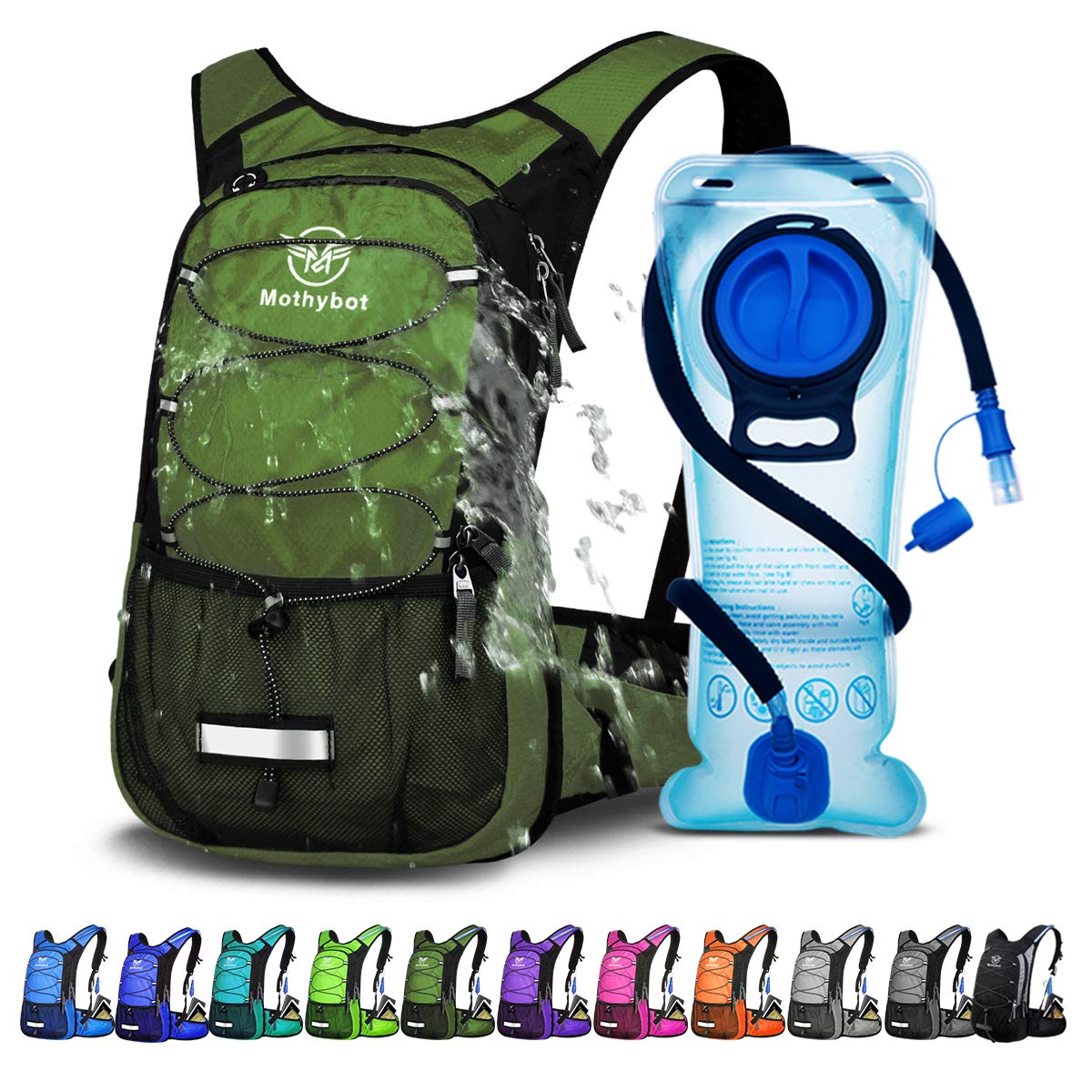
Mothybot Insulated Hydration Backpack 2L
| Price | $29.89 |
| Rating | 4.6 / 5 ★ |
| Reviews | 3,791 |
| Capacity | 2L BPA-free bladder |
| Insulation | Up to 5 hours cool |
| Best for | Summer hiking, hot weather |
- Insulated at under $30 — rare at this price
- High owner satisfaction across a large volume of buyers
- Fits men, women, and kids
- BPA-free bladder included
- 2L only — not for long dry-country hikes
- Less gear storage than N NEVO RHINO
- Insulation adds slight bulk and weight
The standout feature is the insulated bladder compartment keeping water noticeably cooler for up to five hours — most packs under $30 skip insulation entirely. This is the right upgrade over the Unigear for anyone hiking in Oregon summer heat, from the Columbia River Gorge to exposed Cascades ridgelines. Nearly 4,000 reviews at 4.6 stars is one of the stronger validation signals on the budget tier.
Worth the extra $9 over the Unigear if you hike regularly in warm weather. If you need 3L capacity or substantial gear storage, step up to the N NEVO RHINO in the mid-range tier.
INOXTO Running Hydration Vest with 1.5L Bladder

| Price | $23.99 |
| Rating | 4.4 / 5 ★ |
| Reviews | 2,280 |
| Capacity | 1.5L bladder included |
| Style | Running vest |
| Best for | Trail running, cycling, racing |
- Cheapest running vest with insulation
- 2,280 reviews — well validated for budget
- Lightweight and low-profile
- Works for men and women
- 4.4 stars — lowest rating on this list
- 1.5L only — limits range between refills
- Fit can be snug at larger chest sizes
The INOXTO is a rare find at this price: a running-specific vest with an insulated bladder compartment for under $24. Most budget options in this price range are generic hiking packs not designed for running motion. The vest cut keeps the pack stable without bouncing on trail, and the 1.5L insulated bladder keeps water usably cool longer than uninsulated alternatives at the same price.
The 4.4-star rating is the lowest on this list and worth noting — it carries more mixed feedback than the Unigear or Mothybot above. A solid choice for runners who want a vest under $25 and don’t need more than 1.5L of water between refills. For runs with longer stretches between water sources, step up to the Zelvot or Nathan options.
MIYCOO Hydration Backpack 2L

| Price | $19.98 |
| Rating | 4.6 / 5 ★ |
| Reviews | 417 |
| Capacity | 2L bladder included |
| Style | Multi-activity |
| Best for | Light hiking, cycling, climbing |
- Cheapest pack on this list
- 4.6 stars — matches top budget picks
- 2L BPA-free bladder included
- Versatile activity coverage
- Only 417 reviews — least proven on list
- Basic in every respect
- No insulation, minimal organization
The MIYCOO is the lowest-priced pack on this entire list at $19.98, and its 4.6-star rating matches the best budget options. The caveat is sample size — with 417 ratings it has far less real-world validation than the Unigear. A smaller sample can inflate a star rating before a full range of use cases surfaces problems.
If you’ve already decided on a budget pick and want to save a dollar, the MIYCOO is fine. If you’re buying your first hydration pack and want the most validated option for $20, the Unigear is the safer call by a wide margin.
Mid-range picks — $30-$80
N NEVO RHINO 18L Hiking Backpack with 3L Bladder

| Price | $39.99 |
| Rating | 4.6 / 5 ★ |
| Reviews | 2,305 |
| Capacity | 18L gear + 3L bladder |
| Style | Day hiking |
| Best for | Full-day hikes, dry terrain |
- 3L bladder — largest on this list
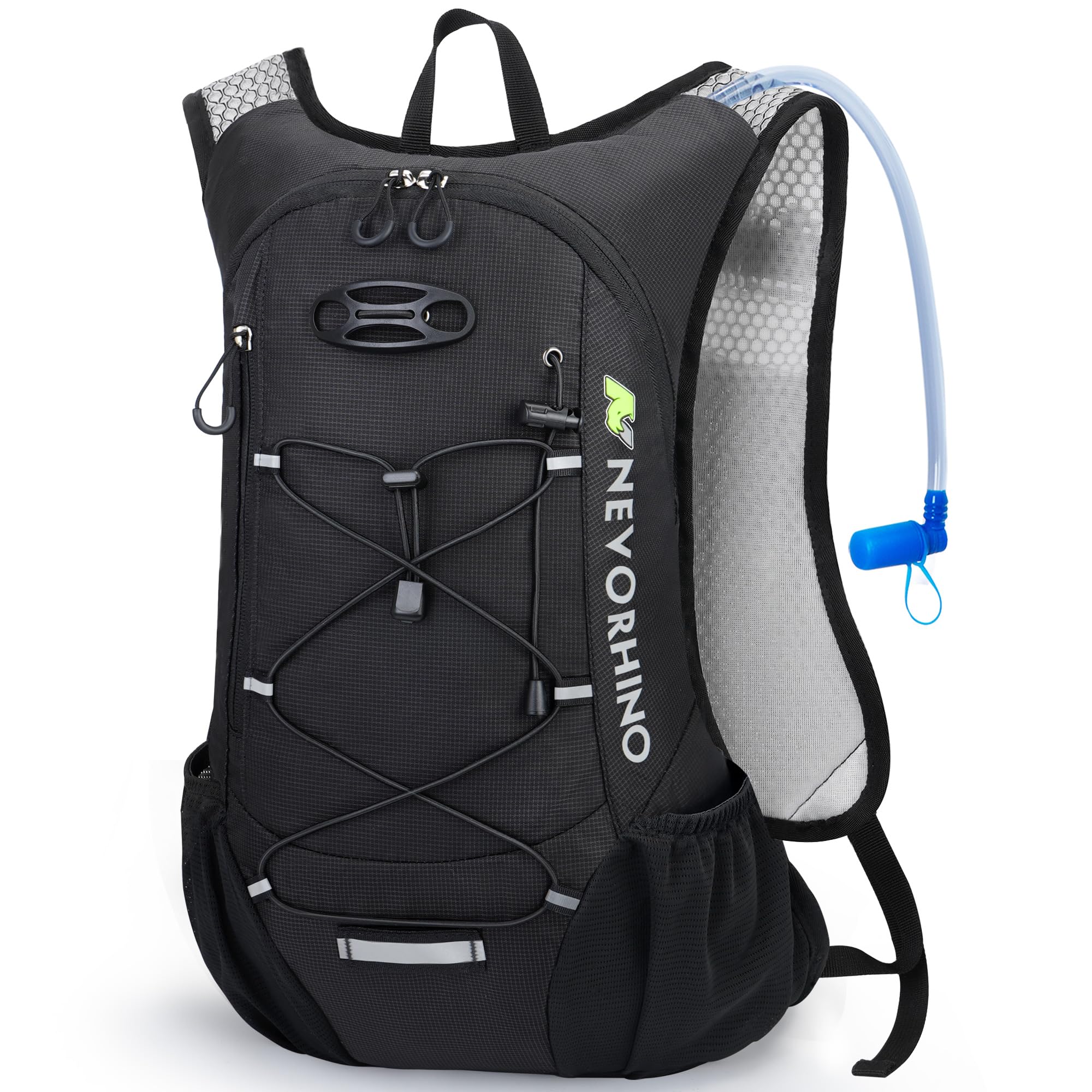
- 18L gear storage for full day kit
- Insulated bladder sleeve
- Padded hipbelt and sternum strap
- Best value on the mid-range tier
- Heavier than running or cycling options
- Overkill for short casual hikes
- Full 3L adds ~6.6 lbs of water weight
This is the pick for full-day hikes where you need to carry real gear alongside your water. 18L handles a rain layer, lunch, first aid, and the ten essentials without feeling stuffed. The 3L bladder is enough water for long summer days on Oregon’s high routes — the Sisters Wilderness, the PCT above Crater Lake, anywhere that charges you for skipping refills. The insulated sleeve keeps it measurably cooler than bare-compartment packs.
At $40, this is the most complete value on the list for hikers who regularly spend full days out. The padded hipbelt and sternum strap are the difference-makers over budget options once you’re carrying a loaded pack for four or more hours.
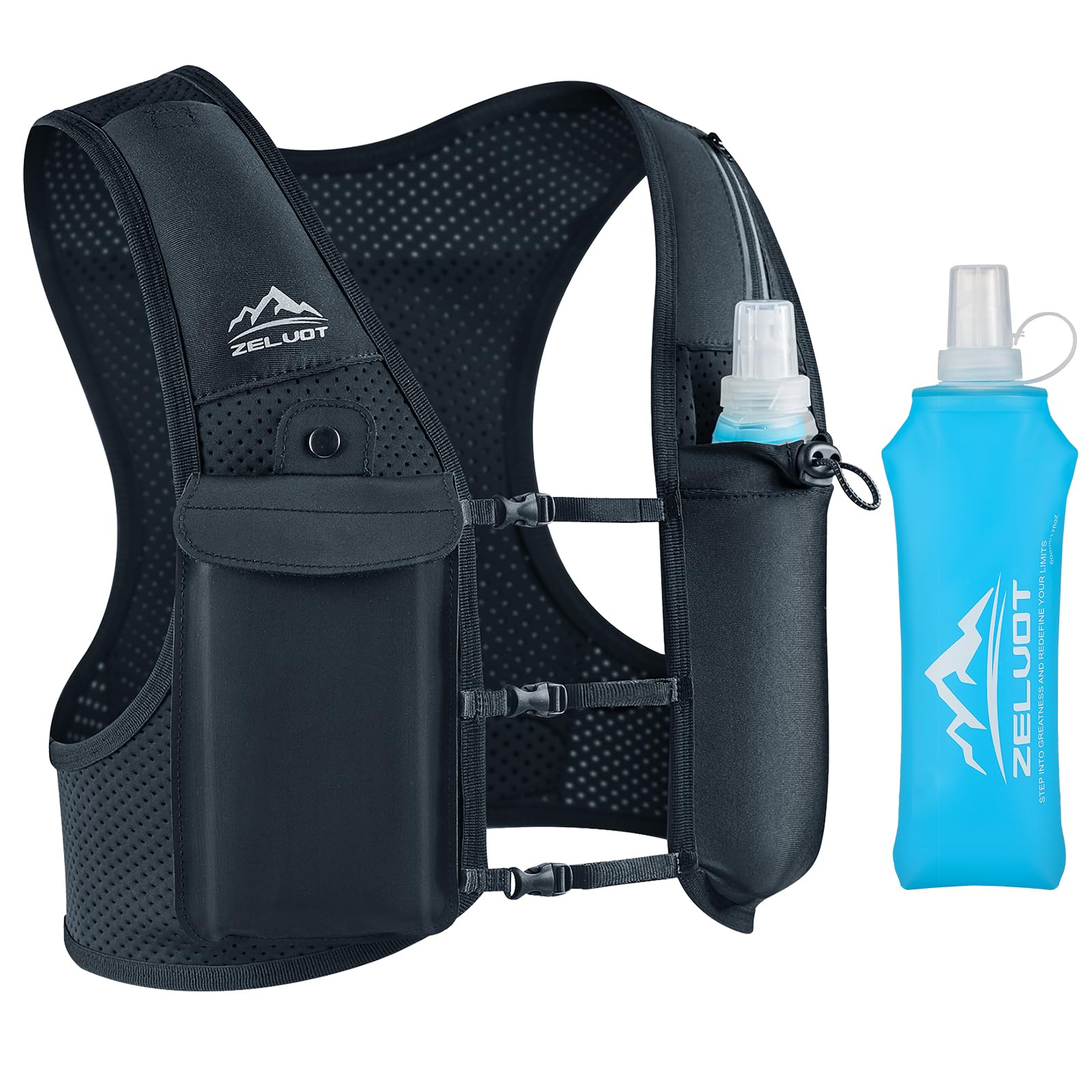
Zelvot Running Hydration Vest with Soft Flask
| Price | $33.99 |
| Rating | 4.5 / 5 ★ |
| Reviews | 1,122 |
| Flask | 500ml soft flask included |
| Style | Running vest |
| Best for | Trail and road running |
- USA patented adjustable chest strap
- Soft flask collapses — no mid-stride slosh
- Reflective panels for low-light running
- Rear compartment fits a bladder too
- 500ml front flask — small for long runs
- Not designed for hiking or MTB
- Newer to market — less field time than the hiking picks above
The Zelvot uses a soft flask rather than a hard bladder — it collapses as you drink, eliminating water slosh mid-stride. The patented adjustable chest strap dials in a snug, bounce-free fit. Reflective panels are a practical addition for early morning and evening runs on Oregon’s trail corridors and road shoulders.
For runs under 10 miles or anywhere with frequent water access, this is the best value running vest on the list. For longer efforts, the rear compartment fits a standard bladder, or supplement with a second soft flask on the opposite strap pocket.
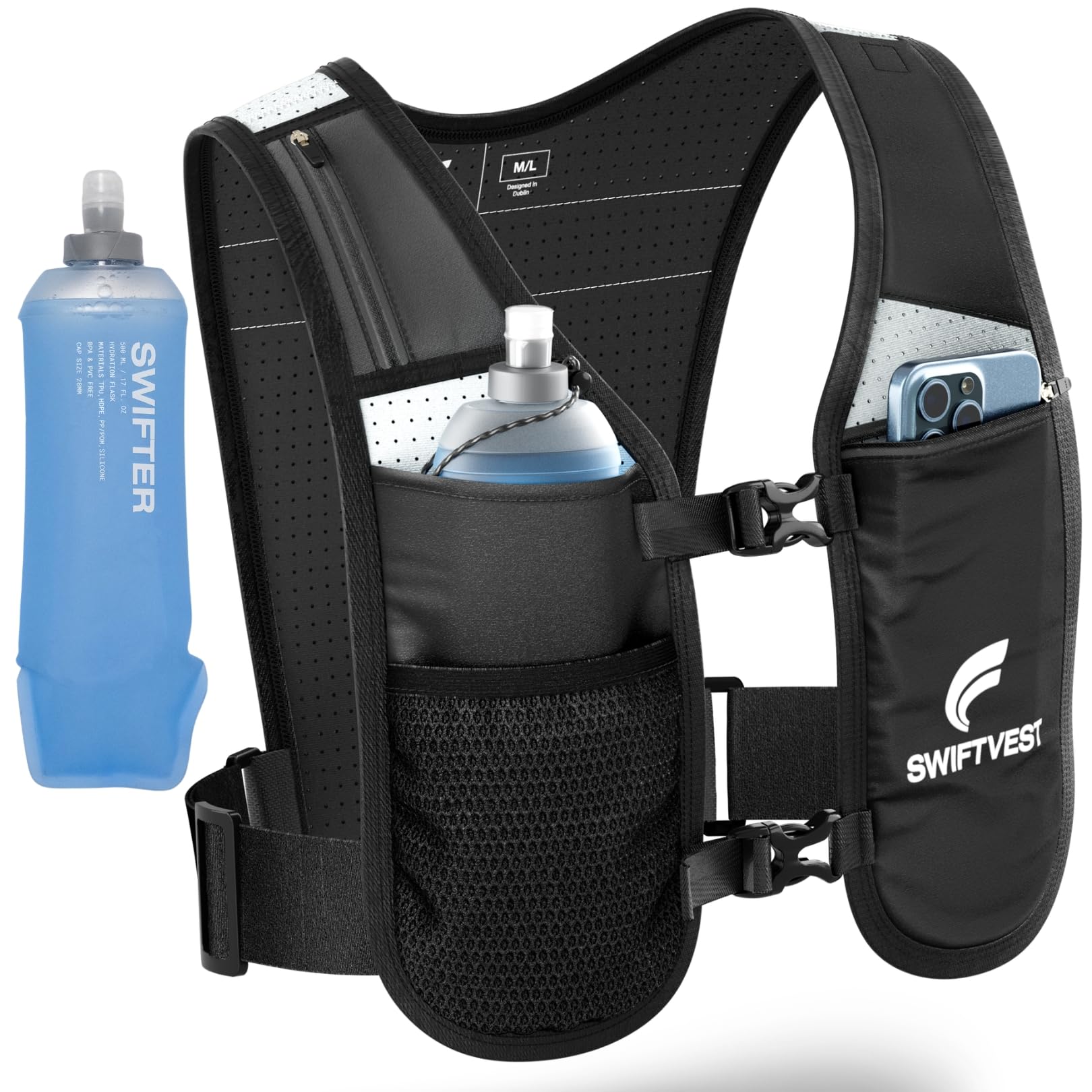
Running Phone Holder Vest with 500ml Water Bottle
| Price | $35.99 |
| Rating | 4.6 / 5 ★ |
| Reviews | 1,004 |
| Bottle | 500ml / 17oz included |
| Pockets | 6 dedicated pockets |
| Best for | Road running, trail running |
- 6 pockets — excellent organization for a vest
- Reflective for low-light visibility
- Adjustable fit, lightweight
- Phone pocket fits most large smartphones
- 500ml only — needs frequent refills on long runs
- Water bottle, not a bladder — no sip tube
- Less structured than dedicated hydration vests
This vest is oriented around organization and accessibility rather than water volume. Six pockets that all stay reachable mid-stride is the main selling point. Phone, gels, keys, gloves, and a headlamp all have a dedicated spot. The 500ml bottle sits in a front pocket rather than connecting to a tube, which makes refilling faster but means you have to reach for it rather than sip freely.
The best pick for runners who prioritize carrying and accessing gear over water volume. If hands-free sipping matters, the Zelvot is the better fit. If you’re doing short urban runs or well-watered trails and want excellent pocket organization, this is worth the look.
CamelBak Classic Bike Hydration Pack 85oz

| Price | $72.00 |
| Rating | 4.5 / 5 ★ |
| Reviews | 2,967 |
| Reservoir | 85oz (2.5L) Crux |
| Waistbelt | Low-profile, cycling-specific |
| Best for | Road cycling, gravel, light MTB |
- CamelBak Crux reservoir quality
- Low-profile waistbelt clears pedaling motion
- Bite valve shutoff switch included
- Nearly 3,000 reviews — well validated
- Limited gear storage vs. the M.U.L.E.
- Not built for technical trail riding
- Premium priced vs. similar-volume budget options
Your first taste of the CamelBak ecosystem. The 85oz Crux reservoir with quick-disconnect fitting and wide-mouth opening is a genuine quality step up from budget bladders — you’ll notice it the first time you need a mid-ride refill. The low-profile cycling waistbelt stays clear of pedaling motion, which is a real ergonomic difference from hiking packs borrowed for bike use.
For road cycling, gravel riding, or lighter trail work, the Classic is the right starting point in the CamelBak lineup. Step up to the M.U.L.E. when you’re doing technical descents and need tool organization and more storage.
Nathan Hydration Vest with 2L Bladder

| Price | $64.99 |
| Rating | 4.5 / 5 ★ |
| Reviews | 654 |
| Capacity | 2L bladder included |
| Style | Running vest |
| Best for | Trail and road running |
- Nathan brand quality when functioning correctly
- Smartphone pocket — dedicated and accessible
- 2L bladder — more water than Zelvot front flask
- One size fits most — good adjustability
- Bladder leaking reported across multiple reviews
- Higher return rate than comparable options
- Expensive at $65 given the reliability concern
- Nathan 4L vest at $109 is a better Nathan option
On paper, the Nathan 2L vest is an appealing mid-range running option — a recognized brand, a 2L bladder with more capacity than soft-flask vests, and a well-positioned smartphone pocket. In practice, a consistent pattern of bladder leaking has been flagged across customer reviews and this vest carries a higher return rate than most others on this list.
We’re including it here for completeness, but we’d recommend the Zelvot at $33.99 or stepping up to the Nathan 4L vest at $108.99 instead. If you’re set on a Nathan and have a way to confirm you’re getting a non-defective unit, it’s a fine vest — just know the risk going in.
Premium picks — $80+
CamelBak M.U.L.E. Mountain Bike Hydration Pack
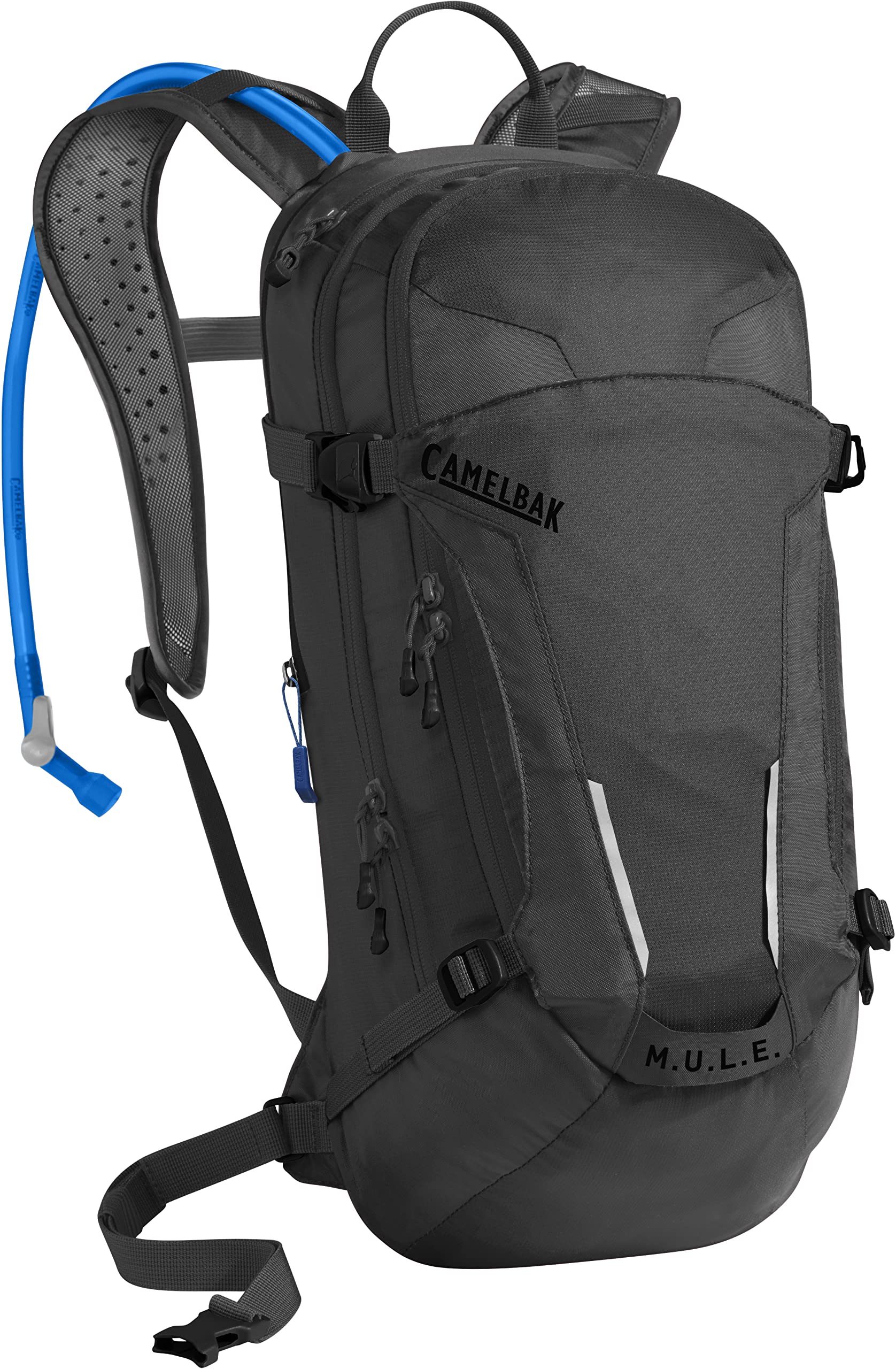
| Price | $98.97 |
| Rating | 4.7 / 5 ★ |
| Reviews | 2,423 |
| Reservoir | 3L Crux |
| Style | MTB-specific |
| Best for | Mountain biking, all-day rides |
- Highest-rated pack on this entire list
- MTB-tuned harness — stable on rough descents
- Tool roll organizer included
- Helmet carry capability
- 3L Crux reservoir, quick-disconnect
- Overkill for casual riding or hiking
- MTB features add bulk for non-riders
- Step up to M.U.L.E. 12 for longer days
The highest-rated pack on this list. The M.U.L.E. is purpose-built for trail riding — the harness stays stable on rough descents, the waistbelt clears full hip rotation on the bike, and the gear storage handles tools, a spare tube, rain gear, and a day of food for trails like the Oakridge network or Tsuga Quarter in the Tillamook State Forest.
4.7 stars across 2,400+ reviews is the strongest signal on this list. If you ride regularly, this is worth every dollar. The tool roll organizer and helmet carry aren’t marketing additions — they’re what a mountain biker actually uses. Step up to the M.U.L.E. 12 only if you’re doing truly all-day epics.
CamelBak Rogue Hydration Pack 85oz

| Price | $86.00 |
| Rating | 4.6 / 5 ★ |
| Reviews | 1,430 |
| Reservoir | 85oz (2.5L) Crux |
| Tube | Quick-disconnect |
| Best for | Day hikes, all-season trail use |
- CamelBak Crux reservoir — best-in-class bladder
- Quick-disconnect tube for mid-hike refills
- Bite valve shutoff prevents in-pack drips
- Hiking-tuned profile and harness
- 4x the price of Unigear for similar water volume
- N NEVO RHINO has more storage at a fraction of the cost
- Premium not justified for occasional hikers
CamelBak’s Crux reservoir is the reason to spend $86 here. The quick-disconnect fitting lets you pull the bladder for a mid-hike refill without wrestling the tube out of the portal. The wide-mouth opening accepts your hand for cleaning, and the bite valve shutoff means your pack won’t slowly drain into itself on a rough technical descent. These are small details that make a real difference on long days.
If you hike regularly enough to justify quality that lasts five-plus seasons, the Rogue is the right call. For occasional hikers, the N NEVO RHINO delivers 90% of the functionality at under half the price.
Nathan Hydration Vest 4L with 1.5L Bladder

| Price | $108.99 |
| Rating | 4.6 / 5 ★ |
| Reviews | 54 |
| Capacity | 4L gear + 1.5L bladder |
| Fit | Adaptive / one size |
| Best for | Trail running, ultras, races |
- Adaptive bungee closure — self-adjusts while running
- Body-mapped mesh — genuinely chafe-free
- 4L well-organized storage for long efforts
- Nathan, a proven running brand with years of gear behind it
- Only 54 reviews — least proven on list
- 1.5L bladder is small for the price
- Significant step up from the Zelvot
Nathan’s adaptive-fit bungee closure self-adjusts as you breathe and move, eliminating the mid-run re-tightening most vests require. The chafe-free construction matters significantly more on a 20-mile trail run than a 5-mile one. Pocket placement is thoughtful — gels, phone, and an emergency layer all have a spot that stays reachable mid-stride.
This is the newest option on the list with the least field time behind it — worth factoring in. For runners doing ultras or racing regularly, this is built for that purpose. For everyone else, the Zelvot does the job at a third of the price.
CamelBak M.U.L.E. 12 Mountain Bike Hydration Pack 100oz
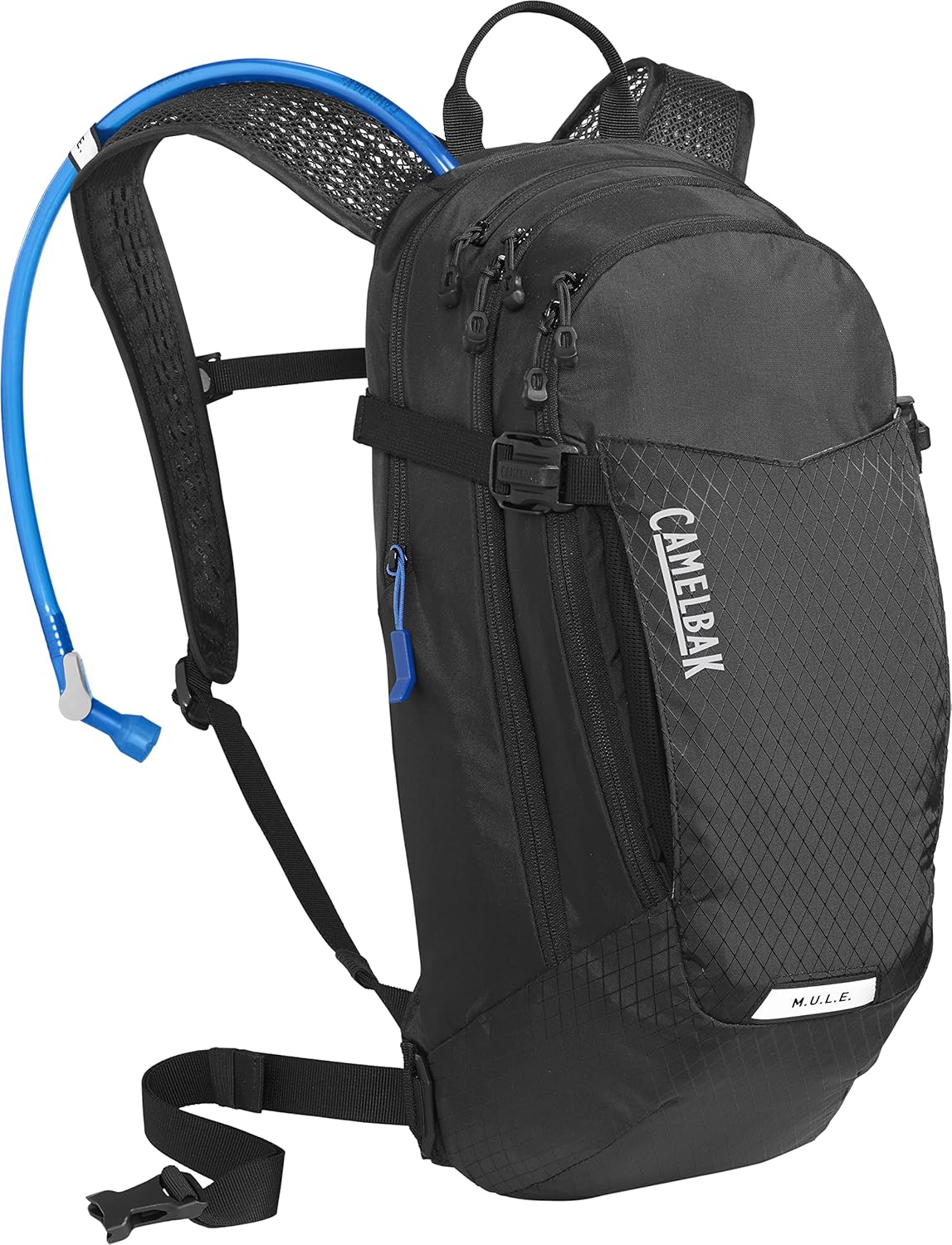
| Price | $141.95 |
| Rating | 4.6 / 5 ★ |
| Reviews | 805 |
| Reservoir | 100oz (3L) Crux |
| Gear storage | 12L total |
| Best for | All-day MTB, enduro, bikepacking |
- 100oz / 3L water — maximum capacity Crux
- 12L gear storage — more than standard M.U.L.E.
- Built for all-day and multi-stage riding
- Full CamelBak MTB-specific harness system
- Most expensive pack on this list at $142
- Heavy when fully loaded
- Standard M.U.L.E. is the right call for most riders
The M.U.L.E. 12 is the step up from the standard M.U.L.E. for riders who regularly spend six or more hours on the bike. The 12L total storage handles the extra layers, tools, food, and bike parts that a true all-day enduro or bikepacking effort requires. The 100oz Crux reservoir is the largest on this list and eliminates refill anxiety on remote routes in the Oregon Cascades or the Ochoco backcountry.
This is a specialist pack for serious riders doing long days in remote terrain. For most mountain bikers — even dedicated trail regulars — the standard M.U.L.E. at $99 is the right call and a meaningful saving. Step up to the 12 only when you’re consistently running out of storage or water on your current pack.
Comparison table
All 14 hydration packs — full comparison by rating, price, and use case
| Tier | Product | Rating | Reviews | Price | Water | Best for |
|---|---|---|---|---|---|---|
| Budget #1 | Unigear 2L | 4.6 | 5,914 | $20.89 | 2L | All-activity |
| Budget #2 | Lightweight Pack 2L | 4.6 | 3,454 | $25.99 | 2L | Hiking, cycling |
| Budget #3 | Mothybot Insulated | 4.6 | 3,791 | $29.89 | 2L | Summer hiking |
| Budget #4 | INOXTO Running Vest | 4.4 | 2,280 | $23.99 | 1.5L | Running |
| Budget #5 | MIYCOO 2L | 4.6 | 417 | $19.98 | 2L | Light hiking |
| Mid #1 | N NEVO RHINO 18L | 4.6 | 2,305 | $39.99 | 3L | Full-day hiking |
| Mid #2 | Zelvot Running Vest | 4.5 | 1,122 | $33.99 | 500ml | Trail running |
| Mid #3 | Phone Holder Vest | 4.6 | 1,004 | $35.99 | 500ml | Road running |
| Mid #4 | CamelBak Classic Bike | 4.5 | 2,967 | $72.00 | 2.5L | Cycling |
| Mid #5 | Nathan 2L Vest ⚠ | 4.5 | 654 | $64.99 | 2L | Running |
| Prem #1 | CamelBak M.U.L.E. | 4.7 | 2,423 | $98.97 | 3L | MTB |
| Prem #2 | CamelBak Rogue | 4.6 | 1,430 | $86.00 | 2.5L | Premium hiking |
| Prem #3 | Nathan Vest 4L | 4.6 | 54 | $108.99 | 1.5L | Ultras, racing |
| Prem #4 | CamelBak M.U.L.E. 12 | 4.6 | 805 | $141.95 | 3L / 100oz | All-day MTB |
How to choose a hydration pack
Match the pack to your activity
Hydration packs are category-specific and the design differences are real. Hiking packs prioritize gear storage and all-day carry comfort. Running vests are cut slim and use soft flasks or small bladders to eliminate bounce. MTB packs have low-profile waistbelts that don’t interfere with pedaling and usually include tool organization. Waistpacks are a lighter alternative worn around the waist, usually with water bottles rather than a bladder, and are ideal for short, fast hikes or runs where you want minimal kit. Buy the right category and the pack works intuitively; buy the wrong one and you’ll fight it every time out.
Water capacity — use this as your starting point
How much bladder capacity you need depends on trip length, heat, and refill access. A practical guide: 0.5–1.5L for short runs, road cycling, and walks under two hours. 2–2.5L is the sweet spot for most hikers — enough for a half to full day without constant refills, and a manageable weight. 3L+ for long summer days, desert terrain, or anyone who hates stopping. Worth knowing: one liter of water weighs approximately two pounds, so a full 3L bladder adds about six pounds to your pack before you’ve loaded any gear.
Gear storage — match your load to the tier
Gear capacity ranges from under 5L up to 50L. Packs under 5L are for ultralight running, road biking, and fast day hikes — room for keys, a bar, and an emergency layer. 6–10L suits mountain biking and trail running where you want a camera, food, and an extra layer. 11–20L is the hiking sweet spot — enough for clothes, food, emergency equipment, and a full day of gear. Over 20L is designed for hiking and handles overnight-capable loads.
Bladder vs. soft flask
Bladders live inside the pack and connect via a sip tube — hands-free, large capacity, but slower to refill and harder to clean. Soft flasks sit in front vest pockets — easy to refill, lightweight, collapsible, but you have to reach for them rather than sip freely. Running vests almost always use soft flasks; hiking packs almost always use bladders. Many running vests accommodate a bladder in the rear compartment as well.
Fit — torso length, not overall height
A well-fitted pack sits snugly against your back with shoulder straps loaded evenly and the hipbelt resting on your hip bones, not your lower back. Torso length determines fit, not overall height. Women’s-specific versions have narrower shoulder straps and shorter torso dimensions. Check the torso length range in the product specs rather than guessing by small/medium/large labels.
Bladder material
Look for BPA-free TPU (thermoplastic polyurethane). It’s flexible, taste-neutral, and more durable than older PVC. Welded seams rather than glued ones are the mark of a bladder that lasts. Wide-mouth openings that fit a hand make cleaning significantly easier than narrow-mouth designs; narrow-mouth bladders require a brush kit.
Features worth paying for
Quick-disconnect tubing makes mid-hike refills far less of a hassle. Bite valve shutoff switches prevent in-pack dripping on descents. Insulated reservoir sleeves and tube covers matter in both summer heat and winter cold. A shoulder-strap tube clip keeps water accessible without fumbling. Together, these details define the difference between a functional pack and one you forget you’re wearing.
Frequently asked questions
What are the best hydration packs?
What is a water bladder?
Is Osprey or CamelBak better?
Are hydration packs good for you?
What are the disadvantages of using a hydration pack?
Are hydration packs better than water bottles?
What size hydration pack do I need for day hiking?
How do I clean a hydration pack bladder?
How much water should I carry hiking?
How we test
Every pack on this list was used on actual Oregon trails — the Columbia River Gorge, the Cascade foothills, the McKenzie River Trail, and Willamette Valley road rides. We score each product across five weighted criteria and write reviews based on what we actually experienced, not the spec sheet.
We weight gear that has proven itself over time — a product with a large volume of satisfied owners at 4.5 stars or above tells us something a short testing window alone cannot. Where volume affects our confidence in a pick, we say so directly.
Read our full testing methodology ›Why trust Oregon Trails

Will
More gear guides
Oregon Trails participates in the Amazon Services LLC Associates Program. As an Amazon Associate we earn from qualifying purchases. This helps us keep the trail reports coming — thank you for your support!