Mirror Lake Trailhead, Mt. Hood
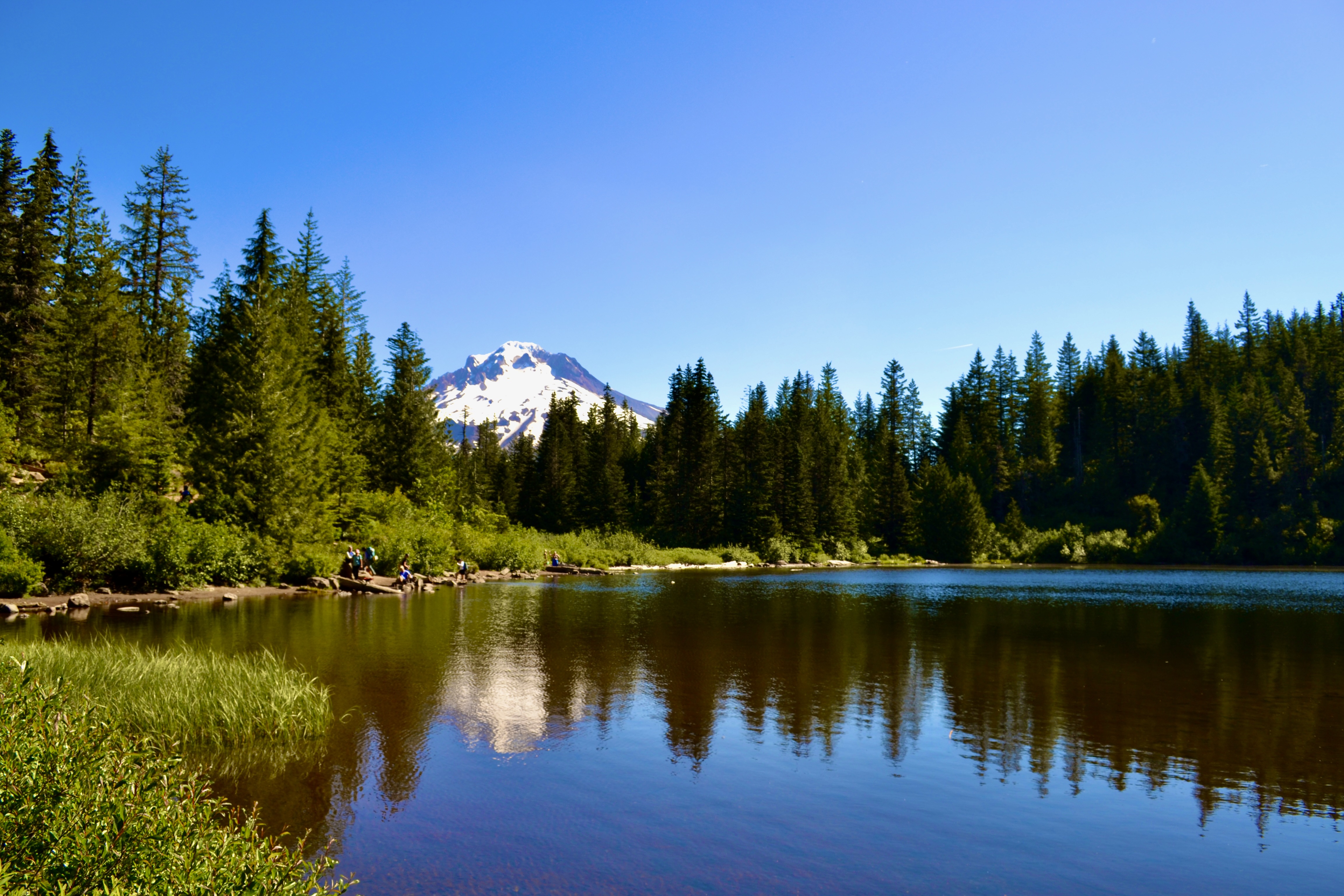
A 4.3-mile lollipop loop to a glacial cirque lake with postcard views of Mt. Hood reflecting in the water on calm days. The trail is just off Highway 26 next to Skibowl West, which means it gets crowded on summer weekends, but it’s worth the early start.
Mirror Lake Trail Quick Stats
Mirror Lake is one of the most popular short hikes on Mt. Hood, and for one specific reason: on a calm, clear day, Mt. Hood’s south face reflects almost perfectly in the lake. It’s one of the most photographed views on the mountain, and the trail is short enough to be doable in half a day. The trail is officially Trail #664 in Mt. Hood National Forest, runs 4.3 miles round trip with 550 feet of elevation gain, and ends at a small glacial cirque lake fed by snowmelt and springs from the ridges above.
The trailhead opened in fall 2018 on a new alignment that added about a mile of trail and 10 helicopter-airlifted footbridges, replacing an awkward old route that started with a walk along the shoulder of Highway 26. The new trail is wider, gentler, and starts in a real parking lot with bathrooms next door to Skibowl West. It is also a fee area: a $5 day-use pass, Northwest Forest Pass, or America the Beautiful pass is required May 1 through October 31. Winter hikers need an Oregon Sno-Park Permit instead. This guide covers the route mile by mile, the optional climb to Tom Dick and Harry Mountain for a full Cascade-range view, the camping situation, and the surprising number of things to do at Skibowl right next door if you’ve still got energy after the hike.
A glacial cirque carved into the south flank of Mt. Hood
Mirror Lake is a textbook glacial cirque: an amphitheater-shaped basin scooped out of the mountainside by the slow grinding action of a glacier during the last ice age. The steep slopes rising to the south and southwest of the lake are the cirque headwall, the back wall of the basin where the ice was thickest. As the glacier retreated, it left a depression that filled with snowmelt and spring water, forming the small alpine lake you see today. Unlike Trillium Lake just down the road, Mirror Lake has no dam: it forms naturally from the geology of the basin.
The forest you walk through to get there is a mix of Douglas-fir, western hemlock, silver fir, noble fir, and western red cedar, a classic Cascade mid-elevation conifer mix. In June and early July you’ll see wild rhododendrons blooming pink in the understory. The route crosses about ten footbridges over creeks and seasonally dry gullies that drain the ridges above, including Camp Creek and Mirror Lake Creek. The whole hike is part of Mt. Hood National Forest, and the optional Tom Dick and Harry Mountain extension above the lake crosses into the Salmon-Huckleberry Wilderness.

Getting there & parking
The Mirror Lake Trailhead sits directly off Highway 26, just before Government Camp, sharing the same exit as Skibowl West. The drive from downtown Portland is approximately 54.8 miles or about 1 hour 10 minutes. The trailhead has 49 parking spaces, a paved plaza with the trail starting behind the restrooms, an information kiosk, bike racks, and a picnic table.
Mirror Lake Trailhead is at 87000 US 26, Government Camp, OR 97028.
- From Portland: Take I-205 south to US-26 east. Continue east on US-26 through Sandy and Rhododendron for about 27.5 miles past Sandy. Turn right at the Skibowl West / Mirror Lake Trailhead exit, just before Government Camp.
- From Government Camp: From the west end of the Government Camp Loop Road, turn right (west) onto Highway 26 and drive 0.4 miles. The Mirror Lake Trailhead Parking Area is on your left.
- Parking: 49 spaces fill up quickly on summer weekends. Arrive before 9 a.m. on a Saturday in July or August, or come midweek. The Skibowl West lot next door functions as overflow parking, separated from the trailhead lot by concrete barriers.
- Trailhead facilities: Pit toilets, info kiosk, bike racks, picnic table, trash receptacles. The trail starts behind the restroom building. There are no facilities at the lake itself.

Walkthrough: trailhead to lake
The route is straightforward: 1.9 miles up to the lake, an optional 0.4-mile loop around the lake, then back the way you came. Here’s what to expect mile by mile.
Down the switchbacks to Camp Creek
Behind the restroom plaza, the paved path drops through six gentle switchbacks under tall Douglas-fir and western hemlock. You’ll hear Camp Creek before you see it; the rush of water through ferns and rotting logs gets louder with every switchback. The pavement ends at a wide wooden footbridge over the creek, and most hikers stop on the bridge for a minute to look down at the water before continuing. From here, the trail surface changes to packed dirt with embedded rocks and surfacing roots.
The footbridge climb through the conifers
After Camp Creek, you’re on a wide, machine-built dirt trail with embedded rocks and protruding roots. Nine more footbridges take you over creeks, drainage gullies, and Mirror Lake Creek. The grade is steady but moderate. Watch for rhododendrons in the understory in late June through early July, when the pink blooms are out. Wild lilies and beargrass appear later in the summer.
The final climb to the lake junction
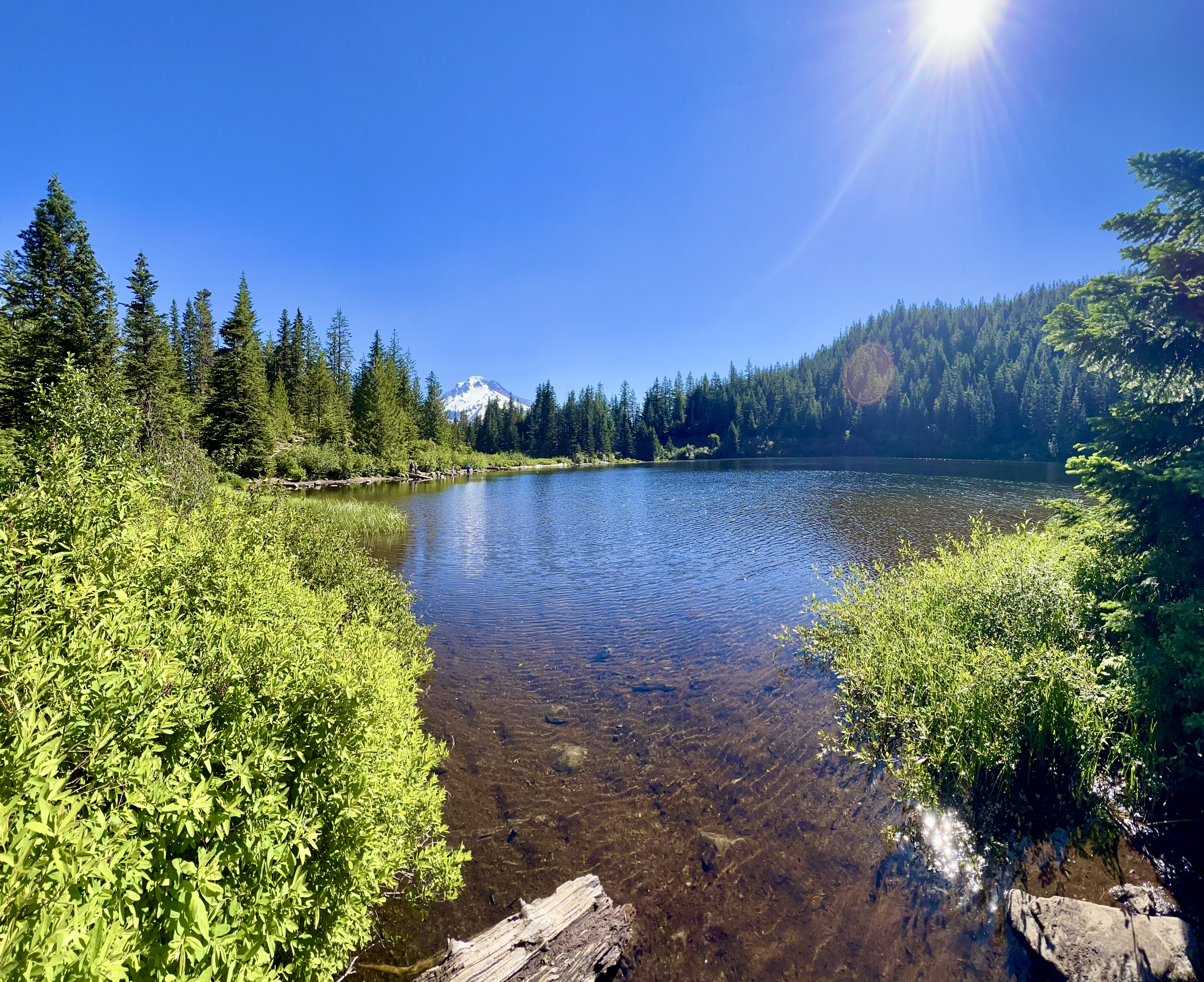
The grade picks up briefly through a few small switchbacks, and the trail intersects the old route that came up from the original Highway 26 trailhead. Stay on the new alignment, and at the lake junction you’ll have a choice: go left (clockwise) or right (counterclockwise) around the 0.4-mile lake loop. The southwest corner of the lake has the postcard Mt. Hood reflection view, so most photographers head counterclockwise to save it for last.
0.4 miles around Mirror Lake (with the marsh planks)
The lakeside trail is narrower than the climb up. You’ll pass a few primitive campsites and several gaps in the greenery where you can walk down to the water. The far side of the loop is where Mt. Hood lines up perfectly with the lake on calm days. Continue around the lake to the marshy section on the western shore, where unanchored wooden planks float across standing water.
The three best photo spots at Mirror Lake
The lake’s small size means you have to know where to stand for the iconic shot. Three angles are worth the walk:
- Southwest corner of the loop: the postcard angle. Mt. Hood lines up directly with the lake’s surface on calm days. Best at sunrise (the mountain catches alpenglow) and within the first 90 minutes of light. Early September after the first cold nights tends to deliver the calmest reflection days.
- South shore primitive campsite area: lower angle, with reeds and shoreline grasses framing the bottom of the frame. Better in afternoon light when the conifers on the far shore go warm-green.
- Northeast corner near the lake junction: the wide-angle establishing shot that shows lake, Mt. Hood, AND the Tom Dick & Harry ridge in a single frame. Hardest of the three because of tree cover; look for a small gap right where the loop trail starts.
The two enemies of the reflection shot: wind and people. A 5 mph breeze ripples the surface enough to break the reflection. Weekend afternoons in summer often have a dozen people in the water swimming. Weekday mornings before 9 a.m. are the surest path to a clean shot.

Cross the marsh planks one at a time. The wooden planks across the marshy section on the lake’s west shore are not properly anchored. They can submerge into the surrounding water when you put weight on them, and a single board with weight on one end will see-saw. Cross them one person at a time, and don’t take them at speed; people fall in regularly. If you have small kids or unsteady footing, it’s fine to turn around at this section and retrace the loop the other direction.
Tom Dick & Harry Mountain extension
From the southwest corner of the lake, the trail continues up the slope and onto the ridge of Tom Dick and Harry Mountain, gaining about 1,000 feet of elevation over 1.8 miles. This section is much steeper and rougher than the lake loop, with the last 200 yards being very steep, rocky, and exposed. It’s not appropriate for young kids or anyone uncomfortable with scrambling.
The reward is one of the best Cascade panoramas in northern Oregon. From the summit ridge on a clear day, you can see Mt. Hood, Mt. St. Helens, Mt. Adams, Mt. Rainier, and Mt. Jefferson all in one sweep. Mirror Lake sits below as a small blue pool surrounded by conifers. The trail enters the Salmon-Huckleberry Wilderness, where wilderness regulations apply: no mechanized vehicles, no group sizes over 12, and Leave No Trace principles. Plan on adding 2 hours to your total time if you do this extension.
Winter recreation note: Snowshoeing is allowed on the trail, but signage is not installed for winter recreation. Route-finding and basic navigational skills are highly recommended for winter use; the trail can be hard to follow under snow. An Oregon Sno-Park Permit is required from November 1 through April 30.
Fees, permits & trail facts
- Summer fees (May 1 to October 31): $5/vehicle/day OR Northwest Forest Pass ($30/year), Interagency Annual Pass, or America the Beautiful pass. Day passes are not sold at the trailhead. Buy ahead at recreation.gov or any Mt. Hood NF ranger station.
- Winter fees (November 1 to April 30): Oregon Sno-Park Permit required. Buy at DMV field offices, winter resorts, sporting goods retailers, or various permit-sales agents.
- Elevation gain: ~550 feet to the lake (~666 ft total per AllTrails when including the lake loop). Tom Dick and Harry adds another ~1,000 ft.
- Amenities at trailhead: Pit toilets, picnic area, information kiosk, bike racks, trash receptacles. No facilities at the lake.
- Open: Year-round. Snow typically covers the upper sections from late October through April.
- Wilderness: The Tom Dick and Harry section enters the Salmon-Huckleberry Wilderness. Standard wilderness regulations apply.
- Bikes: Not allowed on the trail.
- Dogs: Allowed on leash.
Camping at Mirror Lake
About 6 to 12 walk-in primitive campsites are scattered around the shore of Mirror Lake. Note that this is one of the most popular hikes around Mt. Hood, so finding an open campsite during peak summer weekends is far from guaranteed. The good news: most visitors hike up for a day trip and leave by evening, so by 6 or 7 p.m. on a Saturday the lake usually clears out.
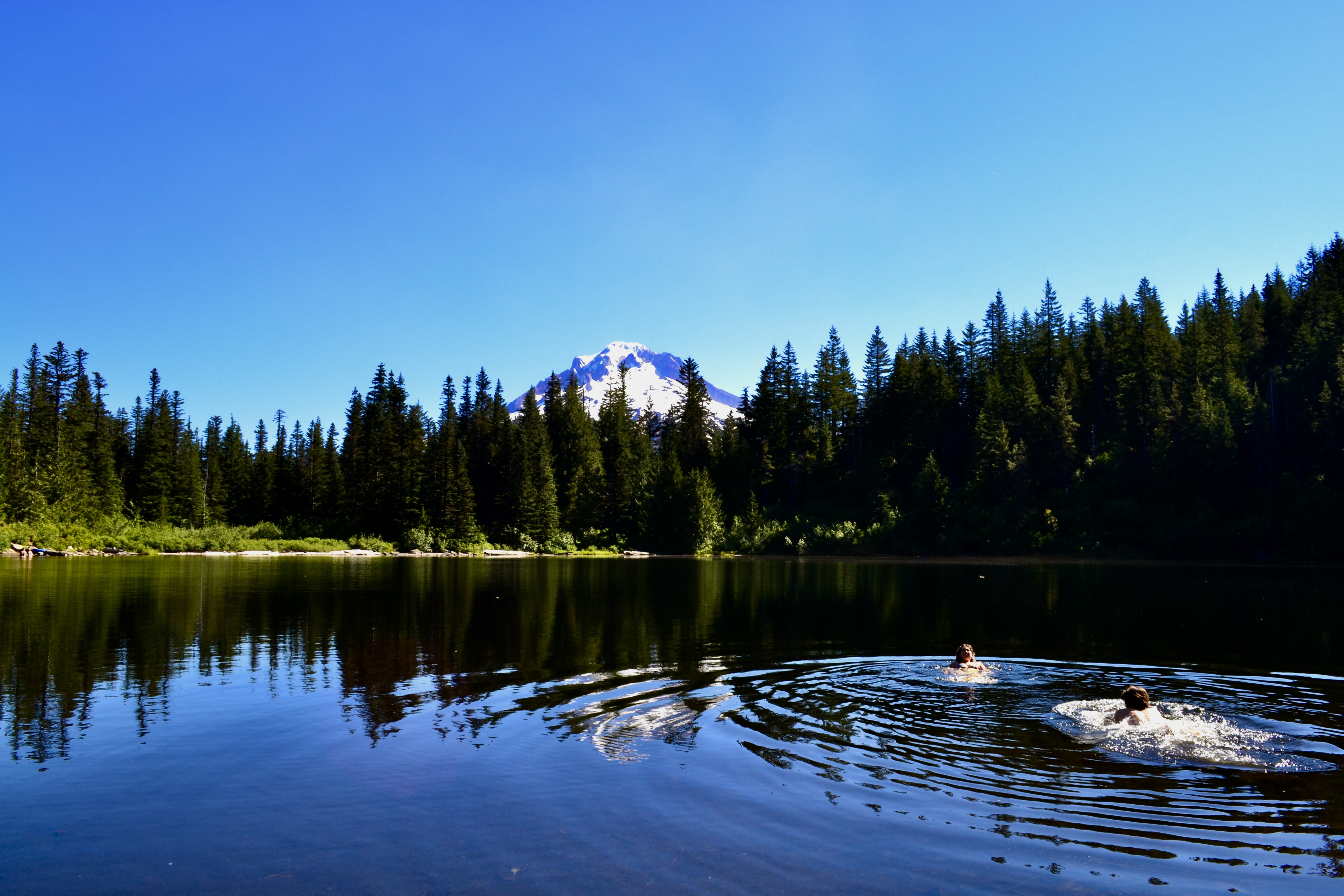
There are no facilities at the lake itself: no toilets, no picnic tables, no piped water. A few rock fire pits and a makeshift bench have been built up near some of the sites. Pack everything in and pack everything out, including human waste (bury cat-holes well away from the lake or pack out with WAG bags). Mirror Lake is surrounded on three sides by mountains and is genuinely peaceful at night, with views of Mt. Hood and the Tom Dick and Harry ridge from the lakeshore.

Bug warning: Mosquitoes are heavy at the lake from late spring through mid-summer because of the standing water and marshy west shore. Bring DEET or picaridin, and consider a head net for the worst weeks (mid-June to early July most years).
Fishing at Mirror Lake
Mirror Lake holds a small but fishable population of brook trout, cutthroat trout, and crawfish. The brookies tend to run small (8 to 9 inches) but feed actively on the surface during summer evenings, making this a fun fly-fishing spot if you’re up for hauling a rod the 1.9 miles in. Anglers report the best bite from July through early October once the water warms above 50 degrees.
The fishing window is small. Mirror Lake is shallow at the shoreline (about 2-3 feet deep until you wade out roughly 40 feet) and the surrounding trees and reeds limit backcasting space, so an ultralight spinning setup or short fly rod (7 to 8 feet) works best. Waders help if you want more casting room. An Oregon fishing license is required; check current regulations on the Oregon Tails fishing map and guide. As with any wilderness lake, practice catch-and-release, pack out all line and tackle, and don’t gut fish in or near the water.
Wildlife at Mirror Lake
Beyond the fish and crawfish, the lake and the surrounding forest support a steady cast of Cascade wildlife. What you’ll likely see, in rough order of frequency:
- Ducks and waterfowl: most often mallards and the occasional bufflehead. They’ll be the small dark shapes paddling across the lake’s surface in the early morning.
- Steller’s jays: bright blue, loud, and bold. They’ll show up at any campsite with food.
- Red-tailed hawks and bald eagles: visible overhead, especially near the Tom Dick & Harry ridge.
- Black-tailed deer: most common at dawn and dusk, browsing in the meadows just below the lake.
- Mosquitoes: the dominant lifeform from mid-June through mid-July. Bring DEET or picaridin.
- Black bears: present in the broader Mt. Hood NF but rarely seen on this trail. Hang food at camp anyway.
What to pack
Mirror Lake is a short, well-marked trail, but it’s still 4,000 feet up Mt. Hood. Weather can change fast. The basics:
Things to do nearby (Skibowl)
If you’re passing through Government Camp or looking for things to do after your Mirror Lake hike, head right next door to Mt. Hood Skibowl. Skibowl shares the Mirror Lake Trailhead exit and is the closest mountain resort to Portland. Its terrain covers 960 acres with 69 different runs, plus a substantial summer adventure park.
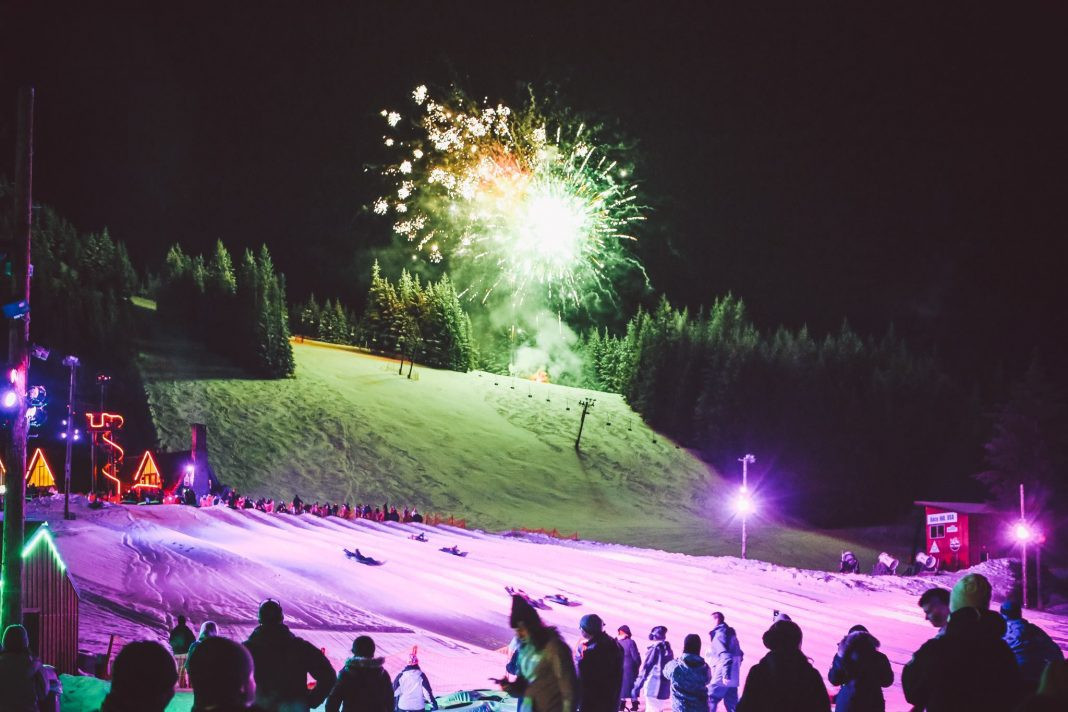


Skibowl runs a real range of activities across all four seasons. In winter, that’s night skiing, Cosmic Tubing (snow tubing under colored lights with a DJ), and luxury lodging. In summer, the slopes turn into an adventure park with the Alpine Slide, zip line, and go-karts, plus mountain biking and disc golf. It’s a natural pairing with a Mirror Lake hike: park once, hike the lake, and walk over to Skibowl for the afternoon.
For more in the area, check our guide to fun day trips from Portland with tips on Mt. Hood, the Columbia River Gorge, and other quick weekend escapes.
More hikes near Mt. Hood
Mt. Hood and the Columbia River Gorge have some of the best day hikes in Oregon. If you finish Mirror Lake before lunchtime and want more, here are some natural pairings.
How Mirror Lake compares to other Mt. Hood & Cascade lake hikes
Mirror Lake is one of several alpine lake day-hikes in this part of Oregon. Here is how it stacks up against the most-asked alternatives:
| Hike | Distance | Difficulty | Best for |
|---|---|---|---|
| Mirror Lake (this guide) | 4.3 mi loop | Moderate (550 ft) | Mt. Hood reflection, families, photography |
| Trillium Lake Loop | 1.9 mi loop | Easy (flat) | Stroller/wheelchair access, picnicking, paddleboarding |
| Tamolitch Falls (Blue Pool) | 4.4 mi out-back | Easy-Moderate | Turquoise pool, riverside scenery, McKenzie River |
| Tom Dick & Harry (full) | 7.6 mi out-back | Hard (1,550 ft) | 5-Cascade panorama, wilderness experience, advanced hikers |
| Mirror Lake snowshoe | 4.3 mi loop | Moderate-Hard | Winter hiking, snow photography, off-season visitors |
If you want the easiest possible Mt. Hood reflection hike, Trillium Lake is the easier sister to Mirror Lake (1.9-mile flat loop with the same iconic mountain reflection from the south shore). If you want a bigger payoff for similar effort, Tom Dick and Harry Mountain as an extension to your Mirror Lake hike is the highest-impact upgrade.
Frequently asked questions
How long is the Mirror Lake Trail at Mt. Hood?
How long does it take to hike Mirror Lake?
How far is Mirror Lake Trail from Portland?
Do you need a permit or pass for Mirror Lake?
Is Mirror Lake Trail open year-round?
Can dogs go on the Mirror Lake Trail?
Can you swim in Mirror Lake?
Is there camping at Mirror Lake?
Is the Mirror Lake Trail kid-friendly?
How much elevation gain is the Mirror Lake hike?
When is the best time to hike Mirror Lake?
How do you get to Mirror Lake Trailhead from Portland?
Are there bathrooms at the Mirror Lake Trailhead?
What’s the closest ski resort to Mirror Lake?
Last updated: May 2026 · Trail conditions, parking fees, and access dates can change quickly. The Mirror Lake Trail is in Mt. Hood National Forest; check the official Forest Service trail page for the latest conditions, especially before winter trips. AllTrails reports 4.7 stars across 8,679+ reviews. For day-use passes and Sno-Park Permits, see the Forest Service recreation pass page.