The Best Hiking Jackets
Fifteen jackets across five categories: rain shells, women’s shells, softshells, fleece midlayers, and insulated layers. Ranked on the weather that actually ends Oregon hikes, and no brand pays for placement.
Quick Picks: The Top 5 in 30 Seconds
If you are shopping in a hurry, these five cover most hiking-jacket buying intent. Tap a card to check current pricing on Amazon.
Find Your Jacket
Four questions, one personalized pick from our 15. No email, no signup.
Your match
Answer the questions above
We will recommend the right jacket from our 15 picks.
Check price on Amazon →Our 15 Top Picks for 2026
Five categories, chosen because they map to what actually goes wrong on an Oregon trail. Every jacket is scored on a 100-point trail score across weather protection, breathability, packability, build, and value.
Best Rain Shells and Hardshells
Five waterproof shells covering everything from a thirty-dollar emergency layer to a fully seam-sealed premium jacket. This is the category that matters most in Oregon, where the difference between a good day and a miserable one usually comes down to whether your outer layer holds.
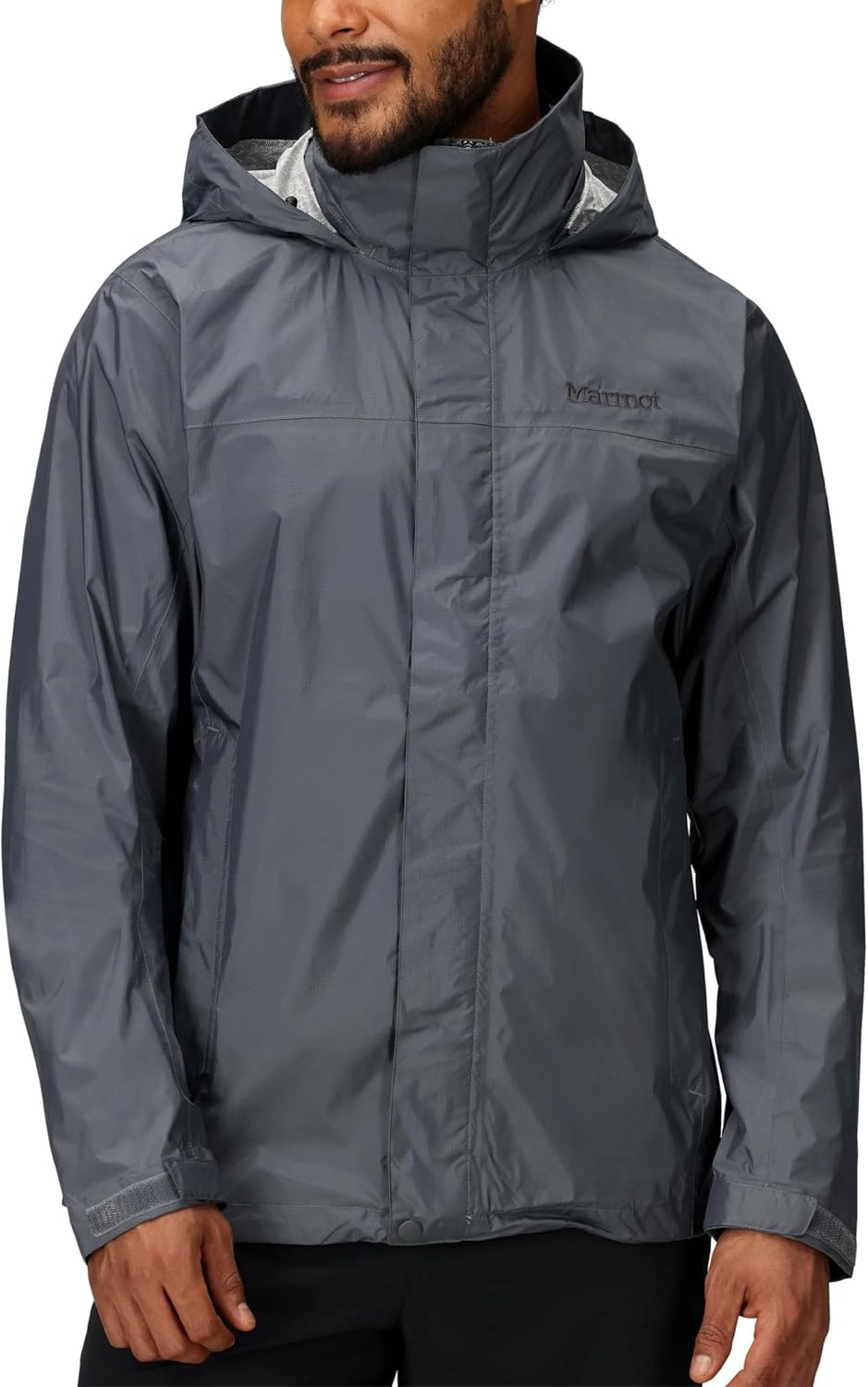
Best Overall Hiking Jacket: Marmot PreCip Eco
Recycled 2.5-layer rain shell that stuffs into its own pocket
Pros
- PitZips dump heat fast on a climb without unzipping the front
- Stuffs into its own hand pocket and disappears into a daypack lid
- Roll-up hood stows on the collar when the sky clears
- Recycled nylon face fabric with a PFC-free water repellent finish
Cons
- The thin inner backer feels clammy against bare skin on humid days
- Fit runs athletic, sizing up helps if you layer a thick fleece underneath
- Face fabric picks up scuffs from pack straps faster than heavier shells
The PreCip Eco is the shell I hand to anyone who asks one question and wants one answer. It has been the default Pacific Northwest rain layer for two decades, and the Eco version swapped the face fabric for recycled nylon without giving up the thing that made it work: it keeps water out during a full day of Gorge drizzle and it disappears when you do not need it.
The PitZips matter more than the membrane rating on a climbing trail. Sustained uphill effort produces more moisture than a thin laminate can move, so the ability to open the underarms and vent directly is what keeps you from soaking yourself from the inside. Marmot has kept them on this jacket while cheaper shells drop them to save cost.
This is not the jacket for someone who wants a town coat that also handles trails. The cut is trail-first and the fabric is thin enough that it reads technical rather than casual. If you want one shell that hikes and commutes, look at the Dubliner further down.
| Fabric | 100% recycled nylon ripstop |
|---|---|
| Membrane | NanoPro Eco, 2.5-layer |
| Waterproofing | Fully seam taped, PFC-free DWR |
| Venting | PitZips, underarm |
| Hood | Attached, roll-up, stows on collar |
| Packability | Stuffs into hand pocket |
| Pockets | 2 zippered hand |
| Weight | About 13 oz, size M |
| Fit | Athletic |
| Best for | Three-season Oregon hiking |
Best Value Rain Shell: Columbia Watertight II
Omni-Tech waterproof shell with the deepest review base in this test

Pros
- Omni-Tech seam sealing holds up through repeated soakings
- Storm hood adjusts at the back and actually stays put in wind
- Packs into its own pocket without a fight
- Sizing runs true and the cut clears a fleece midlayer
Cons
- No pit zips, so venting means opening the front
- The interior coating feels sticky against skin once you sweat
- Hand pockets sit below a hipbelt on a loaded pack
The Watertight II is the shell most people should buy first. It does the core job, keeping rain out through a long wet day, without asking for a premium-brand price. Columbia has sold this pattern for years, which means the fit, the hood geometry, and the seam sealing have all been debugged by a very large number of buyers.
The compromise is venting. Without pit zips your only heat release is the front zipper, and on a sustained climb that is not enough. If your hiking is rolling coastal trail or valley loops, you will not notice. If you are grinding up Dog Mountain in April, you will.
Pair it with a proper midlayer rather than treating it as a warm jacket. It is a shell, nothing more, and it performs like one. Anyone who wants waterproof legs to match should look at our best waterproof hiking pants picks.
| Fabric | 100% nylon shell |
|---|---|
| Membrane | Omni-Tech, 2-layer |
| Waterproofing | Critically seam sealed |
| Venting | Front zip only |
| Hood | Attached, adjustable storm hood |
| Packability | Packs into hand pocket |
| Pockets | 2 zippered hand |
| Weight | About 15 oz, size M |
| Fit | Regular |
| Best for | Everyday rain, value buyers |
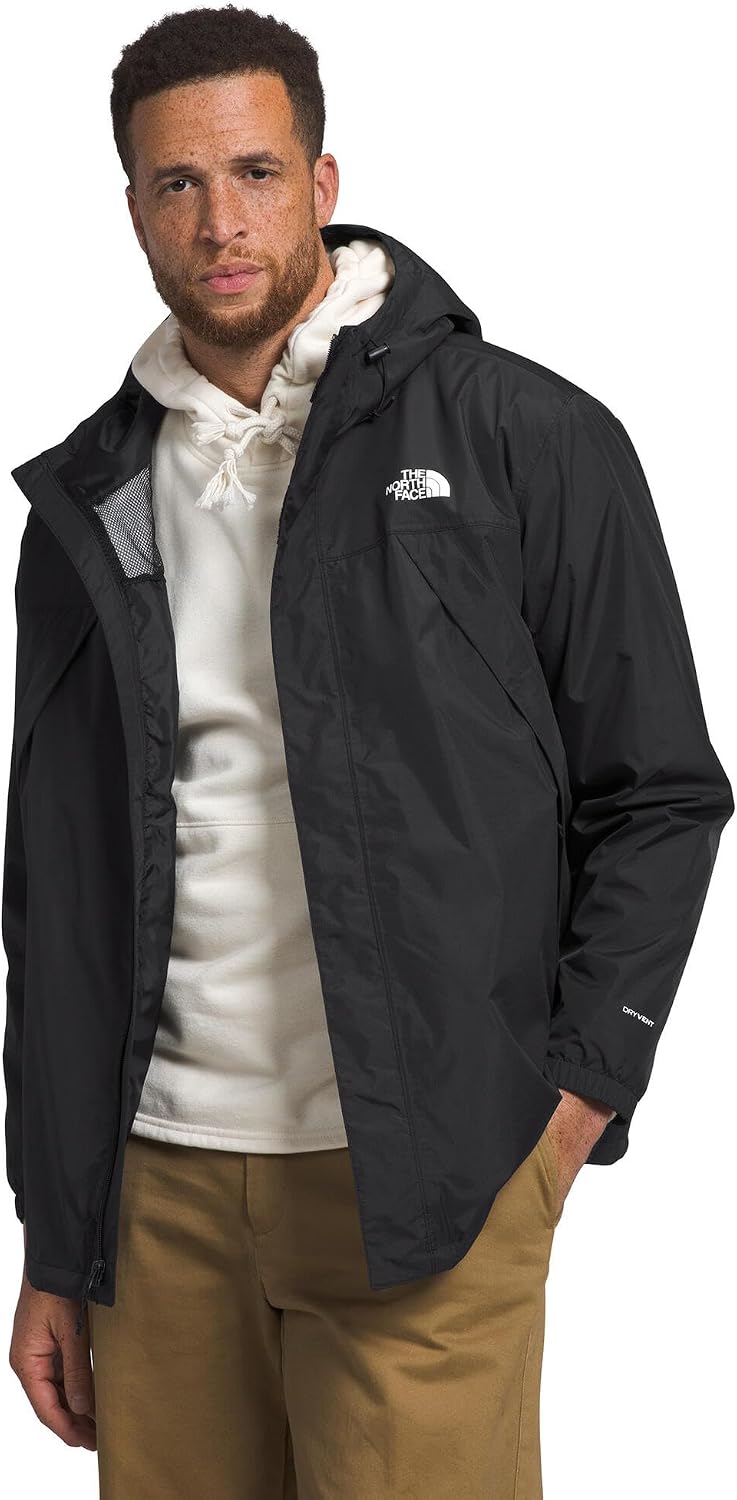
Best Hardshell for Sustained Rain: The North Face Antora
DryVent 2-layer shell in standard and big sizes
Pros
- Heavier face fabric shrugs off brush and pack abrasion
- Hood cinches down to a workable field of view in sideways rain
- Hem drawcord seals the bottom against updraft on exposed ridges
- Extended sizing runs well past what most technical shells offer
Cons
- Bulkier packed than a stuffable ultralight shell
- No pit zips at this price, which is hard to defend
- Recycled DryVent laminate wets out sooner than premium three-layer fabrics
When Oregon commits to a rain week rather than a rain hour, this is the shell that holds up. The Antora uses a thicker face fabric than the packable ultralights, and that extra material is what keeps it from wetting out on day four of continuous use. It is a working shell rather than an emergency one.
The North Face fit here is genuinely generous, and the big-size range is the reason many buyers land on this jacket instead of a Marmot or a Columbia. If you have been sizing up in technical outerwear and still feel pinched across the shoulders, start here.
The absence of pit zips at this price point is the real knock. You are paying for fabric and for brand support, not for ventilation engineering.
| Fabric | Recycled polyester face |
|---|---|
| Membrane | DryVent, 2-layer |
| Waterproofing | Fully seam sealed, non-PFC DWR |
| Venting | Front zip only |
| Hood | Attached, adjustable, stowable |
| Packability | Compresses, no stuff pocket |
| Pockets | 2 zippered hand |
| Weight | About 16 oz, size M |
| Fit | Standard and big |
| Best for | Multi-day rain, larger sizing |
Best Premium Shell: Helly Hansen Dubliner
Helly Tech shell that works on trail and in town

Pros
- Fully seam sealed rather than critically sealed, so nothing weeps at the shoulders
- Cut and colorways read as a normal coat off the trail
- Packable hood tucks into the collar cleanly
- Adjustable cuffs seal over gloves without bunching
Cons
- Heaviest shell on this page for its level of protection
- Priced above what the fabric technology alone justifies
- Longer cut catches wind on exposed ridgelines
Most waterproof jackets make you choose between a shell you can hike in and a coat you can wear to dinner. The Dubliner is the rare one that does both without embarrassing itself in either setting. The fabric is fully seam sealed, not just taped at the critical points, and that difference shows up on the third hour of steady rain when cheaper shells start weeping at the shoulder seams.
Helly Hansen builds this for wet-city Northern Europe, which happens to be a close match for the Willamette Valley from November through March. The longer cut sheds water past the hipbelt line and the pockets sit high enough to still be usable with a pack on.
This is not the jacket for a fast-and-light summit push. It is the jacket for someone who wants one waterproof layer that covers commuting, dog walks, and weekend trails without owning three.
| Fabric | 100% polyester face |
|---|---|
| Membrane | Helly Tech Protection, 2-ply |
| Waterproofing | Fully seam sealed, DWR treated |
| Venting | Front zip only |
| Hood | Attached, packable into collar |
| Packability | Folds, no stuff pocket |
| Pockets | 2 zippered hand, 1 interior |
| Weight | About 19 oz, size M |
| Fit | Regular |
| Best for | Trail and town crossover |
Best Budget Hiking Jacket: OTU Lightweight Rain Jacket
Sub-thirty-dollar packable shell for hikers who need cover now

Pros
- Packs smaller than most water bottles and weighs almost nothing in a pack
- Coated polyester sheds a normal Oregon shower without soaking through
- Elastic cuffs and drawcord hem seal well for the price
- Cheap enough to keep a spare in the car and in the pack
Cons
- Coating breaks down faster than a laminated membrane over repeated seasons
- No pit zips and limited breathability under real effort
- Seam sealing is inconsistent across production runs
This is the jacket that covers the gap between owning nothing and owning something good. It sheds a normal shower, it lives permanently in the bottom of a daypack, and losing it on a trail does not ruin your month. For a new hiker or a car glovebox, that combination is worth more than any membrane spec.
The honest limit is durability. A polyurethane coating is not a laminated membrane, and after two or three seasons of regular use it will start letting moisture through at the high-flex points around the shoulders. Treat this as a two-season jacket and the math still works.
Anyone hiking in sustained Pacific Northwest rain rather than occasional showers should spend the extra and move up to the Watertight II or the PreCip.
| Fabric | Coated polyester |
|---|---|
| Membrane | PU coating, not laminated |
| Waterproofing | Taped main seams |
| Venting | Mesh-lined back yoke |
| Hood | Attached, adjustable |
| Packability | Packs into carry pouch |
| Pockets | 2 zippered hand |
| Weight | About 11 oz, size M |
| Fit | Relaxed |
| Best for | Occasional showers, first jacket |
Best Women’s Hiking Jackets
Three jackets cut for women rather than scaled down from a men’s pattern: a mainstream rain shell, a vented climbing shell, and a packable insulation layer. Fit through the shoulders and waist is what separates these from unisex options.
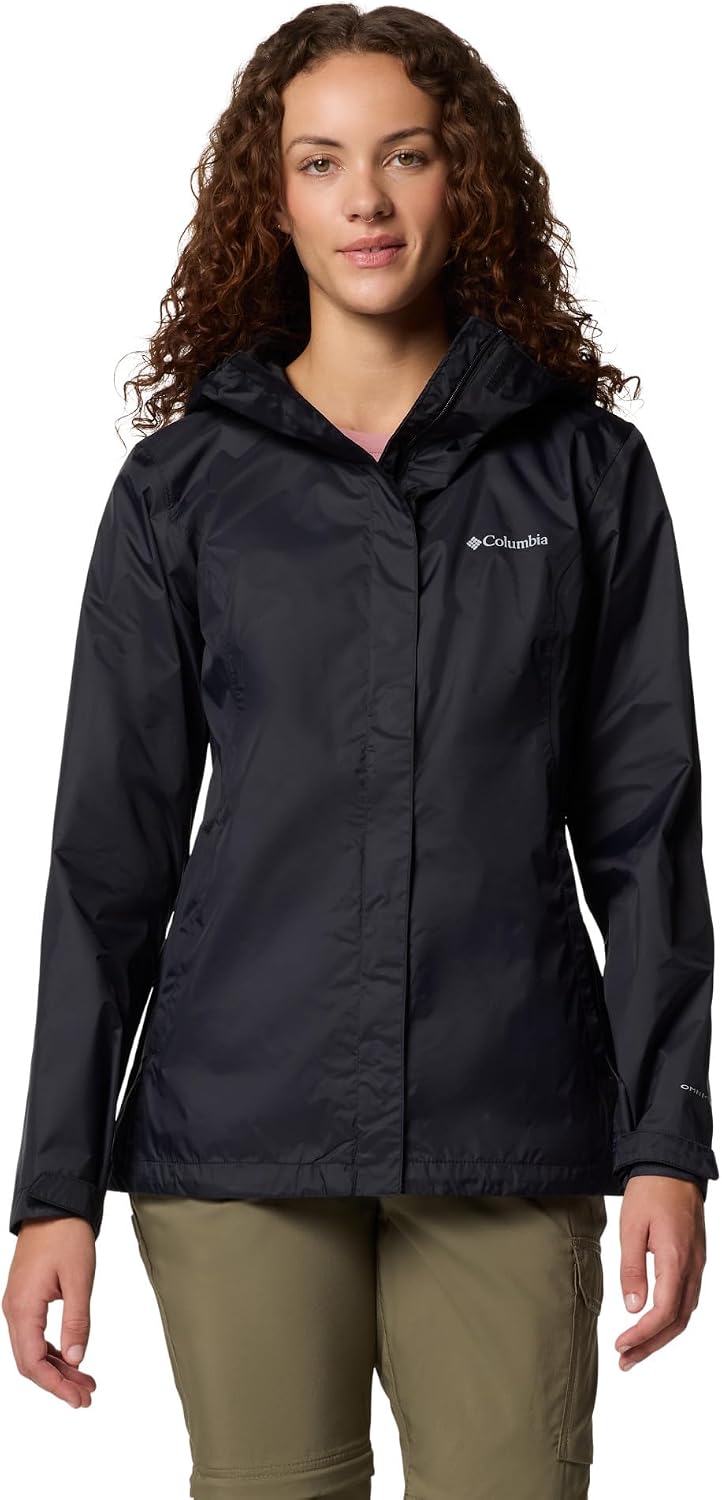
Best Women’s Rain Jacket: Columbia Arcadia II
The women’s Omni-Tech shell with an adjustable storm hood
Pros
- Storm hood adjusts at the back and holds shape in coastal wind
- Drawcord hem stops updraft without cinching awkwardly over a hipbelt
- Packs into its own pocket for daypack storage
- Runs across a wide size range including plus
Cons
- No pit zips, front zip is the only vent
- Cut is boxy through the waist compared with technical women’s shells
- Interior coating feels clammy over a short-sleeve base layer
The Arcadia II is the women’s shell that shows up in every Oregon trailhead parking lot, and there is a reason. It handles real rain, it packs down, and it costs a fraction of what technical brands charge for the same function. Columbia has iterated this pattern long enough that the hood geometry and hem adjustment both work the way they should.
The cut is the main trade-off. It is roomy rather than shaped, which is good news if you layer a fleece under it and less good news if you want a trim silhouette. Most buyers size down one if they are wearing it over a base layer only.
For a matching lower half, our best hiking pants for women guide covers what pairs with this shell across seasons.
| Fabric | 100% nylon shell |
|---|---|
| Membrane | Omni-Tech, 2-layer |
| Waterproofing | Critically seam sealed |
| Venting | Front zip only |
| Hood | Attached, adjustable storm hood |
| Packability | Packs into hand pocket |
| Pockets | 2 zippered hand |
| Weight | About 13 oz, size M |
| Fit | Regular, roomy |
| Best for | All-round women’s rain protection |
Best Women’s Packable Shell: Little Donkey Andy Rain Jacket
Vented women’s shell built for hiking rather than commuting

Pros
- Underarm zip vents at a price where almost nothing has them
- Adjustable hood and cuffs let you seal down in wind
- Shaped through the waist rather than cut straight
- Zippered pockets close properly rather than gaping
Cons
- Membrane wets out sooner than Omni-Tech in sustained downpours
- Zipper hardware feels light and is the likely first failure point
- Color range is narrower than the mainstream brands
This is the shell for a woman who actually climbs with a pack on. The underarm vents are the feature that separates it from everything else near this price, and they matter far more than a marginally better waterproof rating once you are working hard uphill. Little Donkey Andy built this for movement rather than for standing at a bus stop.
Build quality is where the price shows. The fabric and the seam sealing are fine, but the zipper pulls and sliders feel lighter than what Columbia or Marmot put on comparable jackets. Most owners get several seasons before anything gives.
Choose this over the Arcadia II if your hiking involves sustained climbing. Choose the Arcadia II if it involves standing in the rain at a viewpoint.
| Fabric | Polyester face fabric |
|---|---|
| Membrane | Waterproof breathable laminate |
| Waterproofing | Seam taped |
| Venting | Underarm zip vents |
| Hood | Attached, adjustable, detachable |
| Packability | Folds into pocket |
| Pockets | 2 zippered hand |
| Weight | About 14 oz, size M |
| Fit | Shaped |
| Best for | Women who hike uphill with a pack |
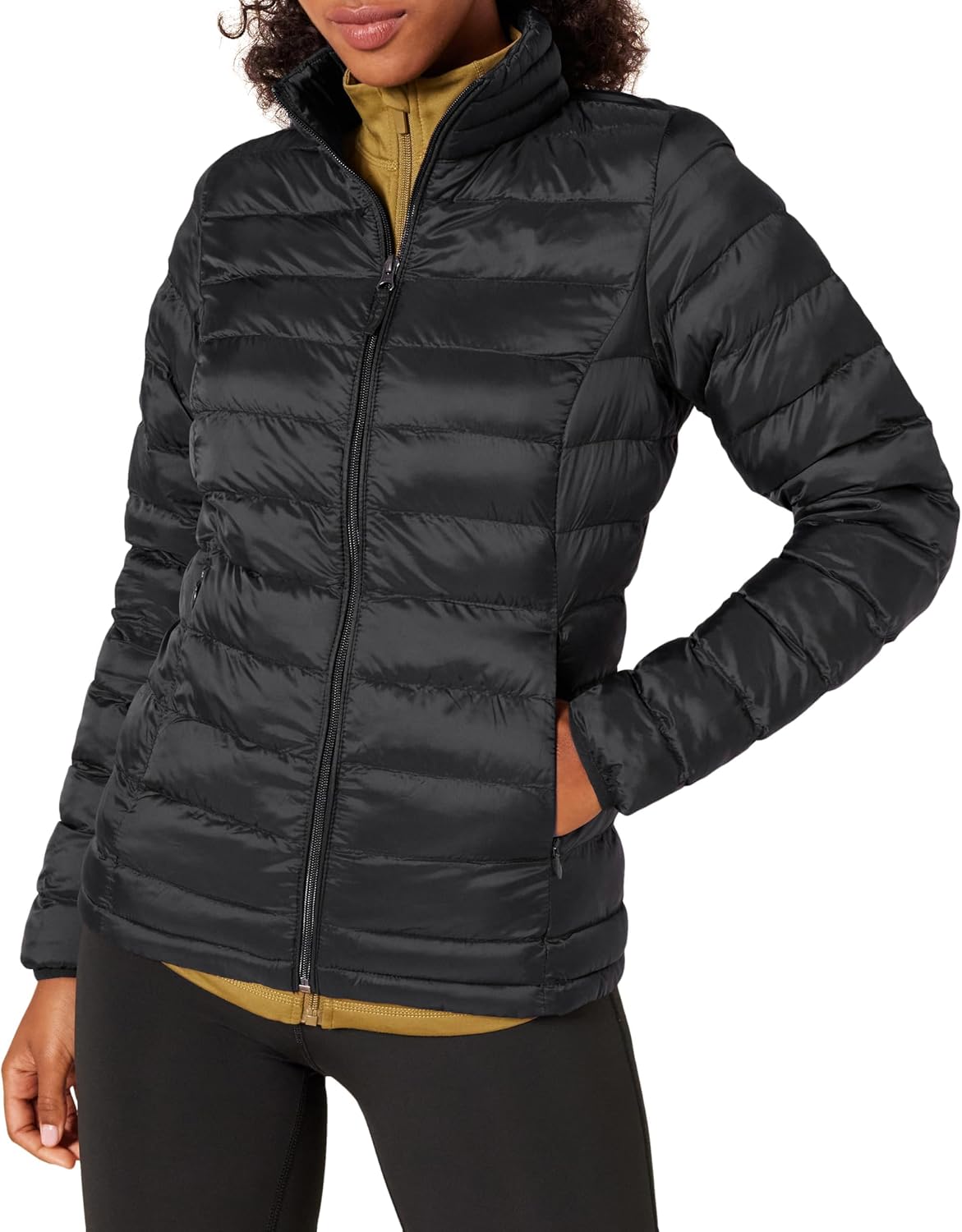
Best Women’s Insulated Jacket: Amazon Essentials Packable Puffer
Water-resistant packable insulation available through plus sizing
Pros
- Compresses into an included pouch small enough for a summit-stop layer
- Water-resistant face fabric handles mist and light drizzle
- Size range runs well into plus without changing the cut
- Warm enough for a shoulder-season lunch break at elevation
Cons
- Not a shell, it soaks through in genuine rain
- Synthetic fill flattens at the shoulders after a couple of seasons
- Elastic cuffs let cold air in without an adjustment option
Insulation you do not carry is insulation that does not help you. This puffer earns its place by compressing small enough that you actually bring it, and by being warm enough to change how a cold viewpoint feels once you stop moving. That is the whole job of a hiking insulation layer.
It is not weather protection. The face fabric handles mist and it stops wind reasonably well, but a real rain shell goes over the top of this, not instead of it. Layer it under the Arcadia II and the combination covers most Oregon shoulder-season conditions.
The fill will compress over time in a way that down does not. At this price that is an acceptable trade, and replacing it every few seasons still costs less than one down jacket.
| Fabric | Water-resistant polyester shell |
|---|---|
| Insulation | Synthetic fill |
| Waterproofing | Water resistant, not waterproof |
| Venting | None |
| Hood | No hood on standard version |
| Packability | Packs into included pouch |
| Pockets | 2 zippered hand |
| Weight | About 12 oz, size M |
| Fit | Regular, plus available |
| Best for | Packable warmth under a shell |
Best Softshells and Windbreakers
Three jackets for the conditions where a waterproof membrane works against you. Cold and dry, or warm and windy, both call for breathability over water resistance.
Best Softshell: Columbia Ascender Softshell
Wind-blocking stretch shell for cold, dry, moving days
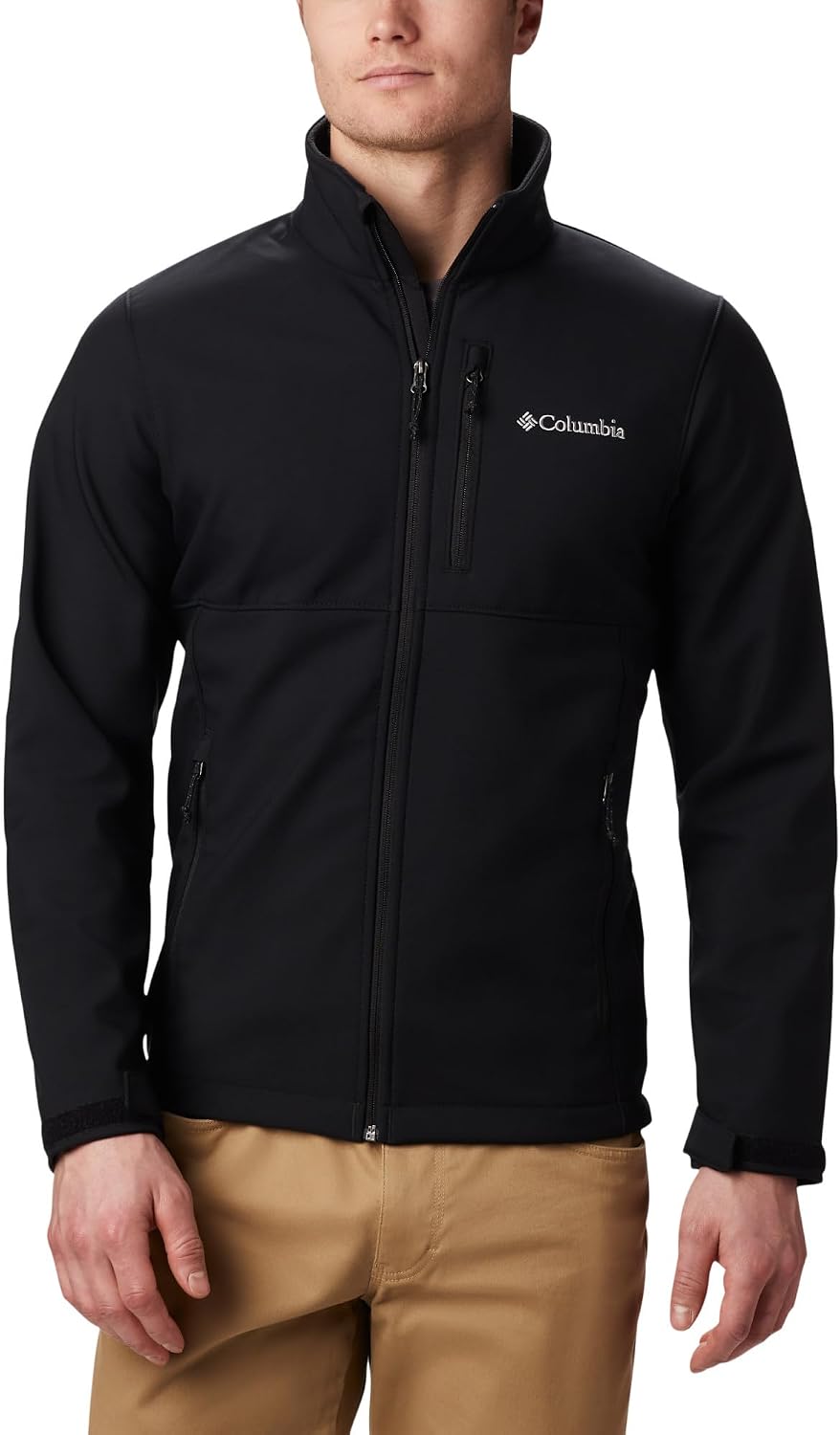
Pros
- Moves sweat far better than any waterproof membrane under sustained effort
- Bonded face fabric blocks wind without the crinkle of a hardshell
- Stretch panels do not fight you on a scramble
- Warm enough alone on a cold dry day, no midlayer needed
Cons
- Water resistant only, it soaks through in steady rain
- Does not compress small, it rides on your body not in your pack
- Runs warm on anything above about fifty degrees
Softshells solve a problem that waterproof jackets create. On a cold dry day with wind, a hardshell traps every bit of moisture you generate and you arrive at the summit wet from the inside. The Ascender blocks the wind, holds a little warmth, and lets vapour out at a rate no membrane can match.
The rule is simple: this is the jacket for cold and dry. The moment rain becomes likely, it is the wrong tool and you want the PreCip or the Watertight II. Central Oregon and the high desert in winter are exactly its conditions.
Column’s bonded construction here is noticeably better finished than the budget softshells further down. You are paying for the face fabric and the stitching, and both hold up.
| Fabric | Bonded polyester softshell |
|---|---|
| Membrane | None, water resistant finish |
| Waterproofing | Water resistant only |
| Venting | Inherent fabric breathability |
| Hood | No hood |
| Packability | Does not compress well |
| Pockets | 2 zippered hand |
| Weight | About 21 oz, size M |
| Fit | Regular |
| Best for | Cold dry days with wind |
Best Budget Softshell: 33,000ft Fleece-Lined Rain Shell
Fleece-lined hooded shell at a third of brand-name softshell pricing
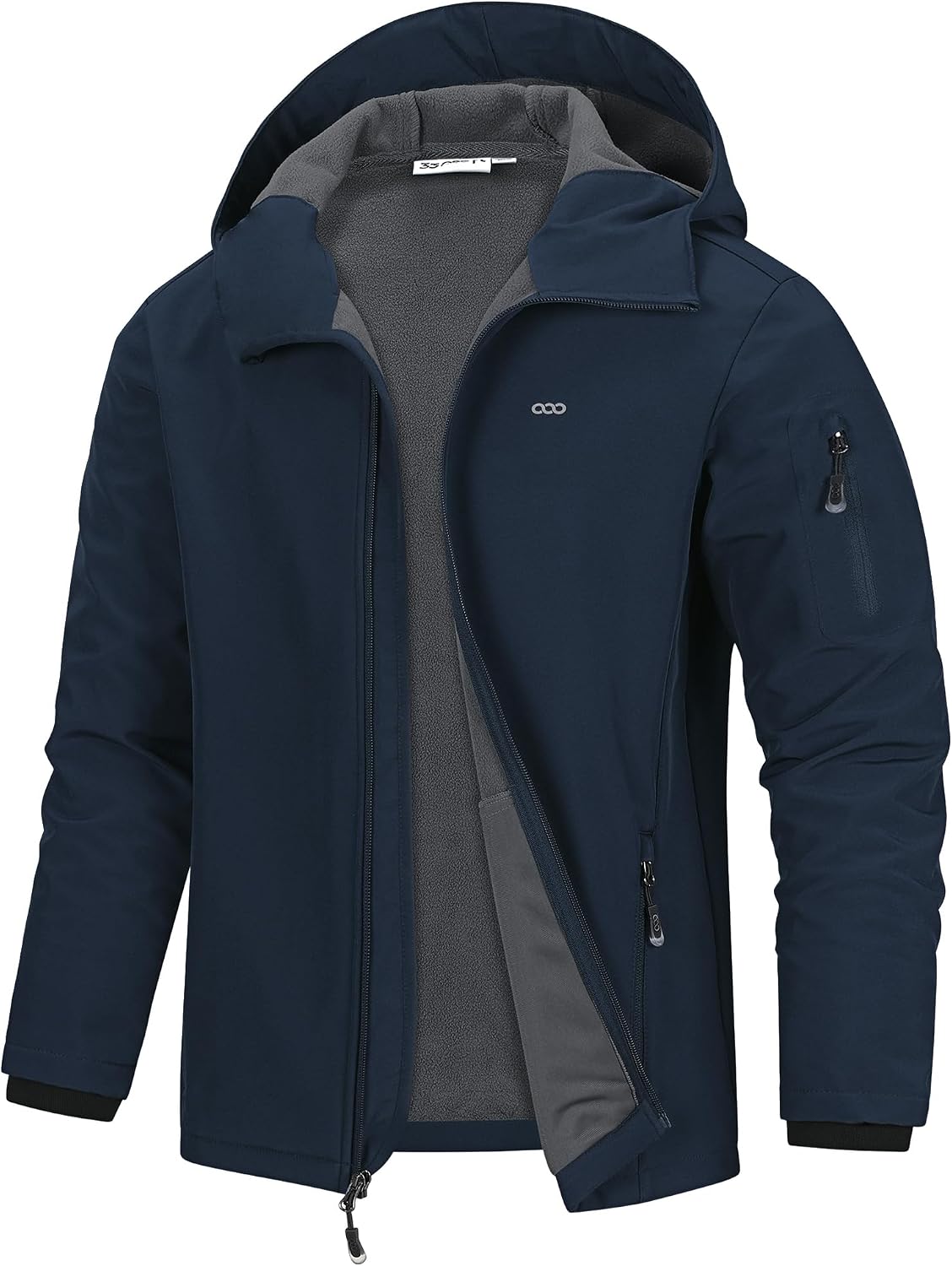
Pros
- Fleece lining removes the need for a separate midlayer on cold days
- Handles more actual rain than a true softshell thanks to the membrane backing
- Detachable hood adapts it for town use
- Adjustable cuffs and hem seal down properly
Cons
- Heavy and bulky, it does not live in a daypack
- Fleece lining makes it too warm above about fifty degrees
- Breathability suffers with the lining under real effort
This one covers two layers at once, and for a lot of hikers that is the right call. Instead of carrying a fleece and a shell you wear one jacket that does both, which simplifies a cold-weather day hike considerably. The membrane backing means it handles more water than a conventional softshell.
The cost of that integration is flexibility. You cannot shed the fleece when you warm up, so on a climb with a wide temperature swing you end up either overheating or stopping to fully remove the jacket. Separate layers still win when conditions change.
For a fixed-temperature winter day hike, or for anyone building a first cold-weather kit on a budget, it is a lot of jacket for the money.
| Fabric | Polyester face, fleece lining |
|---|---|
| Membrane | TPU backing |
| Waterproofing | Water resistant to light rain, taped main seams |
| Venting | None |
| Hood | Detachable, adjustable |
| Packability | Bulky, not packable |
| Pockets | 2 zippered hand, 1 chest |
| Weight | About 30 oz, size M |
| Fit | Regular |
| Best for | Cold weather day hiking on a budget |
Best Lightweight Windbreaker: Columbia Spire Valley Windbreaker
Minimal wind layer for dry summer ridgelines

Pros
- Almost nothing in the pack until an exposed ridge turns cold
- Omni-Shield finish sheds mist and trail grime
- Breathes far better than any waterproof option
- Cuts wind chill dramatically for how little it weighs
Cons
- Not waterproof, it wets through in sustained rain
- Newest jacket on this page with the thinnest owner feedback so far
- Thin fabric is vulnerable to snags on brushy trail
Summer alpine days in Oregon flip fast. You climb in a t-shirt, top out on an exposed ridge, and the wind takes ten degrees off in a minute. A windbreaker is the answer to that specific problem and it does not need to be waterproof to solve it.
What makes this one worth carrying is how little it costs you to have it along. It compresses into a pocket of a daypack and you forget it is there until the moment you need it. The Omni-Shield finish handles mist and drizzle, which is enough for the conditions this jacket is meant for.
This is the newest listing in our lineup and owner feedback is still building. The construction matches Columbia’s other current shells, but we will revisit it after a full season of reviews accumulates.
| Fabric | Ripstop nylon |
|---|---|
| Membrane | None, Omni-Shield finish |
| Waterproofing | Water and stain resistant |
| Venting | Fabric breathability |
| Hood | Attached, adjustable |
| Packability | Packs very small |
| Pockets | 2 zippered hand |
| Weight | About 8 oz, size M |
| Fit | Regular |
| Best for | Summer wind, exposed ridges |
Best Fleece Midlayers
Two fleeces that go under the shells above. Fleece earns its spot in a Pacific Northwest kit because it keeps warming after it gets wet, which down does not.
Best Fleece Midlayer: Columbia Steens Mountain Full Zip 2.0
The most-reviewed midlayer on Amazon, and the one under most shells
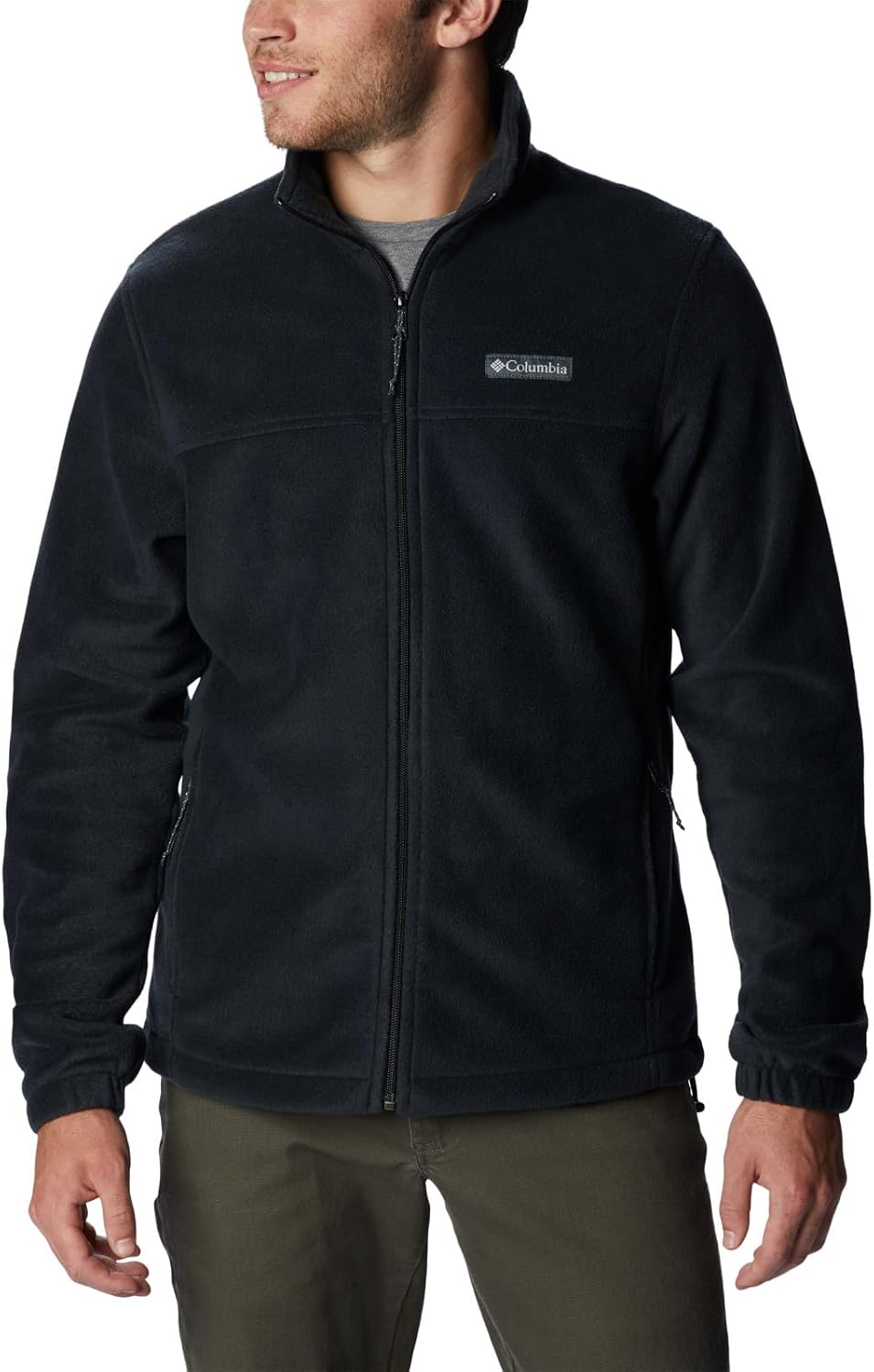
Pros
- Dries fast after a soaking, unlike cotton or down
- Zippered hand pockets keep contents secure while scrambling
- Layers under a shell without binding at the shoulders
- Holds warmth even when damp
Cons
- No wind resistance at all, it needs a shell over it in any breeze
- Bulky in a pack compared with synthetic insulation
- Pills at the cuffs and hem after a season of pack straps
Fleece has stayed on this list for one reason. It keeps working when it gets wet, and in Oregon things get wet. A damp fleece still holds warmth, dries on your body while you move, and does not clump the way wet down does. That is not glamorous but it is the single most useful property in a Pacific Northwest midlayer.
The Steens Mountain is the default because it is warm enough to matter, cheap enough to abuse, and cut to fit under a shell. The filament fleece is thick without being stiff, which is the balance most budget fleeces get wrong in one direction or the other.
Wear it under the PreCip or the Watertight II and you have a two-layer system that covers most of the Oregon hiking year. If you want the same reasoning applied to what goes on your feet, our merino versus synthetic sock comparison works through the same wet-weather logic.
| Fabric | 100% polyester MTR filament fleece |
|---|---|
| Weight class | 250 gram |
| Waterproofing | None, dries fast when wet |
| Venting | Fully breathable |
| Hood | No hood |
| Packability | Compresses, bulky |
| Pockets | 2 zippered hand |
| Weight | About 18 oz, size M |
| Fit | Regular |
| Best for | Midlayer under a shell |
Best Women’s Fleece Midlayer: Columbia Benton Springs Full Zip
Same midlayer role, cut for women, same filament fleece
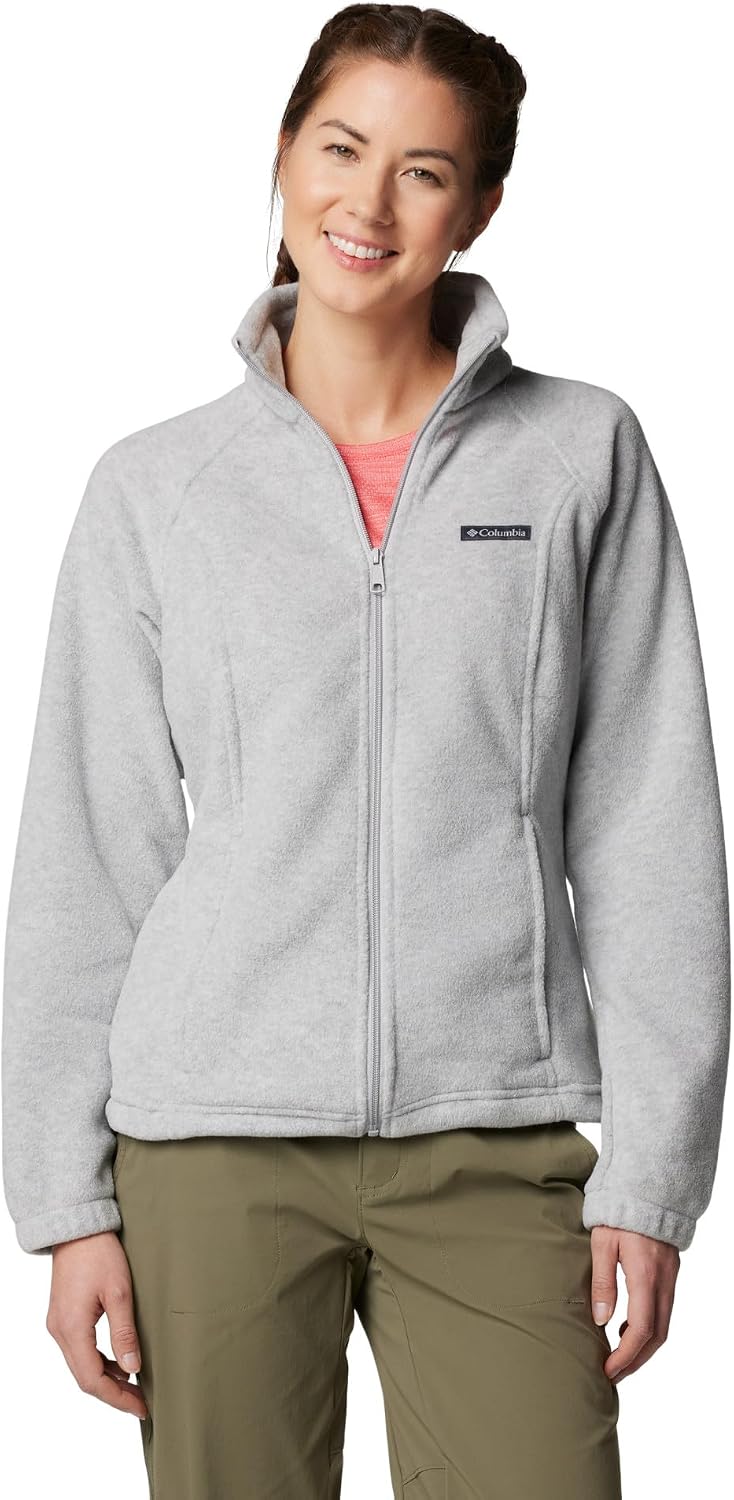
Pros
- Dries quickly and keeps warming when damp
- Slimmer through the body than the men’s cut, so it layers cleanly
- Zippered pockets rather than open handwarmers
- Runs across a very wide size range
Cons
- Sleeves run short for taller women
- No wind blocking, a shell is mandatory in any breeze
- Surface pills where a hipbelt rubs
The Benton Springs is the women’s counterpart to the Steens Mountain and it plays exactly the same role: warmth that survives getting wet, cut to disappear under a rain shell. Columbia uses the same filament fleece in both, so the performance difference is entirely about fit.
The cut is slimmer through the torso, which is what you want in a midlayer. A boxy fleece under a shell creates bunching at the shoulders and armpits that turns into chafe over a long day.
The consistent complaint is sleeve length. Anyone with a long reach should size up and accept some extra room through the body, or plan to push the sleeves anyway.
| Fabric | 100% polyester MTR filament fleece |
|---|---|
| Weight class | 250 gram |
| Waterproofing | None, dries fast when wet |
| Venting | Fully breathable |
| Hood | No hood |
| Packability | Compresses, bulky |
| Pockets | 2 zippered hand |
| Weight | About 16 oz, size M |
| Fit | Slim through body |
| Best for | Women’s midlayer under a shell |
Best Insulated and Winter Jackets
Three jackets for standing still in the cold. Synthetic fill throughout, because down and Oregon do not get along.
Best Insulated Jacket: Outdoor Ventures Packable Hooded Puffer
Synthetic insulation that compresses into its own pocket

Pros
- Hood adds real warmth for a summit stop when the wind picks up
- Stuffs into its own pocket and rides in a daypack lid
- Synthetic fill keeps insulating after it gets damp
- Water-resistant shell handles mist without a rain layer
Cons
- Baffle stitching lets cold through at the seam lines
- Not waterproof, it needs a shell in real rain
- Runs slim, layering a fleece underneath is tight
Synthetic beats down in this climate and it is not close. Down loses most of its loft the moment it gets wet, and in Oregon it will get wet. Synthetic fill keeps a usable amount of warmth when damp and dries on your body, which is the property that matters on a coastal or Cascades trail.
The hood is the reason this pick beats the cheaper hoodless puffers. Standing still at a viewpoint in wind, an insulated hood changes the experience more than an extra layer on your torso does.
Baffle seams are the weak spot, as they are on every stitch-through puffer at this price. You will feel cold lines across the chest in real wind. A shell over the top solves it.
| Fabric | Water-resistant nylon shell |
|---|---|
| Insulation | Synthetic fill |
| Waterproofing | Water resistant, not waterproof |
| Venting | None |
| Hood | Attached, insulated |
| Packability | Stuffs into own pocket |
| Pockets | 2 zippered hand |
| Weight | About 15 oz, size M |
| Fit | Slim |
| Best for | Shoulder-season warmth in a daypack |
Best 3-in-1 Jacket: CAMEL CROWN 3-in-1 Ski Jacket
Zip-out fleece under a waterproof shell, worn three ways

Pros
- Shell and liner separate, so one purchase covers three temperature ranges
- Sealed zippers and taped seams handle snow and sustained rain
- Detachable hood and powder skirt extend it into winter use
- Warm enough for snowshoeing without a separate insulation piece
Cons
- Heavy and bulky, this is a wear-it jacket not a carry-it jacket
- Breathability is poor with both layers zipped together
- Fit is boxy with the liner installed
The 3-in-1 concept solves the layering problem by making the layers part of the same purchase. Shell alone for wet fall days, fleece alone for cold dry ones, both together when winter arrives. For someone building a first cold-weather kit rather than a specialized one, that covers a lot of ground for one price.
The catch is that integrated systems are always heavier than the equivalent separates, and this one is no exception. It is not going in a daypack. It goes on your body at the trailhead and stays there.
Breathability with both layers zipped is the weakest number on this page. On a hard climb you will overheat. This is a jacket for snowshoeing, winter viewpoint walks, and cold weather where you are not generating much heat.
| Fabric | Polyester shell, fleece liner |
|---|---|
| Membrane | Waterproof breathable laminate |
| Waterproofing | Taped seams, sealed zippers |
| Venting | None |
| Hood | Detachable, adjustable |
| Packability | Bulky, not packable |
| Pockets | Multiple zippered, shell and liner |
| Weight | About 42 oz with liner |
| Fit | Regular, boxy with liner |
| Best for | Winter hiking and snowshoeing |
Full comparison table: best hiking jacket
Sort by trail score, price, weight, or customer rating. Tap the buttons to re-rank. The table scrolls horizontally on small screens.
| Jacket | Award | Type | Trail score | Weight | Rating | Price | |
|---|---|---|---|---|---|---|---|
|
Marmot PreCip Eco | Overall Hiking Jacket | Rain shell | 87 | About 13 oz, size M | 4.5 | $101.25 |
|
Columbia Watertight II | Value Rain Shell | Rain shell | 84 | About 15 oz, size M | 4.7 | $71.99 |
|
Columbia Arcadia II | Women’s Rain Jacket | Women’s | 84 | About 13 oz, size M | 4.6 | $70 |
|
The North Face Antora | Hardshell for Sustained Rain | Rain shell | 83 | About 16 oz, size M | 4.8 | $123.50 |
|
Helly Hansen Dubliner | Premium Shell | Rain shell | 83 | About 19 oz, size M | 4.6 | $140 |
|
Little Donkey Andy Rain Jacket | Women’s Packable Shell | Women’s | 81 | About 14 oz, size M | 4.4 | $49.99 |
|
OTU Lightweight Rain Jacket | Budget Hiking Jacket | Rain shell | 78 | About 11 oz, size M | 4.5 | $29.99 |
|
Columbia Spire Valley Windbreaker | Lightweight Windbreaker | Softshell | 77 | About 8 oz, size M | 4.8 | $52.50 |
|
Columbia Ascender Softshell | Softshell | Softshell | 76 | About 21 oz, size M | 4.7 | $87.50 |
|
33,000ft Fleece-Lined Rain Shell | Budget Softshell | Softshell | 74 | About 30 oz, size M | 4.6 | $47.99 |
|
Outdoor Ventures Packable Hooded Puffer | Insulated Jacket | Insulated | 73 | About 15 oz, size M | 4.5 | $50.99 |
|
Amazon Essentials Packable Puffer | Women’s Insulated Jacket | Women’s | 72 | About 12 oz, size M | 4.5 | $40.10 |
|
CAMEL CROWN 3-in-1 Ski Jacket | 3-in-1 Jacket | Insulated | 72 | About 42 oz with liner | 4.4 | $79.99 |
|
Columbia Steens Mountain Full Zip 2.0 | Fleece Midlayer | Fleece | 70 | About 18 oz, size M | 4.7 | $39.99 |
|
Columbia Benton Springs Full Zip | Women’s Fleece Midlayer | Fleece | 69 | About 16 oz, size M | 4.6 | $39.99 |
How We Test Hiking Jackets in Oregon
Every jacket on this page is judged against the four weather patterns that define Oregon hiking: Gorge rain, coastal wind, high-desert sun, and Cascades cold. Each earns a 100-point trail score across five weighted categories.
-
30%Weather
Does it still hold water at hour four
Any shell keeps rain out for twenty minutes. We care about what happens when the fabric saturates, the water repellent finish stops beading, and the face fabric wets through to the membrane. We watch shoulder seams under pack straps, the hood brim in sideways wind, and the hem when an updraft catches it. Sealed seams and hem adjustment matter as much here as the membrane itself.
-
20%Breathability
How wet you get from the inside
Most hikers soak a jacket with sweat before rain ever reaches them. We climb in every shell with a loaded pack and note how long it takes before the interior feels damp. Underarm zips count for more than laboratory vapour numbers, because a jacket you can open beats a jacket that theoretically breathes. Softshells and fleece are judged on the same axis with a higher bar.
-
15%Packability
Whether you actually bring it
A jacket left in the car protects nobody. We measure packed volume against a standard 20-litre daypack and note whether the jacket stuffs into its own pocket or needs a separate sack. Anything that eats a third of a daypack loses points, because that is the jacket people stop carrying by August.
-
20%Build
What fails first and how soon
Zipper hardware, seam tape adhesion, cuff elastic, and face fabric abrasion under pack straps. We read long-term owner feedback for the failure patterns that show up in season two and three rather than week one. Laminated membranes outlast polyurethane coatings. Taped seams outlast sprayed sealant. Branded zippers outlast unbranded ones.
-
15%Value
Cost per wet season, not sticker price
A cheap shell that delaminates after two winters costs more per season than a mid-priced one that lasts eight. We score against expected lifespan, warranty path, and how easily the water repellent finish can be restored at home. A jacket you can revive with a wash and a spray earns points a disposable one does not.
Where we tested
Sustained canyon rain and dripping basalt walls. Nine wet outings.
Salt spray and sideways wind on exposed headlands. Six trips.
Dry heat, abrasive rock, and sweat-out testing. Eight day trips.
Freezing mornings and snow-loaded shoulder season. Five outings.
Anatomy of a Hiking Jacket
Six features decide whether a shell works on a trail or only in a parking lot. Knowing what to check on the rack saves you a soaked midlayer.
- Storm hood
- Look for adjustment at the back of the head as well as around the face, plus a stiffened brim. A hood that only cinches at the front collapses in wind and blocks your peripheral vision on uneven ground.
- Face fabric and membrane
- The outer fabric carries a water repellent finish that makes rain bead. The membrane underneath is what actually blocks water. When a jacket looks soaked but you stay dry, the finish has worn off and the membrane is still working.
- Underarm pit zip
- The single most useful feature on a hiking shell and the first thing cut to save cost. Opening the underarms dumps heat without exposing your chest to rain, which is the only way to stay dry on a sustained climb.
- Hand pockets
- Check where they sit relative to a hipbelt. Pockets buried under a loaded pack belt are unusable on trail. Higher-set or chest pockets stay reachable with the pack on.
- Adjustable cuff
- Hook-and-loop tabs let you seal over a glove or open up to vent. Elastic cuffs are cheaper and simpler but give you no control, and they let cold air run up your sleeve on a descent.
- Hem drawcord
- Cinching the hem stops the updraft that soaks your midlayer from below in wind-driven rain. Jackets without one leak in exactly the conditions where you need them most.
The Layering System, and Where a Jacket Fits
Most jacket mistakes are really layering mistakes. Buying one very warm waterproof coat instead of three pieces means you have no way to adjust when the weather or your effort changes.

- Base layer
- Merino or synthetic against the skin, never cotton. Its only job is moving sweat off your body so the midlayer can do its work. Cotton holds moisture against you and turns a mild day into a cold one.
- Midlayer
- Fleece or synthetic insulation. This is the piece you add and remove as effort and temperature change, which is why buying it separately beats buying an insulated shell.
- Shell
- The waterproof or windproof outer layer. It adds almost no warmth on its own and it is not supposed to. It exists to stop rain and wind from stripping the heat out of the two layers underneath.
- Why three pieces beat one
- A single heavy waterproof coat gives you one temperature setting. Three pieces give you at least four, which matters on a climb where you start cold and finish hot.
How to Choose a Hiking Jacket
Five decisions narrow the field from 180 Amazon listings to the right jacket for your trails. Work through them in order.
1. Decide which layer you are actually buying
A shell blocks weather. A midlayer holds warmth. An insulated jacket does both badly and neither perfectly. Most people who feel underdressed on trail already own a shell and are missing a midlayer, not the other way round. Work out which piece of the three-layer system is missing before you shop, because buying a second shell will not fix a warmth problem.
2. Waterproof or water resistant, and what the ratings mean
Water resistant means a coating that sheds light moisture until it saturates. Waterproof means a membrane plus sealed seams. In Oregon that difference decides whether a hike ends early. The millimetre rating below tells you how much water the fabric holds back, and the gram rating tells you how much vapour it lets out. High numbers on one side and low on the other means a jacket that keeps rain out and sweat in.
3. Check for venting before you check the brand
Underarm zips are the difference between arriving at a summit dry and arriving soaked from the inside. Two shells with identical fabric ratings will perform very differently on a climb if only one of them opens up. Manufacturers cut pit zips first when trimming cost, so a cheaper jacket with venting often outperforms a pricier one without it for anyone who hikes uphill.
4. Fit it over the layer you will actually wear
Try the jacket on over a fleece with the front zipped, then raise both arms overhead. The hem should stay below your waist and the cuffs should stay past your wrists. Turn your head with the hood up and check that it moves with you. A shell that fits perfectly over a t-shirt and binds over a midlayer is the wrong size, and this is the most common sizing mistake in the category.
5. Plan for maintenance, not replacement
When water stops beading on the outside, the repellent finish has worn off, not the membrane. Washing with a technical cleaner and reapplying a repellent treatment restores most of the original performance, and doing this once a season roughly doubles the useful life of a good shell. The same logic applies to boots, which is covered in our boot waterproofing guide.
One jacket for all-round Oregon hiking
Marmot PreCip Eco. Vented, packable, and priced below the premium tier while still doing everything a shell needs to.
First jacket on a tight budget
OTU Lightweight Rain Jacket for emergencies, or the Columbia Watertight II if you can stretch to a real membrane.
Cold and dry days with wind
Columbia Ascender Softshell. Breathes far better than a hardshell when there is no rain to stop.
Winter hiking and snowshoeing
CAMEL CROWN 3-in-1 for a single purchase, or a fleece midlayer under a hardshell for better temperature control.
Hiking Jacket FAQ
The questions buyers ask before committing to a jacket, answered without the marketing language.
How do I choose a hiking jacket?
Start with the weather you actually hike in rather than the worst weather you can imagine. For Oregon that usually means a waterproof shell first, because rain is the condition that ends days. Then decide whether you need venting: if you climb with a pack on, underarm zips matter more than a marginally better waterproof rating. Add a fleece or synthetic midlayer separately rather than buying an insulated shell, because separate layers let you adjust as you warm up. Fit last, and always check it over the midlayer you plan to wear underneath.
What makes a good hiking jacket?
Four things, roughly in order. Sealed seams, because a waterproof fabric with unsealed stitching leaks at every needle hole. A hood that adjusts and holds its shape, so you can still see sideways in wind. A hem drawcord, which stops the updraft that soaks your midlayer from below. And venting, either underarm zips or a genuinely breathable fabric, because most hikers get wet from sweat before they get wet from rain.
Is a rain jacket good for hiking?
Yes, and for Pacific Northwest hiking it is usually the single most useful jacket you own. The caveat is that a rain jacket is a shell, not a warm layer. It blocks water and wind and does almost nothing for warmth on its own. The system that works is a base layer, a fleece or synthetic midlayer, and the rain shell over the top, adjusted by adding or removing the middle piece.
What is the difference between a hardshell and a softshell?
A hardshell has a waterproof membrane and sealed seams, so it stops rain completely but traps moisture you generate. A softshell has no membrane, so it sheds light moisture and blocks wind while letting sweat vapour escape at a much higher rate. Hardshells win in rain. Softshells win in cold, dry, windy conditions where you are working hard. Most hikers eventually own one of each rather than trying to find one jacket that covers both.
What do waterproof ratings actually mean?
The millimetre number is a hydrostatic head measurement: how tall a column of water the fabric holds before it leaks through. Anything at 5,000 mm handles light rain, 10,000 mm covers ordinary sustained rain, and 20,000 mm and above is built for storms and snow. The breathability number, given in grams, measures how much vapour passes through the fabric in a day. A high waterproof rating with a low breathability number is a jacket that will soak you from the inside on a climb.
Should I buy a down or synthetic insulated hiking jacket?
Synthetic, for hiking in Oregon. Down has a better warmth-to-weight ratio on paper, but it collapses when it gets wet and takes a long time to dry. Synthetic fill retains a usable share of its warmth when damp and dries while you wear it. Down makes sense for dry cold, high-desert winter, or as a camp layer that stays inside a dry bag. For a coastal or Cascades day hike, synthetic is the safer choice.
How do I restore the water repellency on a hiking jacket?
When water stops beading and starts soaking into the outer fabric, the durable water repellent finish has worn down rather than the membrane failing. Wash the jacket with a technical cleaner rather than regular detergent, which leaves residue that blocks the finish. Then apply a spray-on or wash-in repellent treatment made for waterproof breathable fabrics, and tumble dry on low or press with a warm iron under a cloth, because most treatments need heat to bond. Doing this once or twice a season keeps a good shell working for years.
How should a hiking jacket fit?
Loose enough to fit a fleece underneath with the front zipped, and no looser. Raise both arms overhead: the hem should not lift above your waist and the cuffs should not slide past your wrists. Turn your head with the hood up: it should move with you rather than blocking your peripheral vision. Sleeves should reach the base of your thumb, since they ride up when you grip trekking poles.
Can I wear a regular rain jacket for hiking?
For flat, short walks, yes. The problem shows up on climbs. Fashion rain jackets are usually built without venting, with a hood that will not adjust, and with a cut that binds when you reach. All three matter once you are working hard with a pack on. If you already own one and hike casually, use it until it annoys you, then buy a hiking-specific shell.
What jacket do I need for winter hiking in Oregon?
A three-piece system rather than one heavy coat. A synthetic or fleece midlayer for warmth, a waterproof shell over the top for wind and precipitation, and an insulated layer you put on when you stop moving. A 3-in-1 jacket bundles this into one purchase and works well for snowshoeing or slow winter walks. For anything with sustained climbing, separates give you far better temperature control.