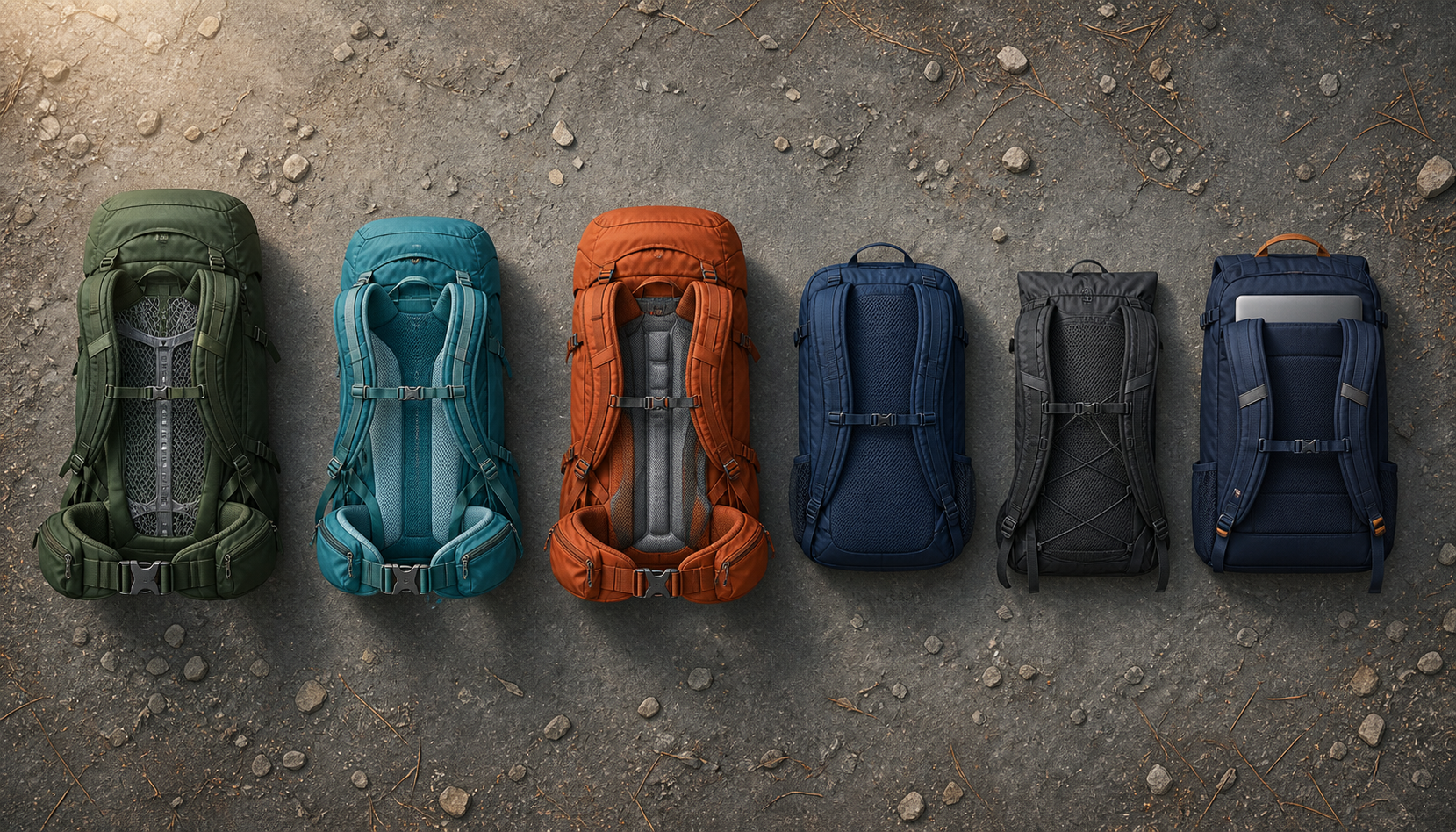
Best Day Hiking Backpack 2026
The best day hiking backpack depends on how far you hike, what conditions you hike in, and whether fit or features matter more to you. A ventilated back panel changes the experience on a warm summer day. A proper hipbelt changes the experience on any hike over 5 miles. The right capacity means not carrying excess weight or running out of room. This roundup covers 10 picks across four sections: men’s day packs, women’s day packs, lightweight options, and budget picks.
Skip to men’s picks, women’s picks, lightweight picks, budget picks, or the full comparison table. For backpacking packs see best hiking backpack.
Quick picks




Full reviews: best day hiking backpack picks
Best men’s day hiking backpacks
The three men’s picks span the ventilated premium tier, the most-validated classic day pack, and the best value option from a premier German brand. All three are men’s-specific fits with hipbelt load transfer.
Osprey Stratos 24L Men’s Hiking Backpack
- 4.9 stars – highest-rated men’s pick in this roundup
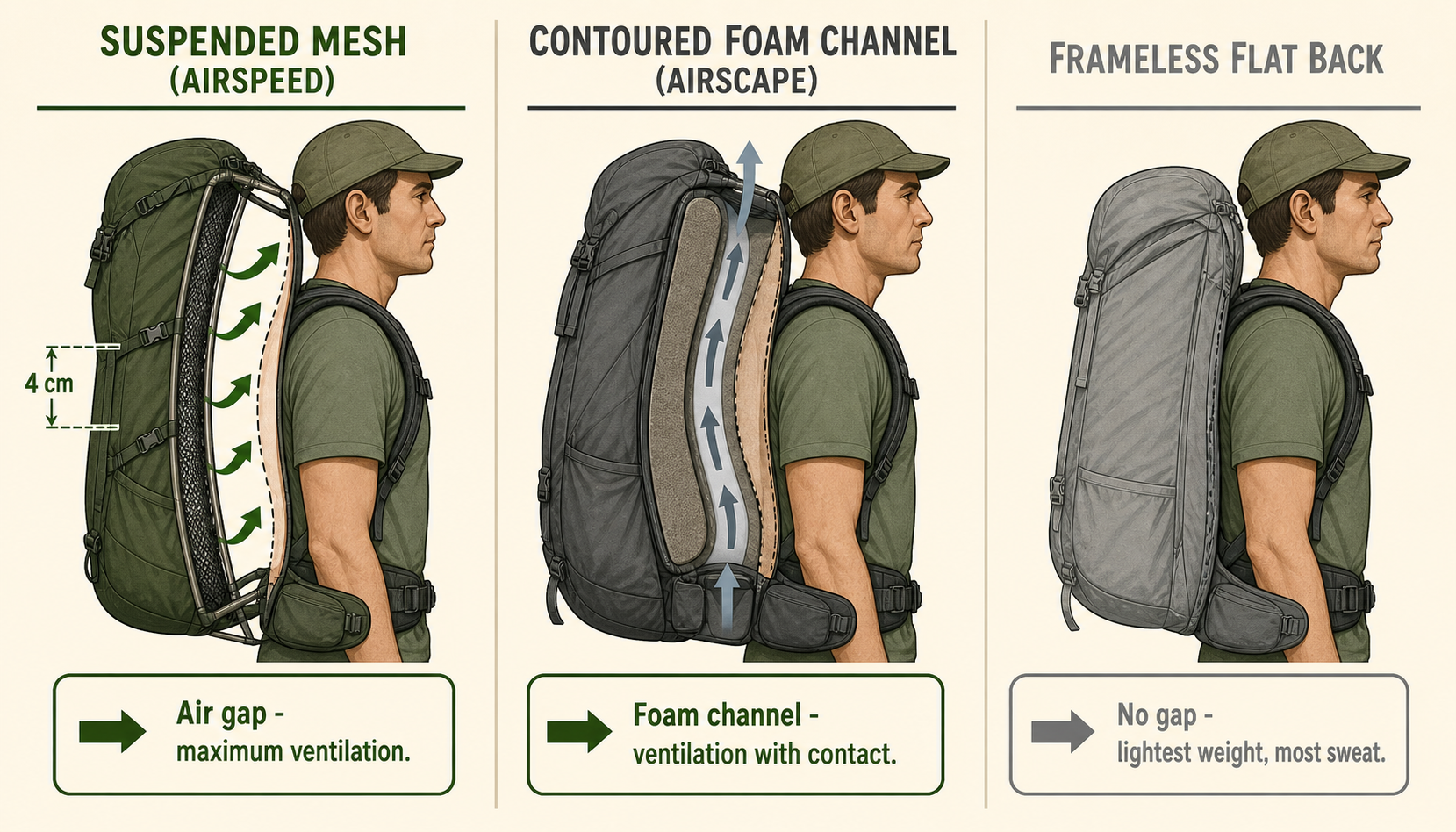
- AirSpeed suspended mesh back panel creates an air channel between pack and back
- Hipbelt transfers load off shoulders on longer day hikes
- LidLock helmet attachment doubles as a daypack cinch for scramble sections
- Integrated rain cover and trekking pole attachments for full trail readiness
- AirSpeed panel adds some bulk compared to flat-back ultralight packs
- Low review count as a newer Osprey model
- Higher price than the Talon and budget picks in this roundup
The Stratos 24L is built around one specific problem: back sweat on warm summer day hikes. The AirSpeed suspended mesh panel holds the pack body away from your back entirely, creating a channel of moving air that makes a real difference on exposed ridge trails and dusty fire roads where the sun hits your pack all day. If you have ever peeled a standard pack off your back after a long summer hike and found your shirt soaked through underneath, this is what fixes that.
The 24L capacity is intentional. It fits a 3L reservoir, a full day of food, a puffy, a rain shell, first aid, and a layer of trekking poles on the outside without the pack looking or feeling overfull. The LidLock attachment at the top and the integrated rain cover underneath remove two of the most common afterthought purchases when outfitting a day pack.
This is the right pack for warm-weather hikers who prioritize back comfort on longer days and are willing to pay for engineering that addresses it directly. It is not the right choice for technical scrambles where a lower-profile pack stays out of your way better, or for hikers who primarily hike in cool conditions where back ventilation is not a comfort priority.
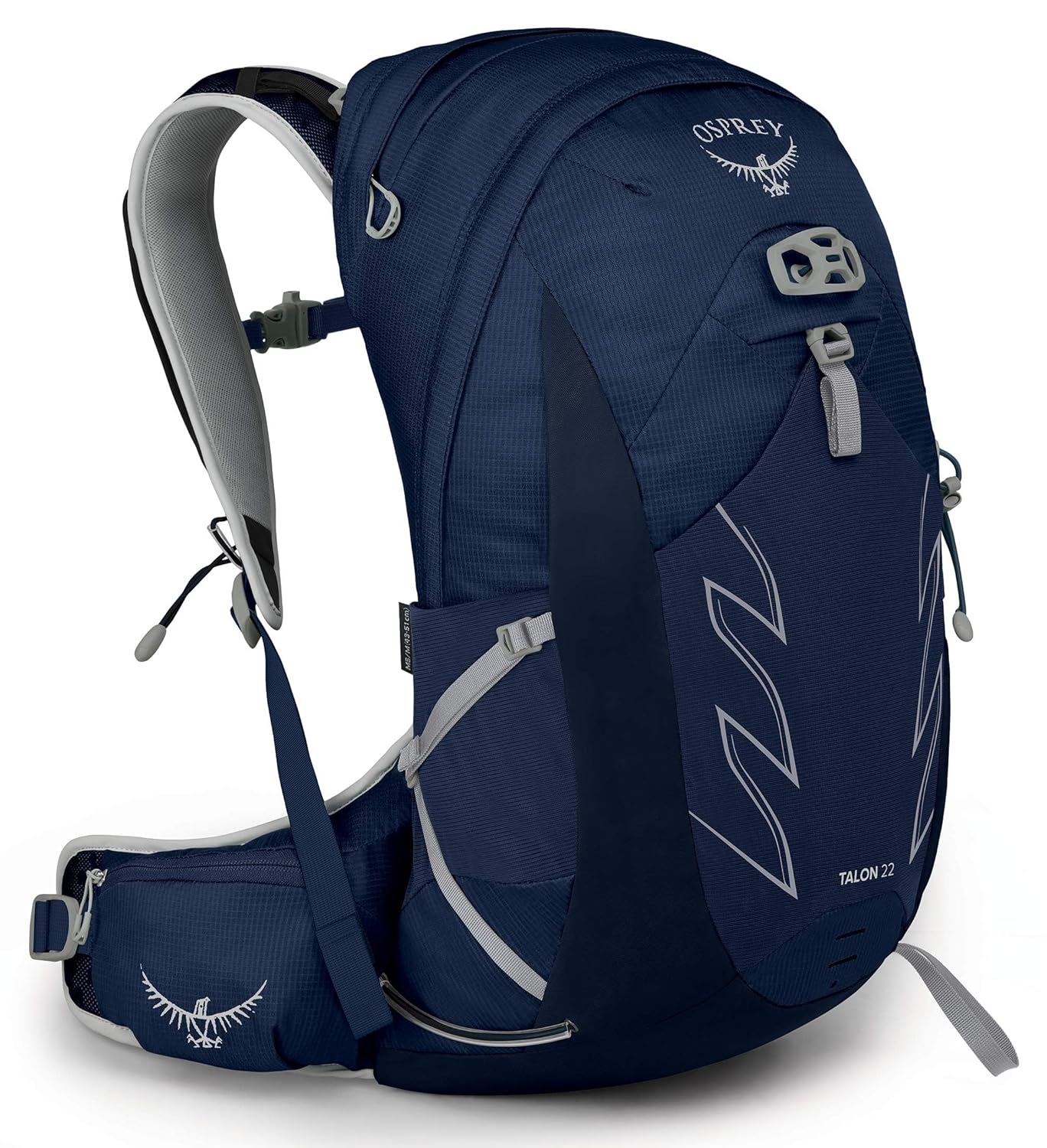
Osprey Talon 22L Men’s Hiking Backpack
- 1,600 reviews at 4.7 stars – most validated men’s pick in this roundup
- AirScape contoured foam back panel with channel for ventilation
- Integrated hipbelt harness designed for technical terrain movement
- Stow-on-the-go trekking pole attachment system for hands-free terrain
- Stretch mesh front pocket for quick-access gear without removing pack
- AirScape foam back panel less ventilated than Stratos AirSpeed system
- 22L slightly smaller than Stratos 24L for longer or colder days
- No integrated rain cover included
The Talon 22L fits the way a well-worn piece of gear fits after years of use, except it fits that way from the first mile. The AirScape back panel uses contoured foam rather than a suspended mesh system, which means it maintains contact with your back while still providing a ventilation channel. That contact is actually useful: it keeps the pack stable during technical movement, making the Talon the right choice when you are moving quickly, scrambling, or covering ground that requires the pack to move with you rather than swaying behind you.
The stow-on-the-go trekking pole system deserves mention because it solves a specific problem on mixed terrain routes. When the trail transitions from established path to hands-required scramble, you can slot the poles into the front strap loop and keep moving without stopping to pull the pack off and rearrange. Over a full day on a route that mixes trail and technical sections, that convenience adds up.
Who this is for: hikers who move at a faster pace on varied terrain and want a pack that moves with them rather than a pack optimized for stationary ventilation. Who it is not for: hikers whose primary concern is back sweat on slow sunny days, where the Stratos AirSpeed system is the better answer.
Deuter Speed Lite 21L Hiking Backpack
- Deuter German engineering at $85 – significantly below the Osprey premium tier
- Aircomfort back system balances ventilation with frame support
- VariFlex hip fins move with your stride rather than staying rigid
- Light aluminum stay frame transfers load without full backpacking pack weight
- 430 reviews validates consistent quality across the lower price point
- 4.6 stars slightly below the Osprey picks at the same use case
- Less feature-rich than the Talon or Stratos at a lower price
- Smaller hip belt than full-suspension systems on premium picks
Deuter has been refining hiking pack construction since 1898, and the Speed Lite 21L reflects that accumulated knowledge without the premium pricing of its top-tier packs. The Aircomfort back system is not a marketing distinction. The foam channel creates real airflow that separates it from the flat-back daypack category, even if it does not match the air gap of Osprey’s suspended mesh systems. For hikers who do not hike in conditions extreme enough to justify the top-tier price premium, this is the honest answer.
The VariFlex hip fins move with your pelvis as you walk rather than staying rigid. On flatter routes this is barely noticeable. On steep terrain with significant stride length variation, rigid hip fins create pressure points that the VariFlex system avoids. It is a feature that reveals itself gradually across a long day rather than one you notice immediately on first use.
Who this is for: regular day hikers who want German manufacturing quality without paying the premium tier price, particularly those doing moderate routes in temperate conditions where Aircomfort ventilation is sufficient. Who it is not for: hikers doing long summer days in hot conditions where maximum back ventilation is worth the additional investment in the Stratos or Sirrus.
Best women’s day hiking backpacks
The three women’s picks cover the best overall ventilated pack, the best full-suspension hipbelt system, and the best value women’s-specific fit. All use SL or women’s-specific geometry designed for female torso proportions.
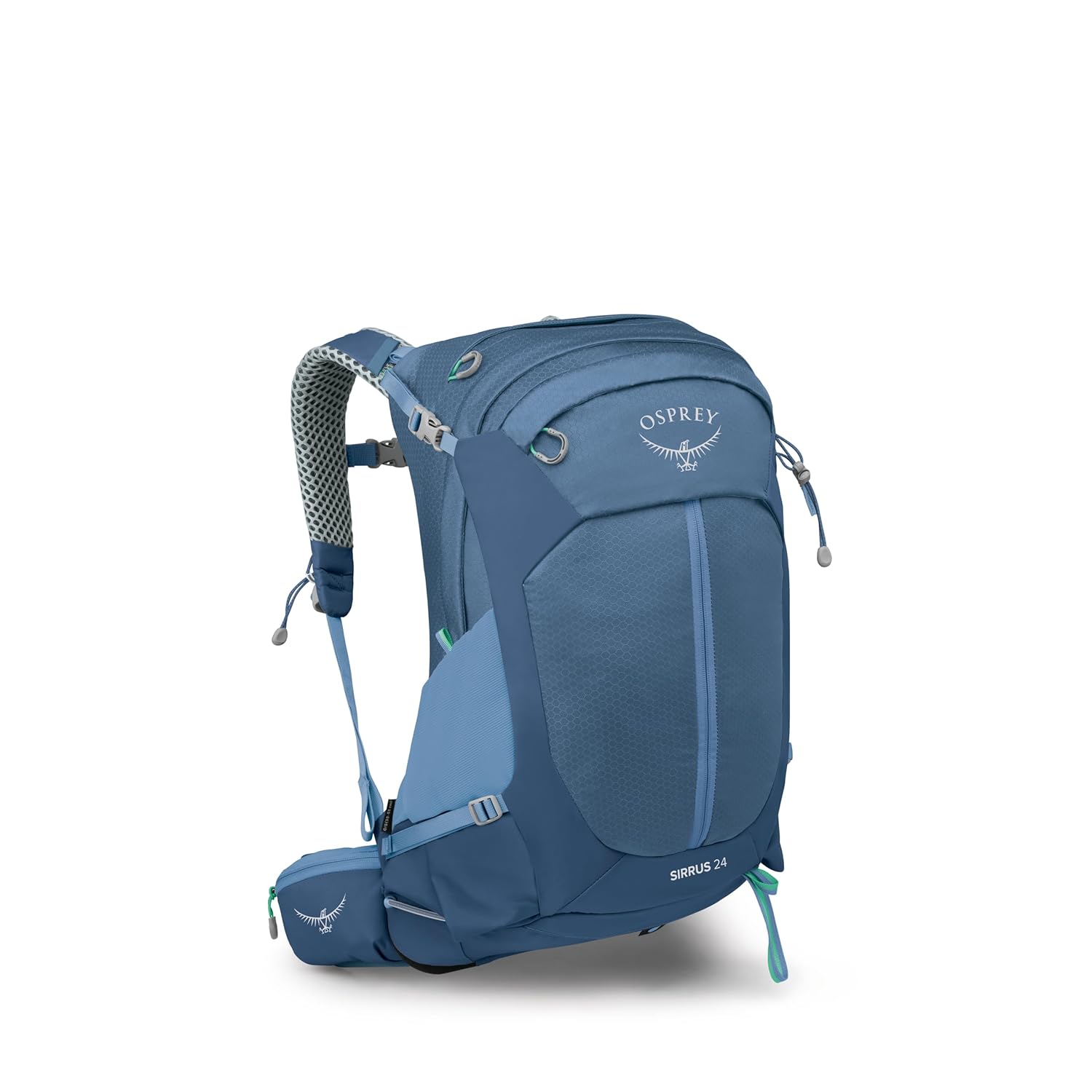
Osprey Sirrus 24L Women’s Hiking Backpack
- 4.9 stars ties the Stratos for highest rating in this roundup
- AirSpeed suspended mesh back panel – same system as the men’s Stratos
- Women’s-specific geometry: shorter torso range, shaped hipbelt for women’s hips
- 24L capacity covers a full day out with water, food, layers, and safety kit
- Integrated rain cover and trekking pole attachment for complete trail readiness
- Low review count as a newer model – less field validation than Tempest 20L
- Premium price reflects women’s-specific engineering and AirSpeed system
- AirSpeed panel adds some volume compared to flat-back lightweight packs
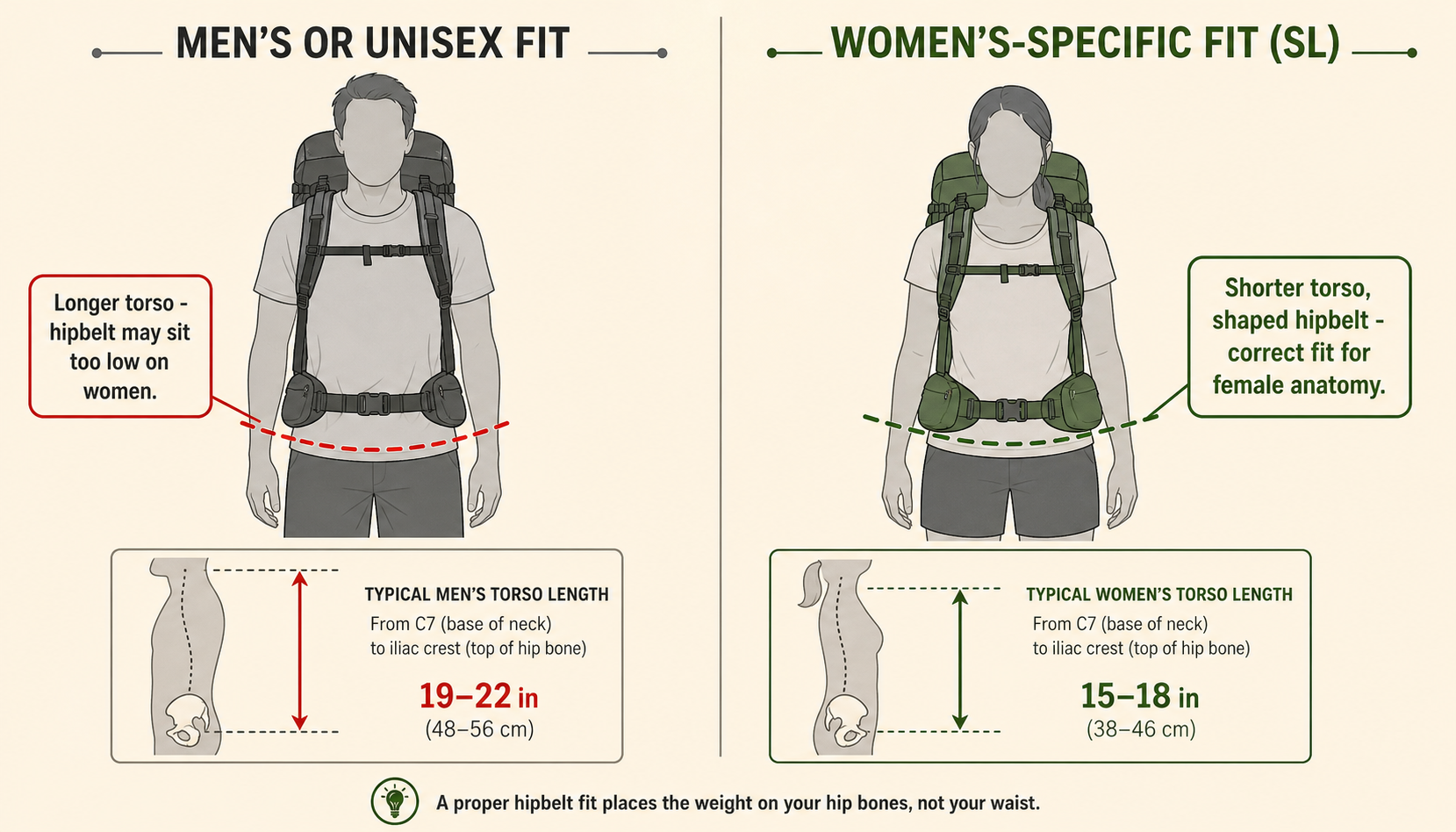
The Sirrus 24L is the direct women’s answer to the men’s Stratos, sharing the same AirSpeed suspended mesh back panel that creates a physical air gap between pack and back. The difference is in the geometry: shorter torso range calibrated for female proportions, a hipbelt shaped for women’s hips rather than borrowed from a unisex design. That geometry difference matters most at the hipbelt. A unisex pack’s hipbelt typically lands too low on women’s hip bones, which means the load transfer system is not actually engaging the skeleton correctly. The Sirrus positions it correctly from the start.
The 24L volume gives meaningful room beyond the bare minimum. Bringing a heavier insulation layer for a summit, an extra liter of water on a hot day, or a full first aid kit does not require choosing what to leave behind. The integrated rain cover at the bottom is specifically useful in mountain terrain where afternoon weather changes without warning and you do not want to stop and dig for a separately packed cover.
Who this is for: women who hike in warm conditions and want the ventilation advantage of a suspended mesh back panel in a pack that is designed for their body rather than adapted from a unisex template. Who it is not for: women who primarily hike in cool conditions where ventilation is not a priority, or who want a lighter, more packable option for shorter outings.
Osprey Tempest 20L Women’s Hiking Backpack
- Full women’s-specific hipbelt suspension transfers load off shoulders completely
- 4.8 stars across 65 reviews validates consistent performance
- AirScape contoured back panel provides both ventilation and contact-point support
- Stow-on-the-go trekking pole attachment same as men’s Talon
- Women’s torso range and hipbelt shape designed for female anatomy
- 20L is slightly smaller than the Sirrus 24L for longer or layered days
- AirScape foam back less ventilated than Sirrus AirSpeed suspended mesh
- Highest price in the women’s section at $210
The Tempest 20L approaches day hiking from a different angle than the Sirrus. Where the Sirrus prioritizes back ventilation, the Tempest prioritizes suspension. The hipbelt is a full women’s-specific load-transfer system, not a stabilizer strap but an actual suspension component designed to move a meaningful share of pack weight from shoulders to hips. For women who have experienced shoulder fatigue or numbness on longer hikes, proper load transfer is frequently the root fix.
The AirScape contoured foam back panel provides some ventilation through its central channel while maintaining the contact points that the suspension system needs to function. This is the right trade for hikers who prioritize carrying comfort over distance above maximum airflow. The smaller 20L capacity keeps the pack light and manageable, right for a focused day out without the extra volume of the Sirrus.
Who this is for: women who log longer mileage days or have found that shoulder fatigue limits their range, and who want a women’s-specific suspension system rather than a unisex pack adapted for female use. Who it is not for: women whose primary hiking problem is back sweat rather than shoulder load. The Sirrus AirSpeed system addresses that problem more directly.
Deuter AC Lite 22L SL Women’s Hiking Backpack
- SL (Slim Line) geometry designed for shorter female torso and shaped hipbelt
- Aircomfort back system with ventilation channel at $90 below the Osprey women’s picks
- 103 reviews validates consistent performance across diverse women hikers
- Deuter German manufacturing standards at a mid-range price point
- 22L capacity covers a full day out without excess volume
- Hipbelt system less comprehensive than Osprey Tempest’s full suspension
- Aircomfort back less ventilated than Osprey’s AirSpeed suspended mesh
- Less feature-rich than the Sirrus and Tempest at a lower price
The AC Lite 22 SL addresses the fit problem that most women encounter with unisex packs without requiring the full investment of the Osprey women’s line. The SL geometry uses a shorter back length that positions the shoulder straps and hipbelt correctly for female proportions. The hipbelt shape is designed for women’s hip bones rather than being a scaled-down men’s design. These are not cosmetic differences. They change where the pack makes contact with your body and how the load sits.
The Aircomfort back system provides real ventilation through a foam channel construction. It is not the suspended air gap of Osprey’s top-tier systems, but it is meaningfully better than a flat pack pressing against your back throughout a long day. At this price point, the ventilation, the German manufacturing quality, and the women’s-specific geometry represent genuine value.
Who this is for: women who want a properly fitting women’s-specific pack with real back ventilation and Deuter build quality, without the premium investment of the Osprey Sirrus or Tempest. A good first quality hiking pack or an upgrade from a generic unisex daypack. Who it is not for: women doing long summer days where maximum ventilation is the priority, or those who need the full suspension of the Tempest for heavy loads over distance.
Best lightweight day hiking backpacks
Lightweight picks work best for shorter hikes under 6 miles with minimal gear loads. Both are frameless or minimal-frame designs that prioritize low weight over full suspension systems.
Osprey Daylite Commuter Backpack

- 4.8 stars across 1,600 reviews – most validated lightweight pick in this roundup
- Osprey quality at $70 – the most accessible Osprey price point here
- Versatile enough for trail and non-trail use without looking like a hiking pack
- Lightweight frameless construction packs flat for travel
- Hydration compatible and trekking pole attachment for trail use
- No hipbelt for load transfer on longer or heavier day hikes
- Frameless back less comfortable than structured packs for heavier loads
- Not the right choice for technical terrain with a full day’s gear load
The Daylite Commuter earns its place in this roundup not through hiking-specific engineering, but through honesty about what most day hikers actually need. For a trail under 8 miles on a moderate day, you do not need a suspended mesh back panel or a full hipbelt suspension system. You need a quality pack that holds your water, your food, a layer, and your phone, and does not fall apart after a season of use. The Daylite covers that use case at the lowest Osprey price in this roundup.
The frameless construction packs flat, which makes it practical for travel, car camping where you want a pack for side trips, and any situation where the pack needs to store compactly when not in use. The hydration compatibility and trekking pole attachment make it trail-capable without making it look like a hiking-specific piece of gear, which matters for anyone who uses the same bag for trail and non-trail purposes.
Who this is for: occasional day hikers, anyone who wants Osprey build quality at a lower entry price, hikers doing shorter routes where suspension engineering is not necessary, and anyone who wants a single bag that works on trail and off it. Who it is not for: anyone regularly hiking over 8 miles or carrying heavier loads where the lack of a hipbelt load-transfer system becomes a meaningful comfort limitation.
Deuter Speed Lite 13L Hiking Day Backpack

- Smallest capacity in this roundup – right for summit approaches and short hikes
- Deuter Aircomfort mesh back keeps airflow even on a frameless pack
- Under $70 for Deuter German manufacturing quality
- 289 reviews at 4.7 stars validates consistent performance for minimalist use
- Hydration compatible for packs that need nothing more than water and essentials
- 13L too small for full-day hikes with layers, food, and safety kit
- No hipbelt or frame – designed for light loads only
- Not appropriate for anything more than a 4-6 hour hike with minimal gear
The Speed Lite 13L occupies a specific niche that larger packs cannot fill: the summit approach, the trail run, the early morning ridge hike where the objective is to move fast and carry only what you genuinely need. At 13 liters, the honest pack list is a 1.5L soft flask or small reservoir, one snack, a lightweight shell, sunscreen, and your phone. That is the right list for a 3-4 hour objective-focused outing where every gram compounds.
Deuter’s Aircomfort mesh back panel keeps some airflow moving even on a frameless construction, which matters on high-output efforts like trail running where body heat generation is high and pack contact creates friction and sweat. The minimalist construction keeps the pack from feeling like a burden on a summit push where the pack is a means to an end rather than a gear carrier for the day.
Who this is for: trail runners, fastpackers, hikers doing focused summit approaches or short high-output objectives where minimal carry weight is the primary goal. Who it is not for: anyone doing a full day out with more than a few hours of food and water, or any hike where weather variability requires carrying extra layers — 13 liters fills up fast when conditions require a complete kit.
Best budget day hiking backpacks
The two budget picks offer quality brand manufacturing at accessible prices. Both work as unisex options suitable for occasional and regular day hikers.
Osprey Sportlite 20L Hiking Backpack
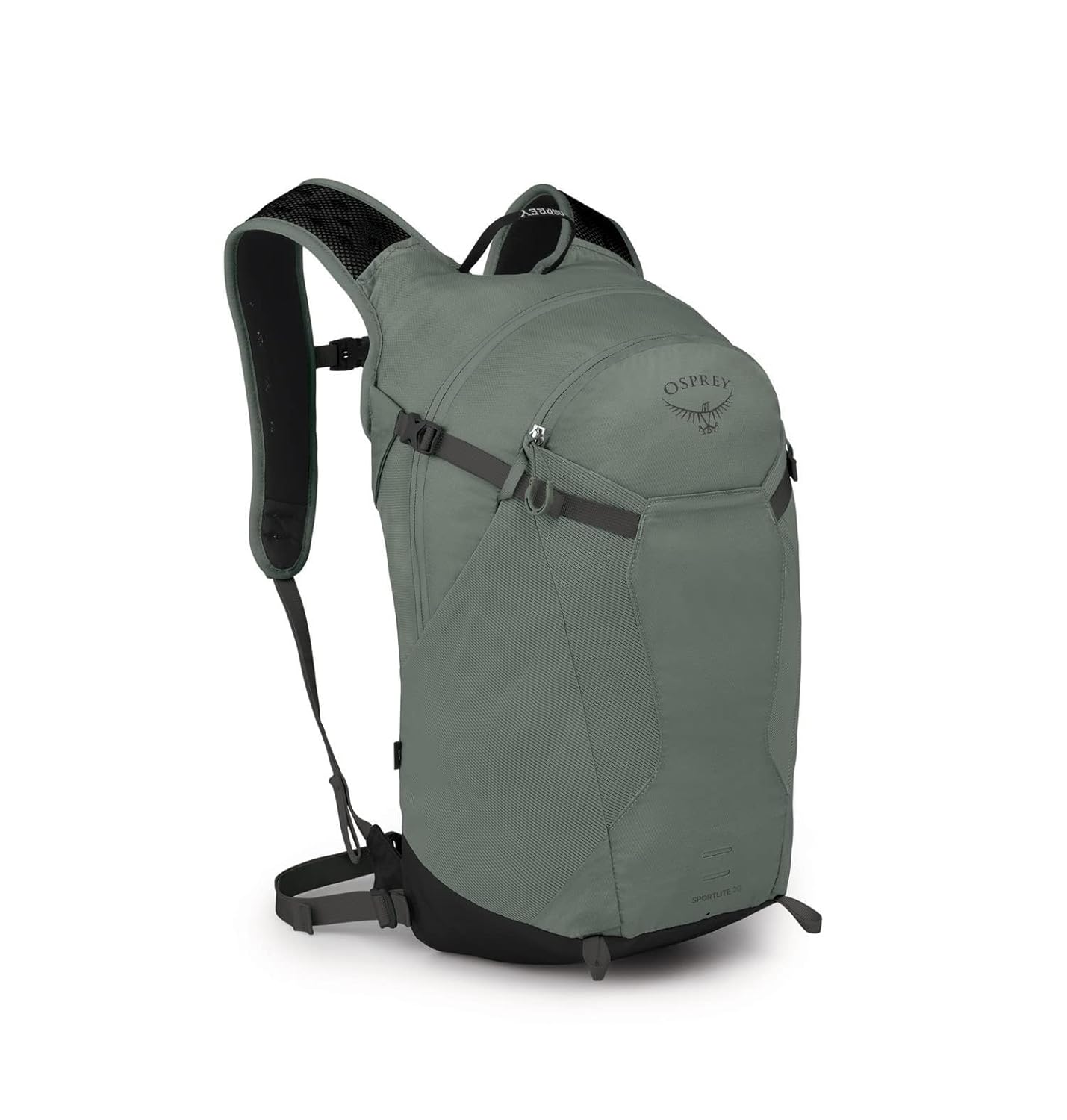
- Lowest Osprey price in this roundup at $64
- LightWire frame adds structure without the weight of full suspension systems
- 4.7 stars across 327 reviews validates consistent performance at the budget tier
- Hydration compatible and trekking pole attachment for trail readiness
- Osprey manufacturing quality at a price competitive with generic budget brands
- No hipbelt for load transfer on longer or heavier days
- LightWire frame less supportive than full aluminum stay systems
- Fewer organizational features than premium picks at this size
The Sportlite 20L is Osprey’s answer to a straightforward question: what is the least you can spend and still get a pack that belongs on a trail? The LightWire frame adds enough structure to hold the pack off your back for some ventilation without the complexity or weight of a full aluminum stay suspension system. The result is a pack that behaves better than a frameless bag for day hiking without the cost of the Talon or Stratos above it.
For hikers who are still building out their gear kit, the Sportlite removes the need to compromise on pack quality to stay within budget. It is also a practical choice for a second pack: a lighter option for shorter outings when you do not want to bring the full-suspension pack, or for equipping a hiking partner who does not own a trail-specific pack yet.
Who this is for: first-time hikers investing in their first proper trail pack, occasional hikers who do not need the full feature set of the premium tier, and anyone looking for a quality-brand entry point before committing to a larger investment. Who it is not for: regular hikers doing distances over 8 miles or carrying loads that would benefit from the hipbelt load transfer and ventilation engineering of the Talon or Stratos.
Fjällräven Skule 28 Backpack
- 28L capacity is the largest in this roundup – fits a full day plus extras
- 630 reviews at 4.7 stars validates consistent real-world performance
- Fjällräven Swedish design and manufacturing heritage since 1960
- Trail-to-town versatility – looks as appropriate in the city as on the trail
- Laptop sleeve makes it practical for hybrid work-and-hike days
- No hipbelt for load transfer on longer distance day hikes
- Heavier than ultralight picks at this capacity
- Less hiking-specific feature set than Osprey and Deuter picks
The Skule 28 takes a fundamentally different approach from every other pack in this roundup. Where Osprey and Deuter optimize for back ventilation and suspension engineering, Fjallraven optimizes for durability, versatility, and carrying enough for a full day without being obviously a hiking pack. The bungee cord front panel holds a shell or poles without committing to a pocket. The laptop sleeve makes it practical for commuting or travel days that end on a trail. The 28L volume is the largest in this roundup.
Swedish outdoor heritage since 1960 shows in the construction: stress points are reinforced, zippers run smooth after extended use, and the fabric maintains its structure rather than developing the soft spots that cheaper packs show after a season. For hikers who want a pack that lasts years rather than one or two seasons, the construction quality reflects long-term value even at a higher initial price.
Who this is for: hikers who want a pack that covers trail and non-trail use without carrying two bags, anyone who values durability and a longer product lifespan over technical hiking features, and hikers doing full days where 28L volume is the practical advantage. Who it is not for: hikers who prioritize back ventilation and hipbelt load transfer for longer technical routes, where the Osprey and Deuter picks are better matched to the demand.
Full comparison table: best day hiking backpack
| Pack | Best for | Back system | Price | Rating |
|---|---|---|---|---|
| Men’s day hiking backpacks | ||||
| Osprey Stratos 24L Men’s Hiking Backpack | Best Men’s Overall | AirSpeed back | $199.95 | 4.9 |
| Osprey Talon 22L Men’s Hiking Backpack | Most Reviewed Men’s | Hipbelt | $169.94 | 4.7 |
| Deuter Speed Lite 21L Hiking Backpack | Best Value Men’s | German engineering | $85.00 | 4.6 |
| Women’s day hiking backpacks | ||||
| Osprey Sirrus 24L Women’s Hiking Backpack | Best Women’s Overall | AirSpeed back | $199.95 | 4.9 |
| Osprey Tempest 20L Women’s Hiking Backpack | Best Hipbelt System | Women’s-specific | $210.00 | 4.8 |
| Deuter AC Lite 22L SL Women’s Hiking Backpack | Best Value Women’s | SL women’s fit | $110.00 | 4.7 |
| Lightweight day hiking backpacks | ||||
| Osprey Daylite Commuter Backpack | Best Lightweight | 4.8 stars | $70.00 | 4.8 |
| Deuter Speed Lite 13L Hiking Day Backpack | Best Ultralight | Under 15L | $66.85 | 4.7 |
| Budget day hiking backpacks | ||||
| Osprey Sportlite 20L Hiking Backpack | Best Budget | Osprey quality | $64.00 | 4.7 |
| Fjällräven Skule 28 Backpack | Best Heritage Brand | Fjällräven | $116.63 | 4.7 |
How to choose a day hiking backpack
Capacity: match liters to your day
Capacity is the most practical starting point. Under 15 liters covers a water bottle or small reservoir, a snack, a phone, and a shell layer — right for 2-4 hour hikes on a warm day. 20-24 liters is the sweet spot for a full day out: water reservoir, full food supply, shell layer, first aid kit, and extras. Over 25 liters makes sense for cold-weather days where you carry more insulation, longer hikes over 10 miles with extra food, or routes where weather changes require a full kit. The Deuter Speed Lite 13L, Osprey Daylite, and Sportlite cover the sub-20L range. The Stratos 24L, Talon 22L, Sirrus 24L, Tempest 20L, Deuter Speed Lite 21L and AC Lite 22L cover the day hiking sweet spot. The Fjallraven Skule 28L sits at the top of day pack capacity.
Back ventilation: AirSpeed vs AirScape vs Aircomfort
The back panel determines how much you sweat on a warm day. Osprey’s AirSpeed suspended mesh system — used on the Stratos 24L and Sirrus 24L — creates a physical air gap between your back and the pack by suspending the pack body on a tensioned mesh trampoline. This is the most effective ventilation system in this roundup. Osprey’s AirScape contoured foam system — used on the Talon 22L and Tempest 20L — provides ventilation through a central foam channel while maintaining the contact points the suspension system needs to function. Deuter’s Aircomfort system uses a similar foam channel approach. Frameless packs like the Daylite Commuter and Speed Lite 13L have no ventilation structure and press against your back, which is appropriate for the light loads these packs are designed for.
Hipbelt: load transfer versus stabilizer
Not all hip belts are the same. A full load-transfer hipbelt system — like those on the Stratos 24L, Talon 22L, Sirrus 24L, and Tempest 20L — is designed to move a meaningful percentage of pack weight from your shoulders onto your hips. This changes the experience on hikes over 5 miles significantly. A stabilizer strap is a thin strap that keeps the pack from swaying but does not transfer load. Lightweight packs like the Daylite Commuter and Speed Lite 13L either omit the hipbelt entirely or include a stabilizer only. If you hike regularly over 5-6 miles, a full hipbelt system is worth the additional pack weight and cost.

Men’s vs women’s fit
Women’s-specific day packs address two fit problems that unisex packs create for most women: the torso length and the hipbelt shape. A unisex pack’s torso range is calibrated for male proportions, which puts the hipbelt in the wrong position on women’s hips. A women’s-specific pack (Osprey SL models, Deuter SL models) uses a shorter torso range and a hipbelt shape designed for female anatomy. The Osprey Sirrus 24L and Tempest 20L, and the Deuter AC Lite 22 SL, all use dedicated women’s geometry rather than adapting a unisex design. For women who have found that standard packs sit uncomfortably at the hips or shoulders, a women’s-specific fit is the practical fix.
Weight: how much does a day pack weigh?
Day pack weight ranges from around 1 pound for minimalist frameless packs to 2.5 pounds for fully-featured suspension packs. The Daylite Commuter and Speed Lite 13L are at the light end. The Stratos, Talon, Sirrus, and Tempest are at the heavier end with full suspension systems. For most day hikers, pack weight is less important than carrying comfort — a 2-pound pack with a proper hipbelt feels lighter to carry than a 1-pound frameless pack on a 10-mile day because the weight is distributed properly. Pack weight matters most for trail runners and fastpackers where every ounce compounds over high mileage.
Integrated rain cover
Some day packs include an integrated rain cover stored in a zippered bottom compartment. The Osprey Stratos 24L and Sirrus 24L include integrated rain covers. The Talon 22L, Tempest 20L, and others do not, requiring a separately purchased cover. For hiking in regions with frequent afternoon thunderstorms or variable weather, an integrated rain cover is a practical advantage. For hiking in consistently dry conditions, it is less relevant. All electronics, food, and dry layers should be stored in dry bags regardless of whether your pack has a rain cover.
Frequently asked questions
What is the best day hiking backpack?
The Osprey Stratos 24L is the best overall men’s day hiking backpack with 4.9 stars and an AirSpeed ventilated back panel. The Osprey Sirrus 24L is the best overall women’s day hiking backpack with the same AirSpeed system in a women’s-specific fit. For budget picks, the Osprey Sportlite 20L at $64 is the most affordable quality option. For lightweight minimalist day hikes, the Osprey Daylite Commuter at $70 with 1,600 reviews is the most validated lightweight pick.
What size backpack is best for day hiking?
20 to 24 liters covers the majority of day hiking needs. A 20-24L pack fits a 2-3L water reservoir, a full day’s food, a shell layer, first aid kit, and small extras. Under 15L is appropriate for short 2-4 hour hikes with minimal gear. Over 25L makes sense for cold-weather days with more insulation or longer hikes over 10 miles.
Do I need a hipbelt on a day hiking backpack?
For hikes over 5 miles or packs over 15 lbs, a proper load-transfer hipbelt makes a meaningful difference. It moves weight from your shoulders onto your hips, reducing upper body fatigue over distance. For shorter hikes under 5 miles with light loads, a hipbelt is less critical. Lightweight packs like the Daylite Commuter omit hipbelts to save weight, which is appropriate for their intended use case.
What is the difference between a men’s and women’s day hiking backpack?
Women’s-specific day hiking backpacks have shorter torso lengths to fit women’s proportions, shaped hipbelts designed for female hip anatomy, and narrower shoulder straps. Osprey’s SL models and Deuter’s SL models use dedicated women’s geometry rather than adapting a unisex design. Women who find standard unisex packs uncomfortable at the hips or shoulders typically find women’s-specific packs fit significantly better.
Osprey or Deuter for day hiking?
Both are premium hiking pack manufacturers. Osprey’s AirSpeed and AirScape back systems are the most refined ventilation solutions in this roundup. Deuter’s Aircomfort system offers comparable ventilation at lower prices. Osprey’s Talon, Stratos, Sirrus, and Tempest are the most feature-complete day packs. Deuter’s Speed Lite and AC Lite lines offer the same German manufacturing standards at meaningfully lower prices. For maximum ventilation and features, Osprey. For value from a premier brand, Deuter.
How much should I spend on a day hiking backpack?
$64 to $70 covers the Osprey Sportlite and Daylite Commuter. $66 to $116 covers the Deuter Speed Lite and Fjallraven Skule. $169 to $210 covers the full Osprey technical day packs with AirSpeed or AirScape back panels and complete hipbelt suspension. Invest proportionally to how often you hike and how long your typical day out is.
What size backpack do I need for day hiking?
Most day hikers need a 20 to 24 liter backpack. That range fits a 2-3L water reservoir, a full day of food, a shell layer, first aid kit, sunscreen, and small extras without excess bulk. Shorter hikes under 4 hours with minimal gear can work with 10 to 15 liters. Cold-weather or longer hikes over 10 miles where you carry extra insulation or safety gear benefit from 25 to 30 liters. A pack that is too large encourages overpacking, which adds unnecessary weight to every mile.
How to pack a backpack for day hiking
Pack heaviest items closest to your back and centered between your shoulder blades — this keeps the load over your center of gravity. Water reservoirs go in the dedicated hydration sleeve against the back panel. Layers and bulkier items fill the main compartment around the heavy items. Frequently accessed gear — snacks, sunscreen, map — goes in the top lid pocket or front pocket. Rain cover, emergency shelter, and first aid go at the bottom where they are out of the way but accessible if needed. Keep the load balanced left-to-right to avoid lateral strain.
What size backpack for day hiking?
20 to 24 liters is the right size for most day hikes. The Osprey Stratos 24L and Sirrus 24L, Osprey Talon 22L, Tempest 20L, and Deuter Speed Lite 21L and AC Lite 22L all fall in this range. Under 15 liters works for short hikes with minimal gear. Over 25 liters is useful for cold-weather days with more layers or longer routes. Size up if you regularly carry trekking poles, a camera, or extra water on hot days.
What to pack in a day hiking backpack
The ten essentials for a day hike: navigation (map or GPS), sun protection, insulation (extra layer), illumination (headlamp), first aid supplies, fire starter, repair tools and knife, nutrition (extra food beyond what you plan to eat), hydration (water plus purification), and emergency shelter (lightweight bivy or space blanket). Beyond the ten essentials: trekking poles, sunscreen, bug spray, rain gear, and a fully charged phone. Adjust based on route length, elevation gain, weather forecast, and how remote the trailhead is.
What to look for in a day hiking backpack
The five features that matter most: (1) a ventilated back panel to reduce sweating on warm days — AirSpeed suspended mesh or Aircomfort foam channel; (2) a hipbelt that actually transfers load for hikes over 5 miles; (3) capacity between 20 and 24 liters for a full day out; (4) women’s-specific fit if you are female, with a shorter torso range and shaped hipbelt; (5) hydration compatibility for a water reservoir. Secondary features worth having: trekking pole attachments, integrated rain cover, hip belt pockets for quick-access snacks, and a top lid pocket for items you reach for frequently on trail.
Every pack in this roundup was evaluated against the factors that matter for day hiking specifically: back ventilation system, hipbelt load transfer, capacity for a full day out, fit for intended gender, and price-to-quality value. No brand pays for placement.

Will founded Oregon Tails to help hikers find gear that works on real trails. Every pack in this roundup was evaluated on back ventilation, hipbelt load transfer, capacity, and fit. No brand pays for placement.