
Best Trekking Poles 2026
The trekking pole decision comes down to two questions: what terrain and use case are you buying for, and how much does reliability matter to you? A lever-lock aluminum pole from Black Diamond or LEKI is the right answer for most hikers. A folding Z-pole is the right answer for trail runners and fastpackers. A budget aluminum pole is the right answer for a first pair or occasional use. This roundup covers 11 picks across four use cases: standard hiking, backpacking, ultralight and folding, and budget, organized so you can read to your own situation and stop.
Skip to standard hiking poles, backpacking poles, ultralight and folding, budget picks, or the full comparison table. Already know poles are worth it? See our guide to how to use trekking poles correctly to get full value from the pair you pick.
Quick picks



Full reviews of the best trekking poles
Best standard hiking trekking poles
Standard hiking poles cover day hikes, moderate terrain, and general-purpose use. The three picks span the premium benchmark, the best German-engineered alternative, and the most accessible entry to lever-lock quality.
Black Diamond Trail Trekking Poles

- Flicklock Pro lever lock is the most reliable locking system in the industry
- Aluminum construction handles abuse that would crack carbon on rocky terrain
- 3-section adjustable design covers the full range of hikers and terrain types
- Industry benchmark – the pole every other aluminum hiking pole is measured against
- Replacement parts available from Black Diamond for long-term ownership
- Heavier than carbon alternatives at comparable lengths
- Foam grip absorbs sweat on extended hot-weather hikes
- No built-in anti-shock if that feature matters for your joints
The Black Diamond Trail is the aluminum hiking pole that everything else is compared against. It has been the industry benchmark for over a decade because the Flicklock Pro lever lock – Black Diamond’s proprietary cam-and-lever mechanism – is categorically more reliable than twist locks in cold, wet, and dirty conditions. Where twist locks fail by collecting grit in the mechanism, the Flicklock Pro stays set under load.
The 3-section aluminum shaft adjusts across a wide height range and collapses short enough for pack attachment on technical sections. The foam grip handles basic sweat management on moderate days. For hiking on rocky, abrasive terrain where the risk of pole contact with rock is real, aluminum is the right material: it bends under impact load rather than shattering, which carbon fiber cannot do.
Who this is for: hikers who want the most reliable aluminum hiking pole available and prioritize durability and lock reliability over minimum weight. The right first pair of quality poles for most hikers. For minimum weight at this use case, step up to the LEKI Khumbu Lite or the Black Diamond Alpine Carbon Cork.
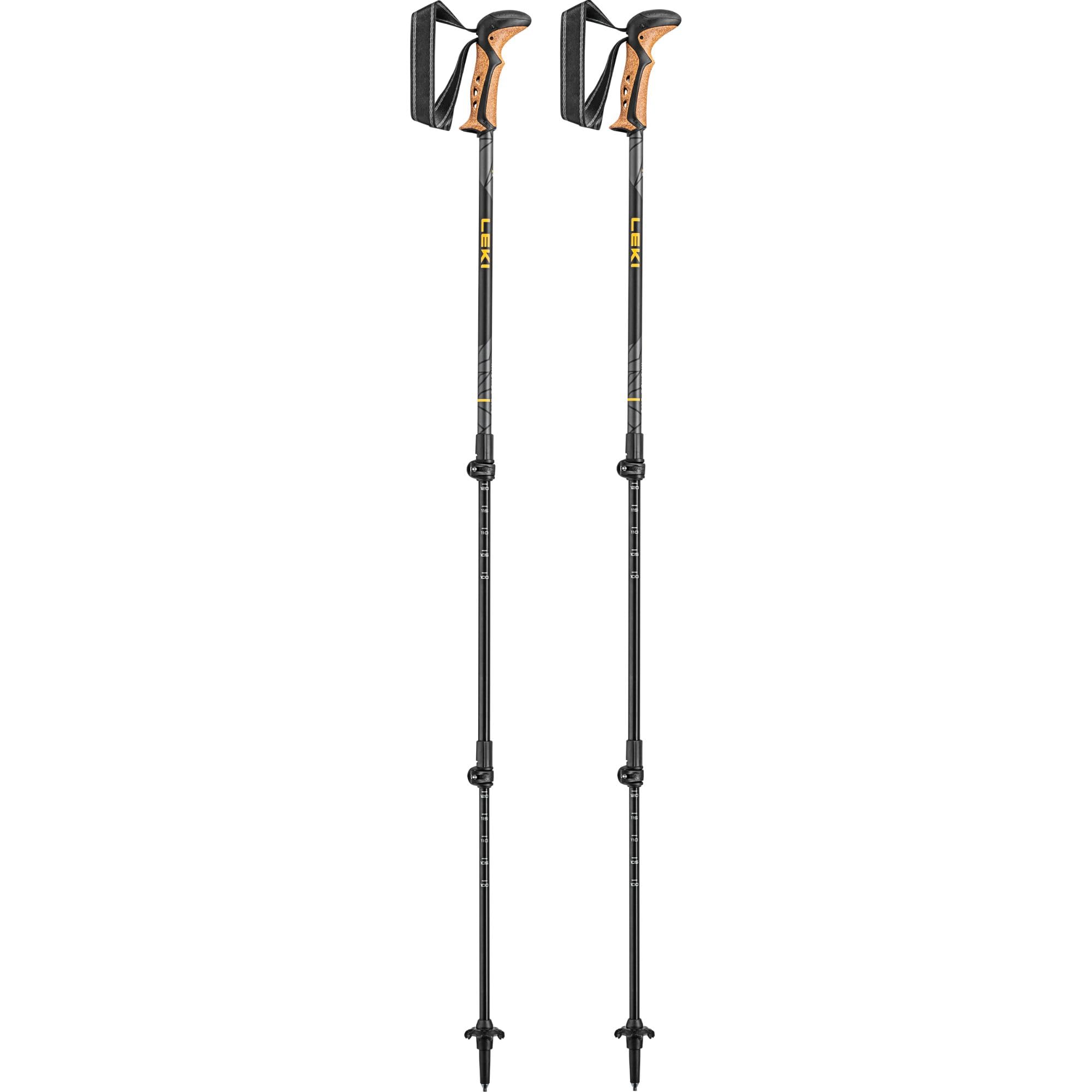
LEKI Khumbu Lite Trekking Poles
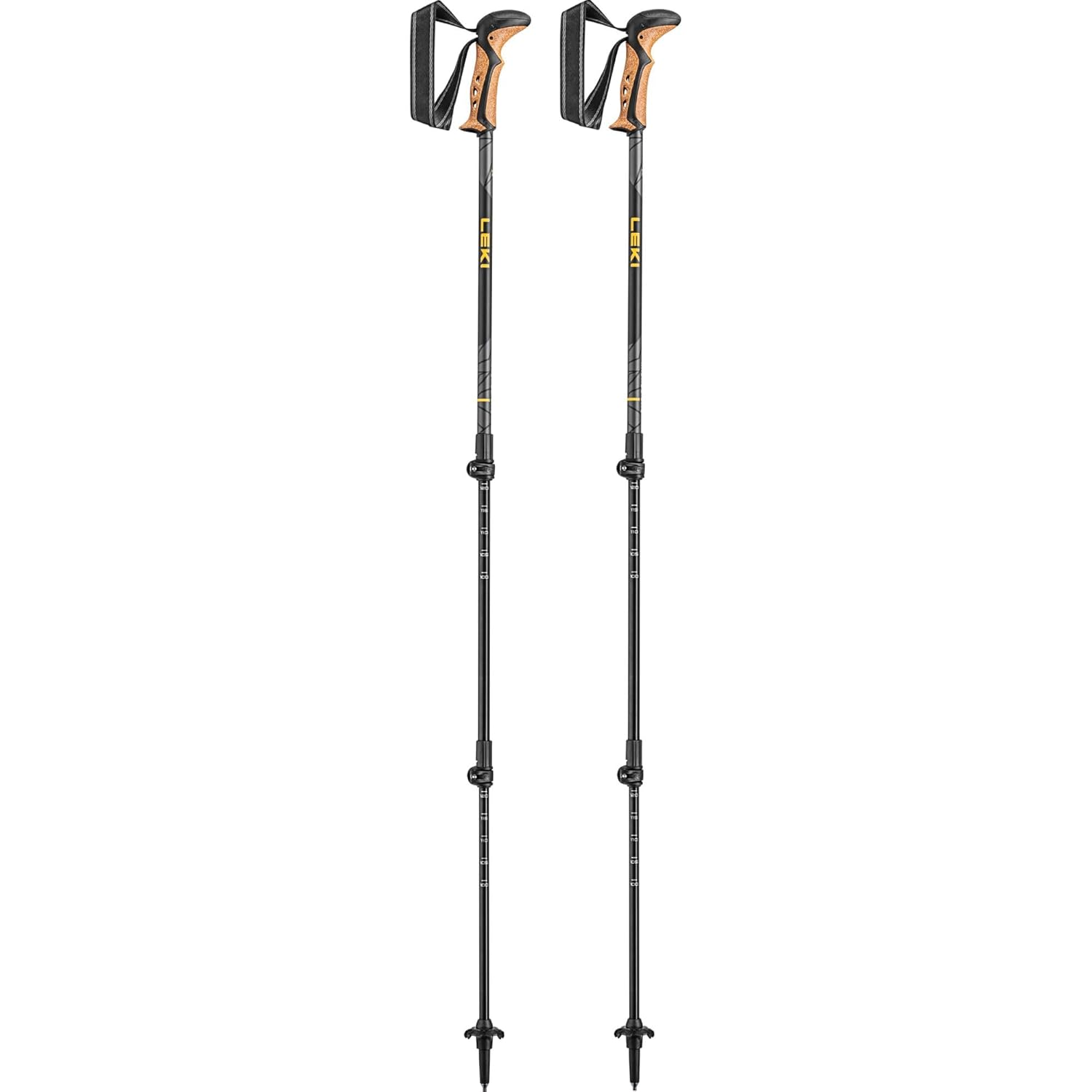
- Speedlock Plus lever lock rivals Black Diamond Flicklock for reliability
- Aergon Thermo grip ergonomically shaped for a natural hand position
- Lighter swing weight than the Black Diamond Trail at comparable length
- LEKI’s German manufacturing standards applied to an accessible price point
- Neoprene padded strap handles extended use without wrist irritation
- 2-section design collapses longer than 3-section poles for pack attachment
- Aergon grip requires adjustment period for hikers used to round grips
- Lower review count than Black Diamond Trail at a comparable price
LEKI has been manufacturing trekking poles in Germany since 1948, and the Khumbu Lite brings that engineering to an accessible aluminum price point. The Speedlock Plus lever lock uses the same cam-and-lever principle as Black Diamond’s Flicklock, which means the same reliability advantage over twist locks in dirty and wet conditions. The 4.7-star rating edges out the Black Diamond Trail and reflects how consistently the pole performs across different users.
The Aergon Thermo grip is LEKI’s proprietary ergonomic shape: the grip is angled and contoured to encourage a natural wrist position rather than a straight-down grip on the standard round handle. For hikers who have experienced wrist fatigue on long descents, the ergonomic angle reduces the rotation force that accumulates over miles. The neoprene padded strap handles the wrist-load transfer that good pole technique requires.
Who this is for: hikers who want German manufacturing and an ergonomic grip system at a lower price than LEKI’s premium carbon lines. A direct alternative to the Black Diamond Trail for hikers who prefer LEKI’s grip geometry or strap system. For LEKI’s heavier-use backpacking pole, the Makalu Lite is the next step up.
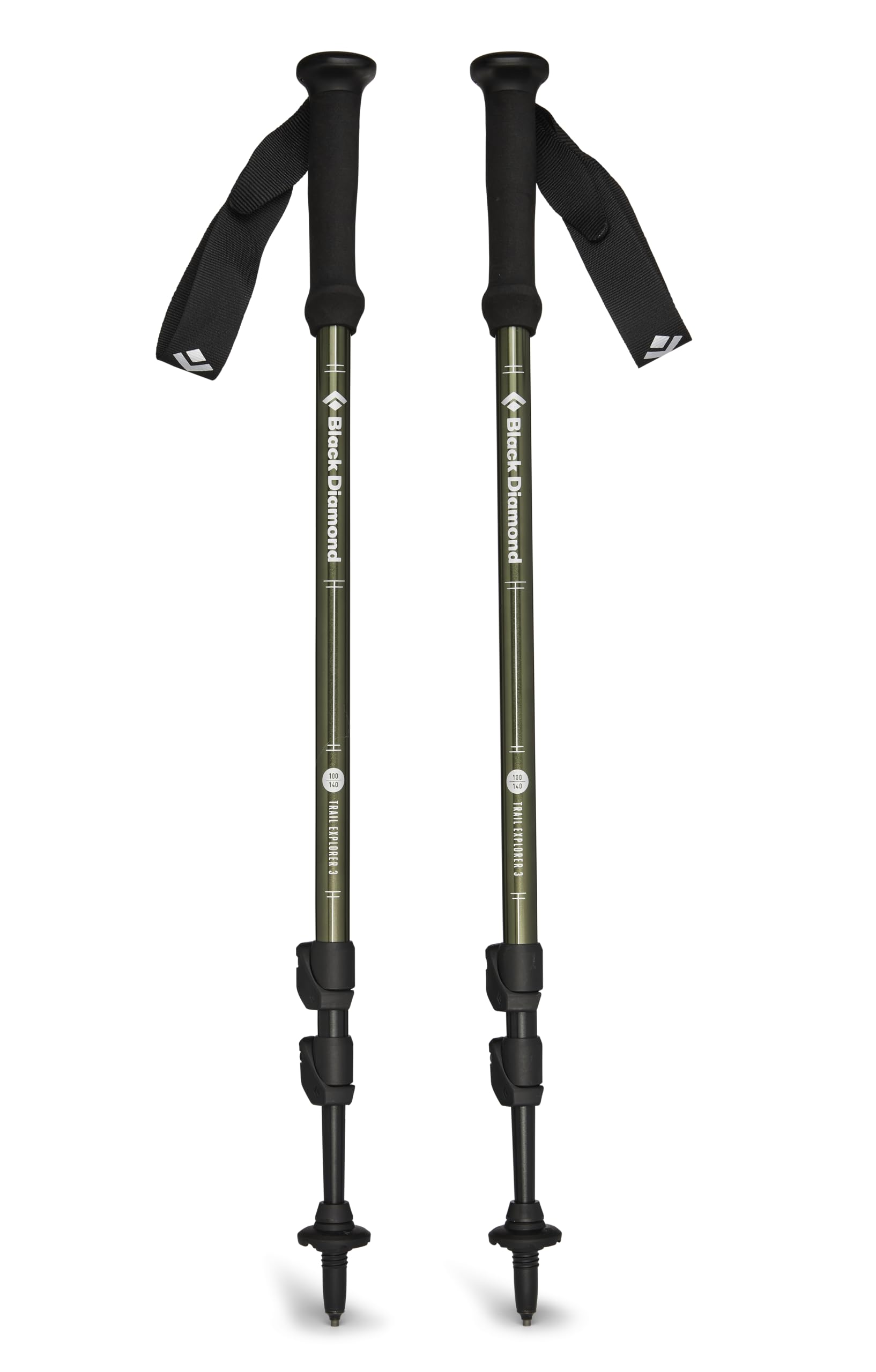
Black Diamond Trail Explorer 3 Trekking Poles
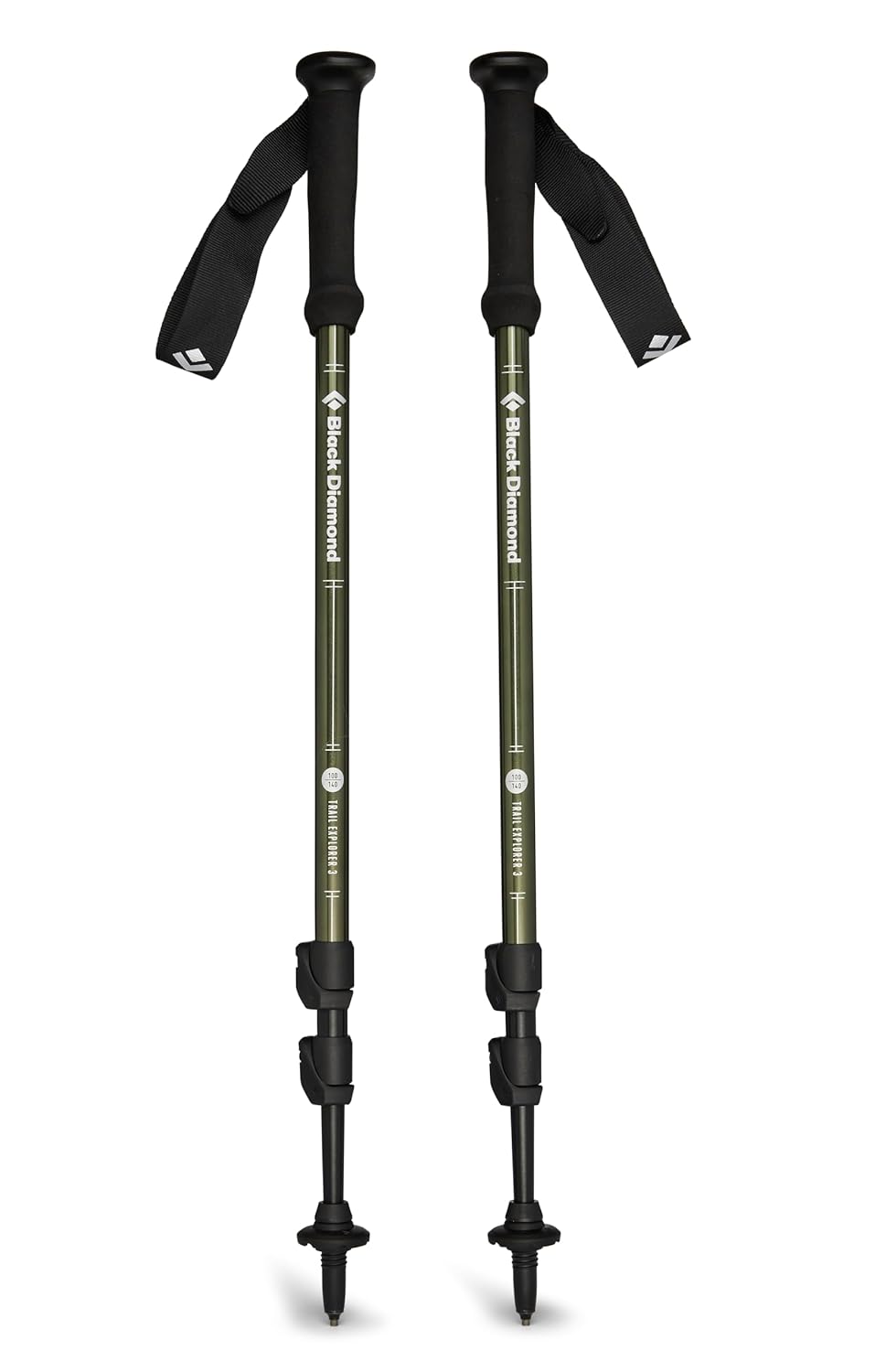
- Black Diamond Flicklock lever lock at a sub-$80 price point
- 3-section design collapses shorter than 2-section poles for pack carry
- 4.7 stars matches the LEKI Khumbu Lite above despite lower price
- Entry point to Black Diamond quality without paying for premium features
- Lightweight aluminum construction handles standard trail conditions well
- Not as robust as the Black Diamond Trail under heavy backpacking loads
- Foam grip only, no cork option at this price
- Lower review count as a newer model than the established Trail line
The Black Diamond Trail Explorer 3 is the entry point to Black Diamond’s lever-lock quality at a price that makes sense for a first pair of hiking poles. The Flicklock lever lock – the same mechanism that defines the more expensive Trail line – is present here, which means the same lock reliability without the added cost of premium grip materials or additional shaft engineering.
The 3-section design collapses shorter than the 2-section LEKI Khumbu Lite, which is a practical advantage for hikers who need to attach poles to a pack on technical sections. At $78 it sits between the budget options in this roundup and the benchmark Trail pole, offering a meaningful quality step over the Foxelli and TrailBuddy without requiring a full premium investment.
Who this is for: hikers buying their first quality pair of trekking poles who want a reliable lever lock from a reputable brand at the most accessible price in this roundup’s standard section. For hikers who know they will use poles heavily or for multi-day trips, the investment in the Black Diamond Trail or LEKI Khumbu Lite is worth making from the start.
Best trekking poles for backpacking
Backpacking poles face sustained load from heavy packs over multiple days. The two picks cover the best aluminum option for heavy-duty use and the best premium carbon for hikers who prioritize weight savings on long trips.
LEKI Makalu Lite Trekking Poles
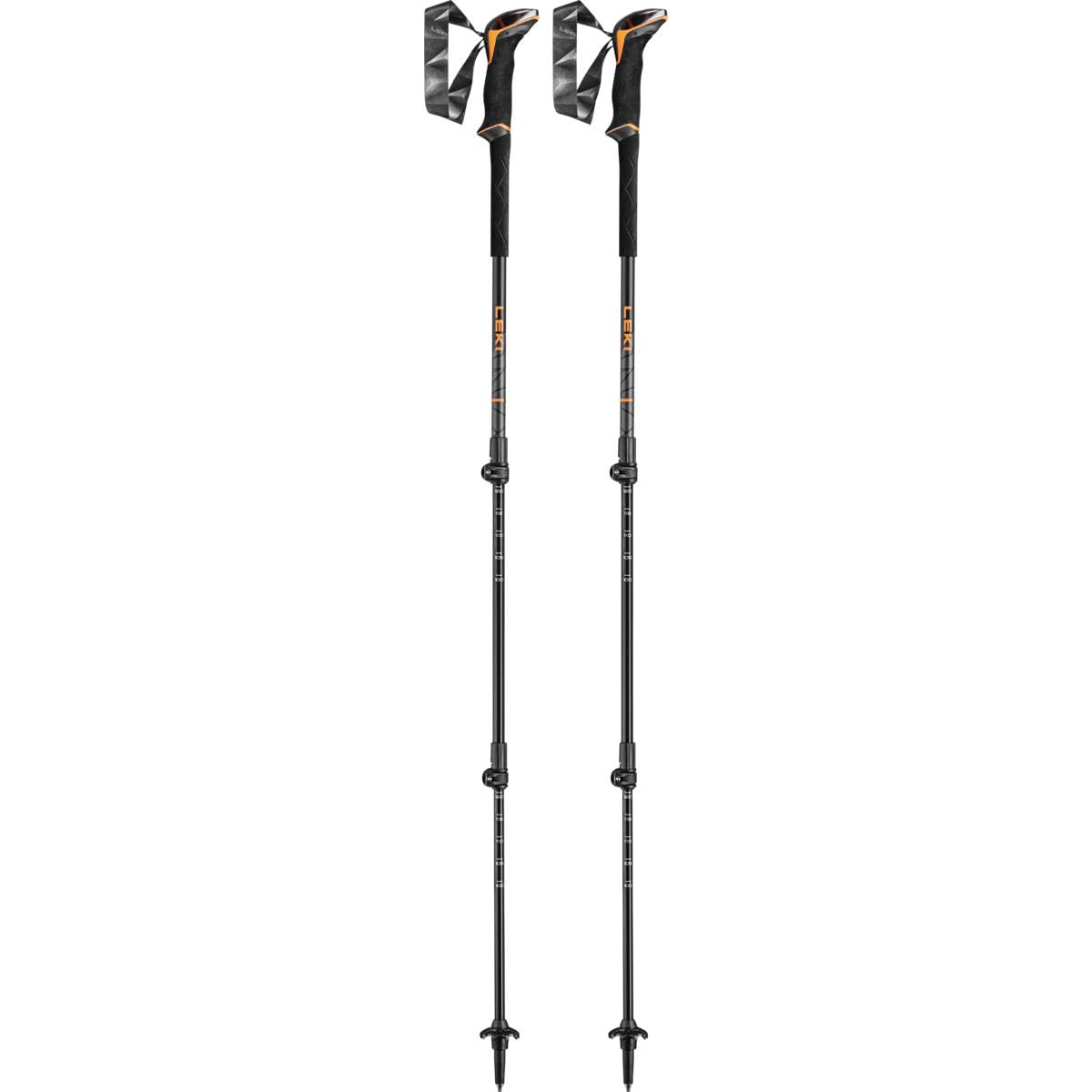
- Reinforced aluminum shaft rated for heavier pack loads than standard hiking poles
- Cork composite grip manages sweat better than foam on multi-day summer trips
- Speedlock Plus holds length setting under sustained downhill load with a heavy pack
- 3-section collapses short for attachment to a loaded backpacking pack
- LEKI manufacturing standards designed for extended active use
- Heavier than carbon alternatives at this use case
- Higher price than standard hiking poles reflects heavier-duty construction
- Cork composite grip requires break-in period compared to foam
Backpacking poles face different demands than day hiking poles. A loaded pack of 30 to 50 pounds puts significantly more force through the pole shaft and locking mechanism on every downhill plant. The LEKI Makalu Lite is built around that load: the aluminum shaft is reinforced compared to standard hiking pole aluminum, and the Speedlock Plus lever lock is rated for the sustained force of a hiker with a heavy pack navigating a long descent.
The cork composite grip handles multi-day sweat better than foam, which becomes waterlogged and heavy by the end of a hot summer day. Cork absorbs moisture without becoming slippery, which matters on the third day of a trip when your hands are consistently damp. The 3-section design collapses short enough to attach to the side of a loaded backpack when the trail demands both hands.
Who this is for: backpackers who carry 25 to 50 pound loads on multi-day trips and need poles that hold up to sustained heavy use over days rather than hours. For maximum weight savings on multi-day trips where pack weight is the priority, the Black Diamond Alpine Carbon Cork handles the same use case at a weight premium.
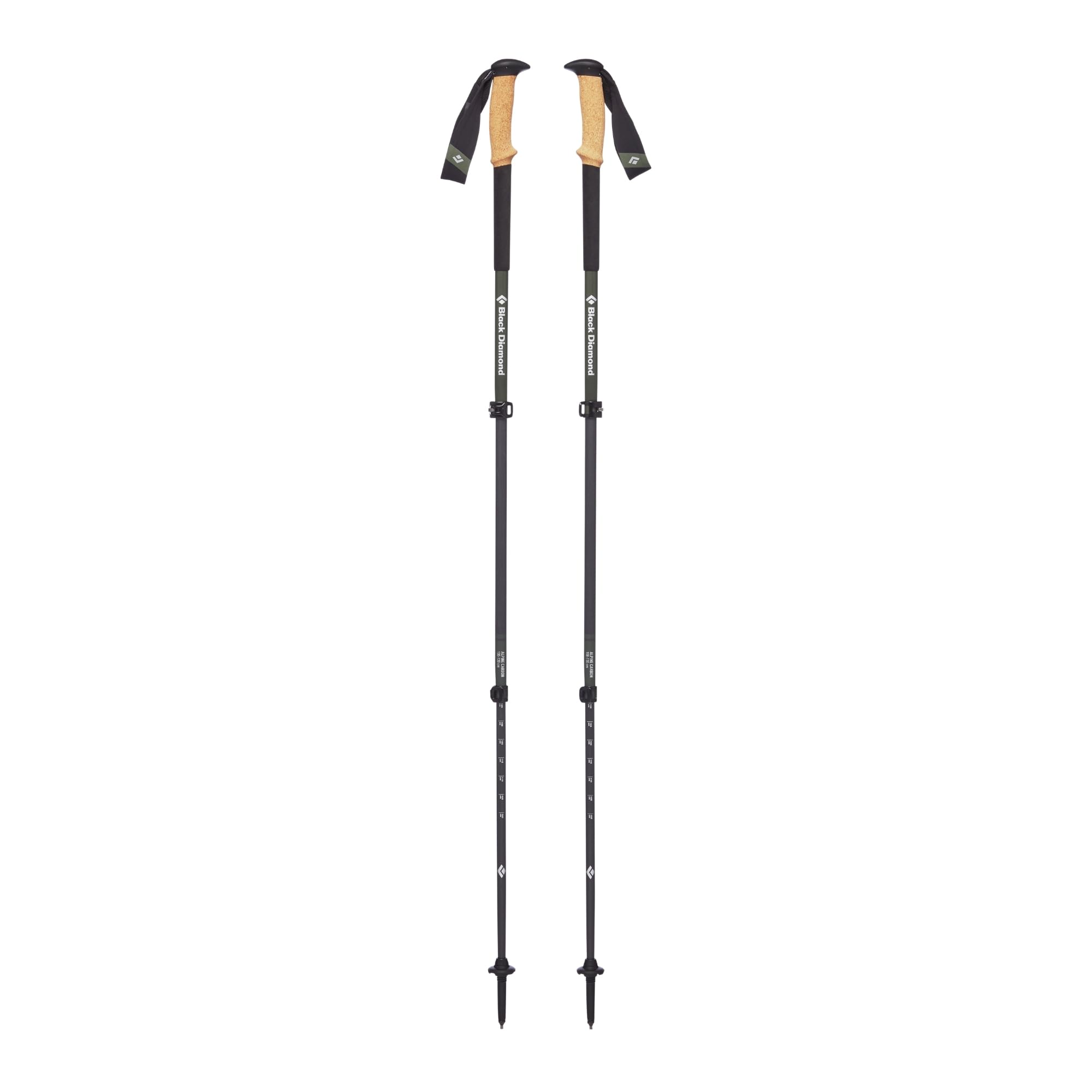
Black Diamond Alpine Carbon Cork Trekking Poles
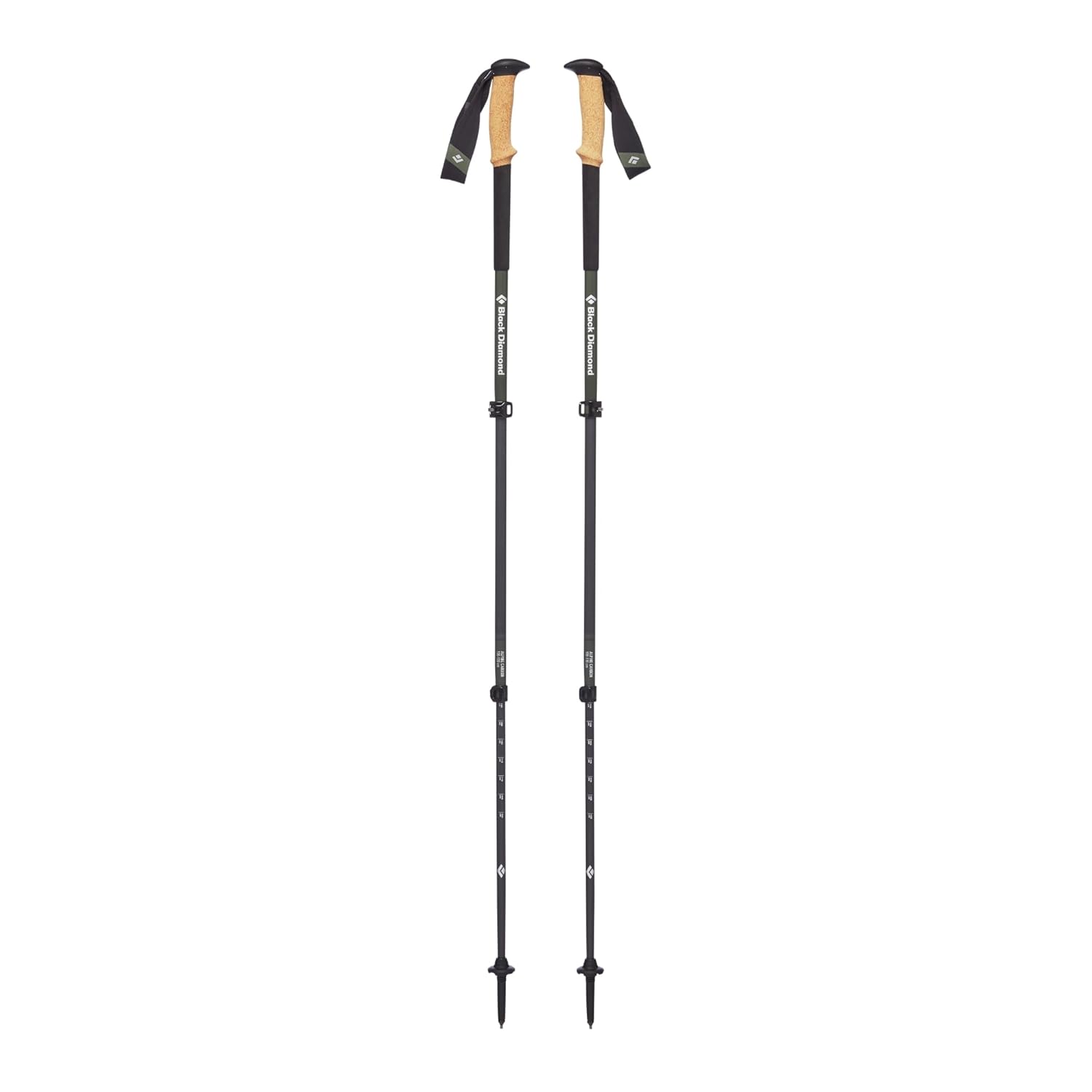
- Carbon fiber shaft saves meaningful weight over aluminum on multi-day trips
- Natural cork grip is the most comfortable grip material for extended use
- Flicklock Pro lever lock carries over from the benchmark Trail poles
- Best vibration damping of any material – carbon absorbs trail impact better than aluminum
- 5,200+ reviews validates the design across years of backcountry use
- Carbon shatters under lateral impact rather than bending like aluminum
- Premium price reflects carbon construction and cork grip
- Not the right choice for rocky terrain where pole-rock contact is frequent
Carbon fiber trekking poles save meaningful weight on multi-day trips: a pair of aluminum poles at this length typically weighs 18 to 22 ounces; the Alpine Carbon Cork comes in significantly lighter. Over a 5-day backpacking trip, the swing weight reduction translates to noticeably less arm fatigue by the end of each day. Natural cork grip is the other material upgrade: cork absorbs hand sweat, shapes to the hand over time, and never becomes slippery in the way that wet foam does.
The Flicklock Pro lever lock carries over from the standard Trail poles, which means the same lock reliability that defines Black Diamond’s aluminum line is present in their carbon line. The 5,200+ review count is the highest of any pole in this roundup and reflects years of backcountry validation across conditions. The trade-off is carbon’s failure mode: where aluminum bends under lateral impact, carbon shatters.
Who this is for: experienced backpackers who have broken in their first pair of aluminum poles and are ready to invest in a weight reduction for multi-day trips. The right premium upgrade when you know you will use poles heavily for years. For hikers on rocky, technical terrain where pole-rock contact is frequent, the aluminum Trail or Makalu Lite is safer.
Best ultralight and folding trekking poles
Folding Z-poles pack to 13 to 15 inches and deploy in seconds. Fixed-length designs are lighter than telescoping adjustable poles. The two picks cover the benchmark folding pole and the premium carbon folding alternative.
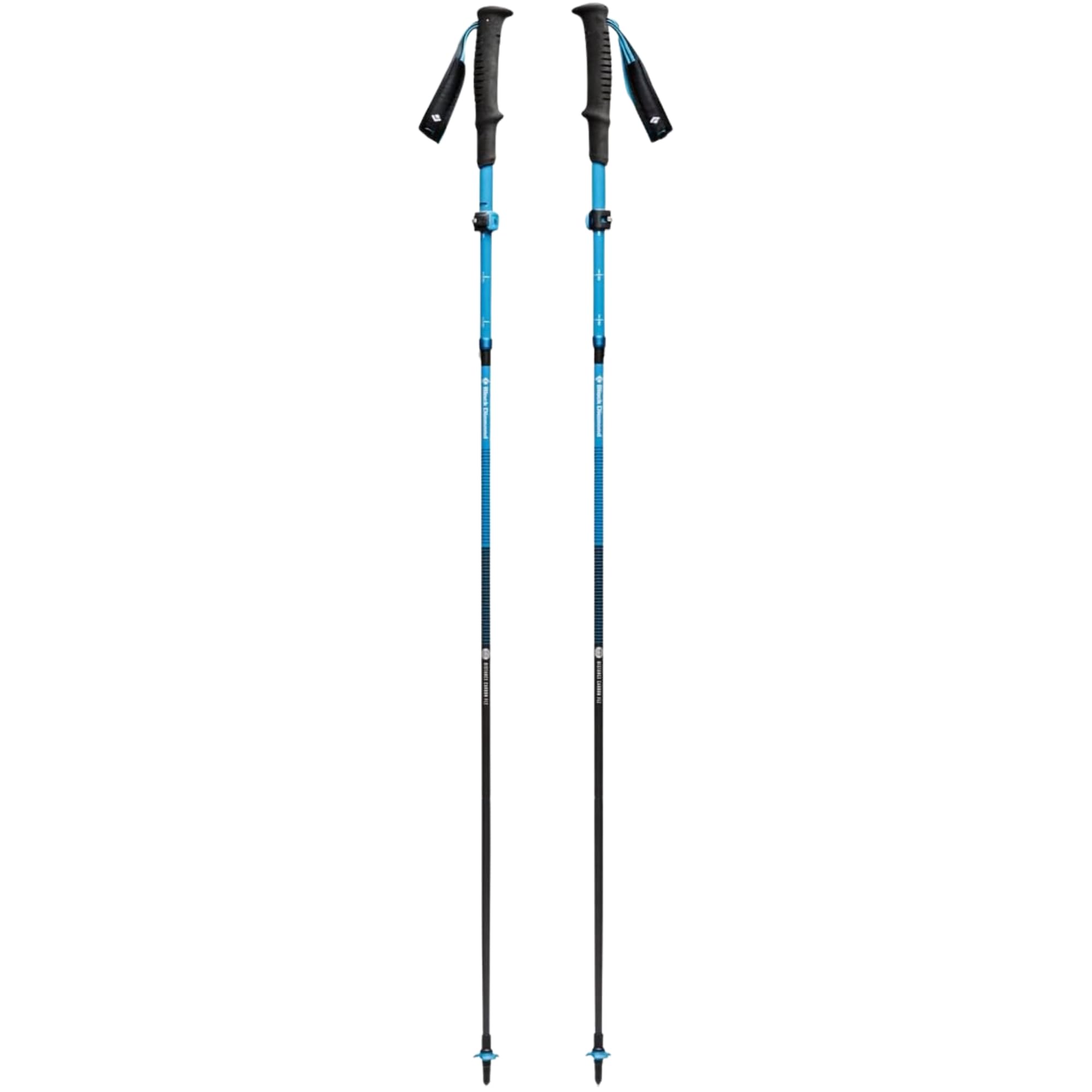
Black Diamond Distance Z Trekking Poles
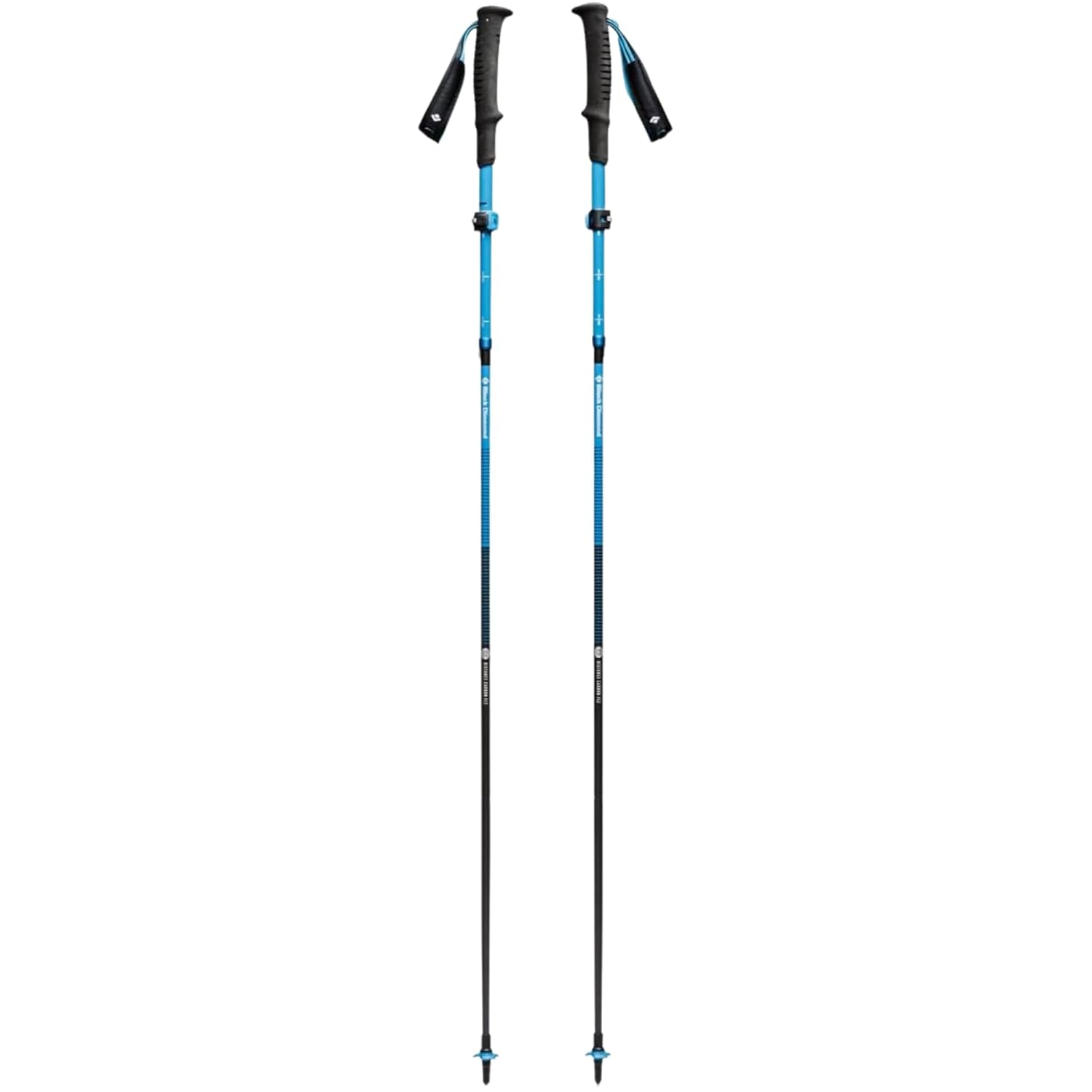
- 4.8 stars, highest rating in this roundup alongside the LEKI Ultratrail
- Z-fold deploys in under 5 seconds and locks without tools
- Packs to approximately 13 to 15 inches for attachment to a running vest or small pack
- Fixed length keeps weight lower than adjustable telescoping designs
- The established benchmark for folding hiking and trail running poles
- Fixed length means you cannot adjust for different terrain grades
- Z-fold does not adjust mid-hike – commit to the length before you start
- Less rigid than telescoping poles under heavy lateral load
The Black Diamond Distance Z is the folding pole that all other folding poles are measured against. The Z-fold mechanism uses three sections connected by an internal cord: pull the grip, the pole snaps to full length and locks, ready to plant in under five seconds. Collapse it, and it packs to 13 to 15 inches – short enough to attach to a hydration vest chest strap or slide into a trail running pack side pocket.
Fixed-length folding poles are inherently lighter than adjustable telescoping designs because they eliminate the length-adjustment hardware. The trade-off is the inability to adjust length mid-hike for different terrain grades. For trail runners and fastpackers who set pole length before the start and leave it there, this trade-off is acceptable. For hikers who regularly adjust length between flat, climb, and descent, an adjustable telescoping pole covers more situations.
Who this is for: trail runners, fastpackers, and ultralight day hikers who want poles that pack small, deploy fast, and add minimum weight. The benchmark in its category. For a premium carbon folding pole with more precise length adjustment, the LEKI Ultratrail FX.One is the alternative.
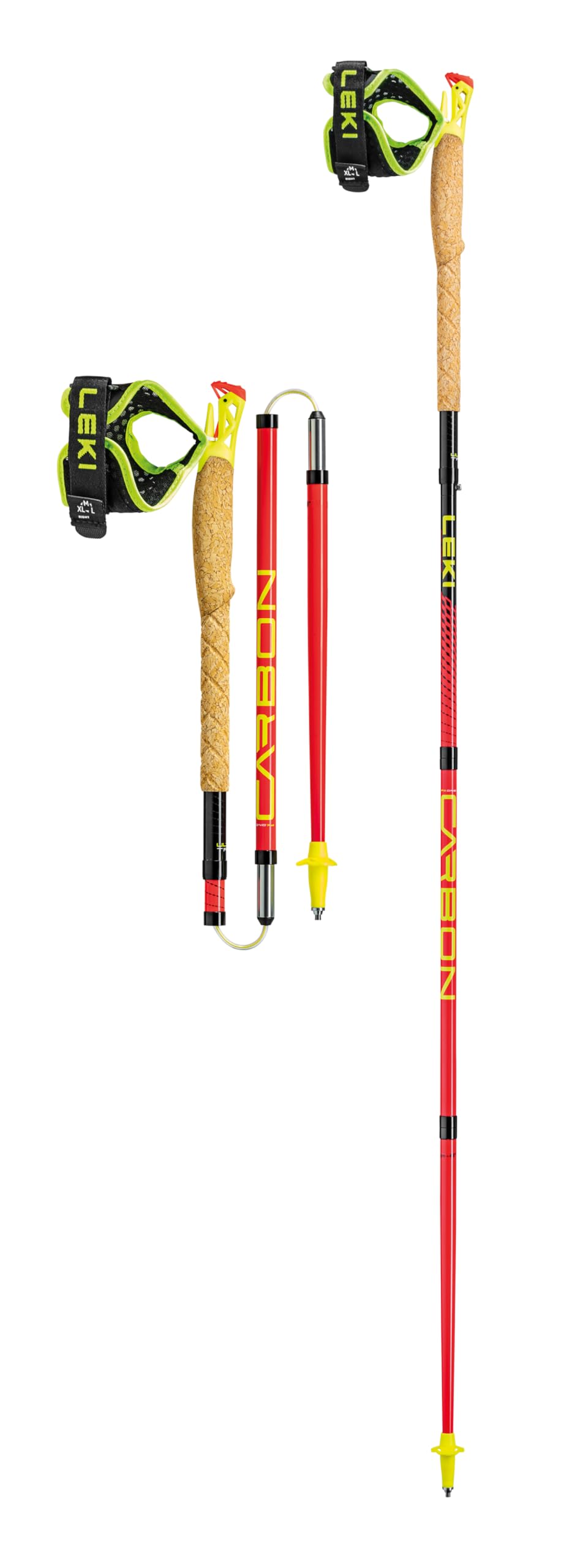
LEKI Ultratrail FX.One Trekking Poles
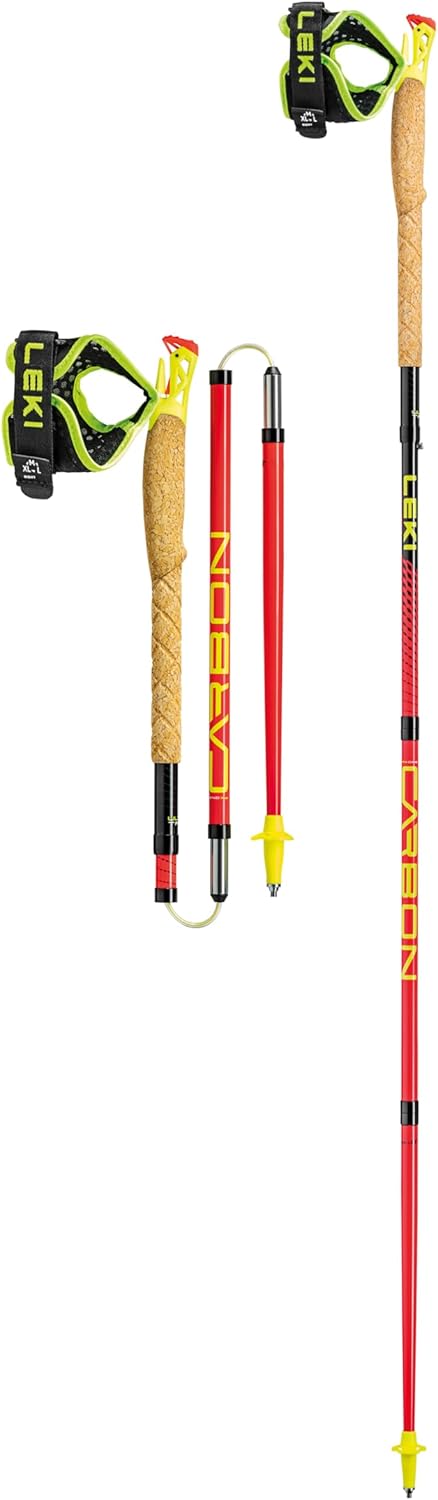
- Sub-200g per pole, the lightest option in this roundup
- Carbon construction absorbs vibration better than aluminum folding poles
- Aergon Air grip is ventilated for maximum sweat management at trail running pace
- Available in multiple fixed lengths for precise sizing
- LEKI manufacturing standards in a trail-running-specific design
- Premium price at the top of the folding pole range
- Fixed length – must select correct size at purchase
- Carbon risk on rocky terrain the same as all carbon poles
The LEKI Ultratrail FX.One is the premium folding pole for trail runners and fastpackers who want sub-200g per pole and full carbon construction. The Z-fold mechanism and fixed-length design follow the same logic as the Black Diamond Distance Z, but LEKI applies carbon shaft construction and their Aergon Air ventilated grip – designed specifically for the faster pace and longer sweat exposure of trail running.
The Aergon Air grip is ventilated with channels that allow airflow through the grip material, reducing heat and moisture buildup at trail running pace where hands are consistently warm. The carbon shaft absorbs vibration from trail impact better than aluminum, which matters over the repetitive pole planting of a long trail run. At sub-200g per pole the Ultratrail FX.One is meaningfully lighter than most aluminum folding alternatives.
Who this is for: trail runners and fastpackers who want the lightest, most refined folding pole available and are willing to pay for German carbon engineering. For hikers who want a folding pole at a lower price with excellent reliability, the Black Diamond Distance Z delivers the same use case at roughly $55 less.
Best budget trekking poles
Budget poles cover first pairs, occasional casual use, and situations where replacement cost matters more than premium features. The four picks span from $30 to $60 and cover the most affordable lever-lock pole, the highest-rated budget option, the most-reviewed budget pole on Amazon, and the best budget cork grip option.
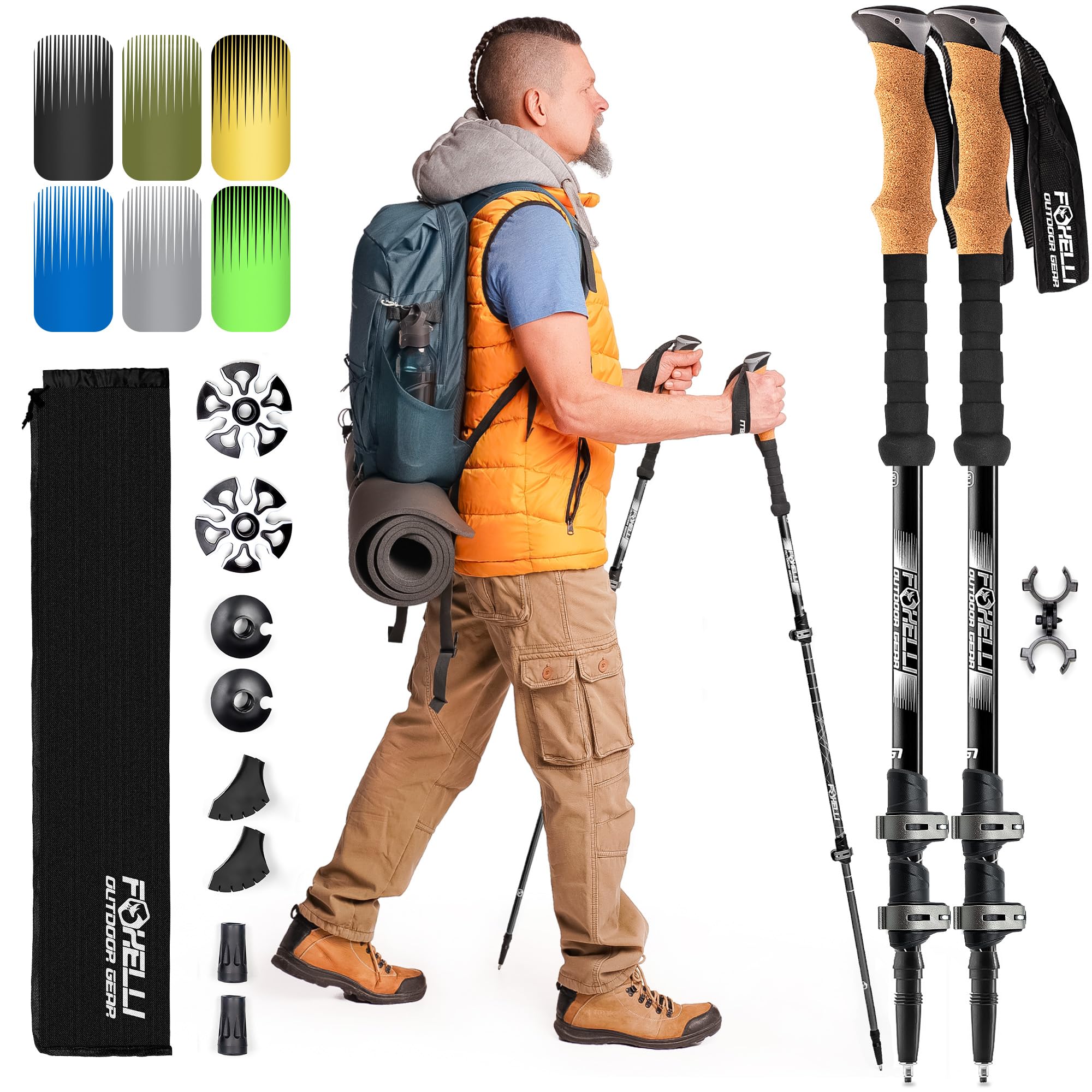
Foxelli Trekking Poles
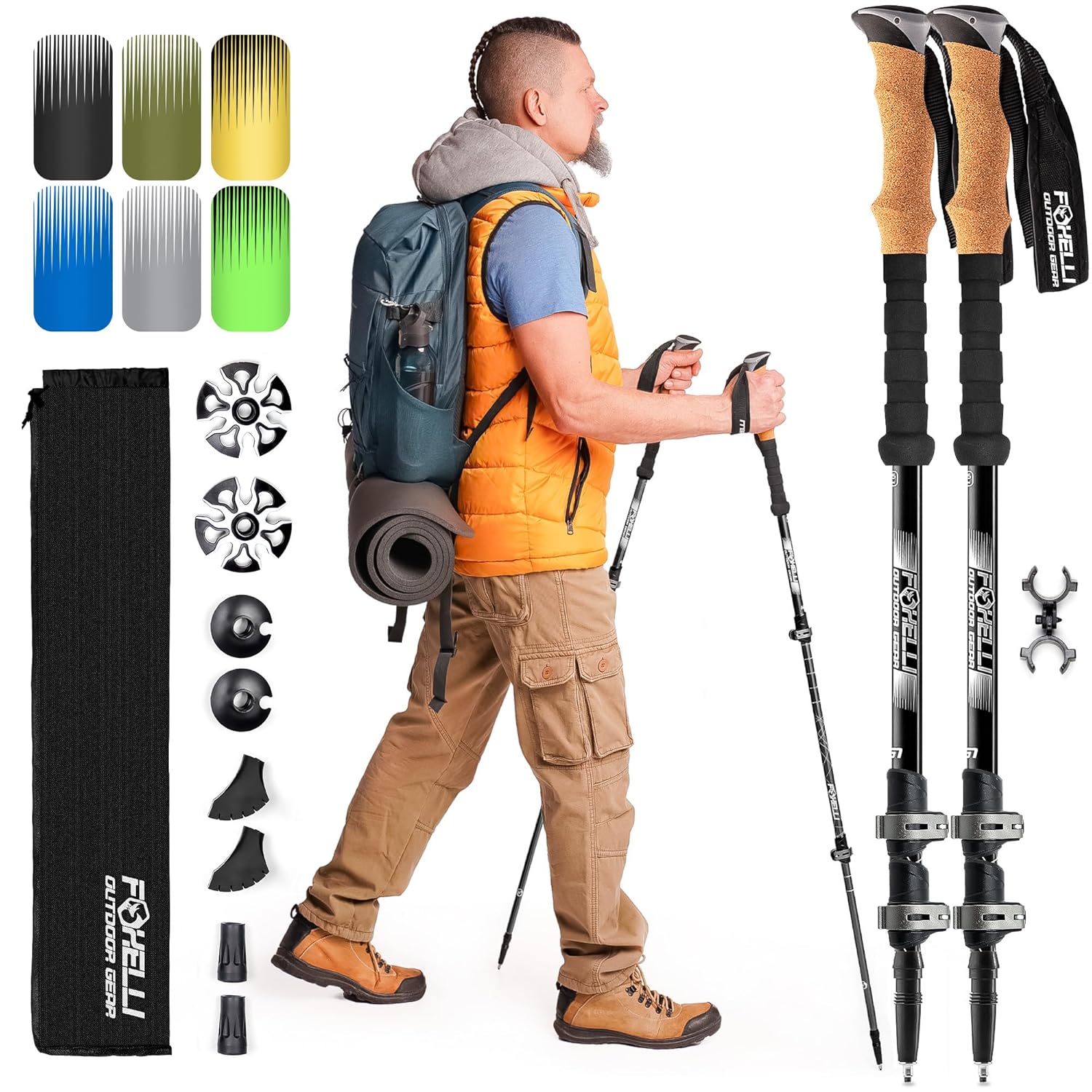
- 4.8 stars across 12,600 reviews – strongest consumer validation in budget section
- Cork composite grip punches above its price point for sweat management
- Aircraft grade aluminum construction more durable than entry-level alloys
- Both trekking and snow baskets included for seasonal versatility
- Adjustable across a wide height range for different users
- Twist lock is less reliable than lever locks in cold and wet conditions
- 12,600 reviews mean quality can vary between production batches
- Not built for sustained heavy backpacking loads
The Foxelli is the best-rated budget trekking pole in this roundup at 4.8 stars across over 12,000 reviews, which is meaningful validation for a pole at under $42. The cork composite grip is the unexpected quality: at this price point most poles use basic foam, but the cork blend handles hand sweat better on warm-day hikes. The aircraft-grade aluminum is a step above the cheapest entry alloys and holds up to standard trail conditions.
The trade-off versus the Black Diamond and LEKI poles in this roundup is the twist lock. Twist locks require precise thread engagement to hold, and they can unwind under vibration or in cold temperatures where the thread fit changes slightly. For hikers doing casual day hikes on maintained trails in temperate conditions, this is not a meaningful issue. For hikers doing serious mountain terrain in variable conditions, the lever locks of the premium options are worth the investment.
Who this is for: hikers buying a first pair of poles to see if trekking poles work for their hiking style, or casual day hikers on maintained trails who do not need the lock reliability or material precision of premium poles. The right budget pick for the majority of occasional hikers.
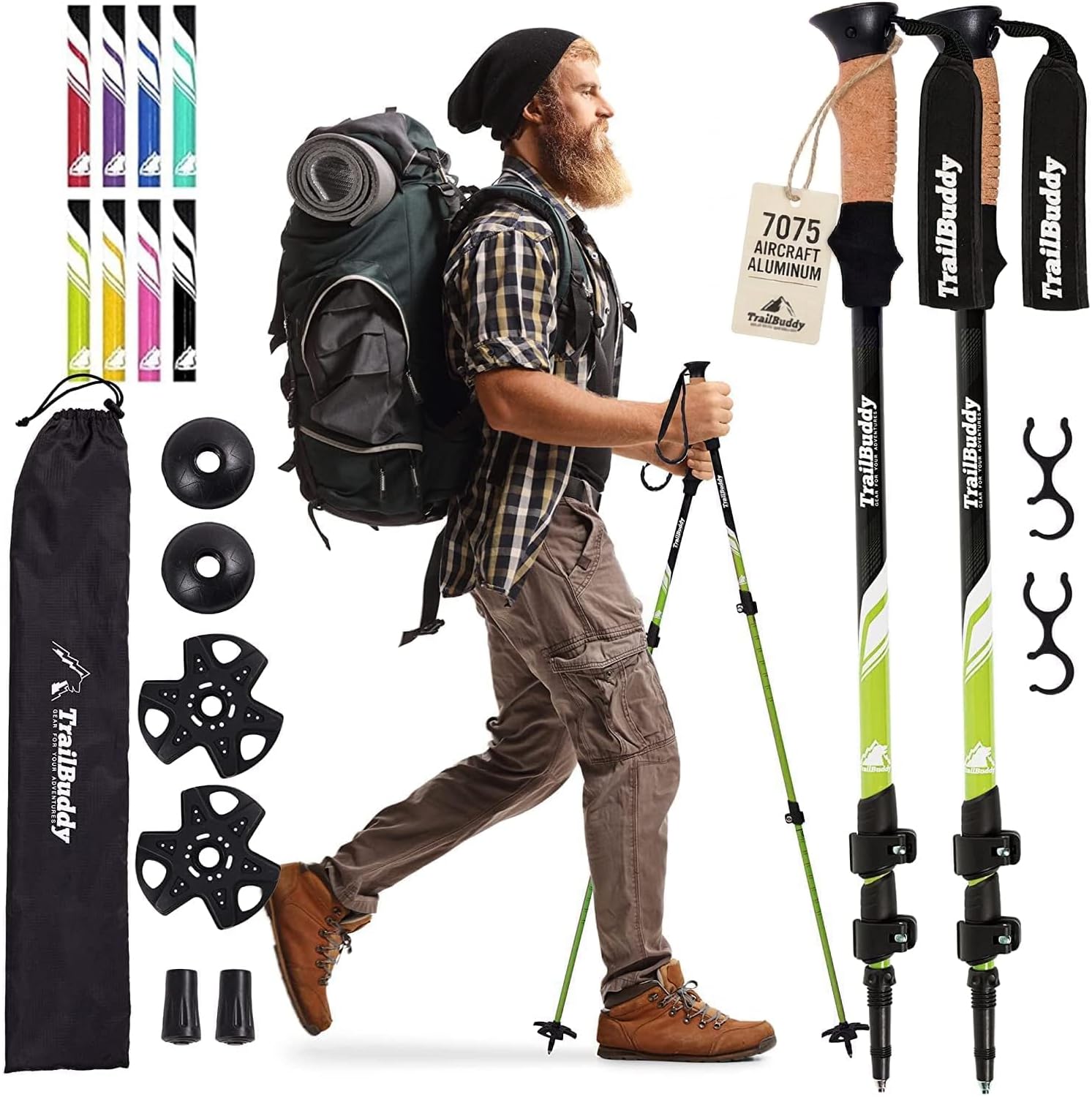
TrailBuddy Trekking Poles

- 7075 aluminum is the same aerospace alloy used in higher-end poles
- Under $40 for a complete pair with straps and tip protectors
- 3-section design collapses short for pack attachment
- 9,800+ reviews validates consistent real-world performance
- Lightest option in the budget section at this alloy grade
- Twist lock same trade-off as Foxelli – less reliable in cold and wet
- EVA foam grip less comfortable than cork on extended warm-day hikes
- Not built for sustained heavy backpacking loads
The TrailBuddy uses 7075 aluminum – the aerospace alloy grade also used in higher-end poles from brands like Black Diamond – at a price point that makes it the most affordable pole in this roundup by material specification. 7075 aluminum is significantly stronger than the 6000-series alloys found in the cheapest entry-level poles, which means the TrailBuddy handles standard trail use without the flex and deformation that cheaper alloys show over time.
At under $40 complete with straps and tip protectors it represents genuine value for a first pair of poles or a backup pair for a hiking partner who does not own poles. The 3-section design collapses shorter than the Foxelli’s telescoping, which is a practical advantage for pack attachment. The EVA foam grip is the weakest point: it absorbs less sweat than cork and becomes slippery when wet on long summer days.
Who this is for: hikers who want the best material specification available at the lowest price in this roundup, or anyone equipping a partner or group member with a functional first pair of poles. The 7075 alloy makes this a meaningful step above generic entry-level poles at essentially the same price.
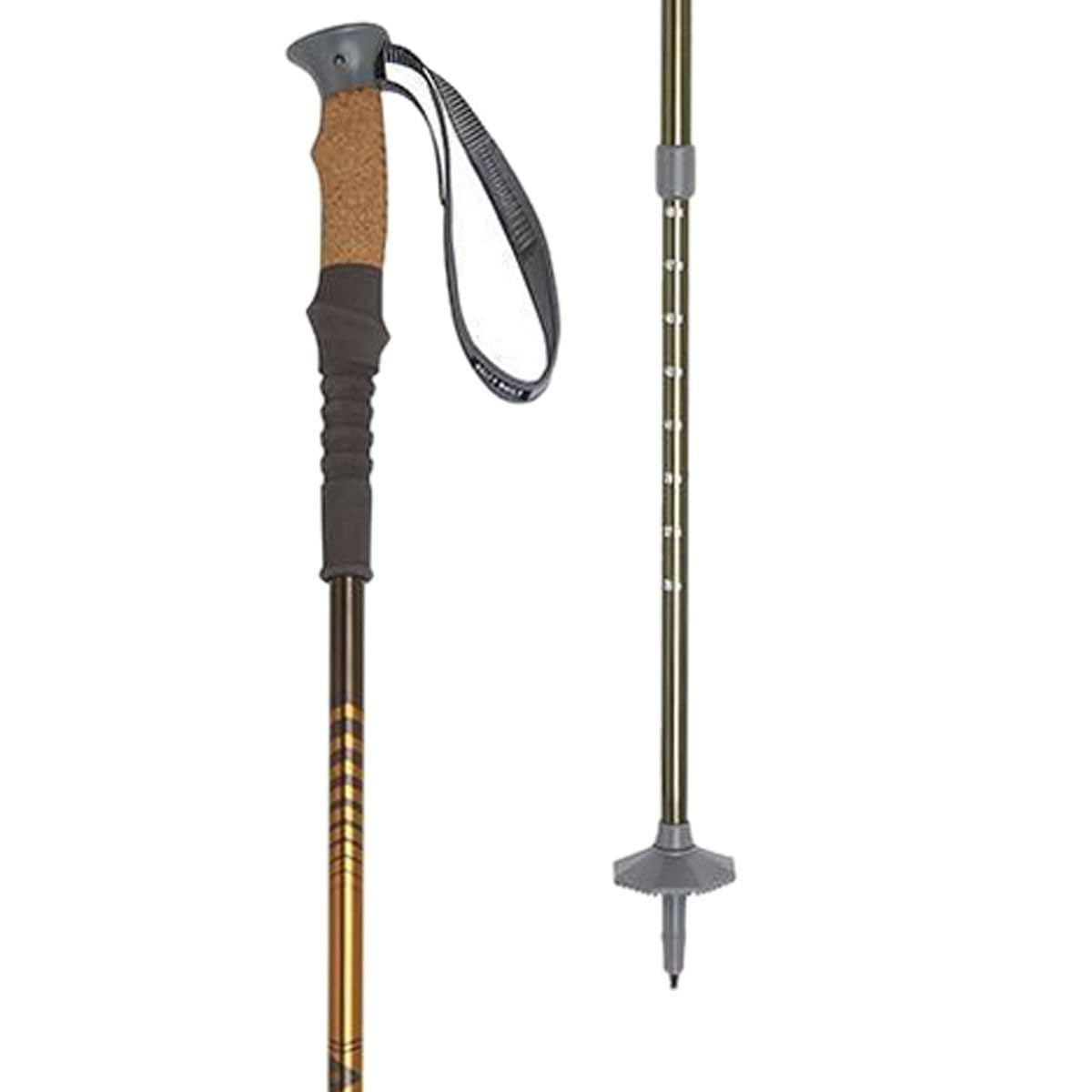
Kelty Range 2.0 Trekking Poles
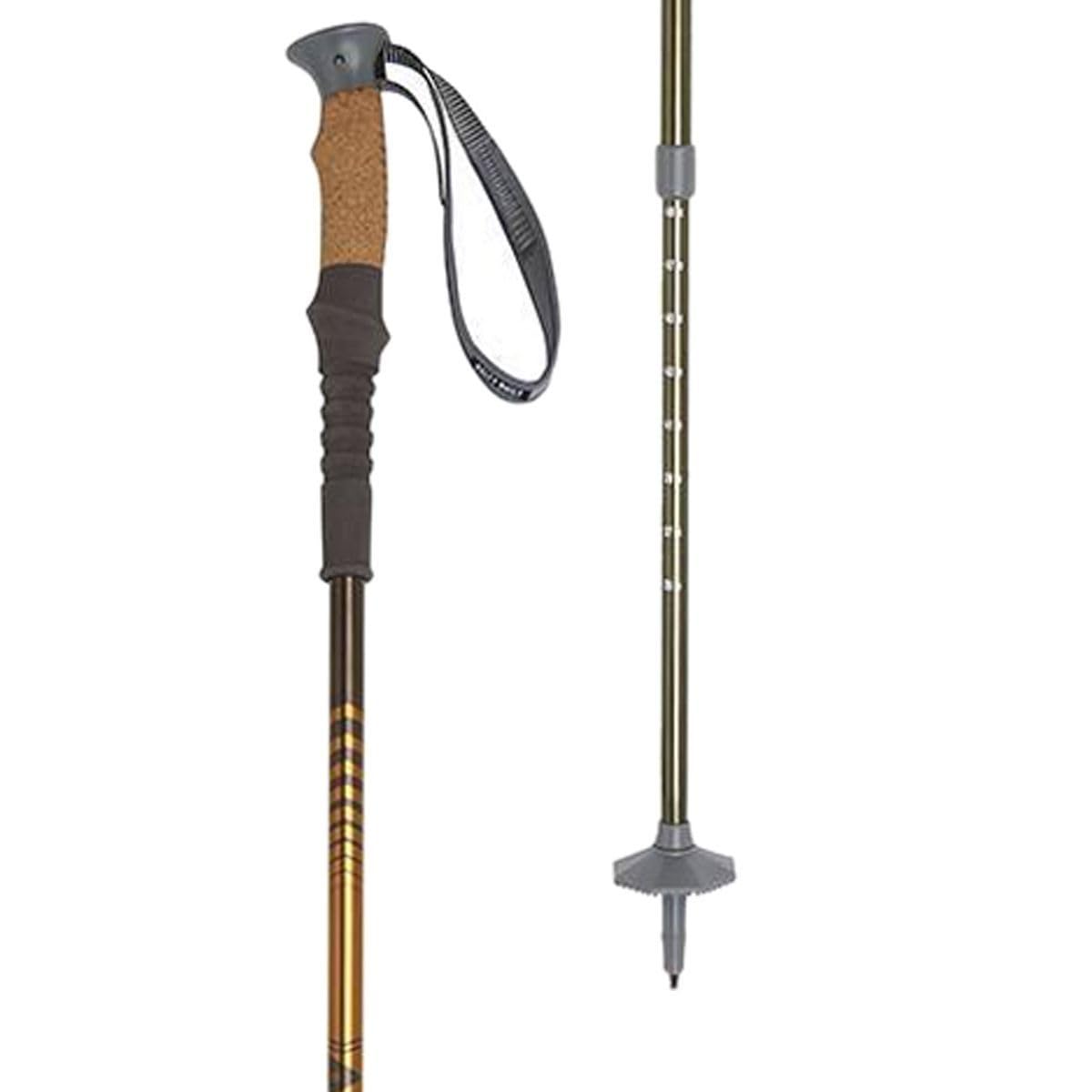
- Natural cork grip at a sub-$60 price, unavailable in the Foxelli or TrailBuddy
- Lever lock rather than twist lock, same reliability advantage as premium poles
- Kelty is an established outdoor brand with warranty support
- 3-section design collapses short for pack carry
- Bridges the gap between budget twist-lock poles and premium lever-lock options
- More expensive than the Foxelli and TrailBuddy in this section
- Kelty’s lever lock is less refined than Black Diamond Flicklock or LEKI Speedlock
- Lower review count than Foxelli and TrailBuddy
The Kelty Range 2.0 occupies the middle ground between the budget twist-lock poles and the premium lever-lock poles in this roundup: it has a lever lock and a cork grip, which are the two features that separate premium poles from budget poles, at a price that is still well below the LEKI and Black Diamond standard hiking poles. For hikers who find the Foxelli and TrailBuddy limiting but are not ready to invest in premium poles, the Range 2.0 is the practical bridge.
Natural cork at under $60 is the key differentiator. Cork grips that shape to the hand and absorb moisture rather than becoming slippery are usually a premium feature. The lever lock means the length setting holds under load without the twist-lock creep that affects the Foxelli and TrailBuddy on sustained downhill grades. Kelty is a Colorado outdoor brand with established warranty and customer service infrastructure.
Who this is for: hikers who have identified the limitations of twist-lock poles and want a lever lock and cork grip without paying premium prices. The right step between entry-level budget poles and the benchmark Black Diamond and LEKI options. For hikers doing regular hiking rather than occasional casual use, the investment in a Black Diamond Trail or LEKI Khumbu Lite is worth making.
Cascade Mountain Tech Aluminum Trekking Poles
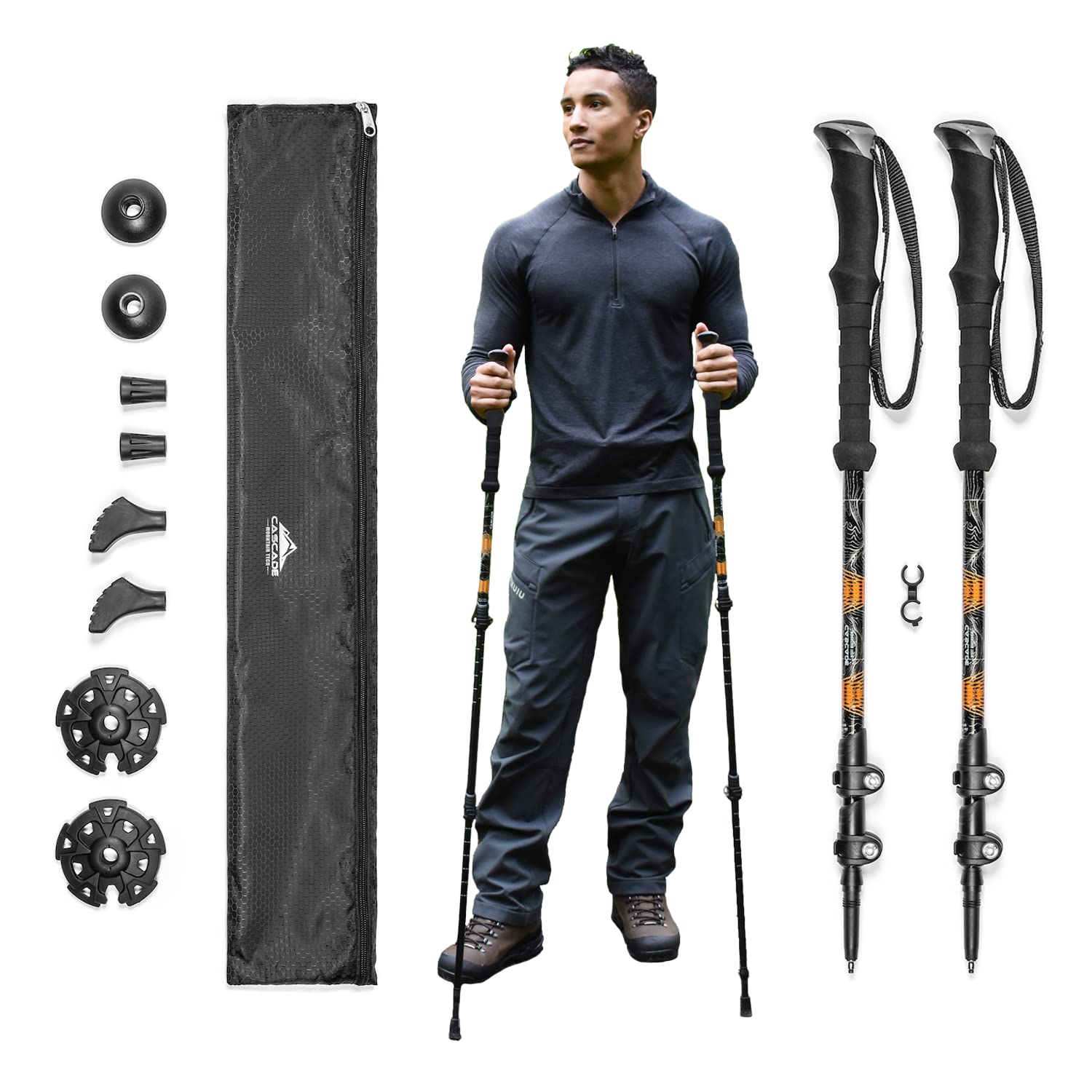
- Lowest price in this roundup at $29.99 with a lever lock, not a twist lock
- Extended down-grip section allows varied hand positions on steep ascents
- Aircraft-grade aluminum handles standard trail use without flex or deformation
- Full tip and basket kit included for all terrain types
- 5,171 reviews validates consistent real-world performance at this price
- EVA foam grip less comfortable than cork on extended warm-day hikes
- Not built for sustained heavy backpacking loads
- Cascade Mountain Tech lock is less refined than Black Diamond Flicklock
The Cascade Mountain Tech aluminum pole is the lowest-priced lever-lock option in this roundup and makes a genuine case for itself at $29.99. The lever lock is the critical differentiator from cheap twist-lock poles at the same price: it holds the length setting under load on descents rather than slowly unwinding. For hikers who want to try poles before committing to a premium pair, the CMT aluminum delivers the most important feature at the lowest cost.
The extended down-grip section is an unexpectedly useful feature at this price point. On steep ascents where you want a lower hand position on the grip rather than adjusting pole length, the down-grip section covers hand positions that a standard grip cannot. The full tip and basket kit means the pole is trail-ready without additional purchases.
Who this is for: casual day hikers who want a lever-lock pole at the lowest practical price, or anyone equipping a hiking partner or group member without spending on premium poles. For hikers who plan to use poles regularly, the step up to the TrailBuddy (cork grip, 63,000+ reviews) or Black Diamond Trail Explorer 3 (Flicklock) is worth making.
Full comparison table: best trekking poles
| Pole | Best for | Material | Price | Rating |
|---|---|---|---|---|
| Standard hiking poles | ||||
| Black Diamond Trail Trekking Poles | Best Overall | Aluminum | $128.88 | 4.6 |
| LEKI Khumbu Lite Trekking Poles | Best LEKI Aluminum | Speedlock Plus | $110.63 | 4.7 |
| Black Diamond Trail Explorer 3 Trekking Poles | Best Under $80 | 3-Section | $78.40 | 4.7 |
| Backpacking poles | ||||
| LEKI Makalu Lite Trekking Poles | Best Backpacking | LEKI | $139.85 | 4.6 |
| Black Diamond Alpine Carbon Cork Trekking Poles | Best Premium Carbon | Cork grip | $239.95 | 4.6 |
| Ultralight and folding poles | ||||
| Black Diamond Distance Z Trekking Poles | Best Ultralight | Z-fold | $164.88 | 4.8 |
| LEKI Ultratrail FX.One Trekking Poles | Best Premium Folding | Carbon Z-fold | $219.95 | 4.8 |
| Budget poles | ||||
| Foxelli Trekking Poles | Best Budget | 4.8 stars | $41.97 | 4.8 |
| TrailBuddy Trekking Poles | Best Under $40 | 7075 aluminum | $44.91 | 4.7 |
| Kelty Range 2.0 Trekking Poles | Best Mid-Budget Cork | Kelty | $59.95 | 4.6 |
| Cascade Mountain Tech Aluminum Trekking Poles | Most Affordable | Lever lock | $29.99 | 4.6 |
How to choose trekking poles
Lever lock vs. twist lock: the most important decision
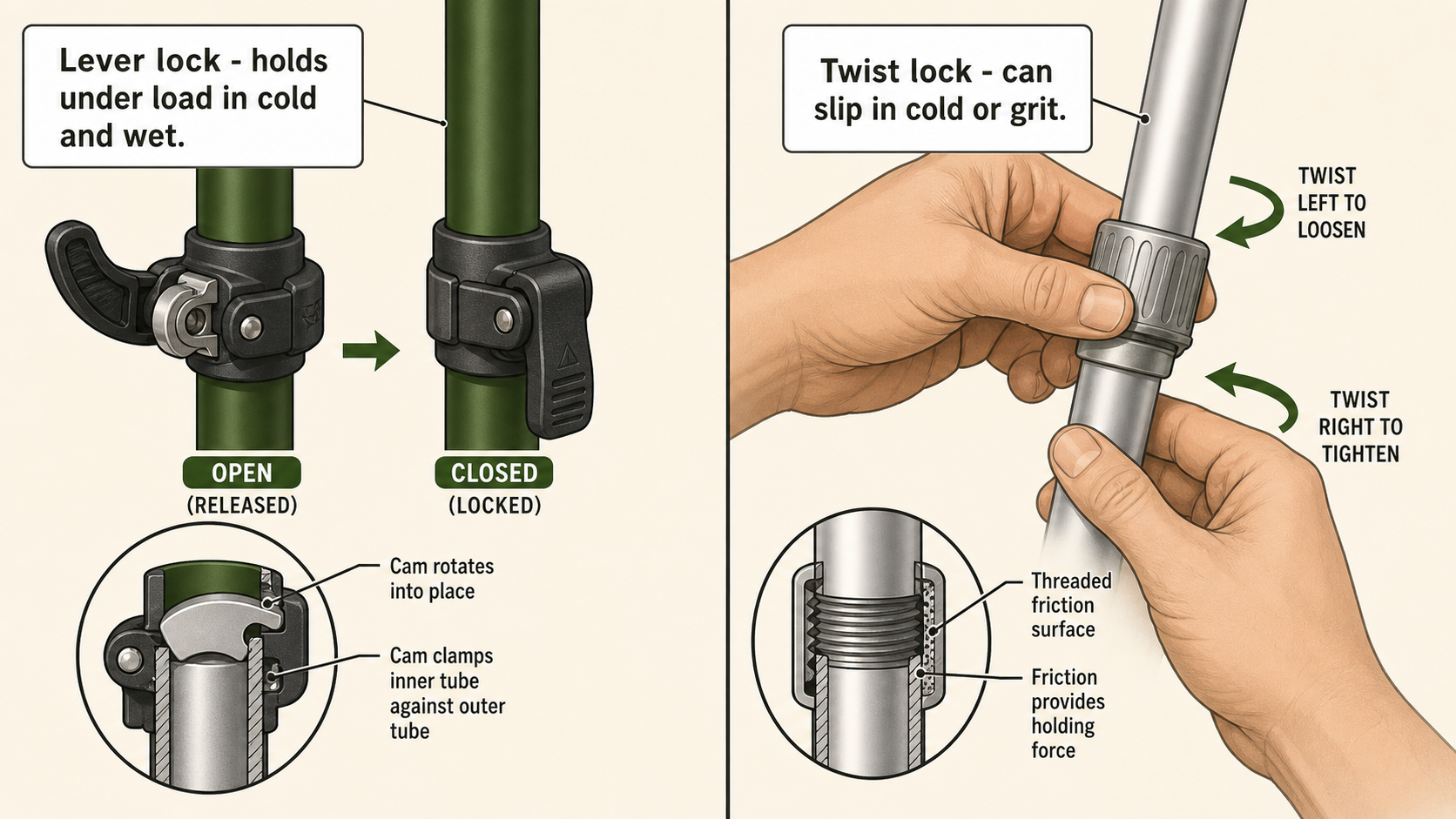
Every trekking pole adjusts length somehow, and the mechanism matters more than most buyers expect. Twist locks use threaded friction between the pole sections: twist one way to lock, the other to release. They work well in dry, temperate conditions. In cold temperatures the fit changes slightly and the lock can creep under sustained downhill load. In mud or grit, material enters the thread and reduces friction. Lever locks (Black Diamond Flicklock, LEKI Speedlock) use a cam mechanism that physically clamps the pole section: open the lever to release, close to lock. The cam does not depend on thread friction, which means it holds under load regardless of temperature or grit. For any serious hiking use, lever locks are the correct choice.
Aluminum vs. carbon: match the material to your terrain
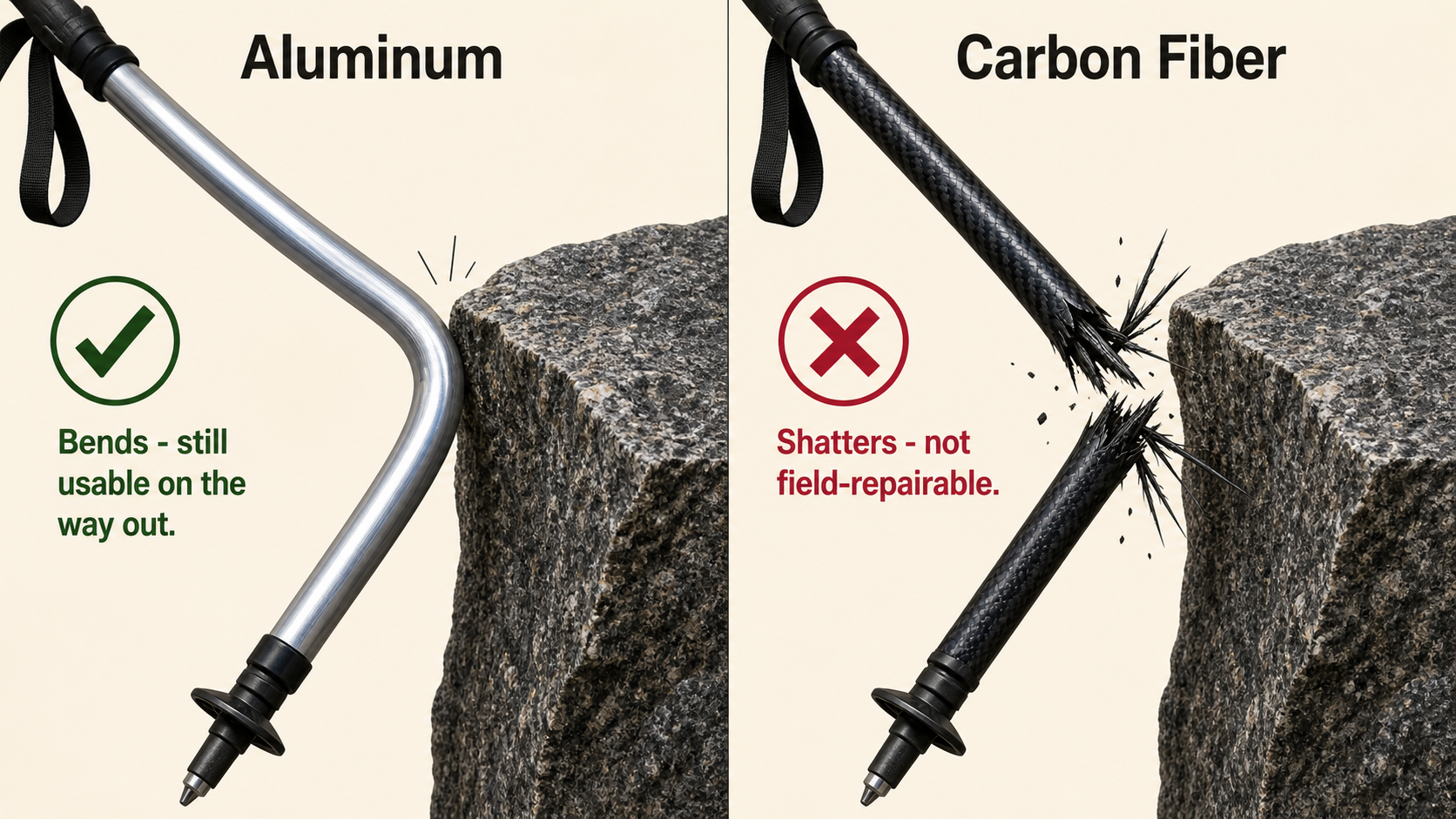
Aluminum and carbon fail differently under lateral impact, and this difference determines which material is right for your terrain. Aluminum bends under lateral force – a pole caught in a rock crack and levered sideways deforms rather than breaking. A bent pole still functions as a walking aid on the way back to the trailhead. Carbon shatters under the same force. A shattered carbon pole on a remote trail is a more serious situation than a bent aluminum pole.
For rocky technical terrain with frequent pole-rock contact, aluminum is the safer material choice regardless of weight preference. For established trail hiking where rocks are navigated around rather than through, carbon’s weight and vibration-damping advantages become the relevant factors. For a first pair of poles, aluminum is always the practical starting point: if you break or lose them, the cost is lower, and the failure mode is safer.
Telescoping adjustable vs. folding fixed-length
Telescoping adjustable poles let you change length mid-hike: shorter on ascents to maintain the 90-degree elbow angle, longer on descents to reduce wrist load, shorter again when stowing on a pack. This mid-hike adjustability is useful on routes with significant grade variation. Folding fixed-length poles (Z-poles) cannot adjust mid-hike. You set the length before you start and commit to it for the day. The trade-off is compact storage: a folded Z-pole packs to 13 to 15 inches and attaches to a vest chest strap or slides into a small pack pocket. For trail runners and fastpackers who prioritize compact storage and fast deployment over mid-hike adjustability, folding poles are the correct format. For hikers who adjust regularly, telescoping poles cover more situations.
Cork, foam, or rubber grips
Cork is the best grip material for extended hiking. It absorbs hand sweat rather than becoming slippery, shapes slightly to the hand over time, and stays comfortable across temperature ranges. Cork grips are typically found on mid-range and premium poles from LEKI and Black Diamond. Foam is the most common grip material across all price points. Standard foam is comfortable in dry conditions and at moderate temperatures but absorbs sweat and becomes waterlogged on hot, humid days. EVA foam is denser and more moisture-resistant than standard foam, which is why it appears on poles like the TrailBuddy. Rubber grips are the least suitable for hiking: they retain heat against the palm and become slippery when wet.
Pole length: the setup that most hikers get wrong
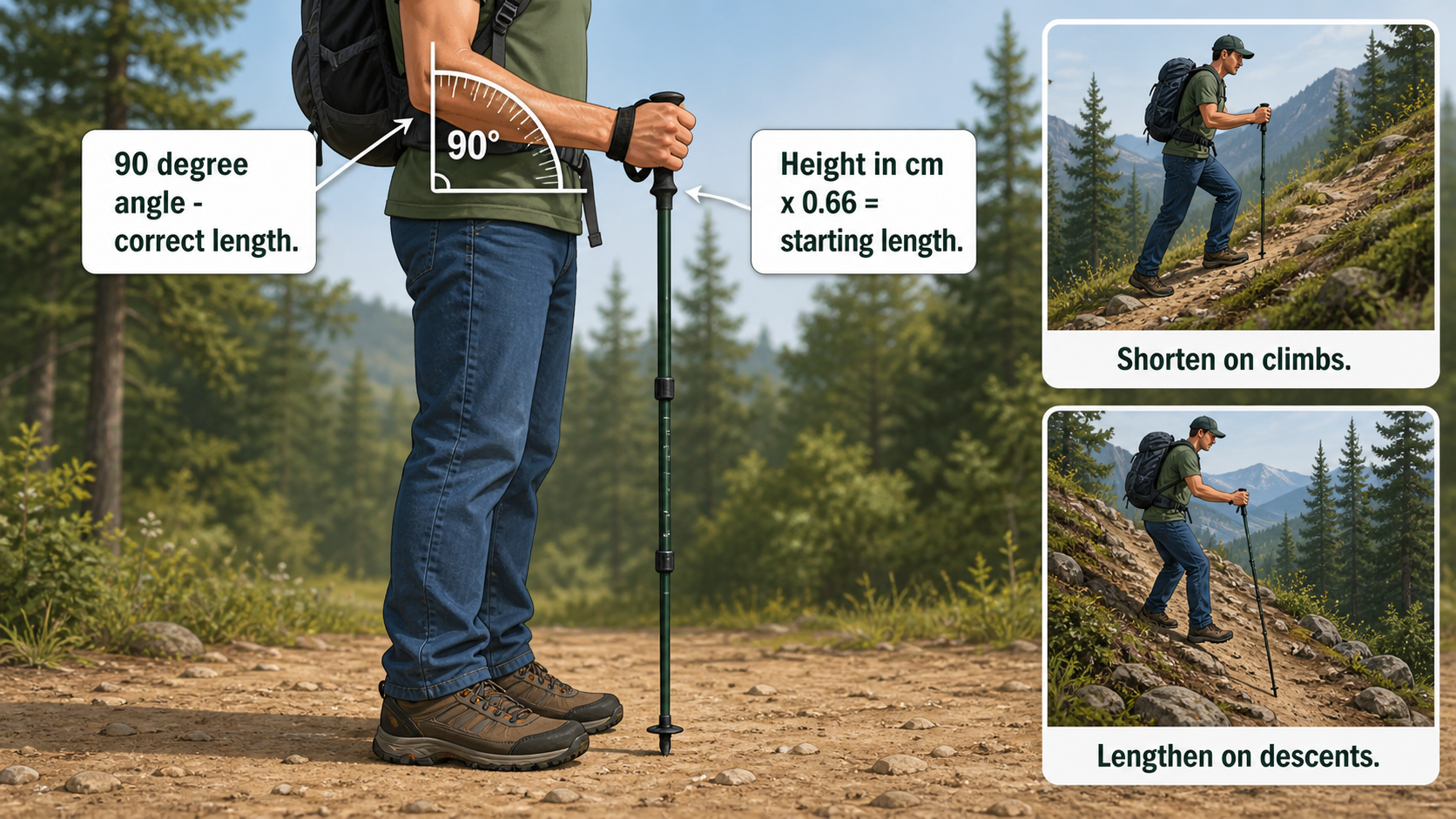
Set pole length so your elbow is at roughly 90 degrees when the pole tip is planted on the ground next to your foot on flat terrain. A rough calculation is your height in centimeters multiplied by 0.66. For most adults this lands between 105 and 130 cm. Shorten by 5 to 10 cm for sustained steep climbs to maintain that elbow angle as grade increases. Lengthen by 5 to 10 cm for sustained steep descents to reduce the forward lean and wrist compression that a too-short pole creates going downhill.
The other setup error is gripping rather than using the strap. Thread your hand up through the strap from below, then close your hand around the grip with the strap across the back of your wrist. The strap transfers the push-down force through the wrist rather than through clenched fingers. Hikers who grip hard and never use the strap correctly experience forearm fatigue and hand cramping that properly strapped poles eliminate. See the full technique guide in our how to use trekking poles article.
Basket size
Most trekking poles ship with small trekking baskets – rubber-tipped discs roughly 60mm across that prevent the pole tip from sinking into soft trail surfaces. These cover 3-season trail use on dirt, gravel, and light mud. Snow baskets are larger, typically 100mm, and prevent the pole from plunging into snow. If you hike in winter conditions, verify that the poles you buy include or accept aftermarket snow baskets. Black Diamond and LEKI both sell replacement and upgrade baskets for their pole lines.
Warranty and repairability
Black Diamond and LEKI both sell replacement parts for their pole lines: replacement tips, baskets, straps, and lock components are available from both brands. A pole that can be field-repaired or component-replaced is a significantly better long-term value than one that requires full replacement when any single component fails. Both brands also offer warranty coverage for manufacturing defects. Budget pole brands typically do not sell replacement components, which means any component failure results in full pole replacement.
Frequently asked questions
What are the best trekking poles?
The Black Diamond Trail is the best overall aluminum trekking pole and the industry benchmark for lever-lock reliability and durability. The LEKI Khumbu Lite is the best German-engineered alternative with an ergonomic Aergon grip. For ultralight folding poles, the Black Diamond Distance Z is the benchmark. For budget poles, the Foxelli leads with 4.8 stars across 12,000+ reviews.
Aluminum or carbon trekking poles: which is better?
Aluminum bends under lateral impact and is the safer choice for rocky terrain where pole-rock contact is common. Carbon is lighter and absorbs vibration better, making it preferable for long multi-day trips and trail running. Carbon shatters under lateral impact rather than bending. For most hikers, aluminum is the practical choice; for experienced backpackers prioritizing weight, carbon is the upgrade.
What is the best trekking pole lock system?
Lever locks (Black Diamond Flicklock, LEKI Speedlock) are more reliable than twist locks in cold, wet, and dirty conditions. Twist locks can unwind under vibration or temperature change. Lever locks hold the length setting under sustained load because the cam mechanism does not depend on thread friction. For serious hiking and backpacking, lever locks are the right choice.
What length trekking poles do I need?
On flat ground, set pole length so your elbow is at roughly 90 degrees when the tip is planted next to your foot. This is approximately your height in centimeters multiplied by 0.66. Shorten by 5 to 10 cm for steep uphill sections; lengthen by 5 to 10 cm for steep descents.
What are folding trekking poles and when should I use them?
Folding trekking poles use a Z-fold mechanism to collapse to approximately 13 to 15 inches. They deploy in seconds and pack into a trail running vest or small pack. They are fixed-length, meaning you cannot adjust mid-hike, but they are significantly lighter than telescoping adjustable poles. The right choice for trail runners, fastpackers, and ultralight day hikers who prioritize compact storage over adjustability.
Black Diamond or LEKI: which is the better trekking pole brand?
Both are premium manufacturers with decades of trail validation. Black Diamond’s Flicklock lever lock is the most widely tested locking system in hiking. LEKI’s Speedlock and ergonomic Aergon grip offer a German-engineering alternative with different grip geometry that some hikers prefer. For most hikers, either brand at the same price point will perform equivalently.
How much should I spend on trekking poles?
For casual day hiking, $40 to $60 covers budget aluminum poles from Foxelli, TrailBuddy, and Kelty. For regular hiking with reliable lever locks, $78 to $140 covers the Black Diamond Trail Explorer 3, LEKI Khumbu Lite, and Black Diamond Trail. For backpacking, $140 to $240 reaches the LEKI Makalu Lite and Black Diamond Alpine Carbon Cork. For ultralight folding poles, $165 to $220 covers the Black Diamond Distance Z and LEKI Ultratrail FX.One.
What grip material is best for trekking poles?
Cork is the best grip material for extended hiking. It absorbs sweat, shapes to the hand over time, and stays non-slippery when wet. Foam is the most common material at all price points and is comfortable in dry conditions. EVA foam is denser and more moisture-resistant than standard foam. Rubber grips are the least suitable for hiking as they trap heat and become slippery when wet.
Do I need one trekking pole or two?
Two poles are more effective than one for most hikers. They distribute load symmetrically across both sides of the body, reduce impact on both knees equally on descents, and provide four points of contact rather than three on steep or unstable terrain. One pole is a reasonable choice for hikers recovering from a single-side injury or those who prefer to keep one hand free for photography or scrambling. All products in this roundup are sold as pairs.
Can you bring trekking poles on a plane?
Trekking poles must go in checked luggage. The TSA does not allow trekking poles in carry-on bags because the tips are classified as potential weapons. This applies to both telescoping and folding poles regardless of collapsed length. Folding poles like the Black Diamond Distance Z collapse to around 13 to 15 inches and fit easily in a checked suitcase. Pack tips in a cover or wrap them in clothing to protect other gear and the bag lining.
How do you attach trekking poles to a backpack?
Collapse the poles to their shortest length, thread the tips through a bottom loop or strap on the pack side, and secure the grip end under an upper compression strap. Some packs have a dedicated X-strap system on the front panel for diagonal cross storage. Folding poles can often be stowed inside a side water bottle pocket. Avoid carrying poles with tips pointing upward where the carbide tip can snag gear or other trail users.
Every pole in this roundup was evaluated against the performance factors that matter most on real trail use: lock stability under sustained downward load, grip comfort on warm and wet days, shaft durability on rocky and rooted terrain, weight and packability, and value relative to price. No brand pays for placement. Rankings reflect independent evaluation only.
Lock security is weighted highest because a pole that collapses on a steep descent is worse than no pole at all.

Will founded Oregon Tails to help hikers, backpackers, and outdoor adventurers find gear that genuinely works on real trails. He has tested trekking poles across day hikes, multi-day backpacking trips, and varied terrain including rocky technical routes where material and lock reliability are tested in practice. Every pole in this roundup was evaluated against lock reliability, grip, material, and real trail performance criteria.