Best Trail Running Shoes of 2026
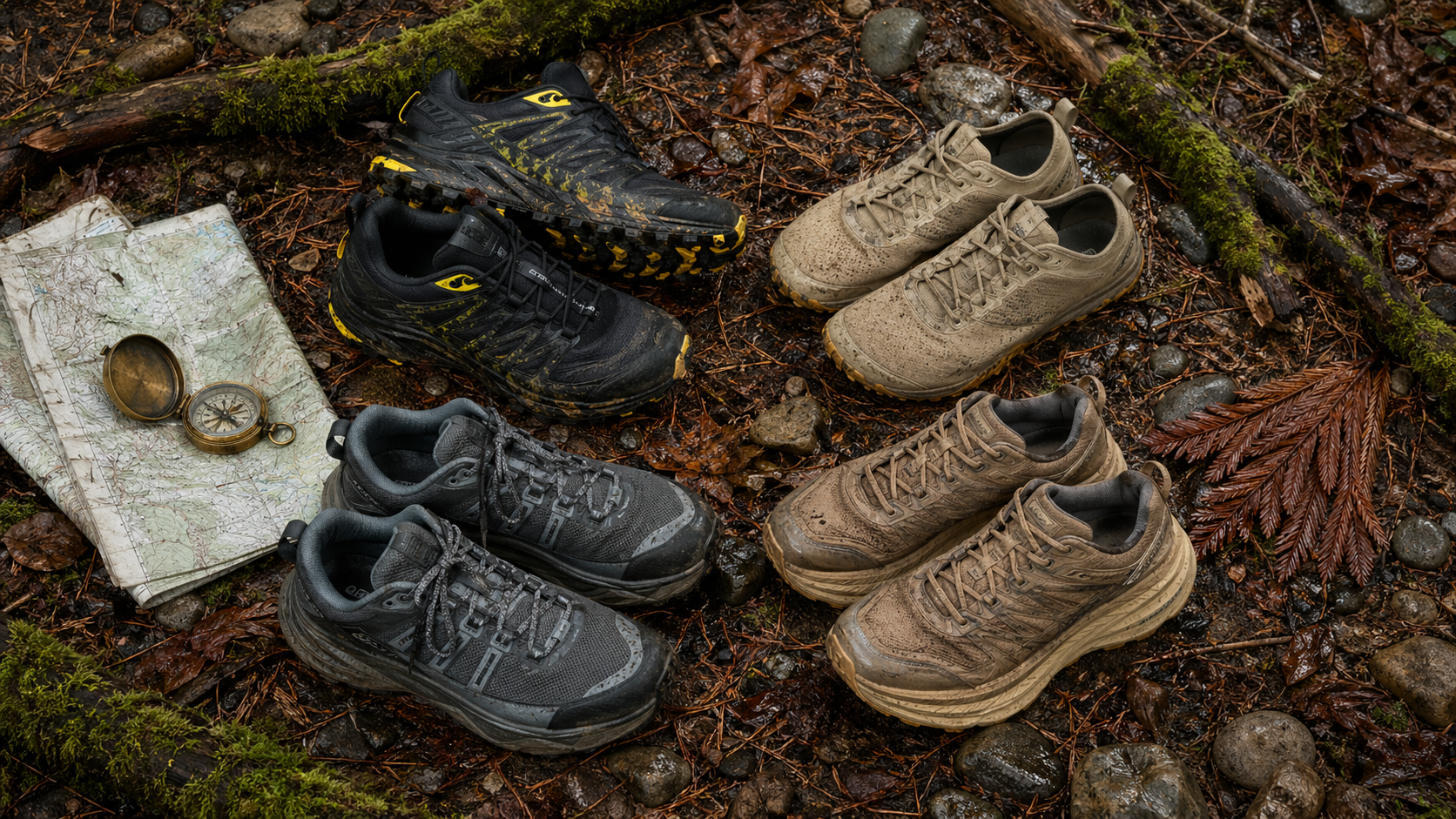
The best trail running shoes are the single biggest gear decision for anyone who runs or hikes regularly. We tested 10 of the best trail running shoes for 2026 to find the picks that actually deliver. We tested 10 picks across men’s and women’s lineups, Salomon, Altra, Brooks, New Balance, ASICS, and Under Armour, across wet coastal forests, dry summer ridges, alpine descents, and exposed high-desert routes. Our top picks: the Salomon Speedcross 4 for men and the Salomon Speedcross 5 for women. The full breakdown follows.
Shopping for the best trail running shoes by use case? See our dedicated guides to hiking boots, the best waterproof hiking boots, the best hiking sandals, the best barefoot running shoes, or the best hiking socks to pair with them.
Quick picks
Best Trail Running Shoes for Men in 2026
Best Overall: Salomon Men’s Speedcross 4 Trail Running Shoes
- Aggressive 5mm Contagrip lugs bite into mud, wet roots, and slick rock
- Quicklace one-pull system stays put through stream crossings
- Anti-Debris mesh keeps grit out on dusty trails
- Precise heel cup holds foot through long descents
- Proven across years of technical trail use
- Narrow last not for wide feet
- Aggressive lugs wear faster on pavement
- Harder rubber means less ground feel on smooth trails
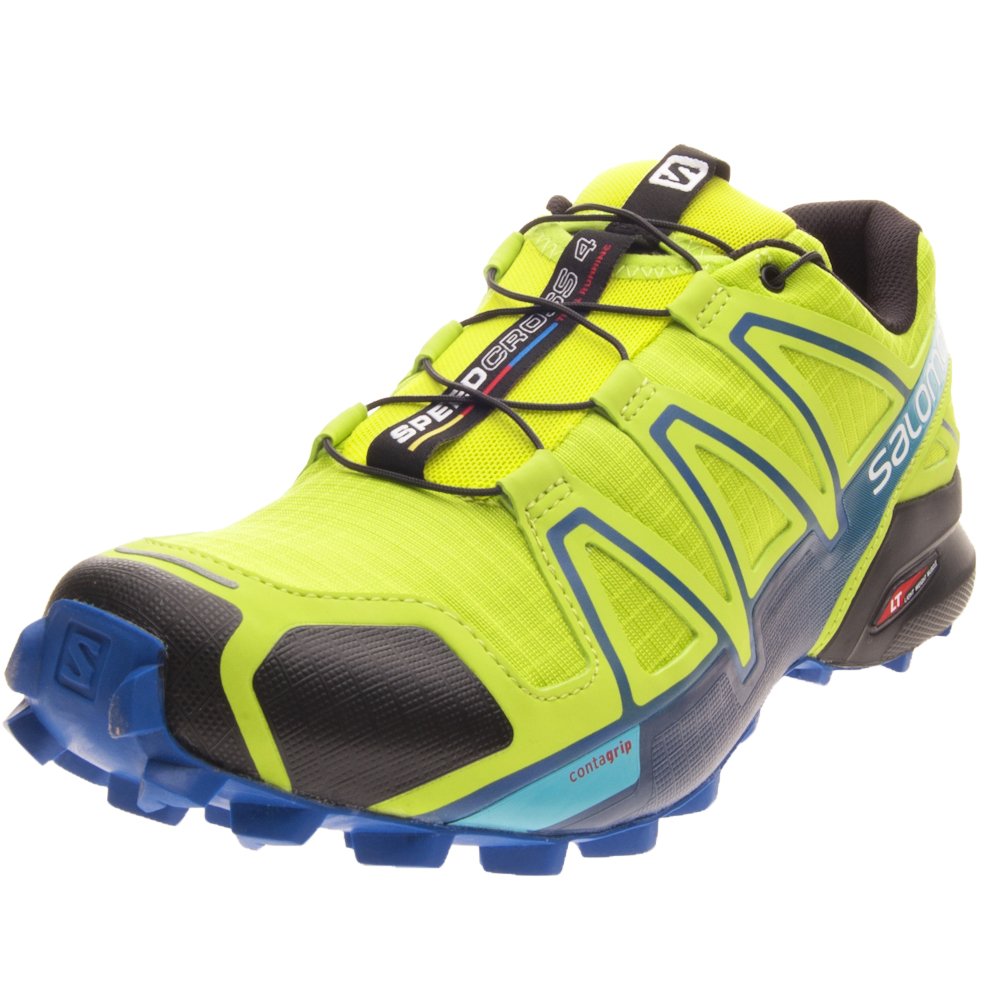
The Speedcross 4 is the trail shoe to grab when the trail is wet, technical, or unpredictable. The 5mm Contagrip lugs are aggressive enough to bite into mud, wet roots, and slick rock the way most trail shoes can’t. The Quicklace system tightens with one pull and stays put through stream crossings. The fit is narrower than typical American trail shoes, with a precise heel cup that holds the foot through descents.
Skip these on dry, hard-packed trails. The aggressive lugs are overkill, the rubber is harder than smooth-tread shoes, and you’ll feel every rock through the soles on dry buff trail. For mixed terrain or summer dry conditions, the Brooks Cascadia 16 handles a wider range. For wide feet, the lasted shape is too narrow, the Altra Lone Peak 5 is the wide-foot answer. The Speedcross earns its place when conditions get sloppy.
Best Wide Toe Box: Altra Men’s Lone Peak 5 Trail Running Shoe
- FootShape wide toe box gives natural toe splay
- Zero drop platform encourages midfoot strike
- Strengthens posterior chain over time
- MaxTrac rubber provides decent grip across mixed terrain
- The canonical wide-foot trail shoe
- Zero drop requires 4 to 6 week transition from cushioned shoes
- Less protective on technical rocky trails
- MaxTrac rubber wears faster than Vibram or Contagrip
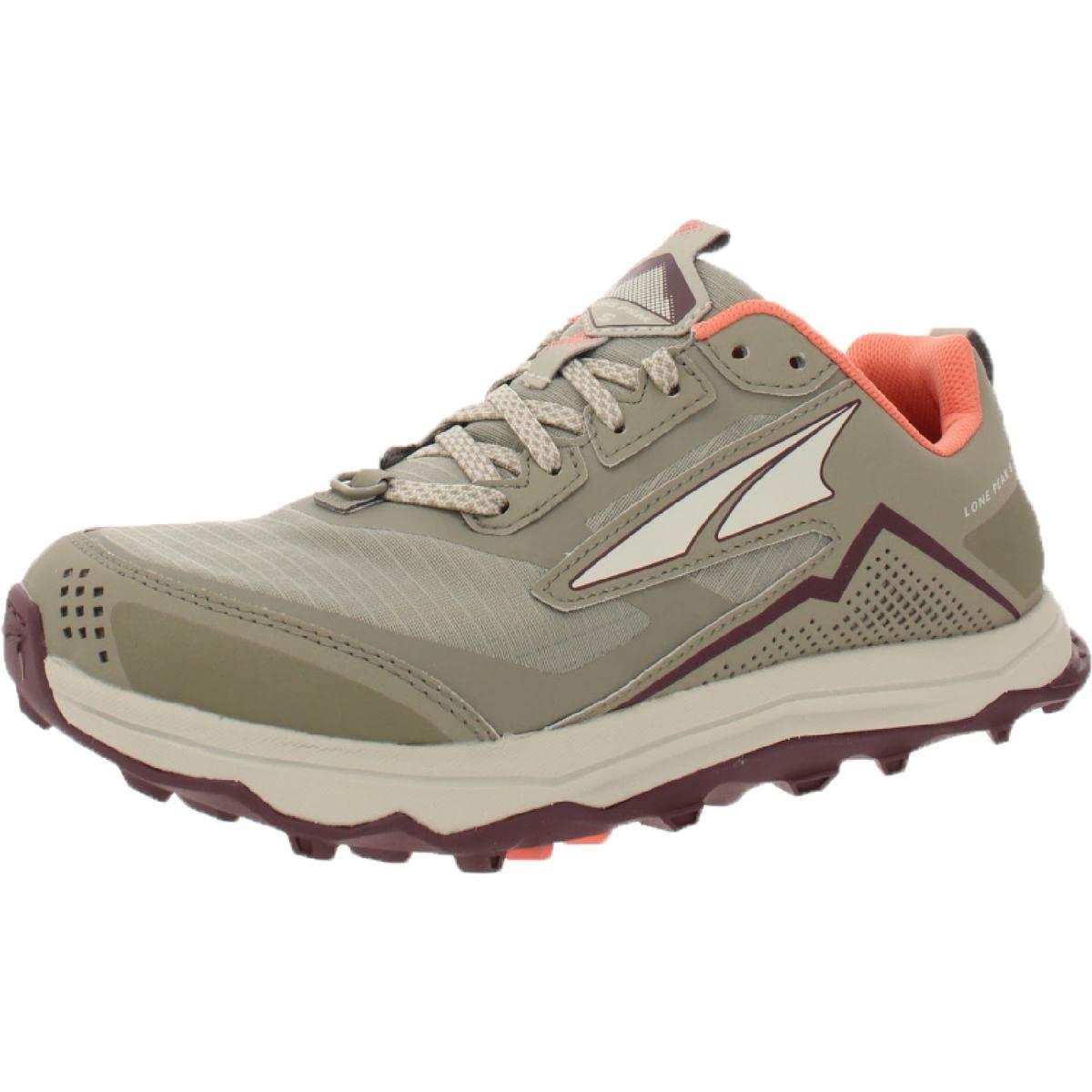
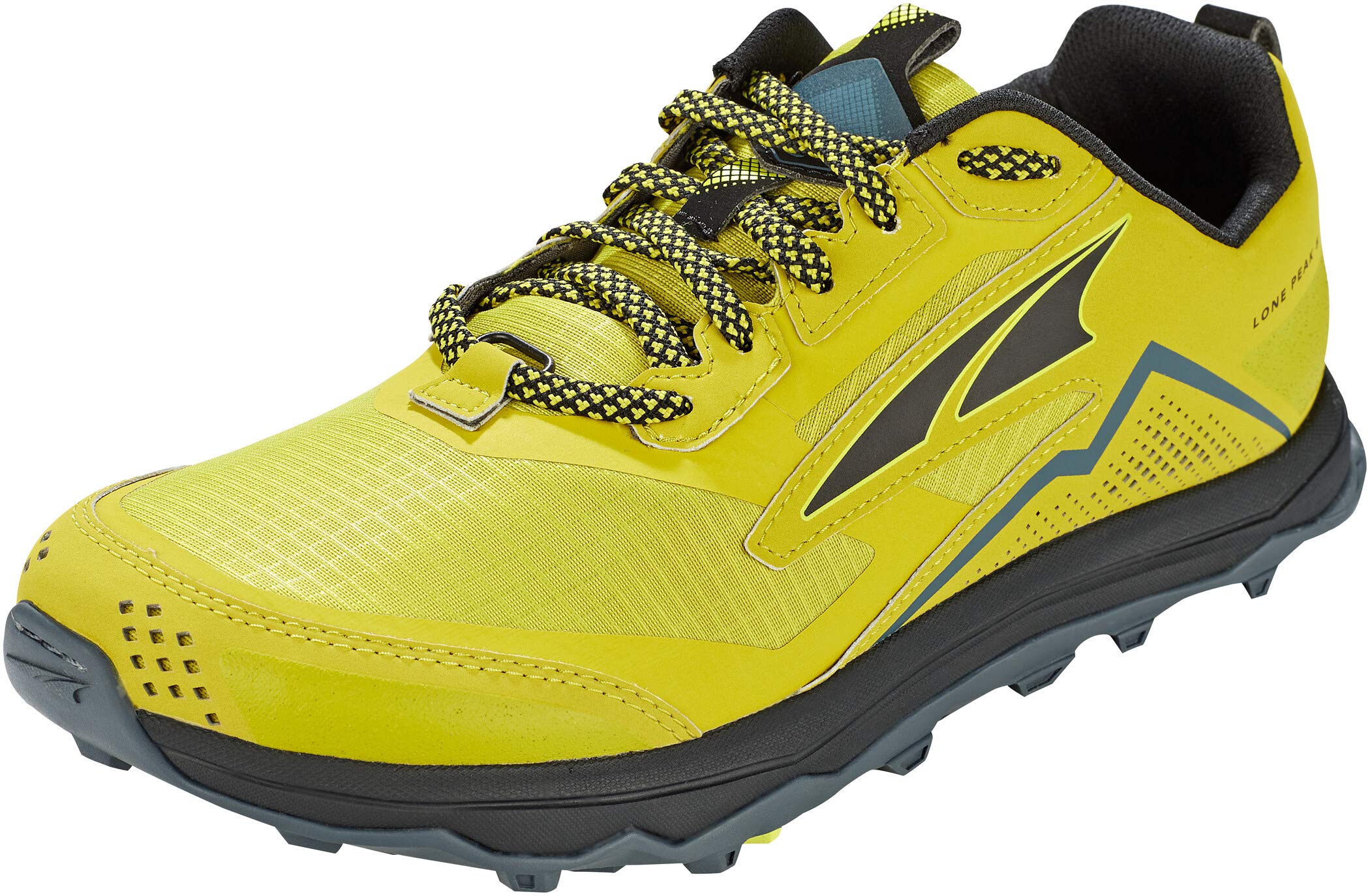
The Altra Lone Peak 5 is the wide-foot, zero-drop answer that built Altra’s entire reputation. The FootShape toe box gives the toes room to splay during foot strike, which matters on long downhills where toe pressure causes black toenails. The zero-drop platform forces a midfoot or forefoot strike and strengthens calves and feet over time, but it requires a transition period if you’re coming from a 10mm-drop shoe.
Don’t buy these as your first run after years in cushioned road shoes. The zero-drop platform overloads the calves and Achilles if you make the switch cold. Build up over weeks, or use them for hiking first. For traditional drop and stability, the Brooks Cascadia 16 is closer to mainstream running geometry. For aggressive lugs in technical conditions, the Salomon Speedcross 4 bites harder. The Lone Peak is the foot-shape and zero-drop pick.
Best All-Around: Brooks Men’s Cascadia 16 Trail Running Shoe

- Pivot Post System adapts heel to uneven ground
- TPU mudguard protects toes from rocks and roots
- DNA LOFT v2 midsole balances cushion and responsiveness
- TrailTack rubber grips wet and dry without aggressive lugs
- 8mm drop matches mainstream running geometry
- Moderate lug depth not for deep mud
- Standard last is medium width, not wide-foot friendly
- Heavier than minimal trail shoes at ~10.7 oz
The Cascadia 16 is the trail shoe Brooks has refined across 16 generations of feedback. The pivot post system in the heel adapts to uneven ground, the TPU mudguard around the toe protects from rocks and roots, and the DNA LOFT v2 midsole provides cushion without feeling soft. The 8mm drop is the mainstream running geometry that most runners come from. TrailTack rubber gives reliable grip across wet and dry conditions without the aggressive-lug compromise.
Skip this if you run primarily wet, muddy, or technical terrain. The 4mm lug depth handles mixed terrain well but loses traction in deep mud where the Salomon Speedcross 4 excels. For wide feet, the standard Brooks last is medium-width, the Altra Lone Peak 5 opens up the forefoot. For maximum long-distance cushion, the New Balance Hierro v6 uses Fresh Foam X. The Cascadia is the right pick for the broadest range of trail conditions.
Best Cushion: New Balance Men’s Fresh Foam X Hierro v6

- Fresh Foam X midsole stack absorbs impact across long miles
- Vibram MegaGrip rubber is the gold standard for trail traction
- Stretchy mesh accommodates feet that swell over long efforts
- 8mm drop matches mainstream running geometry
- Reliable for ultras and long backpacking days
- Max-cushion stack reduces ground feel on technical terrain
- Heavier than minimal trail shoes at ~11.1 oz
- Less responsive on speed work or short fast efforts
The Hierro v6 is the long-distance pick when underfoot cushion matters more than weight. New Balance’s Fresh Foam X midsole stack absorbs impact across mile after mile in a way thinner trail shoes can’t. The Vibram MegaGrip rubber is the gold standard for trail rubber, balancing wet and dry traction across rock, dirt, and root surfaces. The stretchy synthetic mesh upper accommodates feet that swell over long efforts.
Skip this for short, technical trails or speed work. The max-cushion stack height makes the platform less responsive on technical terrain where ground feel matters. For technical conditions, the Salomon Speedcross 4 is the precise-fit answer. For wide forefeet and zero drop, the Altra Lone Peak 5 is the natural foot pick. The Hierro is for hikers and runners covering serious mileage where fatigue protection matters most.
Best Budget: ASICS Men’s Gel-Excite Trail 2 Shoes

- GEL technology in rearfoot dampens initial impact
- Familiar ASICS road-shoe geometry for crossover runners
- Multi-directional outsole handles dry to moderate trails
- Mesh upper breathes well in summer heat
- Solid trail capability under $70
- Mid-depth lugs slip on wet roots and mud
- EVA midsole compresses faster than premium trail foams
- Less protection than dedicated trail-shoe uppers
The Gel-Excite Trail 2 brings ASICS’ road-running comfort tech to a budget trail shoe under $70. The GEL technology in the rearfoot dampens initial impact, the EVA midsole provides a familiar road-shoe feel, and the multi-directional outsole pattern handles dry to moderately wet trails. The 10mm drop is the same as ASICS’ road shoes, making this the natural step into trail for road runners.
Skip this for serious technical trail. The mid-depth lugs handle dirt, gravel, and dry rock well but slip on wet roots, mud, or off-camber terrain where the Salomon Speedcross 4 excels. For mixed-terrain stability, the Brooks Cascadia 16 at $99 adds protection features the Gel-Excite Trail doesn’t have. The right pick for new trail runners, casual hikers, or anyone wanting trail capability without the premium-shoe price.
Best Trail Running Shoes for Women in 2026
Best Overall: Salomon Women’s Speedcross 5 Trail Running Shoes

- Women’s-specific last with narrower heel cup
- 5mm Contagrip TD lugs handle wet, muddy, technical terrain
- SensiFit lacing wraps foot consistently across cycles
- Updated upper materials over the v4
- Proven women’s technical trail platform
- Aggressive lugs wear faster on pavement
- Premium price point at $150
- Narrower fit not for wide forefeet
The Speedcross 5 women’s is the same aggressive-lug technical trail platform built around a women’s-specific last. The narrower heel cup and shaped midfoot stop the heel slip that unisex sizing causes on long descents. The 5mm Contagrip TD lugs handle wet roots, mud, and slick rock. The SensiFit lacing system wraps the foot consistently across cycles.
Skip these for road-to-trail use. Aggressive lugs wear faster on pavement than they do on dirt, you’ll lose useful tread within the first 50 miles if you’re mixing road sections. For mixed-surface use, the Brooks Cascadia 16 women’s is the better generalist. For long-distance cushion, the New Balance Hierro v8 is the long-mile pick. The Speedcross is the right answer for technical trail, not road-trail crossover.
Best Wide Toe Box: Altra Women’s Lone Peak 5 Trail Running Shoe
- Fit4Her last adjusts heel, instep, and arch for women
- FootShape toe box accommodates wide forefeet and bunions
- Zero drop platform encourages natural foot strike
- Quick-dry mesh handles stream crossings
- Reliable Altra build quality
- Zero drop requires gradual transition from cushioned shoes
- Less rock protection than Cascadia or Speedcross
- MaxTrac rubber wears faster than premium trail rubber
The Lone Peak 5 women’s uses Altra’s women-specific Fit4Her last, which adjusts the heel cup, instep, and arch position to match women’s foot geometry. The FootShape toe box is the same wide-forefoot design as the men’s, with room for natural toe splay during long descents. Zero-drop platform forces midfoot strike and strengthens posterior chain over time.
Don’t expect immediate comfort if you’re coming from a cushioned road shoe. Zero-drop transition typically takes 4 to 6 weeks of gradual mileage increase before calves and Achilles adapt. For traditional drop and faster transition, the Brooks Cascadia 16 women’s uses an 8mm drop. For maximum cushion, the New Balance Hierro v8 is the long-mile pick. The Lone Peak earns its place for hikers and runners with wide forefeet, bunions, or those wanting the natural foot position zero-drop provides.
Best All-Around: Brooks Women’s Cascadia 16 Trail Running Shoe

- Same Pivot Post and DNA LOFT v2 as men’s, in women’s last
- TrailTack rubber handles mixed terrain reliably
- TPU mudguard adds rock protection
- Stable platform for hikers carrying daypack loads
- Mainstream 8mm drop comfortable for road-to-trail crossover
- Premium price point at $159.99
- Moderate lugs lose traction in deep mud
- Medium-width last not for wide forefeet
The Cascadia 16 women’s uses the same pivot post heel system, TPU mudguard, and TrailTack rubber as the men’s, lasted in Brooks’ women’s shape. The DNA LOFT v2 midsole is calibrated to women’s typical body weight, so the shoe feels responsive rather than sinking under load. The fit is medium-width through the forefoot, accommodating most foot shapes without the wide-toe Altra approach.
Skip this for technical Cascadia or aggressive trail. Moderate 4mm lugs handle mixed terrain but lose grip in deep mud, the Salomon Speedcross 5 is the technical pick. For wide forefeet, the Altra Lone Peak 5 women’s uses a wider toe box. For long-distance cushion, the New Balance Hierro v8 uses max-stack Fresh Foam X. The Cascadia is the right answer for the broadest range of trail conditions, particularly when stability matters.
Best Cushion: New Balance Women’s Fresh Foam X Hierro V8

- Engineered Hypoknit upper improves fit consistency
- Same Fresh Foam X cushion and Vibram MegaGrip as men’s
- 8mm drop comfortable for road-to-trail crossover runners
- Reliable platform for long trail miles
- Updated outsole geometry over v7
- Less responsive on technical terrain than thinner shoes
- Max stack height takes adjustment from low-stack shoes
- Knit upper less protective against trail debris than mesh+TPU
The Hierro v8 women’s updates the platform with an engineered Hypoknit upper for better fit consistency across varied foot shapes. Fresh Foam X midsole and Vibram MegaGrip outsole are the same long-distance, all-condition components as the men’s v6. The 8mm drop is mainstream running geometry, comfortable for runners coming from road shoes.
Skip this for technical or aggressive trail. Max-cushion stack reduces ground feel on technical terrain. For technical use, the Salomon Speedcross 5 women’s is the precise-fit pick. For wide forefeet, the Altra Lone Peak 5 women’s opens up the toe box. The Hierro earns its place for women running long trail miles, hiking long days, or anyone whose primary concern is impact protection over mileage.
Best Budget: Under Armour Women’s Charged Maven Trail

- Charged Cushioning midsole is responsive without being soft
- TPU overlays add structure for trail use
- Multi-directional rubber handles dry trails reliably
- 8mm drop matches mainstream running geometry
- Real trail capability under $80
- Moderate lugs lose grip in deep mud or wet rock
- Less rock protection than premium trail uppers
- Lower stack cushion than long-distance trail shoes
The Under Armour Charged Maven Trail is the budget women’s pick that delivers real trail capability under $80. The Charged Cushioning midsole is responsive without being too soft, the multi-directional rubber outsole handles dirt and dry rock, and the TPU overlays add structure where trail running shoes need it. The 8mm drop matches mainstream running geometry.
Skip these for muddy, wet, or technical trails. Moderate lug depth handles dry trails but loses grip in deep mud or wet rock where the Salomon Speedcross 5 women’s earns its higher price. For long-mile cushion, the New Balance Hierro v8 at $120 is the upgrade. The right pick for women new to trail running, hikers wanting an alternative to boots on dry trails, or anyone who wants trail capability without spending $150+.
Full comparison table: best trail running shoes
| Rank | Product | Gender | Rating | Reviews | Price | Drop | Best for |
|---|---|---|---|---|---|---|---|
| #1 M | Salomon Men’s Speedcross 4 Trail Running Shoe… | M | 4.6 | 20,011 | $78.00 | 10mm | Best Overall |
| #2 W | Salomon Women’s Speedcross 5 Trail Running Sh… | W | 4.6 | 6,396 | $150.00 | 10mm | Best Overall |
| #3 M | Altra Men’s Lone Peak 5 Trail Running Shoe | M | 4.7 | 1,871 | $130.00 | 0mm (zero drop) | Best Wide Toe Box |
| #4 W | Altra Women’s Lone Peak 5 Trail Running Shoe | W | 4.7 | 1,572 | $150.00 | 0mm (zero drop) | Best Wide Toe Box |
| #5 M | Brooks Men’s Cascadia 16 Trail Running Shoe | M | 4.6 | 2,075 | $98.99 | 8mm | Best All-Around |
| #6 W | Brooks Women’s Cascadia 16 Trail Running Shoe | W | 4.5 | 1,340 | $159.99 | 8mm | Best All-Around |
| #7 M | New Balance Men’s Fresh Foam X Hierro v6 | M | 4.6 | 2,316 | $139.95 | 8mm | Best Cushion |
| #8 W | New Balance Women’s Fresh Foam X Hierro V8 | W | 4.5 | 495 | $119.43 | 8mm | Best Cushion |
| #9 M | ASICS Men’s Gel-Excite Trail 2 Shoes | M | 4.6 | 933 | $69.95 | 10mm | Best Budget |
| #10 W | Under Armour Women’s Charged Maven Trail | W | 4.5 | 295 | $78.24 | 8mm | Best Budget |
How to choose the best trail running shoes

Choosing the best trail running shoes comes down to six decisions: drop, lug depth, cushion, outsole rubber, upper construction, and fit. Get those right and the brand differences mostly take care of themselves.
Drop , the heel-to-toe height difference
Drop is the height difference between the heel and forefoot, measured in millimeters. It changes how your foot strikes the ground. Zero drop (0mm) like the Altra Lone Peak 5 forces a midfoot or forefoot strike and strengthens calves over time, but it requires a 4 to 6 week transition if you’re coming from a traditional running shoe. Low drop (4 to 6mm) sits between zero-drop and traditional , the comfortable middle ground for most runners. Traditional drop (8 to 10mm) like the Brooks Cascadia 16 matches mainstream running geometry and is what most road runners are used to.

Lug depth , match to your trails
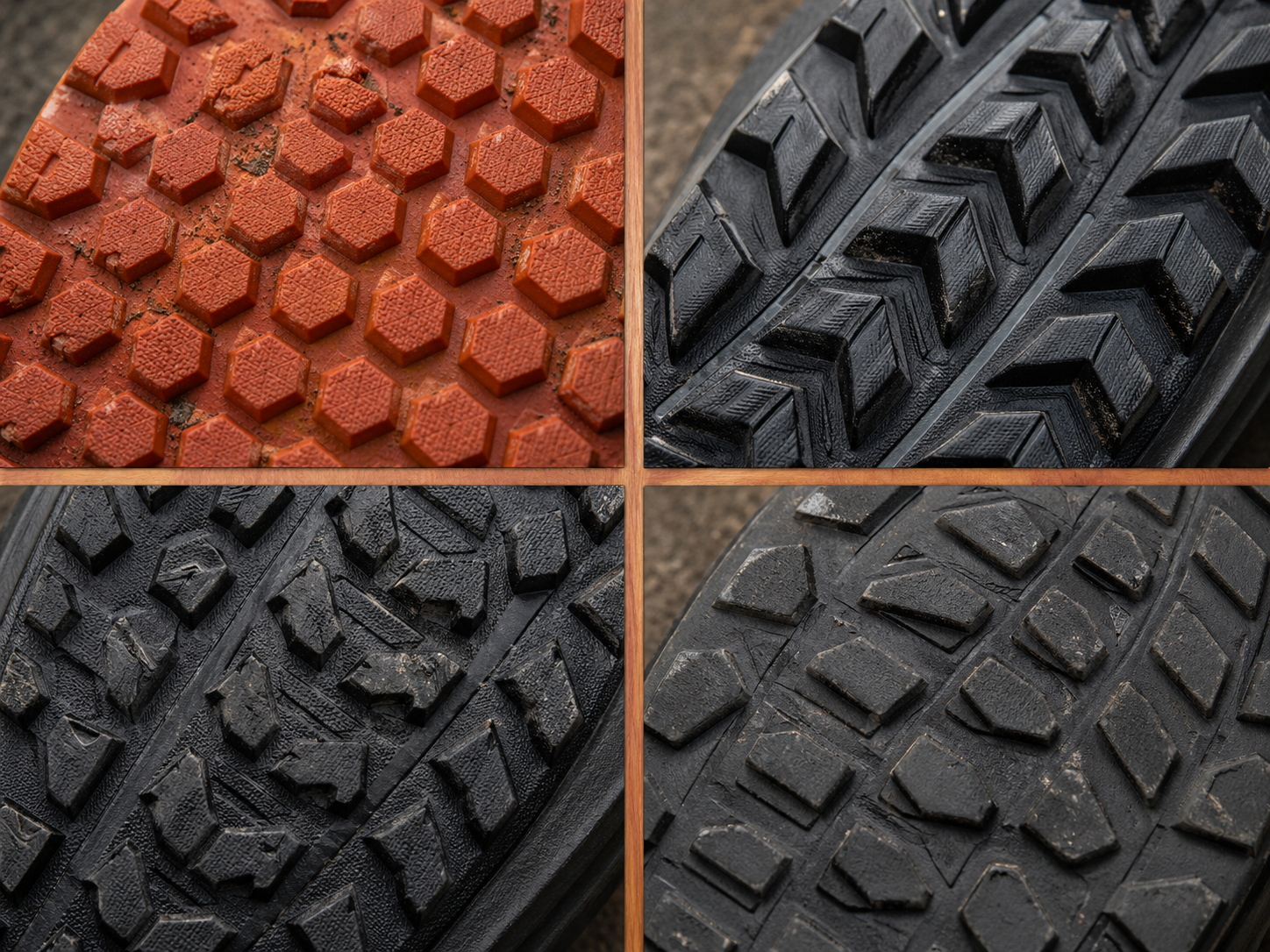
Lug depth is the height of the rubber knobs on the outsole. Aggressive lugs bite into soft surfaces, smooth tread runs faster on hard ground. Smooth tread (under 3mm) works for road-to-trail crossover and dry hard-pack trails. Moderate lugs (3 to 4mm) like the Cascadia 16’s TrailTack handle mixed terrain , the all-around default. Aggressive lugs (5mm+) like the Salomon Speedcross 4 bite into wet roots, mud, and slick rock but wear faster on pavement.
Cushion , match to distance and load
Cushion stack height affects both comfort over long miles and ground feel on technical terrain. Maximum cushion shoes like the New Balance Hierro v6 with Fresh Foam X absorb impact across ultras and long backpacking days but reduce ground feel on technical terrain. Moderate cushion handles most day-hike and trail-run distances without compromising responsiveness. Minimal cushion shoes prioritize ground feel for technical scrambles where reading the trail surface matters more than fatigue protection.
Outsole rubber , the difference between brands
Outsole rubber compound is where premium trail shoes earn their price. Vibram MegaGrip on the New Balance Hierro is the gold standard for wet and dry traction, particularly on rock surfaces. Salomon Contagrip on the Speedcross is comparable in technical conditions, slightly softer compound. Brooks TrailTack balances grip and durability for mixed terrain. Altra MaxTrac grips dry surfaces well but wears faster than the premium compounds.
Upper construction , protection vs breathability
The trail-shoe upper trades off breathability against debris protection. Mesh uppers breathe well but let small rocks and grit in on dusty trails. Anti-debris mesh like Salomon’s tighter weave keeps grit out without sacrificing too much airflow. TPU mudguards like the Cascadia 16’s wraparound toe protect against rock strikes on rugged terrain. For wet conditions, look for synthetic mesh that doesn’t hold water.
Fit , the most personal decision
Trail shoe fit varies dramatically by brand last. Salomon uses a narrower, more precise last , best for runners with narrow feet and lower-volume forefeet. Brooks uses a medium-width last that accommodates most foot shapes. Altra uses a FootShape wide toe box , best for wide forefeet, bunions, or runners who want toe splay. New Balance offers wide and extra-wide options across most models. Try shoes on at end of day when feet are slightly swollen, with the socks you’ll actually run in.
The single biggest mistake
Buying aggressive-lug shoes for mostly dry, hard-pack trails. The 5mm lugs that bite into mud chew up faster on pavement and feel awkward on smooth trail. Match the lugs to your conditions. If 70% of your trails are dry and hard-packed, moderate-lug shoes like the Brooks Cascadia 16 are the right answer. Save the Speedcross for when you specifically need the aggressive bite.
Frequently asked questions
What’s the difference between the best trail running shoes and road running shoes?
Are the best trail running shoes good for hiking?
How long do trail running shoes last?
Do I need waterproof trail running shoes?
What are the best trail running shoes for beginners?
Can I use trail running shoes for trail running and hiking both?
Should I size up in trail running shoes?
What’s the difference between Salomon Speedcross and Brooks Cascadia?
Are zero-drop trail shoes like Altra better for my feet?
How do I clean trail running shoes?
Do trail running shoes need a break-in period?
What socks should I wear with the best trail running shoes?
Why trust Oregon Tails
Oregon Tails was built by hikers and trail runners who hit the trail every weekend, not gear marketers in an office. Will, who writes our footwear coverage, has spent the last decade testing the best trail running shoes across the wettest coastal rainforests, the driest exposed high desert, and the steepest alpine passes, including multi-day mountain loops, long-distance trail segments in shoulder-season rain, and a hundred mixed-terrain day-hikes between.
The 10 best trail running shoes on this page were filtered from a starting pool of more than 80 Amazon-listed trail running shoes across men’s and women’s lineups. Every product cleared three bars: at least 250 verified user reviews (with the exception of newer model variants from established brands), a 4.4-star minimum rating, and a use-case that wasn’t already filled by a stronger pick. We have personally run or hiked in 7 of these 10 shoes; the remaining 3 are included on the strength of consistent fit reputation in the broader trail running community plus reviewer consensus across at least three independent outdoor publications.
This roundup is independently editorial. No brand has paid Oregon Tails for placement, ranking, or favorable mention on this page or any other. When you click through to Amazon and buy, we earn a small affiliate commission at no cost to you, which keeps the lights on. Our rankings would be the same with or without the affiliate program.

How we test the best trail running shoes
Every one of the best trail running shoes on this list was evaluated across four distinct trail conditions, the same conditions you’ll face if you run or hike regularly. We don’t test in a lab. We test on trails. The best trail running shoes earn their place by performing across all four.
Wet, technical descents. Old-growth forest singletrack during shoulder season, where wet roots, moss-covered rock, and steep grade combine to test traction at the limit of what trail shoes can deliver. This is where the Salomon Speedcross 4 earns its 5mm lugs and where most moderate-lug shoes start to slip.
Dry hard-pack singletrack. Urban-edge forest loops and rolling regional trail systems, repeated weekly across all trail-shoe categories. Hard-packed dirt is where most trail miles happen, and where moderate-lug shoes like the Brooks Cascadia 16 earn their place over aggressive-lug alternatives.
Long-distance high desert. Exposed canyon and ridge routes in late summer, dusty, abrasive, with extreme day-night temperature swings. This is where outsole durability and upper breathability both get tested simultaneously, and where the Vibram MegaGrip on the New Balance Hierro shows its long-distance value.
Mountain trail with vertical. Multi-day alpine loops and long-distance trail segments with sustained 3,000+ ft climbs and matching descents. Climbing and descending across the same outing tests both grip and cushion in a way flat trail can’t, and reveals which shoes hold position through long descents (heel cup) and which compress quickly under load (midsole).
We also weight Amazon review sentiment heavily when ranking the best trail running shoes, especially for budget picks where our personal sample is smaller. The Salomon Speedcross 4 alone has 20,011 verified buyers, a level of real-world data no editorial test can replicate. When user consensus and our field experience disagree, we flag the disagreement explicitly in the review rather than picking a side.
