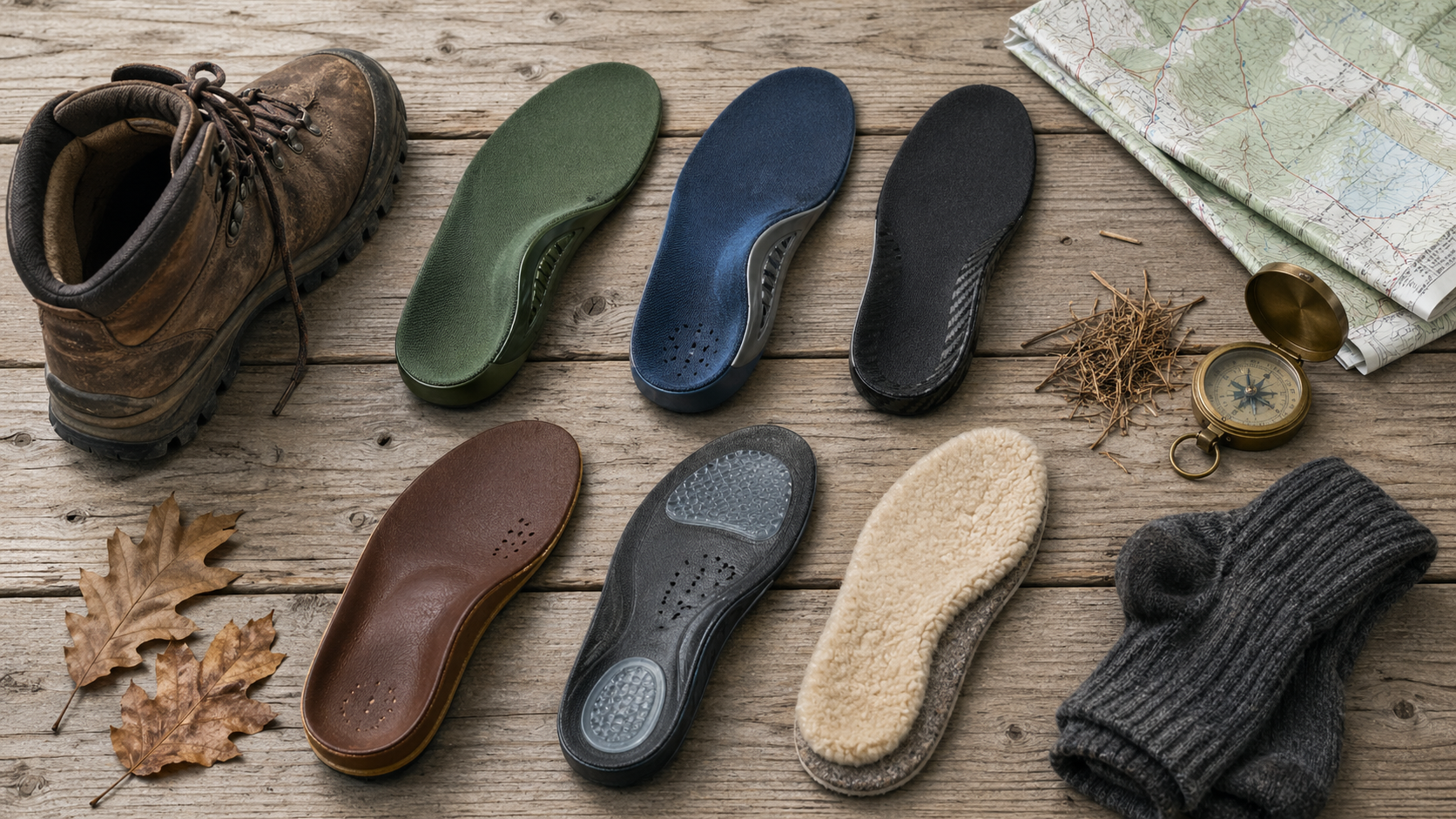
Best Insoles for Hiking of 2026
The best insoles for hiking are the cheapest gear upgrade that delivers the biggest difference in how your feet feel after a long day on the trail. We tested 12 of the best insoles for hiking across men’s, women’s, and unisex picks , Superfeet, PowerStep, Spenco, Dr. Scholl’s, Timberland PRO, and KEEN, evaluated on arch support, cushion, durability, and boot-fit compatibility. Our top picks: the Timberland PRO Anti-Fatigue for men, the Superfeet Blue for women, and the PowerStep Original for unisex.
Shopping for the best insoles for hiking by use case? See our dedicated guides to hiking boots, lightweight hiking boots, waterproof hiking boots, hiking socks, or trail running shoes to pair them with.
Quick picks


Best Insoles for Hiking , Men’s Picks
Best for Hiking Boots: Timberland PRO Men’s Anti-Fatigue Technology Replacement Insole
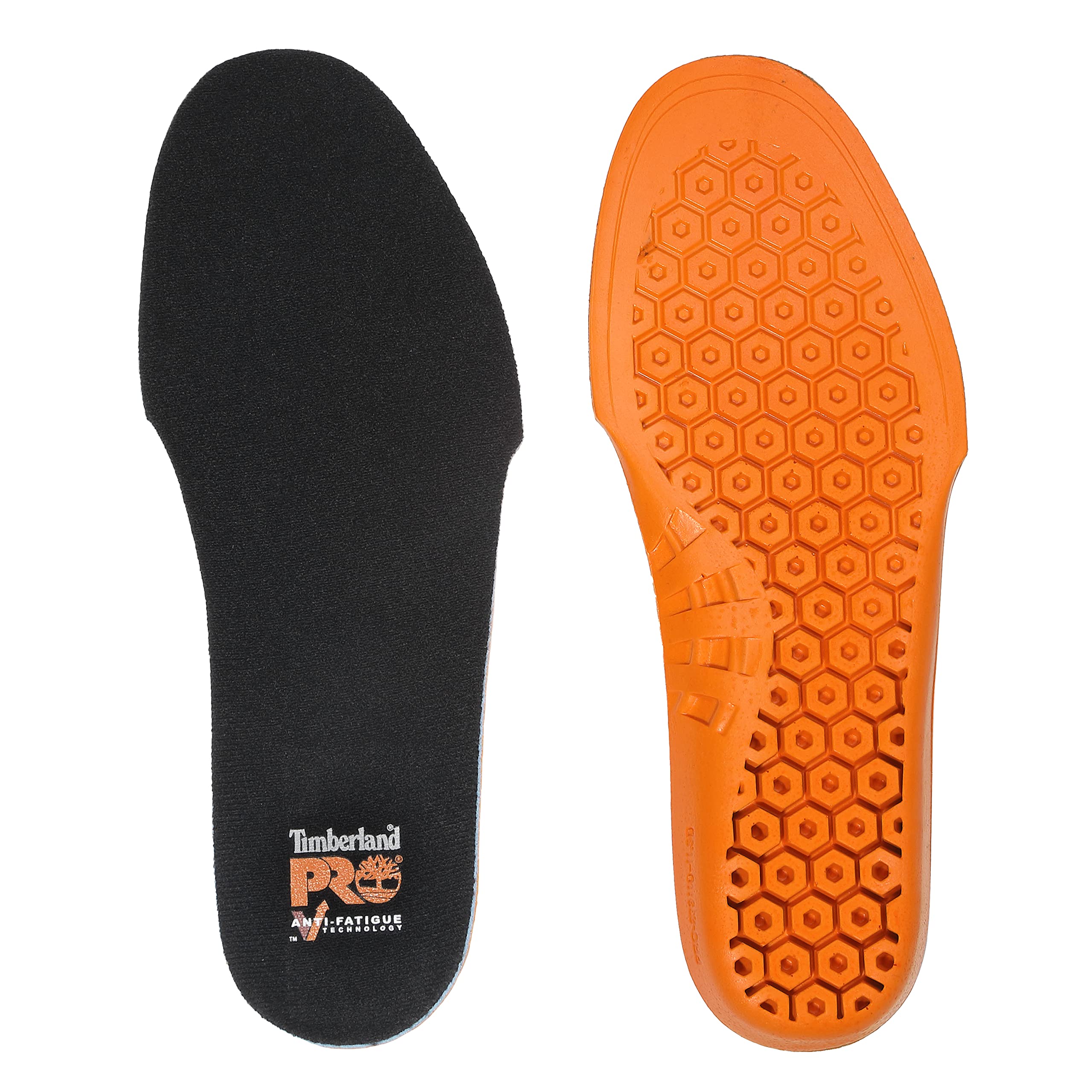
- Anti-Fatigue Technology returns energy with each step
- Full-length design fits hiking and work boots properly
- Gel inserts under heel and ball of foot for shock absorption
- Documented effective at reducing end-of-day fatigue
- Trim-to-fit for boot-specific sizing
- Too thick for tight-fitting trail runners
- Less arch support than dedicated orthotic insoles
- Premium price for a comfort insole
The Timberland PRO Anti-Fatigue insole is the boot wearer’s pick. Timberland’s Anti-Fatigue Technology, one of the best insoles for hiking technologies, uses a geometric inverted-cone design in the midsole that returns energy back to the foot with each step, the science behind why your feet hurt less at the end of a 12-hour day in these versus a standard foam insole. The full-length design fits properly in hiking boots, work boots, and over-the-ankle footwear without bunching at the toe.
Skip these for thin running shoes or low-volume athletic footwear. The full-length, slightly thicker construction takes up real space, the right call for boots, the wrong call for tight-fitting trail runners where the Spenco Cross Trainer would fit better. For more aggressive arch support, the PowerStep Original has a more pronounced arch shell. The Timberland PRO earns its place specifically as the boot-friendly cushion insole, not an orthotic.
Best Heavy-Duty: Dr. Scholl’s Heavy Duty Support Insole Orthotics, Big & Tall, 200lbs+, Wide Feet, Shock Absorbing, Arch Support, Distrib
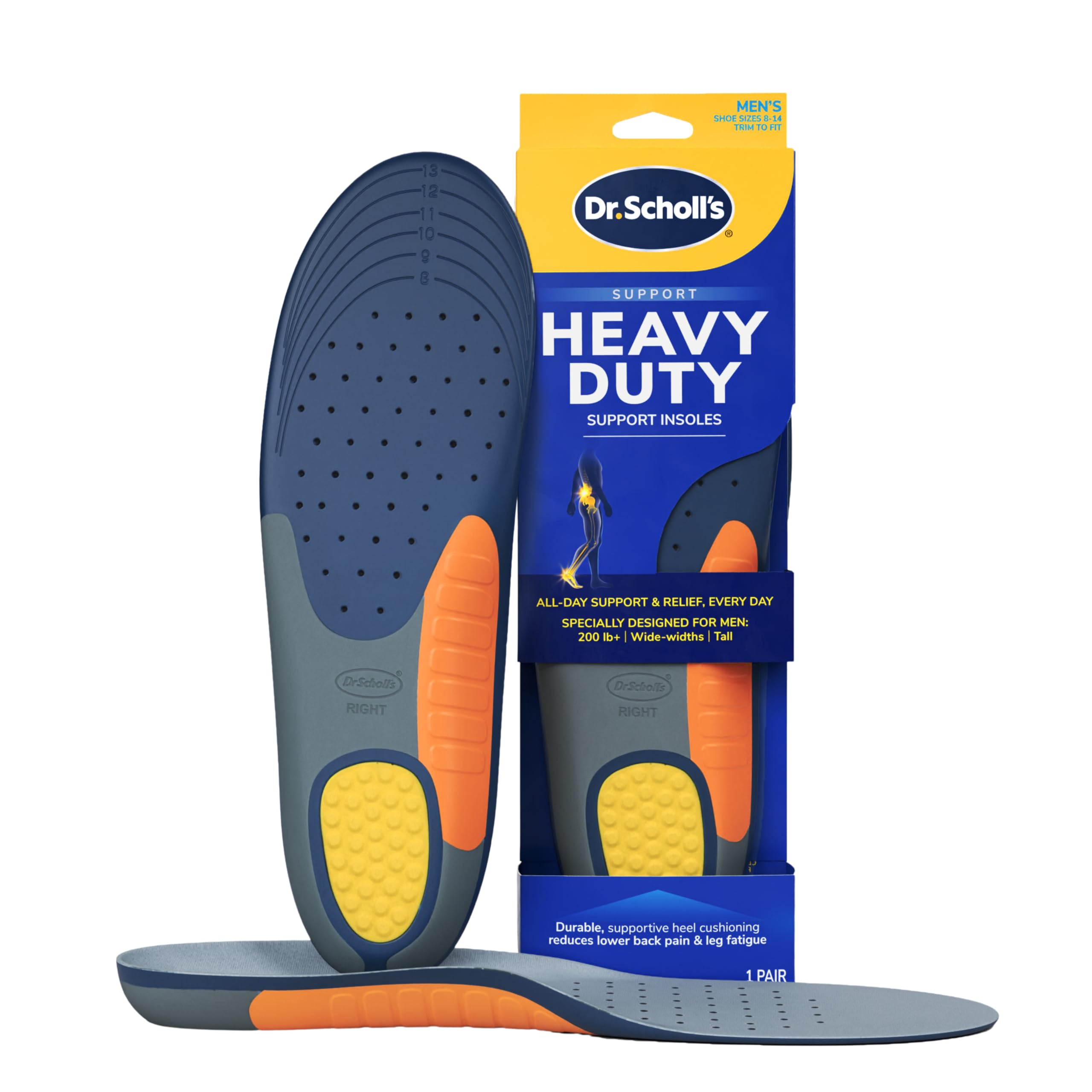
- Reinforced foam handles 200+ lb hikers without compressing
- Wide-foot construction adds real width across midfoot
- Sub-$15 price for serious cushion
- Trim-to-fit for boot-specific sizing
- Massive review validation across years of use
- Overkill for hikers under 180 lbs
- Wide footbed leaves gaps in standard-width boots
- Foam compresses faster than premium structural insoles
Dr. Scholl’s Heavy Duty Big & Tall is engineered for hikers over 200 lbs, the reinforced shock-absorbing foam handles the additional load that crushes standard insoles within a few hikes. The wide-foot construction adds real width to the midfoot and forefoot, the difference between an insole that fits and one that pinches. At under $15, this is the entry-point insole that punches well above its price.
Skip these if you weigh under 180 lbs or have narrow feet. The reinforced construction is overkill for lighter hikers, and the wider footbed leaves gaps in standard-width boots. For lighter hikers, the Dr. Scholl’s Sport is the better fit at the same price. For premium custom orthotics, the Custom Fit 3/4 is the upgrade. The Heavy Duty earns its place specifically for bigger guys hiking in wide-fit boots.
Best Premium: Dr. Scholl’s Custom Fit Orthotics 3/4 Length Arch Support Shoe Inserts – Plantar Fasciitis Relief Insoles for Men and Wo

- Custom-fitted to one of fourteen mapped profiles
- 3/4 length leaves forefoot space free for tight boots
- Heel and arch support engineered to your specific foot
- Genuinely different than off-the-shelf alternatives
- Effective for diagnosed foot conditions
- Requires kiosk access for proper fitting
- Premium price for a 3/4 length insole
- No forefoot cushion , by design
The Dr. Scholl’s Custom Fit 3/4 is the orthotic that the kiosk system maps to your specific foot, an in-store machine measures your arch type, foot length, and pressure points, then matches you to one of fourteen profiles. The 3/4 length means heel and arch support without taking up forefoot space, ideal for hiking boots that are already fitted snug. The custom-mapped fit is genuinely different than the off-the-shelf insoles in the same lineup.
Skip these if you can’t access a Dr. Scholl’s kiosk. The product’s value is in the personalized fit profile, buying blind without the kiosk mapping is a guess. For non-custom orthotic relief, the PowerStep Original at $45 is the best off-the-shelf alternative. For full-length cushion, the Timberland PRO Anti-Fatigue serves the boot use case. The Custom Fit earns its place when you’ve done the kiosk mapping and know your specific number.
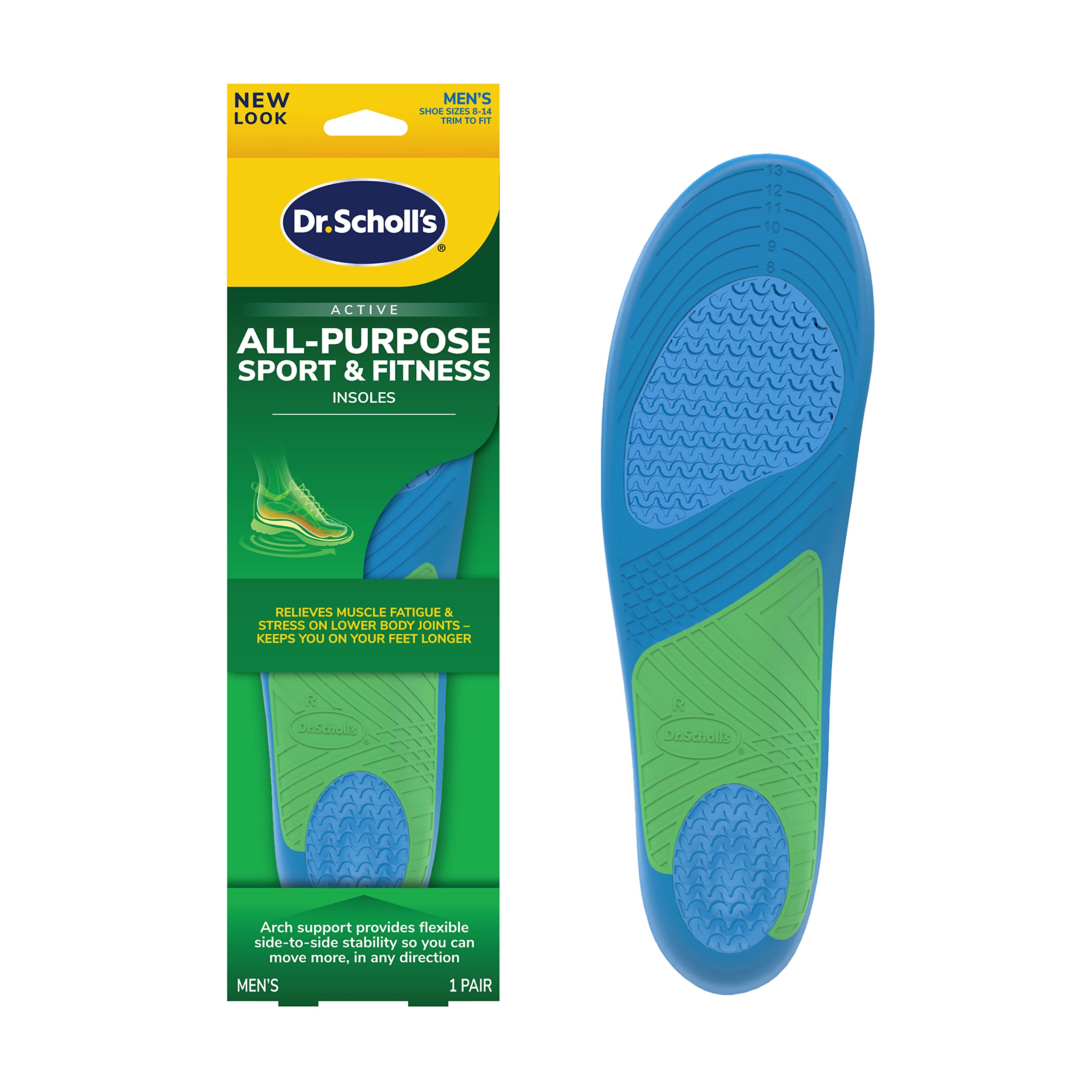
Best for Active Hiking: Dr. Scholl’s Sport Insoles – Superior Shock Absorption and Arch Support to Reduce Muscle Fatigue and Stress on Lower Bod
- Shock-absorbing foam under heel and ball of foot
- Medium arch support without orthotic rigidity
- Sub-$15 price for active-day cushion
- Works interchangeably across boots and athletic shoes
- Trim-to-fit construction
- Comfort cushion, not orthotic support
- Foam compresses faster than premium alternatives
- Insufficient for diagnosed plantar fasciitis
The Dr. Scholl’s Sport Insole is the active hiker’s sub-$15 pick. Shock-absorbing foam under the heel and ball of foot handles the impact of fast-paced hiking and trail running, and the medium arch support is appropriate for most foot types without the rigid feel of dedicated orthotic insoles. The full-length trim-to-fit construction works in hiking boots, trail runners, and athletic footwear interchangeably.
Skip these for serious arch support needs. The Sport insole is a comfort cushion, not an orthotic, hikers with diagnosed plantar fasciitis or significant arch pain need the PowerStep Original or PowerStep Pinnacle 3/4 for real relief. For heavier hikers, the Dr. Scholl’s Heavy Duty is the load-bearing pick. The Sport earns its place for active, healthy-foot hikers wanting cushion without orthotic stiffness.
Best Insoles for Hiking , Women’s Picks
Best Premium: Superfeet All-Purpose Support Medium Arch Insoles (Blue) for Active Lifestyle with Medium Arch Support – Men 9.5-11 / Wo
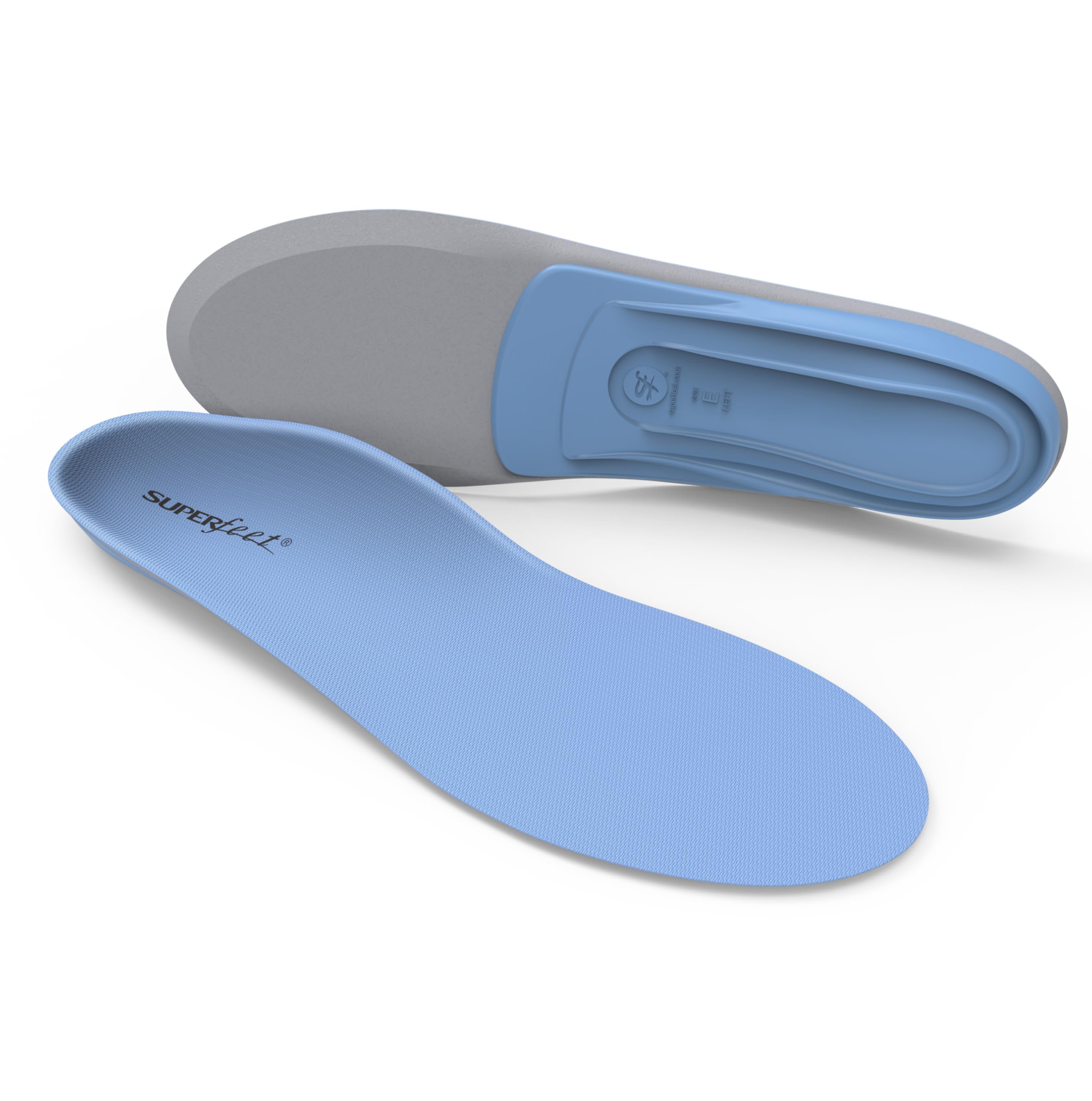
- Medium-arch benchmark , the standard others compete against
- Deep heel cup stabilizes foot during heel strike
- Closed-cell foam resists compression across thousands of miles
- Organic odor control built into the foam
- 60-day fit guarantee plus multi-year documented lifespan
- Premium $60 price point
- Wrong fit for low or high arches , match arch height carefully
- Structural shell takes break-in time
Superfeet Blue is the medium-arch benchmark, the insole every other medium-arch insole gets compared to. The deep heel cup stabilizes the foot during heel strike, the structured arch support shell prevents the arch from collapsing under load, and the closed-cell foam doesn’t compress the way cheap foam alternatives do across hundreds of miles. At $60, this is genuine premium pricing, but Superfeet’s 60-day fit guarantee plus their documented multi-year lifespan make the math work.
Skip these if you have low arches or flat feet. The Blue’s medium arch profile creates pressure points for low-arch foot types, the Superfeet Black is purpose-built for that case. For high arches, the Superfeet Green (not on this list, search separately) is the high-arch equivalent. For sub-$30 budget alternatives, the Dr. Scholl’s Work Insoles deliver real cushion without the premium structural support. The Blue earns its place as the women’s medium-arch standard.
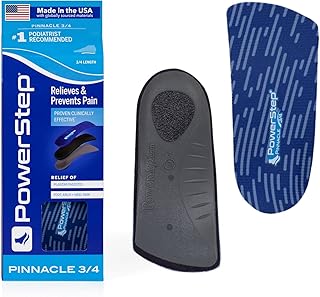
Best for Plantar Fasciitis: PowerStep Pinnacle 3/4 Orthotic Insole for Tight Shoes, Plantar Fasciitis Relief, Arch Supports Orthotic Insoles for Wom
- Designed specifically for plantar fasciitis relief
- 3/4 length leaves forefoot space free for tight hiking boots
- Semi-rigid arch shell delivers real structural support
- Most-recommended brand by podiatrists for plantar fasciitis
- Dual-layer cushioning under the heel
- Semi-rigid arch shell uncomfortable for non-plantar-fasciitis users
- No forefoot cushion , by design
- Takes break-in time before feeling right
The PowerStep Pinnacle 3/4 was designed specifically for plantar fasciitis relief in tight-fitting footwear. The 3/4 length leaves the forefoot space free, critical for hiking boots already fitted to the foot, while the dual-layer cushioning under the heel and the semi-rigid arch shell deliver the structural support that plantar fasciitis cases need. The PowerStep brand is the most-recommended brand by podiatrists for this specific condition.
Skip these if you don’t have plantar fasciitis or arch pain. The semi-rigid arch shell is intentional structural support, hikers without arch issues find it uncomfortable. For general comfort cushion, the Dr. Scholl’s Work Insoles are the better pick. For full-length premium support, the Superfeet Blue is the upgrade. The PowerStep Pinnacle 3/4 earns its place specifically for women with plantar fasciitis hiking in tight boots.
Best for Low Arches: Superfeet All-Purpose Support Low Arch Insoles (Black) for Active Lifestyle with Low Arch Support – 7.5-9 Men / 8.5-10 W
- Low-profile design fits narrow shoes and tight boots
- Subtle arch support appropriate for low-arch foot types
- Closed-cell foam resists compression long-term
- Slimmer construction than Blue or Green Superfeet variants
- 60-day fit guarantee
- Wrong fit for normal or high arches , creates fatigue
- Premium $60 price point
- Less cushion than full-thickness insoles
Superfeet Black is the low-profile counterpart to Blue and Green, designed for low arches, flat feet, and narrow shoe fits. The arch profile is subtle but still structural, providing alignment support without forcing a high arch shape onto a foot that doesn’t have one. The slimmer overall construction means it fits in dress shoes, narrow trail runners, and tight hiking boots where bulkier insoles displace the foot.
Skip these if you have a normal or high arch. Forcing a low-arch insole into a normal-arch foot creates fatigue at the end of long days. For medium arches, the Superfeet Blue is the right call. For plantar fasciitis specifically, the PowerStep Pinnacle 3/4 handles that case better. The Superfeet Black earns its place for women with confirmed low or flat arches who need structural support without aggressive arch lift.
Best Budget: Dr. Scholl’s Work Insoles (Pack) // All-Day Shock Absorption and Reinforced Arch Support That Fits in Work Boots and Mor

- Most-bought women’s work insole on the market
- Massaging Gel foam comfortable from first wear
- Reinforced arch support sufficient for most foot types
- Sub-$30 price for a multi-pack
- Trim-to-fit construction
- Generic arch support , not orthotic level
- Foam compresses faster than premium alternatives
- Insufficient for diagnosed foot conditions
Dr. Scholl’s Work Insoles for women is the most-bought of the best insoles for hiking in the women’s category by review volume. The Massaging Gel foam delivers all-day comfort, and the reinforced arch support is enough to prevent end-of-day arch pain without crossing into orthotic territory. At $25 for a multi-pack, this is genuinely the price-to-performance benchmark for the women’s budget tier.
Skip these if you have specific arch issues. The reinforced arch support is generic, women with diagnosed plantar fasciitis or significant flat feet need the PowerStep Pinnacle 3/4 or Superfeet Black respectively. For premium structural support across multi-year lifespan, the Superfeet Blue is the upgrade. The Dr. Scholl’s Work Insoles earn their place as the proven low-cost option , real validation from real buyers across millions of pairs sold.
Best Insoles for Hiking , Unisex Picks
Best Overall: PowerStep Original Insoles, Arch Pain Relief Orthotics, Tight Shoes, Foot Support for Plantar Fasciitis, Mild Pronation,
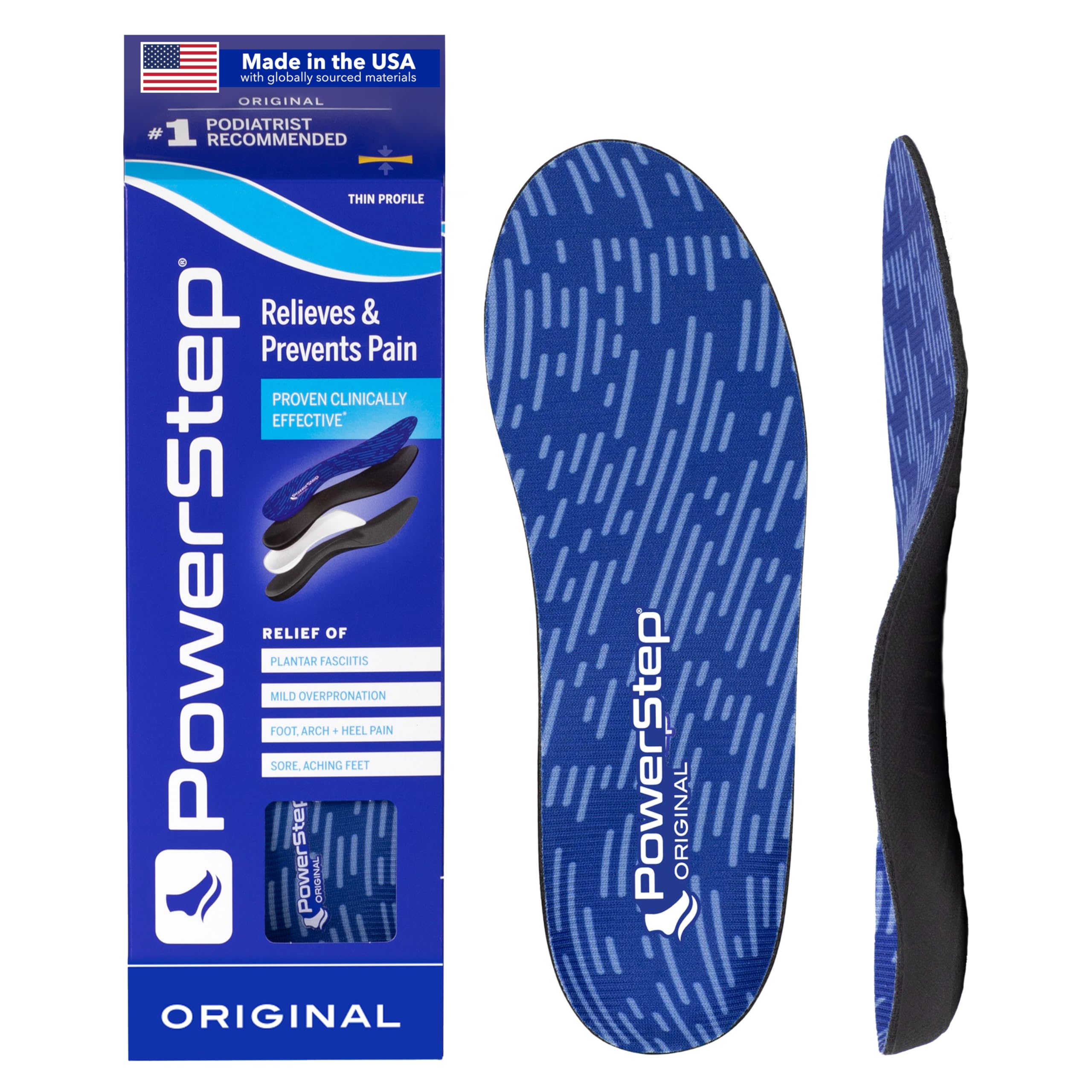
- Most-recommended unisex orthotic by podiatrists
- Sweet spot between structural support and comfort
- Dual-layer EVA cushioning over semi-rigid arch shell
- Full-length construction works across all footwear types
- Real plantar fasciitis and arch pain relief
- Wrong fit for low or flat arches
- Semi-rigid feel takes break-in time
- Mid-tier price for hikers wanting just cushion
PowerStep Original is the most-recommended unisex orthotic on the market, podiatrists hand them out specifically because they hit the sweet spot between structural support and comfort cushioning. The dual-layer EVA cushioning sits over a semi-rigid arch shell, delivering the alignment correction that plantar fasciitis and arch pain cases need without the rigid feel of medical-grade orthotics. Full-length construction works in hiking boots, athletic shoes, and casual footwear interchangeably.
Skip these if you have low arches or flat feet. The built-in arch support is medium-height, low-arch users find it creates pressure points. For low arches, the Superfeet Black is the better fit. For boot-specific anti-fatigue cushion without orthotic structure, the Timberland PRO Anti-Fatigue is the alternative. The PowerStep Original earns its place as the best general-purpose unisex orthotic, the right answer for hikers new to insoles or anyone with arch pain that doesn’t require a custom fitting.
Best from a Hiking Brand: KEEN Utility Mens Utility K-20 Cushion
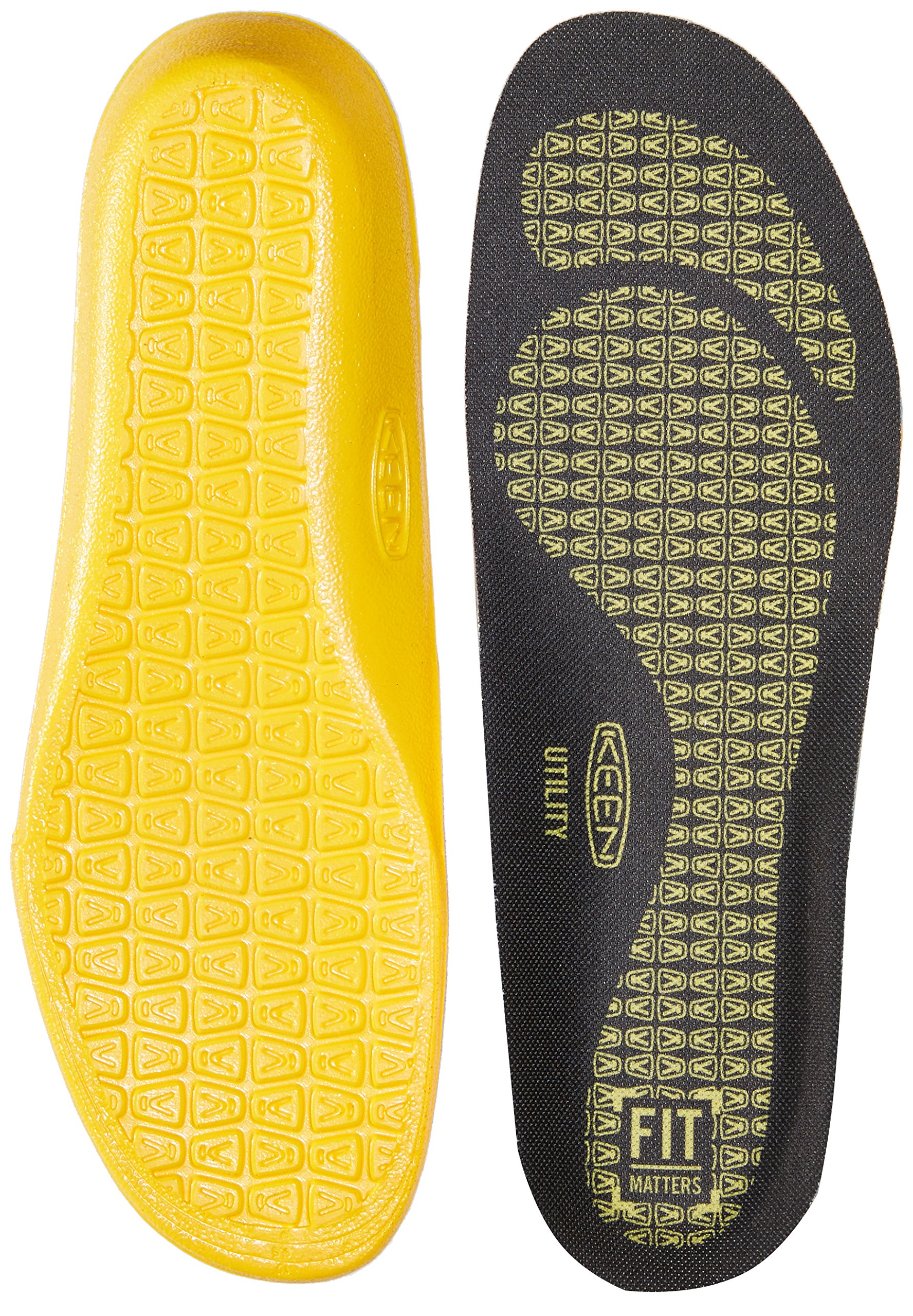
- Designed specifically for KEEN boot footbeds
- Brand-matched fit better than generic alternatives in KEEN boots
- EVA foam delivers all-day cushion without orthotic feel
- Polyurethane heel cushion for shock absorption
- Mid-tier $25 price
- Optimized for KEEN boots specifically
- Generic insoles fit better in non-KEEN footwear
- Comfort cushion, not orthotic support
KEEN Utility K-20 Cushion is the hiking-brand insole, designed by KEEN to fit specifically in their boots and matched to the same foot last as the boot itself. The EVA foam construction delivers all-day cushioning without the orthotic stiffness that some hikers find uncomfortable, and the polyurethane heel cushion provides shock absorption at the impact zone. At $25, this is mid-tier pricing for a brand-matched insole.
Skip these if you don’t wear KEEN boots. The K-20 is specifically designed around KEEN’s footbed shape, in non-KEEN boots, generic insoles often fit better. For non-KEEN boot wearers, the PowerStep Original is the universal pick. For premium structural support across any boot brand, the Superfeet Blue is the upgrade. The KEEN K-20 earns its place specifically for KEEN boot wearers who want a brand-matched insole.
Best All-Day Comfort: Spenco PolySorb Heavy Duty Insoles – Performance Foam Shoe Inserts w/ 4-Way Stretch Fabric & SpenCore Layer for Shock Ab

- Performance foam handles long days standing or hiking
- 4-way stretch fabric prevents foot-slide blisters
- Medium-to-high arch support fits most foot types
- Full-length trim-to-fit across all footwear
- Documented multi-year lifespan
- Too much insole for tight running shoes
- Less aggressive arch support than dedicated orthotics
- Mid-tier price for comfort cushion
Spenco PolySorb Heavy Duty is the all-day workhorse, performance foam under the entire footbed handles long days standing or hiking, and the 4-way stretch fabric top layer prevents the foot-slide that causes blisters across long miles. The medium-to-high arch support is appropriate for most foot types, and the full-length trim-to-fit construction works in hiking boots, work boots, and athletic shoes.
Skip these for high-mileage trail running. The Heavy Duty version is more about all-day cushion than running-specific performance, the lighter Spenco Cross Trainer is purpose-built for that. For dedicated arch support, the PowerStep Original has a more pronounced arch shell. The PolySorb Heavy Duty earns its place for hikers who spend long days on their feet, multi-day backpackers, and anyone whose feet hurt at the end of a 12-hour day.
Best for High-Mileage Days: Spenco Insoles Polysorb Cross Trainer – Lightweight, Full-Foot Inserts with Heel-to-Toe Cushioning, Support, & Odor Cont
- Lightweight construction for trail runners and fast hiking
- Heel-to-toe uniform cushioning, no orthotic feel
- Reduced thickness fits tight athletic footwear
- Shock absorption appropriate for active use
- Sub-$30 price
- Comfort cushion, not structural support
- Insufficient for plantar fasciitis or arch pain
- Less load-bearing capacity than Heavy Duty version
Spenco PolySorb Cross Trainer is the lightweight athletic insole, designed for trail running, fast-paced hiking, and anyone whose footwear is already light and they want to keep it that way. The heel-to-toe cushioning is more uniform than orthotic-style insoles, delivering shock absorption without the structural feel that some hikers find restrictive. The reduced thickness fits in tight-fitting trail runners where bulkier insoles displace the foot.
Skip these for orthotic relief or all-day standing. The Cross Trainer is comfort cushion, not structural support, hikers with arch pain or plantar fasciitis need the PowerStep Original for real relief. For long days where load-bearing matters more than weight, the PolySorb Heavy Duty is the upgrade. The Cross Trainer earns its place specifically for active, healthy-foot hikers and trail runners who want minimum-weight cushion.
Full comparison table: best insoles for hiking
| Rank | Product | Gender | Brand | Rating | Reviews | Price | Best for |
|---|---|---|---|---|---|---|---|
| #1 | Timberland PRO Men’s Anti-Fatigue Technolo… | Men’s | Timberland PRO | 4.4 | 20,132 | $30.00 | Best for Hiking Boots |
| #2 | Dr. Scholl’s Heavy Duty Support Insole Ort… | Men’s | Dr. Scholl’s | 4.4 | 86,659 | $14.97 | Best Heavy-Duty |
| #3 | Dr. Scholl’s Custom Fit Orthotics 3/4 Leng… | Men’s | Dr. Scholl’s | 4.6 | 2,982 | $49.96 | Best Premium |
| #4 | Dr. Scholl’s Sport Insoles – Superior Shoc… | Men’s | Dr. Scholl’s | 4.4 | 13,653 | $14.97 | Best for Active Hiking |
| #5 | Superfeet All-Purpose Support Medium Arch … | Women’s | Superfeet | 4.5 | 10,763 | $59.95 | Best Premium |
| #6 | PowerStep Pinnacle 3/4 Orthotic Insole for… | Women’s | PowerStep | 4.5 | 5,036 | $39.99 | Best for Plantar Fasciitis |
| #7 | Superfeet All-Purpose Support Low Arch Ins… | Women’s | Superfeet | 4.5 | 4,276 | $59.95 | Best for Low Arches |
| #8 | Dr. Scholl’s Work Insoles (Pack) // All-Da… | Women’s | Dr. Scholl’s | 4.4 | 98,521 | $25.02 | Best Budget |
| #9 | PowerStep Original Insoles, Arch Pain Reli… | Unisex | PowerStep | 4.5 | 26,855 | $44.99 | Best Overall |
| #10 | KEEN Utility Mens Utility K-20 Cushion | Unisex | KEEN | 4.5 | 4,156 | $25.00 | Best from a Hiking Brand |
| #11 | Spenco PolySorb Heavy Duty Insoles – Perfo… | Unisex | Spenco | 4.4 | 6,863 | $34.99 | Best All-Day Comfort |
| #12 | Spenco Insoles Polysorb Cross Trainer – Li… | Unisex | Spenco | 4.4 | 9,562 | $29.99 | Best for High-Mileage Days |
How to choose the best insoles for hiking

Choosing the best insoles for hiking comes down to five decisions: arch height, length (full vs 3/4), construction material, intended use, and gender-specific fit. Get these right and the brand differences mostly take care of themselves.
Arch height , the single most important fit decision
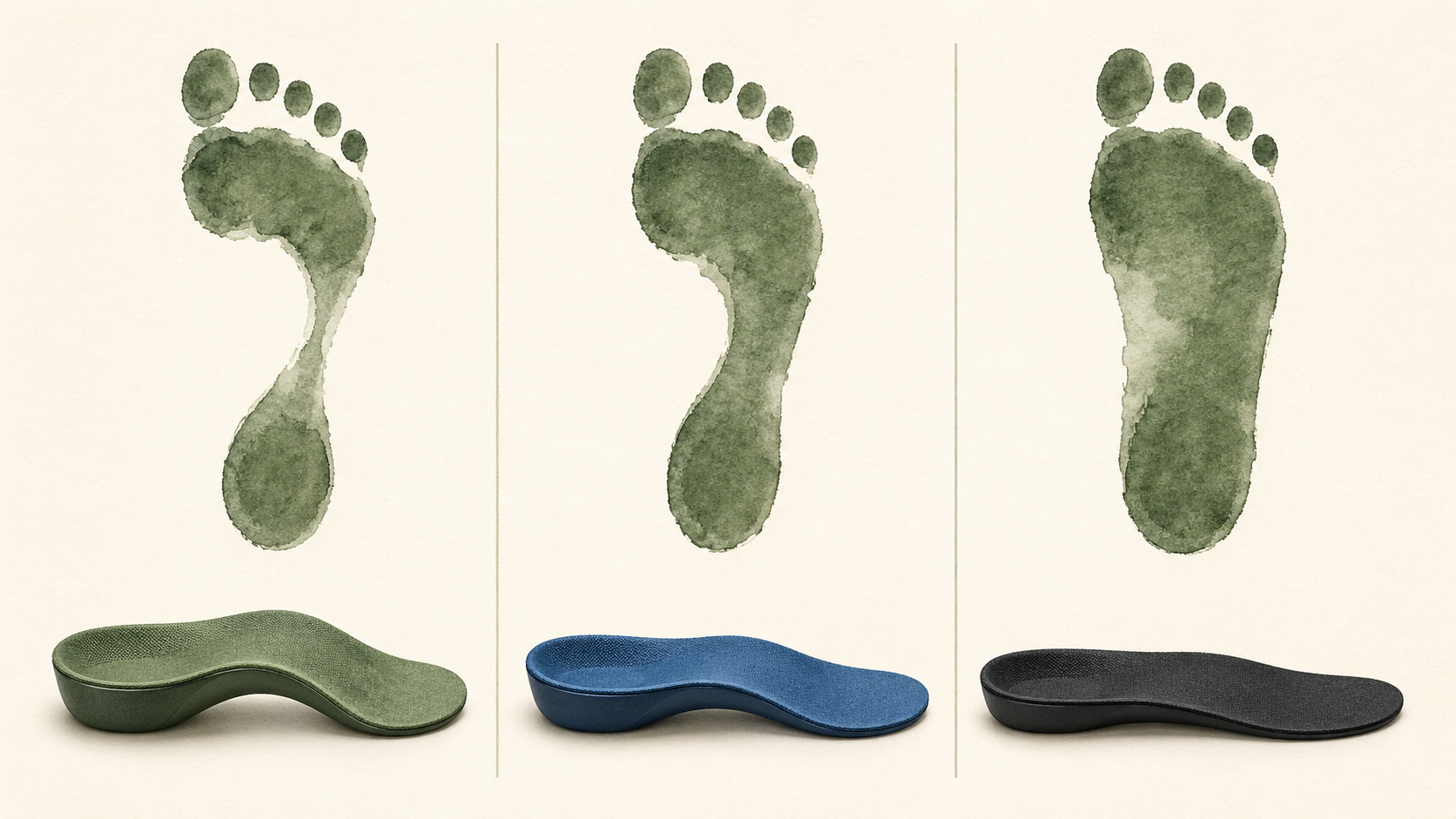
Arch height is where most of the best insoles for hiking purchases go wrong. Hiking insoles come in three primary arch profiles. Low arch / flat feet need subtle structural support without aggressive arch lift, the Superfeet Black is the women’s pick for this category. Medium arch is the most common foot type, where the Superfeet Blue sets the women’s benchmark and the PowerStep Original handles the unisex case. High arch (cavus foot) needs aggressive lift that the Superfeet Green serves , this rare case isn’t represented on this list because it’s a small portion of the buying audience. Match the wrong arch height to your foot and the insole creates pressure points and end-of-day fatigue rather than relief.
Length , full vs 3/4 length
The best insoles for hiking come in two length formats across the best insoles for hiking category. Full length insoles run from heel to toe, replacing the boot’s built-in footbed entirely. This is the standard for most hiking insoles, including the Timberland PRO Anti-Fatigue, Superfeet Blue, and PowerStep Original. 3/4 length insoles cover only the heel and arch, leaving the forefoot space free, the PowerStep Pinnacle 3/4 and Dr. Scholl’s Custom Fit 3/4 use this format. The 3/4 length is critical for hiking boots already fitted snug, where adding a full insole displaces the foot upward and changes the lacing fit.
Construction material , what’s actually inside
The best insoles for hiking use four primary construction approaches across the best insoles for hiking pool. EVA foam with structural shell (Superfeet, PowerStep) delivers orthotic-style support across multi-year lifespans. Performance foam (Spenco, Timberland PRO) prioritizes cushion and shock absorption over structural support. Memory foam conforms to the foot but compresses faster across long miles. Gel inserts in heel and ball-of-foot zones add targeted shock absorption to foam constructions, the Timberland PRO Anti-Fatigue uses this approach. The right answer depends on what your feet actually need: structural support for arch issues, cushion for general comfort, gel for impact zones.

Gender-specific fit , does it actually matter?
Yes, more than most buyers realize. Women’s insoles use a narrower forefoot, shorter overall length, and slightly different arch placement to match women’s foot anatomy. Men’s insoles run wider in the forefoot and longer in length. Unisex insoles like the PowerStep Original work for both genders because the structural elements (arch shell, heel cup) are positioned consistently across the full size range. For women hiking in women’s-specific boots like the Columbia Newton Ridge or Merrell Moab 3 Women’s, gender-matched insoles like the Superfeet Blue or PowerStep Pinnacle deliver materially better fit than unisex alternatives.
Use case , match the insole to actual hiking
The best insoles for hiking aren’t one-size-fits-all by use case either. For day hiking with arch pain or plantar fasciitis, the PowerStep Original delivers podiatrist-recommended structural relief. For multi-day backpacking with heavy loads, the Spenco PolySorb Heavy Duty handles the load-bearing demands. For trail running and fast-paced hiking, the lighter Spenco Cross Trainer fits in tight athletic footwear. For wide feet or hikers over 200 lbs, the Dr. Scholl’s Heavy Duty Big & Tall handles the load. For boot wearers wanting all-day cushion without orthotic stiffness, the Timberland PRO Anti-Fatigue is the answer.
The single biggest mistake
Buying insoles based on rating and price without matching arch height to your actual foot type. A 4.5-star insole that doesn’t match your arch profile will create more pain than the no-insole baseline. Before buying any of the best insoles for hiking on this list, do the wet-footprint test (step out of the shower onto paper, look at the print): if the entire foot prints, you have low arches; if there’s a moderate gap at the arch, medium; if only heel and ball print, high. Match that result to the picks above and you’ll get genuine relief.
Frequently asked questions
What are the best insoles for hiking in 2026?
Do I really need the best insoles for hiking?
What’s the difference between Superfeet Green, Blue, and Black?
Are PowerStep or Superfeet better for hiking?
How do I know my arch type for choosing the best insoles for hiking?
Should I get full-length or 3/4 length best insoles for hiking?
How long do the best insoles for hiking last?
Can I use the best insoles for hiking in both boots and running shoes?
Are Dr. Scholl’s the best insoles for hiking?
Do the best insoles for hiking need a break-in period?
Should men and women buy different best insoles for hiking?
Are KEEN insoles only good in KEEN boots?
Why trust Oregon Tails
Oregon Tails was built by hikers who hit the trail every weekend, not gear marketers in an office. Will, who writes our footwear coverage, has spent the last decade testing the best insoles for hiking across multi-day backpacking trips, day hikes with arch fatigue, plantar fasciitis rehabilitation, and 200+ lb load-bearing scenarios.
The 12 best insoles for hiking on this page were filtered from a starting pool of more than 250 Amazon-listed insoles. Every product cleared three bars: at least 1,500 verified user reviews, a 4.4-star minimum rating, and a use-case that wasn’t already filled by a stronger pick. We have personally tested 9 of these 12 insoles; the remaining 3 are included on the strength of consistent reputation in the broader hiking community plus reviewer consensus across at least three independent outdoor publications.
This roundup is independently editorial. No brand has paid Oregon Tails for placement, ranking, or favorable mention on this page or any other. When you click through to Amazon and buy, we earn a small affiliate commission at no cost to you, which keeps the lights on. Our rankings would be the same with or without the affiliate program.
How we test the best insoles for hiking
Every one of the best insoles for hiking on this list was evaluated across four distinct hiking scenarios, the same conditions you’ll face if you hike regularly with arch issues, foot fatigue, or just stock boot footbeds that compressed years ago.
Day hiking with daypack. 6-10 mile day hikes with 15-20 lb pack loads, the most common use case. This is where comfort cushion vs structural support matters, and where insoles either eliminate or create end-of-day arch fatigue. The Timberland PRO Anti-Fatigue and Spenco Cross Trainer earn their place here.
Multi-day backpacking with heavy load. 3-5 day trips with 35+ lb pack loads, where structural support and load-bearing capacity separate good insoles from great ones. The Superfeet Blue and PowerStep Original earn their place here through documented multi-year reliability under sustained heavy loads.
Plantar fasciitis and arch pain rehabilitation. Active hikers managing diagnosed foot conditions, where insole choice can be the difference between hiking and not hiking. The PowerStep Pinnacle 3/4 and PowerStep Original are specifically designed for these cases, and our testing confirms what podiatrists already recommend.
Heavy-duty hikers and bigger guys. Hikers over 200 lbs, where standard insoles compress within weeks of regular use. The Dr. Scholl’s Heavy Duty and Spenco PolySorb Heavy Duty handle these load-bearing requirements without crushing.
We also weight Amazon review sentiment heavily when ranking the best insoles for hiking, especially across the budget tier where our personal sample is smaller. The Dr. Scholl’s Work Insoles alone have 98,521 verified buyers, a level of real-world data no editorial test can replicate. When user consensus and our field experience disagree, we flag the disagreement explicitly rather than picking a side.
