Oregon Coast activity guide
Sea Lion Caves: Oregon’s Largest Sea Cave
A living sea cave 208 feet below the Oregon Coast clifftop, home to a wild herd of Steller sea lions year-round. The largest sea cave in the United States, located on the central Oregon Coast 11 miles north of Florence, Oregon. No reservation needed.
Inside the cave: what to expect

Sea Lion Caves is the largest sea cave in the United States, measuring about 2 acres and reaching two stories at its tallest ceiling. The cave is entirely natural, carved by the Pacific Ocean over millions of years into the basalt coastal headland. A wild herd of Steller sea lions has occupied it year-round since at least the 1880s.
The visit works like this: you park in the free lot, buy tickets at the gift shop, walk the outdoor cliff trail (about 400 yards, grades up to 20%), and board a 208-foot elevator down to the cave floor. The elevator ride takes about 55 seconds and descends the equivalent of a 12-story building; doors open directly into the cave chamber. Once inside, the cave opens into a dim chamber lit primarily by natural light from ocean openings at water level. The noise from sea lions and surf can be substantial. The smell is unmistakable. The experience is genuinely unlike anywhere else on the Oregon Coast.
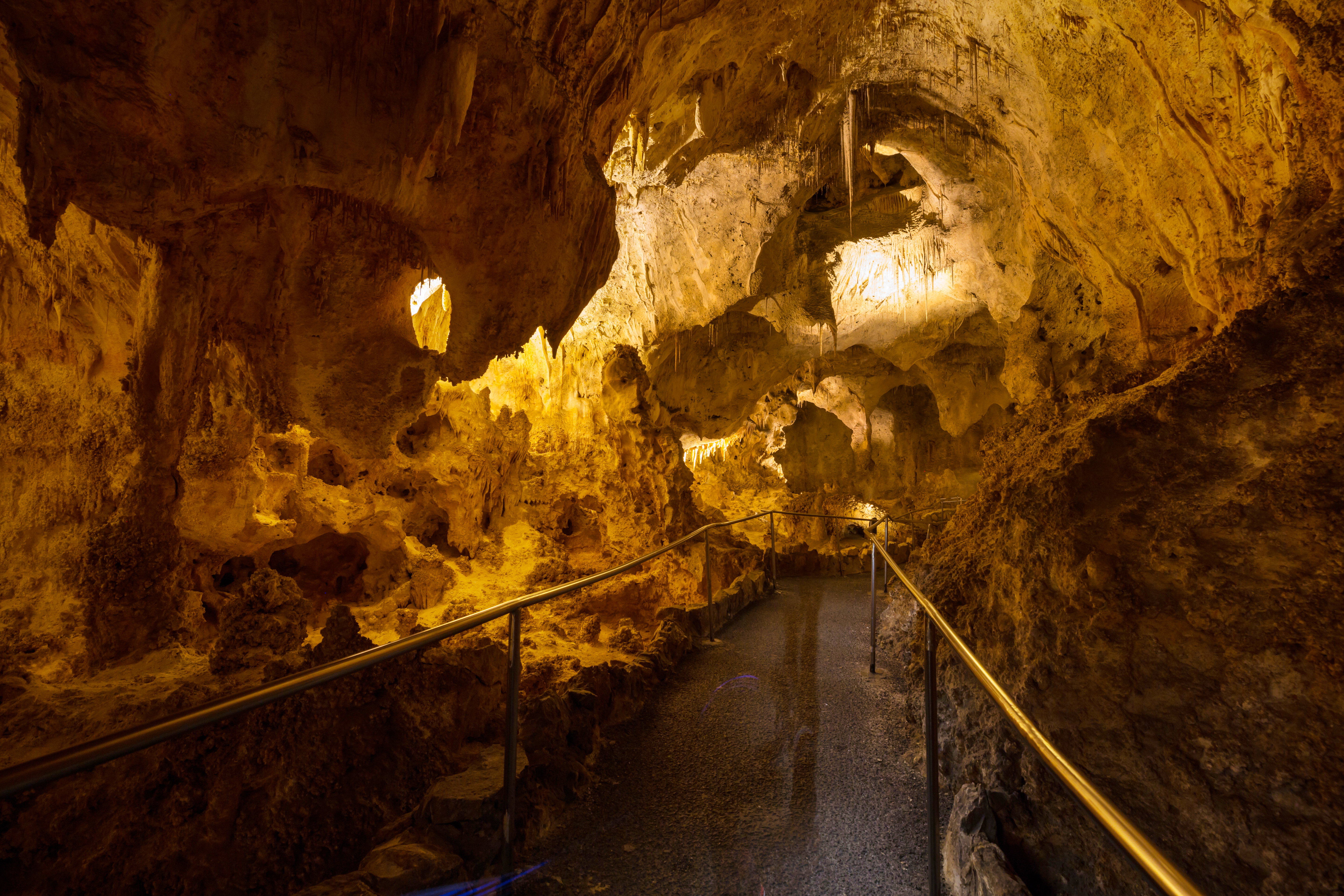
The cave floor is natural rock, wet in places, and uneven. Wear closed-toe shoes with grip. The cave temperature stays around 55–60°F year-round regardless of outside weather, so bring a layer even in summer. Also, the more sea lions there are, the smellier it tends to be so just be mentally prepared once you get in the cave.
Tickets & hours
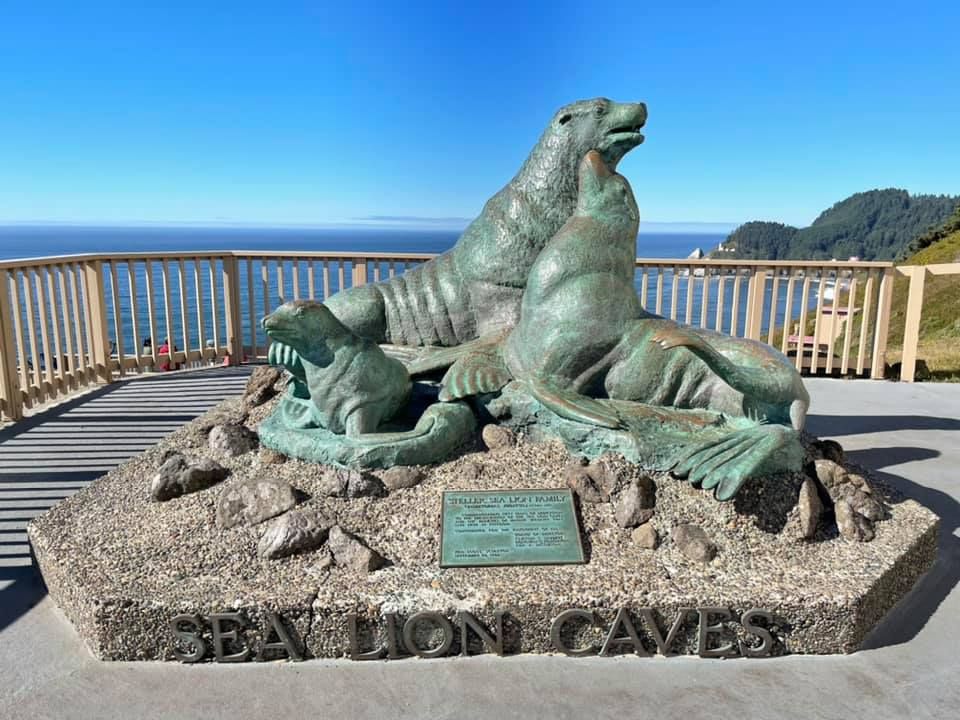
Tickets are sold at the gift shop on a walk-in basis. No online reservation is required. You can verify current hours and prices at sealioncaves.com. Payment accepted by cash or card. Sea Lion Caves has been privately owned and operated since 1932.
| Visitor type | Price |
|---|---|
| Adult (13+) | $16.00 |
| Senior (65+) | $15.00 |
| Children ages 5–12 | $10.00 |
| Children ages 4 and under | Free |
| Parking | Free |
Hours: 9am to 4pm daily. Closed Thanksgiving Day and Christmas Day. On Thanksgiving Eve and Christmas Eve, closes at noon. Open approximately 363 days per year, weather permitting.
Getting there
Sea Lion Caves is located at 91560 US Highway 101, about 11 miles north of Florence and 64 miles south of Newport. From Portland, take US-26 west to US-101 south; the total drive is about 185 miles (3 hours). The entrance is on the west (ocean) side of the highway. Parking is free and the lot accommodates RVs.
| From | Drive time | Best route |
|---|---|---|
| Portland | ~3h | US-26 W → US-101 S |
| Eugene | ~1h 30m | OR-126 W → US-101 N |
| Newport | ~1h 10m | US-101 S |
| Bend | ~3h 15m | US-20 W → OR-126 W → US-101 N |
Where to stay near Sea Lion Caves
Florence (11 miles south on US-101) is the most practical base for most visitors. The Florence area has a full range of lodging from budget motels to vacation rentals along the Siuslaw River waterfront. Heceta Head Lighthouse, 4 miles north of Sea Lion Caves, houses the Heceta Head Lighthouse B&B — one of the most memorable places to sleep on the entire Oregon Coast (book months ahead for summer). For campers, Sutton Campground in the Siuslaw National Forest is 5 miles north and stays open year-round; Jessie M. Honeyman Memorial State Park, 3 miles south of Florence, has full hookups, yurts, and lakefront sites.
Best time to visit Sea Lion Caves

| Season | Where are the sea lions? | Verdict |
|---|---|---|
| Oct–Feb | Inside the cave. Hundreds on the cave floor. Peak noise, smell, and activity. Whale watching best Dec–Jan. | ★★★★★ Best overall |
| Mar–Apr | Transitioning to exterior rocks for pupping. Whale watching excellent (northbound grays). | ★★★★ Good, less crowded |
| May–Sep | Sea lions outside on ocean rocks. Cave is quieter. Busy tourist season. | ★★★ Sea lions outside, not inside |
The bottom line: visit between October and February if the primary goal is seeing sea lions in the cave. Spring whale watching (March–June) makes a shoulder-season visit worthwhile even without the peak cave experience.
Wildlife: the Steller sea lions


Other wildlife visible from Sea Lion Caves
Beyond sea lions, the area around Sea Lion Caves supports a rich coastal ecosystem. The ocean rocks below, the cliff face, and the sky above the whale watching deck all offer regular wildlife sightings.


Steller sea lions (Eumetopias jubatus) are the primary residents. They are the largest of the eared seals; adult males can reach 11 feet in length and 2,500 pounds. Sea Lion Caves is notable because the Steller sea lion population there has been growing, while the species is threatened across much of its range.
California sea lions also visit occasionally. They are noticeably smaller and darker than Stellers, with a more pronounced forehead crest in males.
- What you’ll hear: the guttural roar and bark of Steller sea lions carries throughout the cave and is louder than any California sea lion colony.
- What you’ll smell: fish, marine mammals, and ocean. It’s authentic wildlife, not a zoo.
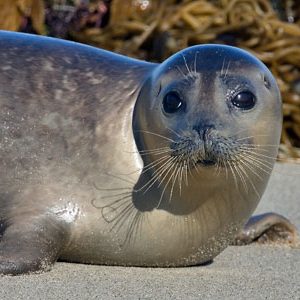
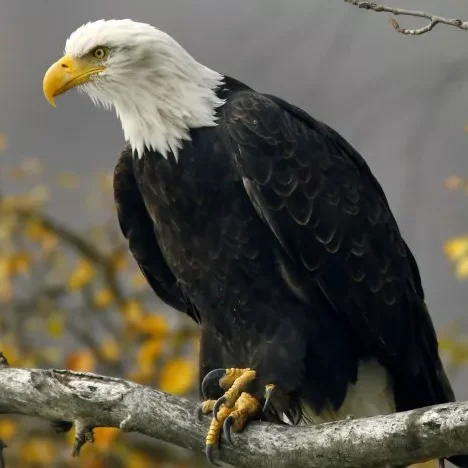
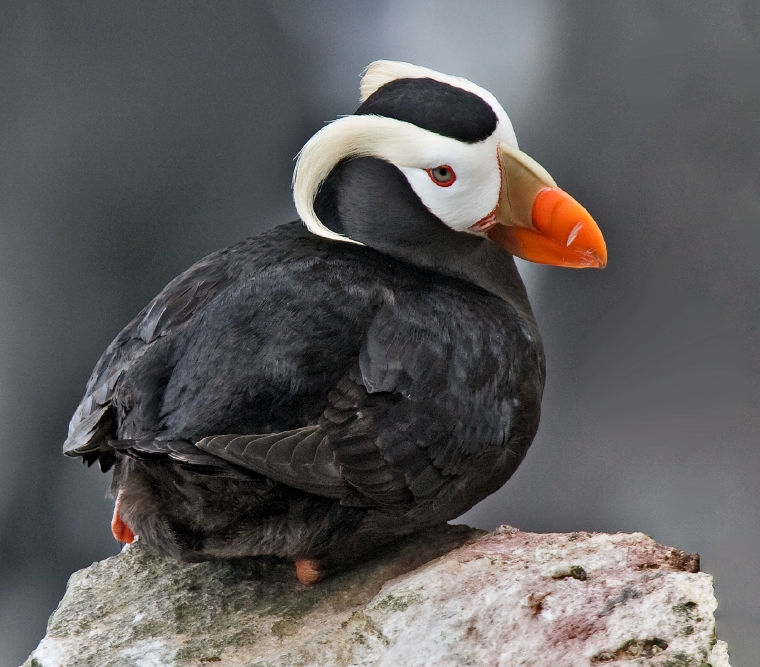
- Other wildlife visible from the outdoor platform: Brandt’s cormorants, pigeon guillemots, tufted puffins (spring/summer), bald eagles, and harbor seals on the rocks below.
Whale watching at Sea Lion Caves

The outdoor whale watching deck at Sea Lion Caves sits 300 feet above sea level with a 20-mile unobstructed ocean view, making it one of the best elevated whale watching platforms on the Oregon Coast. No extra fee is required to access the whale watching deck: it’s included with your admission.
| Species | Jan | Feb | Mar | Apr | May | Jun | Jul | Aug | Sep | Oct | Nov | Dec |
|---|---|---|---|---|---|---|---|---|---|---|---|---|
| Sea lions in cave | ||||||||||||
| Sea lions on rocks | ||||||||||||
| Gray whale southbound | ||||||||||||
| Gray whale northbound | ||||||||||||
| Humpback whale | ||||||||||||
| Orca (occasional) |
- December–January: gray whales heading south. Prime whale watching window. Can see dozens per day during peak migration.
- March–June: gray whales heading north, often traveling with calves born in Baja California. Closer to shore than the southbound migration.
- Orcas: occasionally pass the area, usually once or twice per year in small transient groups feeding near the coast.
- Humpback whales: increasingly common summer sightings as humpback populations recover in the North Pacific.
- Best tip: bring binoculars or a spotting scope. The platform has a long viewing window but distant blows are difficult to see with the naked eye.
Photography tips
- Bring a fast lens. The cave interior is lit only by natural light from ocean openings. ISO 1600–6400 and a wide aperture (f/1.8–2.8) is needed for usable handheld shots. Phone night mode can work but struggles with moving sea lions.
- No flash is permitted in the cave and disturbs the sea lions.
- The outdoor platform is better lit. For clean sea lion portraits, the exterior viewing area in morning light gives sharper results.
- Bring a telephoto for the whale deck. A 300–400mm equivalent is needed to photograph whale blows at ocean distance.
- Protect gear from salt spray. The outdoor areas are directly exposed to Pacific Ocean wind. Weather-sealed cameras and lens caps are essential.
- No drones permitted on the premises.
Nearby attractions
Sea Lion Caves sits in the middle of one of the most scenic 30-mile stretches of the Oregon Coast. The immediate area has several easy additions for a full day trip.
Gear we recommend
Tested for the Oregon Coast
Common questions
Sea Lion Caves FAQ

Oregon Tails earns affiliate commissions from links to retailers in our gear reviews. Recommendations are independent — no brand pays for placement.