Oregon Coast field guide
Complete Guide to the Oregon Sand Dunes
A 40-mile stretch of windswept dunes, coastal forest, and Pacific beach between Florence and Coos Bay. This guide covers where to ride, where to hike, where to camp, the permits you need, and the gear that will make or break the trip.
The Oregon Sand Dunes are not what most people picture when they hear the word “dunes.” Instead of a flat desert, you get rolling sand mountains pressed up against shore pine forest, freshwater lakes, and the open Pacific. The result is one of the most varied 40-mile stretches of coastline in North America, and it’s all open to the public.
This guide is built for the way people actually plan a trip here: pick an activity, find the right access point, check the permit, and pack the right gear. If you’re new to the area, the Oregon Coast hub covers the surrounding region. If you’re focused on overnight trips, our camping guide goes deeper on campgrounds and reservations.
1. Overview & Geography

The Oregon Dunes National Recreation Area covers about 31,500 acres and runs roughly 40 miles down the central Oregon Coast, from the Siuslaw River near Florence in the north to the Coos River near North Bend in the south. Of those 31,500 acres, about 7,000 acres are open sand dunes — the rest is a mix of coastal forest, deflation plain wetlands, lakes, and beach. It is the largest expanse of coastal sand dunes in North America and one of the largest temperate coastal dune systems in the world.
The dunes are old, but not as old as it sometimes gets reported. Parts of the system are estimated to be more than 100,000 years old, but the current shoreline only stabilized about 6,000 years ago. The sand itself is roughly 45% quartz and 45% feldspar, eroded from the Coast Range over millions of years and carried to the beach by rivers. From there, ocean currents push it back onto the shore, and the prevailing northwest summer winds (12 to 16 mph) sculpt it inland — sometimes as much as two and a half miles from the water.
Congress designated the recreation area in 1972 under the sponsorship of Representative John Dellenback, whose name is on the longest non-motorized hiking trail in the system. The Forest Service has managed it ever since as part of the Siuslaw National Forest.
The mix of habitats means the recreation area is far more than just a sand playground. The freshwater lakes east of Highway 101 — Woahink, Siltcoos, Tahkenitch, and Tenmile — and the Siuslaw and Umpqua river estuaries open up kayaking, paddleboarding, and fishing on the same trip. We cover those activities in detail in our Oregon Coast hub.
2. Best Time to Visit
The Oregon Dunes are open year-round, but conditions change dramatically by season. The single most common mistake first-time visitors make is underdressing — even on a hot inland day, the open sand can feel 20 degrees cooler because of the constant ocean wind. Plan around the activity, not the weather forecast in Portland.
| Season | Weather | Best for | Watch for |
|---|---|---|---|
| Spring (Apr–May) | Mild, often wet, 50s°F | Wildflowers, fewer crowds, off-season rates | Plover restrictions begin Mar 15 |
| Summer (Jun–Aug) | Drier, 60s–70s°F, foggy mornings | OHV, sandboarding, camping, kids | Peak crowds, book sites well ahead |
| Fall (Sep–Oct) | Dry early, then wet, 50s–60s°F | Riding without crowds, photography | Plover restrictions end Sep 15 |
| Winter (Nov–Mar) | Wet, windy, 40s°F | Storm-watching, OHV beach access | Wind chill, rain, gusts to 100 mph |
One quirk worth knowing: OHV beach riding in the Spinreel/Horsfall area is only allowed October 1 through April 30. The rest of the year, the beach is set aside for non-motorized use to protect snowy plover nesting habitat (more on that below).
3. Permits, Fees & Rules
The Oregon Dunes have a layered fee structure that confuses almost everyone on their first visit. There are essentially three things you might need: a parking pass, an OHV permit, and a camping reservation. They’re separate.
Parking & day-use passes
Most Forest Service parking lots in the dunes are fee sites. The cleanest option is the Northwest Forest Pass — $30 annually or about $5 per day, available digitally on recreation.gov or in person at the Reedsport Visitor Center. The federal America the Beautiful Pass ($80/year) also works and is the better value if you visit other national parks or forests during the year. The Oregon State Parks pass does not cover Forest Service fees — they’re separate agencies.
Off-highway vehicle (OHV) permits
If you’re operating any motorized vehicle on the sand — ATV, dune buggy, sand rail, motorcycle — you need a State of Oregon ATV Operating Permit on each vehicle. This is issued by Oregon Parks & Recreation, not the Forest Service, and is separate from your parking pass. Out-of-state OHV permits are honored if your state has a reciprocity agreement with Oregon. Permits and current fees are listed on the Oregon State Parks website.
OHV rules that get people ticketed
- Whip flag required: All OHVs need an orange or red flag, 8″ × 12″ minimum, mounted 9 feet above the ground.
- 93 dB sound limit: Stricter than most riding areas. USFS-approved spark arrestor required on all ATVs.
- Headlights after dark: Required from sunset to sunrise and any time visibility is under 100 feet.
- No alcohol in OHV riding areas outside developed campgrounds.
- Helmet required for all riders under 18, recommended for everyone.
4. Getting There & Map
The Oregon Dunes Visitor Center in Reedsport is the official information hub for the recreation area, with maps, permits, and ranger advice. Florence anchors the north end and is the most common base for first-time visitors. North Bend and Coos Bay anchor the south. Highway 101 runs the entire length of the dunes, so you can drive top to bottom in about an hour without stopping.
| From | To Reedsport (mid-point) | Best route |
|---|---|---|
| Portland | 3h 15m / ~190 mi | I-5 S → OR-126 W → US-101 S |
| Eugene | 1h 35m / ~80 mi | OR-126 W → US-101 S |
| Salem | 2h 35m / ~140 mi | I-5 S → OR-126 W → US-101 S |
| Bend | 3h 15m / ~190 mi | US-20 W → I-5 S → OR-126 W |
| Medford | 3h 30m / ~210 mi | I-5 N → OR-38 W → US-101 N |
Times from Google Maps with no traffic; expect 30+ minutes added on summer weekends.
Visitor center address
Oregon Dunes National Recreation Area Visitor Center
855 Highway Ave, Reedsport, OR 97467
Phone: (541) 271-6000
Hours: Monday–Friday, 8:00 a.m.–4:00 p.m. (closed federal holidays)
5. OHV & Dune Buggy Areas

About half of the recreation area is open to motorized vehicles, divided into three main OHV zones. The character of each is genuinely different. Pick the one that matches your skill level and the size of your group.
| OHV area | Location | Best for | Beach access | Crowds |
|---|---|---|---|---|
| North (Siltcoos to South Jetty) | South of Florence | Smaller groups, quick access | Yes, year-round | Medium |
| Middle (Umpqua Dunes) | Winchester Bay, S of Reedsport | Tallest dunes, experienced riders | Limited | Low to medium |
| South (Spinreel / Horsfall / Hauser) | North of North Bend | Largest area, all skill levels, big groups | Yes, Oct 1 – Apr 30 only | Highest |
Riding area maps
- North Dunes (Siltcoos – South Jetty) — USFS
- Middle Dunes (Umpqua) — USFS
- South Dunes (Spinreel / Horsfall) — USFS
OHV rentals near the dunes
Three operators rent dune buggies and ATVs to the public. Walk-ins are accepted but reservations are strongly recommended in summer.
Spinreel Dune Buggy & ATV Rentals
The largest rental fleet on the dunes, located right at the Spinreel staging area. Half-hour, hour, and multi-hour rentals on single-rider ATVs and family-size sand rails.
Steve’s ATV Rental
Smaller, family-run shop with an emphasis on first-time riders. Quads, side-by-sides, and youth ATVs available.
Dune Bug ATV Rentals
Direct access to the Hauser staging area. Good option if you’re staying at Myrtlewood Factory RV Park.
6. Guided Tours

If you don’t want to drive yourself, two operators run guided buggy tours that drop the cost-per-person significantly compared to renting. Tours are also the best option if you have kids under 8, mixed ability levels in your group, or anyone with mobility concerns who still wants to see the dunes from the inside.
Sandland Adventures
Florence’s biggest operator, running guided tours since 1978. The 1-hour Giant Buggy tour is a great family option (covers 8 miles of dunes plus 2 miles of beach). The 30-minute or 1-hour Sand Rail tours are higher-speed for thrill-seekers. They also run a small fun park with go-karts and mini-golf, which is useful if you have kids who finish the dune ride and still want more.
Free ranger programs
Throughout summer, the Forest Service runs free interpretive talks at the Oregon Dunes Day Use Area, plus weekend guided hikes and Jr. Ranger evening programs at various sites across the recreation area. Schedules are posted at the Reedsport Visitor Center and at trailheads. These are an underrated way to learn the geology and wildlife in 30 minutes flat.
7. Hiking Trails
Roughly half of the recreation area is non-motorized, and the hiking experience is unlike anything else on the Oregon Coast — open sand, then forest, then beach, often within a single mile. Four trails stand out.
| Trail | Distance | Difficulty | Beach access | Dogs | Wheelchair |
|---|---|---|---|---|---|
| John Dellenback | ~5.4 mi RT | Hard (deep sand) | Yes | Yes (leashed) | No |
| Oregon Dunes Loop | 1 to 4 mi loop | Easy to moderate | Yes | No | Partial |
| Siuslaw River South Jetty | ~3 mi RT | Easy | Yes | Yes (leashed) | No |
| Tahkenitch | ~3 to 6 mi loops | Moderate | Yes | Yes (leashed) | No |
RT = round trip. Distances and difficulty depend on whether shifting sand has covered marker posts.
John Dellenback Dunes Trail

The longest non-motorized trail in the recreation area, named for the congressman who created it. Starts at Eel Creek Campground, crosses a forested section, then drops you into open dunes for a sustained slog to the ocean. Roughly 5.4 miles round trip if you go all the way to the beach. Wildlife viewing is good (Roosevelt elk are sometimes visible from the higher dunes), and because it’s the only major dune trail with no motorized access, it stays quiet even on summer weekends.

Oregon Dunes Loop Trail

The most popular short hike in the dunes, located in the Oregon Dunes Day Use Area south of Florence. The first viewing platform is wheelchair-accessible, and from there you can extend on a 1-mile or 4-mile loop into the dunes. The longer loop has 2 miles of deep sand at the end and is more demanding than the elevation profile suggests. Dogs are not permitted on this trail to protect snowy plover habitat.

Siuslaw River South Jetty Trail

An easy beach walk at the very north end of the recreation area, where the Siuslaw River meets the Pacific. The walking section is closed to vehicles, so even though OHVs are riding through dunes nearby, you won’t encounter them on the trail itself. Good for sunset, easy for kids, and the parking lot is paved.
Tahkenitch National Recreation Trail

A network of looping trails accessing the dunes, Tahkenitch Creek, and Threemile Lake. Less crowded than Dellenback or the Loop Trail, and you can build the day to your fitness level — short out-and-back to the dunes, or a full 6-mile loop touching the lake and the beach. The lake side stays cool even in midsummer.

8. Sandboarding

Sandboarding is the easiest “extreme” sport to try — if you can stand on a board, you can do it. The Oregon Dunes are one of the few places in the United States with a purpose-built park for it.
Sand Master Park
Opened in 2000 by sandboarding pioneer Lon Beale, this is the world’s first dedicated sandboard park. The 40-acre property in Lane County has private sculpted dunes with beginner and advanced slopes, a pro shop, and certified instructors — two of whom have been world-record holders in the sport. They rent boards and sleds (boards stay rentable for 24 hours, useful if you want to take them to the public dunes), book lessons in advance during summer, and run free sand sculpting clinics plus the popular “Circles in the Sand” labyrinth event each October. Free dune access, free parking, RV parking available.
You can also ride a sandboard on any of the public hiking-only dune areas, including the Oregon Dunes Day Use Area and the John Dellenback approach. Just don’t try it in the OHV zones — getting in front of a moving sand rail at 40 mph is not a good time.
9. Horseback Riding

One outfitter handles guided horseback riding on this stretch of coast, and they’ve been doing it since 1981.
C&M Stables
Located between Florence and Sea Lion Caves, with about 50 horses matched to rider experience. Rides head out through forest and wetlands and crest a dune onto the open beach. They run beach rides, dune trail rides, sunset rides, and group/advanced canter rides. Reservations are required and a credit card holds your spot. Children must be 8 or older for most rides; a separate Pony Ride option is available for kids 5 and under.
Current rates (subject to change — call to confirm): 1-hour ride $95/person, 1.5-hour ride $110/person, 2-hour ride $145/person. Group rates available for 10+ riders.
10. Camping Near the Dunes
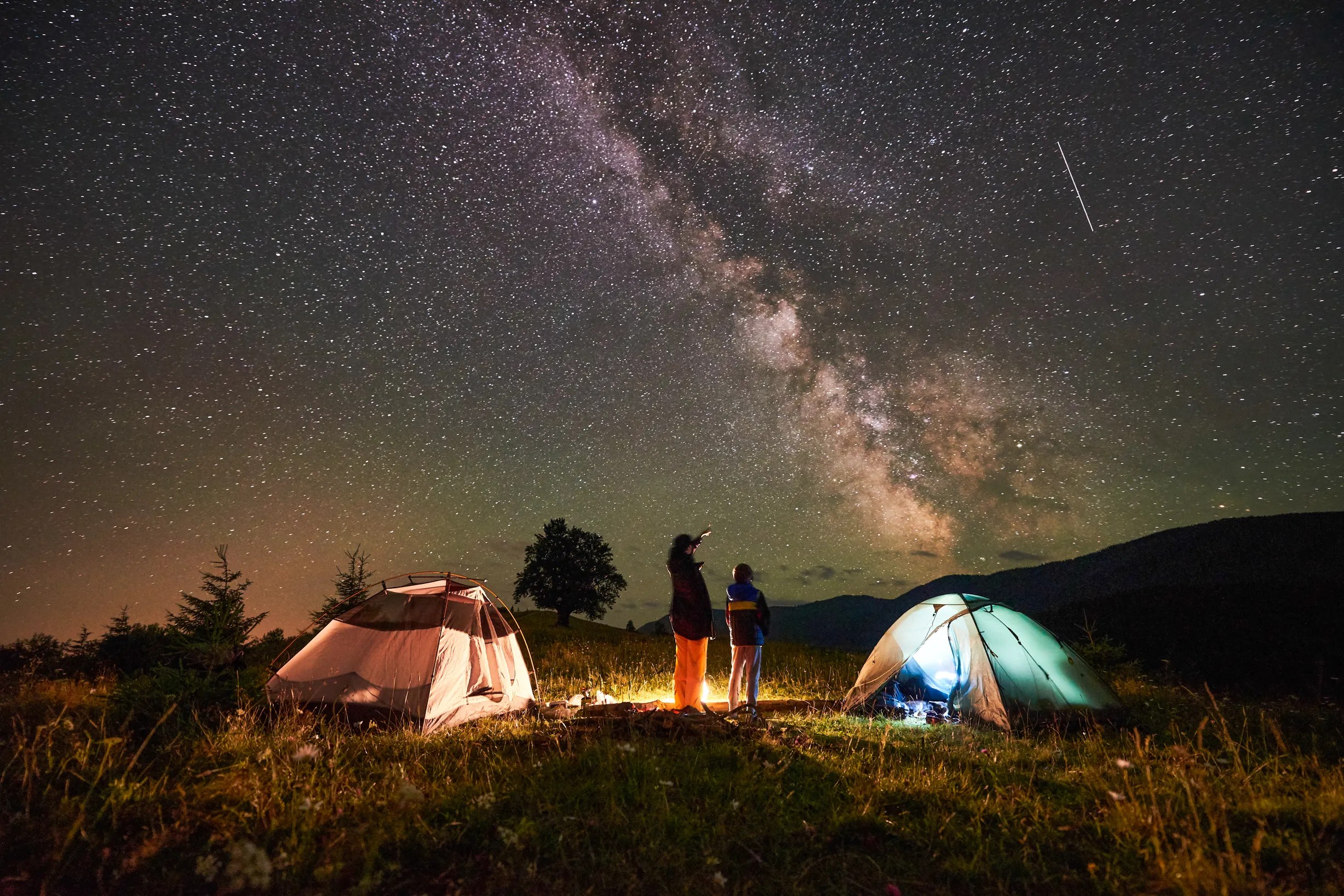
The recreation area has more than a dozen campgrounds, plus dispersed sand camping for OHV users with permits. Sites book up months ahead for summer weekends — start watching recreation.gov as soon as the booking window opens.
Top picks for first-time visitors
- Honeyman State Park — Big developed park just south of Florence with two lakes, the most family-friendly basecamp.
- Harbor Vista County Park — Quiet Lane County campground at the north tip of the recreation area, walking distance to the Siuslaw River South Jetty.
- Eel Creek Campground — Quiet Forest Service site at the John Dellenback trailhead. Best for hikers, not OHV users.
- Spinreel Campground — OHV-focused, direct sand access, near Tenmile Creek and the boat ramp.
- Driftwood II — Designated OHV camping with direct sand access in the Siltcoos area.
- Sunset Bay State Park — Slightly south of the dunes proper, but has the prettiest setting on this stretch of coast.
- Umpqua Lighthouse State Park — Quiet, lake access, and yurts available year-round.
For a deeper rundown of what to look for and how to book, see our full guide to Oregon Coast camping.
11. Wildlife & Snowy Plovers
The Oregon Dunes ecosystem packs more variety into 31,500 acres than most national parks. The mix of beach, deflation plain wetlands, lakes, dunes, and coastal forest means you can see ocean and woodland species on the same hike.
Common sightings include Roosevelt elk (especially on the inland edges of the recreation area at dawn and dusk), gray whales offshore during spring and fall migration, harbor seals at the Siuslaw and Umpqua river mouths, and bald eagles year-round. The South Jetty and Siltcoos areas are exceptional for shorebirds — long-billed curlew, sanderling, dunlin, and snowy plover.
Western Snowy Plover
The Western Snowy Plover is the small, federally threatened shorebird that drives the seasonal beach restrictions across Oregon’s central coast. They nest directly in the open sand above the high tide line, where their eggs are nearly invisible. In 1993, only 68 birds remained in Oregon. Restoration work — invasive grass removal, predator control, and seasonal beach protection — has brought numbers back to several hundred.
The protection rules are straightforward and matter:
- Restrictions run March 15 through September 15.
- On posted beaches: stay on wet, hard-packed sand.
- No dogs, vehicles, bicycles, kites, or drones on plover beaches in season.
- Open beaches outside protected segments stay accessible the entire year.
You’ll see clear signage at every affected beach access. Outside the closed beach segments, the rest of the recreation area is fully open.
12. What to Pack for the Oregon Dunes
The Oregon Coast in general — and the dunes specifically — punishes the underdressed. Two principles cover almost every situation:
- Layer for the wind chill, not the air temperature. The constant ocean wind shaves 15 to 20 degrees off the perceived temperature on the open sand. A 70°F July day frequently feels like 50°F by the third dune.
- Plan for sand getting into everything. Cameras, food, water bottles, ear canals. Zippered bags help, but mostly you accept it.
Day-trip checklist
- Wind shell or hooded jacket (always, even on a “warm” day)
- Long pants — full coverage protects your legs in the OHV zones and from windblown sand
- Closed-toe shoes (sand gets in everything anyway, but open sandals fill up in 50 yards)
- Sunglasses with side coverage — sand glare is brutal
- Reapplied sunscreen (reflective sand burns are common)
- 2 liters of water minimum, more if hiking
- Snacks and a real meal — there are no concessions inside the dunes
- Map downloaded offline (cell coverage drops in places)
- Plastic bag for trash, plus one for sandy clothes
For OHV riders, add:
- DOT helmet
- Goggles or eye protection (mandatory)
- State of Oregon ATV Operating Permit
- Orange or red flag, 8″ × 12″ minimum, on a 9-ft whip
- USFS-approved spark arrestor
Gear we recommend
Tested for Oregon Coast conditions
Common questions
Oregon Sand Dunes FAQ

Oregon Tails earns affiliate commissions from links to retailers in our gear reviews. Recommendations are independent — no brand pays for placement, and rankings are based on real-world testing.