Backpacking gear guide
How to Choose a Sleeping Bag
Temperature rating, fill type, fill power, and weight are the four decisions that matter. Everything else is noise. Here’s how to get each one right for any camping or backpacking trip.
The sleeping bag is the single most consequential piece of gear in your pack. Get it wrong and you will not sleep. Get it right and the rest of the trip takes care of itself. The decision comes down to four things: temperature rating, fill type, fill power, and weight. This guide covers each one without the marketing noise.
Conditions vary widely depending on where you camp. Mountain nights run cold even in July. Coastal and humid environments add moisture to every equation. Desert nights drop fast. The ratings and recommendations here are calibrated for real-world conditions, not marketing copy.
1. Temperature Rating
Temperature rating is the most important number on any sleeping bag. It describes the lowest temperature at which a typical sleeper will be comfortable. The key word is “comfortable” and many brands use the term loosely.
Bags tested to the EN 13537 or ISO 23537 standard carry three ratings: Comfort Range, Transition Range, and Risk Range. The Comfort Range is where you sleep well. The Transition Range (the advertised temperature) is where you stay warm but not comfortably so. The Risk Range is a survival threshold only. Buy at or below the Transition Range figure, and aim for the Comfort Range if you tend to sleep cold.
Rule of thumb: Choose a bag rated 10 to 15 degrees colder than the lowest temperature you expect. A 20F bag for nights that hit 30F is not overkill. You can always vent a warm bag. You cannot add warmth a bag doesn’t have.
| Temperature Range | Rating to Buy | Best For |
|---|---|---|
| Summer (50F+ nights) | 35F to 40F bag | Low-elevation summer backpacking, mild-climate camping |
| 3-season (30 to 50F nights) | 20F to 30F bag | Most 3-season backpacking, mountain camping through summer |
| Cold (20 to 30F nights) | 10F to 15F bag | High-route early and late season, shoulder-season mountain trips |
| Winter (below 20F) | 0F or below | Winter camping, high-elevation snow trips |
For most 3-season backpacking, a 20F bag is the right baseline. It gives you a real buffer against cold snaps without adding significant weight.
2. Down vs Synthetic Fill
This is the most-debated sleeping bag question and the most misunderstood. The right answer depends on where you camp and what you prioritize, not what’s technically “better.”
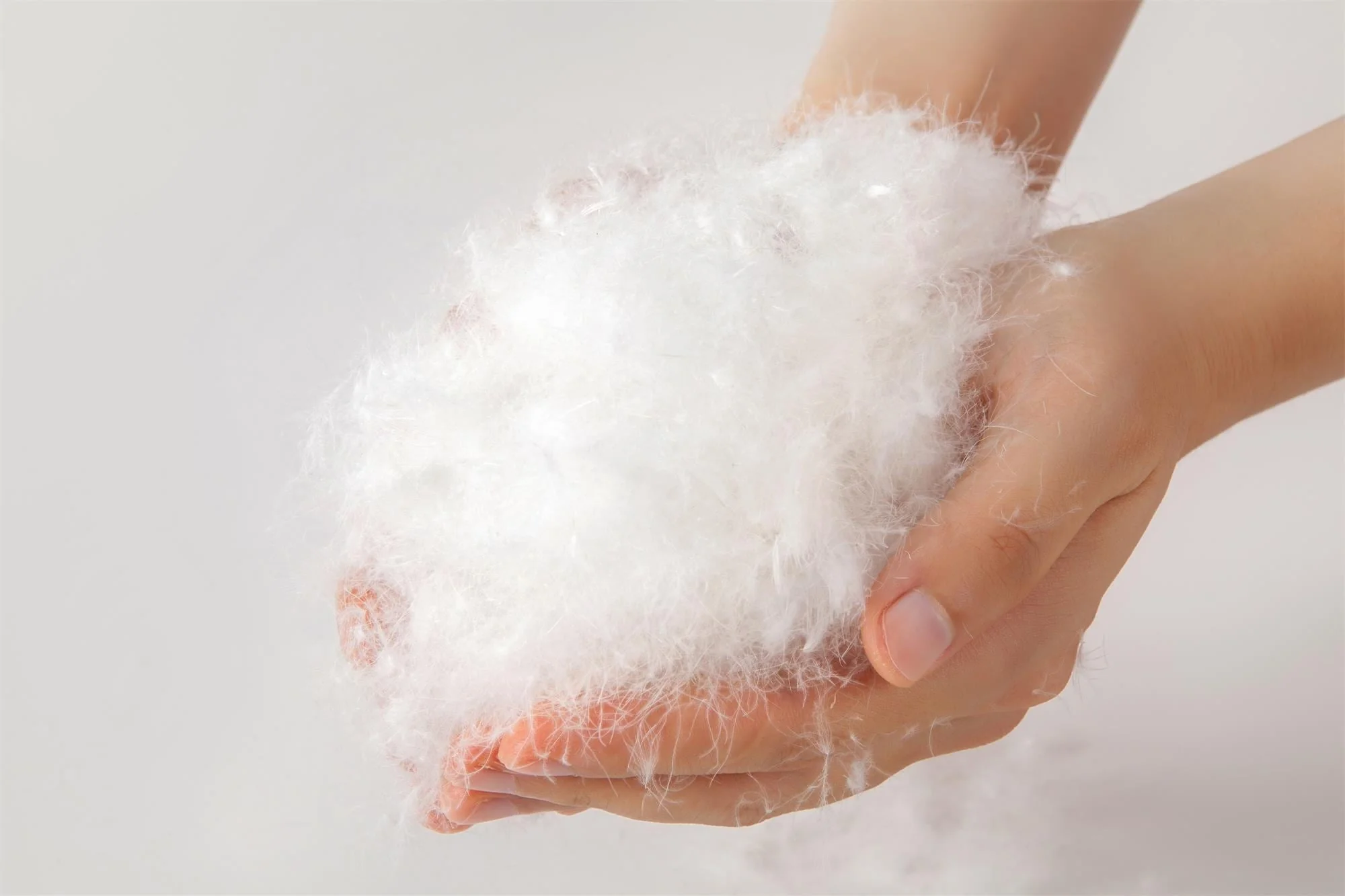
Down fill
Down is the underplumage of geese or ducks. It is the lightest and most compressible insulation available. A high-quality down bag packs to the size of a water bottle and weighs half what a comparable synthetic bag weighs. For backpackers counting ounces, it is the default choice.
The critical weakness: down loses nearly all of its insulating ability when wet. A soaked down bag on a cold night is dangerous. This is a real concern anywhere with wet or humid conditions including coastal camping, early-season mountain trips, or anywhere condensation is common.
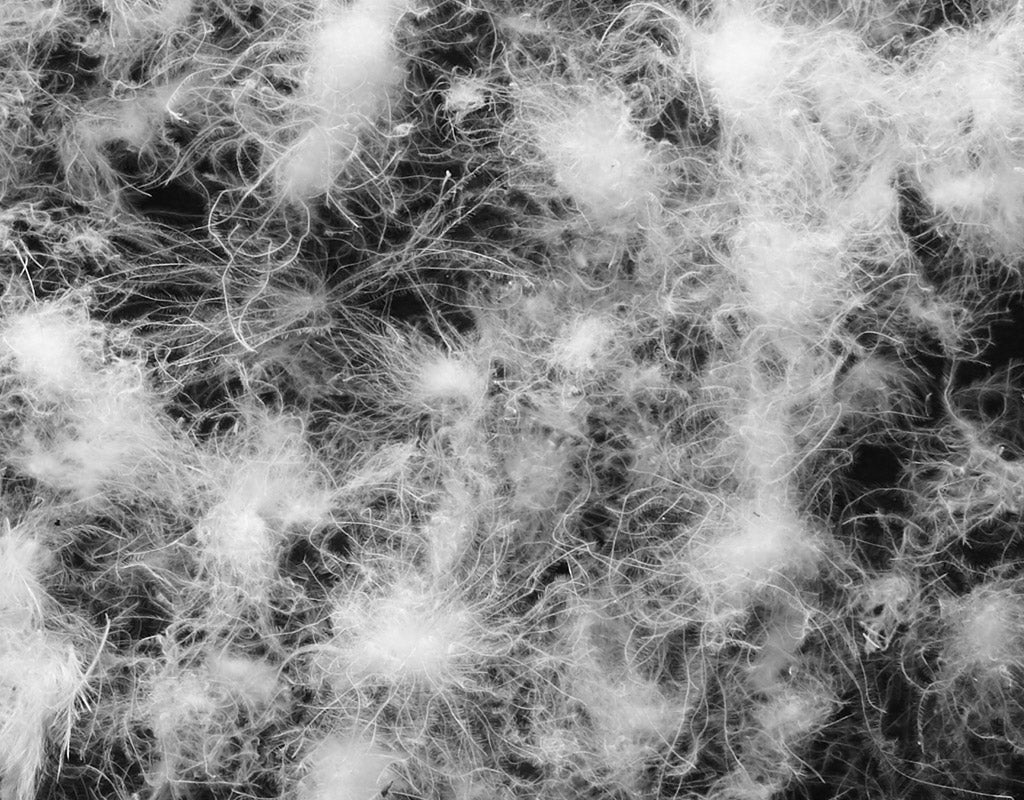
Hydrophobic down
Hydrophobic down is standard down treated with a DWR coating to resist moisture. It delays wet-out and dries somewhat faster than untreated down, but it is not a meaningful upgrade in all conditions. In dry climates there is no benefit. In mild moisture the difference is small. In sustained rain or full soaking it still fails, and the coating degrades well before the bag itself wears out.
The better protection against moisture is a water-resistant shell fabric and proper shelter. If you camp in consistently wet conditions, synthetic fill is the more reliable choice regardless of coating.

Synthetic fill
Synthetic insulation (polyester microfibers) retains warmth when wet, dries faster than down, and costs significantly less. The tradeoffs: it is heavier, bulkier, and does not last as long as down. The same temperature rating takes more pack volume.
For car camping, coastal trips, or anywhere the bag may see sustained moisture, synthetic is an excellent choice. For backpacking where pack weight matters, most hikers eventually move to down once they understand the conditions they camp in most.
| Feature | Down | Hydrophobic Down | Synthetic |
|---|---|---|---|
| Weight | Lightest | Lightest | Heavier |
| Packability | Most compressible | Most compressible | Bulkier |
| Wet performance | Poor | Slightly better | Good |
| Drying speed | Slow | Slightly faster | Fast |
| Durability | Excellent | Good (coating degrades) | Good |
| Price | Higher | Higher | Lower |
| Best for | Dry climates, weight-conscious backpacking | Variable conditions, mixed weather trips | Wet climates, car camping, budget |
3. Fill Power Explained
Fill power measures the loft of down: how many cubic inches one ounce of down expands to fill. A 900 fill power bag uses less down to achieve the same warmth as a 600 fill power bag, which means it weighs less and packs smaller for the same temperature rating.
Fill power does not indicate warmth on its own. A 900 fill power bag with less fill could be rated warmer or colder than an 800 fill power bag with more fill. Fill power tells you efficiency, not temperature. The temperature rating is still the number that matters most.
| Fill Power | Tier | What It Means |
|---|---|---|
| 550 to 600 | Budget | Heavier and bulkier for the warmth. Fine for car camping. |
| 650 to 700 | Mid-range | Good warmth-to-weight ratio. The sweet spot for most backpackers. |
| 750 to 800 | Premium | Lightweight and packable. Worth the price for multi-day trips. |
| 850 to 900+ | Ultralight | Maximum warmth per ounce. Significant price premium. For ounce-counters. |
For most backpackers, 650 to 700 fill power at a 20F rating is the best combination of value, weight, and performance. The jump from 700 to 850 fill power costs significantly more for a weight saving that most hikers won’t notice unless they’re already at ultralight base weights.
4. Shell Fabric and Water Resistance
The shell fabric is the outer layer of the sleeping bag. It determines weight, packability, durability, and water resistance. Most shells are nylon or polyester with a DWR coating.
Lighter shells (10D to 20D nylon) are more packable and weigh less but are more susceptible to snagging and abrasion. Heavier shells (30D to 40D) are more durable and better for rough conditions. For most backpackers, 20D to 30D nylon is the right balance.
A DWR-treated shell will bead water for some time before wetting out. This is not waterproofing. A sleeping bag stored in a wet tent over multiple nights will eventually absorb moisture regardless of shell treatment. A waterproof stuff sack or dry bag is the correct solution for rain protection, not shell treatment alone.
5. Sleeping Bag Shape
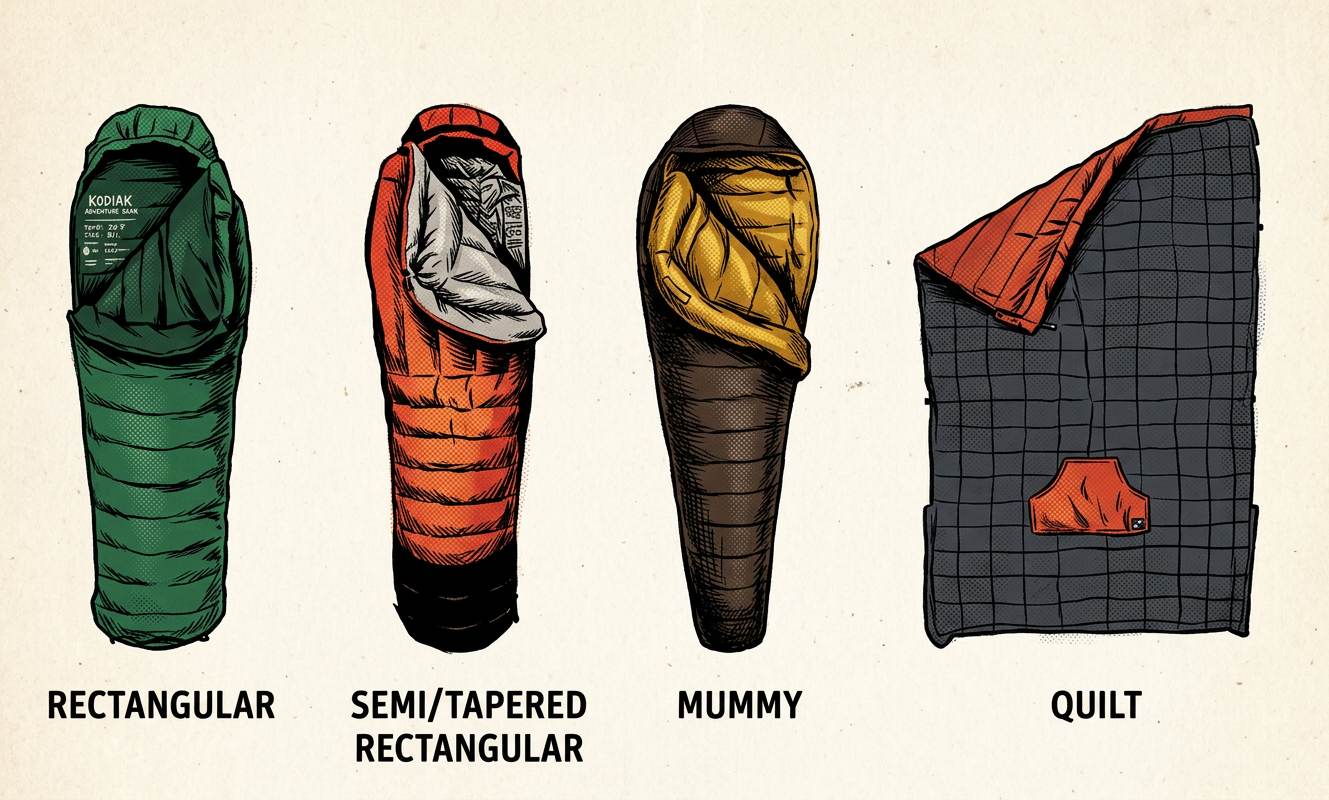
Mummy
Tapers from shoulders to feet, following body contour. The most thermally efficient shape because there is less dead air space to heat. Lighter weight for a given temperature rating. The right choice for backpacking and any trip where weight and warmth matter.
Semi-rectangular
More room in the foot box and hip area than a mummy, less than a rectangular bag. A good middle ground for people who find mummy bags claustrophobic but still want reasonable warmth efficiency.
Rectangular
Maximum interior room. Often unzips to a full quilt. Heaviest and least thermally efficient. Good for car camping where comfort matters more than weight. Many can be zipped together with a matching bag for couples camping.
Quilt
A backpacking quilt removes the back panel entirely. The logic: you compress the insulation beneath you when you sleep anyway, so it provides no warmth. Removing it saves weight and bulk. Quilts pair with an insulated sleeping pad to close the gap. They run lighter and pack smaller than any equivalent-temperature mummy bag. The tradeoff is a learning curve: drafts can enter around the edges until you dial in your setup, and they perform best with a pad rated R-4 or higher. Increasingly popular with ultralight backpackers as the lighter alternative at any equivalent temperature rating.
6. Weight and Packability
For backpackers, the sleeping bag is typically the single heaviest item in the pack. Reducing bag weight is the highest-leverage way to reduce total pack weight.
| Bag Type | Typical Weight | Packed Size |
|---|---|---|
| Ultralight down (20F, 850fp) | 1.0 to 1.4 lb | Grapefruit |
| Standard down (20F, 700fp) | 1.5 to 2.2 lb | Cantaloupe |
| Mid-range synthetic (20F) | 2.5 to 3.5 lb | Large melon |
| Budget synthetic (20F) | 3.5 to 5.0 lb | Large backpack volume |
For multi-day backpacking routes, target a bag under 2 pounds. A 3-pound sleeping bag on a 3-night route adds weight that affects every mile of trail. The cost difference between a 3-pound and a 1.5-pound bag in the same temperature rating is real, but it is the single investment that pays off most consistently over years of use.
7. Recommendations by Trip Type
Wet-climate camping (coast, rainforest, humid regions)
Synthetic or hydrophobic down at 20F to 30F. Moisture is the constant variable in persistently wet climates. A DWR-treated synthetic bag that handles damp conditions and dries quickly is more practical than pure down here, even if slightly heavier.
Mountain backpacking (3-season)
Hydrophobic down at 20F. This covers the full range of summer high-country conditions including unexpected cold snaps and the fog and dew common at elevation. A 20F bag in 40F weather just means you sleep warm, an acceptable tradeoff.
Dry-climate backpacking (desert, arid mountains)
Down at 20F. Dry conditions are where pure down earns its reputation. The weight and packability advantages are real, and without moisture risk they come with no meaningful tradeoff.
Car camping (any season)
Synthetic rectangular or semi-rectangular at the appropriate temperature rating. Comfort over weight. A 20F synthetic rectangular bag covers most three-season car camping and is widely available at reasonable prices.
Family and kids camping
Kids need age-appropriate sizing. An adult bag on a child does not trap heat efficiently because there is too much dead air space for a small body to warm. Purpose-made kids bags in the right temperature range are worth the investment.
Find the Right Sleeping Bag

Best Sleeping Bags
Top picks at every price point and temperature rating. Down and synthetic options tested across a range of camping conditions.
See picks
Best Backpacking Sleeping Bags
Weight-optimized picks for multi-day backpacking routes. Ranked by warmth-to-weight ratio and packability.
See picks
Best Cold Weather Sleeping Bags
Bags rated for 0F and below. For shoulder-season high country and winter camping.
See picks
Best Sleeping Bag Liners
Add 5 to 15 degrees to your existing bag. Silk, cotton, and fleece options compared.
See picksHow to Choose a Sleeping Bag FAQs
