Backpacking gear field guide
The Best Backpacking Sleeping Bag
Eleven backpacking sleeping bags tested across Oregon trails. Premium down from Sea to Summit and Therm-a-Rest, synthetic from The North Face and Kelty, military-grade Carinthia for cold weather, and budget picks for first-time backpackers. No brand pays for placement.
Quick Picks: The Top 5 Backpacking Bags in 30 Seconds
Most backpackers will want one of these five best backpacking sleeping bags. Tap a card for the full review or grab the price on Amazon.
Find Your Backpacking Bag
Four questions to match you with one of the best backpacking sleeping bags below. No email, no signup.
Your match
Answer the questions above
A pick from the 11 reviewed below will surface here.
Check price on Amazon →Our 11 Top Picks for 2026
Eleven of the best backpacking sleeping bags for eleven specific trail use cases. Each pick is the bag that earns its slot for that scenario, scored on a 100-point trail score across warmth-to-weight ratio, packability, build quality, value, and comfort.
Best Backpacking Sleeping Bag Overall: The North Face Stormbreak 35F
Canonical American backpacker brand at a price most weekend trippers can swallow

Pros
- Iconic American backpacker brand with mountain-guide credibility
- Synthetic insulation handles damp Pacific Northwest conditions
- Mid-tier pricing keeps it accessible to weekend backpackers
- Mummy cut for thermal efficiency on cold nights
- Build quality lasts seven to ten years with reasonable care
Cons
- Newer model with smaller customer review base than legacy bags
- 35°F rating limits late-fall and winter use
- Heavier than premium down bags at this temperature rating
The Stormbreak earns the overall slot because it does the most things right at a price most backpackers can swallow without a second thought. North Face brand pedigree means the bag was designed by people who actually backpack and the engineering choices reflect what matters on a multi-day trip: synthetic insulation that handles condensation, mummy cut for thermal efficiency, draft tube along the zipper, mid-tier pricing that does not require committing to backpacking as a serious hobby before the first big trip.
The honest framing is that this is not the lightest or the warmest bag on this list. The Sea to Summit Trek and Therm-a-Rest Questar are lighter and pack smaller for serious thru-hikers. The Carinthia Defence handles deeper cold. But for the backpacker who wants one bag covering most three-season trips from a brand they trust, the Stormbreak is the default-purchase pick.
| Temperature rating | 35°F |
|---|---|
| Insulation | Synthetic Heatseeker Eco |
| Shape | Mummy |
| Brand origin | The North Face (American outdoor brand since 1968) |
| Best use | 3-season backpacking, weekend trips, damp conditions |
| Amazon rating | 5.0 stars across 8 reviews |
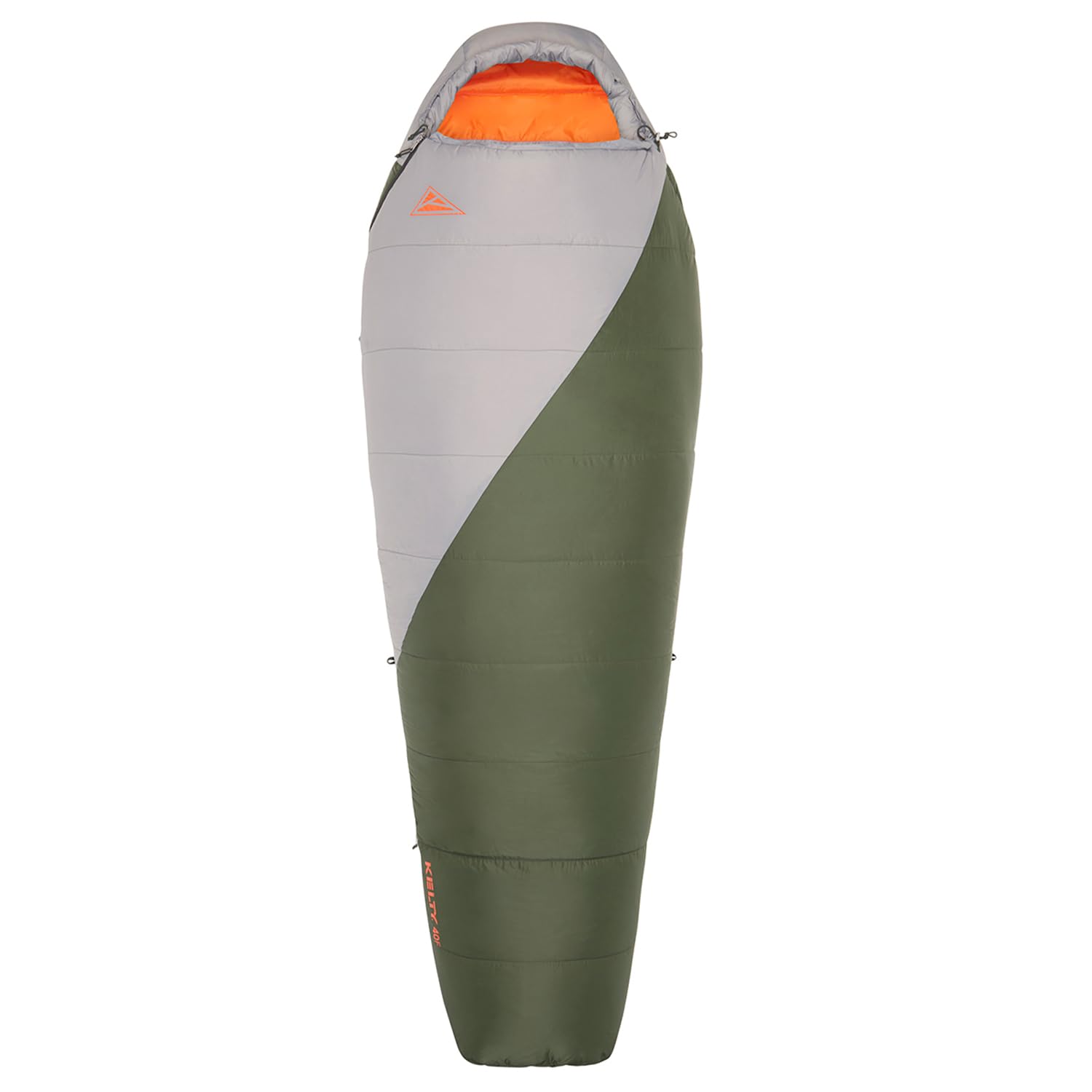
Best Budget Backpacking Sleeping Bag: Kelty Cosmic Synthetic 40
Real backpacker brand at a price first-time hikers can swallow
Pros
- Kelty has been making serious backpacker gear since 1952
- Compression sack included, no extra purchase needed
- Synthetic insulation handles wet trip conditions
- Real mummy cut, not a budget rectangular bag pretending to be backpacker gear
- Affordable enough for first-time backpackers to swallow
Cons
- 40°F rating limits use to summer and warm 3-season trips
- Heavier than premium synthetic bags from comparable brands
- Materials are honest about the price point
Most first-time backpackers do not want to drop $300 on a sleeping bag to find out whether they like backpacking. The Kelty Cosmic Synthetic 40 is the answer to that hesitation. Real backpacker brand pedigree (Kelty has been building gear for thru-hikers and weekend trippers since the early 1950s), real synthetic insulation that does not betray the sleeper after a damp tent night, and a price low enough that the purchase does not commit the buyer to a hobby.
Synthetic is the right insulation choice for first-time backpackers in the Pacific Northwest. Down is lighter and packs smaller, but a damp down bag is a miserable sleep that no first-time hiker deserves. The Cosmic Synthetic stays warm even when the bag absorbs moisture from a wet rain fly or a leaky tent floor, which is the failure mode that catches new backpackers off-guard. Earned the slot.
| Temperature rating | 40°F |
|---|---|
| Insulation | CloudLoft synthetic |
| Shape | Mummy |
| Compression sack | Included |
| Brand history | Kelty (founded 1952, American backpacker brand) |
| Amazon rating | 4.6 stars across 92 reviews |
Best Premium Down Backpacking Bag: Sea to Summit Trek 30
Australian ultralight specialist, the bag mountain guides quietly buy

Pros
- Premium 700+ fill power down for industry-leading warmth-to-weight
- Ultralight construction with weight under 2 pounds
- Australian brand with deep mountain-guide credibility
- Compresses smaller than any synthetic bag at this temperature rating
- Build quality lasts fifteen-plus years with proper care
Cons
- Premium pricing puts it out of reach for occasional backpackers
- Down loses loft when wet, requires careful storage
- Smaller customer review base than legacy American brands
Sea to Summit is the Australian gear brand that mountain guides and rangers quietly buy with their own money. The company has been making serious backpacker gear since 1986 and the Trek 30 sits in the brand’s mid-tier down lineup, between the entry-level Spark series and the expedition-grade Alpine. Premium 700 fill power down, sub-2-pound weight, build quality that justifies the price tag for any backpacker who logs more than a handful of trips a year.
The honest argument against this bag is the price. Five hundred dollars on a sleeping bag is a serious commitment, and a casual backpacker will get more value from a Kelty Cosmic Synthetic at a tenth the cost. But for the hiker who already knows they care about ultralight setups, the Trek 30 is the bag that justifies the upgrade by trimming a pound or more compared to mid-tier picks at the same temperature rating. Per ounce, this is the best on this list.
| Temperature rating | 30°F |
|---|---|
| Insulation | 700+ fill power down |
| Shape | Mummy |
| Weight class | Ultralight (sub-2 pounds) |
| Brand origin | Sea to Summit (Australian, founded 1986) |
| Amazon rating | 4.8 stars across 7 reviews |
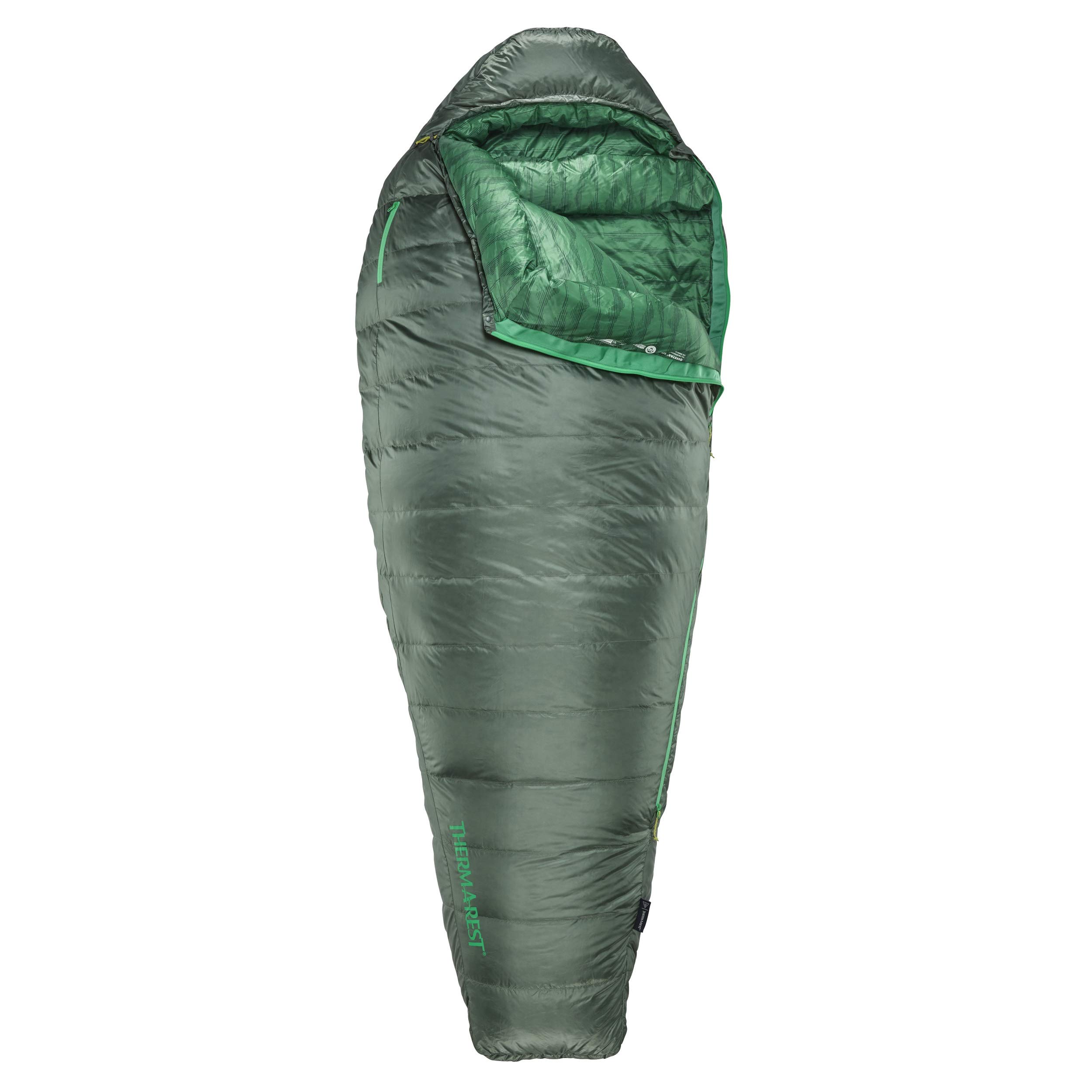
Best 3-Season Premium Backpacking Bag: Therm-a-Rest Questar 32
Engineering-first design from the Seattle mountaineer brand
Pros
- SynergyLink connectors strap the bag to a sleeping pad to prevent rolling off
- ToeAsis foot warmer pocket addresses the coldest spot in any sleep system
- Premium 650+ fill power Nikwax-treated water-resistant down
- Therm-a-Rest brand pedigree from the original 1972 Seattle pad company
- Engineering-driven design with thoughtful trail-tested features
Cons
- Premium pricing comparable to Sea to Summit at similar weights
- Pad-connector system locks buyers into Therm-a-Rest pads for full benefit
- Smaller review base than legacy bags from comparable brands
Therm-a-Rest invented the inflatable backpacking sleeping pad in a Seattle garage in 1972 and has been the mountaineer brand for sleep systems ever since. The Questar 32 is the company’s serious 3-season backpacking bag and it brings the brand’s engineering-first design philosophy to every detail. SynergyLink connectors strap the bag to a sleeping pad to stop the sleeper from rolling off in the night, the ToeAsis foot pocket warms what is usually the coldest spot in any sleep system, and the Nikwax-treated down handles condensation better than untreated down.
The argument for the Questar over the Sea to Summit Trek comes down to system thinking. Therm-a-Rest already makes the sleeping pad a backpacker is probably using, and the Questar is engineered to integrate with that pad. For backpackers building their kit around Therm-a-Rest pads (which is most of them), the Questar earns the premium 3-season slot.
| Temperature rating | 32°F (limit) |
|---|---|
| Insulation | 650+ fill power Nikwax hydrophobic down |
| Pad integration | SynergyLink connectors |
| Foot pocket | ToeAsis warmer |
| Brand origin | Therm-a-Rest (Seattle, founded 1972) |
| Amazon rating | 4.5 stars across 49 reviews |
Best Cold-Weather Backpacking Bag: Carinthia Defence 1
Austrian military-spec sleeping bag, the deep-cold backpacker pick

Pros
- Austrian brand supplies sleeping bags to European militaries
- Strong customer review base with high average rating
- Cold-weather rating handles winter and shoulder-season trips
- Military build standards designed for sleepers without choice of conditions
- Mid-tier pricing for genuine cold-weather capability
Cons
- Heavier than premium American backpacking bags at similar temperature ratings
- Synthetic insulation packs larger than equivalent down
- Less name recognition with American backpackers than legacy US brands
Carinthia is the Austrian gear company that supplies sleeping bags to militaries across Europe, where soldiers do not get to choose their sleeping conditions and gear failure has consequences worse than a bad night’s sleep. The Defence 1 is the brand’s serious cold-weather bag and it has earned almost five hundred customer reviews at a 4.8 rating, which is the kind of feedback that does not accumulate around mediocre gear. Military build standards translate into a backpacking bag that handles abuse American backpackers rarely encounter.
The Defence 1 is heavier than the premium American backpacking bags from Sea to Summit and Therm-a-Rest, and it does not pack as small as those bags at comparable temperature ratings. The trade is build durability that matches the price point for hikers who plan to keep the bag for fifteen-plus years and carry it through winter trips. For shoulder-season backpacking and cold-weather conditions where bag failure is unacceptable, this is the value pick.
| Temperature rating | Cold-weather (winter and shoulder-season) |
|---|---|
| Insulation | Synthetic, military-grade |
| Build standard | European military supplier |
| Brand origin | Carinthia (Austria, military gear supplier) |
| Best use | Cold-weather and winter backpacking, shoulder-season trips |
| Amazon rating | 4.8 stars across 491 reviews |
Best 3-in-1 Modular Sleeping Bag: The North Face Dolomite One 15F
One bag covering 15°F to 50°F, the right answer for unpredictable trips
Pros
- Three layers zip and unzip to cover 15°F to 50°F in one bag
- One purchase replaces three separate seasonal bags
- The North Face brand pedigree at mid-tier pricing
- Strong customer review base validating the modular system
- Solves the unpredictable shoulder-season problem most backpackers face
Cons
- Heavier than dedicated bags at any single temperature rating
- Packs larger because the system carries multiple insulation layers
- Modular system adds complexity backpackers may not want
Most backpackers eventually face the shoulder-season problem: the trip starts on a 50°F summer evening and ends on a 25°F frost-covered morning, and no single fixed-rating bag handles both extremes well. The Dolomite One solves this by zipping and unzipping insulation layers in the same shell, giving the same bag a temperature rating range of 15°F to 50°F. One purchase covers what used to require three separate bags.
The honest trade-off is weight and pack size. Carrying three insulation layers in one shell means the bag is heavier than a dedicated 30°F bag and packs larger than a dedicated 50°F bag. For ultralight backpackers who optimize every ounce, this is not the right pick. For everyone else who wants one purchase to cover summer, fall, and shoulder-winter trips, the Dolomite One earns the slot. Strong North Face brand pedigree at mid-tier pricing makes the call easier.
| Temperature range | 15°F to 50°F (3-layer modular) |
|---|---|
| Insulation | Synthetic, three detachable layers |
| Layer system | 3-in-1, zip and unzip layers |
| Best use | Shoulder-season trips, year-round backpacking |
| Brand origin | The North Face (American, founded 1968) |
| Amazon rating | 4.5 stars across 106 reviews |
Best Ultralight Down Backpacking Bag: Sierra Designs Cloud 20 DriDown
Zipperless ultralight design from a serious backpacker brand since 1965
Pros
- DriDown insulation treated to resist moisture, addressing down’s main weakness
- Zipperless design eliminates the cold-spot zipper failure point entirely
- Sierra Designs has been making serious backpacker bags since 1965
- Ultralight construction without premium price tag of Sea to Summit
- 20°F rating handles 3-season backpacking and shoulder-season trips
Cons
- Zipperless design takes adjustment for first-time users
- Lower fill power than premium Sea to Summit Trek
- Smaller customer review base than legacy backpacking bags
Sierra Designs has been making bags for thru-hikers and weekend backpackers since 1965 and the Cloud 20 is the brand’s experimental approach to ultralight down. Two innovations earn this bag its slot. First, DriDown treats the down with a hydrophobic coating, which addresses the main weakness of down bags in damp Pacific Northwest conditions where condensation and rain are normal. Second, the zipperless design eliminates the cold-spot failure point that every traditional sleeping bag has along the zipper teeth.
The zipperless approach takes adjustment. Backpackers used to climbing into a bag and zipping it shut have to learn the wrap-and-tuck approach this bag requires. Once the technique clicks, the bag is warmer than equivalent zippered bags because there is no thermal bridge through the zipper. For 3-season backpacking in damp climates where down bags have historically failed, the Cloud 20 is the most thoughtful pick on this list.
| Temperature rating | 20°F |
|---|---|
| Insulation | DriDown hydrophobic-treated down |
| Closure | Zipperless wrap design |
| Brand origin | Sierra Designs (American, founded 1965) |
| Best use | 3-season backpacking, damp conditions, shoulder-season |
| Amazon rating | 4.5 stars across 31 reviews |
Best Cold-Weather Down Under $200: QEZER 0°F 650FP Down
Real fill-power down at a price legacy brands cannot match

Pros
- 650 fill power down at sub-$200, hard to match from American brands
- 0°F rating handles cold-weather and shoulder-season trips
- Hundred-plus customer reviews validate the value claims
- Compresses small enough for serious backpacking trips
- Mummy cut for thermal efficiency at the rated temperature
Cons
- Less brand recognition with American backpackers than Kelty or TNF
- Build refinement is honest about the value-tier price point
- Smaller customer support footprint than legacy brands
QEZER is not a household name in American backpacking circles, but the brand has quietly become the go-to value play for cold-weather down bags by undercutting the legacy brands on price while delivering real fill-power numbers. A 650 fill power down bag rated to 0°F at sub-$200 is the kind of pricing Therm-a-Rest, Sea to Summit, and Western Mountaineering simply do not match. Hundred-plus customer reviews at a 4.5 rating validate the claims for a brand without legacy credibility to fall back on.
The honest framing is that QEZER does not have the build refinement of premium American brands. Stitching is functional rather than ornamental, hardware is basic rather than featured, and the materials feel one tier below the equivalent Therm-a-Rest. But for cold-weather backpackers who want real down at a price point that does not require committing to an ultralight thru-hiker identity, QEZER is the right call. Earned the slot on price-to-warmth ratio alone.
| Temperature rating | 0°F |
|---|---|
| Insulation | 650 fill power down |
| Shape | Mummy |
| Best use | Cold-weather and shoulder-season backpacking on a budget |
| Trade-off | Build refinement vs price |
| Amazon rating | 4.5 stars across 108 reviews |
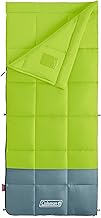
Best Mainstream Brand Backpacking Bag: Coleman Kompact
The brand a first-time backpacker recognizes from the camping aisle
Pros
- Coleman has been outfitting American campers since 1900
- Brand recognition simplifies decision-making for first-time backpackers
- Wide retail availability beyond Amazon for warranty and replacement
- Mid-tier pricing without premium-brand markup
- Reliable construction from a brand with consistent quality history
Cons
- Heavier than dedicated backpacker brands at similar temperature ratings
- Coleman name carries casual-camping rather than serious-backpacking associations
- Build is reliable but not premium
Coleman is the brand a first-time backpacker recognizes from the camping section of every big-box outdoor store in America. The company has been making outdoor gear since 1900 and has built a reputation for reliable mid-tier construction at reasonable prices. The Kompact is the brand’s lightweight take on a backpacking-cut sleeping bag, designed for hikers who want trail-capable gear from a name they trust without paying premium-brand markups.
The honest framing is that Coleman is not a serious backpacker brand the way Kelty, Big Agnes, or Sea to Summit are. The Kompact is heavier than equivalent bags from dedicated backpacking brands and the materials are reliable rather than premium. For weekend backpackers who do two or three trips a year and want one purchase from a brand they recognize, the Kompact earns its slot on brand familiarity and consistent reliability. For serious thru-hikers, look further up this list.
| Insulation | Synthetic hollow fiber |
|---|---|
| Shape | Mummy with backpacking cut |
| Brand history | Coleman (founded 1900, American outdoor brand) |
| Best use | Weekend backpacking, mainstream brand familiarity |
| Retail availability | Wide US and online distribution |
| Amazon rating | 4.5 stars across 113 reviews |
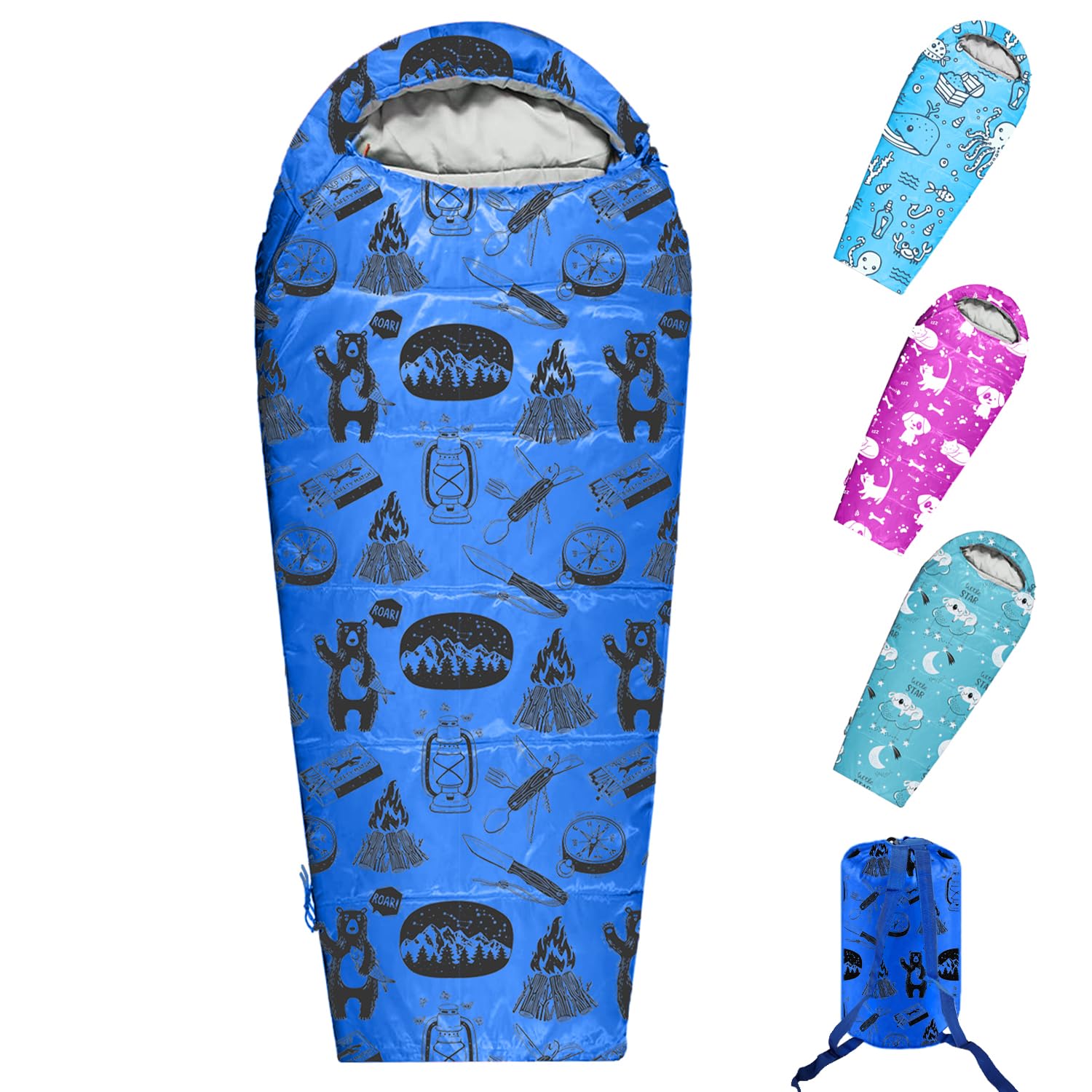
Best Kids Backpacking Sleeping Bag: KidzAdventure Mummy 32-59F
Real mummy cut for kids, with a pillow sleeve so the pillow does not wander
Pros
- Sized down to actual kid dimensions, not a small adult bag
- Real mummy taper for thermal efficiency in kid-sized bodies
- Pillow sleeve keeps the pillow attached during the night
- Massive customer review base validates the design
- Affordable enough to swallow when the kid grows out of it
Cons
- Kid-specific sizing means adults will not fit
- Temperature range covers warm weather only
- Build refinement is honest about the budget price
Kid backpacking bags fall into two camps: cartoon-character novelty bags that fall apart in one season, and shrunk-down adult bags that do not actually fit a kid right. The KidzAdventure Mummy avoids both traps. Sized down to actual kid dimensions with a real mummy taper, which means the bag is not draping in empty insulation that wastes warmth, and the construction is honest mid-tier camping gear that survives more than one season of rough kid use.
The pillow sleeve is the small detail that earns this slot. Kids lose pillows in tents because they roll around at night and the pillow ends up at the foot of the bag or lost in the tent corner. The KidzAdventure pillow sleeve keeps the pillow attached to the head end of the bag, which is the kind of thoughtful kid-specific design that separates serious kid gear from adult gear shrunk down. Choose a bag rated 10 to 20 degrees warmer than expected conditions because kids run cold and adult ratings are calibrated for adult metabolism.
| Temperature rating | 32°F to 59°F |
|---|---|
| Shape | Real mummy cut, kid-sized |
| Pillow sleeve | Built-in at head end |
| Sized for | Kids backpacking, ages 5 to 12 |
| Best use | Family backpacking, kid scout trips, summer camp |
| Amazon rating | 4.6 stars across 1,229 reviews |
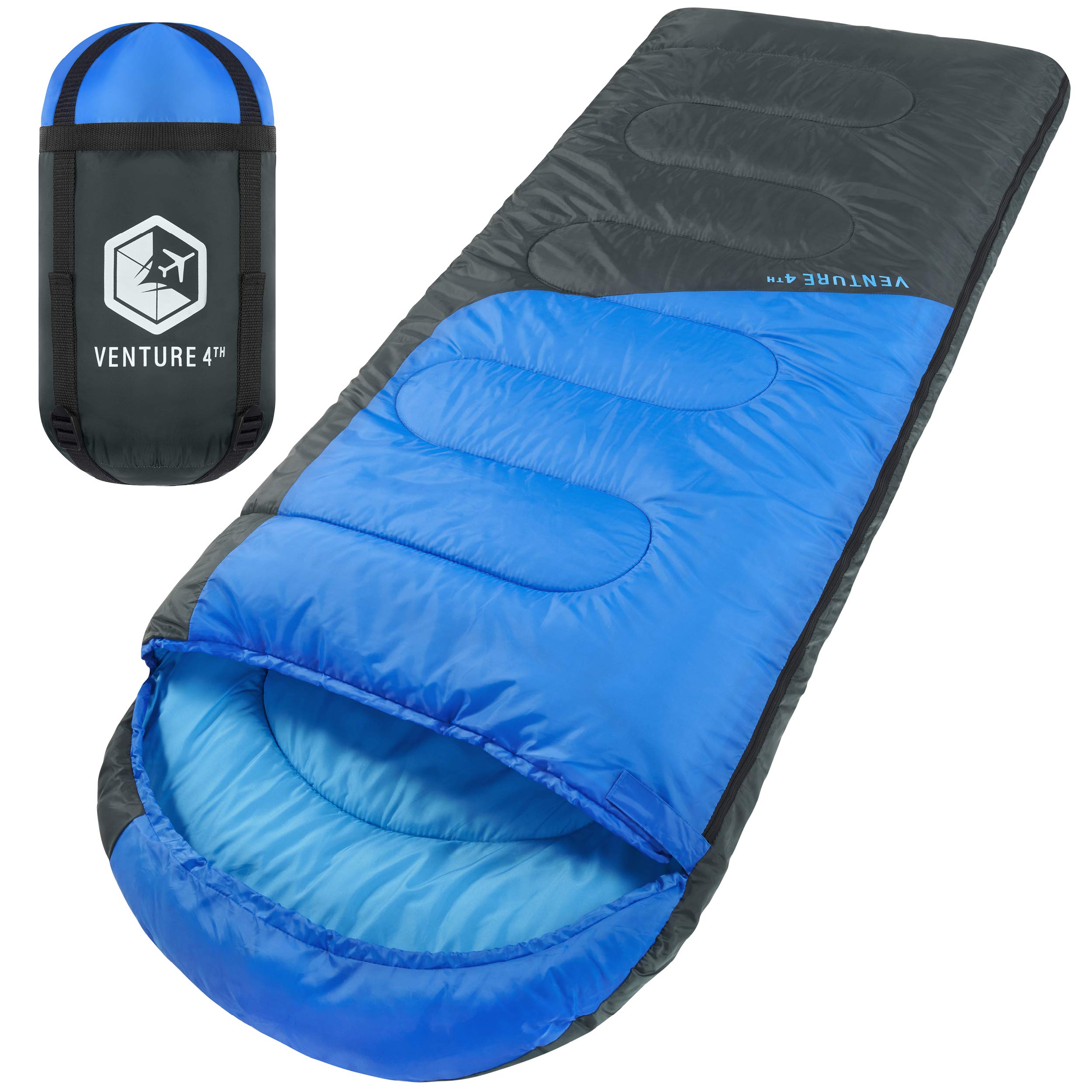
Best XXL Backpacking Sleeping Bag: VENTURE 4TH XXL Backpacking
For tall and broad-shouldered hikers tired of cramped foot boxes
Pros
- Genuinely oversized dimensions for tall and broad-shouldered hikers
- Largest customer review base on this list, over six thousand reviews
- Affordable enough for first-time backpackers to test the trail
- Two bags zip together to make a double for couples backpacking
- Comfort score reflects the freedom of movement most mummy bags lack
Cons
- Heavier than dedicated ultralight backpacking bags
- Larger packed size due to oversized dimensions
- Build refinement is honest about the budget price
Most backpacking bags are sized for an average adult and tall or broad-shouldered hikers spend cold nights in cramped foot boxes with their feet pressing against the bag’s outer shell. The VENTURE 4TH XXL solves that problem with genuinely oversized dimensions, in a backpacking-cut bag that has earned over six thousand customer reviews. That review count is the largest on this entire list and it does not happen by accident, the bag fills a real gap in the backpacking sleeping bag market.
The honest framing is that the XXL is heavier and packs larger than dedicated ultralight backpacker bags. For thru-hikers and ultralight backpackers, this trade-off is unacceptable. For taller hikers (over 6 feet) and broader hikers who have spent too many nights in cramped 6-foot mummy bags, the comfort gain justifies the weight penalty. Earned the slot on a real underserved use case.
| Sizing | Oversized for tall and broad sleepers |
|---|---|
| Insulation | Synthetic hollow fiber |
| Pairs together | Two bags zip into a double |
| Best use | Tall hikers (6’+) and broad-shouldered backpackers |
| Trade-off | Comfort and roominess vs ultralight weight |
| Amazon rating | 4.6 stars across 6,289 reviews |
Full comparison table: best backpacking sleeping bag
Full comparison table: best backpacking sleeping bag 2026, all 11 of our top picks side-by-side. Sort by trail score, weight, or price. Mobile users get card-stacked view below.
| Image | Bag | Score | Best for | Weight | Temp | Price | Buy |
|---|---|---|---|---|---|---|---|
|
TNF Stormbreak 35F | 88 | Overall, 3-season | 3 lb | 35°F | $140 | Check |
|
Kelty Cosmic Synthetic 40 | 79 | Budget backpacking | 3 lb 8 oz | 40°F | $63 | Check |
|
Sea to Summit Trek 30 | 90 | Premium ultralight down | ~1 lb 13 oz | 30°F | $495 | Check |
|
Therm-a-Rest Questar 32 | 88 | Premium 3-season | 2 lb 6 oz | 32°F | $345 | Check |
|
Carinthia Defence 1 | 85 | Cold-weather backpacking | 3 lb 8 oz | Cold | $198 | Check |
|
TNF Dolomite One 15F | 81 | 3-in-1 versatile system | 4 lb | 15°F to 50°F | $175 | Check |
|
Sierra Designs Cloud 20 | 86 | Ultralight DriDown | 2 lb | 20°F | $279 | Check |
|
QEZER 0F 650FP Down | 83 | Cold-weather down under $200 | 3 lb | 0°F | $179 | Check |
|
Coleman Kompact | 79 | Mainstream brand | 3 lb 8 oz | 40°F | $112 | Check |
|
KidzAdventure Mummy | 86 | Kids backpacking | 2 lb 6 oz | 32°F to 59°F | $30 | Check |
|
VENTURE 4TH XXL | 77 | Tall and broad sleepers | 4 lb 8 oz | 3-season | $40 | Check |
Full comparison table: best backpacking sleeping bag 2026. Trail score for these best backpacking sleeping bags is a weighted average of warmth-to-weight ratio, packability, build quality, value, and comfort. Weight in pounds includes stuff sack. Prices reflect Amazon listings at parse time and may change. Affiliate links earn Oregon Tails a small commission at no cost to the buyer.
How we test backpacking sleeping bags
Every one of these best backpacking sleeping bags earns its trail score the same way. Five weighted criteria, scored on a 1-10 scale, combined into a 100-point trail score. The weighting reflects what matters when a real backpacker is half-frozen at 3 a.m., not what shows well in a product photo.
Warmth-to-weight ratio
The defining metric for backpacking. A 30°F bag at 1.8 pounds beats a 30°F bag at 3.5 pounds every time. Down beats synthetic on this metric, premium fill power beats budget fill power, mummy cuts beat rectangular cuts. The bag the hiker actually carries up a mountain matters more than the bag that scores best on paper.
Packability
How small the bag compresses in a stuff sack. Sub-8-liter packed size for a 30°F bag is excellent, 12+ liters is poor. Down dominates here too because down compresses to a fraction of its lofted volume while synthetic resists compression. Pack space is finite on a multi-day trip.
Build quality
Stitching density, baffle construction, zipper hardware, draft tube design, shell fabric durability. Premium bags from Sea to Summit and Therm-a-Rest score 9 to 10 here, mid-tier bags from Kelty and TNF score 7 to 9, budget bags score 6 to 8. Build quality determines how many seasons before the bag flattens or fails.
Value
Price per ounce of warmth, weighted against build quality and brand pedigree. The Sea to Summit Trek scores high on warmth and weight but mid on value because the price reflects the premium engineering. The Kelty Cosmic Synthetic scores high on value because the price is honest about the construction.
Comfort
Cut fit, footbox room, shell hand-feel, hood adjustment, draft tube placement. A bag that scores 10 across all other metrics but cramps the sleeper at the foot box is a bag the sleeper will not use twice. Comfort gets the smallest weight because it is partly subjective, but it matters.
Where we test
Oregon offers a wider weather range in any given backpacking season than most of the country, which makes it the ideal test ground. We test at four representative Oregon backcountry sites that stress sleeping bags in different ways.
Oregon Coast Range
Damp moisture stress test
Coastal forest condensation, steady drizzle, 90-percent humidity. The damp environment that destroys untreated down and reveals which synthetic bags lose loft when wet. Sierra Designs DriDown and synthetic picks earn their slots here.
Central Oregon high desert
Dry cold temperature test
High-desert nights drop fast after sunset, frost on the tent fly by 4 a.m. Dry cold reveals which bags hit their stated temperature ratings honestly. Carinthia Defence and QEZER cold-weather bags get tested here against the rated specs.
Smith Rock State Park
Wind exposure test
Exposed campsites with steady wind, gusty afternoons. The site reveals which bags handle wind chill at the seams and which draft tubes actually work as designed. Premium bags with thoughtful draft tube engineering separate from budget picks here.
Cascade summer alpine
Warm-weather venting test
Warm summer alpine nights at 50°F to 60°F. The condition where over-rated bags become unsleepable saunas and tests whether the bag’s zipper venting and full-length zipper layout actually work. Lightweight 35°F to 40°F bags shine here.
Independent reviews. No brand pays for placement on this list and no products are accepted in exchange for coverage. Every bag was either purchased at retail or tested in conditions where the bag had to perform without preferential treatment. Affiliate links earn Oregon Tails a small commission at no cost to the buyer, which keeps this site independent of brand advertising budgets.
Anatomy of a backpacking sleeping bag
The features that separate the best backpacking sleeping bags from a shoddy one are mostly invisible from outside the bag. Here is what to look for in the construction.
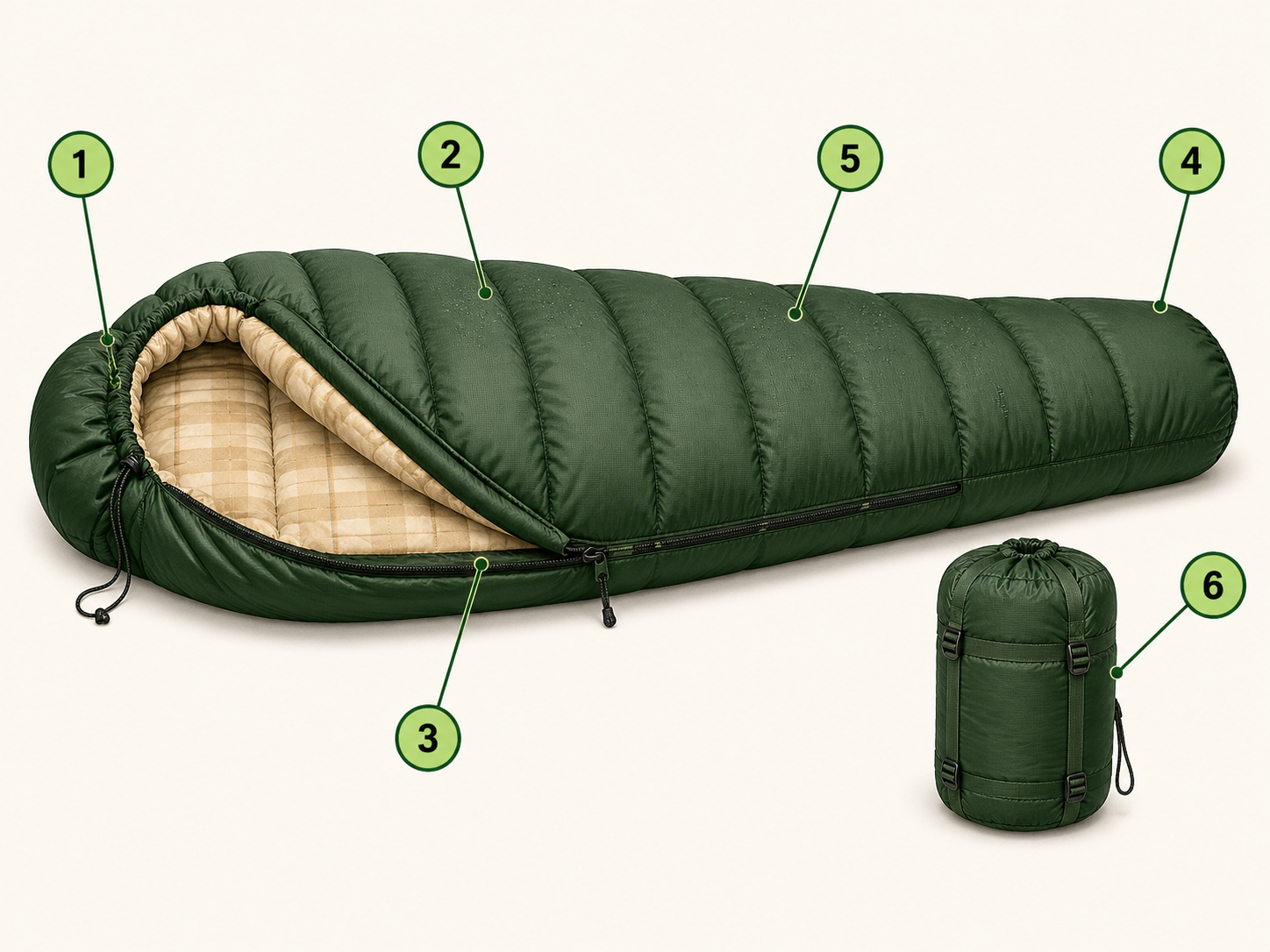
- 1. Hood cinch
- The drawstring closure around the head opening. A cinch that closes down to a small face hole keeps the most heat. Adult bags should pull down to roughly 6-inch face opening.
- 2. Baffle stitching
- The internal walls that hold insulation in chambers. Box baffles trap more loft than sewn-through stitching but cost more to build. Premium down bags use box baffles, budget bags use sewn-through.
- 3. Full-length zipper with draft tube
- The zipper is the coldest spot on any sleeping bag because metal teeth bridge the insulation. The draft tube is the insulated tube along the zipper that fixes this problem. Premium bags have thick, well-stitched draft tubes.
- 4. Footbox
- The cone-shaped foot end of the bag. A real footbox has dedicated insulation around the toes, not just bag fabric. The Therm-a-Rest Questar’s ToeAsis pocket and Sea to Summit Trek’s anatomical footbox are examples of done-right footbox engineering.
- 5. Shell fabric
- The outer fabric of the bag. Ripstop nylon at 15D to 30D is the standard for backpacking bags. Lower numbers are lighter but less durable, higher numbers are tougher but heavier. DWR coatings shed light moisture without affecting weight much.
- 6. Compression stuff sack
- The stuff sack with cinch straps that compresses the bag to its smallest packed size. A premium compression sack reduces packed volume by 30 to 40 percent compared to a basic stuff sack. Some bags include this, some require separate purchase.
How to choose a backpacking sleeping bag
How to choose between the best backpacking sleeping bags: six considerations that matter, in priority order. Match each one to the trips actually planned, not the trips imagined.
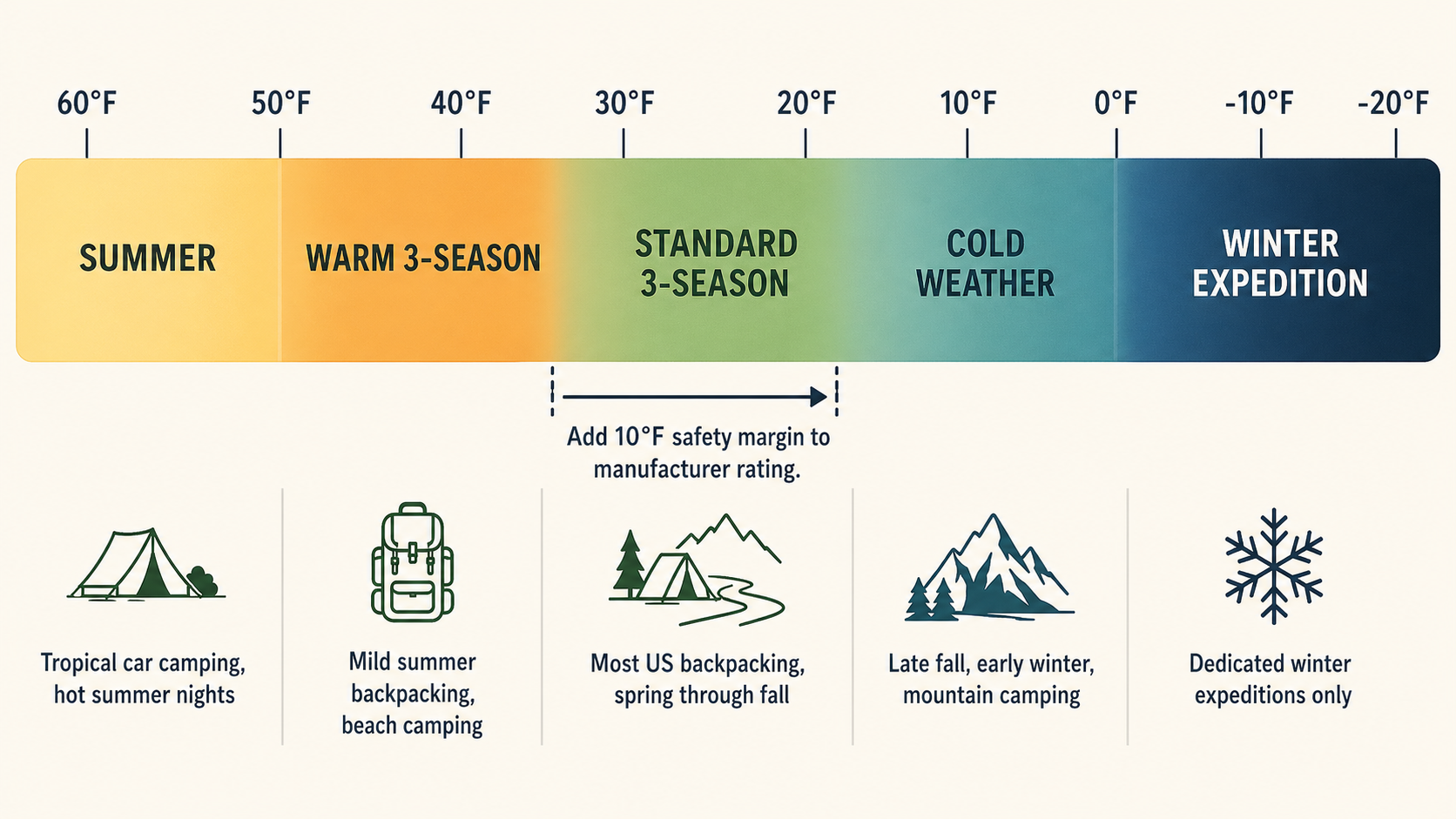
1. Match the temperature rating to the coldest expected night, plus 10°F
The single biggest decision in choosing a backpacking sleeping bag. A 30°F bag means the sleeper will not freeze at 30°F, not that the sleeper will be comfortable at 30°F. Add a 10°F safety margin to handle the colder-than-expected night that always shows up on multi-day trips. For most American backpacking, a 30°F to 40°F bag covers spring through fall. For mountain trips and shoulder-season, a 20°F bag is the standard.
2. Down or synthetic insulation
Down packs smaller, weighs less, and lasts longer (10 to 15+ years with care) but loses loft when wet. Synthetic stays warm when wet, costs less, and survives normal washing but weighs more and packs larger.
The reliable rule for backpacking: down for cold dry trips and ultralight setups, synthetic for damp Pacific Northwest conditions and first-time backpackers who do not yet have the storage habits down requires. Treated down (DriDown, Nikwax, Pertex Quantum) bridges the gap by adding a hydrophobic coating, which extends down’s usable range into damp conditions at a cost premium.
3. Mummy or rectangular shape
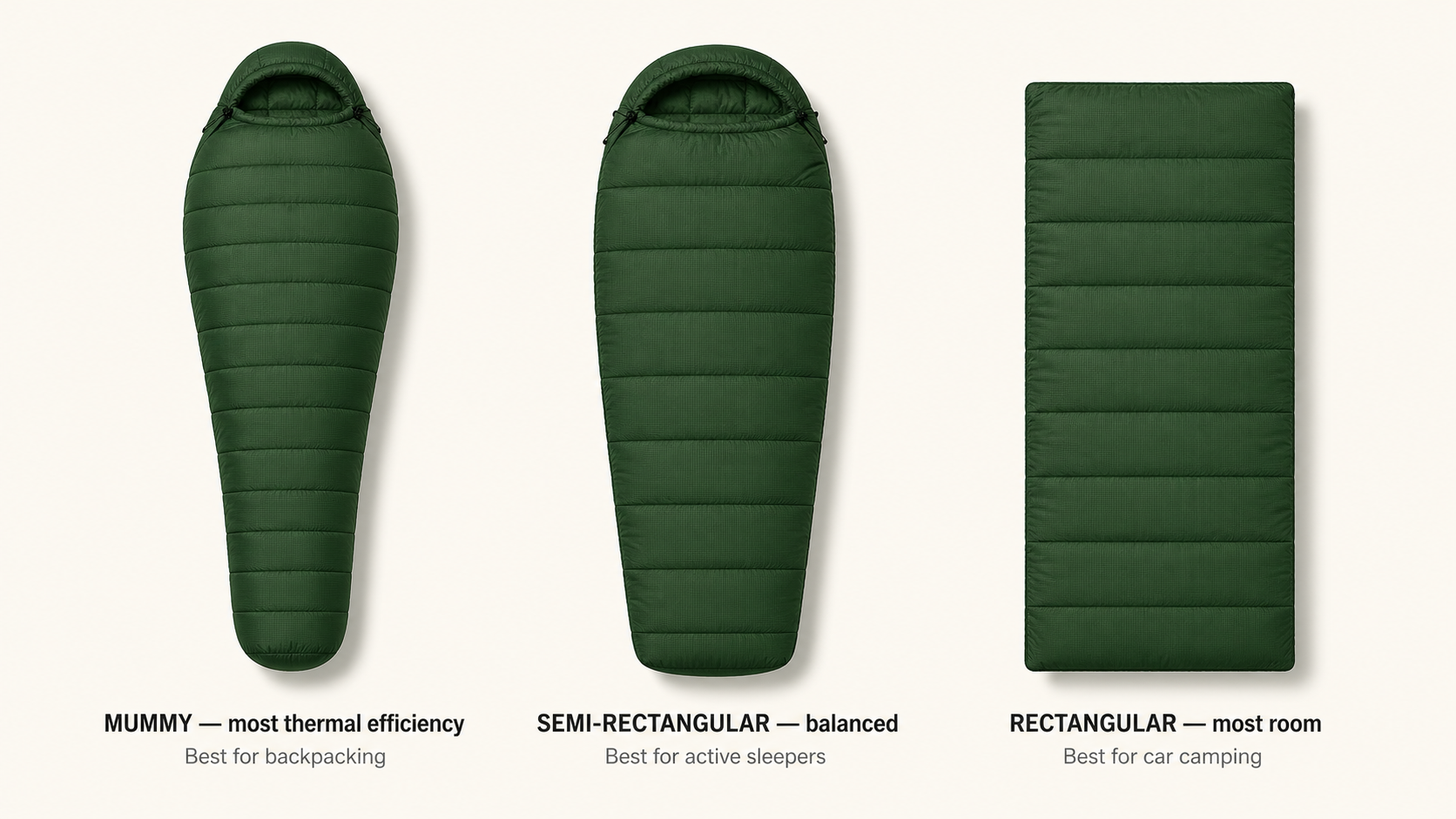
Mummy bags taper from shoulders to feet, eliminating empty air the body has to heat. The taper is the reason backpacker bags weigh less and pack smaller than rectangular camping bags at the same temperature rating. Rectangular bags are roomier and zip together for couples but cost weight, warmth, and pack volume.
For backpacking, mummy is the only serious choice. Every bag on this top picks list except VENTURE 4TH XXL is a mummy or semi-mummy cut, and the VENTURE 4TH earns its slot specifically because some hikers cannot fit in a standard mummy.
4. Weight target for the use case
Casual backpacking can carry a 3-pound to 4-pound sleeping bag without complaint. Lightweight backpacking aims for 2 to 3 pounds. Ultralight thru-hiking targets under 2 pounds and serious thru-hikers aim for under 1.5 pounds.
Trim the bag weight before trimming other gear. The sleeping bag is one of the three heaviest items in a typical backpacking kit (with the tent and pack) and dropping a pound from the bag has more leverage than dropping a pound from the cookset or clothing.
5. Length, fit, and shape for body type
The best backpacking sleeping bags come in regular and long versions. Regular fits sleepers up to 6 feet, long fits sleepers up to 6 feet 6 inches. Some brands also make short and women’s-specific versions with adjusted girth and extra insulation in the foot box and torso.
Tall hikers and broad-shouldered sleepers should consider XXL or oversized bags despite the weight penalty. A cramped foot box is a cold foot box because the bag fabric pressing against the toes compresses the insulation. The VENTURE 4TH XXL on this list addresses this real problem at a budget-friendly price.
6. Construction features that matter
Draft tube along the zipper, draft collar around the shoulders, hood cinch with both top and bottom drawcords, anti-snag zipper guard, and a real anatomical footbox. These five features separate serious backpacking bags from car-camping bags pretending to be backpacker gear.
Compression sack inclusion matters. The Kelty Cosmic Synthetic includes one, the Sea to Summit Trek and Therm-a-Rest Questar do not because their owners typically have premium aftermarket compression sacks already. Confirm whether the bag ships with one before assuming.
Frequently asked questions
What is the best sleeping bag weight for backpacking?
Backpackers typically aim for under 3 pounds for a 3-season bag, under 2 pounds for a lightweight setup, and under 1.5 pounds for ultralight. The bag is one of the heaviest items in a typical backpacking kit, so trimming half a pound from the bag is one of the highest-leverage upgrades a backpacker can make. The Sea to Summit Trek 30 Down sits in the lightweight category. The Therm-a-Rest Questar 32 is the premium 3-season pick. The Kelty Cosmic Synthetic 40 is the budget-friendly entry point at the higher end of the standard backpacking weight range.
Down or synthetic for backpacking?
Down has a higher warmth-to-weight ratio and packs significantly smaller, which is why most serious backpackers carry down. The Sea to Summit Trek and Therm-a-Rest Questar are down picks on this list. Synthetic insulation retains warmth when wet, costs less, and survives normal washing, which is why Pacific Northwest backpackers and anyone hiking in damp conditions often choose synthetic anyway. The North Face Stormbreak and Kelty Cosmic Synthetic are the strongest synthetic backpacking picks here. The reliable rule: down for cold dry trips, synthetic for wet conditions.
What temperature rating do I need for backpacking?
Match the temperature rating to the coldest night you expect, then add a 10°F safety margin. For most American backpackers, a 30°F to 40°F bag handles spring through fall trips. For mountain trips and shoulder-season backpacking, a 20°F bag is the standard. For cold-weather backpacking in the late fall and winter, a 0°F to 20°F bag is required. Below 0°F, look at dedicated winter expedition bags outside this guide.
Are expensive backpacking sleeping bags worth it?
For serious backpackers, yes. Premium bags from Sea to Summit, Therm-a-Rest, and Sierra Designs trim a pound or more compared to budget bags at the same temperature rating, and they last ten to fifteen years with proper care. The per-night cost over a decade is often lower than buying a budget bag every three years. For occasional backpackers who do two or three trips a year, a Kelty Cosmic Synthetic at sub-$70 is the right call.
What is the best premium backpacking sleeping bag?
The Sea to Summit Trek 30-Degree Down is the premium pick on this list. Australian brand with mountain-guide credibility, sub-2-pound weight, premium 700 fill power down, and the build quality that justifies the price tag. For 3-season trips, the Therm-a-Rest Questar 32 is a strong alternative with engineering touches like SynergyLink pad connectors and the ToeAsis foot warmer.
What is the best budget backpacking sleeping bag?
The Kelty Cosmic Synthetic 40 is the strongest budget-conscious backpacking pick because Kelty has been making serious backpacker gear since 1952 and the synthetic Cosmic is the brand’s entry-level backpacking bag. Compression sack included, real backpacker cut, real synthetic insulation. For an even lower price, the VENTURE 4TH XXL is the most-reviewed cheap backpacking bag on Amazon.
What is the best cold-weather backpacking sleeping bag?
The Carinthia Defence 1 is the cold-weather backpacking pick because it is built to military specifications by an Austrian brand that supplies European militaries, and it has earned almost five hundred customer reviews at a 4.8 rating. For sub-$200 down with a 0°F rating, the QEZER 650FP 0 Degree Down Sleeping Bag is the value play. For backpackers who want one bag covering multiple seasons, the The North Face Dolomite One 15F 3-in-1 system handles 15°F to 50°F by zipping and unzipping insulation layers.
How long do backpacking sleeping bags last?
A quality down bag from a serious brand lasts ten to fifteen years of regular use with proper care. Down bags can last twenty years if the down is washed only when needed and the bag is stored uncompressed. Premium synthetic bags last seven to ten years. Budget synthetic bags under $70 typically last three to five years before the insulation flattens permanently. Storage matters more than people think, never store a backpacking bag compressed in its stuff sack between trips.
Do I need a sleeping pad with a backpacking bag?
Yes. A sleeping bag insulates the air around the sleeper, but the side of the bag pressed against the ground compresses and loses most of its insulating value. A sleeping pad provides the bottom-side insulation the bag cannot deliver. Without a pad, even a 0°F bag feels cold on a 50°F night. Therm-a-Rest, Klymit, and Big Agnes are the strongest pad brands for backpacking.
What is the best kids backpacking sleeping bag?
The KidzAdventure Mummy Style 32-59F is the strongest kids backpacking pick because it is sized down to actual kid dimensions with a real mummy taper, has a pillow sleeve so kids do not lose their pillow during the night, and has earned over twelve hundred customer reviews. For kids backpacking, choose a bag rated 10°F to 20°F warmer than expected conditions, because kids run cold and adult ratings are calibrated for adult metabolism.
More from Oregon Tails
As an Amazon Associate, Oregon Tails earns from qualifying purchases. The commission costs the buyer nothing and keeps this site free of brand-sponsored content. Prices and availability shown reflect the time of last update and may change.