Camping gear field guide
What Is a Sleeping Bag Liner?
A sleeping bag liner is a thin, removable insert that slides inside your bag like a sheet into a duvet cover. The material you pick, the weight you carry, and how honestly the manufacturer rates it decide whether that liner adds real warmth or just adds grams.
What a Sleeping Bag Liner Actually Does
- The main job isn’t warmth, it’s hygiene. A liner catches the sweat, body oils, and sunscreen that otherwise soak into the insulation and break down even the best sleeping bag over time.
- Discount marketed warmth claims by about a third. A liner advertised at +25°F feels more like +15°F in real conditions. Plan with the conservative number.
- Merino wool is the most versatile material for three-season Oregon camping. Silk wins for summer ultralight. Fleece is car-camping only.
- Match the liner shape to the bag shape. A rectangular liner inside a mummy bag bunches overnight and cancels any warmth gain.
- Wash after every trip and air dry. Liners are built to be washed. The bag itself stays cleaner and the liner outlasts two or three sleeping bags.
What is a sleeping bag liner, and do you actually need one? Sleeping bag liners are one of the most oversold and most useful pieces of camping gear on the market. The marketing promises a second sleeping bag’s worth of warmth for four ounces and fifty dollars. The reality is more modest, but the case for carrying one is stronger than that marketing suggests. A good liner will outlast two or three sleeping bags, keep every bag you own cleaner and warmer than it would be otherwise, and occasionally save a trip when the forecast gets wrong.
This guide walks through what a liner is, what it actually does, how to pick the right material for the way you camp, and how to care for it so it earns its spot in the pack. If you’re still choosing the bag itself, start with how to choose a sleeping bag, then come back here. Ready to shop for the bag itself? See our best sleeping bags guide.
01 What Is a Sleeping Bag Liner?
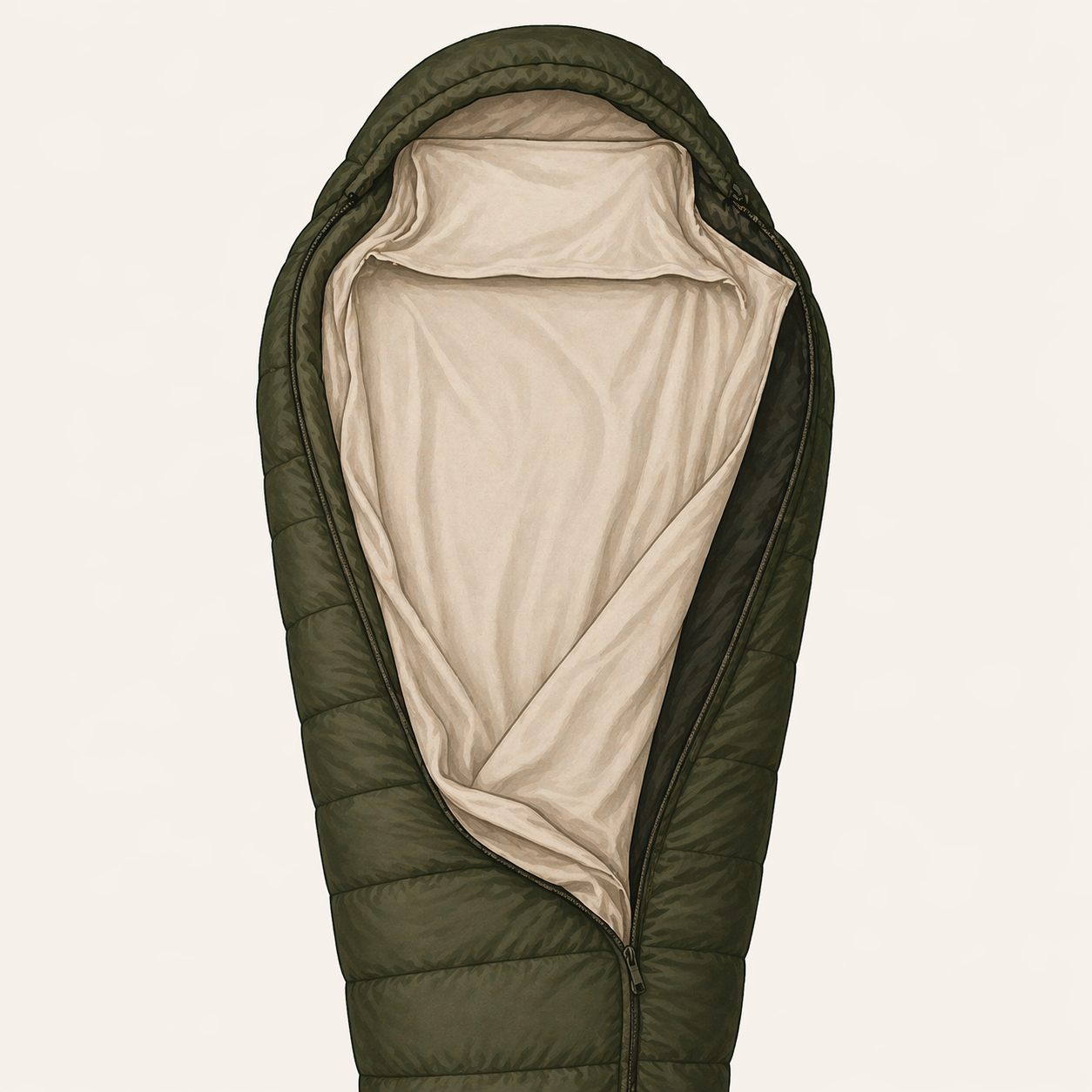
A sleeping bag liner is a thin fabric insert designed to sit inside the sleeping bag, between you and the bag’s insulation. Think of it as a removable sheet for a piece of gear that’s otherwise difficult to wash. The liner zips, buttons, or simply slides in, conforms roughly to the shape of the bag, and gets pulled out at the end of a trip to be laundered separately.
Most liners weigh between 4 and 12 ounces, pack down to the size of a grapefruit or smaller, and cost between $25 and $90. They come in three main shapes (mummy, rectangular, and semi-rectangular) and in materials ranging from featherweight silk to insulated synthetic fleece. For the bigger sleep-system decision, see our best sleeping bags guide.
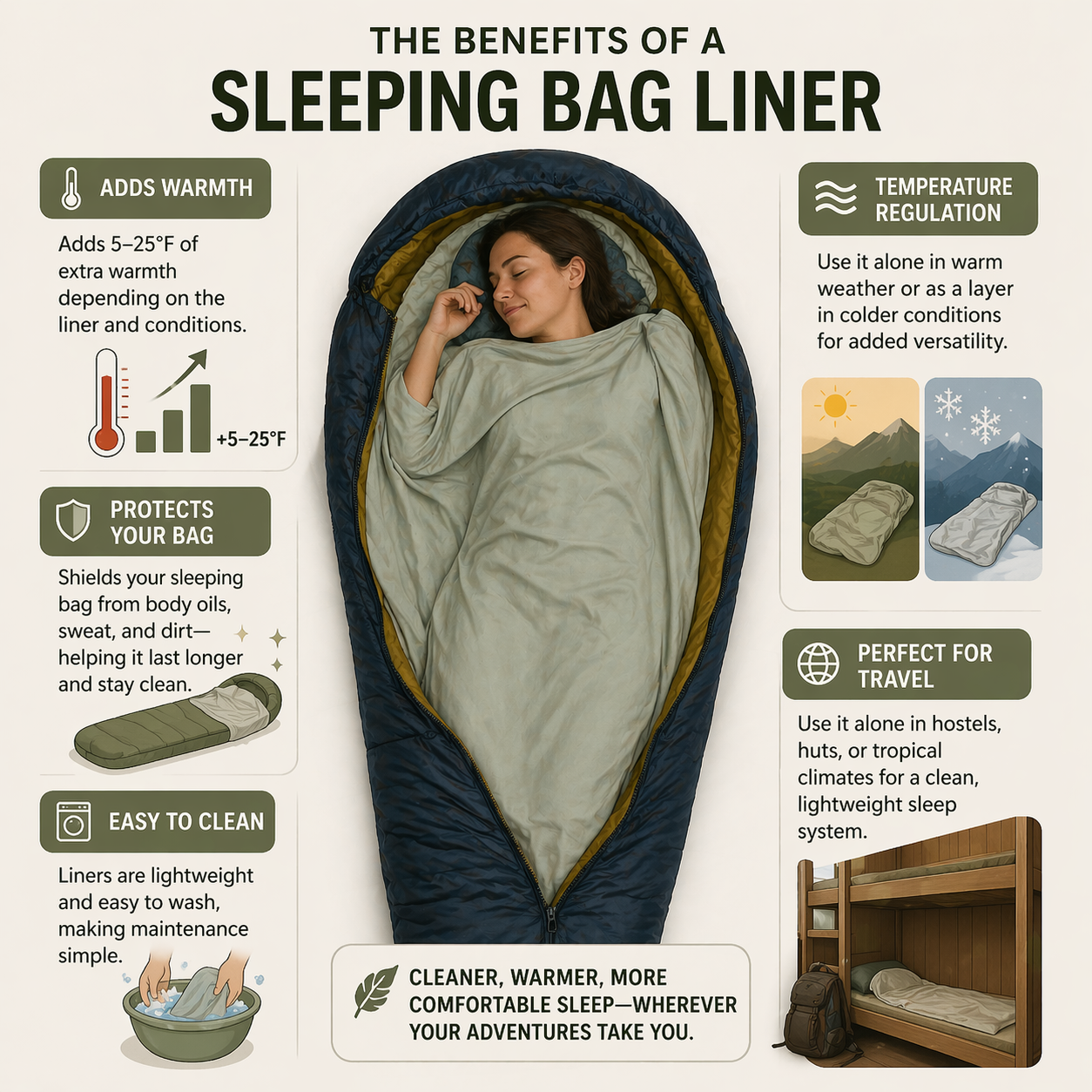
The liner isn’t mostly about warmth. It’s about keeping the bag’s insulation clean so the bag itself lasts ten years instead of three.
02 The Four Real Reasons to Use One
The marketing tends to lead with warmth, which is the least honest of the four benefits. Here are the real ones, in order of how much they matter over the long term.
Keeping the bag clean
This is the main reason. You sweat about a liter of water every night, even in cold weather. That moisture carries skin oils, sunscreen, bug spray, and the fine dust you tracked into the tent. All of it wants to soak into the insulation of the bag, and that is what breaks a bag down over time. Down loses loft when it gets oily. Synthetic fills flatten when dirt collects between the fibers. A liner absorbs the worst of it and pulls out for a 20-minute machine wash. A $60 liner is the single cheapest insurance policy for even the best sleeping bag you can buy. For the bag side of the equation, see our guide on how to wash a sleeping bag.
Adding warmth
A liner does add warmth, but less than the packaging suggests. A silk or cotton liner adds the equivalent of about 5 to 8°F. A merino wool or fleece liner adds 8 to 15°F. An insulated synthetic liner like the Sea to Summit Reactor or the Cocoon MummyLiner can add 15 to 20°F in real conditions, though they’re marketed higher. Useful, not magic. Section 4 covers the warmth math in full, and our best sleeping bags guide can help you decide when the bag itself needs an upgrade.
Comfort against your skin
Most sleeping bag interiors are made of slick nylon or polyester taffeta, because that’s cheap and durable. It’s also clammy and cold to the touch when you first get in. A liner gives you a second layer of fabric that feels like an actual sheet: smooth silk, cushy fleece, or soft merino. For warm sleepers this is the whole pitch on its own.
A standalone sheet for warm nights and hostels
On hot summer nights when the bag is too much, a liner works on its own like a lightweight sleep sack. It also covers the common requirement in European and Asian hostels that travelers supply their own bedding. A single silk liner weighs 4 ounces and packs down to the size of a tennis ball, which makes it a reasonable carry-along even when the main bag stays home.
03 Liner Materials, Side by Side
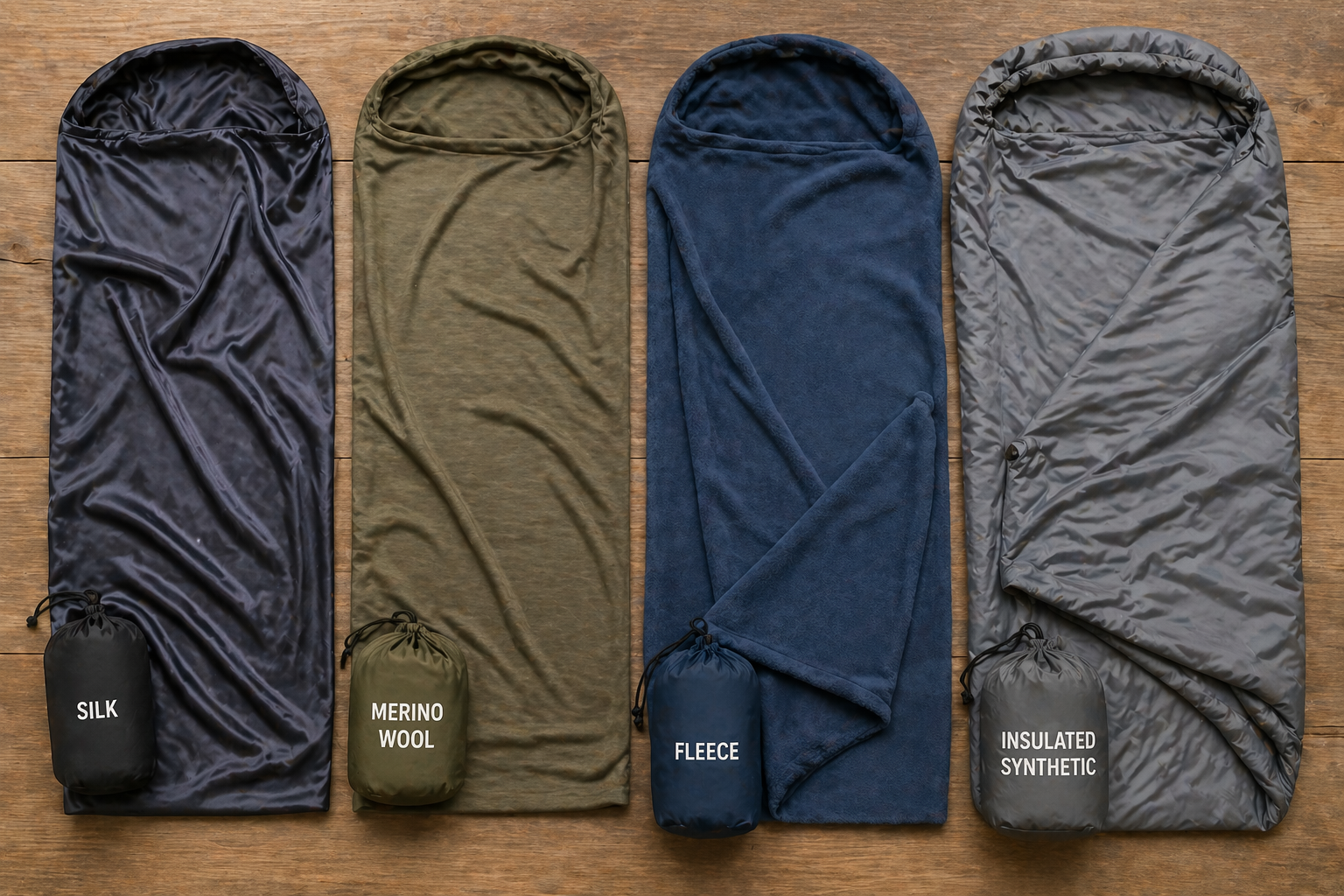
Every liner on the market is built from one of six materials. Each has a clear job and a clear weakness. Pick the material that fits the trip, not the brand.
| Material | Warmth Added | Weight | Best For | Weakness |
|---|---|---|---|---|
| Silk | +5 to 8°F | 4 to 5 oz | Backpacking, hot travel, hostels | Dries slowly, snags easily |
| Cotton | +3 to 5°F | 14 to 20 oz | Car camping, cabin use | Heavy, dries slowly |
| Polyester / CoolMax | +5 to 8°F | 8 to 12 oz | Warm, humid trips; budget buyers | Feels synthetic, holds odor |
| Merino wool | +8 to 15°F | 10 to 14 oz | Three-season PNW, damp conditions | Expensive, bulkier pack size |
| Fleece | +10 to 15°F | 14 to 22 oz | Cold-weather car camping | Bulky, too warm for 3-season |
| Insulated synthetic | +14 to 20°F | 9 to 14 oz | Extending a bag into shoulder season | Temp claims are optimistic |
04 How Much Warmth Does a Liner Actually Add?
Every liner brand publishes a “boost” number. Sea to Summit says their Reactor adds 14°F and the Reactor Extreme adds 25°F. Cocoon rates their MummyLiner at 17°F. Those numbers come from lab testing under ideal conditions: a heated mannequin, no wind, a perfectly fitted bag, and an ambient temperature held precisely where the test method specifies.
In the field, three things quietly erode that number:
- Humidity. Down and many synthetic fills lose efficiency in damp conditions, and a liner alone can’t compensate.
- Fit. If the liner bunches at the shoulders or gaps at the feet, the trapped air pockets the system relies on collapse.
- Body type and sleep style. Cold sleepers lose more warmth per hour and benefit less from a single added layer. Side sleepers compress the insulation under one shoulder.
A rough rule that has held up across a lot of nights out: discount the manufacturer’s claim by about one third. A liner marketed at 15°F feels like a 10°F bump in practice. A liner marketed at 25°F feels more like 15 to 18°F. Plan your bag-plus-liner system around the more conservative number.
05 When to Pack One (and When to Skip)
Trips where a liner earns its weight
- Any trip longer than three nights. Hygiene alone is worth it.
- Shoulder-season trips in the Cascades or the Gorge, where a sudden cold night could put a 35°F bag at its rated edge.
- Coast trips in fog or drizzle, where a merino liner keeps insulating even as the bag’s loft takes on moisture.
- Long summer trips in hot conditions, where a silk liner alone replaces the bag entirely on the warmest nights.
- Rental or shared bags, at a guiding service or a hostel, where you want a clean layer between you and someone else’s gear.
Top picks for sleeping bag liners
Six liners covering every season and trip type, from merino wool mummies to silk-blend summer sheets, with a pick at every price point.
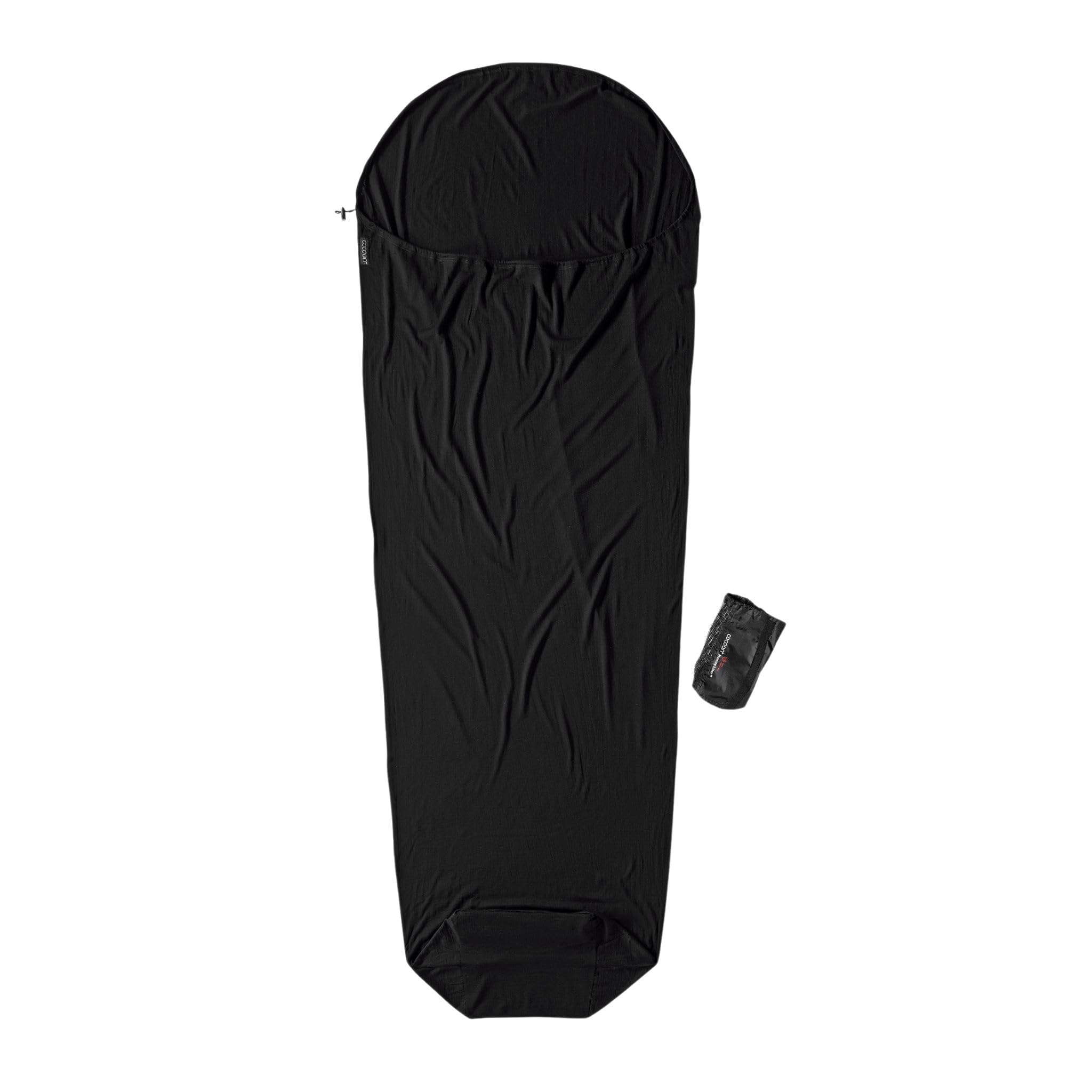
Cocoon Merino MummyLiner
Pure merino wool in a mummy cut from a category specialist. Insulates when damp, resists odor between washes, and delivers real warmth on three-season Oregon trips.
View on Amazon →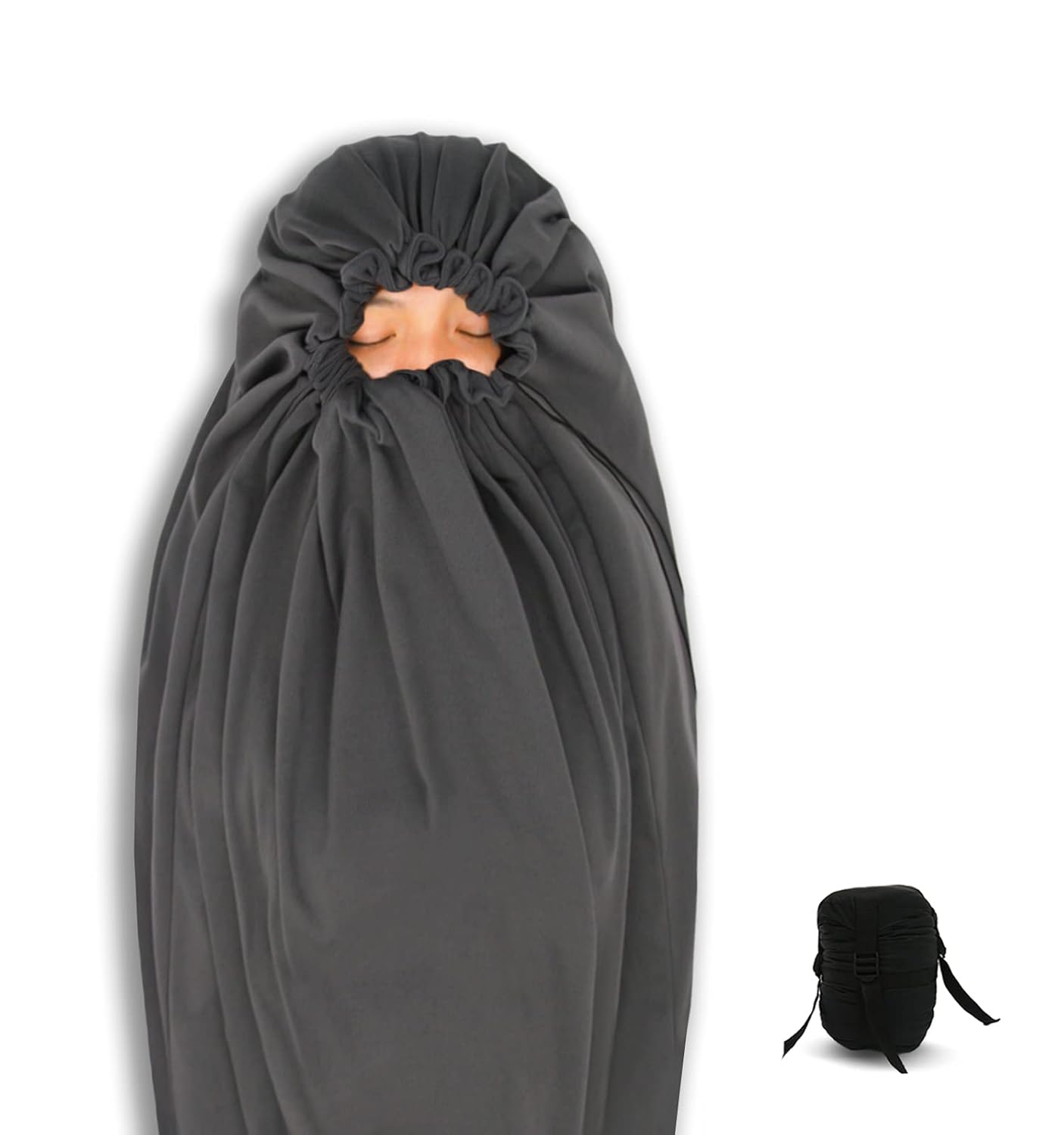
Litume All-Season Mummy Liner
Lightweight fleece mummy shape with a drawstring hood. Marketed at a +27°F boost; expect closer to +15°F in real backpacking conditions.
View on Amazon →
Sea to Summit Silk Blend Liner
Silk-cotton blend that packs smaller than a tennis ball. The summer backpacking pick and a clean standalone sheet for hot nights or desert trips.
View on Amazon →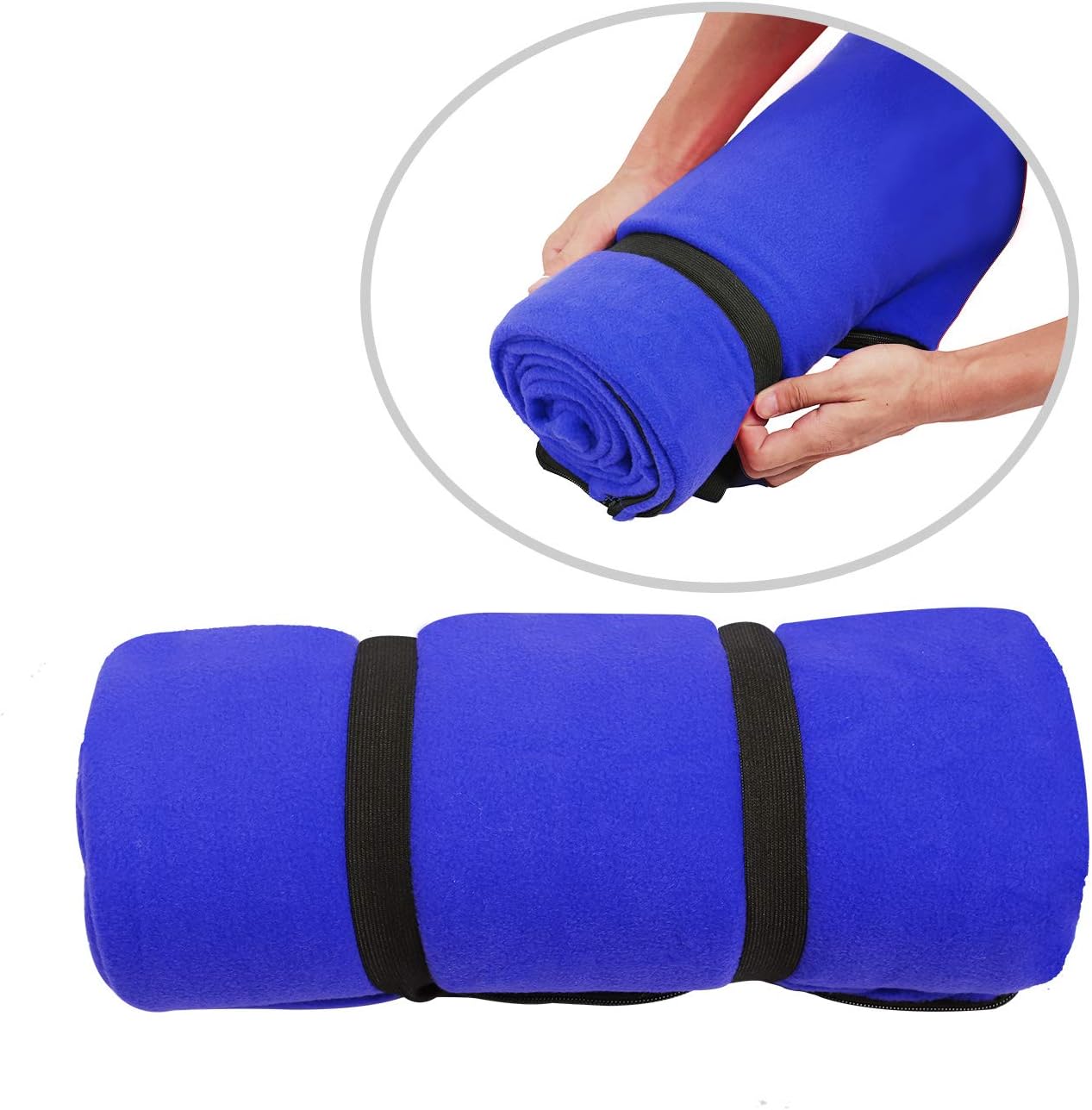
REDCAMP Fleece Liner
Full-size rectangular fleece with a full-length zipper. Built for cold-weather car camping or use as a standalone blanket in milder conditions.
View on Amazon →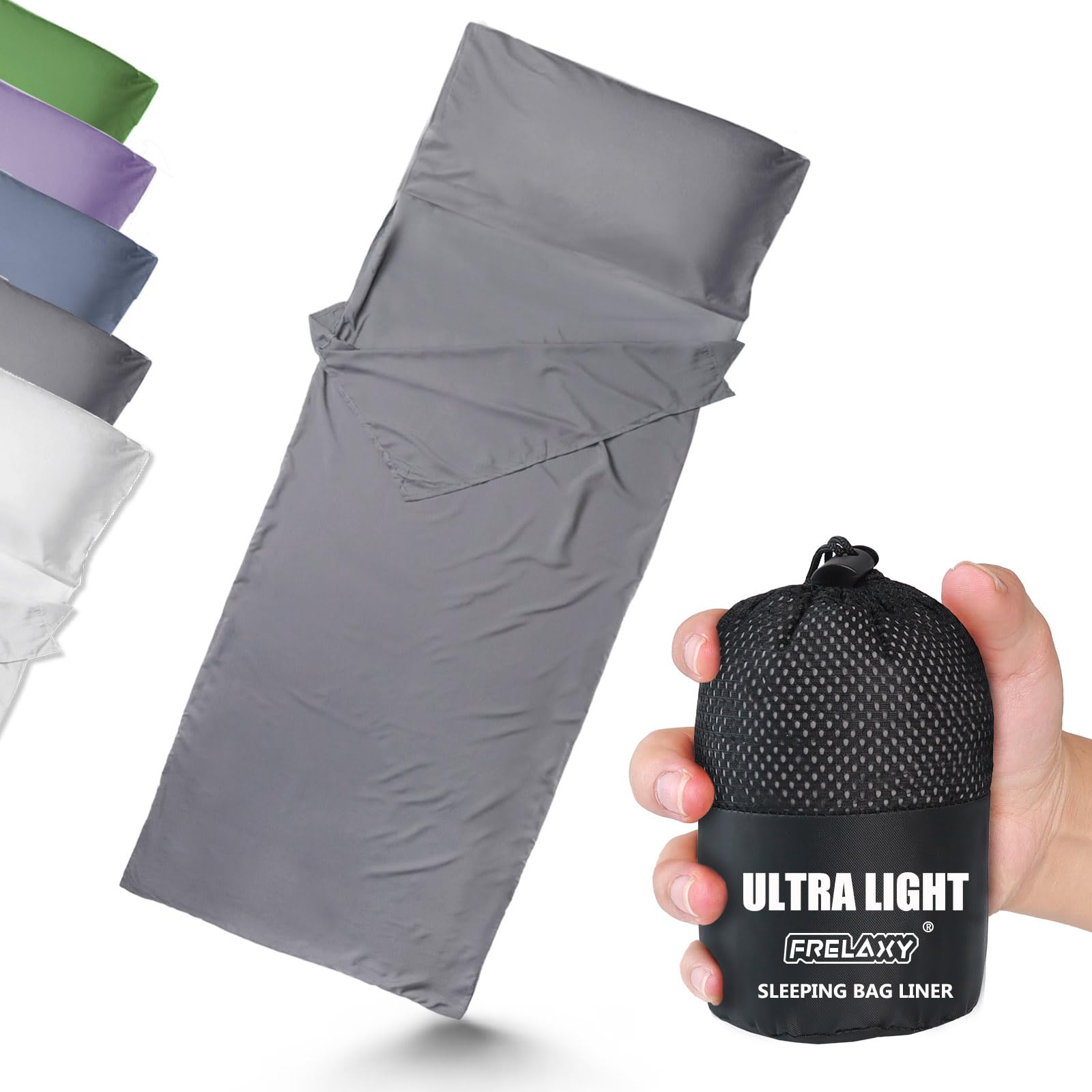
Frelaxy Ultralight Liner
Silky, quick-drying fabric in three size options. The cheapest way to add a liner to a backpacking kit without eating into your pack weight budget.
View on Amazon →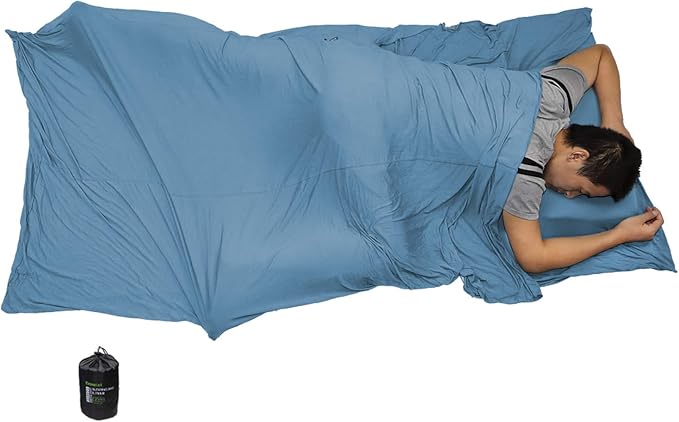
Bamboo Travel Liner
Stretchy bamboo-derived rayon with a pillow pocket. Cool against the skin on hot nights and light enough to carry as a hostel sheet.
View on Amazon →Trips where you can leave it home
- Single-night car camping in mild weather with a bag that’s clearly warmer than you need.
- Fast-and-light weekend trips where pack weight is the dominant concern and the bag, typically a pick from our best backpacking sleeping bag guide, is already well-matched to the expected lows.
- Winter trips where warmth comes from the bag, not the liner. In real cold, a dedicated 0°F or 15°F bag does the work; an extra thin layer inside it adds friction and condensation issues more than warmth.
06 How to Choose the Right Liner
Four decisions, in this order:
Step 1: Pick the primary purpose
Ask what you actually want the liner to do. If the answer is “keep the bag clean,” any silk or polyester liner will do, and you can optimize for weight and pack size. If the answer is “extend my bag into colder weather,” skip silk and look at merino, fleece, or insulated synthetic. If the answer is “a sheet for hot nights,” buy silk or CoolMax and don’t spend more than $40.
Step 2: Match the material to the climate
Cold and damp (most of the Oregon Cascades, the Coast in shoulder season): merino wool or insulated synthetic. Hot and humid: silk or moisture-wicking polyester. Dry cold at elevation: insulated synthetic. Car camping in cool weather with no weight concern: fleece.
Step 3: Match the shape to the bag
Mummy liner inside a mummy bag. Rectangular liner inside a rectangular bag. A mismatched shape is the single biggest reason liners “don’t work”: the excess fabric twists into folds during the night and pulls cold air in. Check the liner’s length too; most are sized for sleepers up to about 6 ft, with “long” versions for 6 ft and over. Couples sharing a bed bag run into a separate issue: single liners don’t fit. If you use a double sleeping bag, check the bag dimensions carefully before buying a liner; most single liners will not fit. Look for dedicated double-wide liners or two linked rectangular liners instead.
Step 4: Pick a realistic weight budget
For backpacking, aim for under 10 ounces. For long-trail or ultralight use, stay under 6, and pair the liner with a pick from our best backpacking sleeping bag guide to keep the overall sleep system in check. For car camping, weight is irrelevant and you can pick fleece or cotton for pure comfort. If you can’t fit a useful liner into your pack weight target, a better baselayer is often the more efficient choice.
07 How to Wash and Store a Liner
Liners are built to be washed, which is why they exist. That said, three rules keep them serviceable for a decade instead of a season.
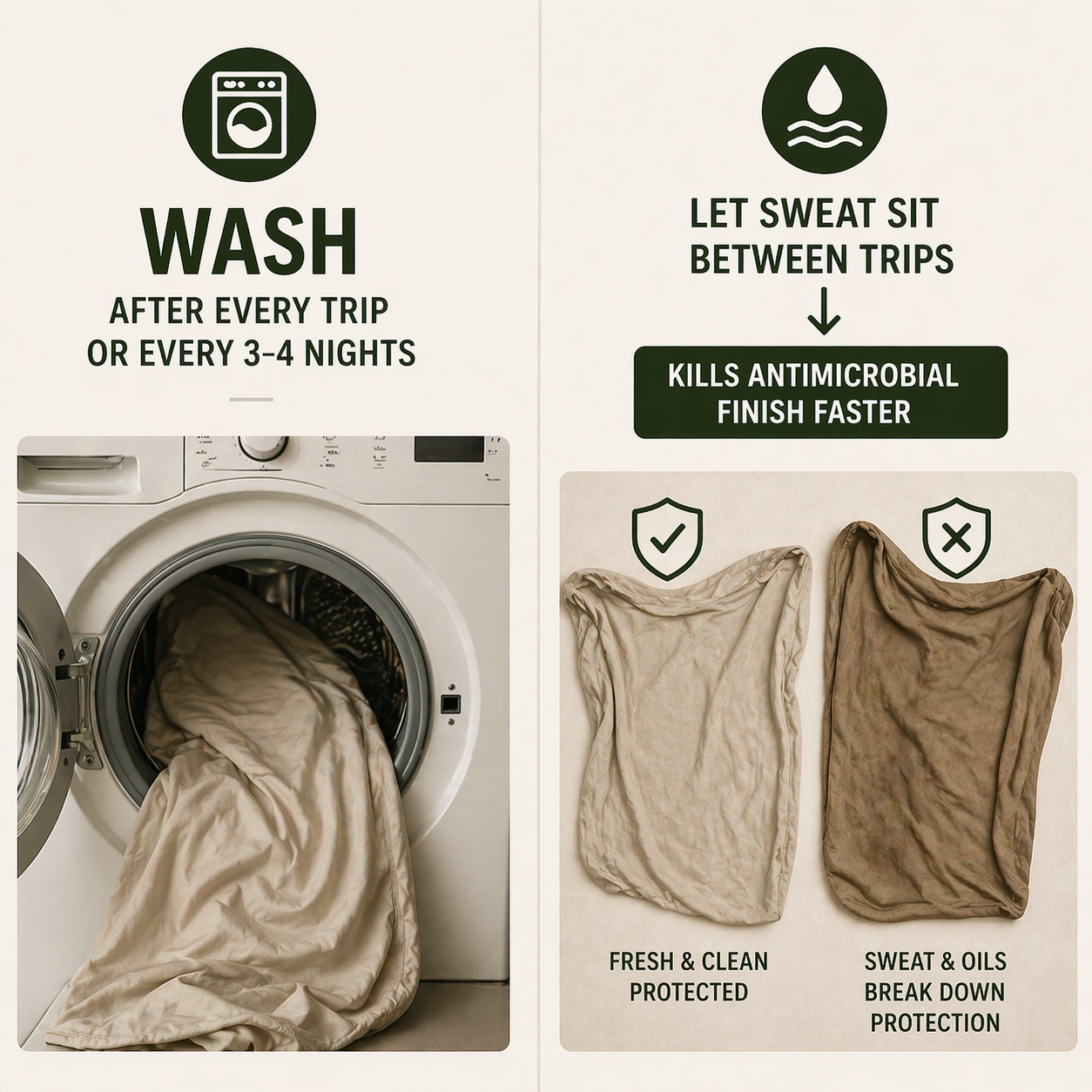
Wash after every trip or every 3 to 4 nights
The whole point of a liner is that it, not the bag, takes the hit. Letting sweat sit in a liner between trips also kills the antimicrobial finish faster than washing does.
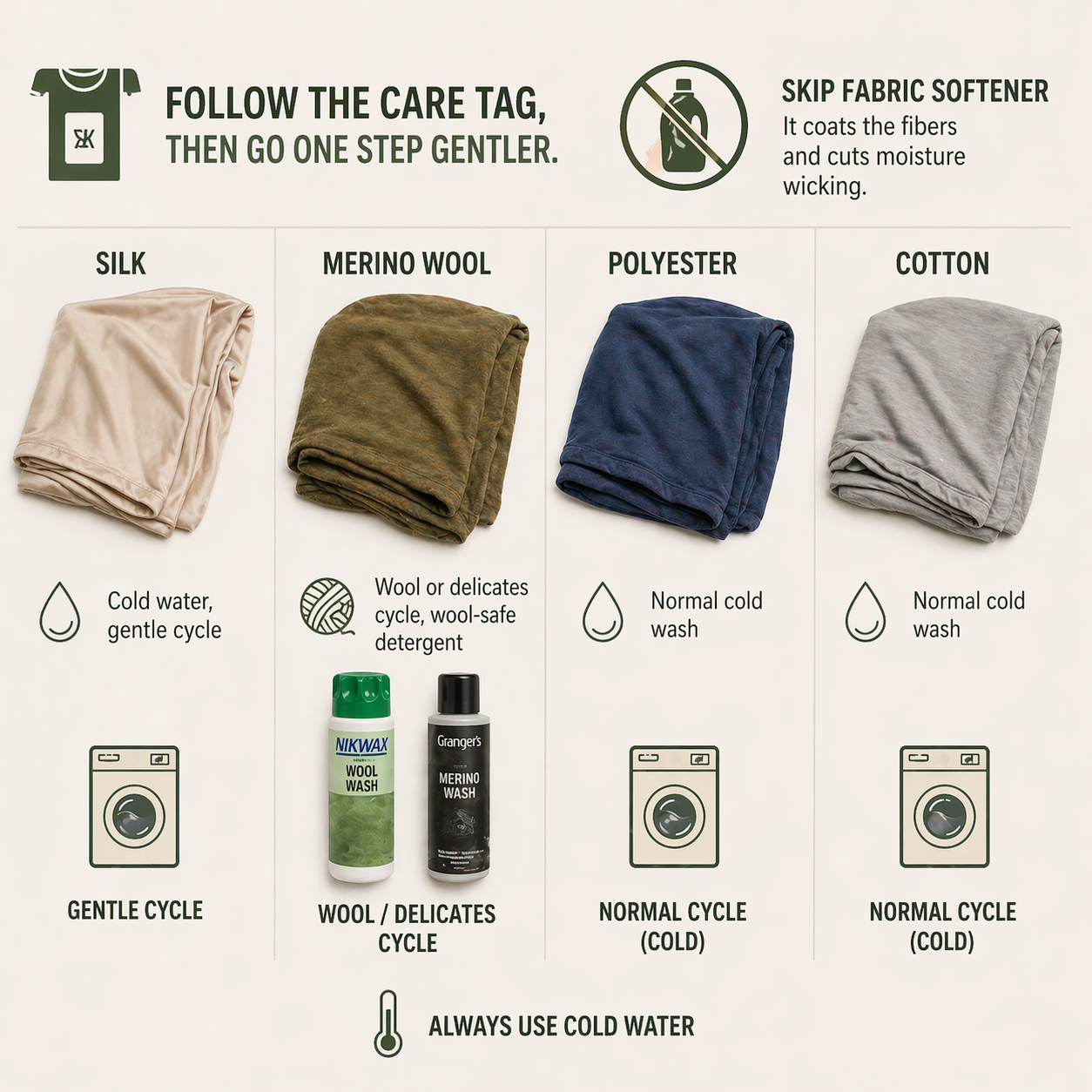
Follow the care tag, then go one step gentler
Silk wants cold water and a gentle cycle. Merino wants a wool or delicates cycle with a wool-safe detergent. Polyester and cotton tolerate a normal cold wash. Skip fabric softener on anything.
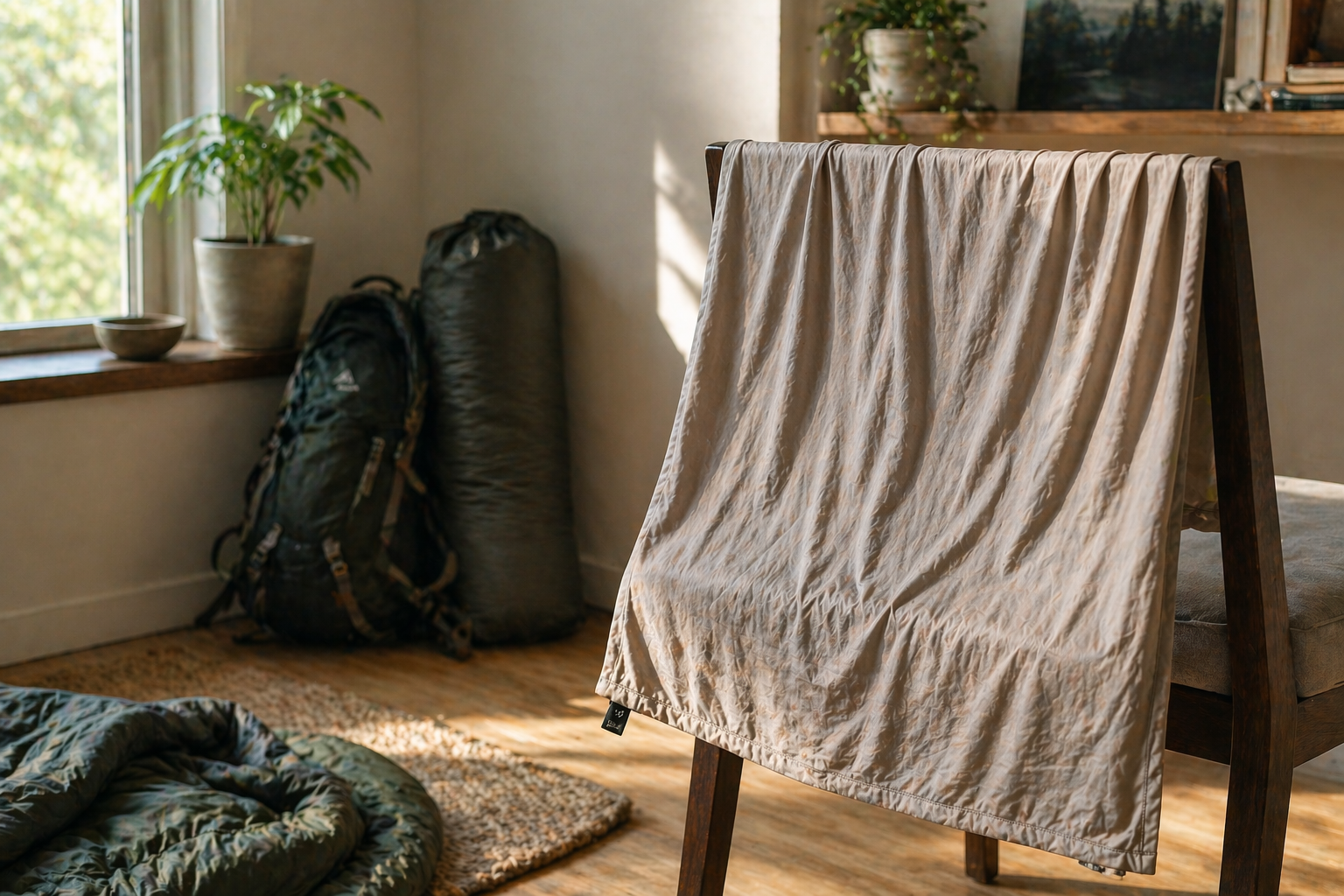
Air dry whenever possible
High heat pills merino, weakens silk, and melts the finish on some synthetics. Hang the liner over a shower rod or the back of a chair; most dry in 2 to 4 hours.
Store the liner loose in a cotton storage sack or draped over a hanger, not compressed inside the bag’s stuff sack. Long-term compression shortens the life of any technical fabric. For a closer look at caring for the bag that sits on top of it, see our guide on how to wash a sleeping bag.
08 Common Mistakes
- Trusting the warmth claim at face value. Discount by a third, every time.
- Buying the wrong shape. A rectangular liner in a mummy bag is almost worse than no liner at all.
- Wearing heavy baselayers inside a liner that was already added for warmth. Extra layers compress the insulation loft; a good sleep system works because there is air between you and the outside, not more fabric.
- Washing with fabric softener. It coats merino and ruins silk. Skip it.
- Compressing the liner for months inside the bag’s stuff sack. Loft loss is permanent on merino and fleece, and silk weakens at the folds.
- Using a liner to make a wet bag work. If the bag itself has absorbed overnight moisture, the liner is not the fix: dry the bag, or bivy the outside.

Sleeping Bag Liner FAQ
What is a sleeping bag liner?
A sleeping bag liner is a thin fabric insert that slides inside a sleeping bag like a sheet inside a duvet cover. The liner catches sweat, body oils, and fine dirt that would otherwise soak into the bag’s insulation, adds a modest 5 to 15°F of warmth depending on the material, and pulls out for an easy machine wash between trips. For most three-season trips, it’s the cheapest way to extend the working life of a quality bag.
Do sleeping bag liners really add 25 degrees of warmth?
In most real-world conditions, no. The 25°F claim comes from a handful of heavily insulated synthetic liners tested under controlled conditions with a heated mannequin. Most users feel a boost of 8 to 15°F from those same liners, depending on body type, humidity, and how well the liner fits inside the bag. Plan with the more conservative number.
Do I need a sleeping bag liner?
You don’t need one to camp, but a liner is the cheapest way to extend the life of even the best sleeping bag. Sweat, sunscreen, and body oils are what break down insulation and stitching over time. A liner catches all of that and washes in under 30 minutes, while the bag itself gets washed maybe once or twice a year.
Can you use a sleeping bag liner on its own?
Yes. A silk or cotton liner works as a standalone sheet in hostels, on hot summer nights, or on desert trips where a full bag is too much. Most liners compress down to roughly the size of a tennis ball, which makes them easy to carry as a just-in-case layer even when you don’t need the main bag.
How often should I wash my sleeping bag liner?
After every trip, or every 3 to 4 nights on a longer one. Liners are designed to be the washable layer, so frequent cleaning is the whole point. Check the care tag, but most silk and polyester liners handle a cold machine wash on a gentle cycle. Merino wool is more forgiving than people expect, though most brands still recommend a gentle wool wash.
Silk vs merino wool liner, which is better?
Silk is lighter, packs smaller, and feels cooler against the skin, which makes it the better pick for warm-weather backpacking. Merino wool weighs more and packs bigger, but it insulates when damp, resists odor for a week or more between washes, and feels warmer on cold nights. For most three-season Oregon trips, merino is the more useful liner. For summer thru-hiking, silk wins on weight. Pair either one with a properly rated bag from our best sleeping bags guide.
Can you put a liner in any sleeping bag?
Almost. The one fit issue to watch is shape. A rectangular liner inside a mummy bag has extra fabric that will bunch around your knees and cancel any warmth gain. A mummy liner inside a rectangular bag twists at the shoulders. Buy the liner shape that matches your bag, and make sure the length matches your height within a few inches.
Are sleeping bag liners waterproof?
No, and they shouldn’t be. A liner needs to breathe so that sweat and body moisture pass through to the bag’s insulation where they can evaporate. A waterproof layer inside the bag traps moisture against your skin and soaks the insulation from the inside. If water resistance is the goal, you want a bivy sack on the outside of the bag, not a plastic liner on the inside.
Oregon Tails earns affiliate commissions from some gear links in this guide. No brand pays for placement, and every recommendation is based on independent testing.
