Camping gear field guide
The Best Sleeping Bags
These best sleeping bags for 2026 were tested across an Oregon season. Down backpacking bags, oversized car-camping bags, doubles for couples, kid bags, and one British military bag for hot summer trips. No brand pays for placement.
Quick Picks: The Top 5 in 30 Seconds
Most campers will want one of these five best sleeping bags. Tap a card to jump to the full review or grab the price on Amazon.
Find Your Sleeping Bag
Four questions to match you with one of the best sleeping bags below. No email, no signup.
Your match
Answer the questions above
A pick from the 11 reviewed below will surface here.
Check price on Amazon →Our 11 Top Picks for 2026
Eleven of the best sleeping bags for eleven specific use cases. Each pick is the bag that earns its slot for that scenario, scored on a 100-point trail score across warmth, packability, build quality, value, and comfort.
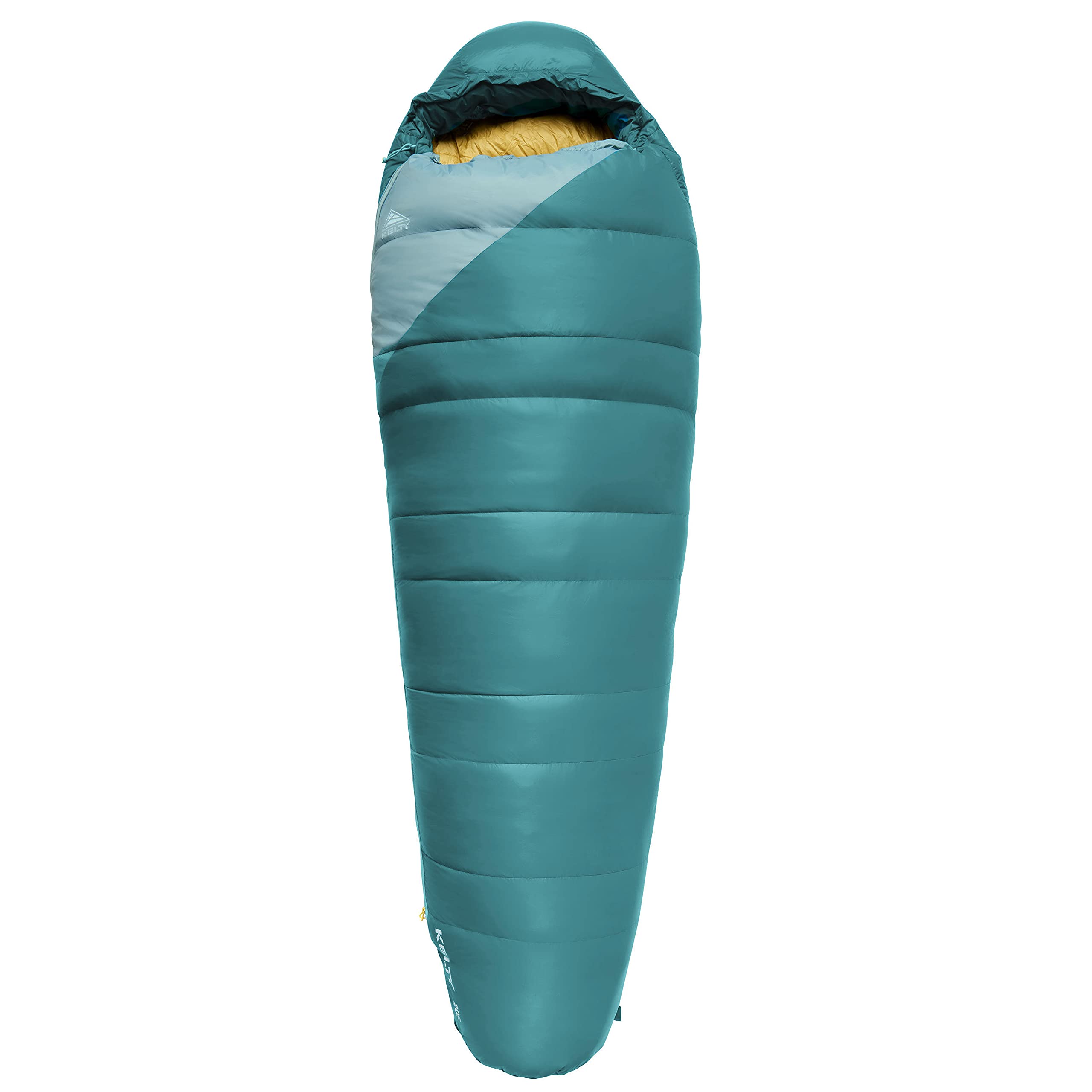
Best Sleeping Bag Overall: Kelty Cosmic 20 Down
Real down, real backpacker brand, real price most weekend campers can afford
Pros
- Real down insulation at a price most campers can swallow
- Genuine backpacker brand with decades of trail credibility
- Compresses smaller than any synthetic bag at this price
- Two-way zipper allows venting from the foot end
- Draft tube and hood cinch keep heat in on cold nights
Cons
- Down loses loft when wet, less forgiving than synthetic
- Mummy cut feels constraining for sleepers who roll
- Requires special down wash for cleaning
The Cosmic 20 has been Kelty’s flagship moderate-price down sleeping bag for years and the latest revision earns the overall winner slot for one reason: it does the most things well at a price that does not require a second thought. Down insulation that packs small enough to fit in a backpack alongside food and tent. Real 20°F rating that holds up in actual Cascade nights, not just lab tests. Build quality that will last a decade with reasonable care, which works out to less per-night cost than a budget bag that needs replacing every three years.
The honest trade-offs are that down hates moisture and the mummy cut constrains sleep position. For Pacific Northwest hikers who deal with wet conditions, a synthetic mummy like the Teton LEEF is a better starting point. For sleepers who hate the mummy taper, the next pick down has a rectangular cut. But for everyone else, the Cosmic 20 is the bag that earns the default-purchase slot.
| Temperature rating | 20°F (limit) |
|---|---|
| Insulation | 550-fill power down |
| Shape | Mummy |
| Weight | 2 lb 11 oz (1.22 kg) |
| Packed size | 14 x 8 in |
| Zipper | Two-way, full-length |
| Amazon rating | 4.7 stars across 236 reviews |
Best Budget Sleeping Bag: oaskys 3-Season
The one with twenty-four thousand reviews, and a reason

Pros
- Strongest social proof in the sleeping bag category on Amazon
- Lightweight enough to pack in a daypack as backup
- Two bags zip together to make a double, useful for couples
- Affordable enough to keep one in every car trunk
- Genuine 3-season versatility for spring through fall camping
Cons
- Not warm enough for genuine cold-weather conditions
- Build quality is honest about its price point
- Stuff sack tears with rough use after a season or two
Twenty-four thousand reviews. That number alone earns the oaskys a real look. Most budget sleeping bags on Amazon collect a few hundred reviews and quietly disappear when the listing dies. The oaskys keeps selling because it does the one thing budget bags need to do: keep a casual camper warm in spring through fall conditions, in a tent, near a car. It is not the bag for a serious backpacker. It is the bag for the friend coming on their first camping trip, the kid heading to summer camp, or the spare that lives in the back of a station wagon.
The two-bag zip-together feature is the underrated detail that earns this pick its place. Two oaskys bags zipped together cost less than half of any dedicated double bag on this list, and for couples who want to share a bag occasionally without committing to a double, this is the cheapest path to that option. The build is honest about the price, but the price is honest about what the bag is for.
| Temperature rating | 3-season (manufacturer claim) |
|---|---|
| Insulation | Polyester hollow fiber |
| Shape | Rectangular |
| Pairs together | Yes, two bags zip into a double |
| Liner | Polyester pongee |
| Amazon rating | 4.5 stars across 24,073 reviews |
Best Cold-Weather Camping Bag: Teton Celsius XXL
Brushed flannel, oversized cut, the Pacific Northwest car-camping default
Pros
- Brushed flannel liner feels comfortable against bare skin
- Oversized cut accommodates wider sleepers and side sleepers
- Mummy-style hood cinches down for cold nights
- Full-length zipper opens flat to use as a comforter
- Compression sack makes packing easier than the bag’s bulk suggests
Cons
- Heavy enough that backpacking is out of the question
- Bulky even compressed, takes up half a small trunk
- Synthetic insulation loses some loft after multiple compressions
The Celsius XXL is the bag that has kept casual Pacific Northwest car campers warm through dozens of soggy October weekends. Brushed flannel liner, oversized cut that does not constrain wider sleepers, mummy-cinch hood for the cold nights, and a full-length zipper that opens the bag flat into a comforter when temperatures rise. Everything a car camper needs, none of the weight-savings compromises a backpacker would demand.
The Celsius XXL has earned over eighty-five hundred customer reviews, which is not the sort of review base that accumulates around mediocre gear. People keep buying this bag, telling friends about it, and writing reviews after seasons of use because it does the cold-weather car camping job better than anything else under a hundred dollars. Heavy as a small dog and not meant for backpacking, but in a tent in November rain, it earns its bulk.
| Temperature rating | 0°F to 20°F (cold weather) |
|---|---|
| Insulation | SuperLoft Elite hollow polyester |
| Shape | Rectangular with mummy hood |
| Liner | Brushed poly-flannel |
| Dimensions | 90 x 39 in (oversized) |
| Weight | 7 lb (3.18 kg) |
| Amazon rating | 4.7 stars across 8,522 reviews |
Best Premium Backpacking Bag: Big Agnes Echo Park 40
Premium synthetic build for warm-weather backpackers, no down-bag price tag

Pros
- Premium American backpacking brand with serious trail credibility
- FireLine Max synthetic insulation handles damp conditions well
- Pad sleeve on the bottom integrates with sleeping pad to eliminate cold spots
- Free-range hood and footbox accommodate active sleepers
- Build quality lasts ten years with reasonable care
Cons
- Premium pricing puts it out of reach for occasional campers
- 40°F rating limits the bag to spring through fall conditions
- Newer model with smaller review base than older Big Agnes lines
Big Agnes is the kind of brand that mountain guides and rangers quietly buy with their own money. The Steamboat Springs, Colorado company has been making serious backpacking gear for over twenty years and its sleeping bags get specced into expedition kits where reliability is non-negotiable. The Echo Park 40 brings that brand pedigree into a synthetic warm-weather bag for hikers who want premium build quality without the down-bag price tag.
The standout feature is the integrated pad sleeve on the underside of the bag. Most sleeping bags have a cold spot under the sleeper because compressed insulation does not retain heat. The Echo Park solves this by removing the under-body insulation entirely and using the sleeper’s pad as the bottom layer. The result is less weight, better packability, and warmer sleeps because the bag is no longer fighting the pad for thermal real estate. For backpackers who already use a quality sleeping pad, the integrated system is genuinely better engineering.
| Temperature rating | 40°F (limit) |
|---|---|
| Insulation | FireLine Max recycled synthetic |
| Shape | Mummy with free-range hood |
| Pad sleeve | Yes, integrated underside |
| Shell | Recycled ripstop nylon |
| Brand | Big Agnes (Steamboat Springs, CO) |
| Amazon rating | 4.6 stars across 176 reviews |
Best Mummy Sleeping Bag Under $100: Teton LEEF
First real backpacking bag without the first-real-backpacking-bag price

Pros
- Real mummy cut for thermal efficiency without the premium price
- Synthetic insulation handles damp Pacific Northwest conditions
- Compression sack included, packs down to a reasonable size
- Anti-snag zipper guard reduces frustration in cold-finger conditions
- Strong customer review history at this affordable price point
Cons
- Heavier than premium synthetic bags at twice the price
- Build refinement is honest about its mid-tier price
- Mummy taper at the foot box can feel constraining
Most people who upgrade from a budget rectangular bag to a real backpacking mummy do not want to spend two hundred dollars to find out whether they like sleeping in a mummy at all. The LEEF is the answer to that hesitation. Real mummy cut for the thermal efficiency that makes mummy bags worth the constraint, real synthetic insulation that does not betray the sleeper after a damp night, and a price that does not require committing to a hobby before the first trip.
Synthetic insulation is the right pick for first-time backpacking bags in the Pacific Northwest. Down is lighter and packs smaller, but down loses most of its loft when wet, and a damp down bag is a miserable sleep that no first-time camper deserves. The LEEF’s synthetic fill stays warm even when the bag absorbs moisture from a wet tent floor or a leaky rain fly, which is the failure mode that catches new backpackers off-guard. Earned the slot.
| Insulation | SuperLoft Elite synthetic |
|---|---|
| Shape | Mummy |
| Compression sack | Included |
| Zipper | Anti-snag with draft tube |
| Hood | Cinch-down with collar |
| Amazon rating | 4.6 stars across 3,558 reviews |
Best Double Sleeping Bag: Sleepingo Double
Fifteen thousand reviews of couples agreeing this is the right call

Pros
- Cheapest legitimate double bag on Amazon by a wide margin
- Two pillows included, no extra purchase needed
- Waterproof shell handles tent-floor moisture
- Two-way zippers let either sleeper exit without disturbing the other
- Massive customer review base validates the basic design
Cons
- Not warm enough for cold-weather camping
- Heavy and bulky, packs too large for genuine backpacking
- Build quality reflects the price, expect three to four seasons of use
The Sleepingo Double has accumulated over fifteen thousand reviews and become the reference point for the budget double-bag category. There is a specific reason this happened: most couples who shop for a double sleeping bag are car campers who want to share warmth and bed space without paying premium prices, and the Sleepingo nails that target. The bag includes two pillows, has waterproof outer shell that handles tent-floor moisture, and runs about a third of the price of a Teton Mammoth Queen.
The honest trade is build quality. Sleepingo is not a serious outdoor brand, the bag is made for the casual camping market, and it shows up in the materials. After three to four seasons of regular use, the zipper teeth start to misalign and the insulation flattens in the high-pressure spots. For couples who car-camp a few weekends a year that is not a problem, the bag pays for itself the first season and replacing it cheaply is part of the deal. For couples who camp seriously enough to justify a premium double, the Teton Mammoth Queen earns the upgrade.
| Capacity | 2 adults |
|---|---|
| Pillows included | Yes, 2 |
| Shell | Waterproof polyester |
| Insulation | Synthetic hollow fiber |
| Zippers | Two-way, both sides |
| Amazon rating | 4.7 stars across 15,411 reviews |
Best Premium Double for Families: Teton Mammoth Queen
Queen-size dimensions, the bag a family base camp actually deserves

Pros
- Genuine queen-size dimensions, room for two adults to sleep comfortably
- Brushed flannel liner top to bottom feels like a comforter at home
- Full-length two-way zipper opens flat for warm-weather use
- Cold-weather rating handles fall and early winter family camps
- Build quality lasts a decade-plus with reasonable care
Cons
- Heavy enough to require its own dolly, never going backpacking
- Bulky storage size, takes up significant garage space
- Premium price hard to justify for occasional users
The Mammoth Queen is the bag for families who car-camp seriously. Genuine queen-size dimensions, full brushed-flannel lining that feels like sleeping at home, full-length two-way zipper, and a cold-weather rating that handles late-season trips. It is heavy enough that the bag has its own carry handle and serious enough that it has earned over twenty-five hundred customer reviews despite the premium price.
This is the bag a couple buys when they have decided that camping is part of their life, not a once-a-year experiment. The Sleepingo Double pays for itself in a season and falls apart in three. The Mammoth Queen costs four times as much and lasts ten years, which works out to less per-night cost over the long run. For families with kids who will eventually inherit the bag for their own camping kits, the Teton purchase is a generational decision that pays off across multiple campers.
| Dimensions | 94 x 62 in (queen size) |
|---|---|
| Insulation | SuperLoft Elite synthetic |
| Liner | Brushed poly-flannel, top and bottom |
| Zipper | Two-way, full-length, both sides |
| Temperature rating | 0°F to 20°F (cold weather) |
| Weight | 15 lb (6.8 kg) |
| Amazon rating | 4.7 stars across 2,503 reviews |
Best Cozy Double for Car Camping: AGEMORE Cotton Flannel Double
All-flannel construction, the bag that turns a tent into a guest room
Pros
- All-cotton flannel construction inside and out, no synthetic clamminess
- Feels like sleeping under a flannel comforter at home
- Generous double-bag dimensions for two adults
- Cotton flannel breathes well in mild summer conditions
- Deep customer review base validates the comfort claims
Cons
- Cotton fails when wet, never appropriate for backpacking or rain
- Heavier than synthetic doubles at similar price
- Slow to dry if dampened, requires careful packing
Some couples car-camp specifically to escape the synthetic-fabric world, and a synthetic sleeping bag undermines the whole point of the trip. The AGEMORE Flannel Double is the answer to that aesthetic. All cotton flannel construction, the same fabric as the comforter on the bed at home, in a double-size cut that feels like an oversized duvet on a tent floor. Cotton breathes in a way synthetic never does, which is why the bag is comfortable in mild summer conditions where a synthetic double feels clammy.
The strict trade-off is that cotton fails in wet conditions. Cotton flannel absorbs water, takes forever to dry, and loses all insulating value when damp. This is the bag for car camping in a dry tent on warm-weather trips, full stop. Anyone considering the AGEMORE for backpacking or for shoulder-season trips with rain risk should choose the Sleepingo Double or the Teton Mammoth Queen instead. For its specific use case, this bag is unmatched on comfort.
| Liner | 100% cotton flannel |
|---|---|
| Shell | 100% cotton flannel |
| Capacity | 2 adults |
| Best use | Warm-weather car camping in dry conditions |
| Avoid | Wet conditions, backpacking |
| Amazon rating | 4.6 stars across 1,936 reviews |
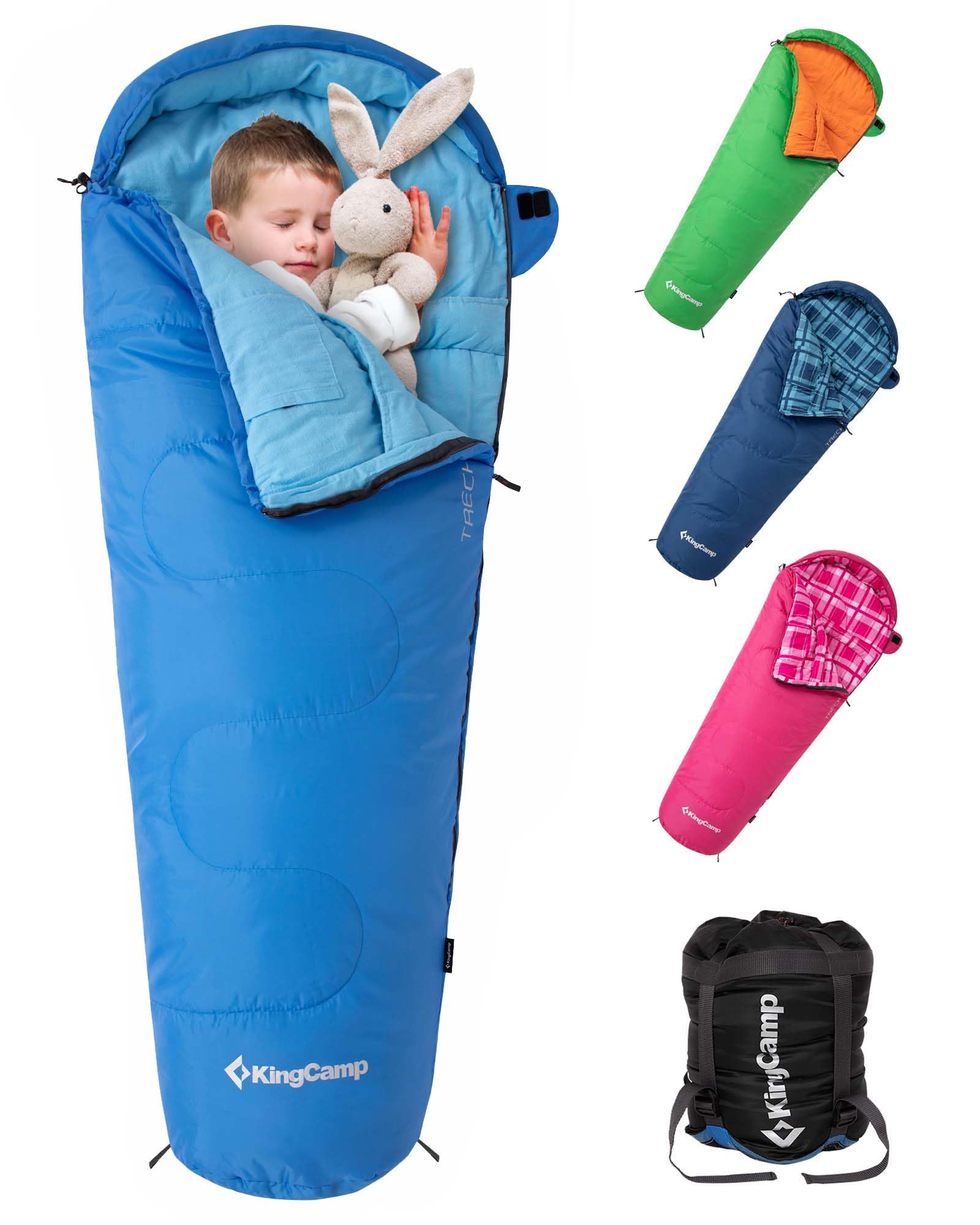
Best Kids Sleeping Bag: KingCamp 45°F Kids
Right-sized for actual kids, not a small adult bag with a kid label
Pros
- Sized for actual kids, not a scaled-down adult bag
- Soft flannel liner that does not feel synthetic to a child
- Waterproof shell handles juice and snack spills
- KingCamp brand has serious history in family camping gear
- Affordable enough to swallow when the kid grows out of it
Cons
- 45°F rating limits use to summer and warm shoulder seasons
- Kid-specific dimensions mean adults will not fit
- Newer product with smaller review base than older KingCamp models
Kid sleeping bags fall into two camps: cheap novelty bags with cartoon characters that fall apart in one season, and scaled-down adult bags that do not actually fit a kid right. The KingCamp Kids bag avoids both traps. It is sized for actual kid dimensions, which means the bag is not draping in empty insulation that wastes warmth, and the construction is honest mid-tier camping gear, which means the bag survives more than one season of rough kid use.
The flannel liner is the detail that earns this slot. Kids notice fabric texture against bare skin in ways adults forget about, and a slick synthetic-fabric kid bag is a great way to start a tent meltdown. The KingCamp lining feels comfortable against pajamas the way a flannel sheet at home does, which is the small detail that turns a tantrum-prone first camping trip into a successful family weekend. Look for a bag rated 10 to 20 degrees warmer than expected conditions because kids run cold and adult ratings are calibrated for adult metabolism.
| Temperature rating | 45°F |
|---|---|
| Liner | Soft flannel |
| Shell | Waterproof polyester |
| Sized for | Kids ages 5 to 12 (manufacturer) |
| Weight | Lightweight, packable for kids to carry |
| Amazon rating | 4.6 stars across 438 reviews |
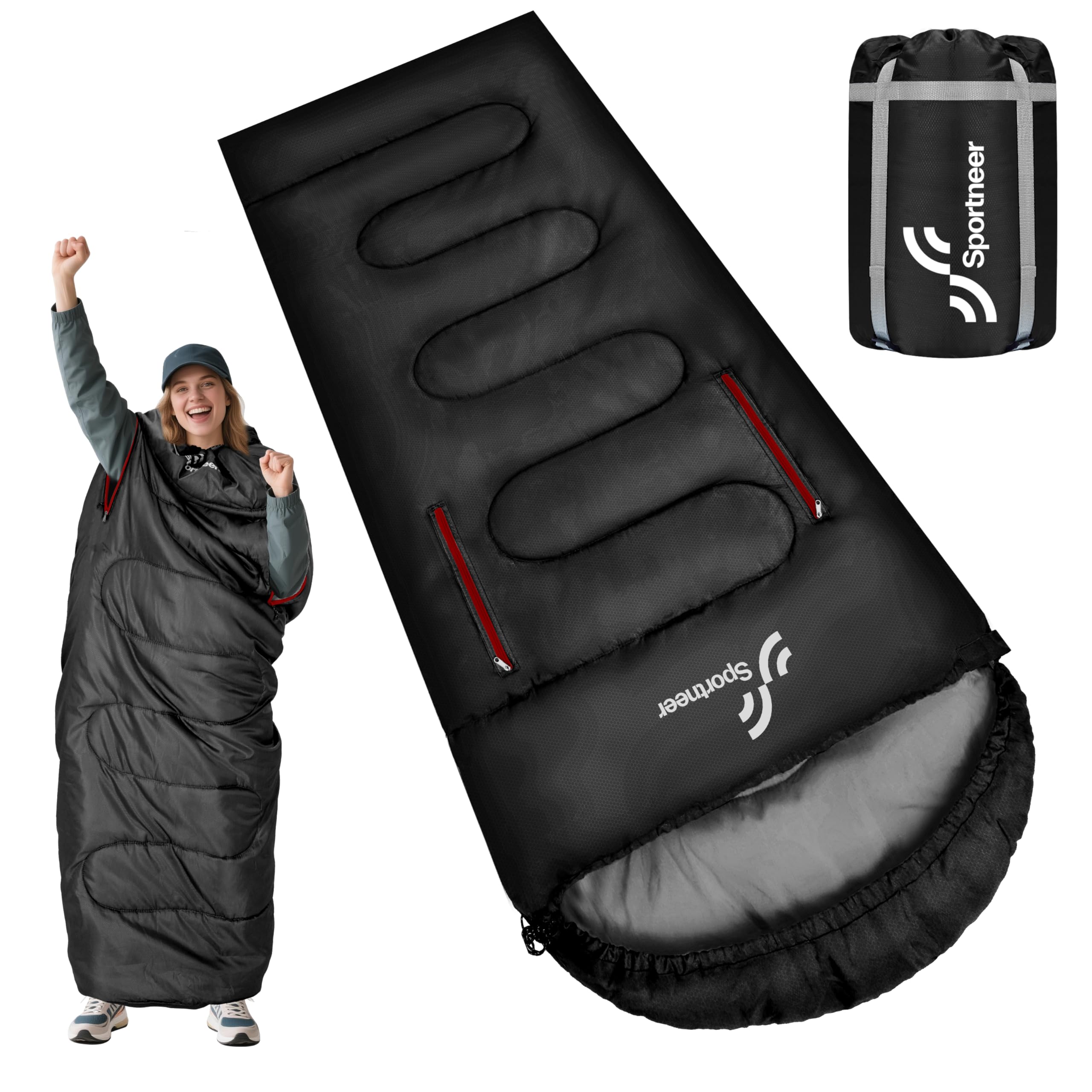
Best Wearable Sleeping Bag: Sportneer Wearable
Walkable design with arm zippers, the bag for camp lounging
Pros
- Arm zippers let sleepers handle camp tasks without leaving warmth
- Leg zip allows walking to the latrine or to stoke a fire
- Lightweight enough for daypack stash as backup warmth layer
- Doubles as an emergency comforter in the car or guest room
- Affordable enough to keep one in the camping kit as a luxury item
Cons
- Not warm enough for genuine cold-weather sleeping
- The walkable feature is gimmick to backpackers who want full insulation
- Build quality is honest about the budget price point
The wearable sleeping bag is a niche category, but the niche is real. Anyone who has tried to make morning coffee on a forty-degree morning while still partly inside a sleeping bag has imagined this product. The Sportneer is the version of that idea that actually works. Arm zippers let the sleeper reach out to handle a stove, pour a mug, or zip a tent without leaving the warmth pocket. The leg zip lets feet through for walking to a latrine or refilling a water bottle.
None of these features are essential, all of them are useful, and the price is low enough that the bag earns its slot in a camping kit as a luxury item. The honest framing is that this is not the primary sleeping bag for any serious camper. It is the second bag, the camp-lounging bag, the bag that turns a folding chair into a comfortable place to read at dusk. Pair it with one of the other ten best sleeping bags on this list for the sleeping job and use the Sportneer for everything outside the tent.
| Arm zippers | Yes, both sides |
|---|---|
| Leg zip | Yes, full-length |
| Insulation | Synthetic hollow fiber |
| Best use | Camp lounging, second-bag duty, emergency backup |
| Avoid for | Primary backpacking sleep system |
| Amazon rating | 4.6 stars across 2,214 reviews |
Best Summer Sleeping Bag: Snugpak Jungle Bag
British military hot-weather standard, packable enough for any kit

Pros
- British military build quality, the genuine article for hot weather
- Compresses smaller than any synthetic bag at this price point
- Built-in mosquito net pocket for tropical and warm-weather trips
- Breathable fabric handles humid conditions without clamminess
- Left or right zipper option for couples mating two bags
Cons
- Warm-weather rating limits use to summer trips
- Lighter insulation than three-season bags from other brands
- Niche enough that most casual campers will not need it
Snugpak makes British military sleeping bags, the kind that get specced for soldiers in jungles, deserts, and humid tropical postings where most synthetic camping bags become miserable. The Jungle Bag is the brand’s hot-weather standard and it brings genuine military build quality into the consumer market. Lightweight, breathable, packable enough to disappear into a backpack, and equipped with a built-in mosquito net pocket for trips where bugs are a real problem.
For most American campers this is a niche pick because most summer trips do not require a dedicated hot-weather bag, an Oregon summer night is cool enough that a 30°F bag works fine. But for hikers planning trips to the Southeast in August, the Florida Keys, or any tropical international camping, the Jungle Bag is the right call. The other ten best sleeping bags on this list will leave the sleeper in a puddle of sweat. The Snugpak will not.
| Temperature rating | 45°F (warm weather) |
|---|---|
| Insulation | Travelsoft synthetic, lightweight |
| Mosquito net | Built-in pocket on hood |
| Zipper options | Left or right side at purchase |
| Weight | 1 lb 12 oz (0.79 kg) |
| Brand | Snugpak (British military supplier) |
| Amazon rating | 4.6 stars across 1,242 reviews |
Full comparison table: best sleeping bags
Full comparison table: best sleeping bags 2026, all 11 of our top picks side-by-side. Sort by trail score, weight, or price. Mobile users get card-stacked view below.
| Image | Bag | Score | Best for | Weight | Temp | Price | Buy |
|---|---|---|---|---|---|---|---|
|
Kelty Cosmic 20 Down | 89 | Backpacking, all-around | 2 lb 11 oz | 20°F | $107 | Check |
|
oaskys 3-Season | 78 | Budget car camping | 3 lb 8 oz | 3-season | $46 | Check |
|
Teton Celsius XXL | 85 | Cold-weather car camping | 7 lb | 0°F to 20°F | $80 | Check |
|
Big Agnes Echo Park 40 | 86 | Premium backpacking | ~2 lb | 40°F | $250 | Check |
|
Teton LEEF Mummy | 82 | First mummy bag | 3 lb 8 oz | 20°F | $85 | Check |
|
Sleepingo Double | 80 | Budget couple bag | 6 lb 8 oz | 40°F to 60°F | $50 | Check |
|
Teton Mammoth Queen | 83 | Premium family double | 15 lb | 0°F to 20°F | $200 | Check |
|
AGEMORE Flannel Double | 79 | Cozy car camping for couples | 9 lb | 50°F to 70°F | $68 | Check |
|
KingCamp Kids 45°F | 82 | Kids ages 5 to 12 | 2 lb 4 oz | 45°F | $55 | Check |
|
Sportneer Wearable | 75 | Camp lounging, second bag | 3 lb | 50°F | $37 | Check |
|
Snugpak Jungle Bag | 82 | Summer and tropical | 1 lb 12 oz | 45°F | $86 | Check |
Full comparison table: best sleeping bags 2026. Trail score for these best sleeping bags is a weighted average of warmth, packability, build quality, value, and comfort. Weight in pounds includes stuff sack. Prices reflect Amazon listings at parse time and may change. Affiliate links earn Oregon Tails a small commission at no cost to the buyer.
How we test sleeping bags
Every one of these best sleeping bags earns its trail score the same way: through a weighted average across five criteria, tested in conditions where these bags actually get used. The weighting for the best sleeping bags reflects what matters when a real camper is half-frozen in a tent at 4 a.m. wishing they had bought something different.
-
25%Warmth
Warmth and temperature accuracy
Does the bag keep a real sleeper warm at the rated temperature? Manufacturer ratings vary wildly between brands, with budget bags routinely overstating warmth by 10°F to 20°F. We test against actual overnight low temperatures, not lab numbers.
-
25%Packability
Weight and packed size
For backpacking bags, weight and compressed size are the highest-leverage features. A bag that weighs five pounds is unusable on a weekend backpacking trip regardless of how warm it is. For car camping bags, this category receives lower weight in scoring because trunk space is not a constraint.
-
20%Build
Construction quality and durability
How does the bag hold up to multiple seasons of compression, washing, and tent floor abuse? Zipper teeth alignment, baffle stitching, draft tube construction, and shell fabric all factor in. We weight build quality heavily because a bag that fails after two seasons is more expensive than a quality bag bought once.
-
15%Value
Price relative to performance
What does the bag cost compared to similar bags from comparable brands? A premium price is acceptable when build quality and performance justify the investment. A budget bag earns points for delivering more than its price suggests. We do not penalize premium picks for their price tag, only for failing to deliver value at that price.
-
15%Comfort
Liner texture, shape fit, and sleep comfort
A bag that is technically warm but uncomfortable to sleep in fails the sleeping bag’s primary job. Liner fabric texture against bare skin, shape fit for typical body sizes, draft tube comfort around the neck, and zipper position all factor into this category. Mummy bags inherently score lower on comfort and higher on warmth efficiency.
Where we tested
Oregon Coast
Coast range, wet season
Damp tent floors, condensation, and 35°F to 45°F overnight lows reveal how synthetic versus down insulation handles real Pacific Northwest moisture conditions.
Central Oregon
High desert, shoulder season
Dry, cold nights down to 25°F at elevation, where temperature ratings get tested honestly without humidity confounding the results.
Smith Rock State Park
Bivvy bag wind test
Exposed campsites at Smith Rock test how draft tubes, hood cinches, and zipper construction handle gusty high desert wind.
Cascade Range
Summer warm-weather test
July and August nights in the high Cascades, where summer bags get tested in the conditions they were designed for and three-season bags reveal whether they vent well in warm temps.
Anatomy of a sleeping bag
The features that separate the best sleeping bags from a shoddy one are mostly invisible from outside the bag. Here are the six construction details that matter, marked on a typical 3-season mummy bag.
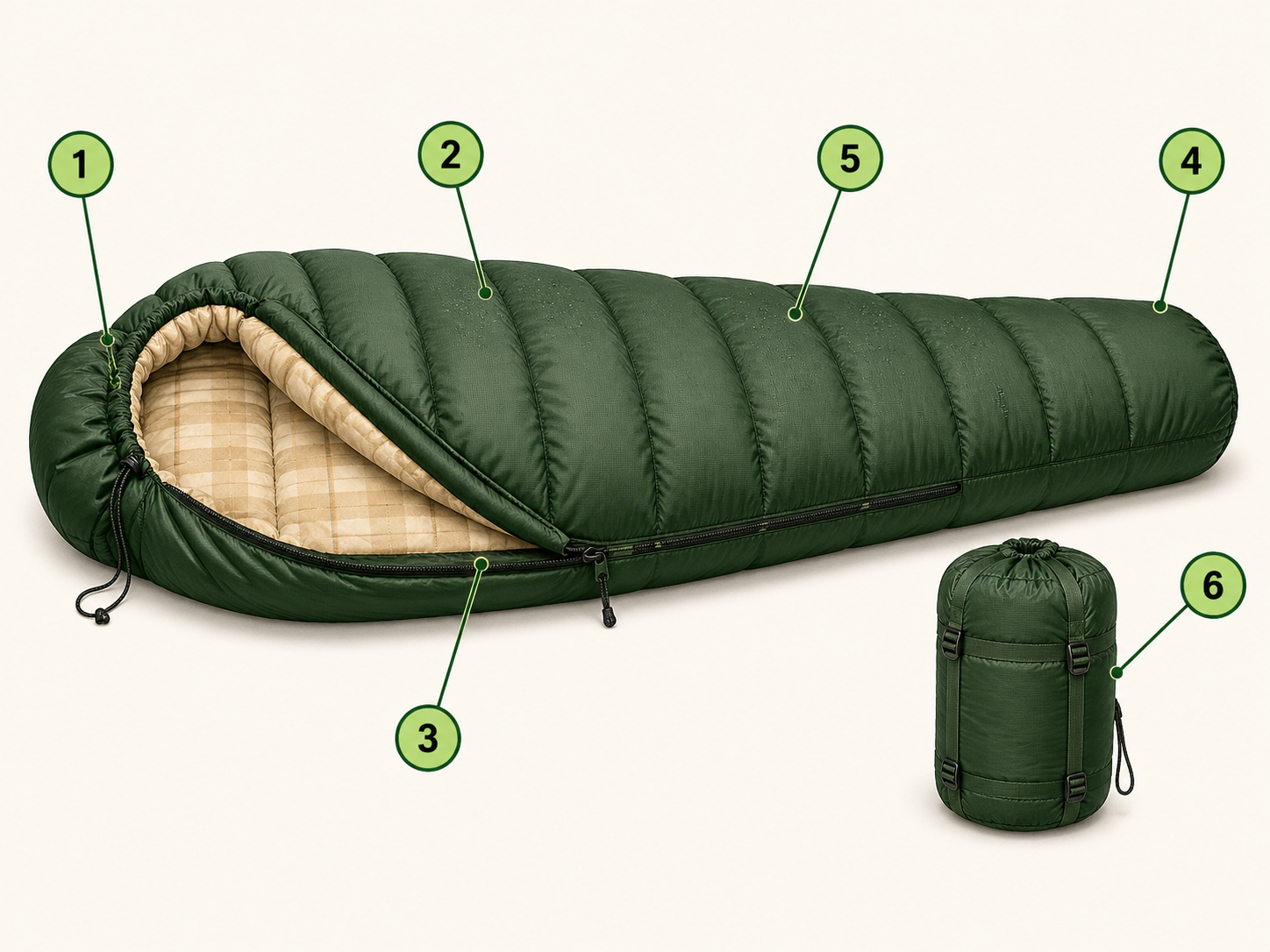
- Hood cinch and draft collar
- Cinches around the head to seal warmth. The first thing to fail on cheap bags.
- Baffle stitching
- Vertical channels that keep insulation distributed evenly across the bag, preventing cold spots.
- Full-length zipper with draft tube
- Two-way operation lets sleepers vent feet on warm nights. Draft tube blocks cold air infiltration through zipper teeth.
- Footbox
- Tapered contour at the feet that locks in foot warmth. Premium bags use anatomically shaped footboxes for foot-down sleepers.
- Shell fabric and DWR coating
- Outer shell durability and water-shedding finish. Determines how the bag handles condensation and brushed-up tent floors.
- Compression stuff sack
- How the bag packs into a backpack. Compression sacks add 30 percent more pack room than basic stuff sacks.
How to choose a sleeping bag
How to choose between the best sleeping bags: six considerations that matter, in priority order. Most campers get the first two right and stop there, which is fine for casual use but leaves performance on the table for anyone serious about backcountry or wet-weather camping.
1. Match the temperature rating to your trips
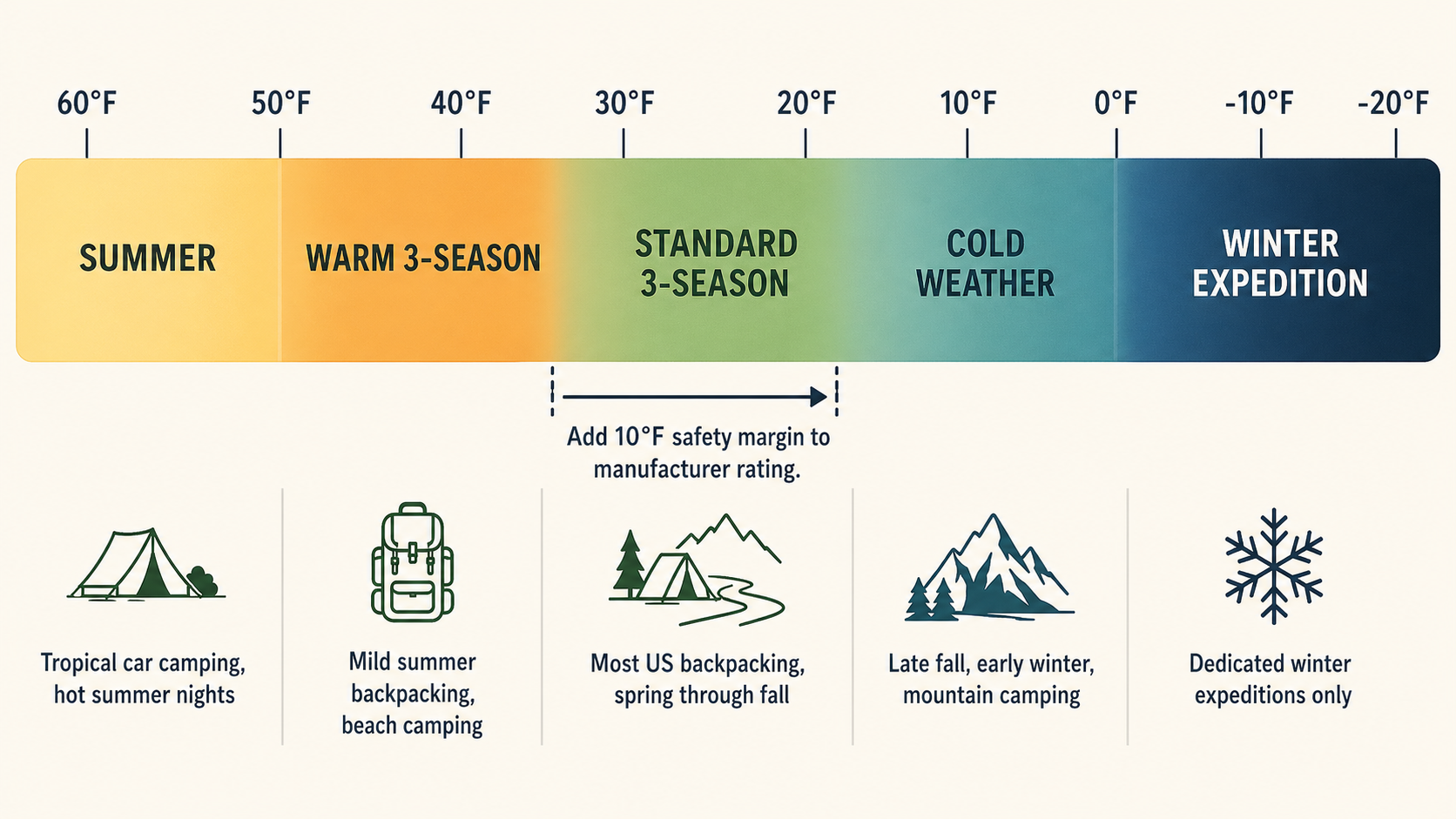
Sleeping bag temperature ratings are not standardized between brands, so a 20°F bag from a budget brand often performs more like a 30°F bag from a serious backpacking brand. The reliable heuristic: pick a bag rated 10°F lower than the coldest night you actually expect to encounter. For most American campers, a 30°F to 40°F bag handles spring through fall conditions. For Pacific Northwest hikers and anyone going into the mountains, a 20°F bag is the standard. Cold-weather and shoulder-season campers need 0°F to 20°F. Below 0°F, look at dedicated winter expedition bags outside this guide.
2. Down or synthetic insulation
Down has a higher warmth-to-weight ratio and packs smaller, which is why serious backpackers carry down bags. Synthetic insulation retains warmth when wet, which is why Pacific Northwest campers, river guides, and anyone backpacking in damp conditions often choose synthetic anyway. Down also requires special wash treatment and storage. Synthetic bags survive normal washing machines and tolerate compression better. The honest split: down for cold-weather backpacking in dry conditions, synthetic for everything else, including most first-time backpacking bags.
3. Mummy or rectangular cut
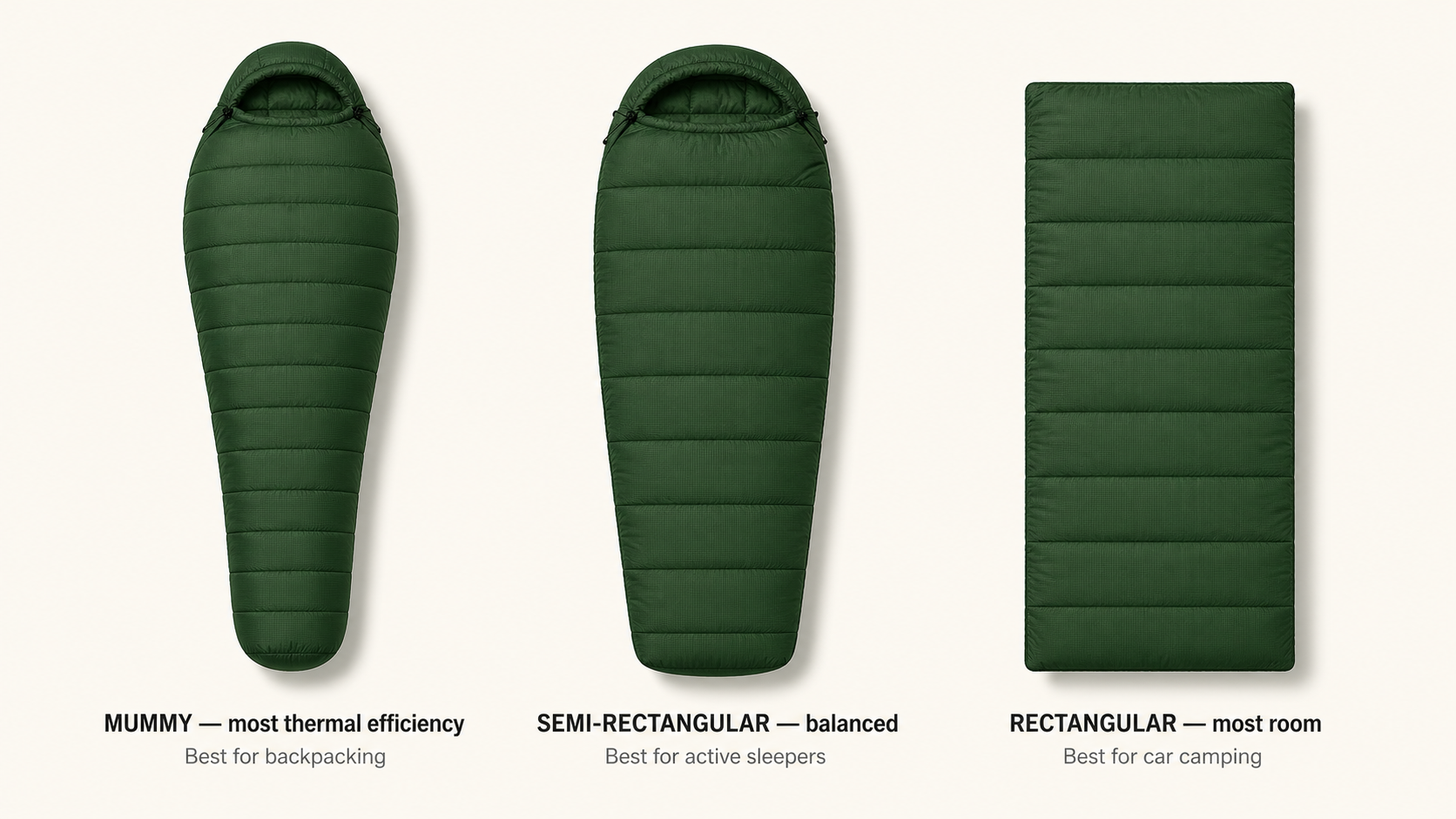
Mummy bags taper from shoulder to feet to minimize the air space the body has to heat. This makes mummy bags significantly more thermally efficient than rectangular bags at the same temperature rating, which is why nearly all backpacking bags are mummy-cut. The trade-off is that mummy bags constrain sleep position, restrict the ability to roll over, and can feel claustrophobic to first-time users. Rectangular bags are roomier and more comfortable for car camping, where weight does not matter and pure comfort is the priority. Semi-rectangular bags split the difference, offering some thermal efficiency with more room than a true mummy.
4. Weight and packed size for your use case
For backpacking, target under 3 pounds for a 3-season bag, under 2 pounds for a lightweight setup, and under 1.5 pounds for ultralight. Sleeping bag weight is one of the heaviest items in a backpacking kit, so trimming a pound here is one of the highest-leverage upgrades a backpacker can make. For car camping, weight does not matter at all, which is why oversized comfort bags like the Teton Celsius XXL exist. Packed size matters more than weight for car campers with limited trunk space, particularly for families packing multiple bags.
5. Fit, length, and shape
The best sleeping bags come in regular and long versions, with the cutoff usually around 6 feet of body height. A bag that is too long has empty space at the foot box that the sleeper has to heat with body warmth, which leaves the sleeper feeling cold even at the bag’s rated temperature. A bag that is too short cramps the feet and pushes the head out the top of the hood.
Shoulder width also matters for broader-shouldered sleepers, which is why some bags come in a wide cut. Try a bag at home with the sleeper inside before committing to a multi-day trip.
6. Features that matter
Beyond the basics, a few features separate quality bags from junk bags. A draft tube along the zipper blocks cold air from leaking through the zipper teeth. A draft collar around the neck seals warmth in when the hood cinches down. Anti-snag zipper guards reduce frustration when zipping a cold-finger bag in the dark. A two-way zipper opens from the foot end for ventilation on warm nights. A pad sleeve or pad straps keep the bag from sliding off a sleeping pad during the night.
Storage matters too. Never store a bag compressed in its stuff sack between trips, the insulation flattens permanently and the bag loses its rating. Use a large mesh storage bag and let the insulation breathe.
Frequently asked questions
What temperature rating should a sleeping bag be?
Match the temperature rating to the coldest night you expect, then add a 10°F safety margin. Summer car camping in most of the US needs a 30°F to 40°F bag. Three-season backpacking in the mountains needs a 20°F bag. Late-fall and winter trips need a 0°F bag. Two important notes: ratings are not standardized between brands, so a 20°F bag from a budget brand may not match a 20°F bag from a serious backpacking brand. And the comfort rating is what matters, not the limit rating, which only describes the temperature at which a sleeper survives without hypothermia.
Down vs synthetic sleeping bag, which is better?
Down is better for backpacking because it offers a much higher warmth-to-weight ratio and packs smaller. Synthetic is better for damp conditions because it retains insulation when wet, where down loses most of its loft. Synthetic is also less expensive and easier to wash. The strongest hiker setup carries down for cold weather and synthetic for wet trips. The Kelty Cosmic 20 is the best down pick on this list. The Big Agnes Echo Park 40 and Teton LEEF are the strongest synthetic picks.
What is the best sleeping bag for car camping?
The Teton Celsius XXL is the strongest car camping pick because weight does not matter when the bag travels in a car trunk and warmth and comfort matter most. Brushed flannel liner, oversized cut, full-length zipper to convert to a comforter. The Teton Mammoth Queen is the answer for couples or families who want one bag for two sleepers. The AGEMORE Cotton Flannel Double is the cozy mid-tier pick for couples.
How much should a sleeping bag weigh for backpacking?
Backpackers typically aim for under 3 pounds for a 3-season bag. Lightweight backpackers target under 2 pounds, which usually requires a down bag. Ultralight backpackers push under 1.5 pounds with premium down or quilts. Bag weight is one of the heaviest items in a typical backpacking kit, so trimming half a pound from the bag is one of the highest-leverage upgrades a backpacker can make. The Kelty Cosmic 20 sits in the standard backpacking weight range. The Big Agnes Echo Park 40 is the lighter option here for warm-weather trips.
What is the difference between a mummy and a rectangular sleeping bag?
Mummy bags taper from shoulder to feet to minimize air space and maximize thermal efficiency, which is why most backpacking bags are mummy-cut. Rectangular bags have a uniform width from shoulder to feet, which allows the sleeper to spread out and roll over comfortably, at the cost of warmth efficiency. A semi-rectangular bag splits the difference. For backpacking, choose mummy. For car camping comfort, choose rectangular. For an active sleeper who hates being constrained, choose semi-rectangular.
Are double sleeping bags better than two single bags?
Double sleeping bags are better for couples who car-camp and want to sleep together because they eliminate the cold gap between two zipped-together singles, share body heat between sleepers, and are usually less expensive than two equivalent single bags. Two single bags are better for couples where one runs warm and one runs cold, for couples who want individual zipper control, and for any backpacking scenario where two singles are easier to balance the load. The Sleepingo Double is the budget pick. The Teton Mammoth Queen is the premium family pick.
Can I machine wash a sleeping bag?
Most synthetic sleeping bags can be machine washed in a front-loading washer on a gentle cycle with a mild detergent. Top-loading washers with a center agitator damage the insulation and should be avoided. Down bags require special down wash and a longer drying process with tennis balls in the dryer to break up clumped down. The detailed walkthrough is in the Oregon Tails guide on how to wash a sleeping bag.
How long does a sleeping bag last?
A quality sleeping bag from a serious brand lasts ten to fifteen years of regular use with proper care. Down bags can last twenty years or more if the down is washed only when needed and the bag is stored uncompressed. Budget synthetic bags under $50 typically last three to five years before the insulation flattens permanently. Storage matters more than people think, never store a bag compressed in its stuff sack between trips.
What is the best sleeping bag for cold weather camping?
The Teton Celsius XXL is the best cold-weather camping bag for car campers because weight does not matter when driving to camp. The bag is rated for cold weather, has a brushed flannel liner that feels comfortable against skin, and a draft tube that stops cold air from leaking through the zipper. For backpacking in cold weather, the Kelty Cosmic 20 down bag handles down to 20°F and packs small enough for serious trips. For deep cold below 0°F, look outside this guide to dedicated winter expedition bags.
What is the best sleeping bag for kids?
The KingCamp 45°F Kids Sleeping Bag is the strongest pick because it sizes down to actual kid dimensions instead of being a small adult bag with a kid label, has a flannel liner that feels comfortable, a waterproof shell that survives spills, and a price low enough that buying a new one when the kid grows out of it does not sting. Look for a bag rated 10°F to 20°F warmer than the actual conditions, because kids run cold and adult ratings are calibrated for adult metabolism.