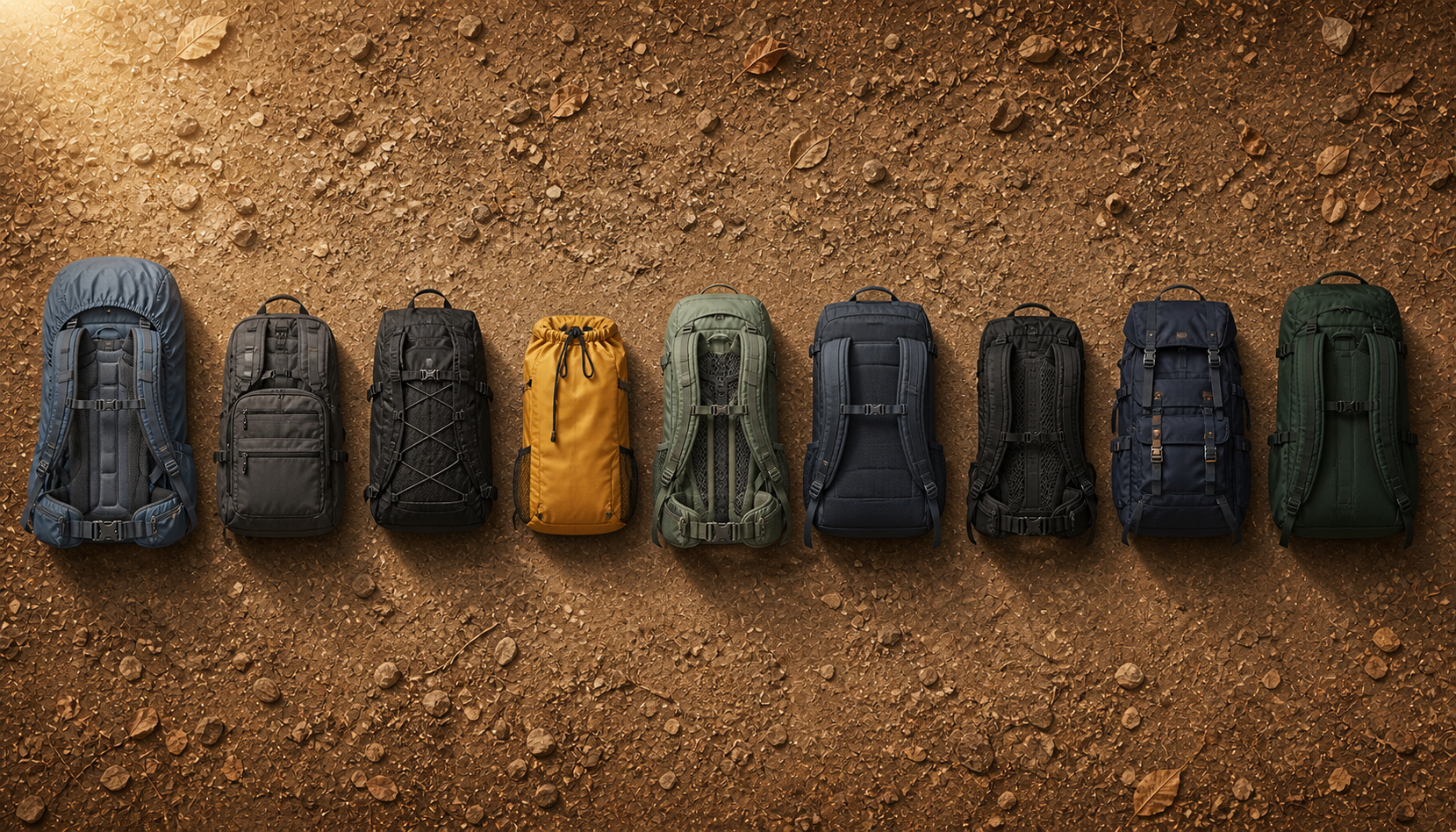
Best Budget Hiking Backpack 2026
A budget hiking backpack does not have to mean a bad hiking backpack. The right pick depends on how much you hike, how far you go, and which brand credibility matters to you. This roundup covers 9 picks across three price tiers: under $40 for maximum value, $50 to $80 for the best price-to-quality crossover, and $80 to $100 for heritage outdoor brands at the top of the budget range.
For premium day hiking picks see best day hiking backpack. For full-range backpack coverage see best hiking backpack.
Quick picks by price tier
Best budget hiking backpacks under $40: 3 picks


Best budget hiking backpacks $50 to $80: 3 picks

Best budget hiking backpacks $80 to $100: 3 picks


Full reviews: best budget hiking backpack picks
Best budget hiking backpacks under $40
The three under-$40 picks represent the most field-validated options at the lowest price tier. All three come from brands with outdoor credibility rather than generic no-name alternatives.
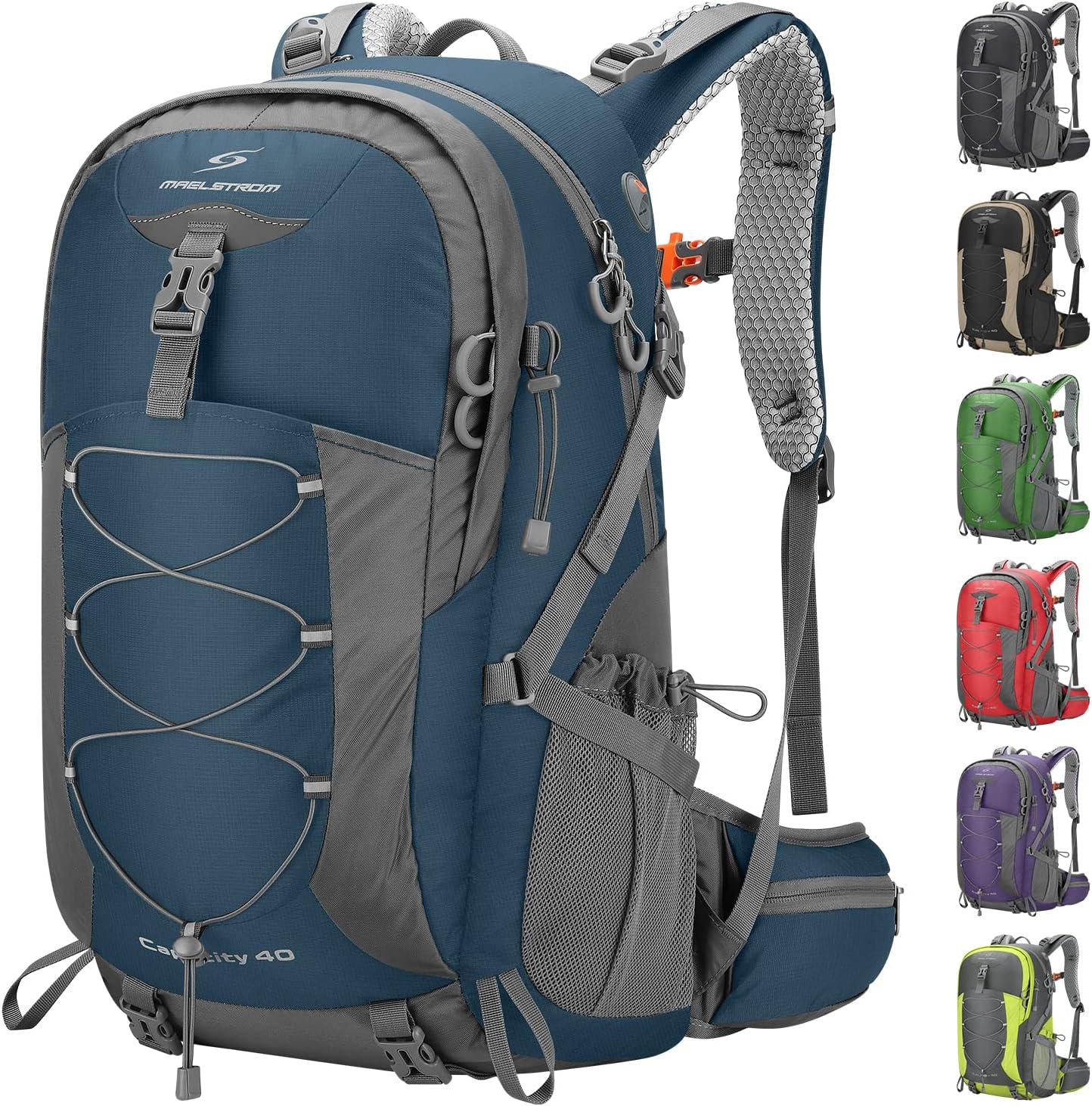
Maelstrom 40L Hiking Backpack
- 3,284 reviews at 4.5 stars is the strongest validation of any under-$40 hiking pack
- 40L capacity covers everything from day hikes to casual overnight trips
- Integrated rain cover included rather than sold separately
- Hip belt for basic load transfer on longer day hikes
- Waterproof construction handles trail conditions without a separate cover
- Budget construction means less durability than Osprey or Deuter at higher prices
- Hip belt less refined than premium suspension systems
- Maelstrom is a newer brand without the decades-long track record of established outdoor names
The Maelstrom gets used on trails the way a truck gets used on a job site. It is not the most refined tool for the purpose, but it takes what you give it and does not complain. The 40L volume means you are not playing Tetris to fit a rain layer, a lunch, and a first aid kit alongside a water reservoir. At this price that kind of practical generosity is rare.
The included rain cover matters more than it sounds. Most packs at this price ship without one, then the cover costs another twenty dollars separately. Having it stuffed in the bottom pocket means it is there when the sky changes between the trailhead and the summit, not sitting at home because you forgot to pack it.
This is a pack for someone who wants to be outside, not someone who wants to think about gear. The hiker who is going out six times a year and does not need the pack to be their identity will find it entirely sufficient. It starts to show its limits on longer efforts in summer heat, where a pack with real back ventilation makes a measurable difference.
High Sierra Loop 26L Backpack
- 17,383 reviews at 4.5 stars is the most-validated pick in this roundup by a wide margin
- High Sierra is a recognized outdoor brand with decades of budget pack manufacturing
- Padded back panel with airflow channels for ventilation at the budget tier
- Laptop sleeve makes it practical for days that include both hiking and non-hiking use
- 26L hits the day hiking sweet spot without excess volume
- Stabilizer hip strap rather than full load-transfer hipbelt
- More trail-to-town versatile than hiking-specific in feature set
- Not appropriate for hikes over 8 miles with a full kit where load transfer matters
The High Sierra Loop has been the default first hiking pack for a generation of hikers, and there is a reason for that beyond marketing. The proportions are right. The straps land in sensible places. It opens cleanly and closes without fuss. None of that is exciting, but all of it matters when you are on a trail and just need the pack to work.
The versatility is genuine rather than claimed. This is a pack that can go from a work commute to a weekend trail without looking out of place in either setting, which is either a strength or a weakness depending on how serious you are about hiking-specific gear. For hikers who want one bag that does multiple jobs reasonably well, it delivers that.
Where it reaches its ceiling is on longer days with heavier loads. A stabilizer strap is not a hipbelt, and by mile eight on a warm day, the difference between shoulder carry and hip-transferred weight becomes something you feel rather than read about. For shorter outings it never reaches that ceiling.
Columbia Zigzag II 30L Backpack
- Columbia is a major outdoor brand at a price most budget packs cannot match for brand credibility
- 4.7 stars is the highest rating of any under-$40 pick in this roundup
- 30L capacity is the largest of the three under-$40 picks
- Hydration compatible for reservoir use on longer day hikes
- Hip belt included for basic load stabilization
- 120 reviews is the lowest count in this roundup, limiting real-world validation
- Newer model with less long-term durability data than the High Sierra or Maelstrom picks
- Hip belt is a stabilizer rather than a full suspension system
Columbia makes outdoor gear for people who spend real time outside, and the Zigzag reflects that in ways that are easy to miss in a product listing. The fabric handles abrasion without pilling the way cheaper materials do after a season. The seams are finished properly. The zippers have enough tooth to them that they do not feel like they are one snag away from splitting.
The 30L capacity sits in a useful middle ground. It is large enough for a full day out with real food and real water without the pack feeling cavernous on a shorter trip. Hikers who regularly switch between half-day and full-day outings will find this capacity more forgiving than a smaller pack that demands precise packing.
The honest limitation is that the review base is thin compared to the other picks at this price tier. That does not mean the pack is worse. It means you are trusting brand standards rather than a wide sample of user experience to make the call. For hikers who are comfortable extending that trust to Columbia’s outdoor heritage, this is the strongest brand argument at this price tier.
Best budget hiking backpacks $50 to $80
The $50 to $80 range is where budget pricing meets trail-specific engineering. Osprey enters at $60 with the Daylite Cinch and $64 with the Sportlite. Thule brings Swedish design quality at $78.
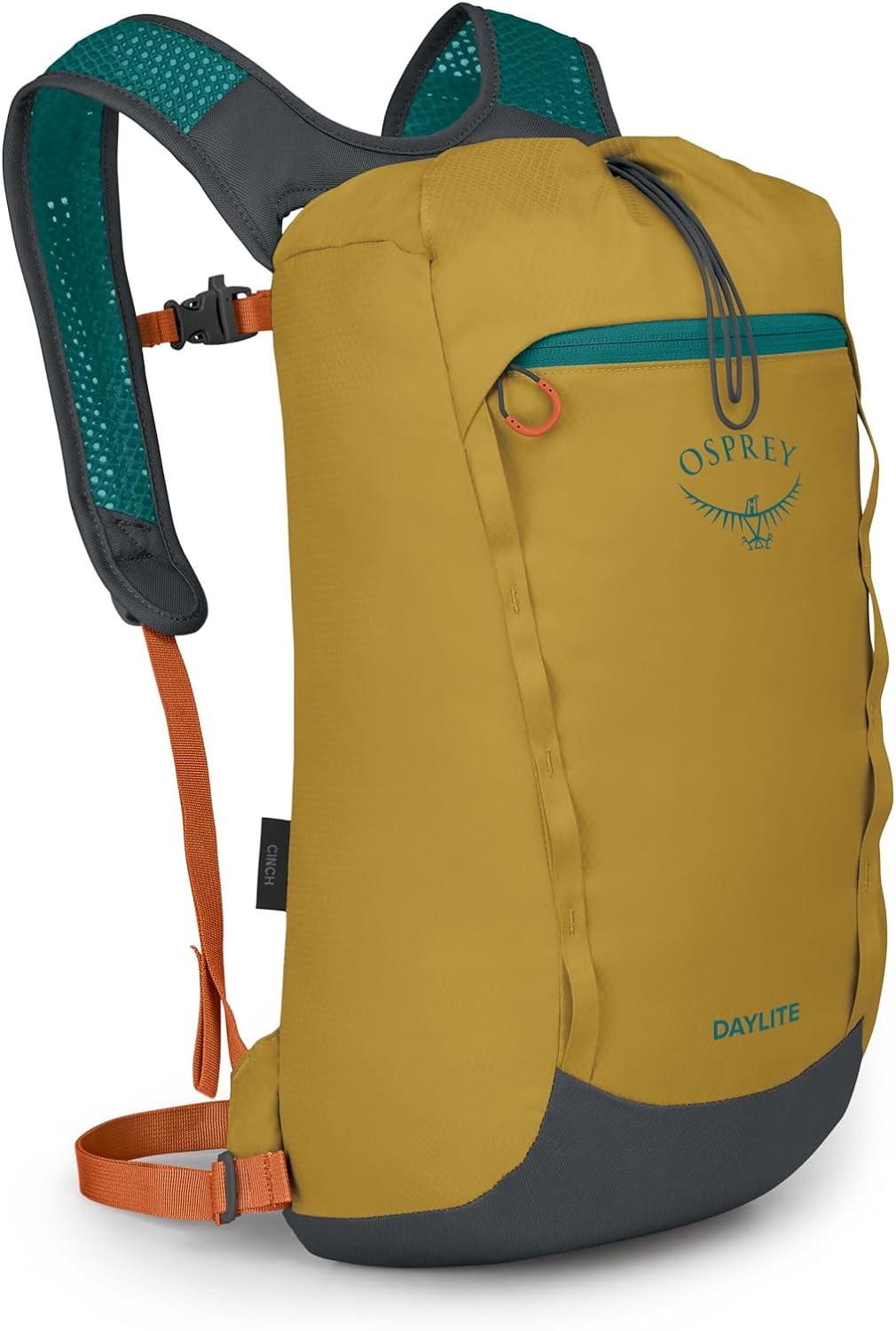
Osprey Daylite Cinch Backpack
- Osprey manufacturing quality at the lowest Osprey price in this roundup
- Cinch-top closure accesses the main compartment faster than zip-top packs on trail
- Hydration compatible for reservoir use without adding weight
- 1,088 reviews validates consistent performance across hikers
- Lighter and simpler than the Sportlite for hikers who do not need structured frame
- 17L is smaller than most day hiking packs and limits full-day carry capacity
- No frame or hipbelt for load transfer on longer or heavier days
- Cinch-top closure less secure than a zippered main compartment for technical terrain
The cinch-top closure is worth understanding before buying. On a traditional zippered pack, accessing the main compartment mid-hike means stopping, removing the pack, and unzipping. On the Daylite Cinch, you loosen the cord, reach in, and pull out what you need. Over the course of a full hiking day that repeated motion adds up to a genuinely different experience on trail.
The trade is capacity and structure. This is not a pack for carrying a full kit. It is a pack for carrying what you actually need on a lighter day: water, a snack, a layer, your phone. Hikers who routinely overpack will run out of room and need to make different choices. Hikers who have learned to carry less find the simplicity liberating rather than limiting.
Osprey’s construction quality shows even at this entry price. The stitching at stress points, the way the shoulder straps are shaped, the feel of the fabric after washing. These are details that cheaper packs at the same price do not share, and they are what the price premium over the Maelstrom and High Sierra is actually buying.
Osprey Sportlite 20L Hiking Backpack
- LightWire frame adds structure without full suspension system weight or cost
- Ventilated back panel keeps airflow moving on warm day hikes
- Trekking pole attachment and hydration compatibility for full trail readiness
- Osprey build quality at the most trail-capable price in this roundup
- 20L hits the day hiking capacity sweet spot for a full day out
- No hipbelt for load transfer on hikes over 8 miles or with heavier loads
- 327 reviews is modest validation compared to other Osprey models
- LightWire frame less supportive than aluminum stay systems on premium packs
The difference between a framed pack and a frameless pack is most obvious at the end of a hike rather than the beginning. For the first two miles the frameless pack feels lighter and more responsive. By mile seven on a warm day, the sweat-soaked back contact and the way the load shifts rather than rides becomes the thing you are thinking about. The Sportlite’s LightWire frame solves that second experience without adding meaningful weight.
Trekking pole attachment is a small feature that earns its place on mixed terrain. When the trail goes from dirt to hands-on rock, being able to stow the poles without removing the pack and rearranging gear means you keep moving. It is one of those design decisions that is invisible until you need it, and then it is the obvious right call.
This is the pack for the hiker who has graduated beyond occasional use and knows they will keep hiking, but is not yet ready to spend premium prices on a suspended mesh system and full suspension hipbelt. It covers the full day hiking use case well enough that many hikers will stay here for years without feeling limited.
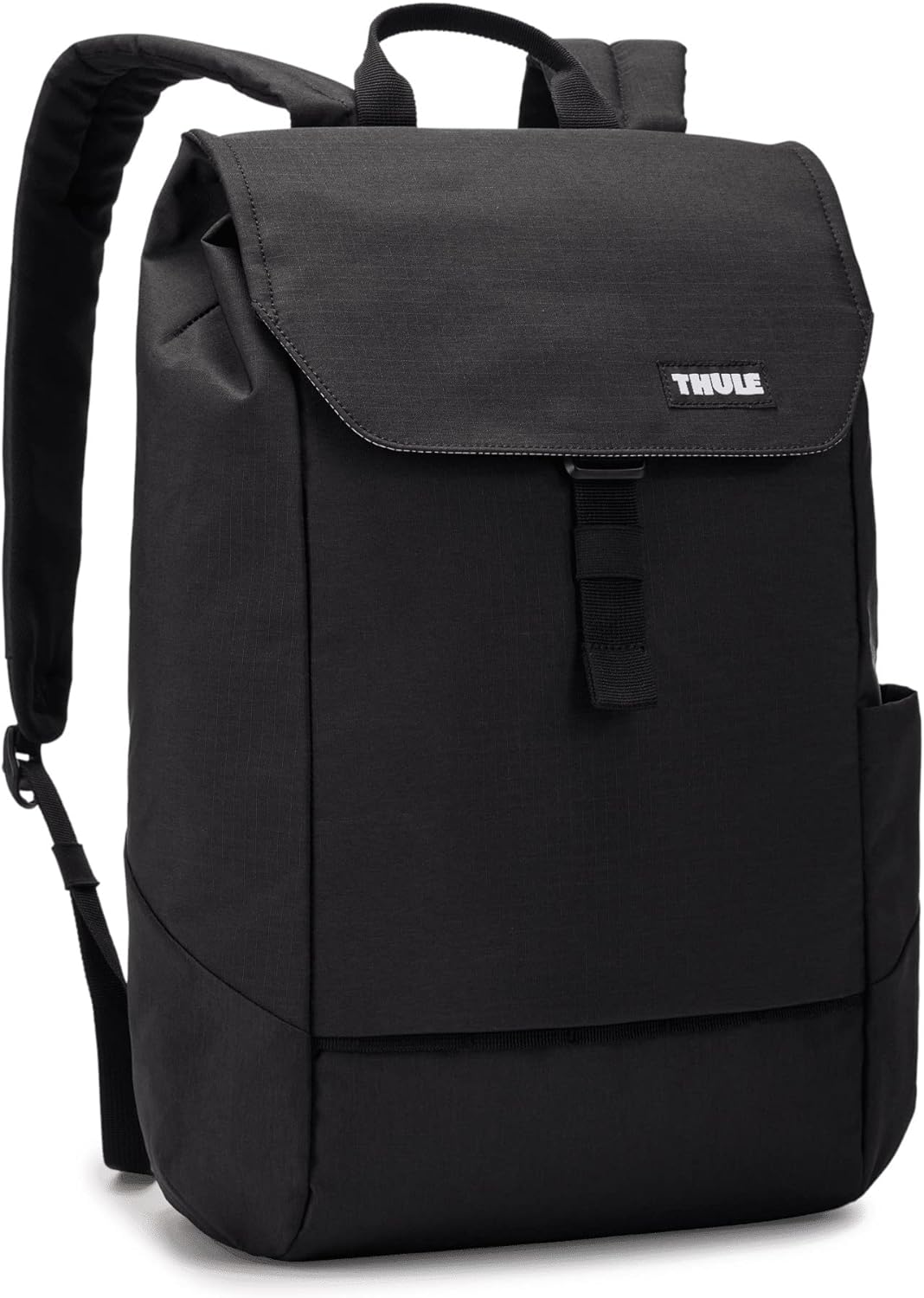
Thule Lithos 20L Backpack
- Thule Swedish design and manufacturing quality at the top of the budget range
- SafeZone top compartment protects glasses and fragile items from compression
- 1,019 reviews at 4.7 stars validates consistent performance
- 20L laptop sleeve makes it practical for days that mix trail and office
- Clean design works on trail and in town without looking like hiking gear
- No hipbelt for sustained load transfer on longer hikes
- Not hiking-specific in feature set compared to Osprey Sportlite
- Higher price than the Sportlite for less trail-specific engineering
Thule builds luggage and car racks to survive the kind of treatment that ends cheaper products early. That engineering culture comes through in the Lithos in ways that are not visible in a product photo but become apparent over time. The way the fabric does not develop soft spots after repeated loading. The zipper pulls that stay flush rather than spinning loose. The back panel foam that holds its shape through a full season.
The SafeZone compartment at the top is more useful on trail than its name suggests. Sunglasses in a regular pack pocket get sat on, stepped on, or crushed when the pack is leaned against a rock. In the SafeZone they do not. On a long day hike where you keep taking glasses on and off depending on the sun angle, not having to worry about them is one less thing occupying mental space.
The Lithos is not trying to compete with the Osprey picks on trail-specific engineering and it does not need to. It is making a different argument: that the pack you actually carry every day is more valuable than the pack that is optimized for one specific use. For hikers who resent maintaining a separate bag for trail and work, this resolves that tension cleanly.
Best budget hiking backpacks $80 to $100
The top of the budget range brings heritage outdoor brands with decades of trail engineering behind them. Salomon, Fjallraven, and Eddie Bauer all make cases for spending near the $100 ceiling rather than less.
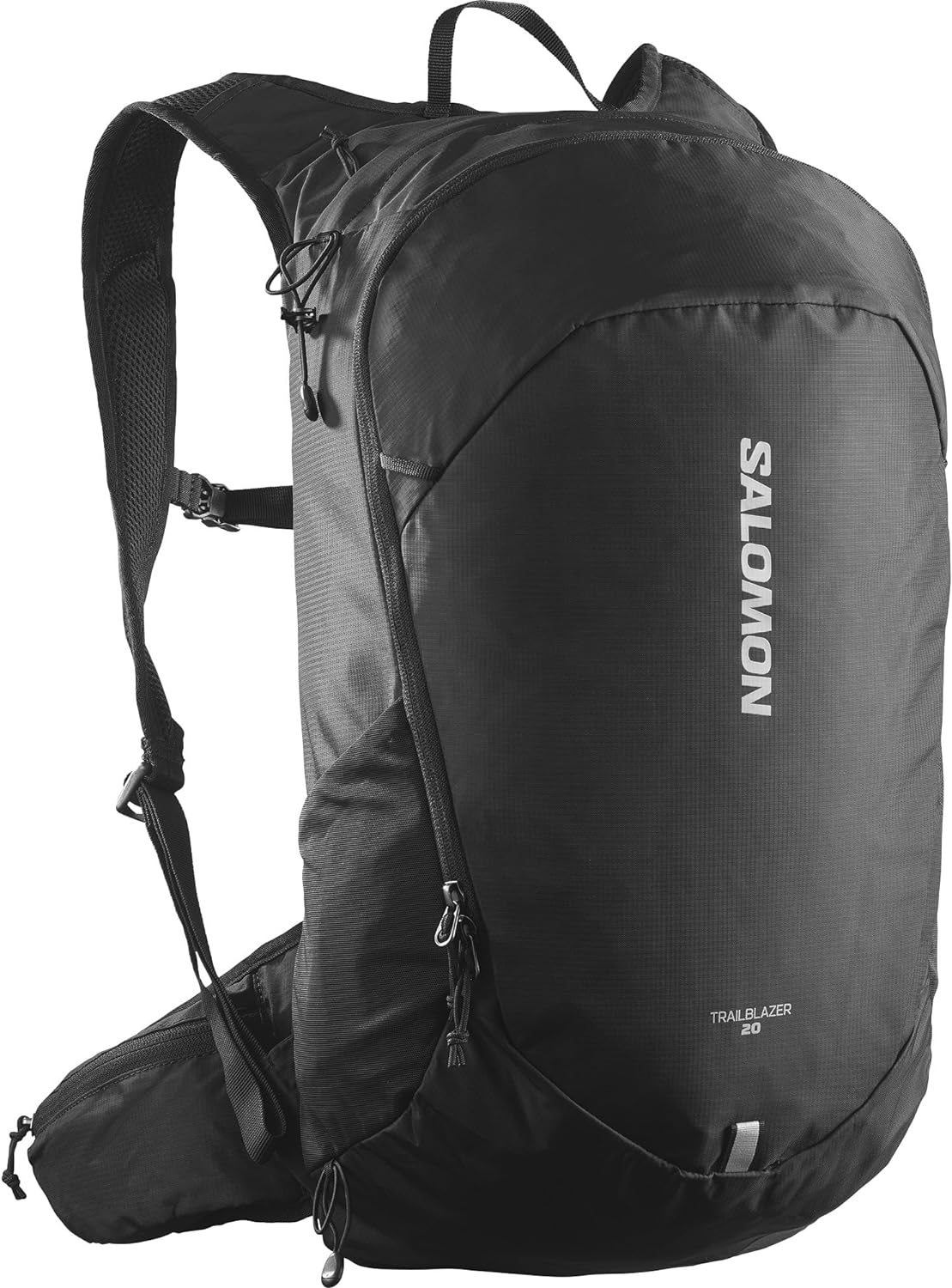
Salomon Trailblazer 20 Hiking Backpack
- Salomon is a dedicated trail brand with deep hiking and trail running engineering heritage
- ErgoPulse back system designed for active movement rather than static carry
- Structured hipbelt transfers load on longer or faster-paced days
- Trail running DNA means the pack moves with the body rather than swaying
- Hydration compatible for reservoir use on high-output days
- 20L is right for day hiking but not overnight or multi-day use
- ErgoPulse system optimized for high-output movement, less suited to slow leisure hiking
- 331 reviews is modest validation for this price tier
Salomon designs gear around people who are moving rather than standing still, and the Trailblazer reflects that in ways a standard hiking pack does not. When you are moving quickly on uneven terrain and the pack shifts with each stride, the ErgoPulse back system keeps it close to your center of gravity rather than letting it swing. That difference is invisible on flat trail and obvious on technical descent.
The hipbelt on the Trailblazer is doing real work rather than sitting there for appearances. On a budget pack, the presence of a hipbelt is often cosmetic. Here it genuinely transfers load, which means the weight of what you are carrying sits on your hips rather than pulling on your shoulders over distance. That changes how tired you feel at the end of a demanding day.
This is the wrong pack for a leisure hiker who wants to amble and stop often. The close-contact back system is designed for movement, not ventilation, and on a slow day in warm conditions it will be warmer against your back than a suspended mesh alternative. For hikers who move with intention and cover ground at pace, it earns its place.
Fjällräven Räven 28 Backpack
- Fjallraven Swedish outdoor heritage since 1960 at a budget price point
- 28L capacity is the largest in this roundup for maximum day hiking versatility
- Multi-pocket organization covers gear separation that most budget packs lack
- Laptop sleeve makes it practical for mixed-use days
- 496 reviews at 4.7 stars validates consistent performance
- No hipbelt for load transfer on demanding day hikes
- Trail-to-town design prioritizes versatility over hiking-specific features
- Higher price than the Salomon for less trail-specific engineering
Fjallraven packs are built on the assumption that you will use them for a long time and that the details should hold up across years of that use. The Raven 28’s fabric does not thin at the stress points the way budget pack fabric does. The organizational pockets are sized for gear that hikers actually carry rather than theoretical categories. The carry handles are reinforced where they are grabbed, not just attached.
The 28L volume gives a specific advantage that is easy to underestimate until you need it: room for a full layer change. On a shoulder-season hike where you start cold, heat up on the climb, cool down on the ridge, and need dry layers for the descent, a smaller pack forces hard choices. The Raven 28 holds the full kit without compromise.
The aesthetic is worth acknowledging directly. Fjallraven packs have a design identity that is recognizable and that some hikers find meaningful. If you are indifferent to that, the pack makes no stronger an argument than the Osprey picks above it on trail-specific grounds. If you respond to the design heritage and want a pack that reflects outdoor values without looking tactical, this is the most considered choice in this roundup.
Eddie Bauer Adventurer Backpack
- 4.8 stars is the highest rating in this roundup
- Eddie Bauer outdoor brand heritage at the top of the budget range
- 30L capacity covers full day hiking with room for extras
- Hip belt and hydration compatibility for trail readiness
- Padded back panel with airflow channels for ventilation
- 101 reviews is the lowest count in this roundup, limiting validation
- Newer model without the long-term durability data of established picks
- No suspended mesh ventilation system at this price
Eddie Bauer has been making outdoor gear since long before outdoor gear became a lifestyle category, and the Adventurer carries that institutional knowledge in its proportions. The shoulder straps are curved in a way that distributes pressure correctly across the shoulder blade rather than concentrating it at one point. That sounds minor until hour four of a long hike when the difference between a pressure point and a comfortable carry becomes the thing you are thinking about.
The 30L capacity with hip belt and hydration compatibility means this pack has an honest claim to covering a full day out. It is not asking you to leave things behind to make it work. On a warm-weather hike with a reservoir, food, layers, and first aid, you will fill it without overfilling it, which is exactly the right relationship between pack and use case.
The caveat is that fewer people have used this pack long enough to report back. High review counts tell you that a product holds up across a wide range of users and conditions. A smaller sample tells you it has performed well for the people who have tried it so far. Trusting the Eddie Bauer name to bridge that gap is a reasonable call for some hikers and a risk others will not want to take.
Full comparison table: best budget hiking backpack
| Pack | Best for | Key feature | Price | Rating |
|---|---|---|---|---|
| Under $40 | ||||
| Maelstrom 40L Hiking Backpack | Most Reviewed Under $40 | Rain cover included | $35.96 | 4.5 |
| High Sierra Loop 26L Backpack | Most Reviews Overall | High Sierra | $38.99 | 4.5 |
| Columbia Zigzag II 30L Backpack | Best Brand Under $40 | Columbia | $39.00 | 4.7 |
| $50 to $80 | ||||
| Osprey Daylite Cinch Backpack | Best Osprey Entry | Cinch-top | $60.00 | 4.6 |
| Osprey Sportlite 20L Hiking Backpack | Best Structured Budget | LightWire frame | $64.00 | 4.7 |
| Thule Lithos 20L Backpack | Best Trail-to-Town | Thule quality | $78.63 | 4.7 |
| $80 to $100 | ||||
| Salomon Trailblazer 20 Hiking Backpack | Best Trail-Specific Brand | Salomon | $80.00 | 4.6 |
| Fjällräven Räven 28 Backpack | Best Heritage Brand | Swedish design | $91.08 | 4.7 |
| Eddie Bauer Adventurer Backpack | Best All-Rounder | 4.8 stars | $92.50 | 4.8 |
How to choose a budget hiking backpack
Price tier versus use case: matching the right ceiling to your hiking
The under-$40 tier covers occasional hikers doing shorter outings who want to try hiking without a significant gear investment. The $50 to $80 tier is where real trail engineering begins: frame structure, ventilated back panels, and brand manufacturing standards that hold up over multiple seasons. The $80 to $100 tier delivers heritage outdoor brand quality at a price that is still meaningfully below the premium Osprey Talon and Deuter Futura tier. For hikers who go out regularly and know they will keep using a pack for years, the top of the budget range often makes more economic sense than the bottom of it.
What budget packs typically give up versus premium picks
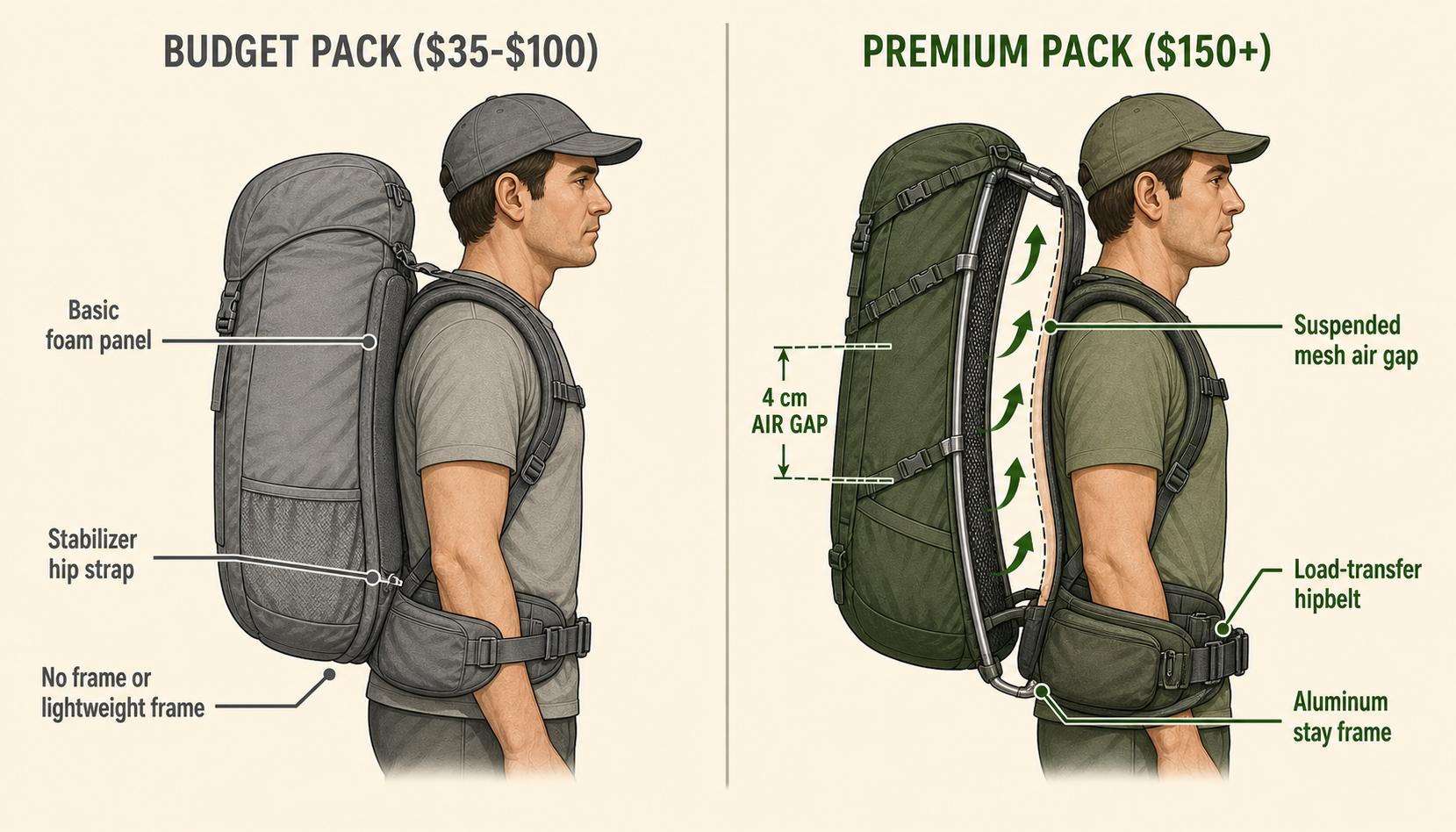
The three features most commonly absent from budget hiking packs: a suspended mesh back panel with a true air gap, a full load-transfer hipbelt suspension system, and women’s-specific geometry. Suspended mesh ventilation like Osprey’s AirSpeed system does not appear below $160. Full hipbelt load transfer systems begin around $120. Women’s-specific torso geometry begins around $100. Within the budget range, you can find hip belt stabilizer straps, basic ventilation channels through foam panels, and hydration compatibility. What you cannot find is the premium suspension engineering of the full Osprey and Deuter trail line.
Brand reliability at budget prices
Brand reputation matters more at budget prices than at premium prices. At $200, Osprey and Deuter’s quality is consistent and well-documented. At $35, build quality variance between products is much wider. Sticking to brands with outdoor manufacturing heritage, high review counts, or both reduces the risk of buying a pack that fails within a season. The Maelstrom 40L has the review count. High Sierra has both review count and brand history. Columbia, Salomon, Fjallraven, and Eddie Bauer have the brand heritage. Osprey has both at the $60 to $80 tier.

Capacity at budget prices
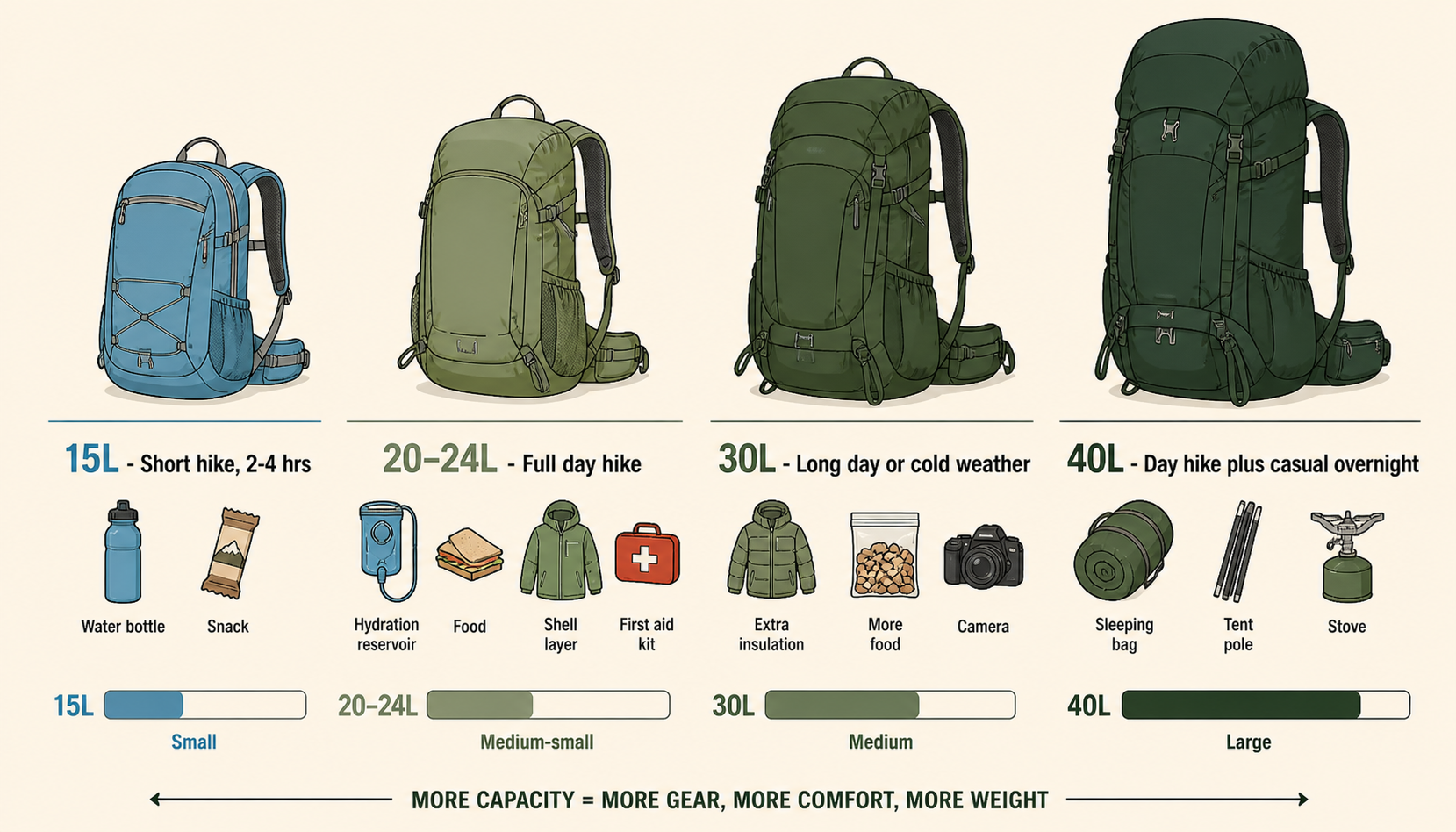
Budget packs often offer larger capacities than premium packs at the same use case because volume is cheaper to manufacture than engineering. The Maelstrom 40L at $35 has more volume than the Osprey Stratos 24L at $200. The relevant question is not which has more volume, but which capacity is right for the hike. Most day hikes need 20 to 24 liters. A 40L pack on a day hike means carrying excess air and structure that adds weight without purpose. Match capacity to use case rather than choosing the largest affordable option.
When to step up from budget pricing
A budget hiking backpack makes sense as a starting point. It stops making sense when the limitations create real problems on trail. If you find yourself sweating through your shirt under the pack on every summer hike, that is the suspended mesh ventilation gap. If your shoulders ache on every hike over 6 miles, that is the full hipbelt load transfer gap. If your pack does not fit right regardless of adjustment, that is the women’s-specific geometry gap. Those specific problems have specific solutions in the premium tier. A budget pack that creates none of those problems is the right pack until it wears out.
Frequently asked questions
What is the best budget hiking backpack?
The best budget hiking backpack depends on your price ceiling. Under $40, the Maelstrom 40L is the most field-validated option and the High Sierra Loop has the deepest review base. In the $50 to $80 range, the Osprey Sportlite 20L brings the best trail-specific engineering. For $80 to $100, the Salomon Trailblazer 20 is the most trail-specific pick and the Fjallraven Raven 28 offers the best durability heritage.
What should I look for in a budget hiking backpack?
Prioritize a hip belt for load stabilization on hikes over 5 miles, hydration compatibility for a water reservoir, and a ventilated back panel rather than flat foam. Rain cover inclusion saves a separate purchase. Avoid packs with no recognizable brand at all, where build quality variance is highest. At budget prices, review count is the most reliable quality signal alongside brand heritage.
Is a budget hiking backpack worth it?
A budget hiking backpack is the right starting point for new hikers and occasional hikers. For regular hikers who go out 20 or more times per year, the step up to Osprey or Deuter mid-tier pays for itself in durability and comfort over multiple seasons. A budget pack that wears out after two seasons costs more over time than a quality pack bought once.
What size budget hiking backpack do I need?
20 to 30 liters covers most day hiking needs. A 20L pack fits a water reservoir, food, a shell layer, and first aid basics. The Maelstrom 40L covers day hiking and casual overnight trips. Avoid undersized budget packs under 15L that force you to leave essentials behind, and avoid oversizing for day hiking where extra volume adds unnecessary weight.
Osprey vs budget hiking backpacks: is the price difference worth it?
Osprey’s suspended mesh ventilation, hipbelt load transfer, and build quality are meaningfully better than budget alternatives. The practical difference shows on hikes over 6 miles and in warm conditions where back ventilation changes the experience. Osprey’s entry points, the Daylite Cinch at $60 and the Sportlite at $64, bring Osprey construction to prices that compete directly with non-outdoor-brand budget packs and are the clearest value argument in this roundup.
Can a budget hiking backpack work for overnight camping?
A 40L budget pack like the Maelstrom can cover casual overnight camping with lightweight gear. For overnight trips you need at least 35L to carry a sleep system, shelter, cooking kit, and full food supply alongside your day kit. Budget packs under 25L are day hiking only. The main limitation on overnight use is the hip belt: budget stabilizer straps are not designed for sustained loads over multiple miles the way full suspension systems are.
Every pack in this roundup was evaluated against brand credibility, review validation, trail-specific features, and value within each price tier. No brand pays for placement.

Will founded Oregon Tails to help hikers find gear that performs on real trails. Every budget pick in this roundup was evaluated on brand credibility, field validation, trail features, and value within its price tier. No brand pays for placement.