
Best Cameras for Landscape Photography (2026): Mirrorless and DSLR Picks
Landscape photography in the Pacific Northwest punishes your gear in specific ways. The light at Crown Point is best at 5am in October when the weather is wet. Smith Rock dust in summer gets into everything. The salt fog at Cape Kiwanda corrodes anything not weather-sealed. Cascade alpine starts and ends in deep shadow under heavy canopy. I’ve bought, broken, and replaced enough cameras to have opinions about what actually survives this region’s particular cocktail of rain, mist, dust, and dramatic light shifts. The cameras below are ones I’ve used or watched colleagues use through real PNW conditions.
The honest top pick: Canon EOS R5 at $2,999. The 45MP full-frame sensor is the meaningful spec for landscape work where you’ll crop, print large, or push dynamic range. For beginners, the Canon EOS Rebel T7 Double Zoom Kit at $619 has 8,442 reviews behind it and includes both a wide-angle and telephoto lens, the only camera here under $700 that gives you real focal-length flexibility. Below the summary, here’s the full breakdown across three tiers, plus an honest note about brand dominance and ecosystem choices.
Quick picks
Full reviews, premium tier ($1,900+)

- 45MP resolution gives you crop room and large-print headroom that 24MP bodies cannot match
- In-body image stabilization rated to 8 stops, helps handheld dawn shots
- Weather-sealed magnesium body handles PNW rain and salt fog
- Dual card slots (CFexpress + SD) protect against single-card failure
- Canon RF mount has the most current-generation native lens options of any system here
- 3.69M-dot OLED EVF shows live exposure preview
- $2,999 body-only, factor in $700-$1,500 for a serious landscape lens
- 45MP RAW files are large (40-60MB each), require fast cards and ample storage
- 8K video is overkill for landscape stills, you’re paying for a feature you may not use
- Battery life is shorter than DSLR equivalents (about 320 shots per charge)
- Requires investment in CFexpress cards if you want maximum write speeds
For landscape photography specifically, the 45MP sensor is the spec that earns the R5 its top placement. You can crop a Mt. Hood image from a Trillium Lake viewpoint to a tighter composition without losing print-quality detail. You can stitch panoramas at native resolution and still have files large enough for gallery prints. The dynamic range pulls usable shadow detail out of forested foregrounds while keeping highlight skies intact, which is the defining problem of PNW landscape work.
In-body stabilization has rescued more handheld dawn shots than I want to admit. Combined with a stabilized RF lens, the R5 can deliver sharp images at shutter speeds where I’d normally need a tripod. For photographers who hike to viewpoints and don’t want to carry a heavy tripod, the IBIS is the difference between bringing back a sharp image and bringing back a blurry one.
The honest case against the R5: $2,999 for the body alone is real money, and that’s before lenses, cards, and accessories. If $2,999 stretches your budget uncomfortably, the Canon EOS R6 Mark II with kit lens at $2,399 (#2 Premium) gets you 80% of the experience with a lens included. The R5 is the right call when resolution specifically matters to your work and budget allows.

- Kit lens included makes the total package about $400 cheaper than R5 + comparable lens
- Better low-light performance than the R5 due to lower pixel density
- 4.8-star rating is the highest in the premium tier
- Same in-body stabilization as the R5
- Weather-sealed, dual card slots
- Smaller RAW files than R5 mean faster card writes and less storage
- 24.2MP gives you less crop room than the R5’s 45MP for landscape detail work
- Kit lens is consumer-grade, F4-7.1 means slow at the long end
- 221-review proof base is the smallest of the premium full-frame options
- Newer model means firmware quirks may still emerge
The R6 Mark II is the right pick when you want to walk out the door with a complete shooting setup at a lower total cost than the R5 plus a comparable lens. The 24-105mm range covers most landscape situations from wide vistas at Crown Point to compressed views of Mt. Hood from Trillium Lake, and the included lens is competent enough to use as your primary lens for years.
For landscape work specifically, the 24.2MP sensor is the trade-off versus the R5. Twenty-four megapixels is plenty for prints up to 16×20 and full social media use, and the lower pixel density actually means cleaner shadow detail in low-light conditions. Where you’ll feel the lower resolution: heavy cropping, very large prints (20×30 and above), and panoramic stitching where every pixel matters.
When this beats the R5: when your budget caps at $2,400 and you don’t already have a Canon RF lens. When the R5 wins: when resolution specifically matters and you’re willing to spend separately on a serious landscape lens. Either is a credible long-term landscape body.

- 33MP sits between the R5 and R6 II for resolution, splits the difference well
- Sony E mount has the deepest third-party lens market (Sigma, Tamron, Samyang)
- BIONZ XR processor handles high-resolution files quickly
- 425-review proof base is solid for a current-generation Sony body
- Kit lens included makes this a complete starter package
- Sony’s menu system has a steeper learning curve than Canon’s interface
- 28-70mm kit lens starts wider than ideal for landscape (24mm is more standard)
- Sony E mount lenses can be more expensive than Canon RF equivalents
- Battery life and ergonomics are weaker than the Canon competitors
The A7 IV is the right answer when you’re committed to Sony’s ecosystem or planning to add Sigma and Tamron third-party lenses (Sony E mount has by far the deepest third-party market). For landscape photographers who want maximum lens flexibility at lower per-lens cost, the E mount delivers options Canon’s RF mount cannot yet match.
The 33MP sensor sits between the R5 (45MP) and R6 Mark II (24MP), giving you meaningful resolution for landscape work without the file-size pain of the R5. Image quality is competitive with both Canon options, and Sony’s BIONZ XR processor handles the high-resolution files faster than older bodies.
The honest case against: Sony’s menu system and ergonomics are weaker than Canon’s. If you’ve never owned a Sony, the learning curve is real. The 28-70mm kit lens is also weaker than Canon’s 24-105mm kit, particularly at the wide end where landscape work usually wants 24mm or wider. Worth it if you’re Sony-committed; if you’re picking your first ecosystem, Canon’s RF is the easier path.
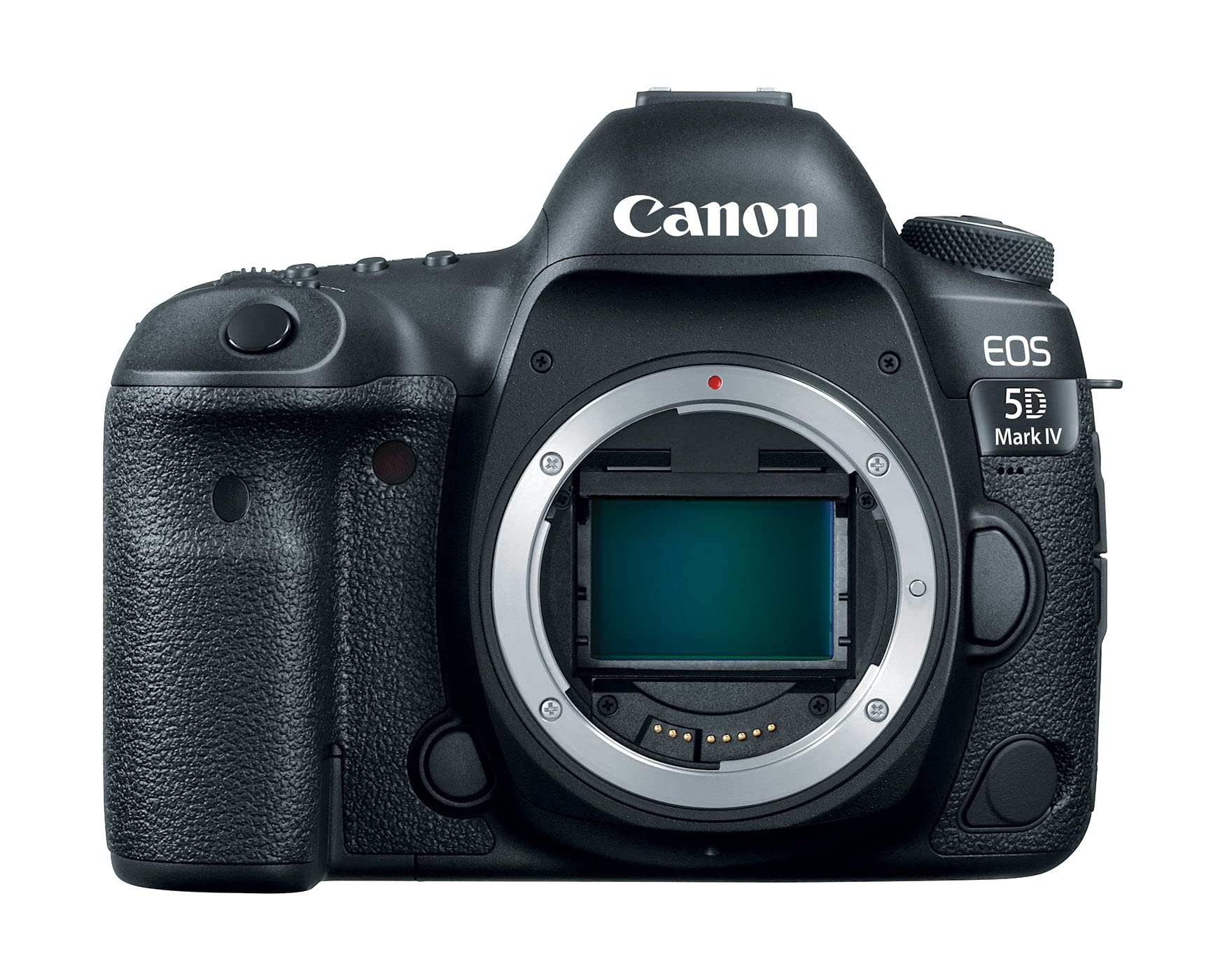
- 857-review proof base is the deepest in the premium tier
- 30.4MP full-frame sensor still delivers excellent image quality
- Canon EF mount has by far the deepest used lens market at the lowest prices
- Optical viewfinder works in any battery state, no electronic dependency
- Better battery life than mirrorless equivalents (~900 shots per charge)
- Dual card slots (CF + SD) and weather-sealed magnesium body
- No in-body image stabilization, you depend on stabilized lenses
- Older platform (released 2016), no electronic viewfinder benefits
- Canon’s EF mount is being phased out in favor of RF, future lenses are RF only
- Larger and heavier than equivalent mirrorless bodies
- Live View autofocus is slow compared to mirrorless
The 5D Mark IV is the right call for one specific buyer: someone who already owns Canon EF lenses, or someone willing to invest in the deeper used EF lens market. The EF lens market has 30+ years of glass available, including L-series wide angles like the 16-35mm F4 IS that work beautifully for landscape, often at half the price of comparable RF lenses. For a buyer building a landscape kit on a constrained budget, EF can stretch your dollar significantly.
As a body alone, the 5D Mark IV is still excellent. Canon got this platform very right, and 857 reviews of long-term feedback confirms it. The image quality holds up against any current full-frame body for landscape work, the weather sealing handles PNW conditions, and battery life is genuinely better than any mirrorless option here.
The honest case against: Canon’s RF mount is the future, and EF is being slowly deprecated. New lens releases are RF-only. The 5D Mark IV is the right buy if you have EF glass already or you’re comfortable buying into a sunsetting platform with cheap used lenses. For someone starting fresh in 2026, the R5 or R6 Mark II is the better long-term play.
Full reviews, mid-range ($900 to $1,900)

- 32.5MP is the highest APS-C resolution available from Canon
- In-body stabilization is rare at this price tier
- Dual card slots add reliability for important shoots
- 4.8-star rating is the highest in the mid-tier
- Canon RF mount works with both APS-C (RF-S) and full-frame RF lenses
- APS-C sensor means smaller pixels than full-frame, weaker low-light performance
- Body only, factor in $400-$1,000 for a serious landscape lens
- RF-S lens selection is limited, you’ll likely use full-frame RF lenses with crop
- The 1.6x crop factor changes lens focal lengths significantly
The R7 is interesting for landscape photographers who want serious resolution without paying full-frame prices. 32.5 megapixels on APS-C is genuinely competitive with full-frame bodies for cropped composition work and large-print headroom, and the 1.6x crop factor effectively turns standard wide lenses into more standard-focal-length lenses (a 16-35mm becomes a 26-56mm equivalent).
For PNW landscape work specifically, the R7 makes sense if you’re shooting mostly distant subjects: Mt. Rainier from a Cascades viewpoint, Mt. Hood across the Hood River Valley, the Three Sisters from a high meadow. The crop factor extends your reach. For wide-angle work where you want maximum field of view (waterfalls, coastal scenes, broad valley shots), full-frame bodies will give you more wide coverage with the same lens.

- Cheapest current-generation Canon full-frame mirrorless body, by a meaningful margin
- Kit lens included makes this a complete starting setup
- 26.2MP sensor delivers full-frame image quality at this price
- Compact and lightweight body for hike-in landscape work
- 819-review proof base is solid for the mid-tier
- No in-body stabilization, depends on lens IS for sharp handheld shots
- Single card slot lacks the redundancy of higher-tier bodies
- Slower autofocus than R5/R6 II (a tradeoff for the lower price)
- Older platform, may be replaced soon
- Limited weather sealing compared to R5/R6 II
The RP solves a specific problem: getting into Canon full-frame mirrorless at the lowest possible cost. At $1,349 with a 24-105mm kit lens, this is the cheapest path to full-frame image quality on Canon’s current RF platform. The 26.2MP sensor is plenty for most landscape work, the body is genuinely lightweight (the lightest full-frame mirrorless body Canon makes), and the kit lens gives you a usable focal range out of the box.
For PNW hikers who want full-frame quality without lugging an R5 weight class body up to viewpoints, the RP’s compactness is a real advantage. I’ve taken this body up Cascade trails where I wouldn’t have wanted to carry the heavier alternatives. The trade-off is missing IBIS (you depend on the lens stabilization) and a single card slot.
When this beats the R7 (#1 Mid): when you specifically want full-frame image quality and don’t need APS-C resolution. When the R7 wins: when you want IBIS and dual cards and don’t mind paying $200 more for body-only. The RP is the Canon full-frame entry point that makes financial sense at this tier.
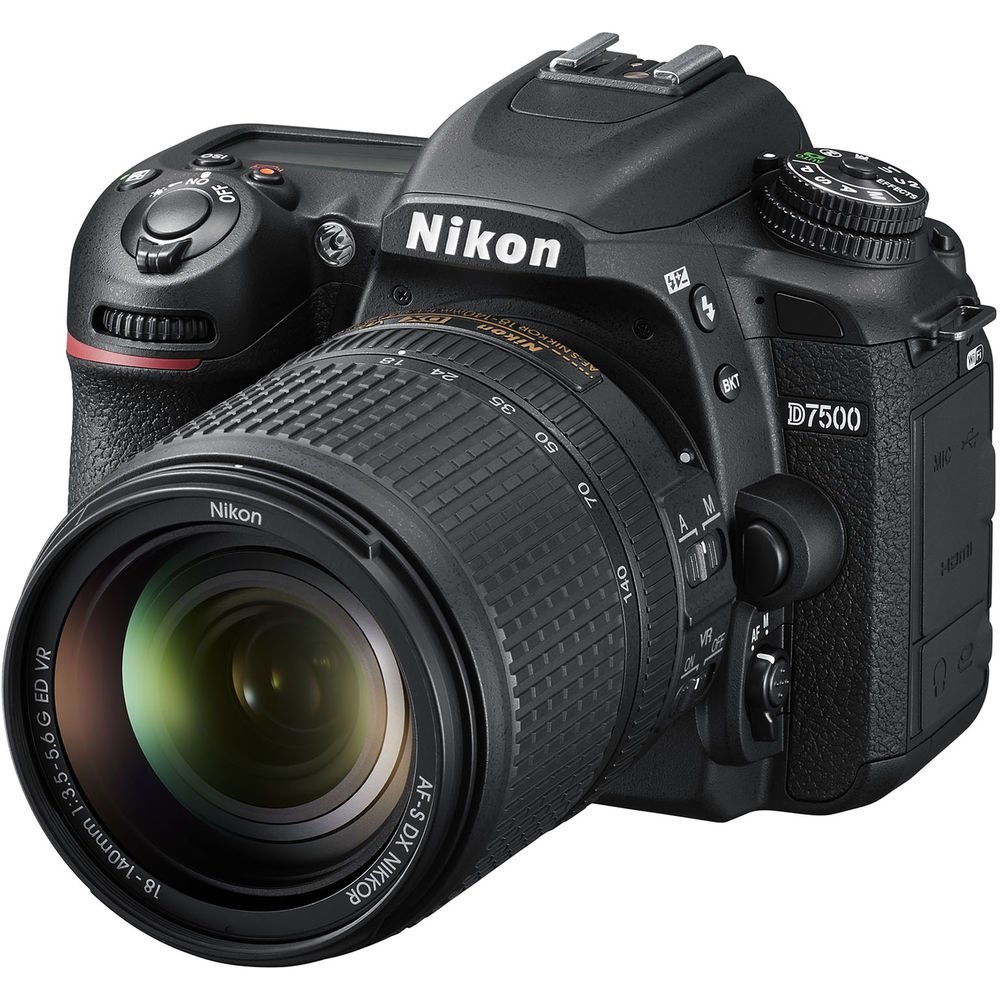
- Weather-sealed body at under $1,000 with kit lens
- 18-140mm kit lens has more reach than typical 18-55mm kits
- Nikon’s color science is highly respected for landscape work
- Optical viewfinder, longer battery life than mirrorless equivalents
- 666 reviews provide solid long-term reliability data
- 20.9MP is the lowest resolution among the cameras on this list
- Nikon F mount is being phased out in favor of Nikon Z (mirrorless)
- No in-body stabilization, depends on lens VR
- Single card slot
- Older platform (2017 release) lacks newer mirrorless conveniences
The D7500 is the only Nikon option in this Amazon search, and it’s a solid one. For Nikon-committed photographers or anyone with existing Nikon F-mount lenses, this is the right body at this price tier. Weather sealing is real (I’ve shot a D7500 in Cascades drizzle for hours with no issues), the 18-140mm kit lens covers a more useful focal range than typical 18-55mm kits, and Nikon’s color science remains a respected reason to choose the brand.
For landscape work specifically, the 20.9MP resolution is the trade-off. It’s enough for most uses but doesn’t match the 24MP+ sensors of the Canon competitors at similar prices. Where Nikon’s image quality often shines: foliage rendering, sky gradients, deep shadow recovery in RAW.
The honest case against: Nikon’s F mount is being slowly retired in favor of the Z mount, much like Canon’s EF/RF transition. The D7500 will be supported for years, but new lens development is on Z. Buy this if you’re already in Nikon F or you specifically prefer Nikon’s image character; otherwise the Canon options are the easier path.
Full reviews, budget tier (under $900)
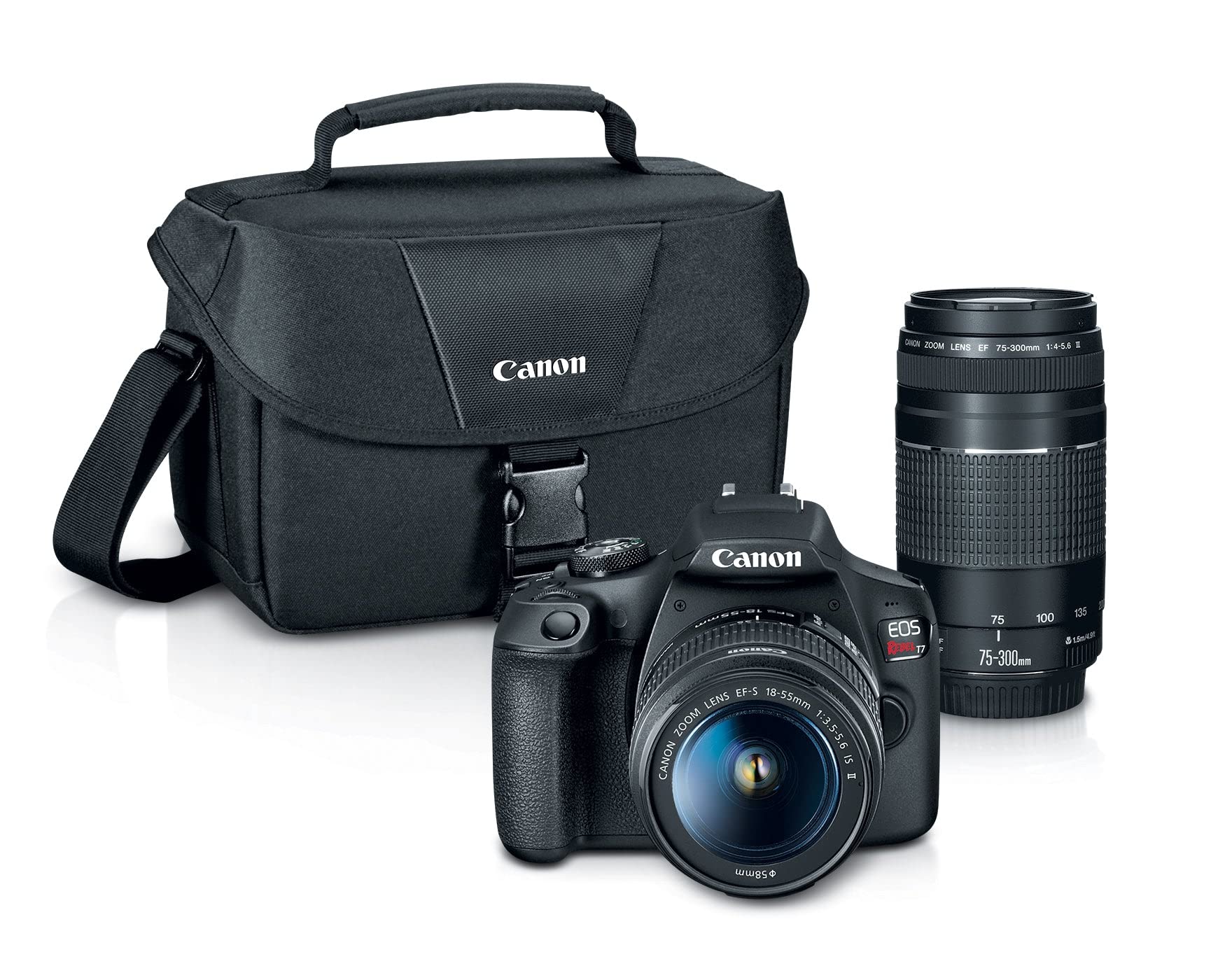
- 8,442 reviews is the deepest proof base by far on this page
- Two lenses included gives you wide-angle (18-55mm) and telephoto (75-300mm) coverage
- $619 total cost is the lowest entry to a complete two-lens DSLR system
- Canon EF/EF-S mount has by far the deepest used lens market for upgrades later
- DSLR fundamentals (optical viewfinder, manual controls) are worth learning
- 4.7 stars across this many reviews is a remarkably reliable signal
- Older platform (2018 release), missing modern features like vari-angle screen
- Kit lenses are consumer-grade with slow apertures (F3.5-5.6 to F4-5.6)
- No in-body stabilization, relies on lens IS
- 1080p video only, no 4K
- Single SD card slot
- EF mount is being phased out long-term in favor of RF
8,442 reviews at 4.7 stars is the kind of social proof that makes “what camera should I buy to learn landscape photography” easy to answer. The Rebel T7 Double Zoom Kit covers the most common beginner question (wide-angle for landscapes plus telephoto for distant subjects) at $619 total, which is genuinely impressive for a complete system. The two lenses give you real focal-length flexibility from the start: the 18-55mm handles vistas, environmental shots, and waterfalls; the 75-300mm handles compressed Mt. Hood images, isolated peaks, and wildlife details on landscape hikes.
For learning the fundamentals, DSLR ergonomics actually have advantages over mirrorless. The optical viewfinder works regardless of battery state, the dedicated dials and buttons reward muscle-memory learning, and the deeper EF mount used market lets you upgrade lenses cheaply as you develop your style. A used Canon EF 17-40mm F4 L can be found for $300-$400 and immediately transforms your landscape work.
The honest case against: Canon’s EF mount is being slowly deprecated in favor of RF (their mirrorless mount). New lens development is RF-only. The T7 will be supported for years, but you’re buying into a sunsetting platform. For someone who wants the modern mirrorless experience as their first camera, the Canon EOS R100 (#3 Budget, $579) is the alternative. For someone who wants the deepest proof base and the most flexibility per dollar in this exact moment, the T7 Double Zoom Kit is the answer.

- 1,436 reviews makes this the deepest-proof current-gen mirrorless under $1,000
- Canon RF mount future-proofs your investment
- Vari-angle touchscreen useful for low-angle landscape compositions
- Compact body, easy to carry on long hikes
- Modern mirrorless features (eye AF, focus peaking) accelerate learning
- No in-body stabilization, lens IS only
- Kit lens is short range (18-45mm = 28-72mm equivalent), narrower than the T7 kit
- RF-S native lens selection is still limited
- $180 more than the T7 Double Zoom Kit which gets you one fewer lens
- No weather sealing
The R50 is the right answer for someone who wants to start on Canon’s modern RF platform without spending mid-tier money. The 24.2MP APS-C sensor produces excellent landscape images, the vari-angle touchscreen helps with the low-angle compositions waterfalls and tide pools require, and the modern mirrorless features (eye autofocus, focus peaking, live exposure preview) make learning faster than DSLR fundamentals.
The trade-off versus the Rebel T7 Double Zoom Kit: you get one lens (18-45mm RF-S) instead of two (18-55mm and 75-300mm), and you pay $180 more. For a beginner who values the modern platform and longer-term lens compatibility, the R50 wins. For a beginner who values immediate two-lens flexibility and lowest entry cost, the T7 wins.
For PNW landscape work specifically, the 28-72mm equivalent range of the kit lens is reasonable but cramped at the wide end. You’ll likely want a wider lens fairly quickly for big vistas. The Canon RF-S 10-18mm wide-angle (about $300 used) is a natural next purchase.

- $579 is the cheapest current-generation Canon mirrorless body with kit lens
- RF mount means future lens compatibility with full-frame upgrades
- Same 24MP sensor class as the R50 at lower price
- Compact and lightweight
- Fixed (non-articulating) screen limits low-angle composition
- Slower autofocus than R50
- No vari-angle, no touchscreen swiping for menu navigation
- Limited continuous shooting speed (3.5fps)
- Smaller proof base than R50 (656 vs 1,436 reviews)
- No weather sealing
The R100 is Canon’s stripped-down current-generation mirrorless body, designed to hit the lowest possible price point. For a buyer who specifically wants the modern mirrorless platform at the absolute lowest cost, this is it. The 24.1MP APS-C sensor produces image quality very similar to the R50, and the RF mount means future lens upgrades will work as you grow.
The honest case for paying $220 more for the R50: vari-angle touchscreen, faster autofocus, deeper proof base (1,436 vs 656 reviews), and meaningfully better continuous shooting. For landscape photography specifically, the R50’s articulating screen is genuinely useful for the low-angle compositions that waterfall, tide pool, and macro-landscape work require.
When this is the right buy: when $579 is the firm budget ceiling and you want to start on Canon’s modern platform. When the Rebel T7 Double Zoom Kit beats it: when you want two lenses (a real focal range) for slightly more money. The R100 wins on pure lowest-cost current-gen entry; the T7 wins on focal-length flexibility per dollar.
Comparison table
| Camera | Tier | Sensor | Rating | Reviews | Price |
|---|---|---|---|---|---|
| Canon EOS R5 (Body) | Premium | 45MP FF | 4.7 | 777 | $2,999 |
| Canon EOS R6 II + Kit | Premium | 24.2MP FF | 4.8 | 221 | $2,399 |
| Sony A7 IV + Kit | Premium | 33MP FF | 4.6 | 425 | $2,198 |
| Canon 5D Mark IV (Body) | Premium | 30.4MP FF | 4.7 | 857 | $1,999 |
| Canon EOS R7 (Body) | Mid-range | 32.5MP APS-C | 4.8 | 390 | $1,549 |
| Canon EOS RP + Kit | Mid-range | 26.2MP FF | 4.6 | 819 | $1,349 |
| Nikon D7500 + Kit | Mid-range | 20.9MP APS-C | 4.7 | 666 | $997 |
| Canon Rebel T7 Double Zoom | Budget | 24.1MP APS-C | 4.7 | 8,442 | $619 |
| Canon EOS R50 + Kit | Budget | 24.2MP APS-C | 4.6 | 1,436 | $799 |
| Canon EOS R100 + Kit | Budget | 24.1MP APS-C | 4.5 | 656 | $579 |
How to choose a landscape camera
Frequently asked questions
More camera guides
Browse all gear
