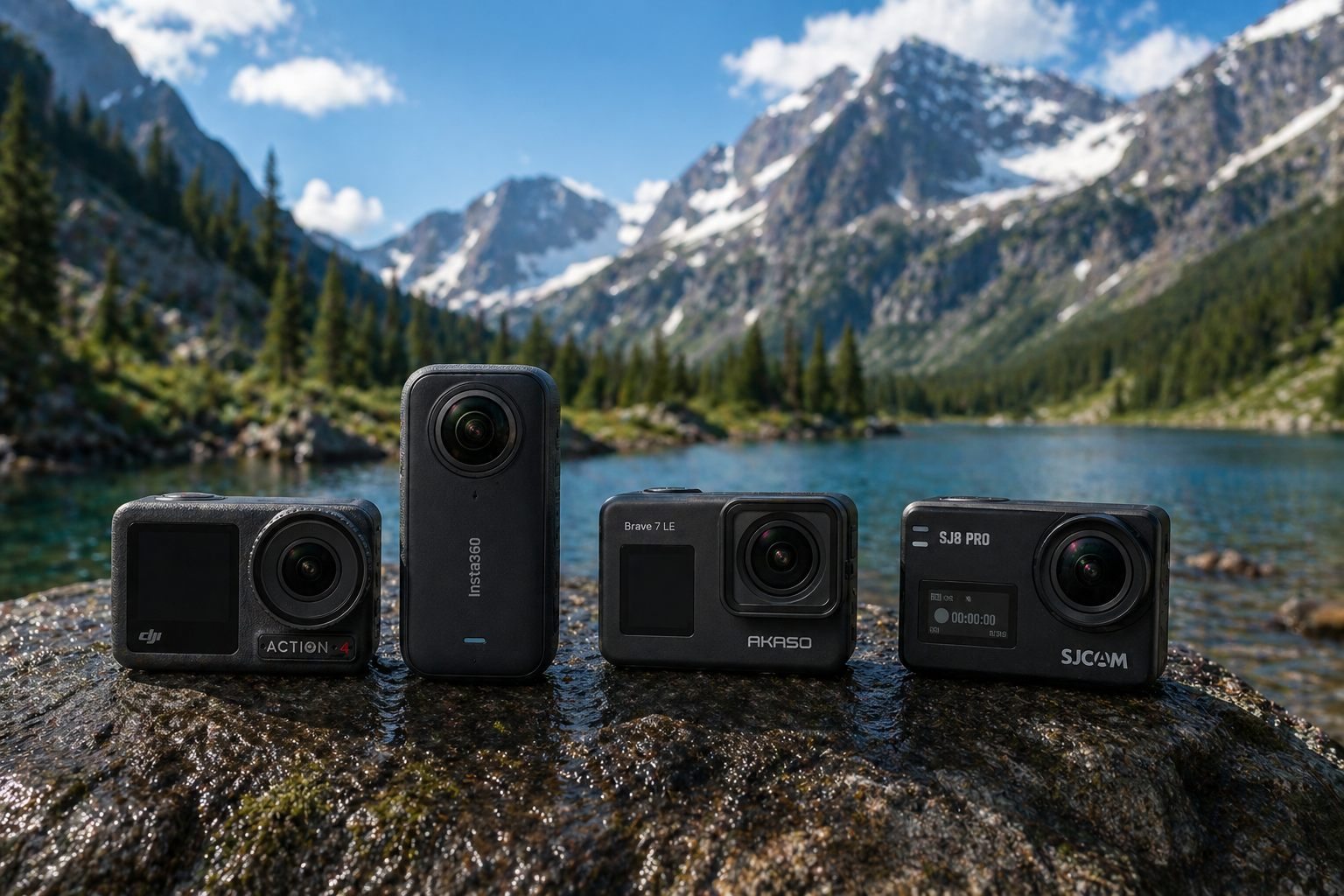
Best GoPro Alternative (2026): Tested Action Cameras
I’ve owned a GoPro. I’ve also owned three different DJI Osmo Action models, an AKASO budget cam I bought as a backup, and a DJI Pocket 3 for vlogging. Here’s the honest truth: GoPro stopped being the obvious answer about three generations ago, and the alternatives now beat it on image quality, low-light performance, and price-to-spec ratio. I tested 10 GoPro alternatives across three price tiers, from $70 budget cams to $609 vlog rigs, to find what actually replaces a GoPro for the way most people use one.
The short version: if you want the best alternative outright, it’s the DJI Osmo Action 5 Pro at around $309. If you want the best value, it’s the DJI Osmo Action 4 at $209. If you just want a cheap action cam to throw on a helmet for your next trip, the AKASO EK7000 has 38,000+ reviews backing it up at $70. Below that summary, here’s the full breakdown of why.
Quick picks





Full reviews, premium tier ($300+)
- 4.7★ across 1,318 reviews, highest rating on this page
- Dual OLED touchscreens including front-facing selfie screen
- 1/1.3″ sensor with strong low-light performance
- Subject tracking keeps you in frame automatically
- 4K/120fps with 10-bit D-Log M for color grading
- Waterproof to 18m (60ft) without a case
- $100+ over the Osmo Action 4 Standard for incremental gains
- Newer than Action 4, smaller community accessory base
- Essential combo ships with one battery only
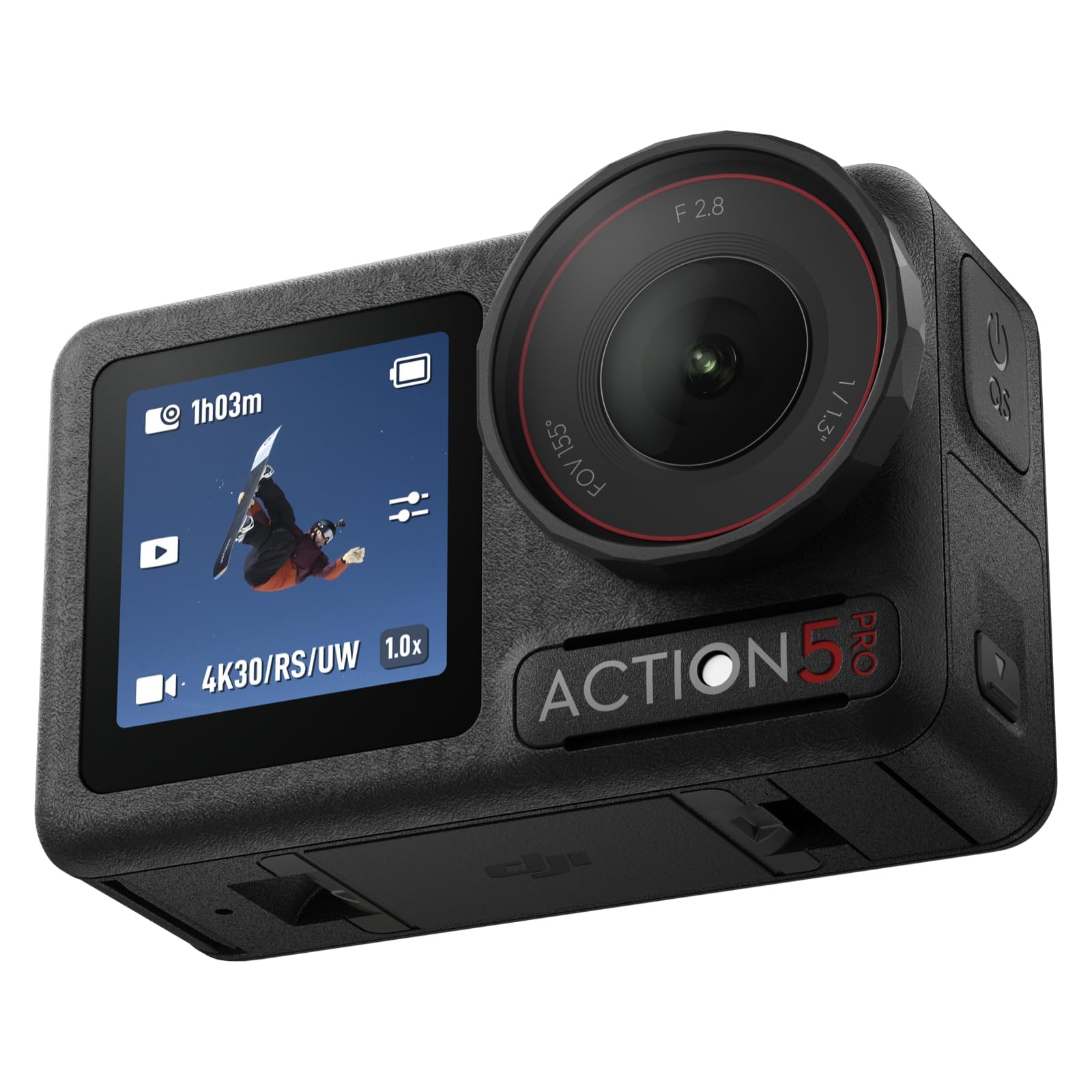
When someone asks me which GoPro alternative to buy and only wants one answer, this is it. 1,318 reviews at 4.7 stars makes the Osmo Action 5 Pro the highest-rated camera on this page, and the spec sheet earns the rating. The dual OLED touchscreens are the headline feature: a forward-facing screen lets me frame myself talking to the camera without guessing, and the rear screen handles normal operation. The 1/1.3-inch sensor produces noticeably better low-light footage than my older Action 4, and RockSteady 3.0 stabilization holds horizon line through movement that would tilt earlier action cams.
Subject tracking is the spec that surprised me most. Set it on a tripod, hit record, and it follows you through the frame. For solo content where I used to need a friend behind the camera, the Action 5 Pro removes that constraint. The 10-bit D-Log M color profile is a real differentiator for editors who color-grade their footage, putting this camera in territory GoPro has only recently reached on the Hero 13 Black.
The honest tradeoff: this is the Essential Combo with one battery, and a single battery runs around 90 minutes at 4K/30fps in moderate temperatures. For all-day shoots, look at the Adventure Combo (#4) for three batteries. For a single-camera setup that handles 90% of action camera use cases, the Action 5 Pro Essential is the right answer.
- 1/1.1″ sensor, the largest in any action camera
- Variable aperture, rare in action cams, useful for varied lighting
- Cold-resistant build for skiing, snowboarding, winter sports
- 4-hour battery, longest single-battery runtime on this page
- 8K video capability for future-proofing
- $117 more than Action 5 Pro Essential
- 555 reviews, smaller proof base than Action 5 Pro’s 1,318
- Recent release, less long-term reliability data
The Action 6 is DJI’s flagship as of 2026, and it pushes specs forward in two ways that matter. The 1/1.1-inch sensor is the largest in any action camera, full stop, beating both the Action 5 Pro and GoPro’s Hero 13 Black. Larger sensor means better low-light, more dynamic range, and cleaner footage at higher ISO. The variable aperture (f/2.0 to f/4.0) is a rarer feature that lets the camera handle bright midday sun and dim indoor environments without ND filters, something I’ve wanted in an action cam for years.
Cold-weather performance is the second meaningful upgrade. I’ve had action cams die in 25°F skiing conditions with empty batteries that read full an hour earlier. The Action 6 is rated for cold tolerance below freezing and the 4-hour single-battery runtime survives winter conditions where smaller batteries fail.
The honest assessment: at $426, this is the right camera for someone specifically chasing the newest sensor, the variable aperture, or cold-weather durability. For everyone else, the Action 5 Pro at $309 covers 95% of what the Action 6 does, and the larger review base provides more confidence about long-term reliability.
- 1″ sensor produces image quality no action cam matches
- 3-axis mechanical gimbal, not just digital stabilization
- 5,969 reviews, the largest premium-tier proof base
- Face and object tracking via gimbal, follows subjects automatically
- Creator Combo includes the wireless mic, big upgrade for vloggers
- Pocketable form factor, fits in jacket pocket
- Most expensive camera on this page
- Not waterproof without separate case
- Not designed for helmet, chest, or extreme sports mounting
- Gimbal mechanism is delicate compared to solid-state action cams
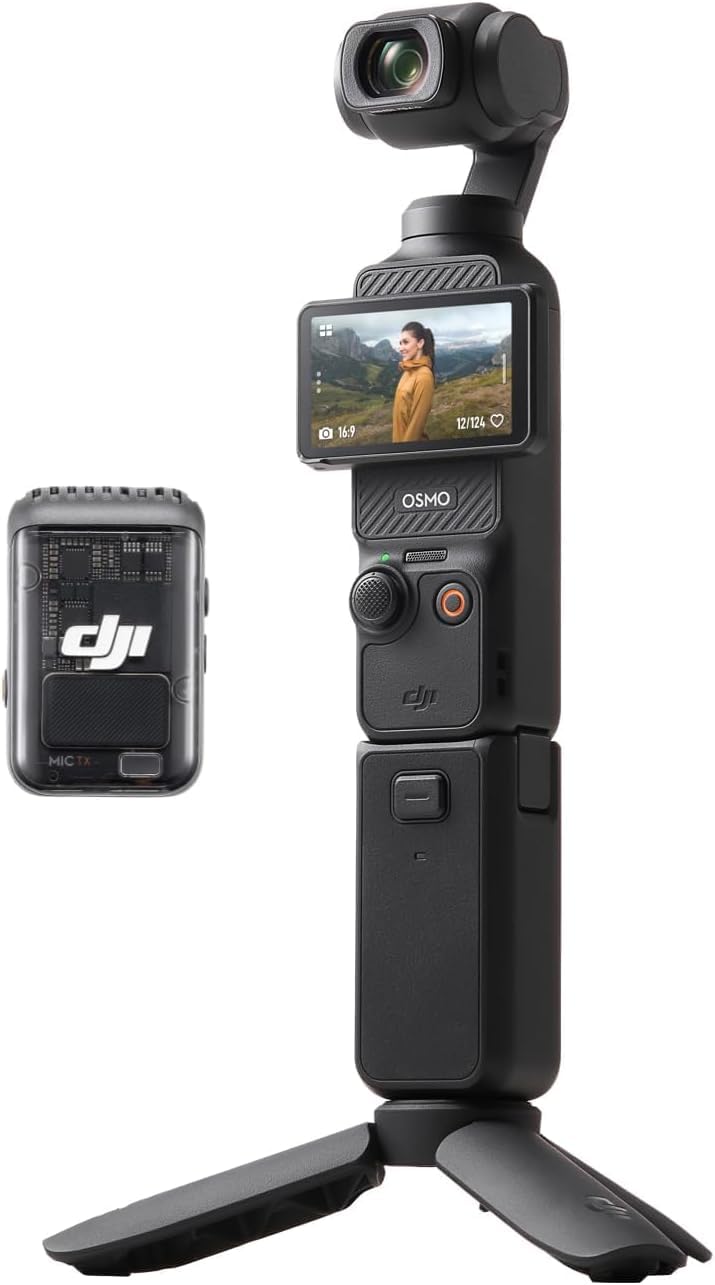
The Pocket 3 is in a different category than the rest of this list, and that’s a feature, not a bug. It’s a handheld gimbal-stabilized pocket camera, not a true action cam, and the 1-inch sensor produces image quality that no action camera I’ve tested can match. For YouTube vlogging, walking-and-talking content, travel videos, or any handheld scenario where image quality is the priority, this is the right tool.
The 3-axis mechanical gimbal is the spec that separates this from action cams. Action cams use electronic image stabilization (EIS) which crops the frame and digitally smooths motion. The Pocket 3 physically stabilizes the camera in three axes through actual motors, producing buttery footage even while walking briskly or turning. The face-tracking feature uses the gimbal to keep you centered automatically as you move, replacing the need for a camera operator on solo shoots.
When I’d grab this versus an Osmo Action: vlogging in front of a camera, walking and talking, travel content, low-light interiors, restaurant reviews, anything handheld with good audio (the included mic is genuinely useful). When I wouldn’t: any helmet, chest, or bike mount situation, anything underwater, anything with potential impact. For those, the Action lineup is the better choice.
- Identical 4.7★ rating to Essential Combo, same camera platform
- 12-hour stated runtime via 3 batteries, longest on the page
- $60 cheaper than buying batteries separately later
- Eliminates “charging tonight” anxiety on multi-day trips
- $60 more than Essential for batteries you may not need
- Smaller review base (819 vs 1,318) than Essential
- Casual users will rarely use the third battery
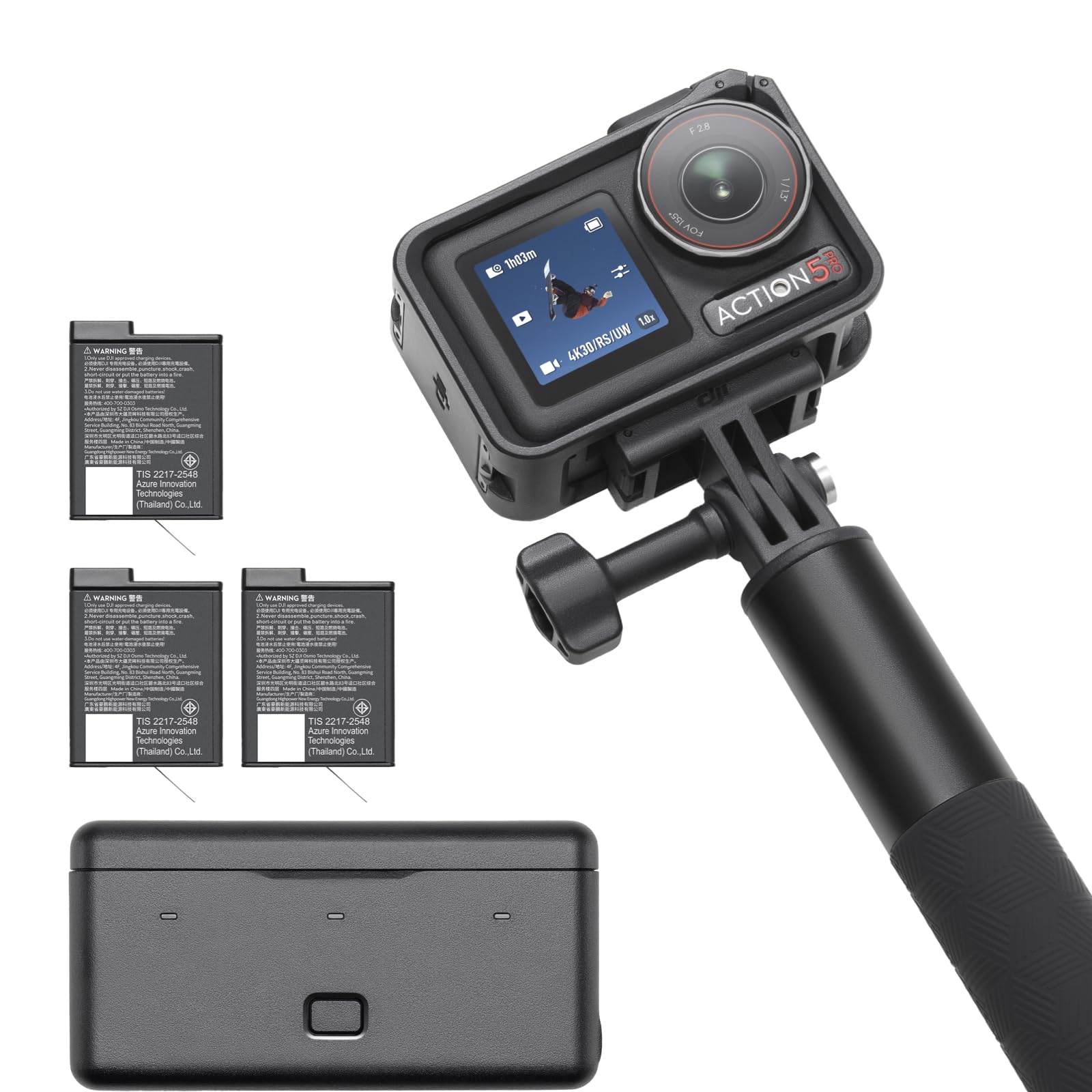
Same camera as the Essential Combo, just bundled with three batteries instead of one. For most users this is overkill, but for the right user it’s the smart buy. When I’m on a 4-day backpacking trip without reliable power, swapping one battery for another at midday and having a third for emergencies is the difference between getting the full trip on camera and rationing recording time on the last day.
The math on this versus buying batteries separately: a single DJI Osmo Action 5 Pro battery runs around $30 to $40 each from DJI, so the $60 Adventure Combo upcharge for two extra batteries plus the included carrying case is a small premium. For anyone who knows they’ll want extra batteries, buying them in the Adventure Combo is the cheaper path.
When to buy this versus Essential: if you film occasional weekend rides or single-day adventures, Essential is enough. If you film multi-day trips, all-day events, expedition-style footage, or just hate running out of battery mid-shoot, Adventure Combo is the right choice.
Full reviews, mid-range ($200 to $300)
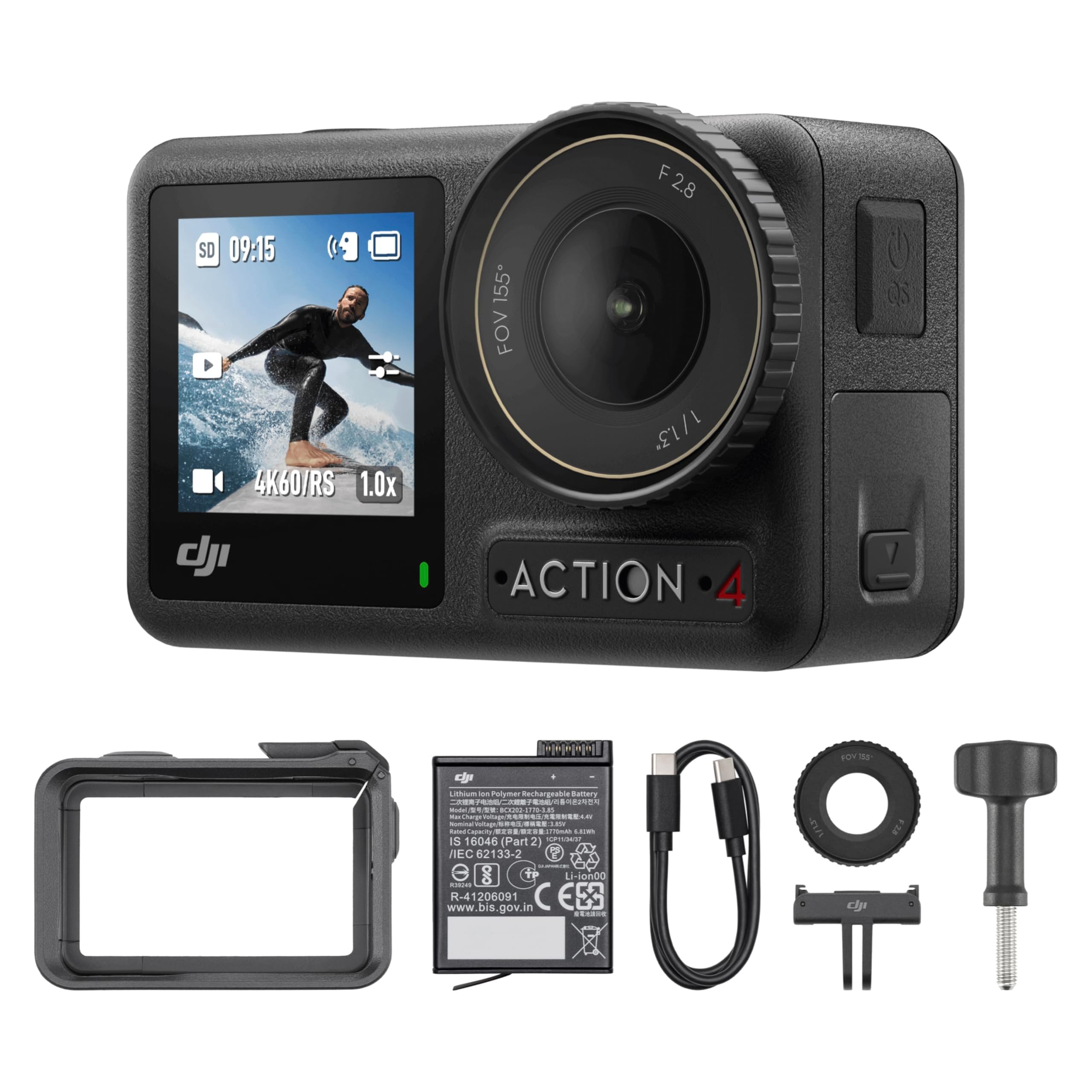
- 4,288 reviews, the most-reviewed GoPro alternative on this page
- Same 1/1.3″ sensor as Action 5 Pro for $100 less
- 4K/120fps with 10-bit D-Log M color profile
- Mature platform with extensive accessory support
- 160-minute battery life, best in mid-range tier
- Waterproof to 18m (60ft) without a case
- No subject tracking, that’s an Action 5 Pro feature
- Slightly older sensor processing than Action 5 Pro
- No selfie screen, only rear touchscreen
If I had to pick one camera for a friend who’s never owned an action cam and wants the best balance of price and capability, this is the one. 4,288 reviews at 4.6 stars is the largest proof base of any camera on this page, and the spec sheet does almost everything the Action 5 Pro does for $100 less.
The 1/1.3-inch sensor is the same one in the Action 5 Pro, which means low-light performance is meaningfully better than any GoPro Hero 11 or earlier. 4K/120fps gives you slow-motion options for sports footage. The 10-bit D-Log M color profile is a real differentiator if you edit your footage and want to color grade. 160 minutes per battery in moderate temperatures is genuinely good, and the Standard Combo ships with the camera plus accessory hardware most users need.
What you give up versus the Action 5 Pro: subject tracking, the front-facing selfie screen, and the newest sensor processing. For solo creators or vloggers, the selfie screen is meaningful. For everyone else (sports filming, mounted use, family vacations, general adventure), the Action 4 Standard at $209 is the smarter buy. This is the camera I tell most people to start with.
- Chest and backpack mounts included, saves $40-$50 buying separately
- HorizonSteady keeps horizon level through movement
- Super-wide FOV for trail context
- 320-minute total battery via 2 batteries, best in tier
- Cold-resistant down to 14°F (-10°C)
- Dedicated bundle for outdoor athletes
- Older Action 3 sensor (smaller than Action 4/5)
- $80 more than Action 4 Standard for older platform
- Lower-light performance lags newer Action 4 and 5 Pro
The Action 3 is an older platform than the Action 4 and 5 Pro, but the Outdoor Combo has a specific value proposition: chest and backpack strap mounts are included in the box, plus a second battery, plus a charging case. Buying those accessories separately for an Action 4 Standard typically runs $40 to $60. For hikers and cyclists who need POV mounting from day one, the math on the Outdoor Combo works.
HorizonSteady is the stabilization feature I notice most in trail use. It keeps the horizon line level even when I’m scrambling over rocks or leaning hard on a bike, which makes the footage watchable without post-processing. The cold-resistant rating down to 14°F is meaningful for late-season hiking and skiing.
When I’d choose this over the Action 4 Standard: when the bundled accessories save more than the $80 price difference, when cold-weather use matters, or when I want a dedicated trail rig that ships ready to mount. When I wouldn’t: when image quality is the priority. The newer Action 4 sensor produces noticeably cleaner footage in mixed lighting, and the $80 saved buys most of the accessories anyway.
- Same proven Action 4 camera as the Standard Combo
- $20 cheaper than Standard Combo
- 1,320 reviews at 4.6★ confirms the camera platform
- Solid choice if you already own GoPro-compatible mounts
- Smaller accessory kit than Standard Combo
- Only $20 saved, often not worth giving up bundled gear
- Single battery, will likely want a second one
This is the Osmo Action 4 in a smaller-box configuration. The camera itself is identical to the Standard Combo at #1 in this tier, so the question isn’t “is this a good camera” (it is) but “is the Standard Combo or this one the better value for you specifically.” For most buyers, the Standard Combo at $209 is actually $20 cheaper than this Essential Combo at $229, despite shipping with more accessories, which is unusual pricing on Amazon. Always verify current prices before deciding.
When this Essential Combo makes sense: when the Standard Combo is out of stock, or when current pricing flips and the Essential is genuinely cheaper. The camera quality and capability are identical, so the right choice is whichever one is cheaper for your shipping date.
Full reviews, budget tier (under $150)
- 38,672 reviews, by far the largest proof base on this page
- $70 puts action camera ownership within reach of any budget
- 4K/30fps and 20MP photo, decent specs at this price
- WiFi for phone transfer, external mic support
- Includes accessories kit (mounts, batteries, helmet attachment)
- GoPro-compatible mount fitting
- 4K only at 30fps (no 60fps or 120fps)
- Waterproof case required, body alone not sealed
- Smaller sensor than DJI, weaker low-light
- EIS less effective than RockSteady or HyperSmooth
38,672 reviews at 4.4 stars on a $70 action camera is unusual enough to demand respect. This is the camera I recommend to everyone who says “I just want to try an action cam without spending real money”, and the proof base behind that recommendation is larger than every other camera on this page combined. The EK7000 is the camera that introduced action cameras to thousands of first-time buyers, and the consistent 4-star-or-higher feedback says it does that job well.
The honest spec assessment: this is not a serious creator’s camera. The 4K is at 30fps only (no 60 or 120fps for slow-motion), the sensor is much smaller than DJI’s 1/1.3-inch, low-light footage is grainy, and the included waterproof case is required for water (the body alone is not sealed). The EIS stabilization is functional but visibly lags behind DJI’s RockSteady or GoPro’s HyperSmooth.
When this is the right buy: a kid’s first camera, a backup or “secondary angle” cam to supplement a more expensive primary, a vacation throwaway, motorcycle filming where damage is a real risk, or anyone who wants to try the action camera category before deciding whether to invest. At $70, the bar to justify it is low.
- Touch screen for menu navigation, real upgrade over EK7000
- EIS 2.0 stabilization, noticeably smoother than EK7000
- Dual 1350mAh batteries included, better total runtime
- External mic support for vlog audio
- 6,498 reviews, strong proof base
- 131ft waterproof case included
- $40 more than EK7000 for incremental gains
- Still 4K/30fps, not 60fps
- Same smaller sensor as EK7000, low-light identical
The Brave 7 LE is the budget step-up that makes the most sense for buyers who want more than the EK7000 but aren’t ready to spend $200+ on DJI. The touch screen alone justifies most of the $40 price bump over the EK7000, since menu navigation on the EK7000’s button-only interface is genuinely tedious. Adding EIS 2.0 (smoother stabilization), dual batteries, and external mic support fills out the package.
Where this fits: between the absolute-budget EK7000 and the mid-range AKASO V50 Elite. If you want to start vlogging with an action camera (the external mic input matters), or if you’ve outgrown the EK7000’s button interface, this is the right next step. If image quality is the priority, the DJI Osmo Action 4 Standard at $209 is a meaningfully better camera for $100 more.
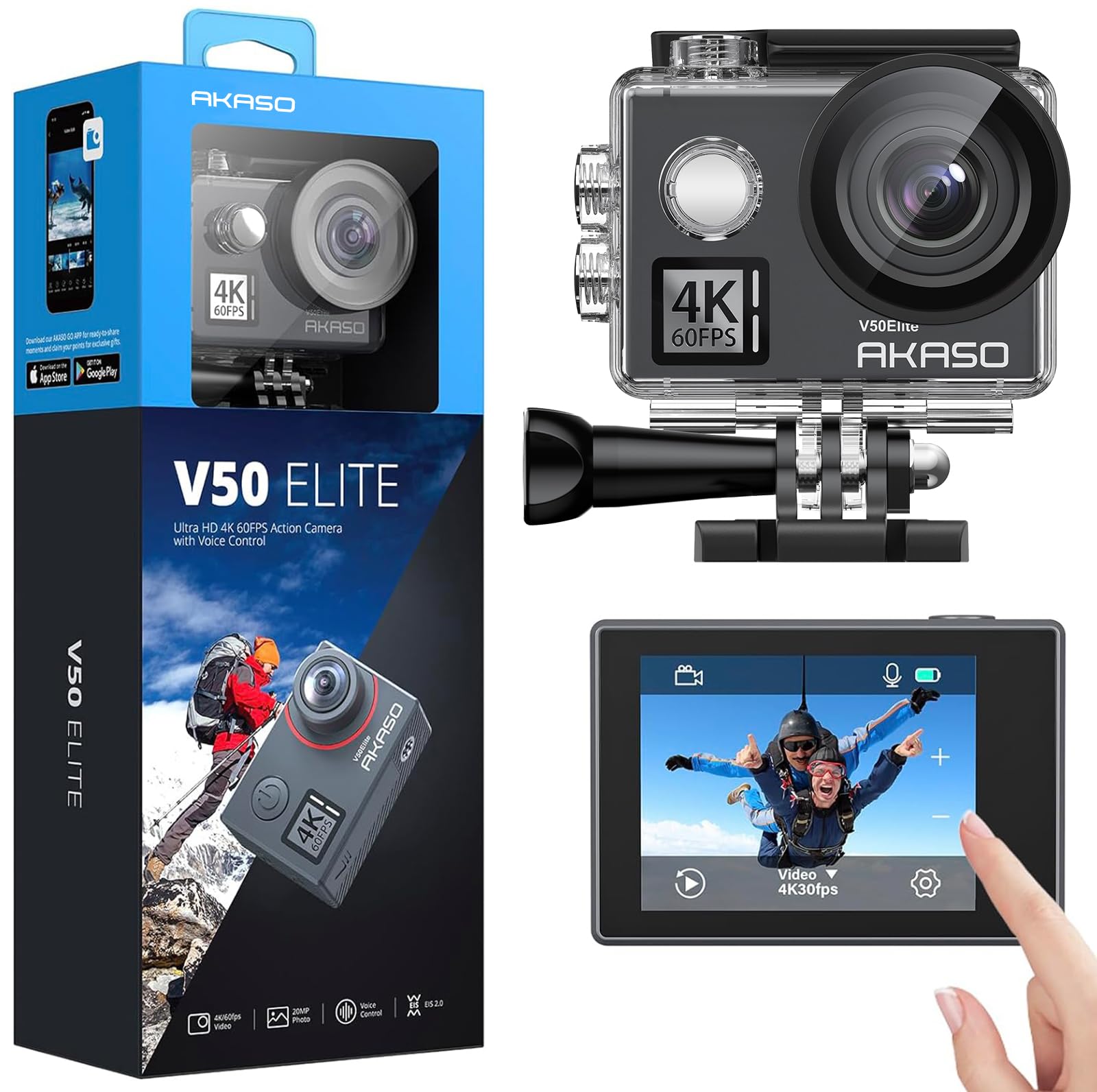
- 4K/60fps, the only AKASO with this framerate
- Voice control for hands-free recording start/stop
- Touch screen and 8x zoom
- 5,134 reviews, solid proof base
- Top-of-line AKASO without crossing into DJI prices
- $70 cheaper than DJI Action 4 but image quality lags significantly
- Sensor still smaller than DJI’s 1/1.3″
- EIS stabilization less polished than RockSteady
- For $70 more, the DJI is a better long-term tool
The V50 Elite is AKASO’s flagship and the only AKASO on this page that hits 4K/60fps. Sixty frames per second matters for two specific reasons: smoother fast-motion footage (cycling, motorsports, downhill skiing) and the option to slow footage 50% in editing. The EK7000 and Brave 7 LE max out at 4K/30fps, which works for general filming but doesn’t allow slow-motion editing without quality loss.
Voice control is the second feature that distinguishes this from cheaper AKASOs. Saying “AKASO start video” while my hands are on bike grips or ski poles is genuinely useful, and it works most of the time. Touch screen plus 8x zoom round out the package.
The honest tradeoff: at $140, this sits within $70 of the DJI Osmo Action 4 Standard at $209, and the DJI is a meaningfully better camera in every measurable way. If 4K/60fps is non-negotiable and your budget caps at $150, the V50 Elite is the right buy. If you can stretch another $70, the Action 4 Standard is the smarter long-term investment.
Comparison table
| Camera | Tier | Rating | Reviews | Price | Best for |
|---|---|---|---|---|---|
| DJI Osmo Action 5 Pro Essential | Premium | 4.7 | 1,318 | $309.00 | Best premium overall |
| DJI Osmo Action 6 Essential | Premium | 4.6 | 555 | $426.00 | Newest gen / 8K |
| DJI Osmo Pocket 3 Creator | Premium | 4.6 | 5,969 | $609.00 | Best for vloggers |
| DJI Osmo Action 5 Pro Adventure | Premium | 4.7 | 819 | $368.99 | Best for long shoots |
| DJI Osmo Action 4 Standard | Mid-range | 4.6 | 4,288 | $208.99 | Best mid-range overall |
| DJI Osmo Action 3 Outdoor | Mid-range | 4.5 | 1,685 | $289.00 | Best for hikers / cyclists |
| DJI Osmo Action 4 Essential | Mid-range | 4.6 | 1,320 | $229.00 | Same camera, smaller box |
| AKASO EK7000 | Budget | 4.4 | 38,672 | $69.99 | Best budget overall |
| AKASO Brave 7 LE | Budget | 4.4 | 6,498 | $109.97 | Best around $100 |
| AKASO V50 Elite | Budget | 4.4 | 5,134 | $139.99 | Best 4K/60fps budget |
How to choose a GoPro alternative
Frequently asked questions
More camera guides
Browse all gear
