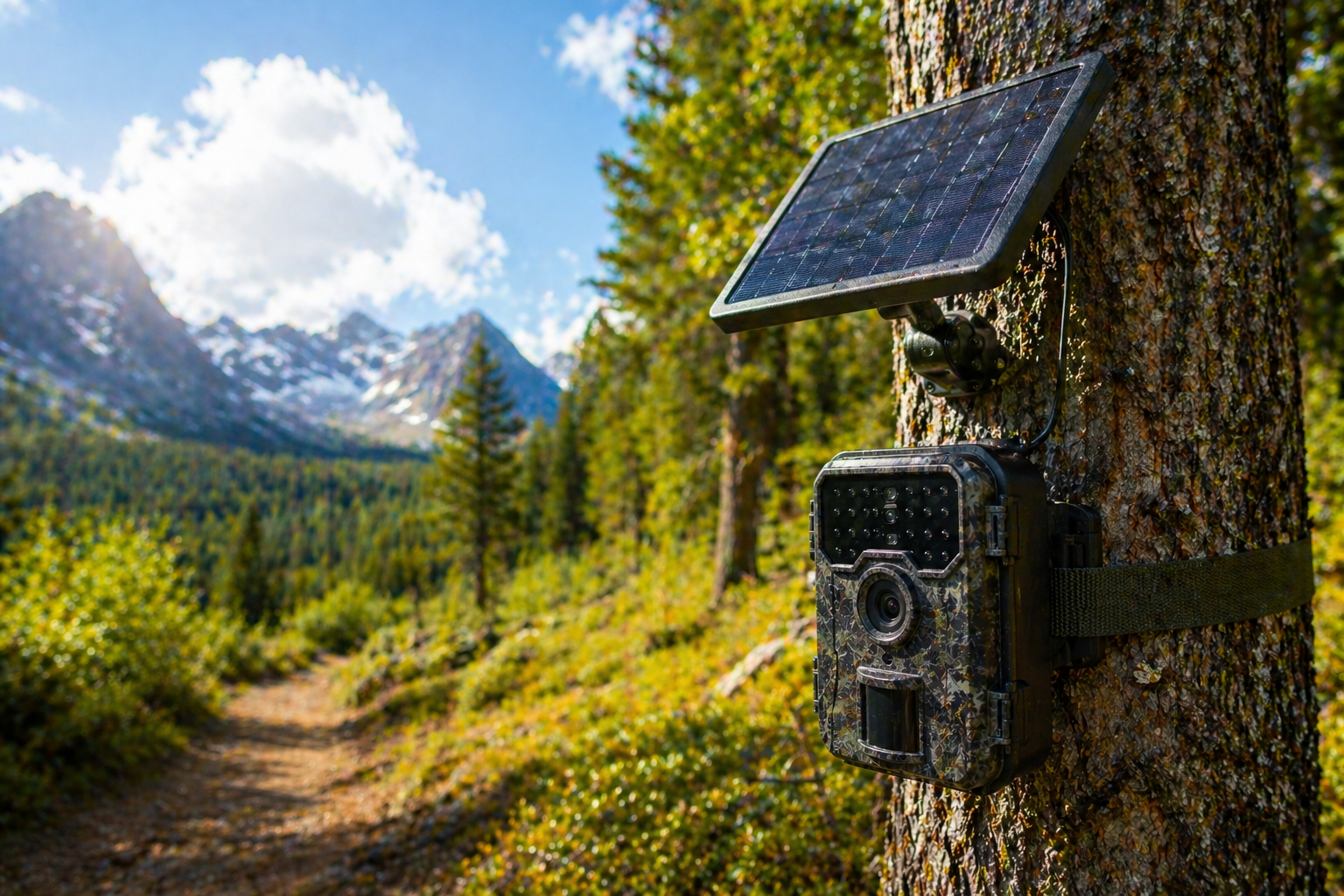
Best Solar-Powered Trail Cameras (2026): Set-and-Forget Wildlife Cams
Solar-powered trail cameras are the right answer when you’re tired of swapping AA batteries every six months. The integrated panel keeps the internal lithium pack topped off, the camera runs effectively forever in any reasonably sun-exposed location, and you get one less maintenance task. The wrong answer is using a solar-powered trail camera in a deeply shaded location where the panel will never see direct light, in which case a battery-only trail cam with quality lithium AAs is more honest engineering. I’ve had two solar-powered trail cameras running on a property for eighteen months now without swapping a single battery, and the workflow improvement over the lithium-AA cameras they replaced is real.
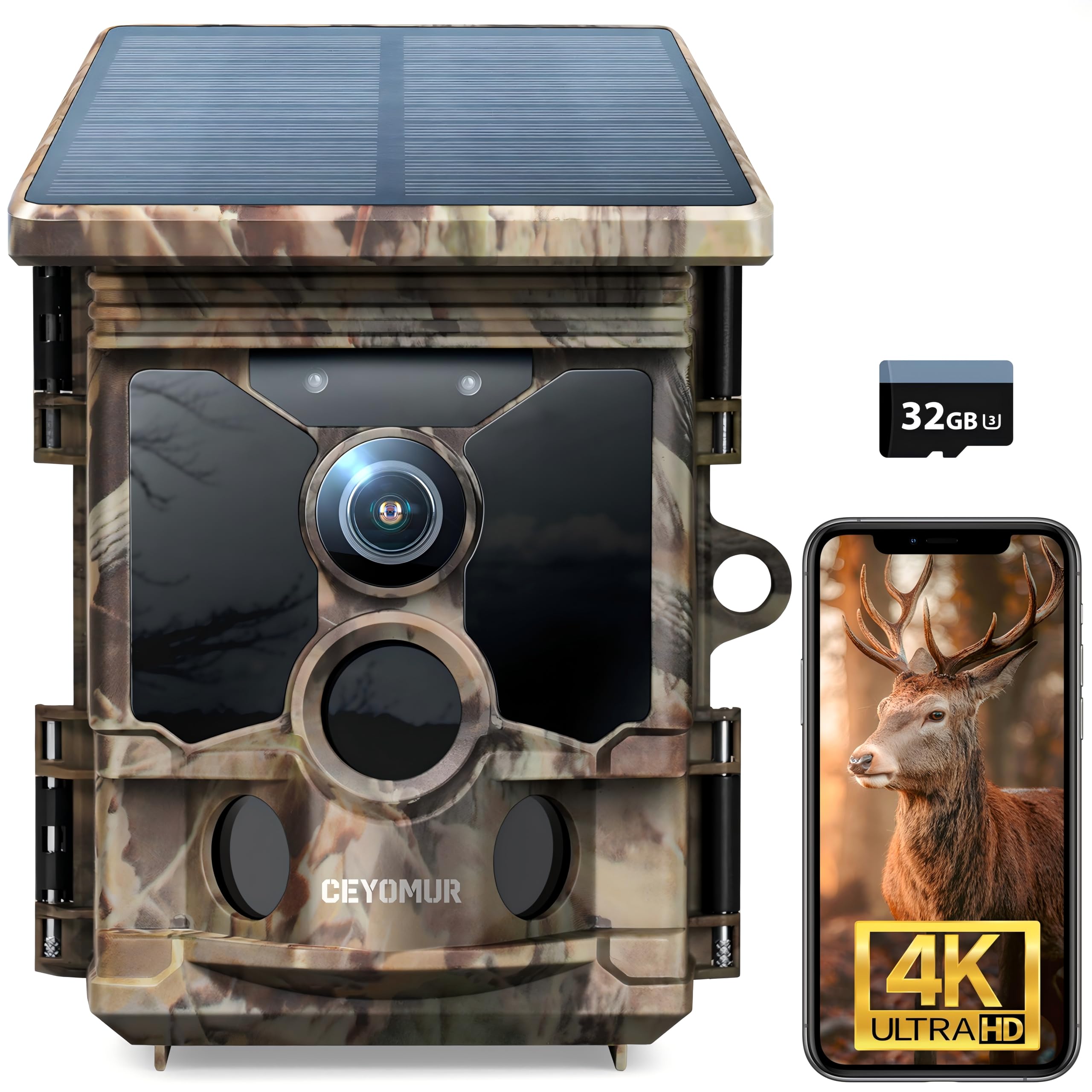
The short version: the CEYOMUR 4K Solar at $60 is the best solar-powered trail camera most people should buy. 1,165 reviews at 4.3 stars makes it the deepest premium-rated proof base among solar-powered trail cameras, the 5200mAh battery handles low-sun periods, and the included 32GB SD card means it deploys out of the box. If budget matters more than features, the iZEEKER Solar at $44 has 2,083 reviews behind it and just works as a deploy-and-forget solar-powered trail camera. Below the summary, here’s the full breakdown of solar-powered trail cameras across three price tiers.
Quick picks
Full reviews, premium tier ($85+)
The premium tier holds the best solar-powered trail cameras for buyers who care more about brand reliability or specialized features than spec-for-dollar value. SPYPOINT is the only established brand at this tier; the two VOOPEAKs are newer entries with strong feature sets but thinner proof bases.

- SPYPOINT is the most-established hunting trail cam brand on this list
- External solar panel allows independent panel/camera orientation
- Cellular transmission means you don’t need to visit the camera
- Built-in GPS for theft recovery
- Mature app ecosystem with years of development
- Bundled price beats buying camera and solar panel separately
- Cellular requires monthly data plan ($5-$15 per month after the free tier)
- Most expensive option on this page
- External panel adds installation complexity vs integrated designs
- SPYPOINT’s free plan limits photo transmission counts
- Cable-connected solar panel is a potential failure point
The Flex-M Solar is the only camera on this list that does the truly hands-off thing: images push to your phone over 4G LTE from anywhere with cell signal, and the bundled external solar panel keeps the camera fed without you ever returning to the site. That combination changes what a trail camera can do. Instead of “useful surveillance for places I visit,” it becomes “useful surveillance for any property I own, regardless of distance.”
The external panel is also genuinely useful as a design choice, not just a marketing point. Because it connects by cable, you can mount the camera looking at a north-facing game trail (or any direction the target uses) while running the panel up onto a south-facing branch where it actually catches sun. Integrated-panel cameras force the whole unit to face the sun, which constantly conflicts with how animals actually move through a property. Built-in GPS is the other quiet upgrade. If the camera walks off, you can locate it.
The honest tradeoff is the cellular data plan. SPYPOINT’s free tier covers basic photo transmission, but most users move to a paid plan ($5-$15/month) for unlimited transmission and HD video. Across a year that’s $60-$180 on top of the $122 hardware, which makes this expensive next to a $44 iZEEKER. You’re paying for time and reach: the time you’d otherwise spend driving to a remote camera, and the reach to monitor places you simply can’t walk to. If your camera lives within walking distance of your house, this is overspending. If it’s 30 minutes away or more, the math flips fast.
- Dual-lens system delivers color daytime images and clean IR night images
- Starlight low-light sensor produces usable images at dusk and dawn
- Built-in solar panel handles battery management automatically
- 4K 30FPS video is the highest video spec at this price
- WiFi + Bluetooth pairing simplifies the phone connection
- No monthly fees (local pairing only)
- 71-review proof base is thin compared to the mid-range alternatives
- VOOPEAK is a newer brand with shorter long-term track record
- Integrated solar requires meaningful sun exposure
- Dual-lens design adds complexity that can fail in either lens
- WiFi-only means you must visit the camera to retrieve images
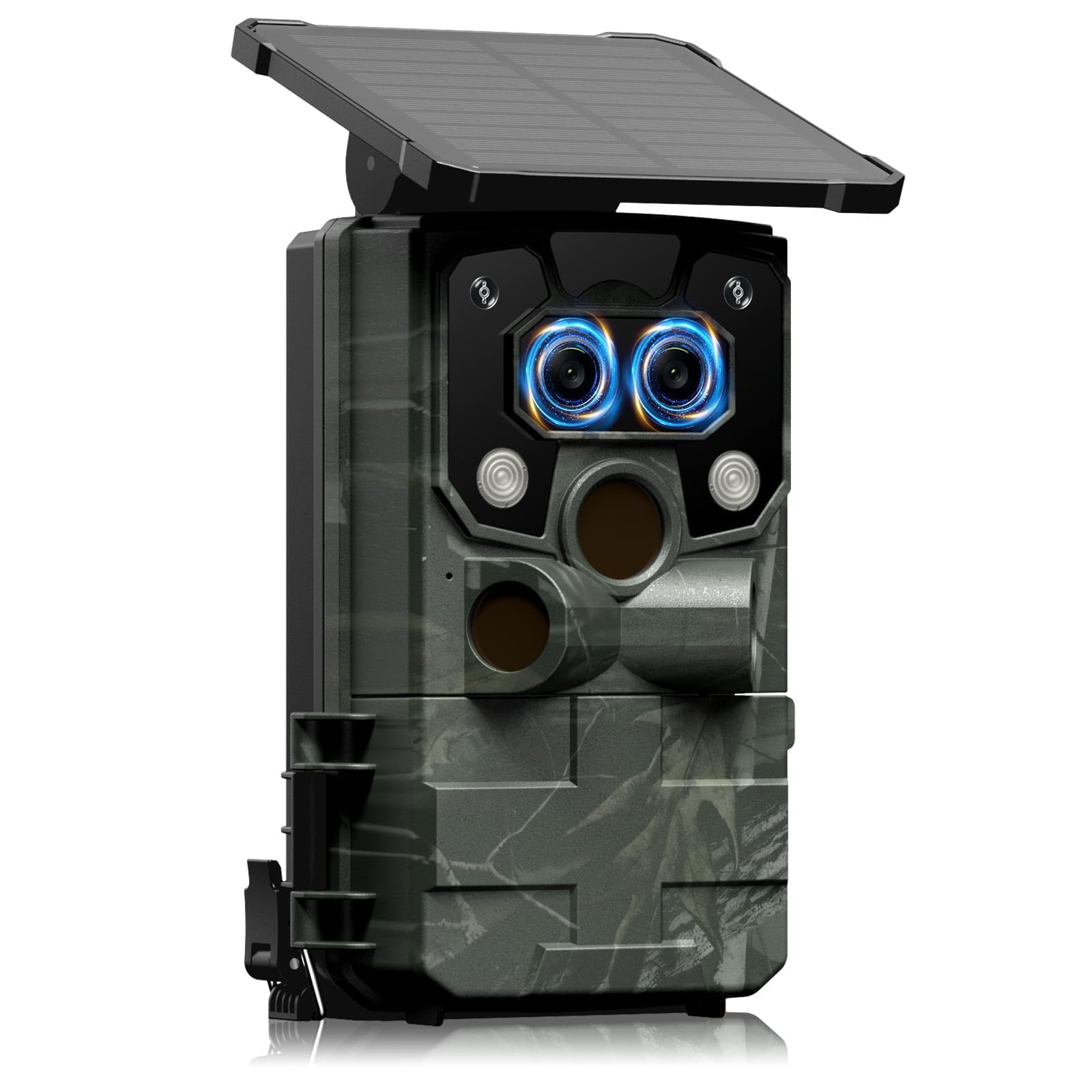
Most trail cameras use a single sensor for both day and night, which means engineers have to compromise: an IR-friendly sensor produces washed-out daytime color, while a color-optimized sensor produces noisier night IR. The Dual Lens VOOPEAK splits the work between two physical lenses, one tuned for color daytime capture, one tuned for clean infrared night capture, and the camera switches between them automatically based on ambient light. The result is daytime images that actually look like daytime (saturated greens, accurate browns, real shadow detail) and IR images at night without the smeary noise that plagues compromise designs.
The starlight low-light sensor matters more than the spec sheet suggests. Most game movement happens during the half-hour windows around sunrise and sunset, the period where regular cameras are too dark to use IR but too dim to capture color cleanly. The starlight tier handles those windows in usable color, which is the difference between knowing what you saw and just confirming something was there. If you’re using the camera for wildlife identification or photography rather than just movement detection, this is the camera that earns its $90. If you mainly want to know “did anything walk through last night,” the cheaper CEYOMUR delivers the same yes/no answer for $30 less.
- 2-inch on-camera display lets you preview captures without the phone app
- 0.1-second trigger speed catches fast-moving wildlife
- IP66 waterproof rating handles heavy weather
- Same starlight night vision and dual lens as the #2 model
- Integrated solar handles power
- 46-review proof base is the smallest in the premium tier
- Same price as the #2 VOOPEAK with fewer reviews
- WiFi-only means physical visits to retrieve images
- Newer listing means less long-term feedback
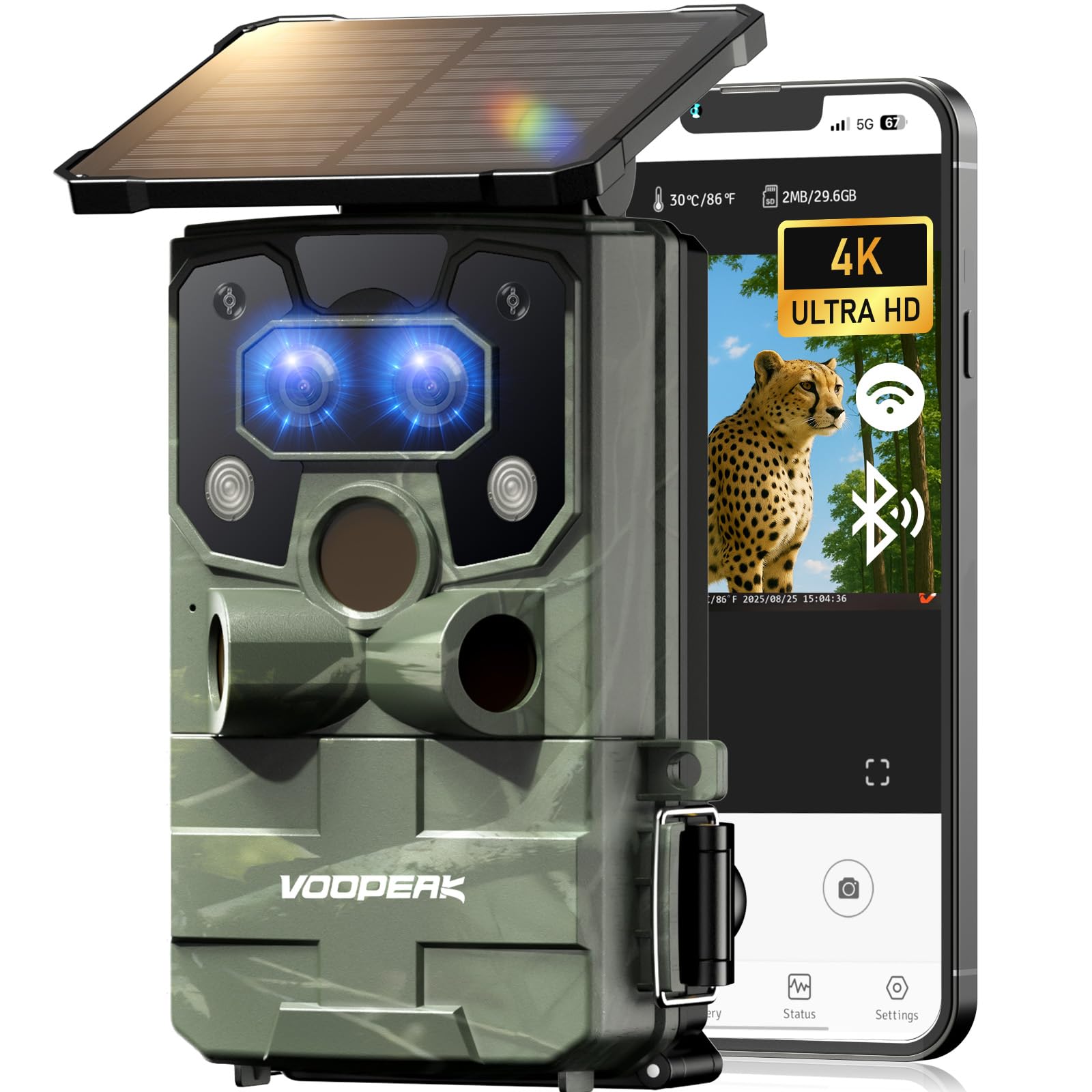
The 2-inch on-camera screen is what justifies this VOOPEAK over the Dual Lens version at the same price. You can frame the shot, preview a test capture, and confirm the camera is pointed where you want before walking away. No fumbling with a phone app while standing on a stepladder, no “guess and check” trips to verify positioning. For first-time mounting in a new spot, that direct workflow saves real time.
The 0.1-second trigger is the other practical upgrade. At that speed, the camera catches animals moving through frame rather than just their tail end disappearing into the next tree, a meaningful improvement on game trails where deer and coyotes don’t pause for the camera. IP66 waterproofing handles open mounting in heavy rain without a separate housing. Choose this one when you’re mounting in a tricky spot and want to verify framing on-site; choose the Dual Lens version when image quality matters more than setup convenience.
Full reviews, mid-range ($55 to $85)
The mid-range tier is where most of the best solar-powered trail cameras for everyday buyers live. The CEYOMUR is my overall top pick, and the rest of this tier is genuinely competitive, with $55 to $80 buying serious specs and real proof bases.
- 4.3★ across 1,165 reviews, the deepest mid-tier solar proof base
- 5200mAh battery rides out cloudy stretches without losing function
- 32GB SD card included, no extra purchase needed
- 4K 30fps video and 68MP photos at $60 is strong spec-for-dollar
- 120-degree detection angle catches wider scenes
- Comes ready to deploy out of the box
- WiFi + Bluetooth dual-protocol pairing
- CEYOMUR is newer to the US market than legacy brands like SPYPOINT
- Solar requires sun exposure to keep up with high-traffic locations
- App reliability has occasional reports of pairing hiccups
- 4K video files quickly fill the 32GB card on busy locations
- WiFi-only means physical visits to retrieve images
The reason the CEYOMUR earns the top overall pick comes down to one thing: it’s the most complete package for the money in the entire category. The box includes the camera, the integrated solar panel, a mount strap, and a 32GB SD card pre-loaded, so you can pull it out, walk to a tree, and have a working camera in five minutes. Most cameras at this price ship without the SD card and assume you’ll buy one separately, which is a $10-$15 hidden cost most buyers don’t budget for.
The 120-degree detection angle is the spec that most affects daily use. Standard trail cameras have 90-100 degree detection zones, which means animals frequently trigger the camera but exit the frame before the shutter fires. The wider zone catches more activity at the edges (the moose that walked along the property line, the fox that cut across the corner of the yard) that narrower-detection cameras miss entirely. Combined with the 5200mAh battery (enough capacity to ride out two weeks of overcast weather without solar input), the practical effect is a camera that catches more and asks less.
The 4K 30fps video and 68MP photos look as sharp as they sound on a phone screen, meaningfully better than the 1080p/48MP cameras you’ll find for $20-$30 less. WiFi-plus-Bluetooth pairing means the phone connection actually completes on the first try, which sounds minor until you’ve stood in the rain for ten minutes trying to reconnect to a single-protocol camera. This is the camera I tell first-time buyers to start with because nothing about it requires homework, and every choice is the right one for someone who just wants the camera to work.

- XTU is one of the more-established direct-to-consumer brands in the solar trail cam category
- 412-review proof base is solid for the price
- 4.4★ rating is among the highest for cameras with this many reviews
- 4K 64MP specs at $80
- WiFi + Bluetooth dual-protocol pairing
- No monthly subscription fees
- $20 premium over the CEYOMUR with comparable core specs
- 0.2-second trigger is slower than the 0.1-second cameras on this page
- Smaller proof base than the CEYOMUR (412 vs 1,165)
- Battery capacity not as well documented as MAXDONE alternatives
XTU has been making trail cameras for several years longer than most of the newer brands on this list, which shows up in two places that matter: app stability and firmware update cadence. The XTU app is one of the more polished on the market: pairing completes reliably, settings save consistently, and the image-review interface doesn’t crash mid-scroll. Smaller details, but they add up across hundreds of camera-checks over a year.
The 4K 64MP image specs match the cheaper cameras at $60, so you’re not paying $20 more for sharper pictures. You’re paying for the brand’s track record of supporting cameras after the sale: firmware updates that fix detection-zone issues, app updates that maintain compatibility with new phone OS versions, and support that actually responds when something goes wrong. Pay the $20 premium when reliability and long-term software support matter; save the money on the CEYOMUR when you’d rather have the maximum spec sheet for the dollar.
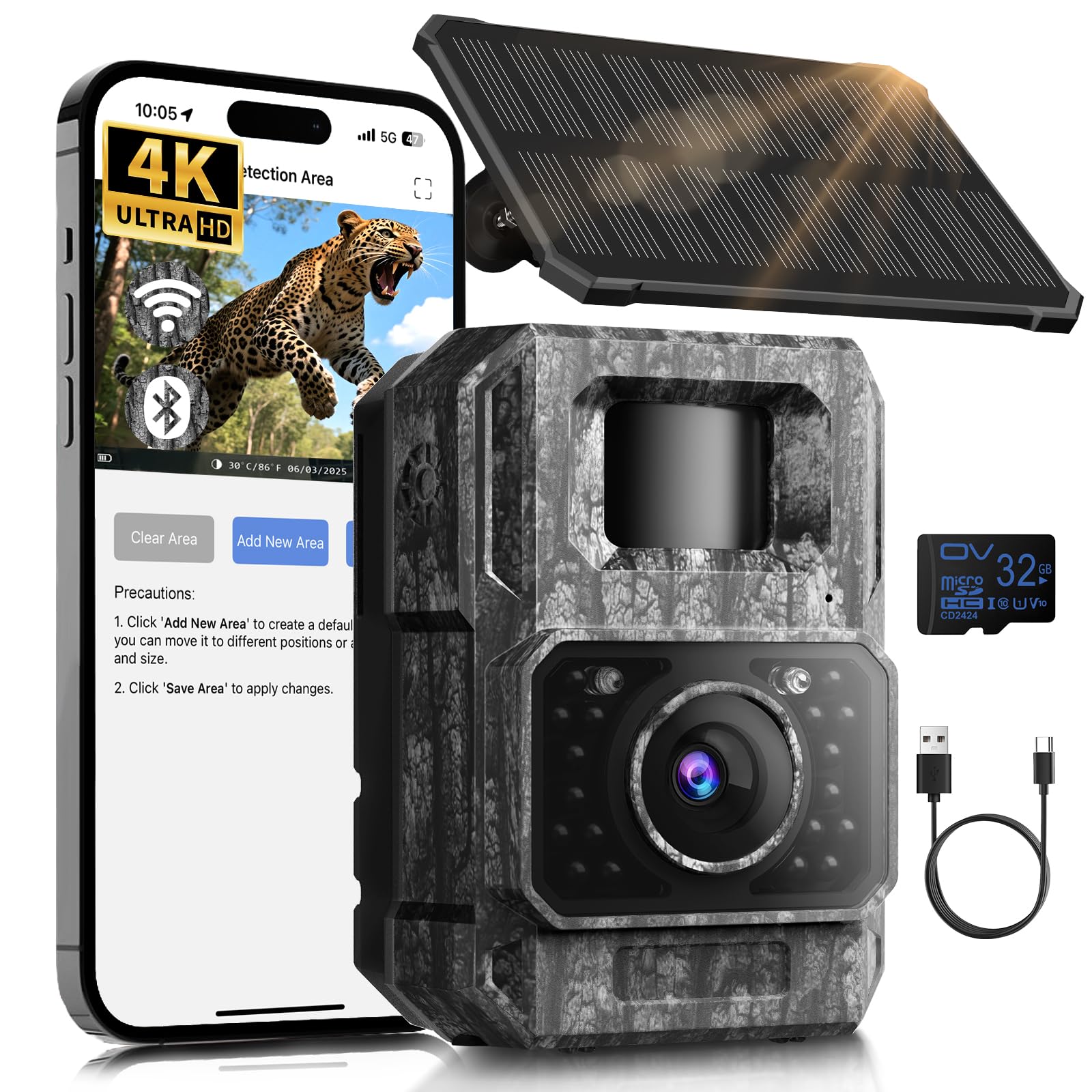
- 6000mAh battery is the highest capacity on this page
- 4.4★ rating, the highest in the MAXDONE line
- Solar plus large battery handles dense canopy and overcast better than smaller batteries
- 4K 64MP specs at $57
- WiFi + Bluetooth pairing
- No monthly fees
- 316-review proof base smaller than CEYOMUR’s 1,165
- $3 premium over the 5200mAh MAXDONE with similar specs
- MAXDONE app reliability mixed in reviews
- Larger battery means slightly heavier camera
- WiFi-only means physical visits to retrieve images
The 6000mAh battery is the largest on this page and the entire reason to choose this MAXDONE over its 5200mAh sibling. That extra capacity translates to roughly 50% more runtime margin during the cloudy stretches when the solar panel can’t fully recharge each day. For a north-facing mount, a partially shaded location, or any setup in a climate where overcast can run a week at a time, that margin is the difference between a camera that keeps working through winter and a camera that goes dark in February.
For sun-exposed mounts the extra battery is wasted overhead. The 5200mAh CEYOMUR with its included SD card and wider detection angle is the smarter buy in those conditions. The MAXDONE’s strength is specifically the worst-case sun scenarios where battery buffer matters more than detection-zone width. Buy this one when you know your location is shade-challenged; buy the CEYOMUR when sun exposure is reasonable and you want the more complete out-of-box package.
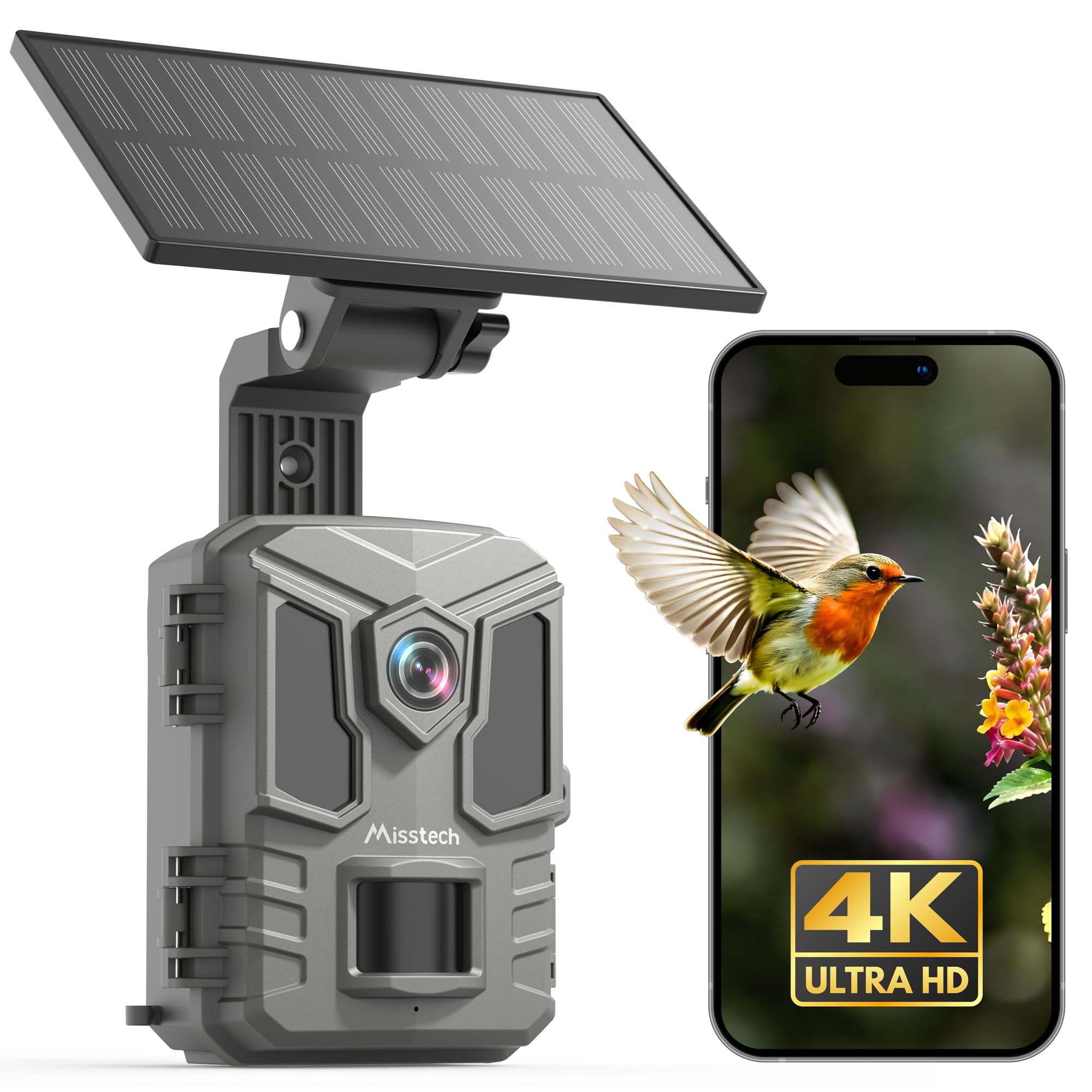
- 4.6-star rating is the highest in the mid-range tier
- 0.1-second trigger speed catches fast-moving wildlife
- 4K + 64MP at the same $60 price point as the CEYOMUR
- Integrated solar handles power
- No monthly fees
- 121-review proof base is small compared to the CEYOMUR’s 1,165
- Misstech is a newer brand with limited recognition outside Amazon
- High rating partly reflects newer-listing bias
- Battery capacity not clearly documented
The 0.1-second trigger speed is the spec that earns Misstech a place on this list. For comparison: most trail cameras at this price have 0.2-0.5 second trigger times, which means a deer walking briskly through frame can clear the detection zone before the shutter fires. A 0.1-second trigger captures the animal mid-frame instead of in mid-exit, which is the difference between a useful image and a photo of a tail. For busy game trails, deer feeders, or any high-traffic crossing, that speed matters.
The honest tradeoff is brand maturity. Misstech is newer to the trail-camera category than most competitors, and the camera lacks the polish of cameras from longer-established brands: the app is functional but plain, the manual reads like a translation, and customer support is responsive but limited. For buyers who care primarily about capture quality and don’t mind an unfamiliar brand name, the trigger-speed advantage justifies the pick. If app polish and brand support matter more than the fastest trigger, the CEYOMUR at the same price is the more refined choice.
Full reviews, budget tier (under $55)
The budget tier is where the best solar-powered trail cameras for first-time buyers and casual users live. Under $55 still buys real solar power, real WiFi (on most models), and real proof bases. The iZEEKER alone has 2,083 reviews behind it.

- 2,083 reviews is by far the largest proof base of any solar trail camera on this page
- 4K + 48MP specs at $44 is genuinely impressive value
- High-capacity lithium battery handles low-sun periods well
- IP66 waterproof rating handles heavy weather
- SD card retrieval is dead simple, no app or pairing required
- Cheapest path to a real solar trail cam
- 4.0★ rating is below the WiFi-equipped alternatives
- No WiFi means you must pull the SD card to retrieve images
- iZEEKER focuses on Amazon-direct sales rather than retail distribution
- App support is minimal (basic functionality only)
- 48MP photo resolution is below the 64MP-68MP competitors
The iZEEKER’s selling point is a workflow most reviews skip over: no app, no pairing, no WiFi setup. Just pull the SD card every couple months, plug it into a laptop, browse images. That sounds primitive until you’ve spent twenty minutes in the rain trying to reconnect a phone to a WiFi camera that lost its pairing because the firmware updated. For a meaningful share of buyers, the simplest possible workflow is the right workflow, and this camera is built for that audience.
The high-capacity lithium battery is the underrated feature for a no-WiFi camera. Because it’s not running WiFi or Bluetooth radios, every milliamp of battery goes to actual capture and IR illumination. The camera can run 4-6 months on a charge even in poor sun, which means you can deploy it in spring and forget about it until fall. The 4K 30fps video and 48MP photos are sharp enough for any wildlife ID work; you give up the 68MP photos of the CEYOMUR and the 4K WiFi review-on-phone capability, and you save $16 doing it.
Where this is exactly right: backyard wildlife watching where you’ll pull the card monthly anyway, property monitoring where simplicity matters more than connectivity, gifts for someone who’d rather not deal with apps. Where the CEYOMUR is the better call: when you want to review captures on your phone in the field, when WiFi pairing is non-negotiable, when you want the latest spec sheet. For a first-time buyer who wants the most foolproof entry point into trail cameras, the iZEEKER is the safer recommendation than any camera that requires app setup.
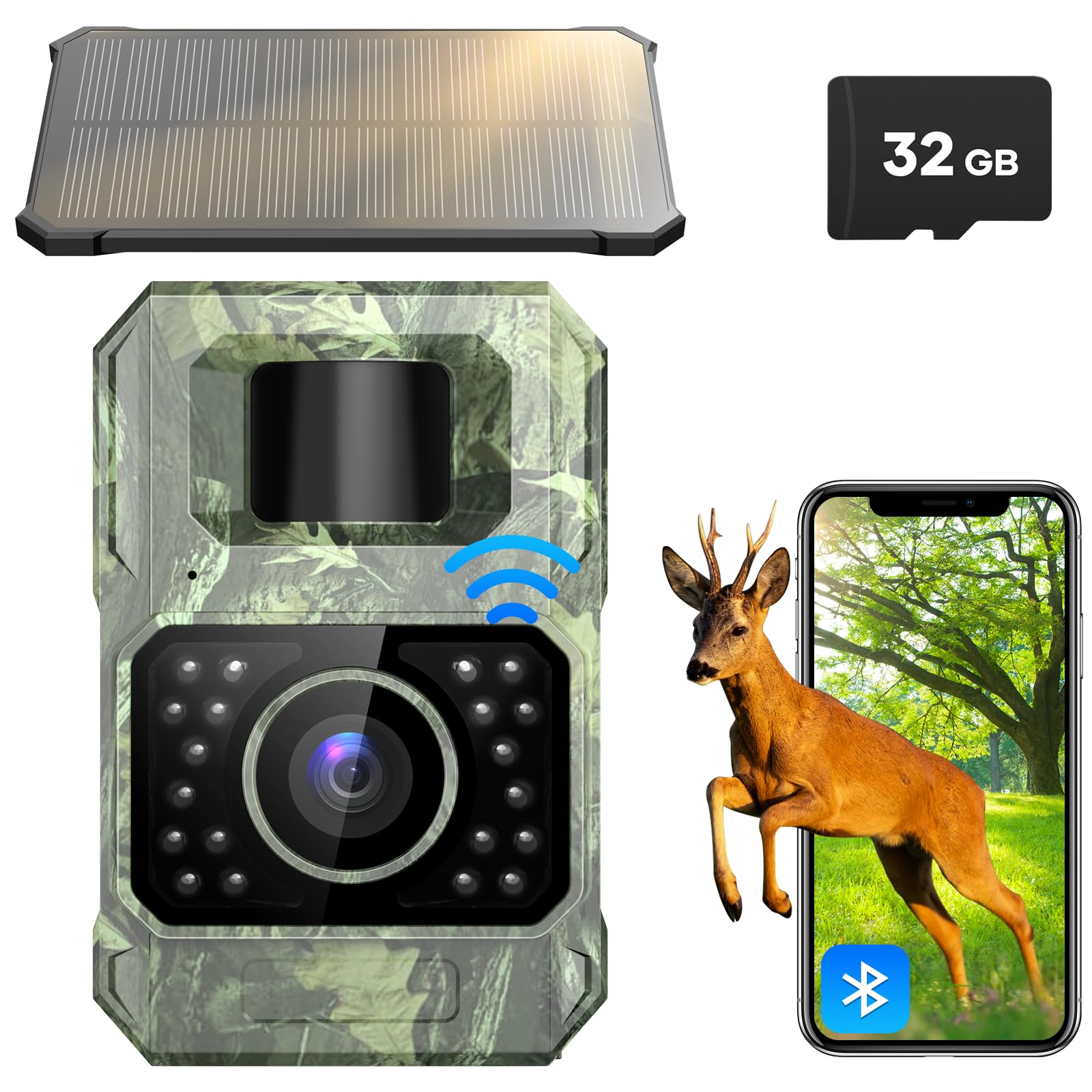
- $41 is the lowest price on the page
- 892-review proof base is the second-largest on the list
- 4.3★ rating is among the highest at this price
- WiFi + Bluetooth pairing for app-based image retrieval
- 0.2-second trigger competitive with mid-range cameras
- IP66 waterproof rating
- 48MP photos rather than 64MP-68MP found on competitors
- 30FPS video, no 4K on this listing
- Assark is less widely known than legacy hunting brands
- App quality on no-name listings is uneven
- Battery capacity not clearly documented
The Assark is the cheapest camera on this page that includes WiFi pairing for in-field image review. That single feature is what separates the $41 Assark from buying a basic non-WiFi solar cam for $30. The ability to pull up captures on your phone right at the camera saves the SD-card-shuttle-back-to-laptop step that no-WiFi cameras require.
The image specs are honestly fine: 48MP photos and 30fps video aren’t 4K but are sharp enough for any wildlife identification work, and the 0.2-second trigger is competitive with mid-range cameras. The areas where it’s clearly a budget pick are app polish (functional but plain), customer support (responsive but limited), and battery capacity (smaller than the MAXDONE alternatives, more dependent on consistent sun). Buy this one when WiFi pairing is the must-have feature and budget is under $50; step up to the CEYOMUR when you want better image quality and a more refined app for $19 more.
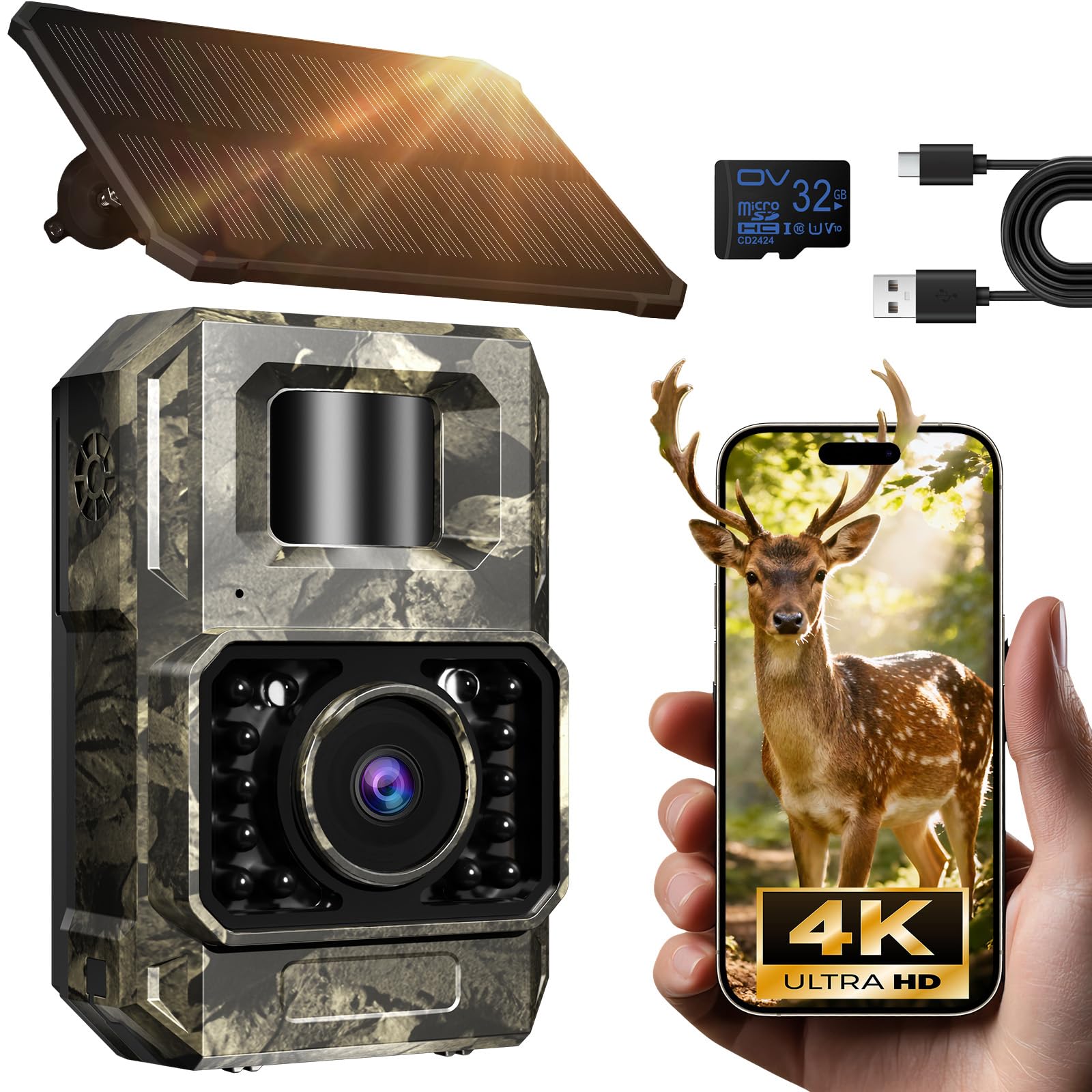
- 4.3★ rating is solid for the price
- 596-review proof base is decent for budget tier
- 4K 64MP specs match more expensive MAXDONEs
- WiFi + Bluetooth pairing
- Cheaper than the 5200mAh and 6000mAh siblings
- Solar handles power in sun-exposed locations
- 2000mAh battery is the smallest in the MAXDONE line, the smallest on this page
- Smaller battery limits use in shaded or cloudy locations
- 596 reviews is much smaller than iZEEKER’s 2,083
- MAXDONE app concerns apply here too
- Won’t handle dense canopy or winter overcast as well as 5000mAh+ cameras
The MAXDONE Entry is essentially the same camera as its 5200mAh and 6000mAh siblings (same 4K 64MP capture, same WiFi+Bluetooth pairing, same MAXDONE app) but with a 2000mAh battery instead of the larger packs. For a location with consistent direct sun exposure (south-facing mount, open backyard, sun-bathed trail), 2000mAh is genuinely enough because the panel recharges what gets drained each day. The smaller battery becomes a problem only when sun exposure is intermittent and the camera has to coast between recharge cycles.
Choose this MAXDONE over the larger-battery versions when your mount location is sunny, you’re working with a budget, and you specifically prefer the MAXDONE app over alternatives (some users have favorites: the iZEEKER’s no-app simplicity, the CEYOMUR’s pairing reliability, MAXDONE’s settings depth). Where this is exactly right: budget-conscious buyers replacing a battery-only trail cam in a sunny location who want WiFi connectivity for $44. Where it’s wrong: shaded mounts, cloudy regions, or any setup where battery margin matters more than the dollar savings.
Comparison table
| Camera | Tier | Rating | Reviews | Price | Best for |
|---|---|---|---|---|---|
| SPYPOINT Flex-M Solar Bundle | Premium | 4.3 | 285 | $121.98 | Best premium with real brand |
| VOOPEAK Dual Lens Solar | Premium | 4.6 | 71 | $89.99 | Best dual-lens solar |
| VOOPEAK 4K Solar Starlight | Premium | 4.6 | 46 | $89.99 | Alt VOOPEAK option |
| CEYOMUR 4K Solar 68MP | Mid-range | 4.3 | 1,165 | $59.99 | Best overall |
| XTU 4K 64MP Solar | Mid-range | 4.4 | 412 | $79.99 | Best high-end mid-range |
| MAXDONE Solar 6000mAh | Mid-range | 4.4 | 316 | $56.99 | Best high-cap battery |
| Misstech 4K UHD Solar | Mid-range | 4.6 | 121 | $59.99 | Highest-rated mid-range |
| iZEEKER Solar 4K 48MP | Budget | 4.0 | 2,083 | $43.99 | Best budget overall |
| Assark Solar 48MP | Budget | 4.3 | 892 | $41.01 | Cheapest with WiFi |
| MAXDONE Solar (Entry) | Budget | 4.3 | 596 | $44.09 | Best entry MAXDONE |
How to choose the best solar-powered trail camera
Frequently asked questions
More camera guides
Browse all gear
