Camping gear field guide
The Best Camping Coolers
Ten camping coolers tested for ice retention, build quality, and real camp use in the Cascades and on the Oregon Coast. Hard, soft, wheeled, backpack, and electric picks. No brand pays for placement.
Quick Picks: 10 Best Camping Coolers
Every cooler here holds ice for 4 days or more, or eliminates ice entirely. Tap any card to jump to the full review.
Find Your Camping Cooler
Answer three questions and get a personal recommendation from the list above.
Our pick for you
See Best Price on AmazonReviews: 10 Best Camping Coolers
Full breakdown of each pick with honest pros, cons, and who it is actually for.
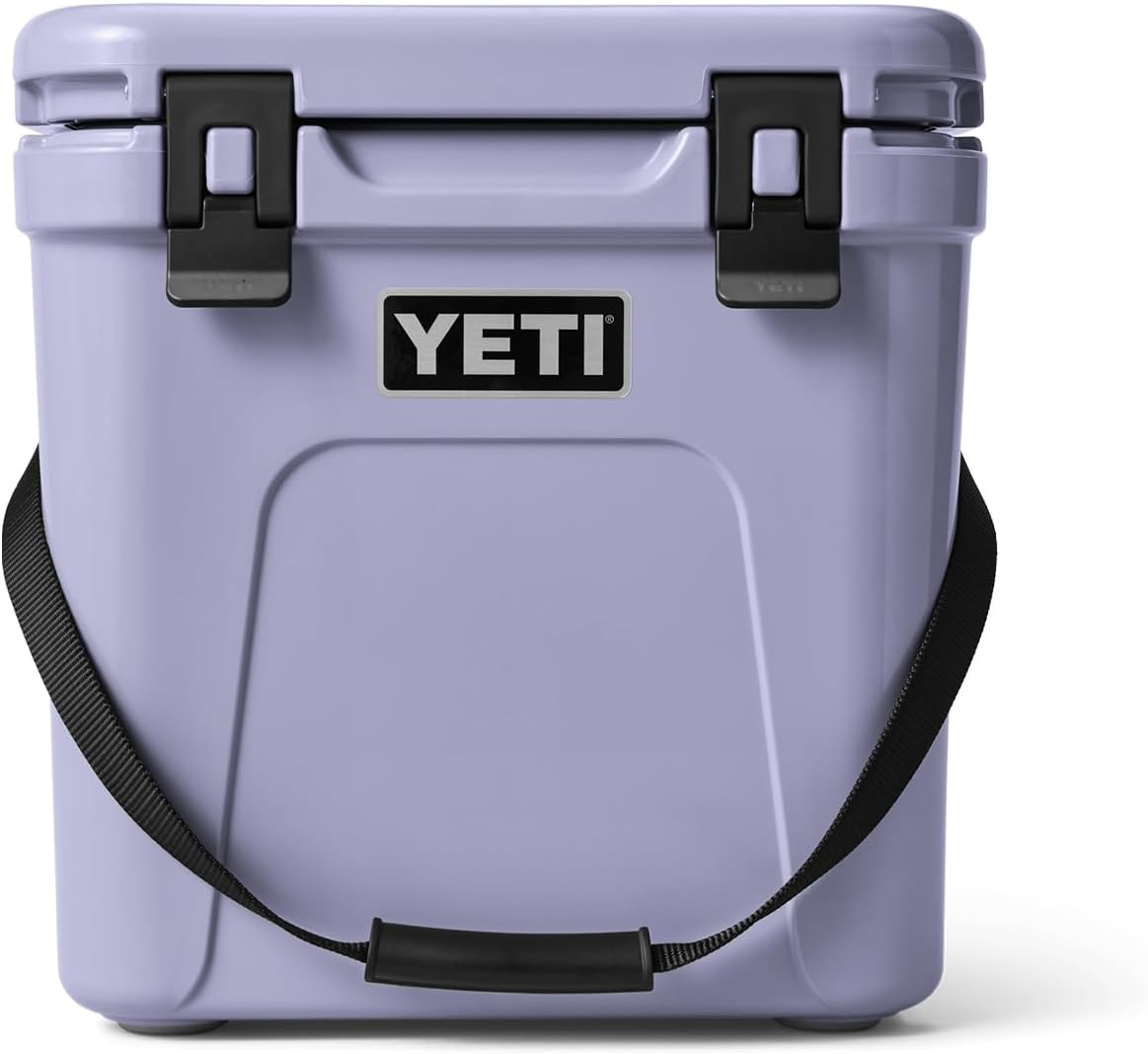
YETI Roadie 24
4.8 stars across 8,096 reviewsThe Roadie 24 is the cooler that ends up in the truck by default, because the size lands where most trips actually live. It is the most-reviewed premium cooler in the dataset, and the rating has held steady as the volume grew.
24 quarts holds 16 cans plus ice, or two days of food and drink for two people with careful packing. At 7.8 lb empty it is light enough to carry comfortably when loaded. The rotomolded shell is one continuous piece with no seams. PermaFrost insulation holds ice for 4 days in real camp conditions. AnchorPoint tie-down loops let you strap it to a truck bed or kayak without strapping across the lid gasket.
Pros
- Rotomolded one-piece shell, no seams to fail
- Holds ice through a four-day weekend in real conditions
- AnchorPoint tie-down slots built in
- Light enough for one person to carry loaded
Cons
- Too small for groups of three or more
- A serious investment for a single cooler
- No wheels at this size
| Capacity | 24 qt / ~23L |
|---|---|
| Weight (empty) | 7.8 lb |
| Construction | Rotomolded |
| Ice retention | 4+ days |
| Dimensions | 19.3 x 13.5 x 15.9 in |
| Drain plug | Yes |
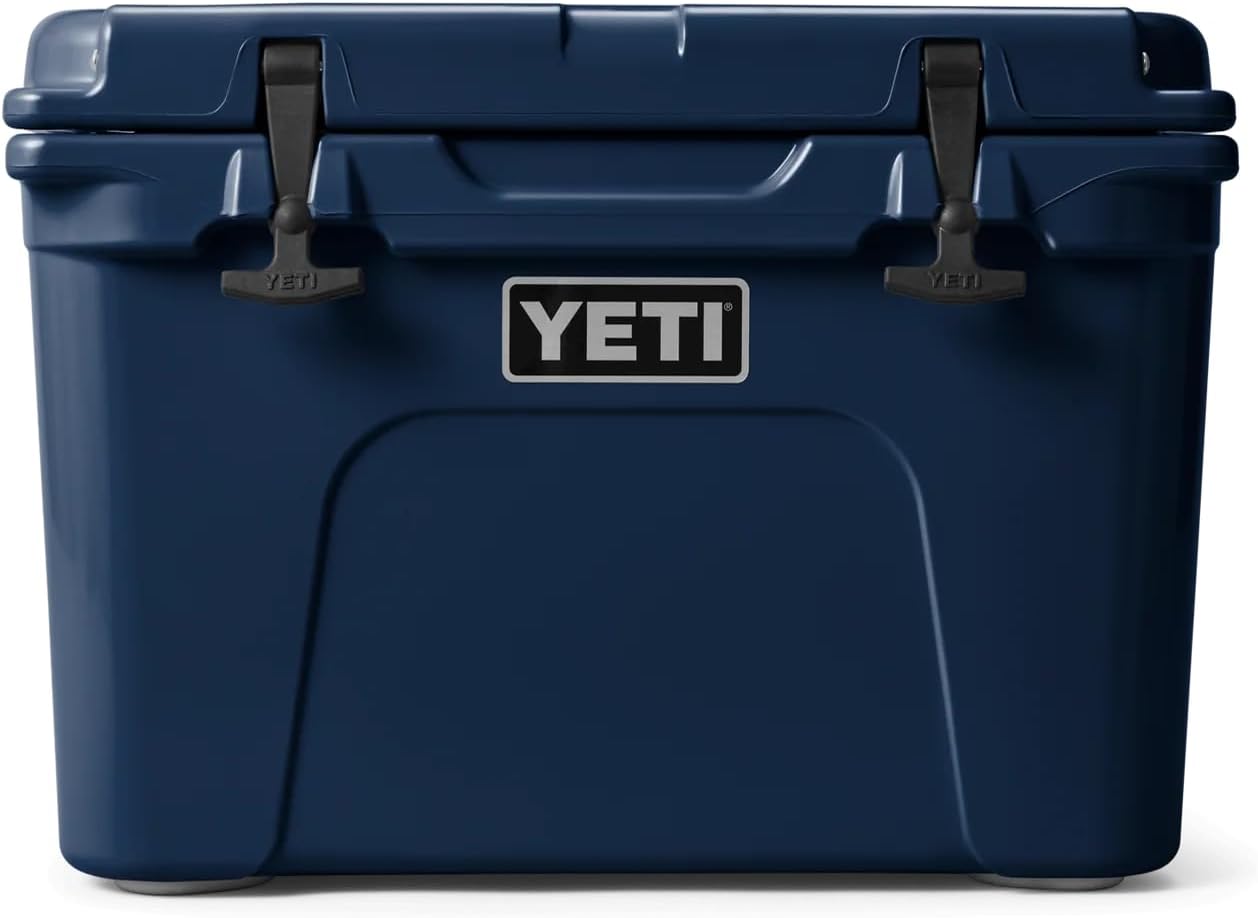
YETI Tundra 35
4.8 stars across 4,328 reviewsThe Tundra is the cooler that turned YETI from a product into a category. The 35-quart size is the original standard: large enough for a weekend for two, small enough to fit in a truck cab or the back of an SUV without fighting for space. At 15 lb empty it is heavy but manageable with the two-person rope handles.
PermaFrost insulation keeps ice for 4 to 5 days. The interlocking lid gasket creates a freezer-quality seal. T-Rex latches hold under real camp punishment. The AnchorPoint slots work on truck beds, boats, and four-wheelers. This is the campsite cooler that outlasts the truck.
Pros
- Holds ice through a long weekend in field conditions
- Interlocking lid gasket creates freezer-quality seal
- T-Rex latches, AnchorPoint slots, drain plug
- Available in six capacities across the Tundra line
Cons
- Heavy empty, and a two-person lift when loaded
- No wheels, so long carries need help
- Undersized next to the Tundra 65 for group trips
| Capacity | 35 qt |
|---|---|
| Weight (empty) | 15 lb |
| Construction | Rotomolded |
| Ice retention | 4 to 5 days |
| Dimensions | 25.5 x 15.75 x 15.5 in |
| Drain plug | Yes |
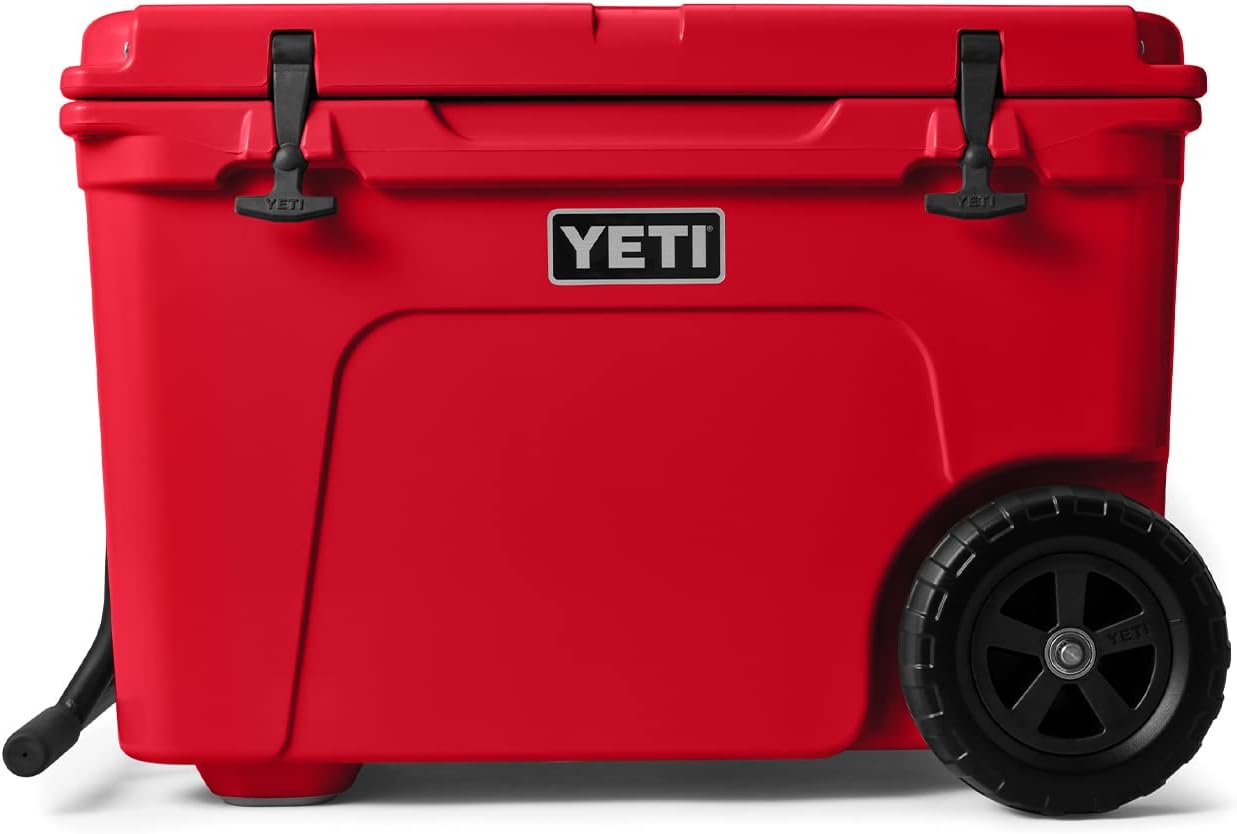
YETI Tundra Haul
4.8 stars across 3,824 reviewsThe Tundra Haul takes the Tundra body and puts it on oversize terrain wheels with a retractable aluminum handle. The wheels are the critical difference from cheaper wheeled coolers: they are wide enough to roll on beach sand and gravel without sinking or jamming. The retractable handle disappears when not needed so it does not catch on truck beds or tailgates.
Capacity lands between the Tundra 35 and 65 with full Tundra ice retention intact. The premium over the Tundra 35 buys the wheels plus extra volume. For anyone who loads a cooler at the car and drags it to the campsite, the wheels pay for themselves on the first trip.
Pros
- Oversize terrain wheels handle beach sand and gravel
- Retractable aluminum handle stows flat
- Full Tundra ice retention and rotomolded build
- Serves four to six people for a weekend
Cons
- The most expensive hard cooler in the roundup
- At full capacity it is still a two-person lift over stairs or curbs
- Wheels add width that can be awkward in tight vehicle spaces
| Capacity | 55 qt |
|---|---|
| Weight (empty) | 29 lb |
| Construction | Rotomolded |
| Ice retention | 4 to 5 days |
| Wheel diameter | 5.5 in oversize |
| Drain plug | Yes |
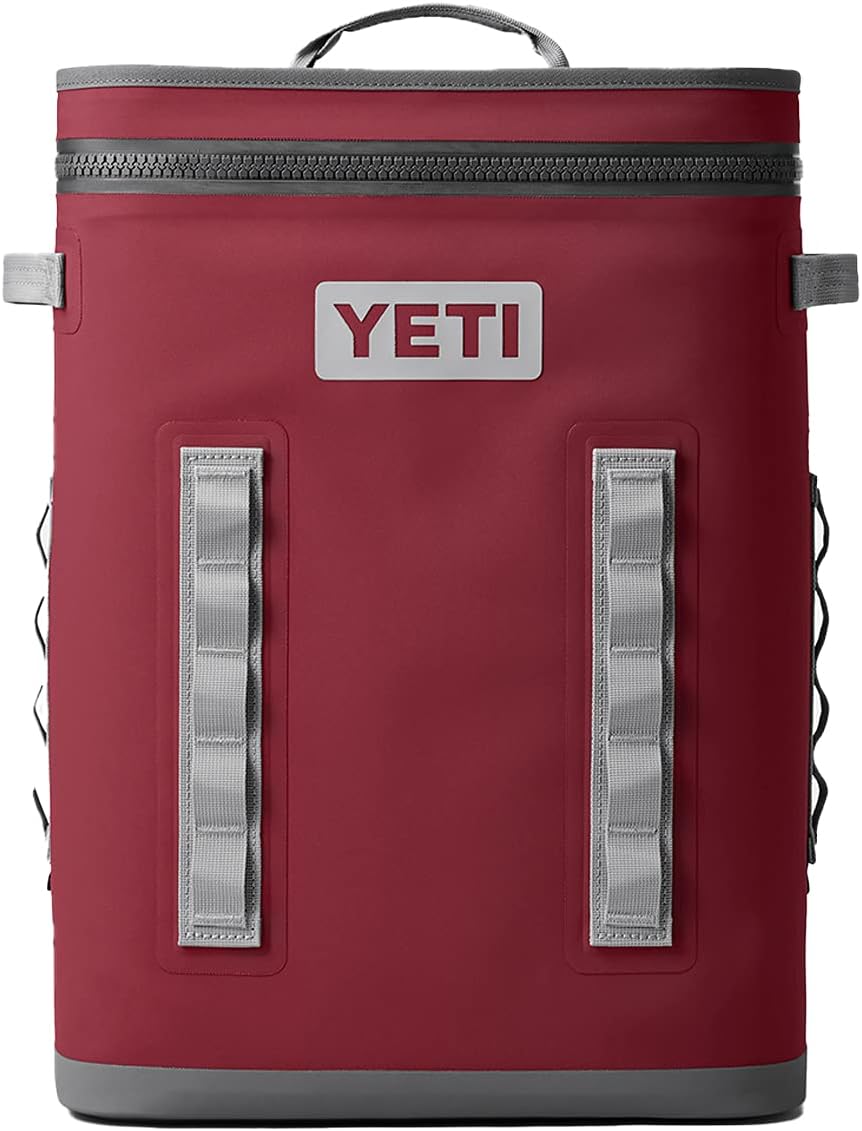
YETI Hopper Backflip 24
4.8 stars across 2,791 reviewsThe Hopper Backflip is the soft cooler that carries like a hiking pack. The DryHide shell uses high-density fabric that resists punctures, abrasion, and mildew better than any other soft cooler material in this comparison. The HydroLok zipper creates a fully waterproof, leakproof seal so the contents stay dry and the outside stays dry from spills.
For hike-in camping, beach days, or float trips where a hard cooler is impractical, the Backflip is the answer. The shoulder straps are padded and sternum-strapped, not token loops. It handles a full day of food and drink for two, and there is no credible challenger in this format.
Pros
- DryHide shell resists puncture, abrasion, and mildew
- HydroLok zipper is fully leakproof
- Real backpack carry system with sternum strap
- Works as a hike-in cooler where hard coolers cannot go
Cons
- The highest price in this roundup
- Soft capacity is less usable than the same number in hard-cooler quarts
- Shorter ice life than hard coolers in hot weather
| Capacity | 24L / approx 20 cans + ice |
|---|---|
| Weight (empty) | 4.5 lb |
| Type | Soft / backpack |
| Ice retention | 24+ hours |
| Shell | DryHide high-density fabric |
| Zipper | HydroLok leakproof |
YETI Hopper Flip 18
4.7 stars across 2,603 reviewsThe key feature that separates the Hopper Flip from other soft coolers is the field-standing base. It stands upright on its own on flat ground, which means it stays open and accessible at camp without tipping over and spilling. This sounds minor until you have carried soft coolers that do not stand independently.
HydroLok zipper is fully leakproof. The DryHide shell holds up to the same abuse as the Backflip. The capacity is sized for a day’s worth of food and drink for two, or a shorter weekend for one. After the Backflip, this is the most-validated soft cooler in the dataset.
Pros
- Field-standing base stays upright without support
- HydroLok leakproof zipper
- DryHide shell resists abrasion, puncture, and mildew
- More portable than any hard cooler at this capacity
Cons
- Too small for multi-day trips or larger groups
- Shorter ice retention than rotomolded hard coolers
- A real commitment for a soft cooler
| Capacity | 18L / approx 14 cans + ice |
|---|---|
| Weight (empty) | 4 lb |
| Type | Soft / tote |
| Ice retention | 24+ hours |
| Base | Field-standing |
| Zipper | HydroLok leakproof |
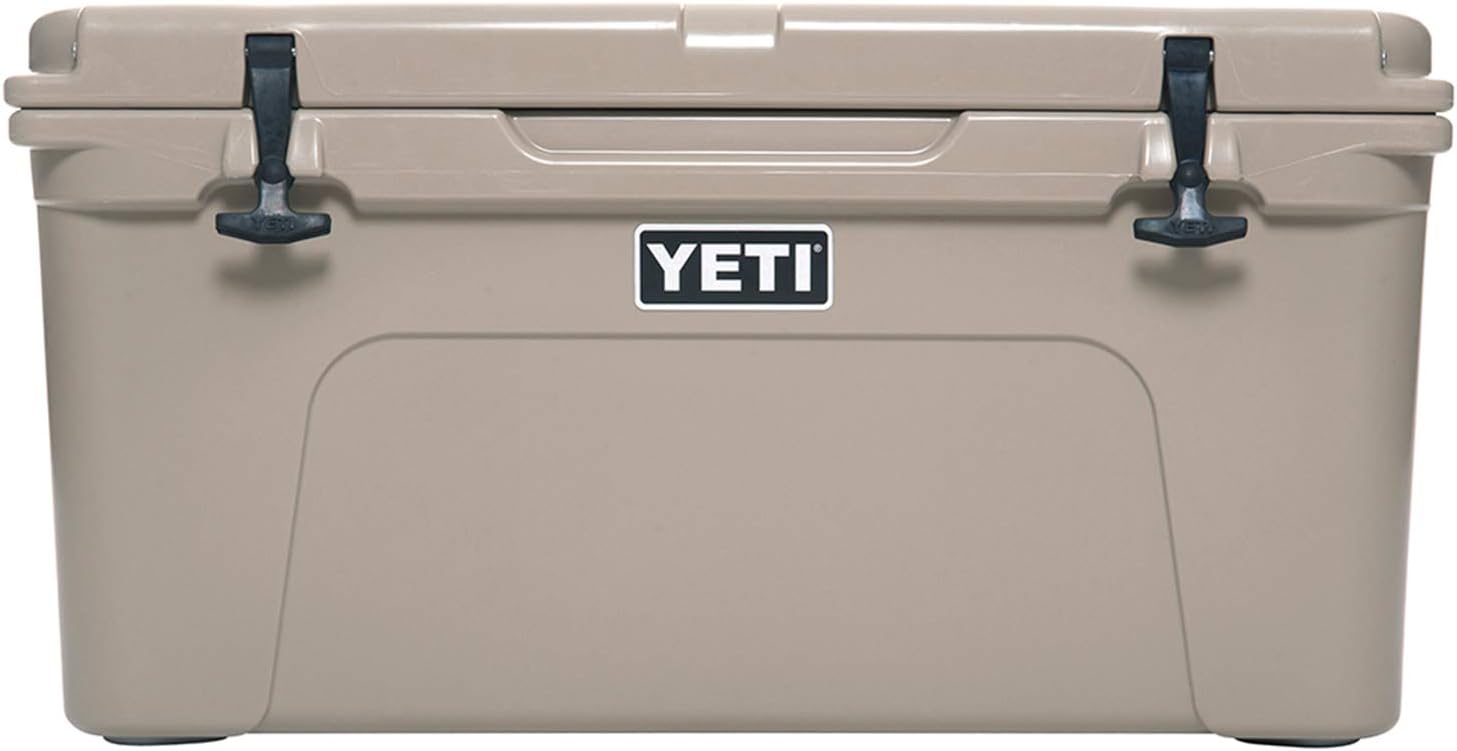
YETI Tundra 65
4.7 stars across 2,768 reviews65 quarts holds food and drink for four to six people over a long weekend without restocking ice. At larger capacity, the thermal mass of the cooler itself extends ice life: a full Tundra 65 packed correctly keeps ice longer than the Tundra 35 in the same conditions because there is less air and more cold mass inside.
The Tundra 65 is the standard group camping cooler for a reason. It requires two people to move when full, but it also serves as a stable bench or step at the campsite. The review history runs longer than the smaller Tundras and confirms reliable performance at this size.
Pros
- Longest ice retention in the roundup at group capacity
- Serves as a bench or step at camp
- Same PermaFrost insulation and rotomolded build as smaller Tundras
- Best value per quart in the Tundra lineup
Cons
- Heavy empty, and a two-person carry when loaded
- Large footprint in vehicle storage
- No wheels
| Capacity | 65 qt / ~60L |
|---|---|
| Weight (empty) | 29 lb |
| Construction | Rotomolded |
| Ice retention | 5+ days |
| Dimensions | 31.5 x 18.4 x 18.1 in |
| Drain plug | Yes |
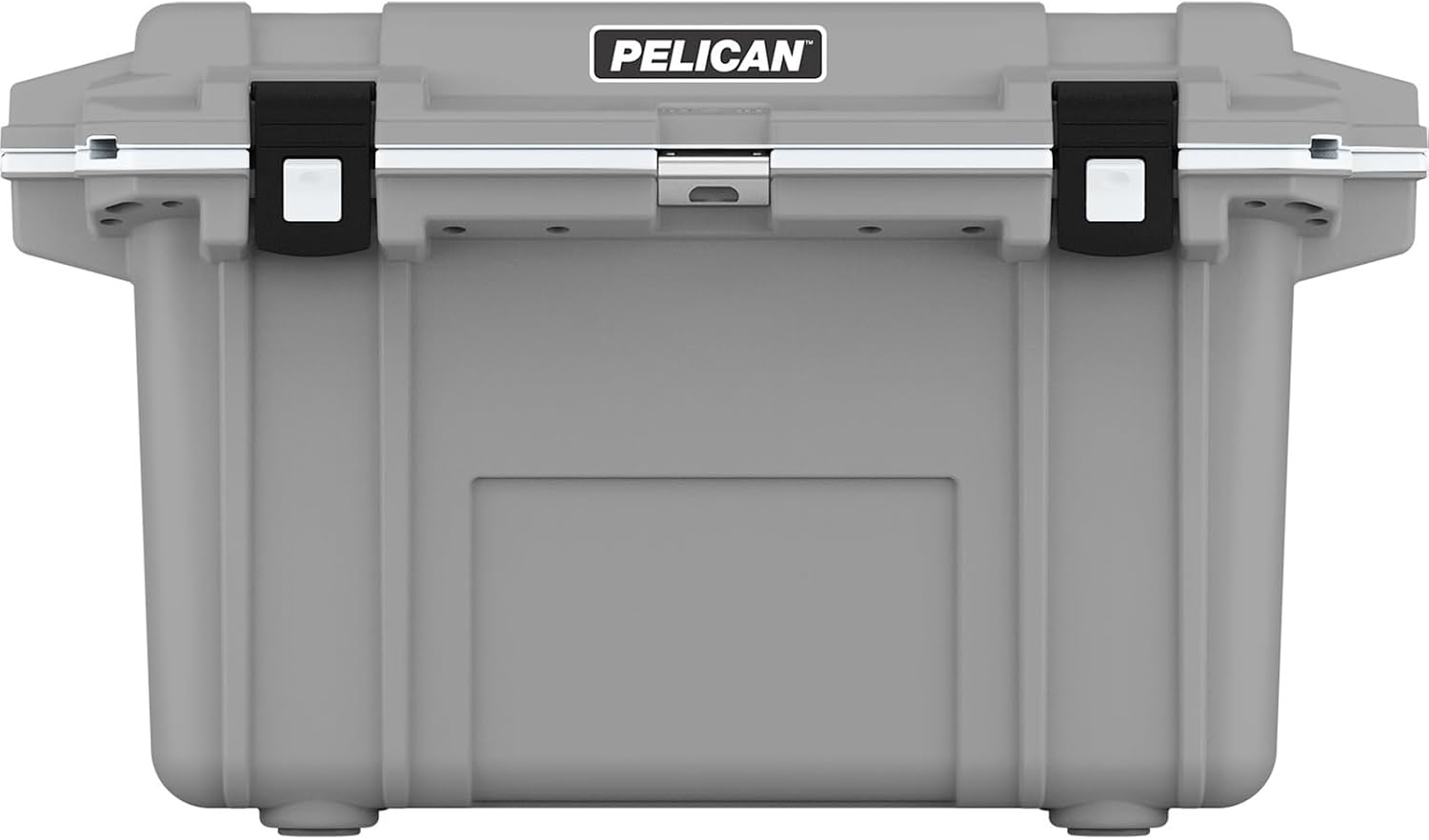
Pelican 70 Quart Elite Cooler
4.7 stars across 847 reviewsPelican built its reputation making cases for military equipment, camera gear, and industrial tools. The Elite cooler is that same engineering applied to cold storage. The 3-stage lid design includes a pressure-relieving button that releases the vacuum seal when you want to open it, and the press-and-pull latches are rated to bear-resistant standards by the IGBC.
You get more capacity than the Tundra 65 for slightly less money. The review base is smaller than YETI’s, but that reflects the brand’s market position in coolers rather than quality. For anyone who wants a credible alternative to YETI with a different design philosophy, Pelican is it.
Pros
- IGBC bear-resistant rated press-and-pull latches
- 3-stage lid with pressure-relieving button
- More capacity than the Tundra 65 for slightly less
- Pelican lifetime guarantee
Cons
- Smaller review base than YETI at a comparable price
- Heavy when loaded, no wheels
- Less color selection than YETI
| Capacity | 70 qt |
|---|---|
| Construction | Rotomolded |
| Ice retention | 4+ days |
| Latches | Press-and-pull, IGBC bear-resistant |
| Lid | 3-stage with pressure release |
| Drain plug | Yes |
RTIC 65QT Ultra-Tough Hard Cooler
4.7 stars across 2,450 reviewsRTIC was co-founded by the same team that originally supplied molds to YETI. The 65QT uses the same rotomolded construction process, and the ice retention numbers land at the top of the hard-cooler field. It undercuts the Tundra 65 by a wide margin while holding more.
The trade-off is brand equity and some fit and finish details. The gasket seal is solid but not quite at the freezer-quality Tundra level. The latches are robust but simpler. For anyone who wants rotomolded ice retention without paying the YETI premium, RTIC is the honest answer.
Pros
- Rotomolded construction, same process as YETI
- Top-of-field ice retention confirmed across a large review base
- Undercuts the Tundra 65 substantially for more capacity
- Heavy-duty lid latches and rubber gasket
Cons
- Gasket seal not at YETI Tundra quality level
- Less brand cachet than YETI or Pelican
- Resale value lower than YETI
| Capacity | 65 qt |
|---|---|
| Construction | Rotomolded |
| Ice retention | 5 to 6 days |
| Weight (empty) | 27 lb |
| Drain plug | Yes |
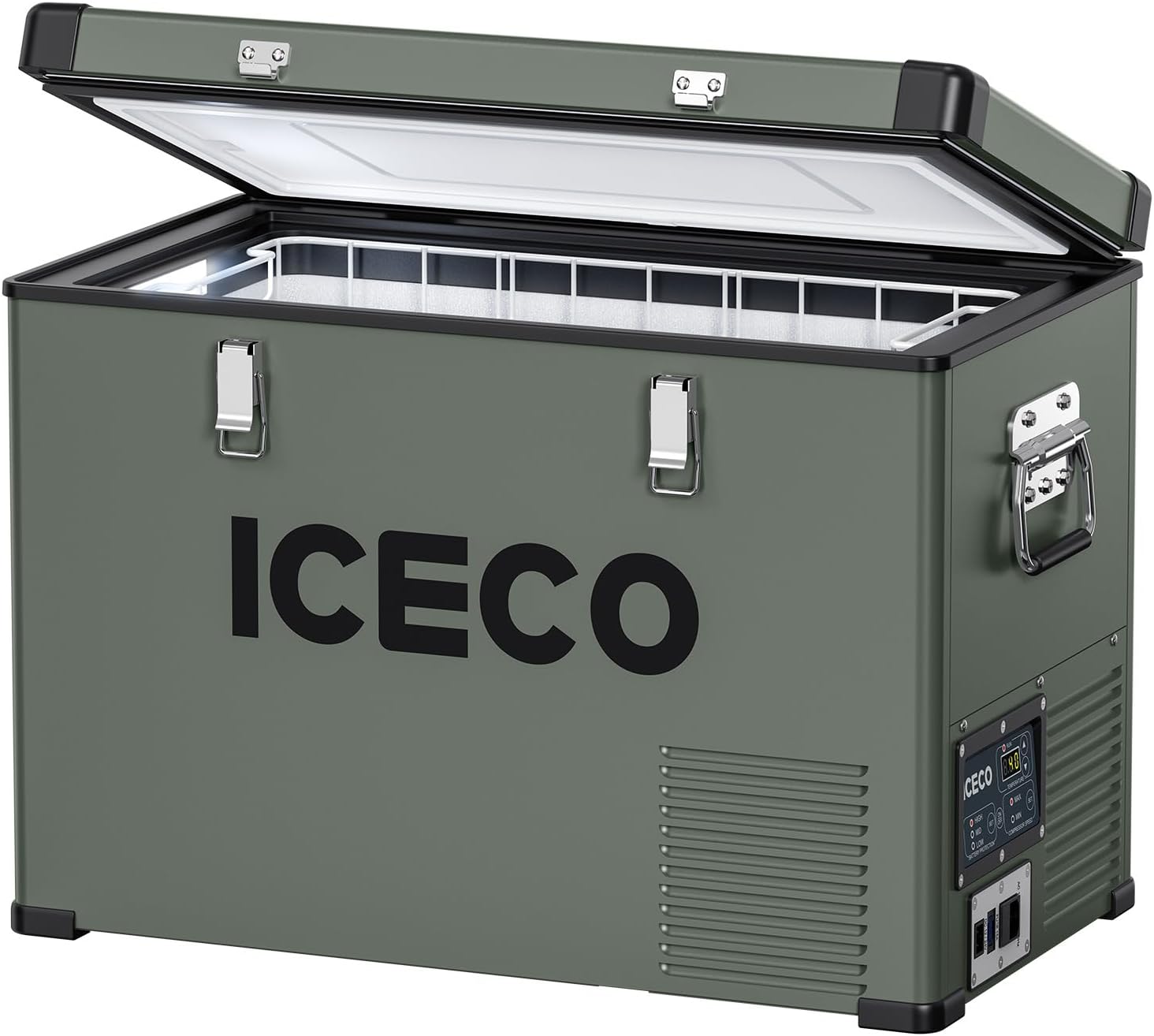
ICECO VL45 Portable Refrigerator
4.8 stars across 104 reviewsThis is not a cooler. It is a refrigerator that runs off your car, truck, or campsite power. The SECOP compressor cools the interior below freezing, which means it can freeze food and drink, not just chill it. It runs off 12V or 24V DC (car battery, portable power station) or 110V or 240V AC (shore power or generator). No ice is required.
The long-term calculation is real: if you camp monthly, ice becomes a recurring line item that never stops. The ICECO removes it entirely, along with melt water and soggy food. The review sample is smaller than the hard coolers here, but this product category is inherently more specialized.
Pros
- No ice required, eliminates ice cost and logistics
- Cools below freezing, so it can hold frozen food
- Runs on 12V/24V DC or 110V/240V AC
- No melt water, no wet food, no ice restocking
Cons
- The highest price in this roundup
- Requires a power source, not functional without electricity
- Draws battery from vehicle if run overnight without solar or shore power
| Capacity | 45L |
|---|---|
| Type | Electric compressor refrigerator |
| Temperature range | -4°F to 50°F |
| Power input | 12V/24V DC, 110V/240V AC |
| Compressor | SECOP (industrial grade) |
| Ice required | No |
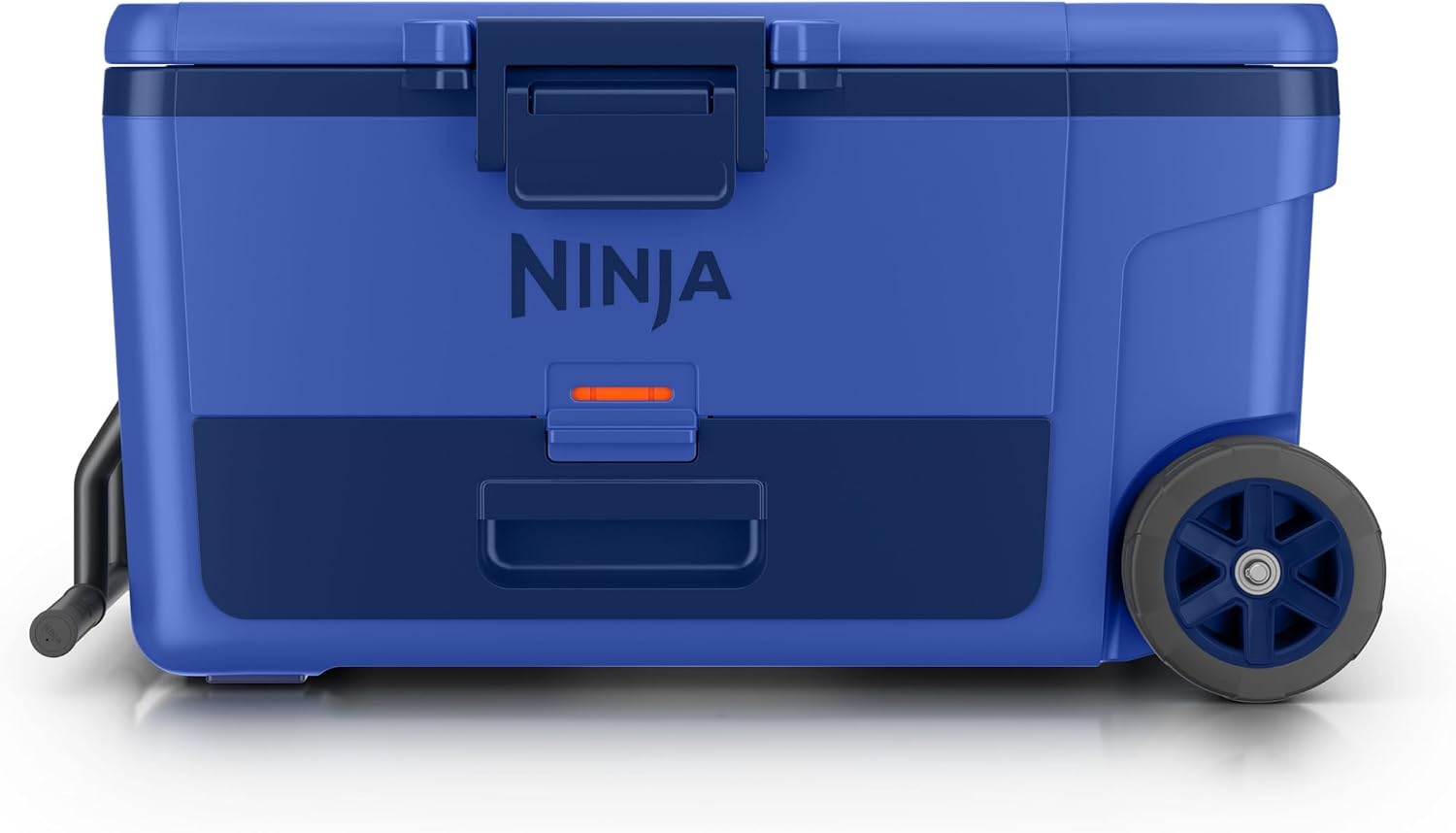
Ninja FrostVault 65QT
4.7 stars across 450 reviewsThe Ninja FrostVault solves the most persistent problem with standard coolers: keeping dry food separate from ice and melt water. The Cold Dry Zone is a removable shelf with integrated freeze packs that sits above the wet zone. Bread, buns, chips, and anything you do not want soaking in melt water stays dry and cold without a separate container.
The MagLock lid uses integrated magnets to seal without mechanical latches. Wheels are included, which is unusual at this capacity and price. The review base is young, but it shows Ninja entered camping gear with a credible design rather than a category-extension afterthought.
Pros
- Cold Dry Zone keeps dry food separated from ice and melt water
- MagLock lid seals without mechanical latches
- Wheels included, which is rare at this capacity
- Strong value for the feature set
Cons
- Newer brand in coolers, shorter track record than YETI or Pelican
- Smaller review base than established cooler brands
- MagLock may not hold as securely as mechanical latches in rough conditions
| Capacity | 65 qt |
|---|---|
| Dry zone | Cold Dry Zone removable shelf |
| Lid | MagLock (magnetic) |
| Wheels | Yes, integrated |
| Ice retention | 4+ days |
| Drain plug | Yes |
Full comparison table: best camping cooler
All 10 coolers sorted side by side. Sort by price, capacity, or ice retention days.
| Cooler | Best for | Type | Capacity | Ice retention | Price | |
|---|---|---|---|---|---|---|
 |
YETI Roadie 24 | Best overall | Hard, rotomolded | 24 qt | 4+ days | $359 |
 |
YETI Tundra 35 | Best hard cooler | Hard, rotomolded | 35 qt | 4 to 5 days | $295 |
 |
YETI Tundra Haul | Best wheeled | Hard, wheeled | 55 qt | 4 to 5 days | $450 |
 |
YETI Hopper Backflip 24 | Best backpack cooler | Soft, backpack | 24L | 24+ hours | $600 |
 |
YETI Hopper Flip 18 | Best soft cooler | Soft, tote | 18L | 24+ hours | $410 |
 |
YETI Tundra 65 | Best for groups | Hard, rotomolded | 65 qt | 5+ days | $395 |
 |
Pelican 70QT Elite | Best YETI alternative | Hard, rotomolded | 70 qt | 4+ days | $363 |
 |
RTIC 65QT | Best budget hard cooler | Hard, rotomolded | 65 qt | 5 to 6 days | $269 |
 |
ICECO VL45 | Best electric cooler | Electric compressor | 45L | No ice needed | $658 |
 |
Ninja FrostVault 65QT | Best dry zone cooler | Hard, wheeled | 65 qt | 4+ days | $350 |
How to choose a camping cooler
The right camp cooler depends on how you camp, how many people you are feeding, and how much you actually care about ice retention. Here is the honest breakdown.
Hard vs. soft cooler: when each makes sense
Hard coolers hold ice significantly longer and handle camp punishment better. They double as benches and steps. Soft coolers are lighter, more flexible to store, and go places hard coolers cannot. The right choice depends on your trip, not a preference for brand.
Use a hard cooler when
You are car camping and leaving the cooler at the site. You need 3 or more days of ice life. The cooler will be in a truck bed, on a boat, or in conditions where it takes real abuse.
Use a soft cooler when
You are hike-in camping, kayaking, or doing a beach day where a hard cooler is impractical. You need a cooler that stores flat when empty. You are topping up a hard cooler for day trips from camp.
Use an electric cooler when
You have vehicle power or a portable power station. You camp frequently enough that monthly ice costs add up. You want precise temperature control or need to freeze food.
What size cooler do you actually need?
The most common mistake is buying too large. A half-empty cooler loses ice faster because air fills the space that thermal mass would otherwise occupy. Size down and pack tight rather than buying up and packing loose.
20 to 35 quarts
1 to 2 people for a 2 to 3 day weekend. Roadie 24 or Tundra 35. Fits in most vehicles without dedicating the whole cargo area.
45 to 55 quarts
2 to 4 people for a long weekend. Tundra Haul or equivalent. You will want help moving it when full.
65+ quarts
4 to 6 people, 4+ days, or any trip where you want to separate drinks from food. Tundra 65, Pelican 70, RTIC 65, or FrostVault. Two-person carry required.
Does ice retention really differ between brands?
Yes, significantly. A cheap cooler from a discount retailer holds ice for a day or two in warm weather. A rotomolded premium cooler from YETI, Pelican, or RTIC holds ice for the better part of a week in the same conditions. The insulation thickness and gasket quality are the two primary variables. Prep matters too: pre-chill the cooler before loading, use block ice instead of cubed where possible, and minimize opening the lid.
Is YETI really worth it over RTIC?
In pure functional terms, RTIC delivers nearly all of YETI’s performance for meaningfully less. The construction process is identical. The build quality difference is real but marginal for most campers. YETI wins on brand equity, resale value, color selection, and small fit-and-finish details. RTIC wins on price. If you camp regularly and want the best value per dollar of performance, RTIC is the honest answer. If you want the best total package and plan to keep it for a decade, YETI is the investment.
Where these coolers earn their keep in Oregon
Coastal sites are the hardest test: salt air, damp marine layer, and sun exposure that runs a cooler lid hot all afternoon. Cascade sites are easier on ice but harder on access, which is where wheels or a backpack carry start to matter. If you are planning trips around either, start with our guides to camping in Oregon and the 19 national parks across the Pacific Northwest.
Camping cooler FAQ
What is the best camping cooler brand?
YETI leads on build quality, ice retention, and brand reputation. Pelican matches YETI on engineering with bear-resistant hardware. RTIC delivers rotomolded performance for meaningfully less than YETI. For the money, RTIC is the best value. For the long-term investment, YETI and Pelican are the top two.
How long do camping coolers keep ice?
Budget coolers hold ice for a day or two. Mid-range coolers stretch to about three days. Premium rotomolded coolers like YETI and Pelican hold ice for the better part of a week in real camp conditions. Performance depends on prep: pre-chill the cooler before loading, use block ice, keep it in shade, and minimize lid opening.
Are YETI coolers worth the money?
For regular campers, yes. A premium cooler kept for a decade costs less per year than a cheap cooler replaced every two or three seasons, and the experience is better the whole time. RTIC delivers comparable construction for less if budget is the constraint. The YETI premium pays off most for frequent campers who keep gear long-term.
What size camping cooler do I need?
For 1 to 2 people on a weekend trip, 20 to 35 quarts is sufficient. For 3 to 4 people, 45 to 55 quarts. For 5 or more people or trips over 3 days, 65 quarts or larger. A common mistake is buying too large: a half-empty cooler loses ice faster. Size down and pack tight rather than sizing up with room to spare.
Should I get a hard or soft camping cooler?
Hard coolers hold ice longer, handle rough treatment better, and double as seats at camp. Soft coolers are lighter, more flexible to store, and work better for hike-in camping and day trips. For a base camp near the vehicle, use a hard cooler. For a cooler that travels with you on the trail or to the beach, use a soft or backpack cooler.
What is a compressor cooler for camping?
A compressor cooler is a portable refrigerator that uses an electric compressor instead of ice. It runs off 12V or 24V DC power (car battery or power station) or 110V AC (shore power). It holds precise temperatures, can freeze food, and never has melt water. It is more expensive upfront but eliminates the ongoing cost and logistics of ice.