
Best Garmin Watches (2026): Picks for Trail, Backcountry, and Daily Use
Garmin makes watches for nearly every outdoor sport, but most readers don’t need to spend $800+ to get the right one. The 10 watches below cover the actual use cases: trail running on technical singletrack, multi-day backpacking in the wilderness, hunting deep on private land, and general fitness tracking for everyone in between.
The Best Overall pick is the Garmin vívoactive 5 at $178.49, which has the deepest proof base on Amazon (10,252 reviews) and covers most users’ actual needs. The Best Backcountry pick is the Garmin Instinct 2X Solar at $312.22, which adds rugged construction, multi-band GNSS, and solar charging that genuinely extends battery life on multi-day trips.
A note on case size: most picks below are 42-51mm flagship cases. For 40-41mm “S” variants designed for smaller wrists, see our best Garmin watch for women guide.
Quick picks
Full reviews, premium tier ($400+)

- Built-in inReach satellite means SOS and two-way texting from anywhere with sky view, no separate $400 device
- Multi-band GNSS handles dense forest canopy and steep terrain where standard GPS fails
- Sapphire crystal and titanium build is genuinely durable for years of alpine use
- Garmin’s full multisport metrics: trail running, hiking, climbing, skiing, cycling, swimming
- Topographic maps, route planning, and back-to-start navigation built in
- AMOLED display is bright and readable in sun and shade
- $1,299.99 is the highest price on this page, real money even for a flagship
- 164 reviews is a thin proof base for a $1,300 watch (newer release)
- inReach requires a Garmin satellite subscription ($15-$65/month) for active service
- 51mm case is large on smaller wrists
- AMOLED display draws more battery than MIP-based Instinct cousins
- Overkill if your activities stay within cellular coverage
The Fenix 8 Pro is the right pick for one specific buyer: someone who genuinely uses backcountry locations where cellular coverage doesn’t exist. The built-in inReach is the spec that justifies the $1,300 price tag. Two-way satellite messaging, SOS triggering, and weather forecasts work from anywhere on the planet with sky view, and Garmin’s inReach network is the established gold standard for backcountry communication.
The Fenix 8 Pro makes sense for serious mountaineers on technical alpine objectives, multi-day backcountry trips where you’re days from a trailhead, or coastal sea kayaking where cell coverage gaps are real. The combination of multi-band GNSS for accurate tracking under canopy, full topographic maps for route planning, and inReach for safety puts the Fenix 8 Pro in a category by itself.

- Full-color topographic maps with route planning, the running watch with maps
- Multi-band GNSS handles forest canopy and urban canyons accurately
- Training readiness, recovery insights, and race predictor algorithms are Garmin’s most refined
- 4.7-star rating across 1,887 reviews is the highest in the premium tier
- AMOLED display is brilliant in any light
- Lighter than the Fenix 8 Pro, more comfortable for long runs
- No satellite communication (use a separate inReach if needed)
- $500 is real money for a watch focused primarily on running metrics
- Plastic body construction (vs Fenix 8 Pro’s titanium)
- Forerunner 265 at $415.99 has many of the same features for $84 less
The Forerunner 965 is the right pick for serious runners who want Garmin’s most refined running platform. Full-color topographic maps with route planning is the headline feature, you can plan a route on your phone, sync to the watch, and follow turn-by-turn directions on a map you can actually read. Combined with multi-band GNSS for accurate tracking under heavy canopy and Garmin’s deepest training metrics, this is the running watch for athletes who care about training science.
For trail running specifically, the multi-band GNSS solves the chronic problem of inaccurate GPS tracks on heavy-canopy trail systems where standard GPS bounces signals off tree trunks. Topographic maps mean you can plan runs in unfamiliar areas without bringing a separate map. The 31-hour GPS battery handles ultramarathon-distance events.

- 2,644 reviews at 4.7 stars is the deepest premium-tier proof base on this page
- Same AMOLED display, training metrics, and recovery insights as the 965 at $84 less
- Lighter than the 965, more comfortable for daily wear
- Garmin’s full Forerunner ecosystem with no compromise on running features
- No topographic maps (the main difference vs Forerunner 965)
- No multi-band GNSS, single-band GPS may struggle under heavy forest canopy
- Plastic body construction
- Forerunner 165 at $199 covers most user needs at half the price
The Forerunner 265 is the running watch sweet spot at this price tier. You get Garmin’s full AMOLED training platform, all the metrics that matter for serious runners, and 2,644 reviews of long-term proof at $84 less than the flagship 965. The trade-offs are no topographic maps and single-band GNSS, both of which most road runners and gravel-trail runners can do without.
For runners who do most of their running on roads, paved paths, or moderate trails, the 265 is the right answer. For trail runners pushing into deep forest canopy where multi-band GPS matters, step up to the 965 or Instinct 2X Solar.
Full reviews, mid tier ($200 to $400)

- Multi-band GNSS handles dense forest canopy where single-band GPS produces garbled tracks
- Solar charging genuinely extends battery, can hit indefinite battery life with sufficient sun
- MIP display sips power, baseline battery is multi-week before solar gain
- Built-in flashlight (white plus red night vision) is genuinely useful at trailheads and camps
- Rugged build handles rain, dust, and impacts better than AMOLED competitors
- Buttons (no touchscreen) work with gloves and wet conditions
- MIP display is less vibrant than AMOLED, some buyers prefer color-rich displays
- Larger 50mm case is bulky on smaller wrists
- No topographic maps (use breadcrumb navigation instead)
- No satellite communication, pair with a separate inReach Mini if needed
- Newer Instinct 3 Solar (#2 Mid) costs $67 more for similar core features
The Instinct 2X Solar is the right answer for serious backcountry use. Multi-band GNSS solves the chronic problem of single-band GPS losing accuracy under heavy canopy, your tracks actually follow the trail you walked rather than wandering through trees. Solar charging genuinely matters on multi-day trips: in summer sun conditions with sun exposure, the watch can run effectively forever without external charging.
For specific use cases that benefit from this watch: multi-day backpacking where you can’t afford battery anxiety, hunting where you want both GPS tracking and a built-in flashlight, alpine objectives where rugged construction and sun-readable MIP display win over AMOLED, and trail running on heavy-canopy trails where multi-band GPS produces clean tracks.
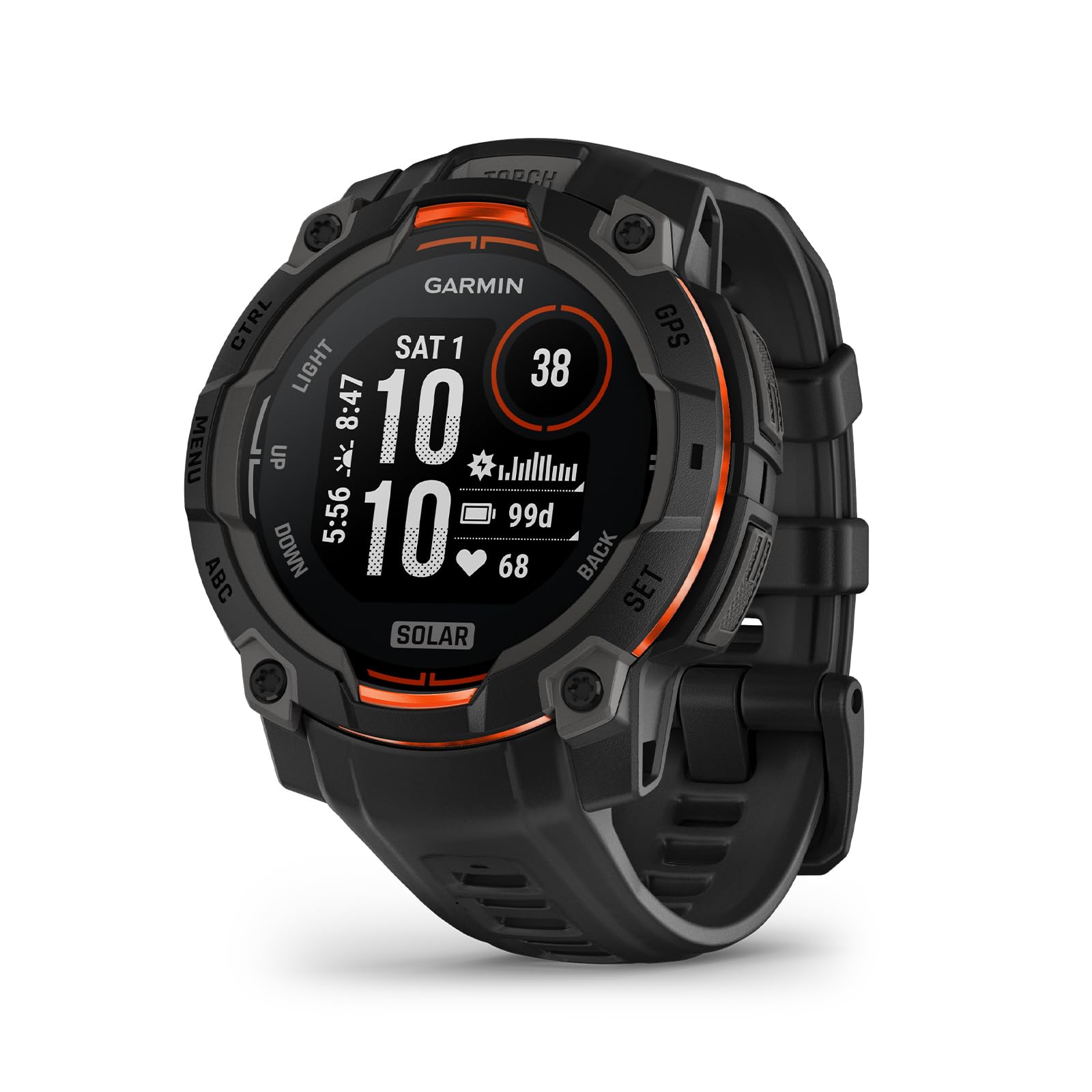
- 45mm case fits smaller wrists better than the 50mm Instinct 2X
- Newer-generation platform with refined Garmin Connect features
- Metal-reinforced bezel adds rugged appeal and durability
- Solar charging works the same as Instinct 2X for extended battery
- Built-in flashlight retained from Instinct 2X
- $67 more than Instinct 2X Solar with similar core capabilities
- Smaller proof base (694 vs 2,105 reviews) than Instinct 2X
- Smaller case has slightly less solar surface area
- Verify multi-band GNSS support before purchase, may differ from 2X
The Instinct 3 Solar is the right pick when you want the newest Instinct generation or have smaller wrists where the 50mm Instinct 2X feels oversized. The 45mm case is genuinely more comfortable for daily wear, especially under jacket cuffs or with gloves. The newer platform brings refined Garmin Connect features and a metal-reinforced bezel that looks more polished than the Instinct 2X’s all-plastic exterior.

- 6,036 reviews is the second-deepest proof base on this page
- Premium materials (stainless steel bezel) make this look like a watch, not a sports tracker
- AMOLED touchscreen is bright, vivid, and responsive
- Phone-call support via paired phone is genuinely useful for daily wear
- Garmin’s deep health metrics: sleep, stress, body battery, women’s health
- Smaller 1.2-inch case fits smaller wrists comfortably
- Lifestyle focus means less running-specific depth than Forerunner line
- Single-band GPS, less accurate than multi-band under canopy
- AMOLED battery life is shorter than MIP-based Instinct alternatives
- $340 is a real premium over Vivoactive 5/6 with similar core capabilities
The Venu 3S is the right pick when style matters as much as function. The stainless steel bezel and AMOLED touchscreen genuinely look like a premium watch you can wear with anything from gym clothes to a button-down, and the 6,036-review proof base reflects that lifestyle buyers are happy with the package. Garmin’s health metrics ecosystem (sleep, stress, body battery) is the deepest in the smartwatch category.
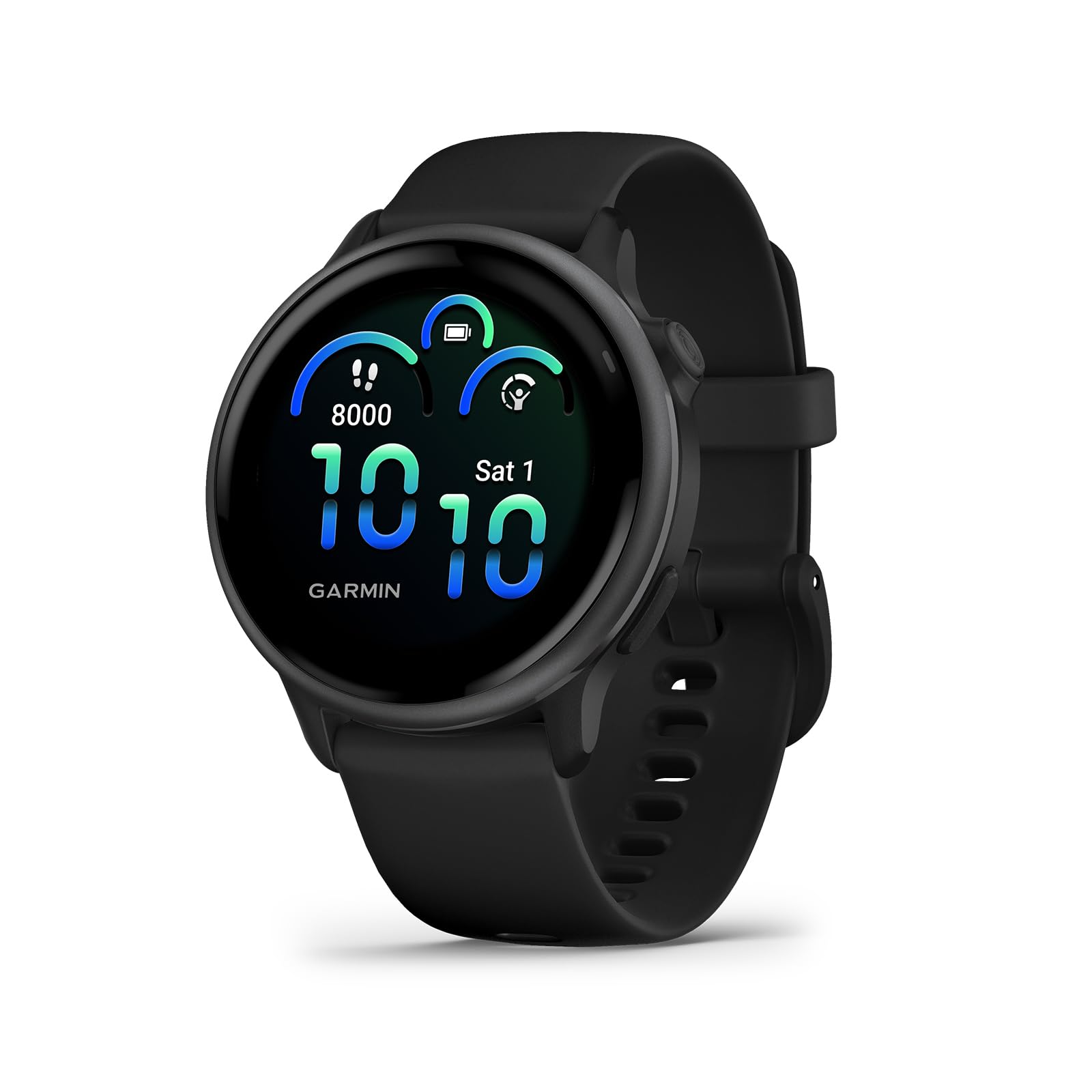
- Newest-generation Vivoactive platform with refined health metrics
- AMOLED display matches the more expensive Venu 3S
- 11-day battery life balances AMOLED brightness with reasonable charging frequency
- Full Garmin Connect ecosystem with 2,388 review proof base
- Vivoactive 5 at $178 has 4x the review depth (10,252 reviews) for $122 less
- Single-band GPS, not multi-band
- Plastic body, not stainless steel like Venu 3S
- No phone-call support
- “Newer” alone doesn’t justify the premium over the Vivoactive 5 for most users
The Vivoactive 6 is the right pick for buyers who specifically want the newest Garmin Vivoactive generation and the slightly refined platform that comes with it. The honest case: the Vivoactive 5 at $178.49 has 10,252 reviews of proof and the same core specs (AMOLED, 11-day battery, GPS). The Vivoactive 6 represents incremental improvement, not a meaningful jump.
Full reviews, entry tier ($150 to $200)
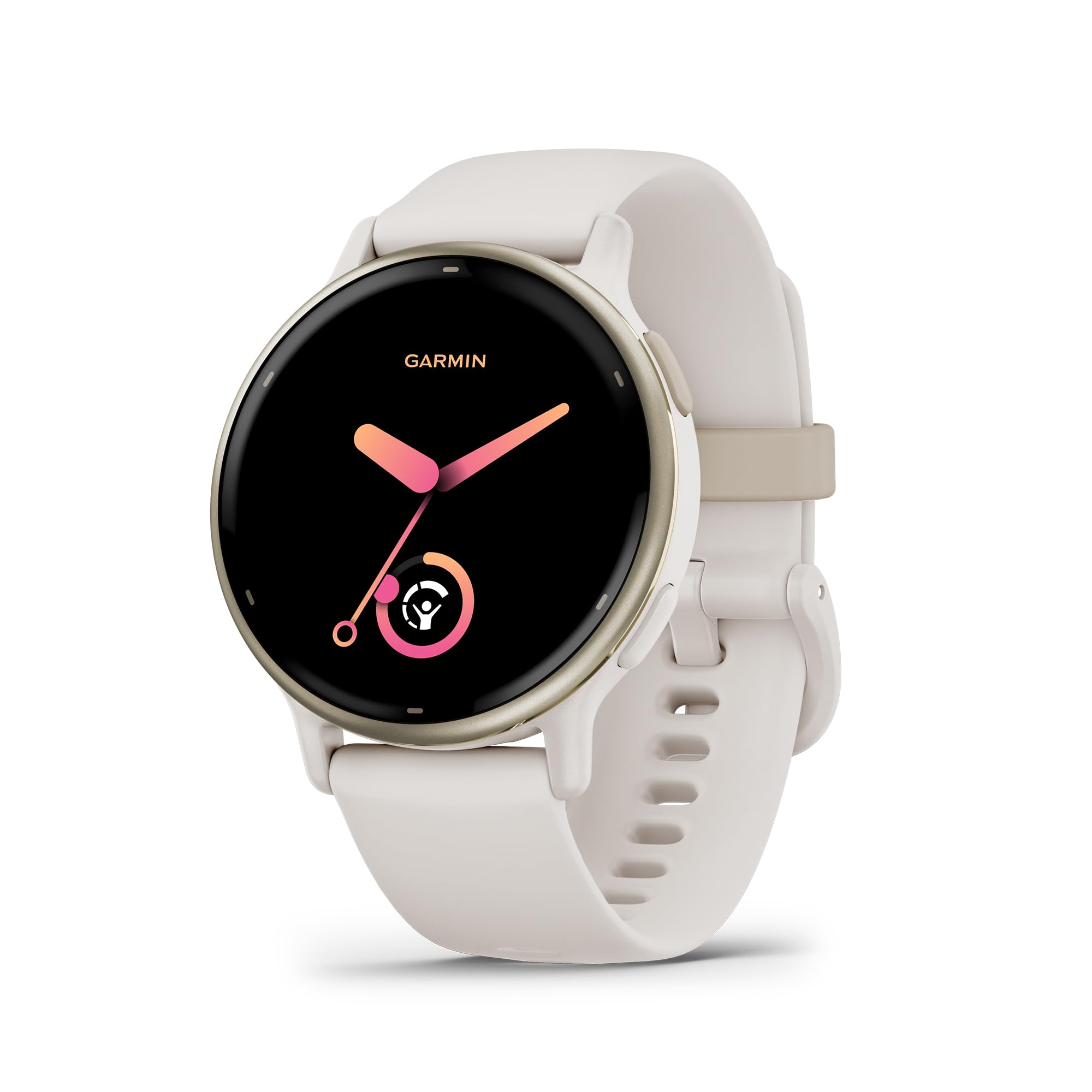
- 10,252 reviews at 4.4 stars is the deepest proof base of any current Garmin watch on Amazon
- AMOLED display is bright and vivid, comparable to watches twice the price
- 11-day battery life balances display quality with practical charging frequency
- Full Garmin Connect ecosystem: sleep tracking, stress, body battery, training metrics
- Most affordable AMOLED Garmin smartwatch on the market
- Three color variants (Ivory, Slate, Orchid) at $178-$227 with identical hardware
- Single-band GPS struggles under heavy forest canopy compared to multi-band
- 4.4-star rating is lower than the running-focused Forerunner 165 (4.7 stars)
- No topographic maps or advanced navigation
- Plastic body construction
- Older platform than the Vivoactive 6, may lack newest firmware features
The Vivoactive 5 is the best Garmin watch for most readers. 10,252 reviews at 4.4 stars is the deepest proof base of any current Garmin watch on Amazon, and at $178.49 it’s the most affordable AMOLED Garmin you can buy. The AMOLED display, 11-day battery, GPS tracking, and full Garmin Connect ecosystem cover what most users actually need: daily fitness, sleep tracking, casual workout tracking, occasional GPS hikes, and Garmin’s deep health metrics.
This is the watch I’d recommend to a friend asking “I want a Garmin but I don’t need to spend a lot.” Single-band GPS handles open-trail use fine, the AMOLED screen is bright enough for outdoor visibility, and the 11-day battery means you charge weekly rather than daily. The trade-offs (no multi-band GNSS, no topographic maps) only matter if you specifically need them.
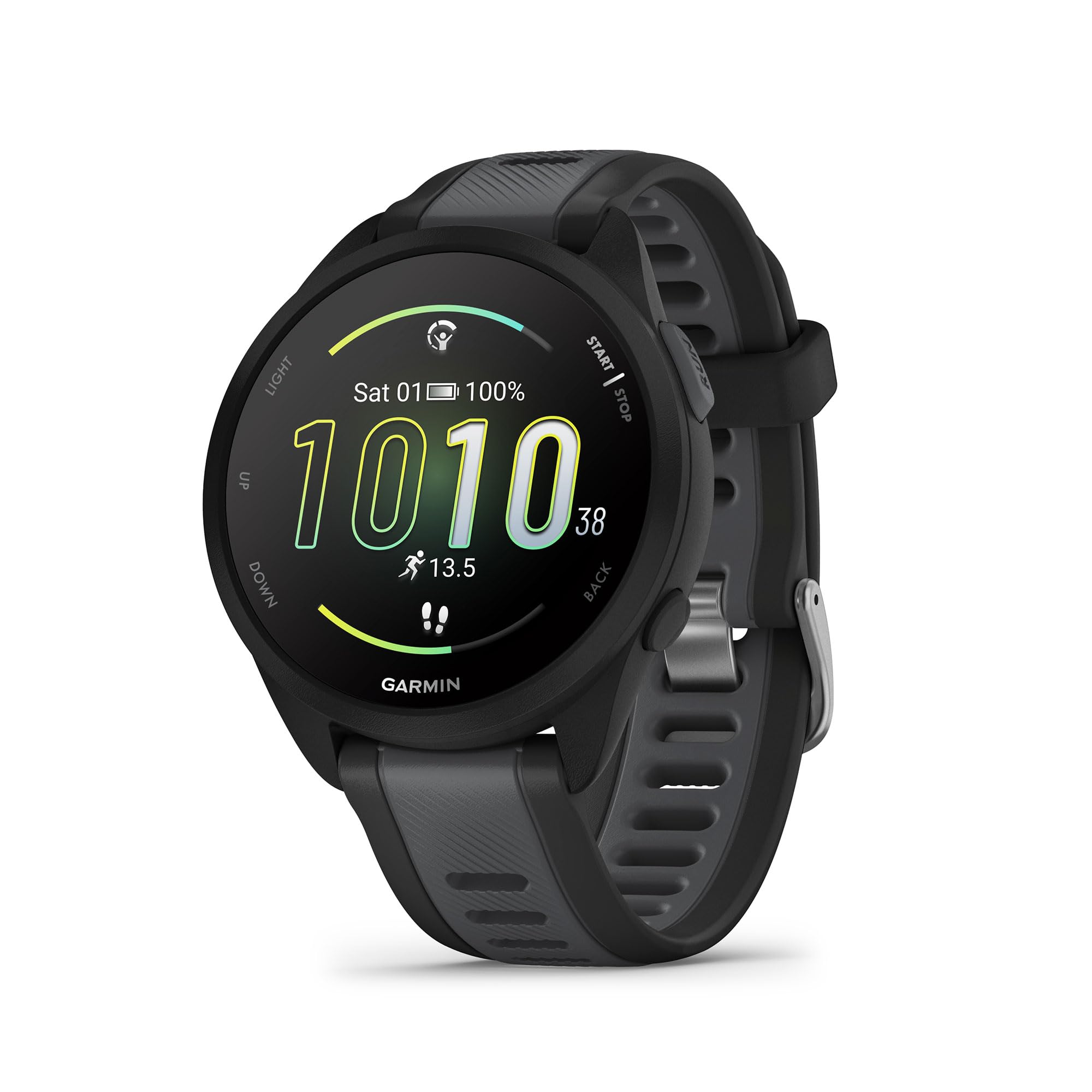
- 4.7-star rating is the highest in the entry tier
- Cheapest Forerunner with AMOLED color display
- Garmin’s training readiness and recovery insights at entry pricing
- Lighter than the higher-tier Forerunners, comfortable for long runs
- 3,606 reviews provide solid proof at this price point
- $34 more than the Vivoactive 5 with less broad ecosystem appeal
- Single-band GPS, struggles under heavy canopy
- No topographic maps
- 11-day battery (similar to Vivoactive 5, less than the 2-week Forerunner 55)
The Forerunner 165 is the right pick when you’re specifically a runner and want Garmin’s training-load and recovery analysis at an entry price. Training readiness scoring (Garmin’s algorithm that suggests when to push hard vs recover) is a meaningful upgrade over basic run tracking, and at $199 this is the cheapest way to get it. The AMOLED display matches more expensive Forerunners.
For runners specifically, the 165 is a strong starter watch for road running, paved trail running, and casual gravel running. For runners who specifically run heavy-canopy forest trails, the Instinct 2X Solar’s multi-band GNSS is worth paying up for.

- 5,791 reviews is the third-deepest proof base on this page
- 2-week battery life is the longest in the entry tier
- Daily suggested workouts feature is genuinely useful for new runners
- Cheapest Garmin GPS running watch from a current platform
- MIP display is excellent in direct sunlight
- Black-and-white MIP display feels dated next to AMOLED competitors
- Less training depth than the Forerunner 165 (no training readiness)
- Single-band GPS, less accurate than multi-band under canopy
- Older platform (released 2021), may receive fewer firmware updates over time
The Forerunner 55 is the right pick for budget-conscious runners who want a reliable GPS running watch without paying for AMOLED display or advanced training metrics. 5,791 reviews at 4.5 stars is solid proof for a sub-$170 watch, and the 2-week battery means you charge less than half as often as AMOLED competitors. Daily suggested workouts is a feature most runners ignore at first but appreciate over time.
Comparison table
| Watch | Tier | Display | Rating | Reviews | Price |
|---|---|---|---|---|---|
| Garmin Fenix 8 Pro | Premium | AMOLED | 4.4 | 164 | $1,299.99 |
| Garmin Forerunner 965 | Premium | AMOLED | 4.7 | 1,887 | $499.99 |
| Garmin Forerunner 265 | Premium | AMOLED | 4.7 | 2,644 | $415.99 |
| Garmin Instinct 2X Solar | Mid | MIP + Solar | 4.6 | 2,105 | $312.22 |
| Garmin Instinct 3 Solar | Mid | MIP + Solar | 4.6 | 694 | $379.00 |
| Garmin Venu 3S | Mid | AMOLED | 4.5 | 6,036 | $339.99 |
| Garmin Vivoactive 6 | Mid | AMOLED | 4.5 | 2,388 | $299.99 |
| Garmin Vivoactive 5 | Entry | AMOLED | 4.4 | 10,252 | $178.49 |
| Garmin Forerunner 165 | Entry | AMOLED | 4.7 | 3,606 | $199.00 |
| Garmin Forerunner 55 | Entry | MIP B&W | 4.5 | 5,791 | $165.00 |
How to choose a Garmin watch
Frequently asked questions
More tech guides
Browse all gear
