Hiking Gear Field Guide
The Best Power Bank for Hiking
Ten power banks tested on real Oregon trails. Budget 10K picks, rugged IP67, MagSafe, and 140W laptop chargers. Every pick scored and ranked by Trail Score. No brand pays for placement.
Quick Picks: Top 5 Hiking Power Banks
If you’re shopping fast, these five cover the most common hiking scenarios.
Our 10 Top Picks for 2026
Ten banks, ten specific hiking scenarios. Each pick scored on a 100-point Trail Score across capacity for weight, output speed, durability, value, and convenience.
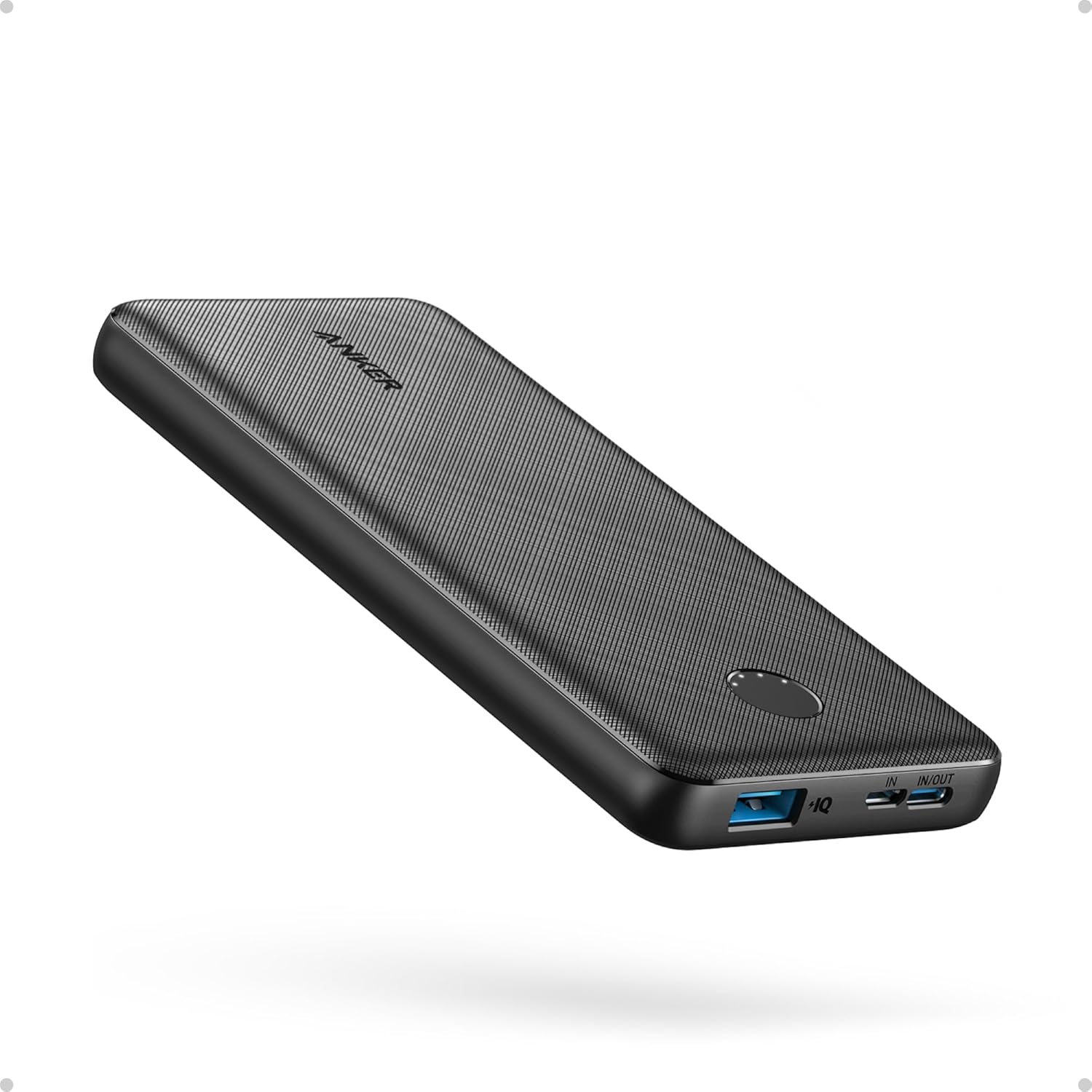
Pros
- Drop-tested to 3.2ft on concrete
- PowerIQ delivers optimized output for any device
- 18-month Anker warranty
- Trickle-charge mode for earbuds
Cons
- 15W max output is slower than newer picks
- No built-in cable
- Four LED dots, not a percentage display
This is the pick for the hiker who just needs their phone to survive the day without overthinking it. Throw it in a pack, plug in, done. PowerIQ auto-adjusts output for whatever you connect, so you don’t get the frustrating slow-charge situation where a device barely gains ground. What it isn’t: a speed charger, a cable-included option, or anything a multi-night backpacker should rely on solo. If your trip is one day and your phone is your GPS, this covers it cleanly.
| Capacity | 10,000mAh |
|---|---|
| Max output | 15W (PowerIQ) |
| Weight | ~8.6 oz |
| Ports | 1x USB-C, 1x USB-A |
| Built-in cable | No |
| IP rating | None |
| Display | 4 LED dots |
| Pass-through | Yes |

Pros
- 4.8oz, the lightest pick in this roundup
- Built-in flip plug: no charging cable ever needed
- Goal Zero outdoor brand pedigree
- Fits any hip belt pocket
Cons
- 6,700mAh is one full phone charge, not two
- USB-A only output, no USB-C out
- Not suited for multi-day trips
The Flip 24 is the only pick in this roundup designed for hikers who have forgotten a cable one too many times. The built-in flip plug charges directly into any wall outlet at the trailhead, the hotel, or the car, no cable, no adapter, nothing to leave behind. At under five ounces it disappears into a hip belt pocket. The honest constraint: the capacity is sized for a day hike, not a long weekend. If you’re heading out for more than one night, this belongs as the backup bank in your kit, not the primary.
| Capacity | 6,700mAh |
|---|---|
| Max output | 10.5W (2.1A) |
| Weight | ~4.8 oz |
| Ports | 1x USB-A out, built-in USB plug in |
| Built-in cable | Yes, flip USB plug |
| IP rating | None |
| Display | LED indicator |
| Pass-through | No |
Best Value 20K Power Bank: Anker Zolo 20K
Built-in cable, 20,000mAh, starts under $35
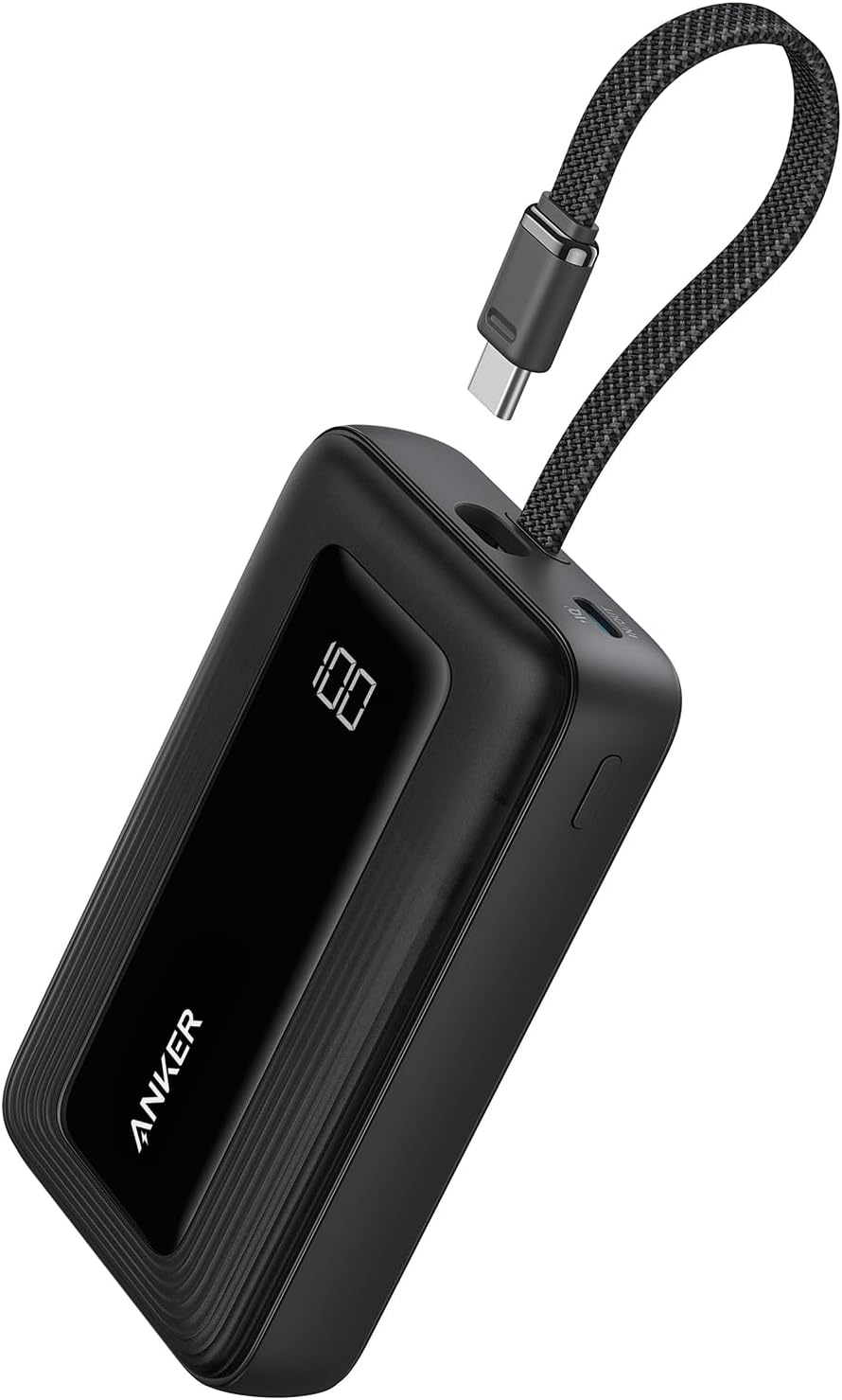
Pros
- Built-in retractable USB-C cable, no separate cable needed
- 20,000mAh covers two full nights of heavy phone use
- 30W output charges modern phones at reasonable speed
- Best price-per-mAh in the roundup
Cons
- No USB-A port for older headlamps or GPS units
- No IP rating, keep it dry
- LED dots only, no percentage display
Two nights out with a phone on GPS all day is where 10K banks start failing and 20K banks start earning their weight. The Zolo crosses that threshold while solving the cable problem most multi-day hikers encounter: the built-in USB-C cable means you can top off at a hut, a trailhead outlet, or a camp neighbor’s solar setup without hunting through your pack. Not the pick for laptop users or anyone who needs waterproofing. For straightforward multi-night hiking with a phone and headlamp, it covers the brief without fuss.
| Capacity | 20,000mAh |
|---|---|
| Max output | 30W USB-C |
| Weight | ~12.7 oz |
| Ports | 1x USB-C + built-in USB-C cable |
| Built-in cable | Yes, retractable USB-C |
| IP rating | None |
| Display | LED dots |
| Pass-through | Yes |
Best Trail Display: Anker Nano 10K OLED
Exact percentage remaining, not guesswork

Pros
- OLED display shows exact battery percentage
- 45W output: fastest charging in the 10K tier
- Built-in retractable USB-C cable
- Compact enough for a hip belt pocket
Cons
- 10K capacity: one night only
- No USB-A port
- Pricier than basic 10K options
The problem with LED dot indicators on a multi-day trip is that you’re always guessing: is two dots 50% or 35%? The Nano’s OLED display shows an exact number, which matters when you’re deciding at mile 14 whether to charge your GPS now or wait until camp. Paired with a built-in cable and a genuinely fast 45W output, this is the compact pick for hikers who treat their power bank like a piece of navigation equipment rather than an afterthought. If you just need a phone top-off and don’t care about precision, the basic PowerCore does the same job for less.
| Capacity | 10,000mAh |
|---|---|
| Max output | 45W USB-C |
| Weight | ~6.7 oz |
| Ports | 1x USB-C + built-in retractable USB-C |
| Built-in cable | Yes, retractable USB-C |
| IP rating | None |
| Display | OLED percentage readout |
| Pass-through | Yes |
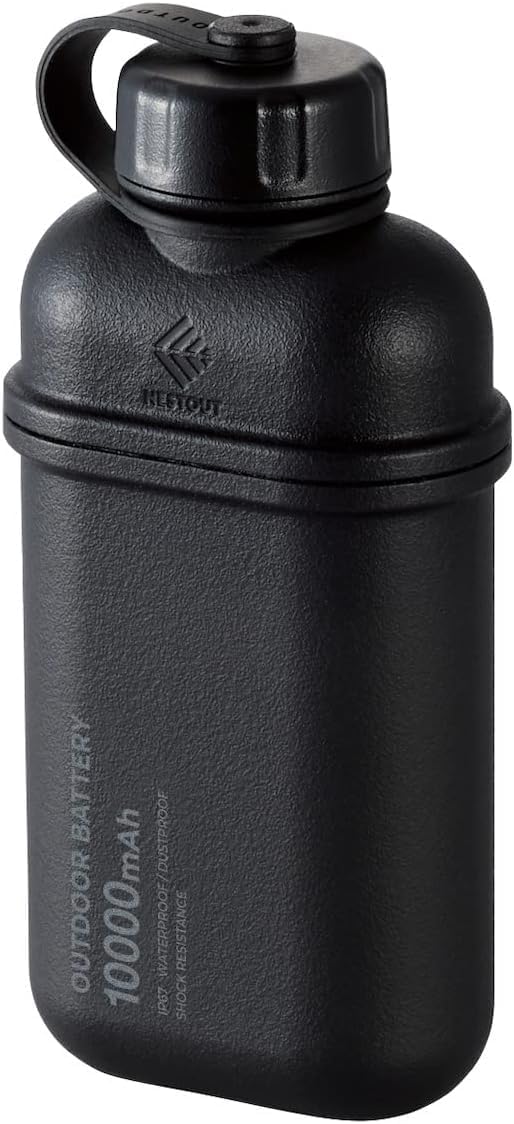
Pros
- IP67 rated: survives submersion in 1m of water for 30 minutes
- 3-port design charges multiple devices at camp
- Rubberized grip, drop-resistant shell
- Goal Zero outdoor brand standard of construction
Cons
- Heaviest 10K in the roundup
- Slower output than non-rugged picks
- Higher price for the capacity tier
Every other pick in this roundup needs to stay dry. The NESTOUT does not. For coastal hiking, river canyon routes, kayak camping, or any trip where your pack might take a wave, a dunking, or four consecutive days of Pacific Northwest rain, this is the only appropriate choice. The IP67 rating is genuine: submersion-rated, not just splash-resistant. The tradeoff is weight: it is the heaviest 10K on this list. If your route is dry trail, you are paying for protection you do not need. If it is not, you will be glad you have it.
| Capacity | 10,000mAh |
|---|---|
| Max output | ~18W |
| Weight | ~12 oz |
| Ports | 2x USB-A, 1x USB-C |
| Built-in cable | No |
| IP rating | IP67 |
| Display | LED indicator |
| Pass-through | Yes |

Pros
- USB-C PD output charges phones faster than USB-A standard
- Dual ports: two devices charge simultaneously
- MultiProtect safety prevents overheating in a warm pack
- Proven Anker service track record
Cons
- No built-in cable, bring your own
- Heavier than the Zolo 20K for similar capacity
- 18W USB-C is slower than newer Anker models
The case for this over the Zolo 20K is simple: if you want the most battle-tested 20K on the market from a brand with a decade of warranty track record, this is it. USB-C PD output charges a phone noticeably faster than USB-A standard, and dual ports mean a hiking partner can charge at the same time. What it gives up is the built-in cable, so bring one. Not the pick for laptop users: the output ceiling is too low. But for phones, headlamps, GPS, and cameras over three to five nights, this has been doing the job reliably for years.
| Capacity | 20,000mAh |
|---|---|
| Max output | 18W USB-C PD |
| Weight | ~12.7 oz |
| Ports | 1x USB-C PD, 2x USB-A |
| Built-in cable | No |
| IP rating | None |
| Phone charges | ~5 full charges |
| Pass-through | Yes |
Best MagSafe Power Bank: Anker MagGo Slim 10K
Snap to iPhone, drop in pocket, charge while walking
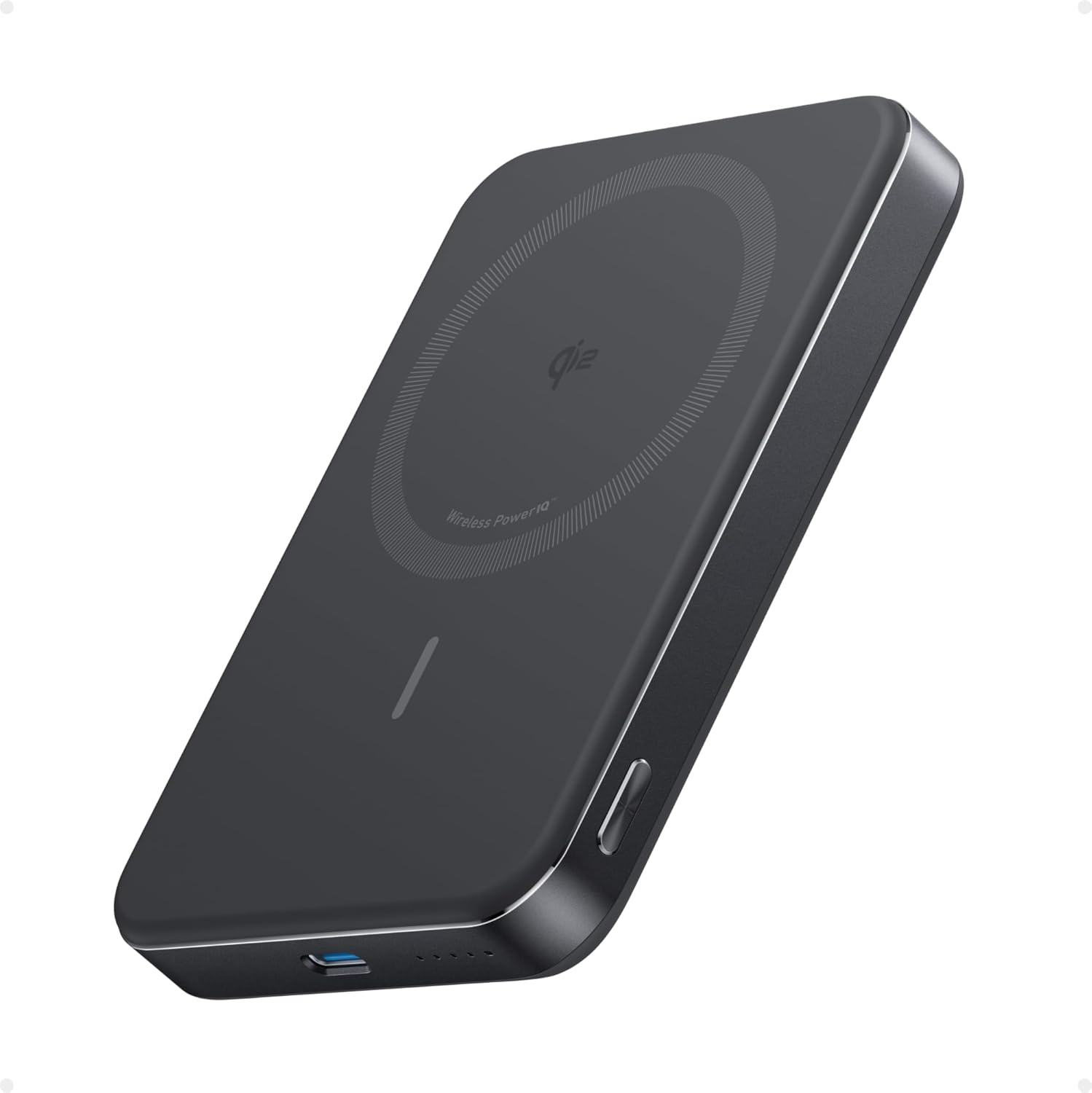
Pros
- Snaps to iPhone MagSafe case, charges while you walk
- No cable needed between phone and bank
- Slim profile fits hip belt pocket with phone attached
- USB-C port for simultaneous wired charging
Cons
- iPhone 12 and later with MagSafe case only
- 10K capacity: supplement, not standalone for multi-night
- Premium price for a 10K bank
If you hike with your phone in a MagSafe case, this changes the experience in one specific way: the bank snaps to the back of the phone, the whole assembly drops into a hip belt pocket, and your phone charges while you walk with no cable attached to anything. That matters on long days where you want the phone accessible but don’t want a cable snagging on pack straps every time you reach for it. Two things to be clear about: this only works with iPhone 12 and later in a MagSafe case, and the capacity is not enough for a multi-night trip on its own. It’s a day-hike charger or a supplement to a larger bank.
| Capacity | 10,000mAh |
|---|---|
| Max output | 15W MagSafe / 25W USB-C |
| Weight | ~8 oz |
| Ports | 1x USB-C + MagSafe magnetic pad |
| MagSafe | Yes, magnetic snap |
| IP rating | None |
| Recharge time | ~3 hrs |
| Pass-through | Yes |
Best Wireless Charging: Anker MagGo Qi2 10K
Set your phone on it at camp. It charges. No cable.
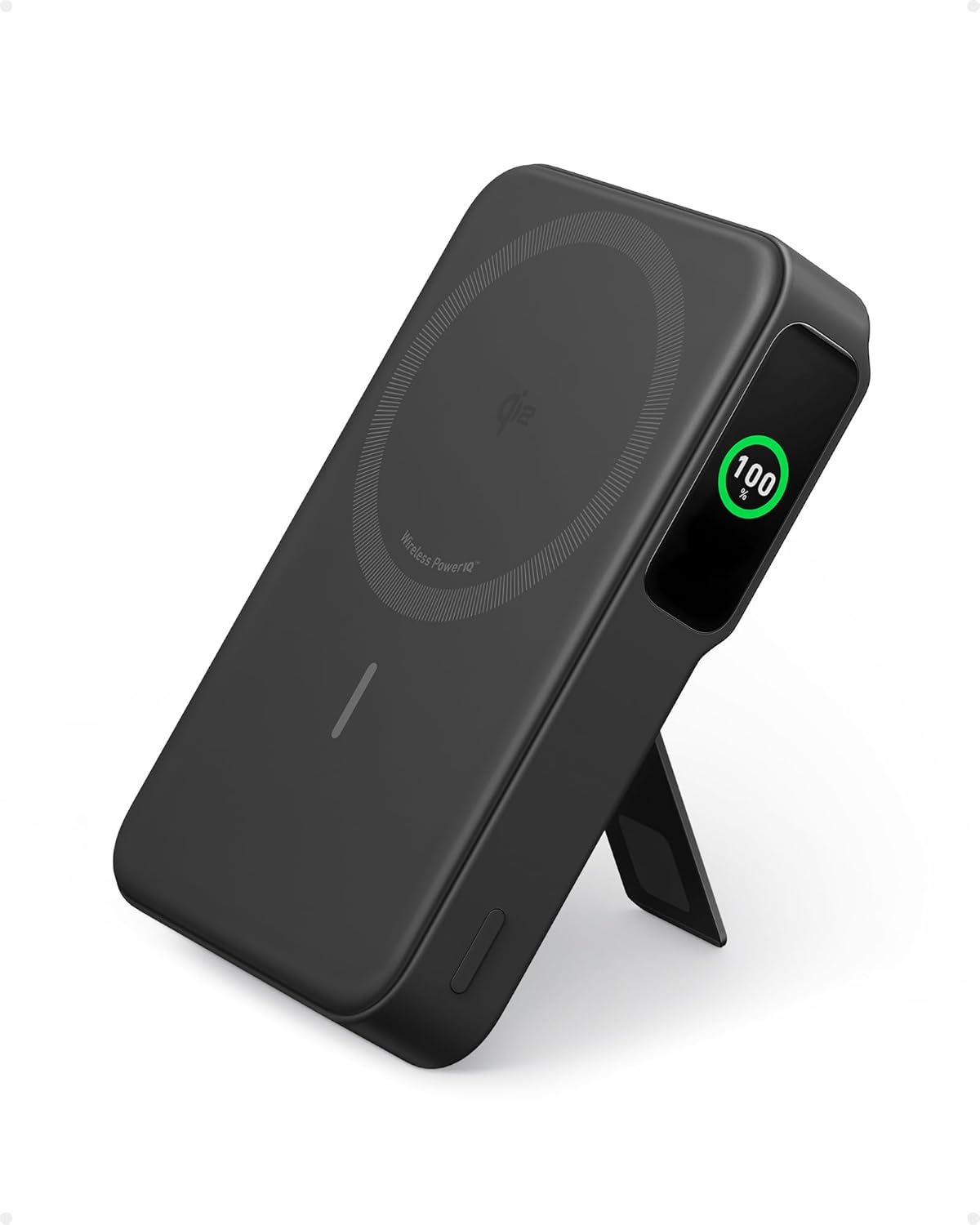
Pros
- Qi2 standard: works at 15W with iPhone and Qi2 Android
- Zero cable at camp, set phone down and charge starts
- No port wear: preserves your USB-C port on long trips
- USB-C port also available for wired charging
Cons
- 15W wireless is slower than 45W wired
- Highest price for a 10K bank in the roundup
- Requires Qi2-compatible device
Set your phone on this at camp and it charges. No port to find in the dark, no cable to untangle after a long day, no wear on a USB-C port that has already been plugging and unplugging through rain and dust all week. The Qi2 standard means it works at full speed with iPhone and with the growing range of Android devices that support it. Who should skip it: anyone who prioritizes charging speed over convenience, and anyone without a Qi2-compatible device. The wireless output is slower than wired, and that is the honest tradeoff you make for the zero-friction camp experience.
| Capacity | 10,000mAh |
|---|---|
| Wireless output | 15W Qi2 |
| Weight | ~9 oz |
| Ports | 1x USB-C + Qi2 wireless pad |
| Built-in cable | No |
| IP rating | None |
| Recharge time | ~3 hrs |
| Pass-through | Yes |
Best High-Output Power Bank: Anker 737 PowerCore 24K
Charges a MacBook Pro at wall-charger speed
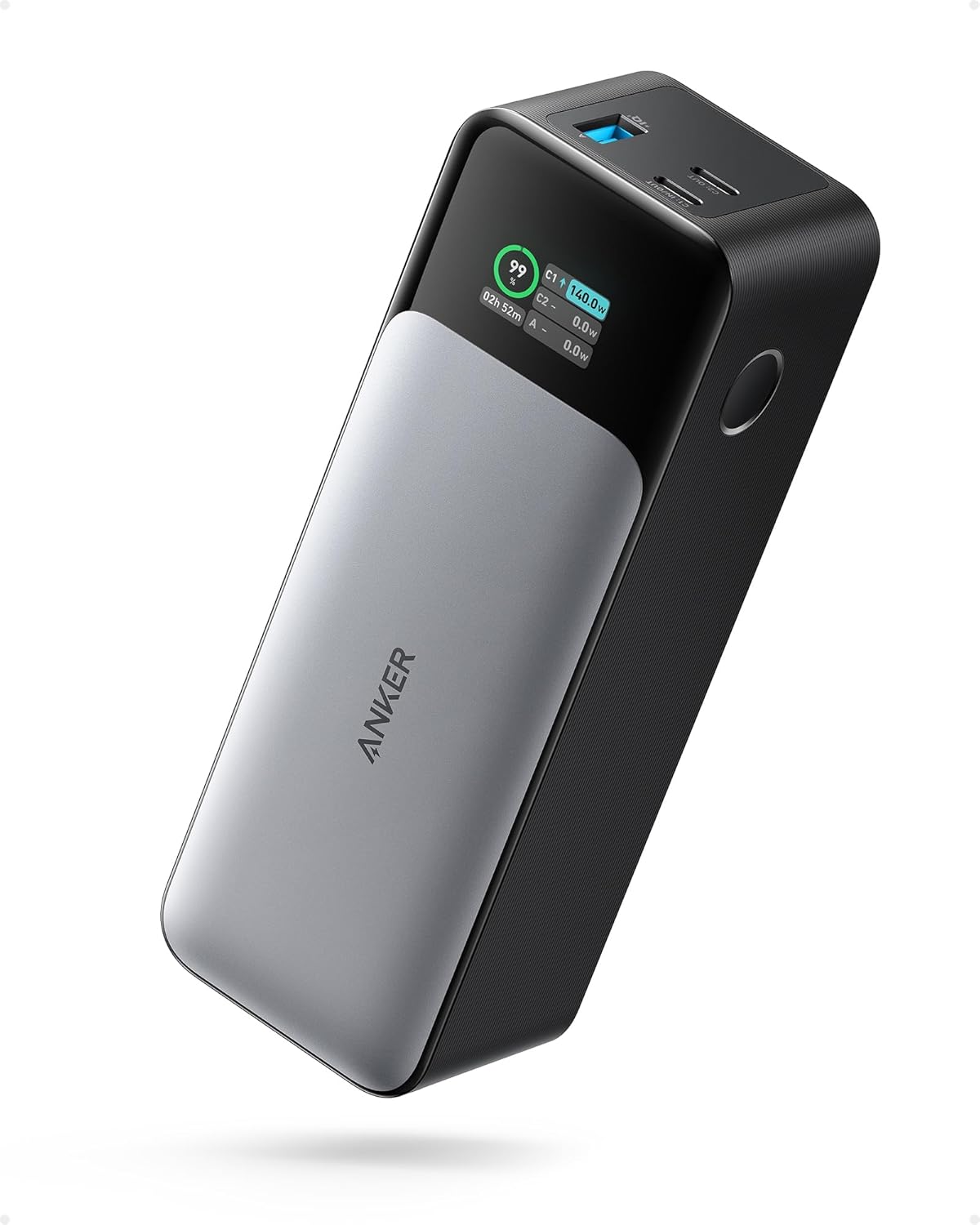
Pros
- 140W PD 3.1: charges a MacBook Pro at full wall-charger speed
- OLED display shows live wattage per port and remaining capacity
- Charges laptop, phone, and GPS simultaneously
- 24,000mAh outlasts most laptops on a full discharge
Cons
- 1.4 lb: basecamp or car camping only, not for backpacking
- Overkill and expensive if you don’t have a laptop
- Bulk rules it out for weight-conscious hikers
If a laptop is in your pack, most power banks are a disappointment: they slow the battery drain rather than actually charging it. The 737 is the exception: it delivers enough output to charge a MacBook Pro at the same speed as the wall charger, while a phone and GPS charge simultaneously from the other ports. The live wattage display per port is useful at basecamp when you want to know whether you have enough left to top off the camera before morning. The honest limit is weight: this belongs in a car camping kit or a basecamp bag, not a backpacking pack.
| Capacity | 24,000mAh |
|---|---|
| Max output | 140W USB-C PD 3.1 |
| Weight | ~1.4 lb |
| Ports | 2x USB-C (140W + 60W), 1x USB-A |
| Built-in cable | No |
| IP rating | None |
| Display | OLED wattage per port |
| Pass-through | Yes |
Best Laptop Power Bank: Anker 25K Triple 100W
Three built-in cables, zero loose wires at basecamp

Pros
- Three built-in retractable USB-C cables: no loose wires at camp
- 100W per port actually charges laptops rather than just running them
- 25,000mAh outlasts a MacBook Air on full discharge
- Flight-approved for carry-on under 100Wh limit
Cons
- Highest price in this roundup
- Heavier than the 737 at comparable capacity
- Three built-in cables are USB-C only
The specific problem this solves: you are at basecamp with a laptop, a drone, and a phone, and the charging cable situation is already a tangled mess before anyone has unpacked. Three built-in retractable cables, one per port, means everything charges from the same bank with nothing loose in the bag. The capacity outlasts a MacBook Air on a full discharge with charge left for everything else, and each port delivers enough output to actually fill a laptop battery rather than just run it. This is not a lightweight hiking bank: it is a mobile power hub for trips where serious gear needs serious power.
| Capacity | 25,000mAh |
|---|---|
| Max output | 100W per USB-C port |
| Weight | ~16 oz |
| Ports | 3x USB-C 100W + 3 built-in retractable cables |
| Built-in cables | 3x USB-C retractable |
| IP rating | None |
| Flight-approved | Yes (under 100Wh) |
| Pass-through | Yes |
Full comparison table: best power bank for hiking
Sort by Trail Score, price, or capacity. The table collapses to cards on mobile.
| Power bank | Award | Trail score | Capacity | Max output | Weight | Price | |
|---|---|---|---|---|---|---|---|
|
Anker 25K Triple 100W | Best Laptop Power | 84 | 25,000mAh | 100W | ~16 oz | $119.99 |
|
Anker Nano 10K OLED | Best Trail Display | 82 | 10,000mAh | 45W | ~6.7 oz | $37.99 |
|
Anker Zolo 20K | Best Value 20K | 80 | 20,000mAh | 30W | ~12.7 oz | $33.99 |
|
Anker 737 24K 140W | Best High-Output | 77 | 24,000mAh | 140W | ~1.4 lb | $94.99 |
|
Anker Essential 20K PD | Best Rated | 70 | 20,000mAh | 18W | ~12.7 oz | $61.99 |
|
Anker MagGo Slim 10K | Best MagSafe | 70 | 10,000mAh | 15W MagSafe | ~8 oz | $79.86 |
|
Goal Zero Flip 24 | Best Compact | 69 | 6,700mAh | 10.5W | ~4.8 oz | $29.95 |
|
NESTOUT 10K IP67 | Best Rugged | 66 | 10,000mAh | ~18W | ~12 oz | $54.99 |
|
Anker PowerCore 10K | Best Reliable Brand | 63 | 10,000mAh | 15W | ~8.6 oz | $25.99 |
|
Anker MagGo Qi2 10K | Best Wireless | 62 | 10,000mAh | 15W Qi2 | ~9 oz | $89.99 |
How much capacity do you actually need?
The most common power bank mistake is buying either too little capacity and running out, or too much and carrying unnecessary weight. Use trip length to size it right.

One full phone charge plus headlamp top-up. Covers AllTrails navigation all day with a 20% buffer. Best options: Anker PowerCore 10K or Anker Nano 10K OLED for the display.
Two to three phone charges, plus GPS and headlamp. The threshold where you stop rationing charge across a two-night trip. Best options: Anker Zolo 20K or Anker Essential 20K PD.
Full laptop charging plus all trail devices. Necessary if a camera, drone, or laptop is in your kit. Best options: Anker 737 (140W speed) or Anker 25K Triple (three built-in cables).
Hiking Power Bank FAQ
The questions hikers and buyers ask most often, answered from what we actually found in testing.
How many mAh do I need for hiking?
For a single day hike, 10,000mAh is enough to fully charge most smartphones once or twice. For overnight trips of one to two nights, 20,000mAh covers a phone, headlamp, and GPS comfortably. For three or more nights or laptop charging, 24,000mAh or higher is the right tier.
What is the best lightweight power bank for backpacking?
The Anker PowerCore 10K is the best balance of capacity and weight for day hiking. The Goal Zero Flip 24 is the lightest pick with no cable required at only 4.8oz. For multi-night backpacking the Anker Zolo 20K adds the capacity needed without much weight penalty.
Are power banks allowed on airplanes?
Power banks under 100Wh are allowed in carry-on bags on most airlines. The Anker 25K Triple is right at the 100Wh limit and is flight-approved. Power banks over 100Wh require airline approval. Always carry power banks in your carry-on, never checked luggage.
What is the difference between MagSafe and Qi2?
MagSafe is Apple’s proprietary magnetic wireless charging standard for iPhone, delivering up to 15W. Qi2 is the open standard based on MagSafe that works with both iPhone and compatible Android devices at 15W. The Anker MagGo Slim uses MagSafe for iPhone only. The Anker MagGo Qi2 uses the open Qi2 standard, which works with any Qi2-compatible device.
Can a power bank charge a laptop?
Most power banks cannot charge a laptop at useful speed. You need a bank that outputs at least 60W via USB-C PD to charge a laptop rather than just slow its discharge. The Anker 737 at 140W and the Anker 25K Triple at 100W per port are the picks in this roundup that actually charge laptops at full speed.
What does IP67 mean on a power bank?
IP67 means the power bank is dust-tight and can be submerged in one meter of water for up to 30 minutes without damage. For hikers this covers river crossings, rain, and accidental drops in water. The NESTOUT 10K is the only IP67-rated pick in this roundup.
How do I know when my power bank is fully charged?
Most power banks use LED dot indicators that show approximate charge level. The Anker Nano 10K OLED is the only pick in this roundup with an exact percentage display. The Anker 737 shows remaining capacity and live wattage per port on its OLED display, which is useful for managing a multi-device basecamp setup.