Types of Birds in Oregon: ID Guide by Habitat | Oregon Tails
Common birds of Oregon in their natural habitat
Oregon Bird Identification Guide

Types of Birds in Oregon

Oregon is home to 547 bird species across five distinct habitats. This guide covers the most important species in each, with field marks and ID tips to help you name what you are seeing.

Oregon ranks fifth in bird species diversity in the entire United States, behind only Florida, New Mexico, Texas, and California. With 547 accepted species and 120 recognized Important Bird Areas, it is one of the most rewarding states in the country for birders at any skill level.

What makes Oregon exceptional is the variety of its landscapes. The same state that has dense temperate rainforest on the coast also has alkali desert lakes in the southeast. Glaciated peaks in the Cascades give way to high ponderosa pine forests, then sagebrush steppe, then canyon grassland. Each habitat supports a distinct bird community, which is why Oregon species lists look so different depending on where you are standing.

This guide organizes Oregon’s birds by habitat rather than by taxonomy, because that is how most people encounter them. Start with where you are, and let the habitat do the narrowing.
547Total Species
#5US Diversity Rank
120Important Bird Areas
5Habitats Covered
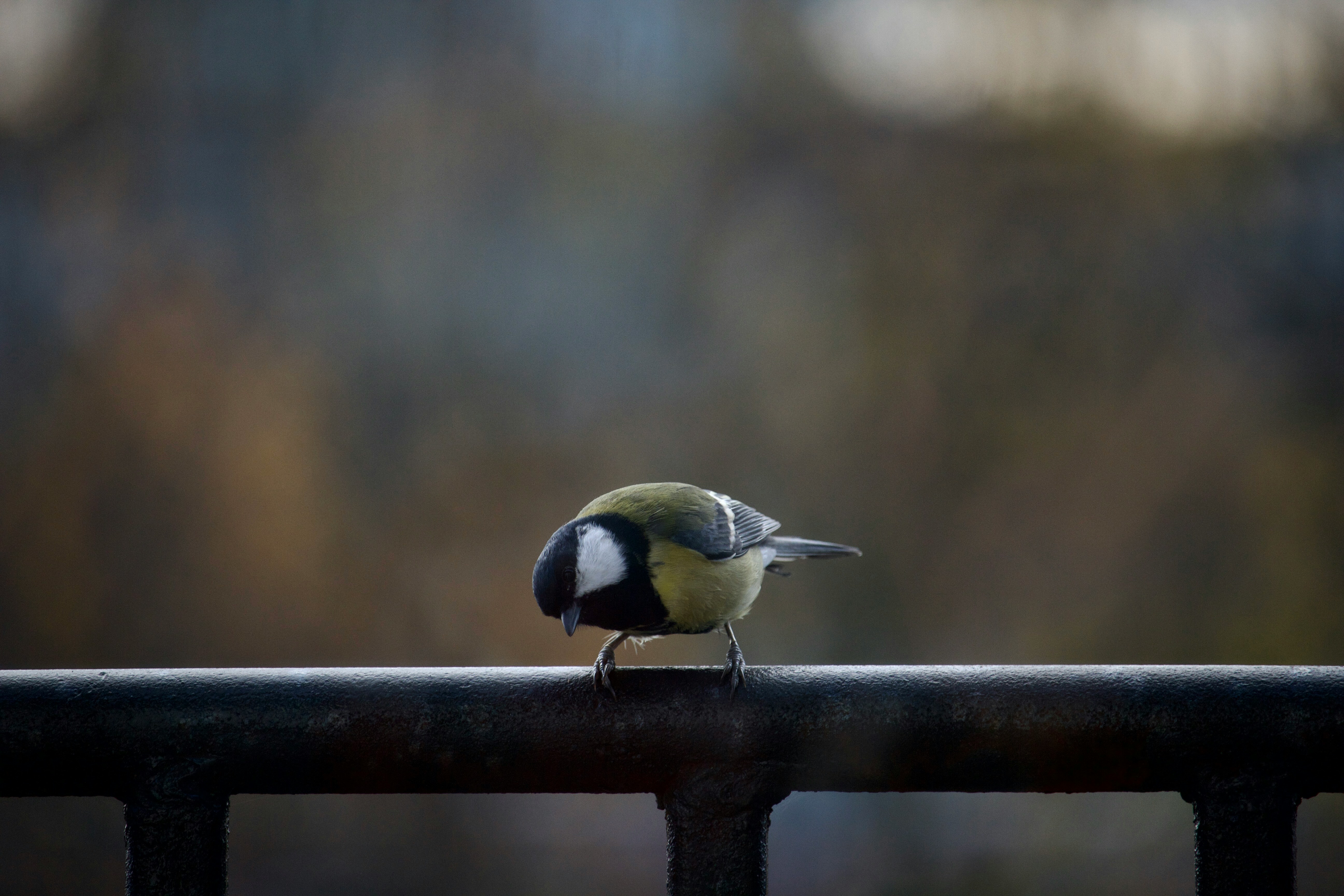
Backyard and urban birds of Oregon at a feeder
Habitat 1 of 5

Backyard and Urban Birds

Western Oregon’s mild, wet climate supports a surprisingly rich community of year-round resident birds. You do not need to leave Portland to add 30 species to your list. Most of the birds in this section visit feeders, and nearly all can be found in parks, greenbelts, and suburban gardens across the Willamette Valley and coast.
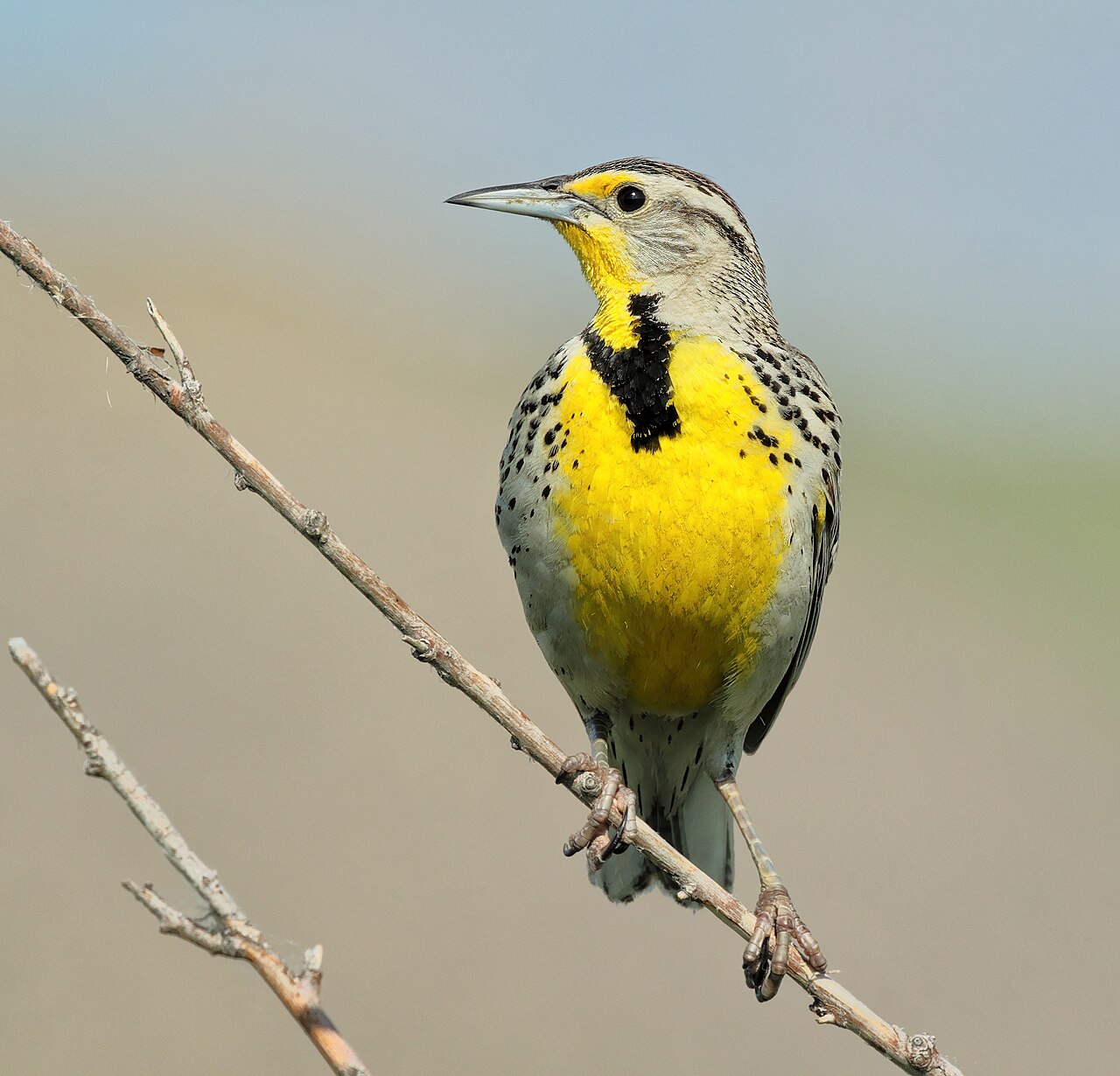
Western Meadowlark, Oregon state bird, perched on a fence post
Oregon State Bird

Western Meadowlark

Sturnella neglecta

The Western Meadowlark is Oregon’s state bird and one of the most iconic sounds of the state’s open landscapes. The male’s loud, rich, flute-like song carries across fields and roadsides from early spring through summer.

Look for a robin-sized bird with a bright yellow breast crossed by a bold black V. Brown and black streaked upperparts provide camouflage against dry grass.
Hear the call Click to play
Songbirds and Feeder Birds
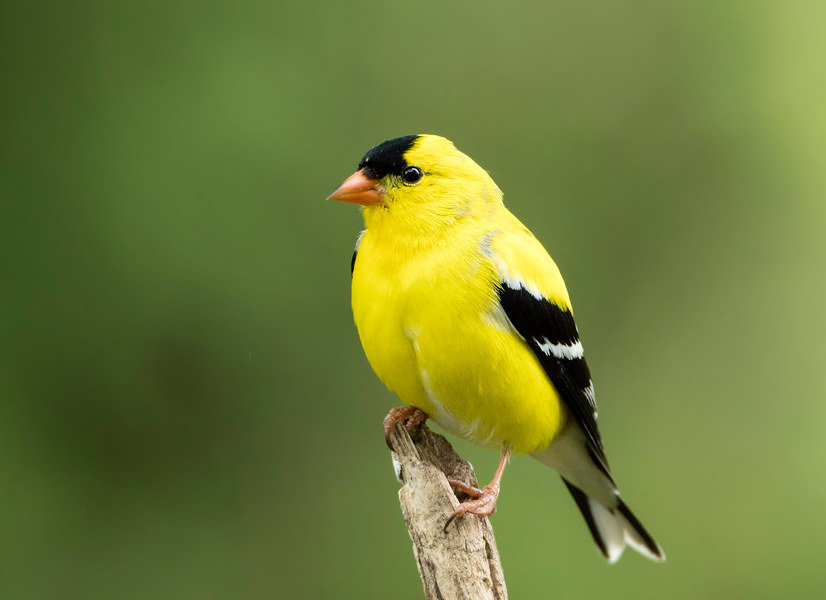
American Goldfinch bright yellow male in Oregon

American Goldfinch

Spinus tristis

Brilliant yellow in summer, olive-drab in winter. Strict seed eater that nests later than most birds, waiting for summer thistle.
Key ID Mark
Bright lemon yellow with black wings and black forehead cap (male, summer). Undulating flight pattern.
Year-roundFeeder Bird
Hear the call Click to play
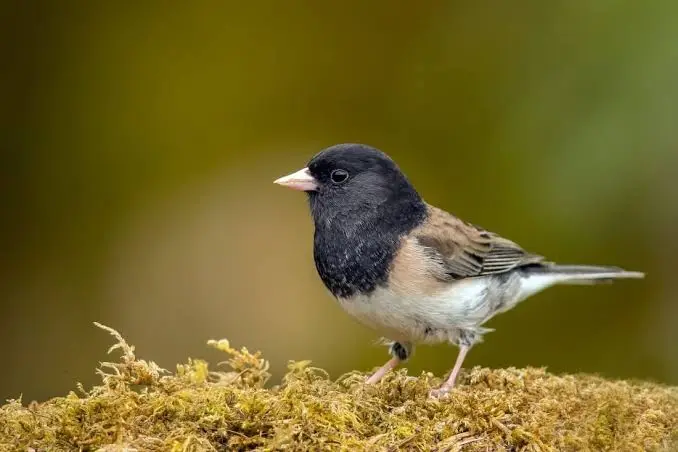
Dark-eyed Junco showing white outer tail feathers in Oregon

Dark-eyed Junco

Junco hyemalis

One of the most abundant birds in North America. Slate-grey head and back, white belly, flash of white outer tail feathers in flight.
Key ID Mark
White outer tail feathers visible in flight. Pink bill. Oregon birds (“Oregon Junco”) have rusty-brown flanks.
Year-roundFeeder Bird
Hear the call Click to play
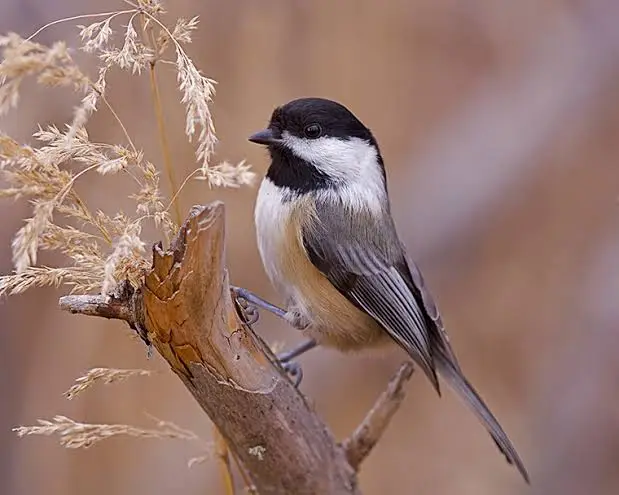
Black-capped Chickadee perched on a branch in Oregon

Black-capped Chickadee

Poecile atricapillus

Tiny, bold, and inquisitive. The first bird many Oregon beginners learn. Their “chick-a-dee-dee-dee” call is unmistakable.

Key ID Mark
Black cap, black bib, white cheeks. Small round body. More “dee” notes in the call signal greater nearby threat.
Year-roundFeeder Bird
Hear the call Click to play
American Robin with orange-red breast on an Oregon lawn

American Robin

Turdus migratorius

One of the most recognized birds in the US. Common on lawns where it hunts earthworms by sight, tilting its head to locate prey.
Key ID Mark
Orange-red breast, dark grey back, yellow bill. Often seen running across lawns and stopping suddenly.
Year-round
Hear the call Click to play
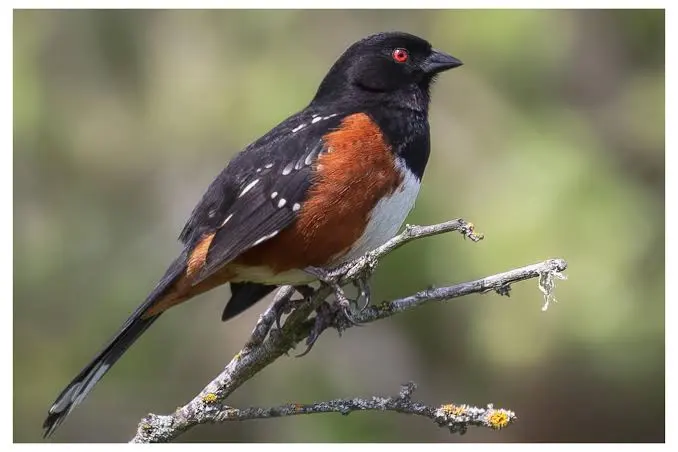
Spotted Towhee with rufous flanks scratching in leaf litter in Oregon

Spotted Towhee

Pipilo maculatus

Scratches noisily through leaf litter under shrubs. Often heard before seen. Males have striking black, white, and rufous plumage.

Key ID Mark
Black hood, white-spotted wings, rufous flanks. Loud double-scratch in leaf litter. Red eye.
Year-round
Hear the call Click to play
House Finch male with red head on a feeder in Oregon

House Finch

Haemorhous mexicanus

Abundant feeder bird across Oregon. Males display variable amounts of red on the head and breast, with the reddest males preferred by females.
Key ID Mark
Red head and breast (male), streaked brown overall. Curved bill. Cheerful warbling song. Almost always at feeders.
Year-roundFeeder Bird
Hear the call Click to play
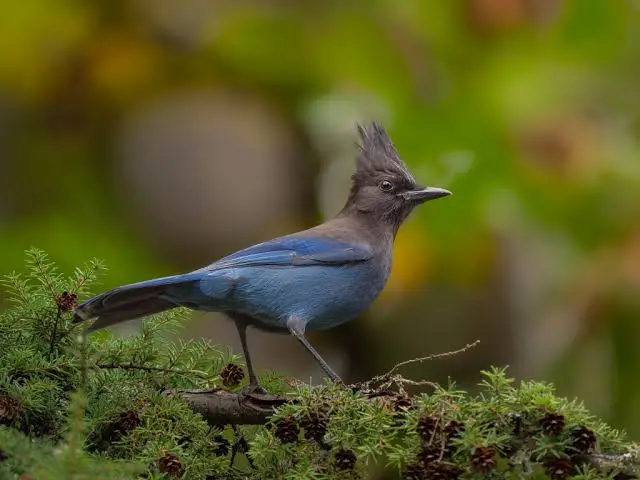
Steller's Jay with black crest in Pacific Northwest forest

Steller’s Jay

Cyanocitta stelleri

The loudest bird in any Oregon campground. Deep blue body with a black head and prominent crest. Intelligent and bold at feeders.
Key ID Mark
Black crest and head, deep blue body. Loud, harsh “shack shack shack” call. Will mimic Red-tailed Hawk.
Year-roundFeeder Bird
Hear the call Click to play
Hummingbirds
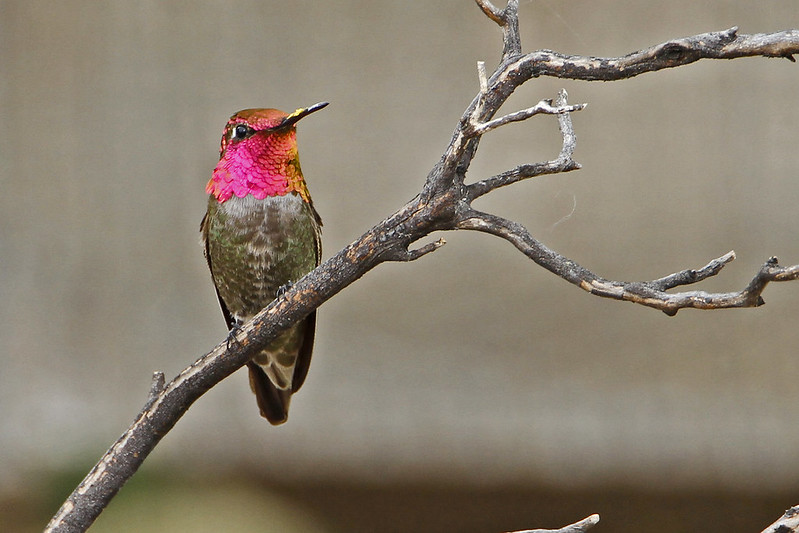
Anna's Hummingbird male with vivid magenta gorget in Oregon

Anna’s Hummingbird

Calypte anna

The only hummingbird in western Oregon year-round. Males have an iridescent magenta head and throat that appear black in poor light.
Key ID Mark
Magenta gorget and crown (male). Green back. Larger than Rufous. Only hummingbird present in Portland in winter.
Year-roundFeeder Bird
Hear the call Click to play
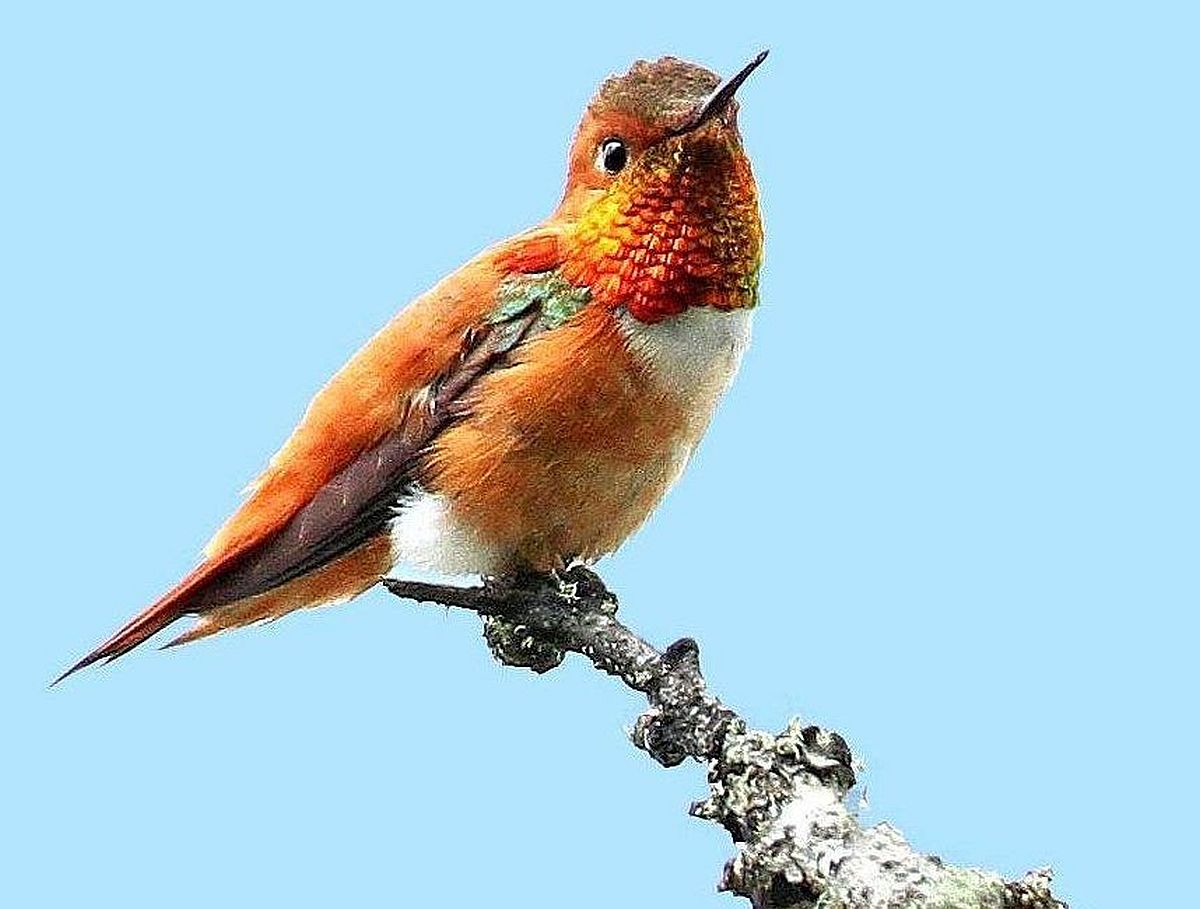
Rufous Hummingbird male showing brilliant orange plumage in Oregon

Rufous Hummingbird

Selasphorus rufus

The feistiest hummingbird in North America. Males are almost entirely orange-rufous, aggressively defending feeders.
Key ID Mark
Brilliant rufous-orange body (male). Iridescent red-orange gorget. Arrives late Feb to March; departs by August.
SummerFeeder Bird
Hear the call Click to play
Woodpeckers
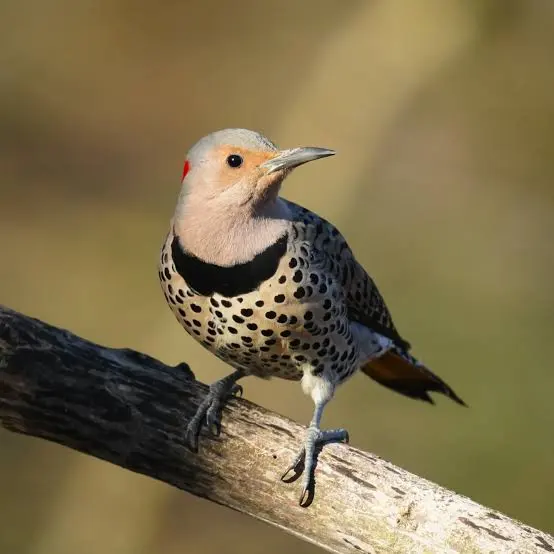
Northern Flicker woodpecker on a lawn in Oregon

Northern Flicker

Colaptes auratus

Unusual among woodpeckers for spending most of its time on the ground, digging for ants. More likely spotted on your lawn than on a tree.

Key ID Mark
Brown barred back, black chest crescent, white rump in flight. Red mustache stripe on males. Loud “wicka-wicka” call.
Year-round
Hear the call Click to play
Spot more birds with the right binocularsOur tested picks from $36 to $280, for every budget
Birds of Oregon's old-growth and mixed forests
Habitat 2 of 5

Forest Birds

Oregon’s forests range from coastal Sitka spruce rainforest to inland Douglas-fir and hemlock, to dry ponderosa pine east of the Cascades. Each supports distinct species. The bird community of an old-growth Coast Range forest is almost entirely different from a high-elevation pine forest near Bend.
Raptors
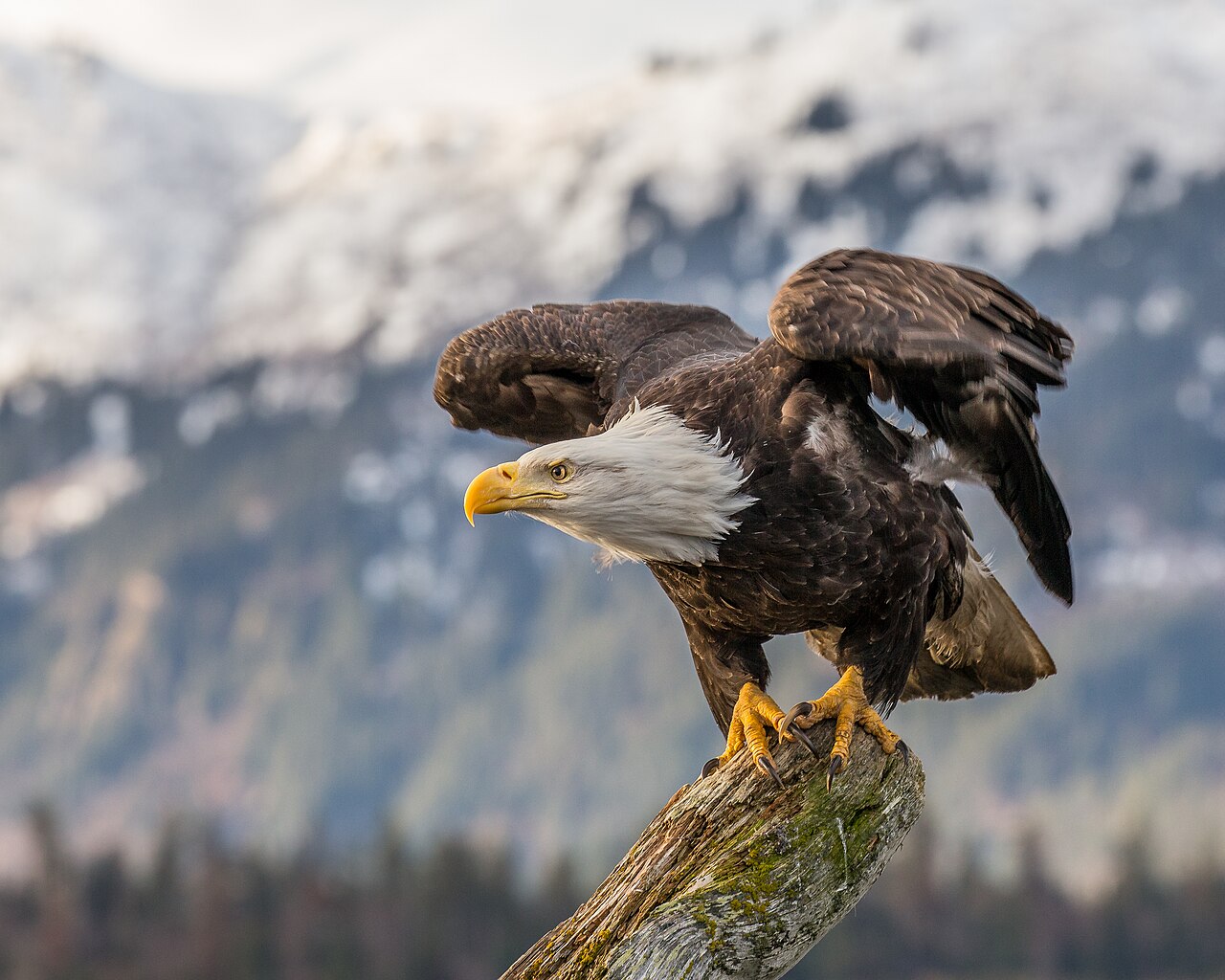
Bald Eagle with white head perched near water in Oregon

Bald Eagle

Haliaeetus leucocephalus

Oregon’s most iconic raptor. Commonly seen near large rivers, lakes, and reservoirs. Concentrations of 500 or more winter in the Klamath Basin.
Key ID Mark
White head and tail, dark brown body (adults). Massive wingspan up to 8 feet. Immatures are mottled brown for 4 to 5 years.
Year-round
Hear the call Click to play
Osprey in flight carrying a fish over Oregon waters

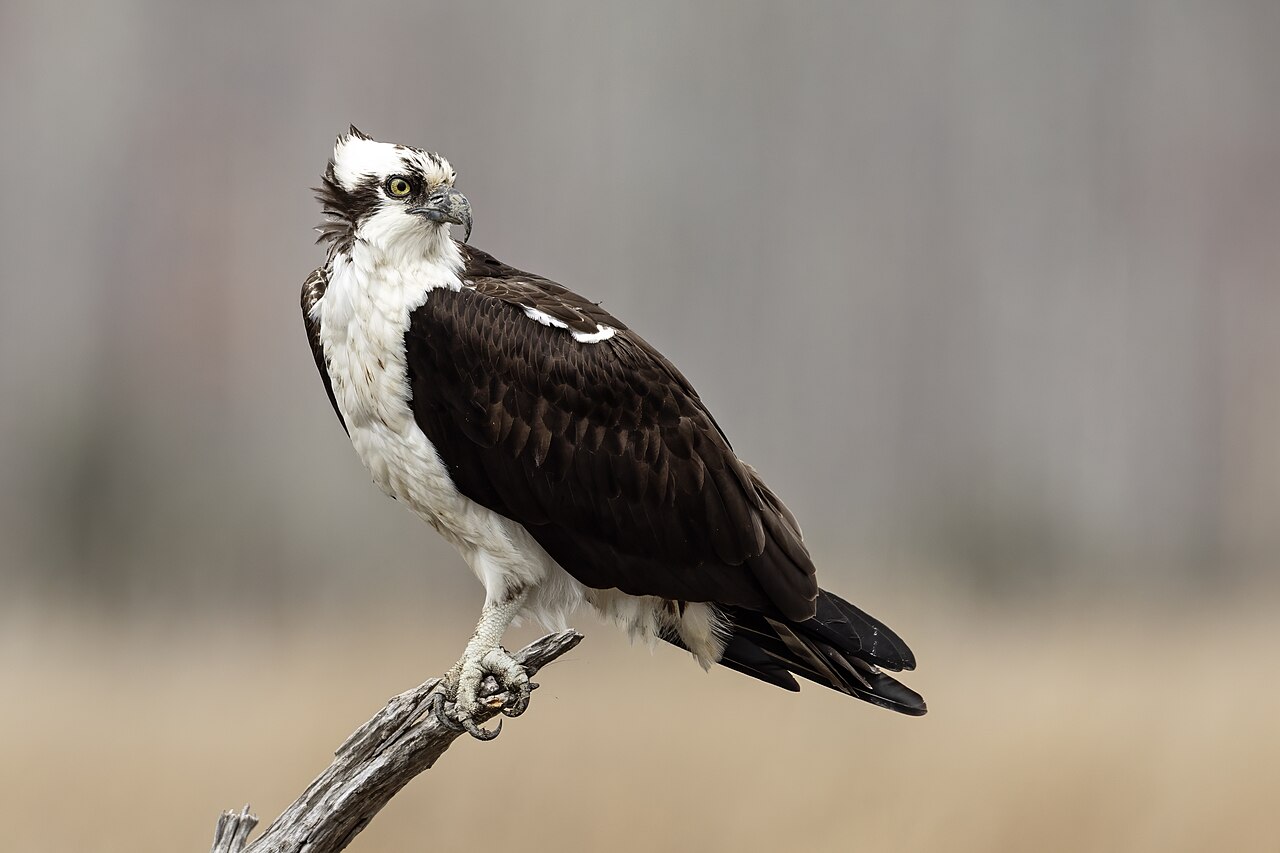
Osprey

Pandion haliaetus

The “fish hawk.” Plunges feet-first into water to catch fish. Abundant near lakes and rivers in summer.

Key ID Mark
White belly, dark brown back, dark eyestripe. Crooked wing shape in flight. Often hovers over water before diving.
Summer
Hear the call Click to play
Great Horned Owl with ear tufts in an Oregon forest

Great Horned Owl

Bubo virginianus

Oregon’s largest and most widespread owl. Begins nesting in January, using abandoned hawk or crow nests. Its deep hooting is common after dark year-round.
Key ID Mark
Large size, prominent ear tufts, yellow eyes, white throat bib. Deep hooting call in groups of 5 to 7.
Year-round
Hear the call Click to play
Forest Songbirds and Woodpeckers
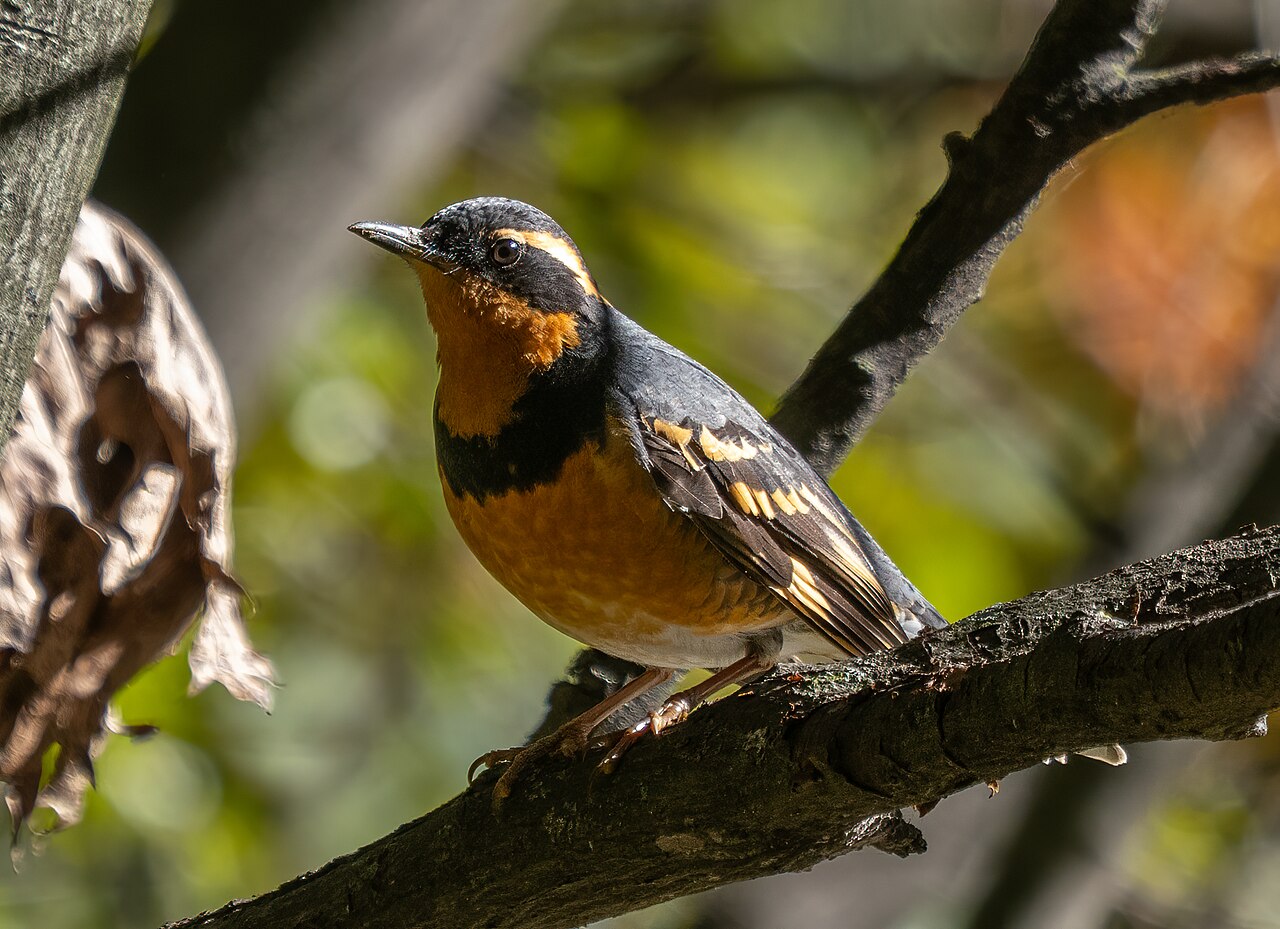
Varied Thrush showing orange eyebrow and breast band in Oregon forest

Varied Thrush

Ixoreus naevius

One of Oregon’s most beautiful forest birds. Its eerie, sustained single-note whistle is one of the defining sounds of a wet winter forest.

Key ID Mark
Orange eyebrow, orange breast with black band, orange wing bars. Robin-sized but more secretive. Haunting single-pitch song.
Year-round
Hear the call Click to play
Pileated Woodpecker with red crest excavating a tree in Oregon

Pileated Woodpecker

Dryocopus pileatus

Oregon’s largest woodpecker, roughly the size of a crow. Excavates large rectangular holes in dead trees searching for carpenter ants.

Key ID Mark
Crow-sized, flaming red crest, black body with white neck stripes. Loud, laughing “kuk-kuk-kuk” call.
Year-round
Hear the call Click to play
Oregon wetland habitat with herons and waterfowl
Habitat 3 of 5

Wetland and Riparian Birds

Oregon’s wetlands, marshes, rivers, and lakes host some of the state’s most dramatic bird concentrations. The Willamette Valley refuges, Malheur NWR, and Sauvie Island all sit along the Pacific Flyway. In peak season, these wetlands hold hundreds of thousands of birds at once.
Wading Birds and Herons
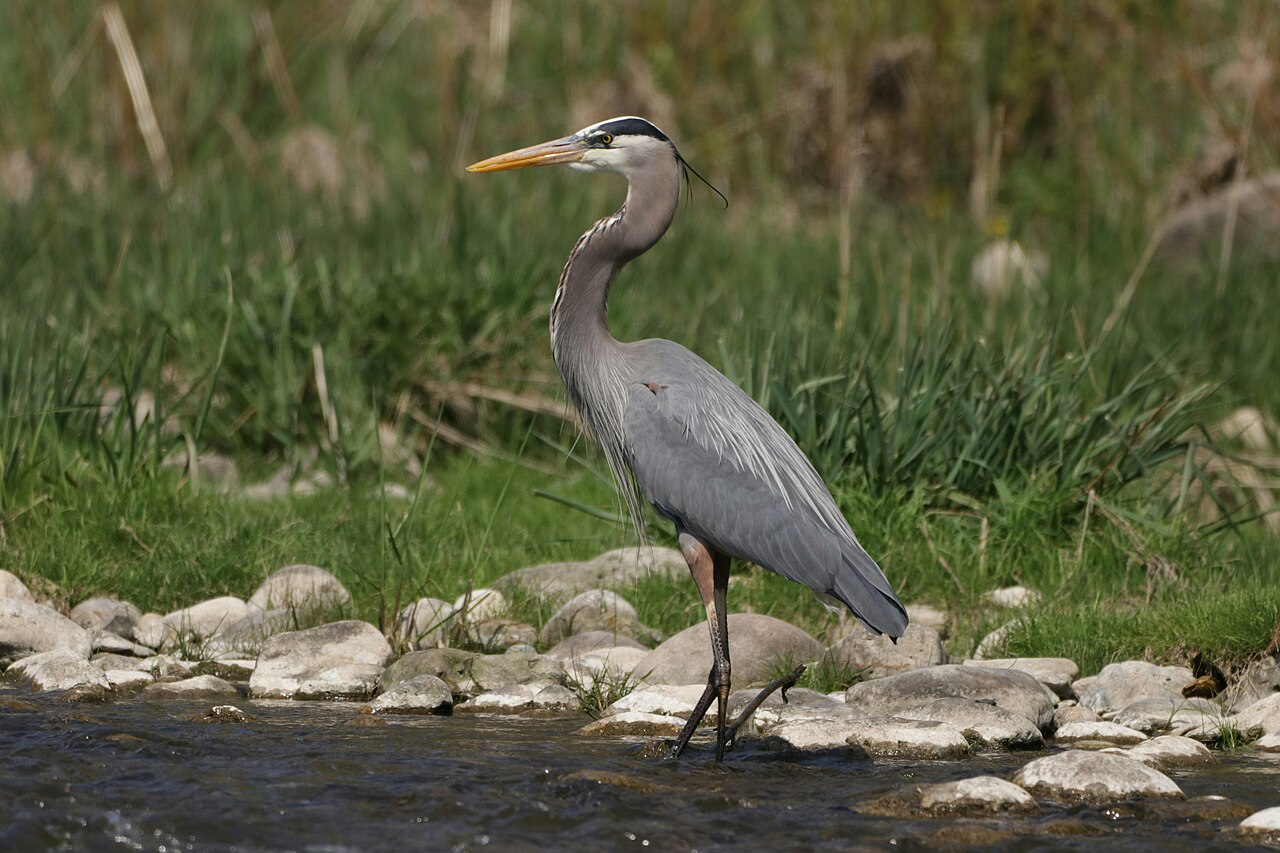
Great Blue Heron standing in shallow water in Oregon

Great Blue Heron

Ardea herodias

Oregon’s most visible large wading bird. Stands motionless in shallow water waiting for fish. Found on virtually every river and lake in the state.
Key ID Mark
Grey-blue, 4-foot-tall wading bird. Folds neck into S-curve in flight. Slow, deep wingbeats. Harsh “fraank” call when startled.
Year-round
Hear the call Click to play
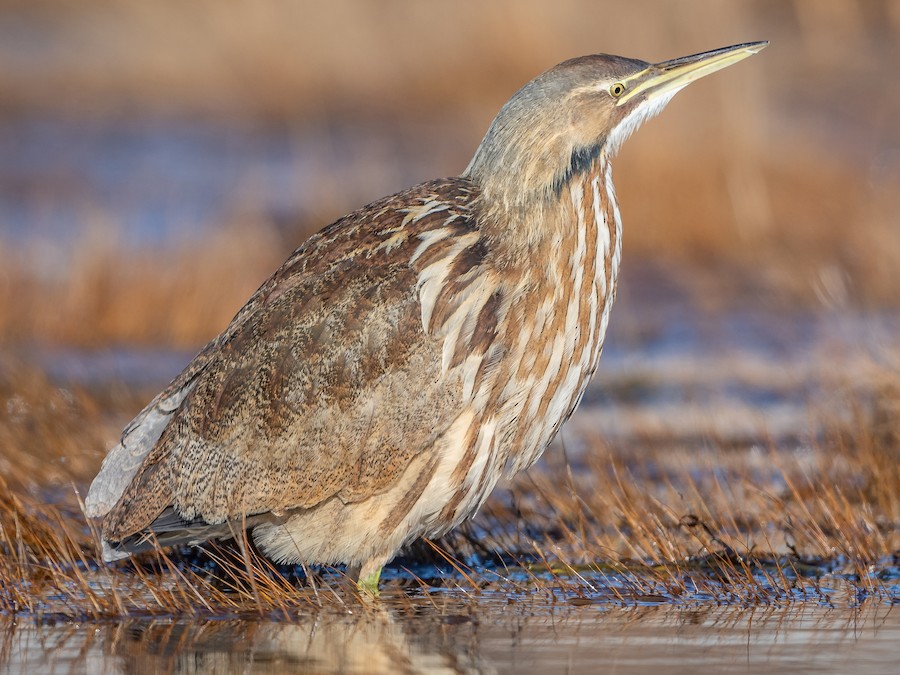
American Bittern standing motionless in Oregon marsh reeds

American Bittern

Botaurus lentiginosus

Master of camouflage. When threatened, the bittern points its bill skyward and sways, blending perfectly with surrounding reeds.
Key ID Mark
Brown streaked, heron-shaped. Bold dark neck stripe. Booming “pump-er-lunk” call carries far across wetlands in spring.
SummerSome winter
Hear the call Click to play
Cranes and Waterfowl
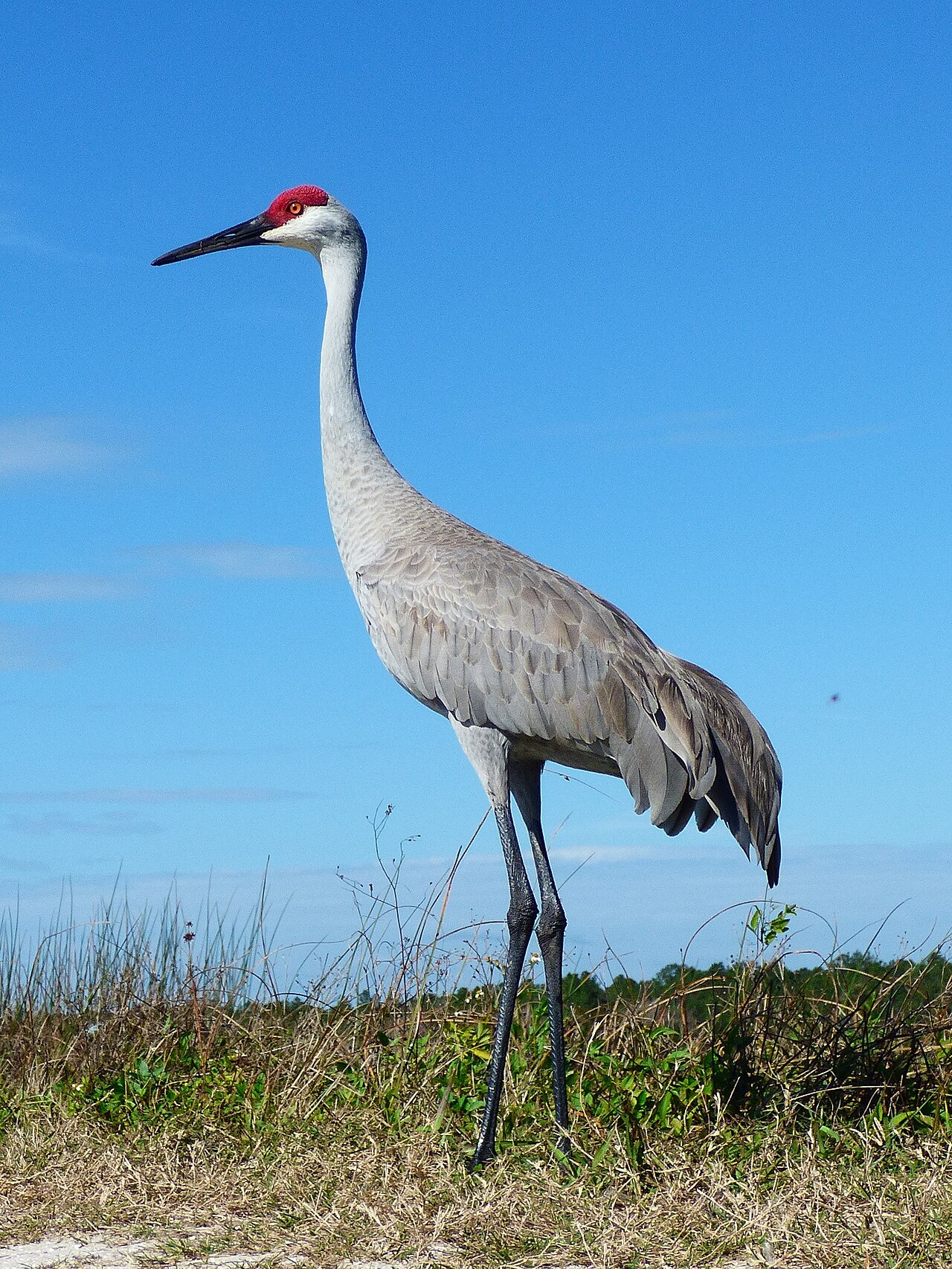
Sandhill Cranes in flight over an Oregon wetland

Sandhill Crane

Antigone canadensis

Autumn arrivals at Sauvie Island are spectacular, with flocks of thousands staging in fields before continuing south. Their rattling bugle call announces their presence from miles away.

Key ID Mark
Grey, long-necked, red forehead patch. Flies with neck extended. Distinctive rattling bugle call.
MigrantWinter
Hear the call Click to play
Wood Duck male with iridescent plumage on an Oregon pond

Wood Duck

Aix sponsa

Often called the most beautiful duck in North America. Nests in tree cavities near water and takes readily to nest boxes.
Key ID Mark
Male has iridescent green and purple head with white markings. Female grey-brown with white teardrop eye ring.
Year-round
Hear the call Click to play
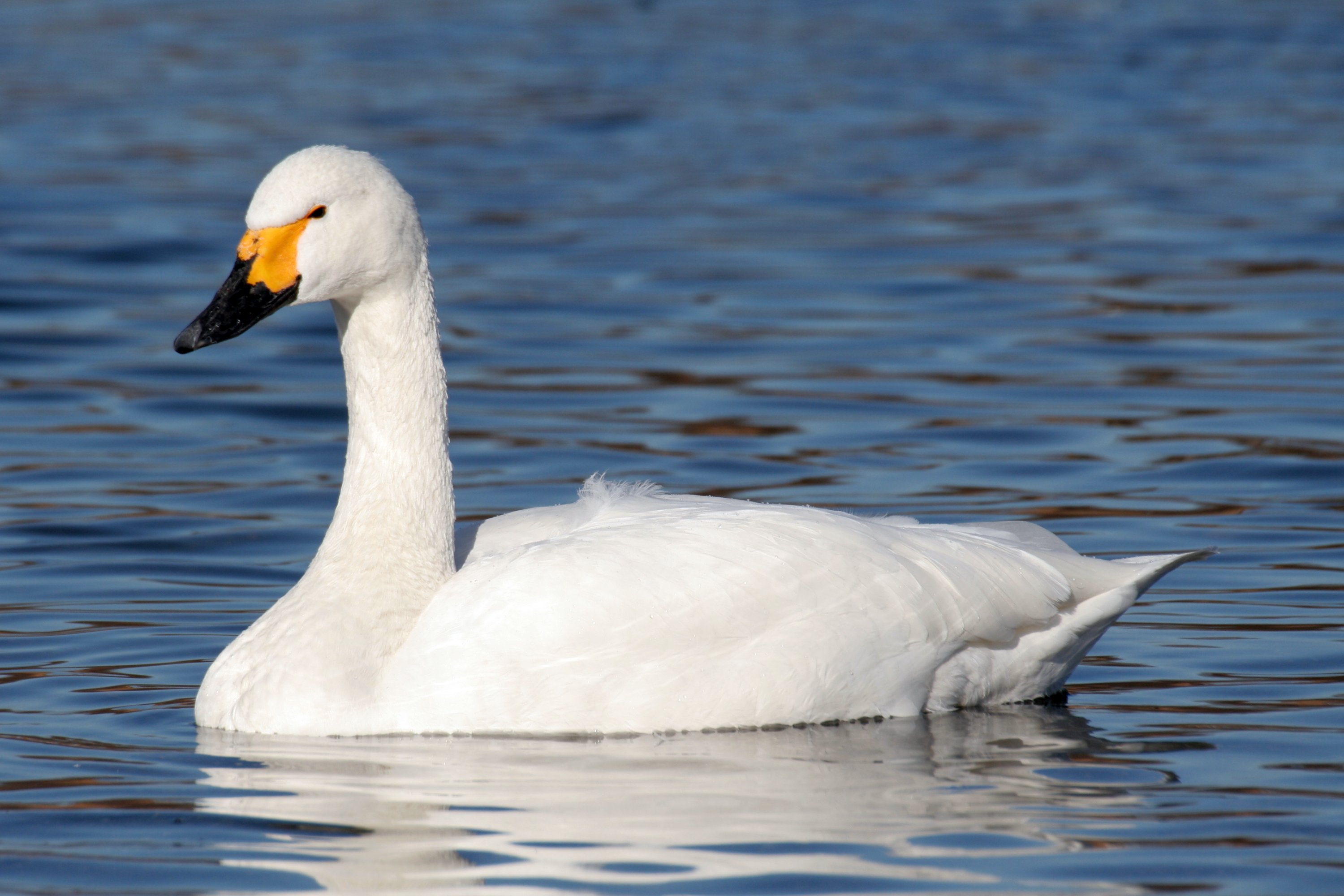
Tundra Swans in flight over Oregon wetlands

Tundra Swan

Cygnus columbianus

Oregon hosts tens of thousands of Tundra Swans each winter, primarily in the Willamette Valley refuges and Sauvie Island.
Key ID Mark
All white, long neck, black bill often with small yellow spot near eye. High-pitched “woo-woo-woo” calls.
WinterMigrant
Hear the call Click to play
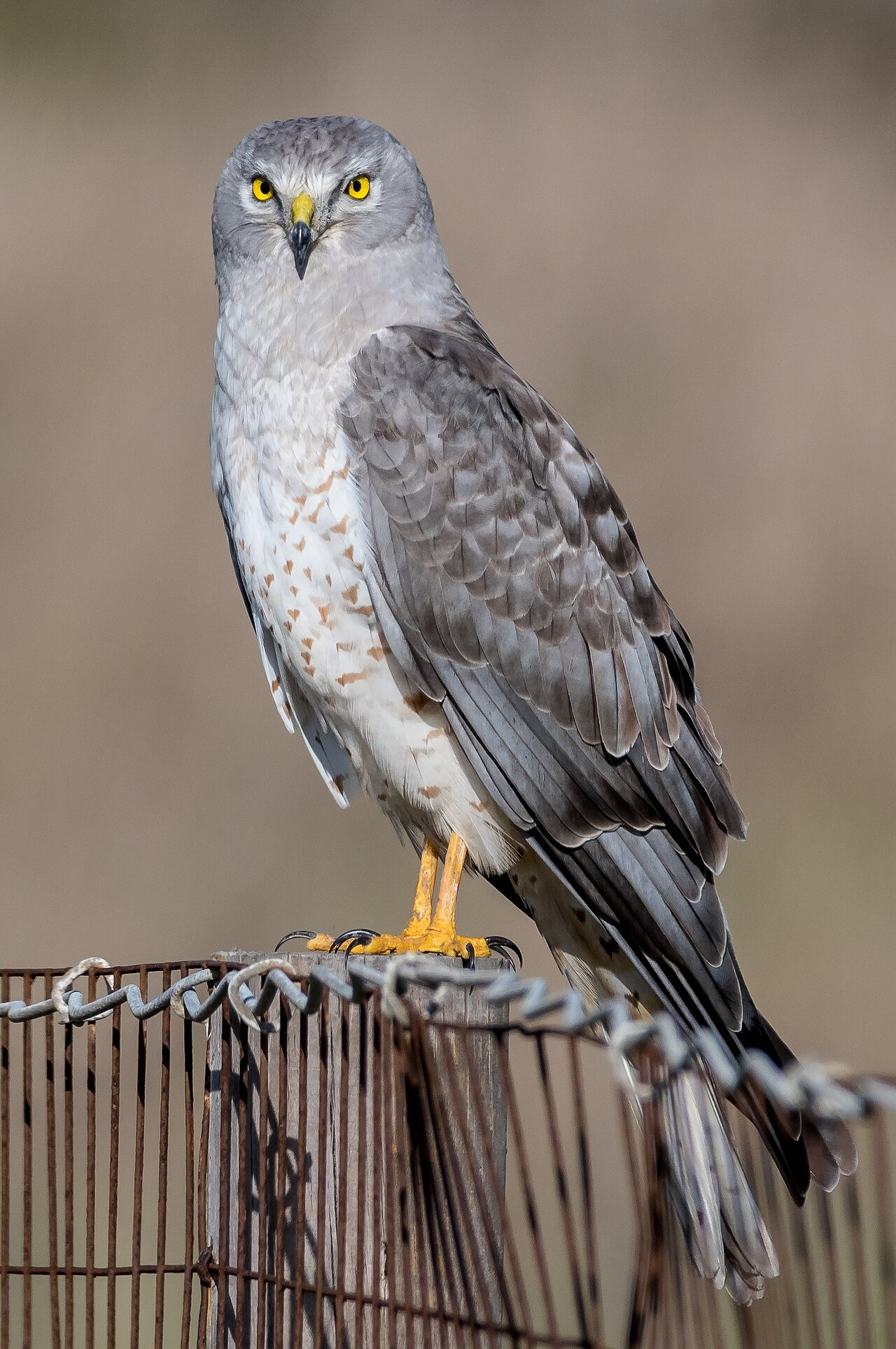
Wetland Raptors
Northern Harrier gliding low over an Oregon marsh

Northern Harrier

Circus hudsonius

Hunts by flying low and slow over marshes and fields. The white rump patch is visible at a great distance.

Key ID Mark
White rump patch visible in flight. Flies low with wings held in a slight V. Owl-like facial disc. Buoyant, tilting flight.
Year-round
Hear the call Click to play
Oregon coastal birds on rocky headlands and sea stacks
Habitat 4 of 5

Coastal and Seabirds

The 363-mile Oregon coast is one of the most productive bird habitats in the western United States. Offshore rocks and sea stacks support nesting colonies of seabirds from April through August. Rocky shores host specialized shorebirds year-round.

Blue Birds Found in Oregon

Searching for blue birds specifically? Oregon has several striking blue species across different habitats. Here are the four most likely blue birds you will encounter:

  • Steller’s Jay Deep blue with black crest. Western Oregon forests. Year-round.
  • Western Bluebird Vivid blue back, rusty breast. Open woodlands east of Cascades.
  • Mountain Bluebird All sky-blue. High elevation meadows in summer.
  • Lazuli Bunting Brilliant blue-and-orange. Spring and summer migrant.
Seabirds and Alcids
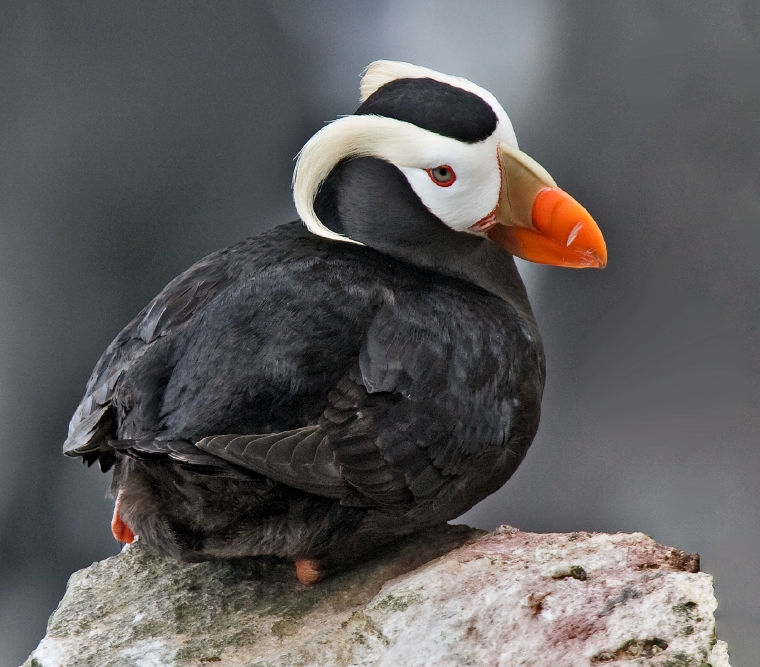
Tufted Puffin with golden head plumes on an Oregon sea stack

Tufted Puffin

Fratercula cirrhata

One of Oregon’s most sought-after seabirds. Nests on offshore rocks and headlands from April through August. Unmistakable in breeding plumage.

Key ID Mark
Black body, white face, golden head tufts, large orange-red bill (breeding). Cape Meares is a reliable viewing site.
Summer
Hear the call (All About Birds)
Brown Pelicans flying in formation over the Oregon coast

Brown Pelican

Pelecanus occidentalis

Plunge-dives for fish from heights up to 60 feet. Increasingly common along the Oregon coast in summer and fall.

Key ID Mark
Huge size, long bill with expandable pouch. Often seen flying in lines low over the surf.
Summer
Hear the call Click to play
Common Murres packed on an Oregon sea stack nesting colony

Common Murre

Uria aalge

Oregon’s most abundant seabird. Nests in dense colonies on offshore rocks and sea stacks. Cape Meares hosts one of the largest colonies on the coast.

Key ID Mark
Black above, white below, slender pointed bill. Stands upright on rocks. Buzzy “murr” calls from colony.
Year-round
Hear the call Click to play
Pigeon Guillemot with bright red feet on Oregon coastal rocks

Pigeon Guillemot

Cepphus columba

A close-inshore alcid found on rocky sections of the Oregon coast year-round. Nests in cliff crevices and under boulders.
Key ID Mark
Black with white wing patches (breeding), red feet and mouth. Usually seen singly close to rocky shores.
Year-round
Hear the call Click to play
Rocky Shore and Estuary Birds
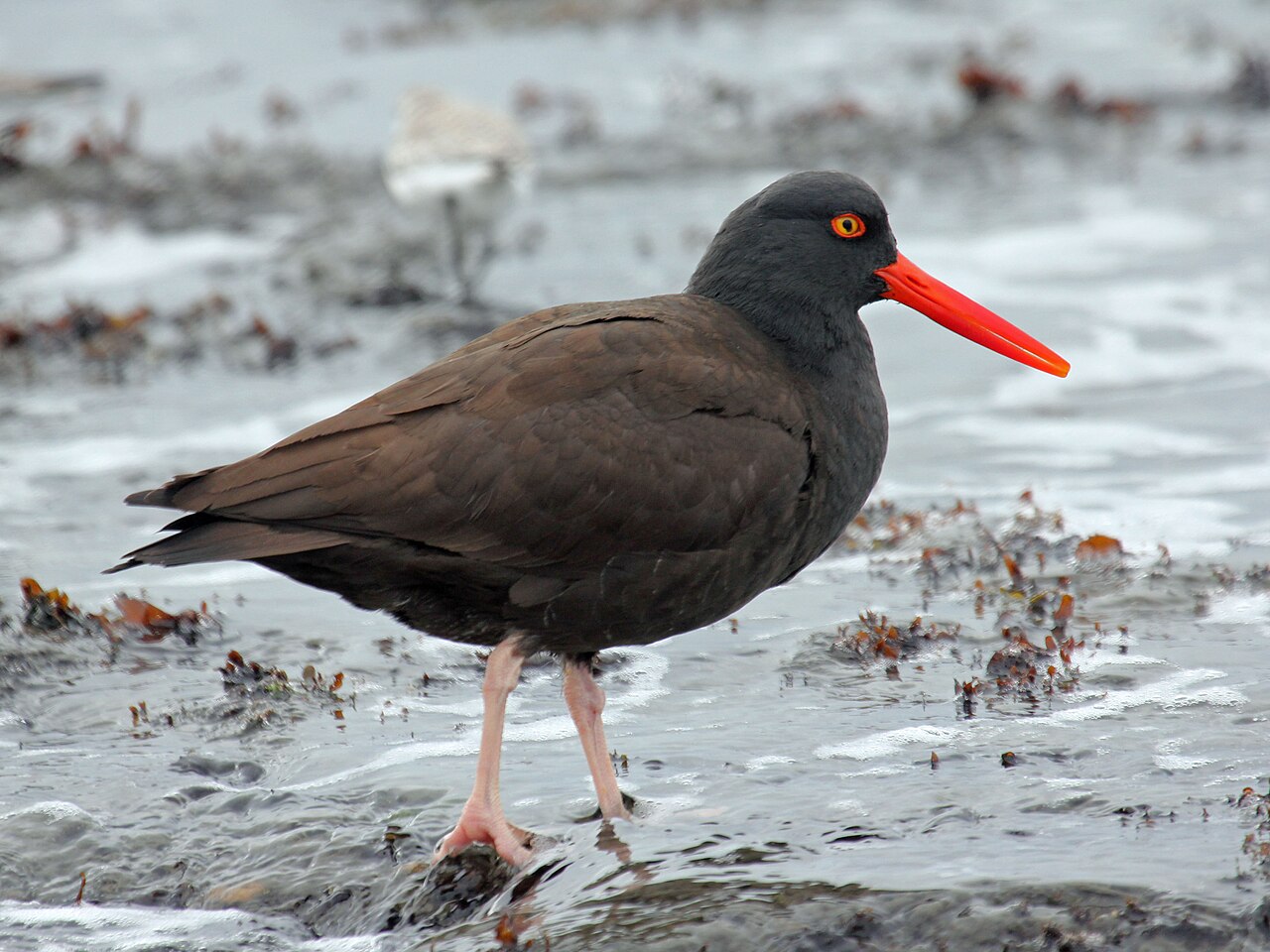
Black Oystercatcher with bright orange bill on Oregon rocks

Black Oystercatcher

Haematopus bachmani

A year-round resident of Oregon’s rocky coastline. Pries open mussels and limpets with its striking orange bill.
Key ID Mark
All black, bright orange-red bill, pink legs, yellow eye. Found only on rocky shores. Loud “wheep wheep” calls.
Year-round
Hear the call Click to play
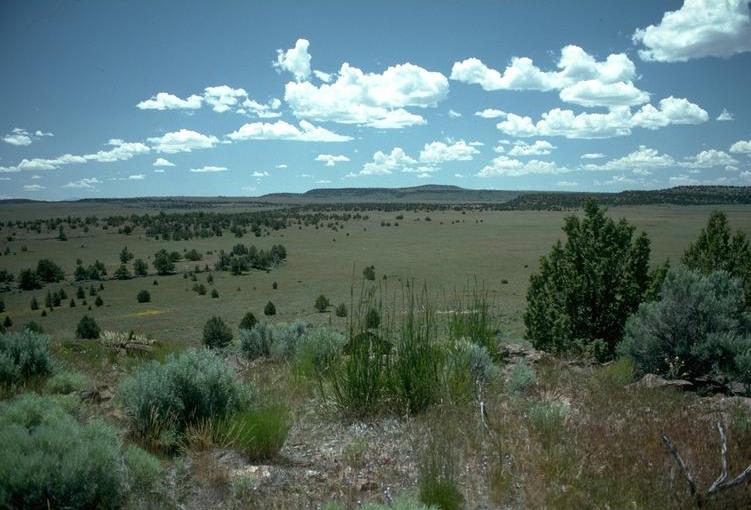
Eastern Oregon high desert habitat with sagebrush and open sky
Habitat 5 of 5

Eastern Oregon and Desert Birds

East of the Cascades, Oregon transforms into a different world. Sagebrush steppe, juniper woodland, alkali lakes, rimrock canyons, and high desert grasslands replace the forests of the west. This is Oregon’s most underbirded region, and for experienced birders, its most rewarding.

Grassland and Sagebrush Species
Western Meadowlark singing from a sagebrush perch in eastern Oregon

Western Meadowlark

Sturnella neglecta

Oregon’s state bird is far more abundant in the open grasslands east of the Cascades. The male sings from fenceposts and shrubs all spring and summer.

Key ID Mark
Bright yellow breast with black V. Brown streaked upperparts. Rich flute-like song of 7 to 10 notes.
Year-round
Hear the call Click to play
Greater Sage-Grouse male displaying on a lek in eastern Oregon sagebrush

Greater Sage-Grouse

Centrocercus urophasianus

The largest grouse in North America and the signature species of the Great Basin. Males perform elaborate lek displays in early spring.

Key ID Mark
Large, brown-mottled body, black belly patch, spiky tail. Males display with yellow air sacs on white breast.
Year-round
Hear the call Click to play
Swainson's Hawk perched on a fencepost in eastern Oregon farmland

Swainson’s Hawk

Buteo swainsoni

A long-distance migrant that breeds in Oregon’s open country east of the Cascades and winters in Argentina.

Key ID Mark
Dark chest bib contrasting with white belly. Long wings held in shallow V when soaring.
SummerMigrant
Hear the call Click to play
Loggerhead Shrike perched on wire in eastern Oregon desert

Loggerhead Shrike

Lanius ludovicianus

The “butcher bird.” Hunts like a raptor but is songbird-sized. A declining species, most reliably found in eastern Oregon’s open shrublands.

Key ID Mark
Grey back, white underparts, black mask, hooked bill. Perches conspicuously on fenceposts and wires.
Year-round
Hear the call Click to play
Horned Lark with small black horns on open ground in eastern Oregon

Horned Lark

Eremophila alpestris

One of the most abundant birds in eastern Oregon’s open habitats. Flocks of hundreds winter in plowed fields and along roadsides.

Key ID Mark
Pale brown, black chest band, black mask, tiny black “horns.” White outer tail feathers in flight.
Year-round
Hear the call Click to play

Frequently Asked Questions

The Western Meadowlark is the state bird of Oregon. It is a medium-sized songbird with a bright yellow breast marked with a bold black V. The male’s loud, flute-like song is one of the most distinctive sounds of Oregon’s open fields and grasslands.
The most common birds in Oregon year-round include the American Robin, Dark-eyed Junco, Black-capped Chickadee, Steller’s Jay, American Crow, Song Sparrow, House Finch, Anna’s Hummingbird, and Northwestern Crow. All are easily found in backyards, parks, and urban greenspaces across western Oregon.
Several blue birds are found in Oregon. The Western Bluebird is a small thrush with a vivid blue back and rusty breast, found in open woodlands east of the Cascades. The Mountain Bluebird is all sky-blue. Steller’s Jay is deep blue with a black crest and is the most commonly seen blue bird in western Oregon forests. Lazuli Bunting is a brilliant blue-and-orange songbird found during summer migration.
As of 2022, the Oregon Bird Records Committee has accepted 547 species on the official Oregon bird list. Oregon ranks fifth in bird species diversity in the United States, behind Florida, New Mexico, Texas, and California.
Common small birds in Oregon backyards include the Black-capped Chickadee, Dark-eyed Junco, American Goldfinch, House Finch, Song Sparrow, Spotted Towhee, Bushtit, and Bewick’s Wren. Anna’s Hummingbird is a year-round resident in western Oregon and regularly visits feeders.