Best Binoculars for Bird Watching
10 picks ranked by glass quality, magnification fit, and field-tested durability. From $36 starter compacts to $280 premium 8×42s, the right pair for every birder.
Birding binoculars are general-purpose binoculars judged on the criteria that actually matter for spotting and identifying birds: color fidelity for plumage detail, wide field of view for tracking movement, and steady image at typical viewing distances. The 8×42 spec dominates this category for good reason; it gets all three right.
This guide covers ten picks across every realistic birding kit: the 8×42 standards for serious birders, 10×42 picks for open-country and shore birding, low-light specialists for dawn chorus, budget pairs for new birders, and ultra-compact backups. Brands include Vortex, Athlon, Nikon, Celestron, Bushnell, Gosky, and Occer.
If you’re new to birding and don’t know your specific use case, the Vortex Diamondback HD 8×42 is the default answer. The 8×42 spec, HD glass, and Vortex’s lifetime warranty make it the safest first serious purchase. For the broader category guide, see the main hub.
The 10 Best Binoculars for Bird Watching
Tap any product to jump to the full review, or click “View on Amazon” to see current pricing and availability.
-
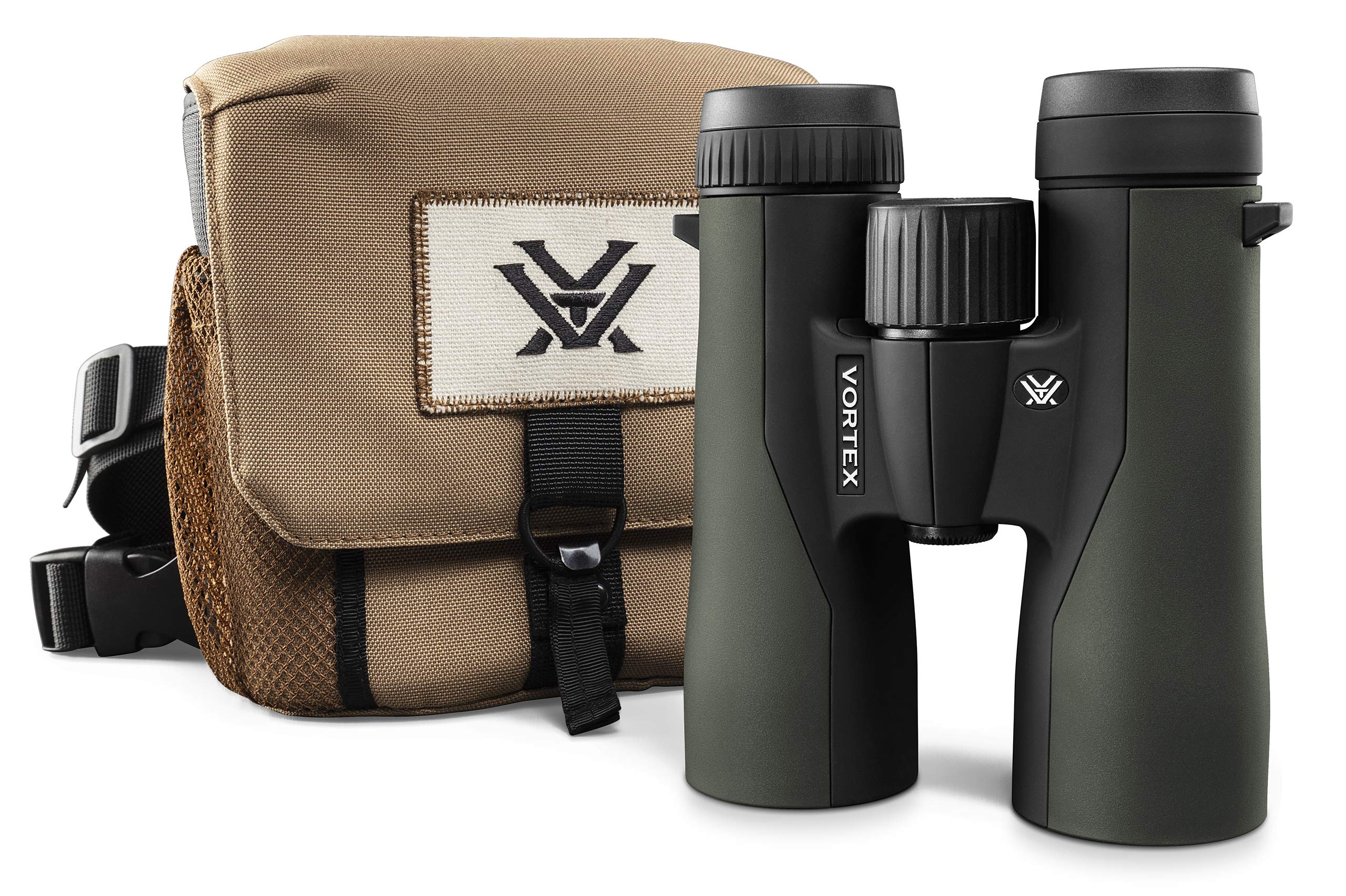 View on AmazonBest OverallVortex Optics Diamondback HD 8×42 Binoculars
 -
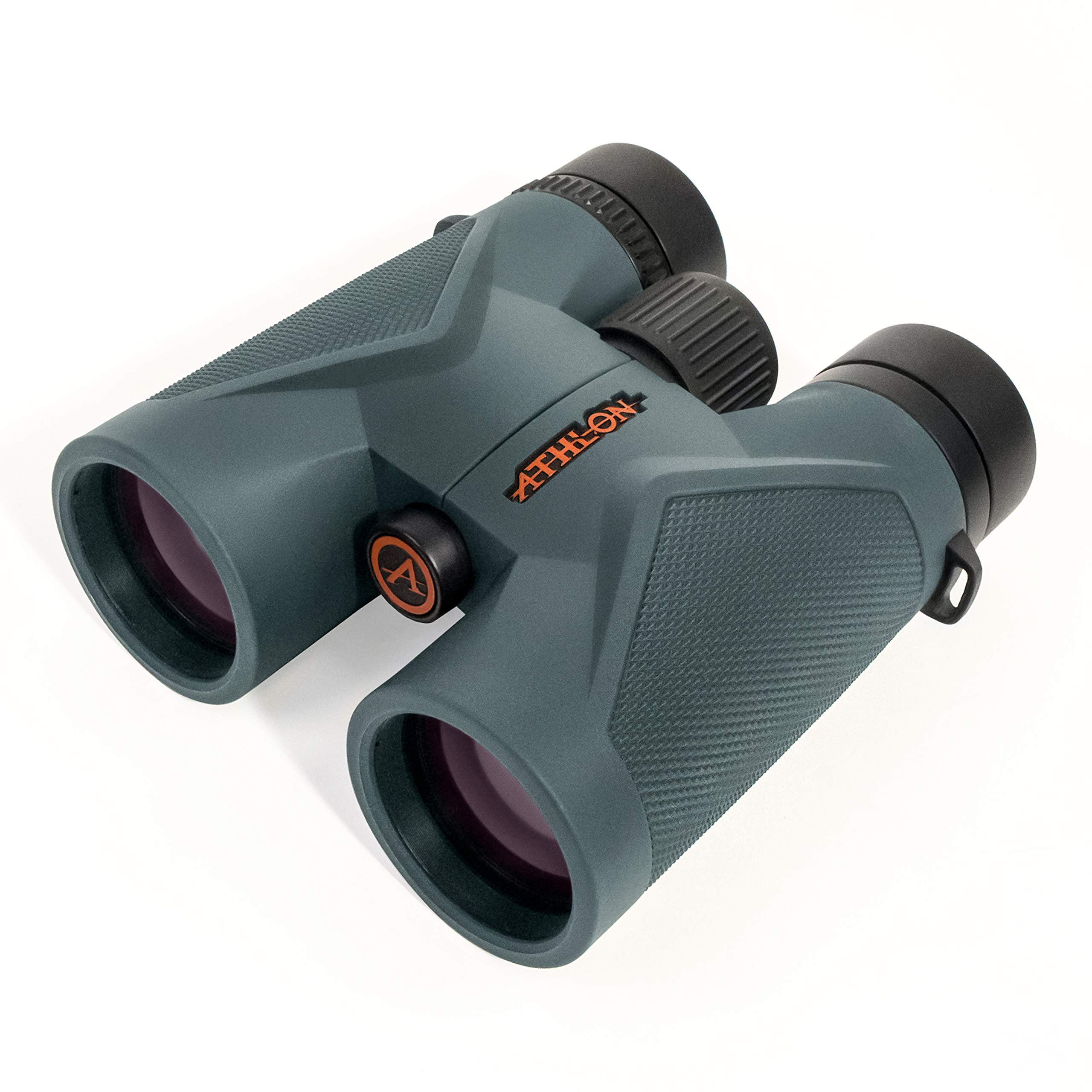 View on AmazonBest Mid-RangeAthlon Optics Midas UHD 8×42 Binoculars
 -
 View on AmazonBest Premium PickNikon Monarch M5 8×42 Binoculars
 -
 View on AmazonBest for First-Time BirdersCelestron Nature DX 8×42 Binoculars
 -
 View on AmazonBest 10× for Open CountryNikon PROSTAFF P3 10×42 Binoculars
 -
 View on AmazonBest Waterproof ValueBushnell H2O Waterproof 10×42 Binoculars
 -
 View on AmazonBest for Low-Light BirdingCelestron Outland X 10×50 Binoculars
 -
 View on AmazonBest Budget with Phone AdapterGosky 10×42 Roof Prism Binoculars
 -
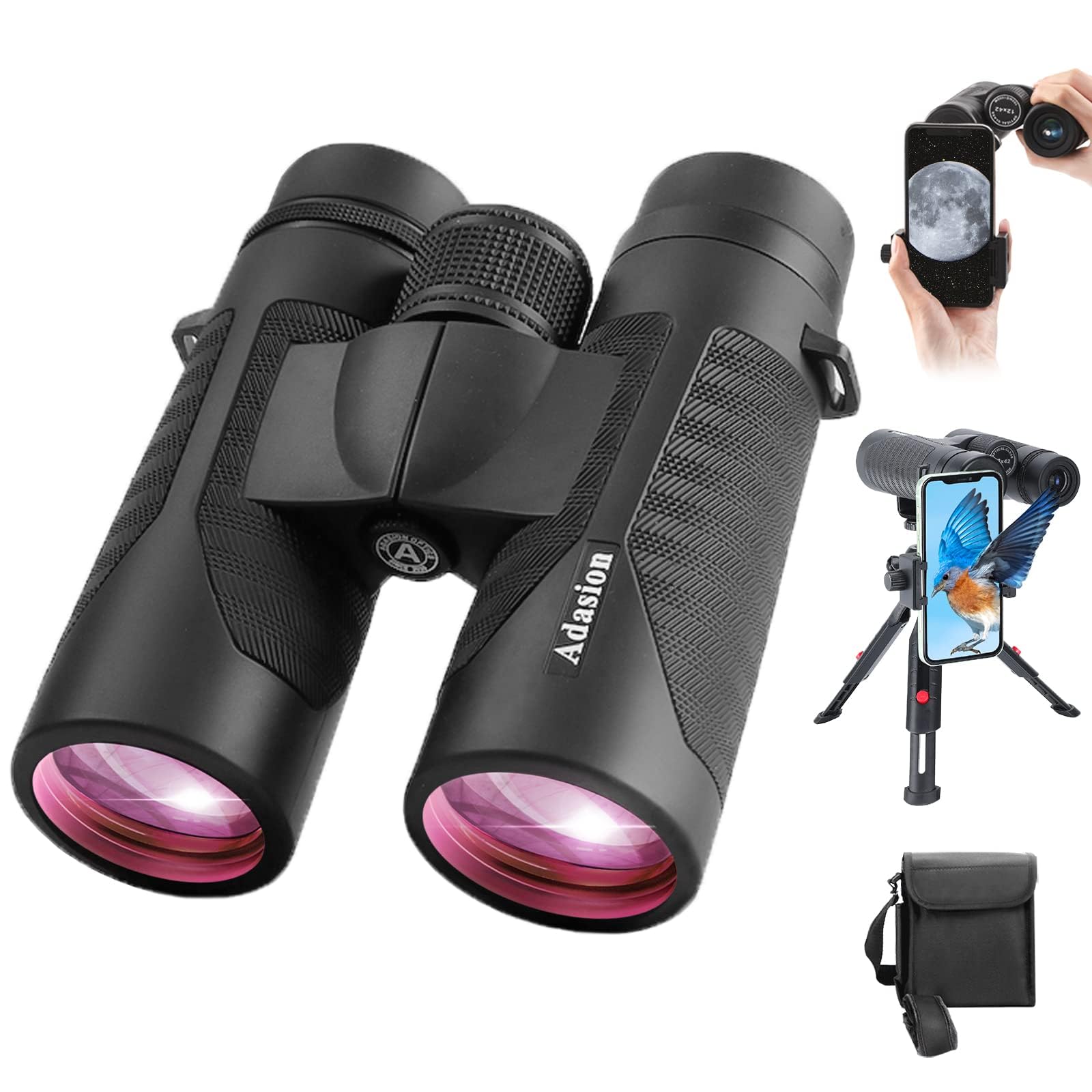 View on AmazonBest Long-Reach Budget12×42 HD Binoculars with Phone Adapter and Tripod
 -
 View on AmazonBest Compact BackupOccer 12×25 Compact Binoculars
What to Know Before You Buy
Four spec choices determine which binocular fits your use case. Get these right and the rest of the decision falls into place. Get them wrong and you’ll end up disappointed regardless of price.
8×42 is the birding standard
Most experienced birders choose 8× over 10×. The wider field of view makes tracking movement easier, the steadier image reduces fatigue, and 8× is plenty of magnification for typical bird viewing distances. Use 10× only if you frequently scan open areas like coastlines, marshes, or grasslands.
ED glass earns its premium
ED (Extra-low Dispersion) glass cuts the color fringing you see around bright birds against contrasting backgrounds, the rainbow halo around a yellow warbler against a gray sky. The Athlon Midas UHD and Nikon Monarch M5 both use ED glass. It’s the upgrade most worth paying for in birding-tier optics.
Eye relief matters for glasses wearers
If you wear glasses, you need at least 15mm of eye relief to see the full field of view. Look for twist-up or fold-down eyecups that adjust to your face. This spec is often overlooked and leads to a lot of frustrating, narrow views. Most picks here have 16mm+ eye relief; the Celestron Nature DX has 18mm.
BAK-4 prisms are non-negotiable
BAK-4 prisms transmit more light and produce rounder, cleaner exit pupils than BK-7 glass. Nearly every quality birding binocular uses BAK-4. If a spec sheet doesn’t mention BAK-4, that’s a red flag for budget-quality internals that will limit your image quality on serious birding outings.
All 10 Birding Picks: Detailed Reviews
Each pick is rated on optical quality, build, suitability for its use case, and value at its price tier. Click any “Check Price on Amazon” button for current pricing.
Vortex Optics Diamondback HD 8×42 Binoculars
8×42 in the value tier with Vortex’s lifetime VIP warranty. The pair experienced birders recommend first.
The Vortex Diamondback HD earns its best-overall status by doing almost everything right at a price that doesn’t require a special occasion to justify. With 8x magnification and a 42mm objective, it hits the exact sweet spot that experienced birders recommend: bright images, a wide field of view, and a steady picture you can hold all morning without fatigue.
Vortex uses high-density (HD) glass in the Diamondback, which reduces color fringing, that rainbow halo you sometimes see around high-contrast subjects like a bird perched against a bright sky. The phase-corrected, dielectric-coated BAK-4 prisms deliver crisp, accurate color rendition, which matters when you’re trying to distinguish a Townsend’s Warbler from a Yellow-rumped in October. The close focus is 5 feet, which makes it equally capable for butterflies and dragonflies.
Argon purging and a rubber-armored body mean it will handle Oregon rain without complaint. The included VIP (Very Important Promise) lifetime warranty from Vortex is unconditional: they’ll repair or replace it, no questions asked. At this price, that warranty alone makes it the smart choice.
Pros
- Outstanding image quality for the price
- HD glass reduces chromatic aberration
- Lifetime unconditional warranty
- Waterproof and fogproof
- 5-foot close focus distance
Cons
- Eyecups can feel a bit loose
- Slightly heavier than mid-size alternatives
Athlon Optics Midas UHD 8×42 Binoculars
ED glass at $225. The smartest step-up for serious birders without going to flagship pricing.
Athlon has built a strong reputation in the birding community by packing premium glass features into accessible price tiers. The Midas UHD uses Extra-low Dispersion (ED) glass, the same technology found in binoculars costing two to three times as much. ED glass is particularly effective at eliminating color fringing, giving you truer colors when studying plumage in bright or backlit conditions.
The Ultra HD optics with fully multi-coated lenses and dielectric-coated, phase-corrected BAK-4 roof prisms produce an image that competes comfortably with models in the $400 range. If you’re a serious birder who wants to step up from an entry-level pair without committing to a flagship price, the Midas UHD is a very compelling option.
Pros
- ED glass for superior color accuracy
- Punches well above its price tier
- Excellent build quality
- Wide field of view
Cons
- More expensive than the Diamondback
- Smaller review base than competitors
Nikon Monarch M5 8×42 Binoculars
The Nikon birding line that’s been the safe answer for 20+ years. Premium glass, first-rate ergonomics.
The Nikon Monarch line has been the go-to recommendation for serious birders for over two decades, and the M5 continues that tradition. Nikon’s ED glass is first-rate, and the fully multi-coated optics deliver the kind of bright, crisp, true-color images that make identifying difficult species noticeably easier.
For eyeglass wearers, the long eye relief and smooth turn-and-slide eyecups are particularly welcome. The Monarch M5 is also notably well-balanced in hand, which reduces fatigue on long dawn patrols. If you’re buying binoculars you expect to use for the next 10 to 15 years, the Monarch M5 is a sound investment.
Pros
- Exceptional Nikon ED glass
- Excellent for eyeglass wearers
- Well-balanced, comfortable ergonomics
- Trusted long-term performer
Cons
- Higher price point
- Focus wheel travel can feel slow for some
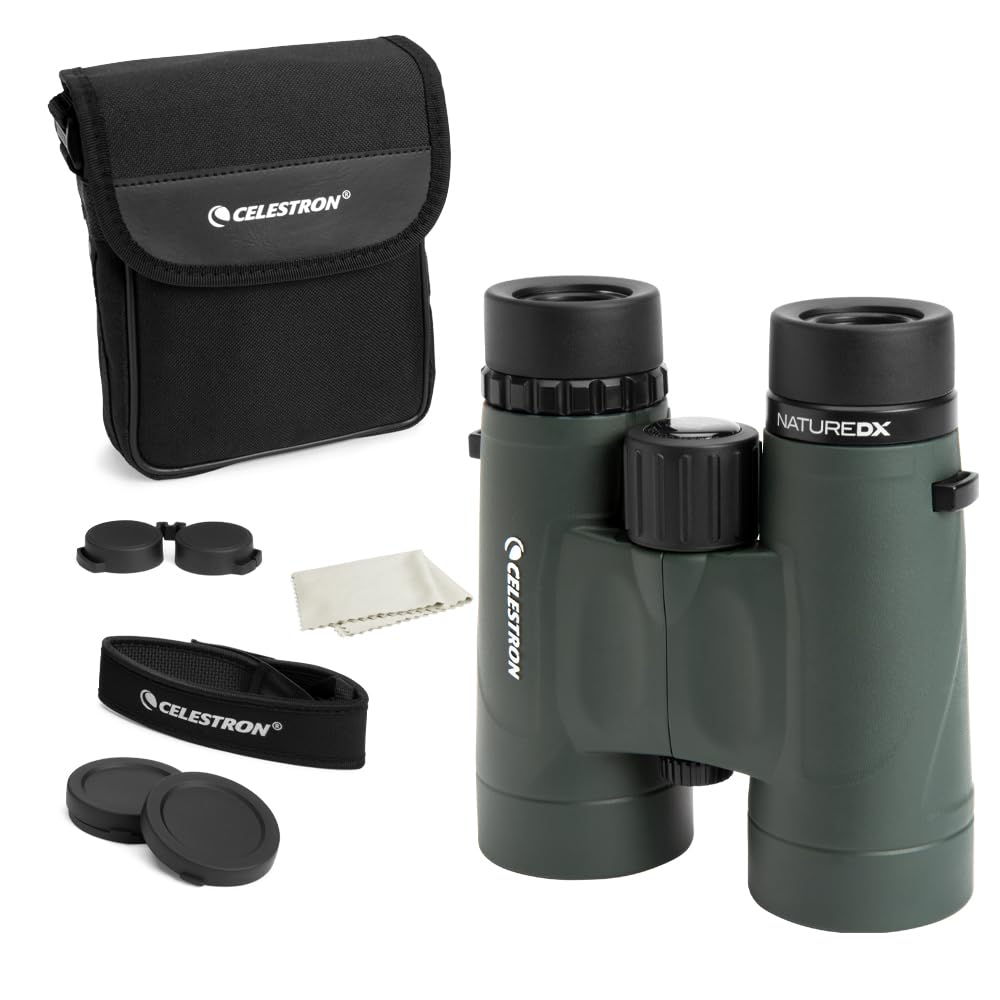
Celestron Nature DX 8×42 Binoculars
$136 for waterproof 8×42 with phase-coated optics. The right first serious binocular for new birders.
The Celestron Nature DX is the go-to recommendation for birders buying their first serious pair or upgrading from a cheap department store set. At under $150, it offers features that used to cost twice as much: phase-coated BaK-4 prisms, fully multi-coated optics, and a waterproof chassis with 18mm of eye relief, more than enough for most eyeglass wearers.
The image is noticeably bright for the price, and with 4,000+ reviews averaging 4.6 stars, the consistency of quality control is clearly strong. It won’t match the edge-to-edge sharpness of pricier options, but for backyard birding, park walks, or travel, the Nature DX delivers excellent value.
Pros
- Excellent value for price
- Great 18mm eye relief
- Phase-coated BaK-4 prisms
- 4,000+ reviews back up quality
Cons
- Edge sharpness less than premium models
- Plastic feel to some components
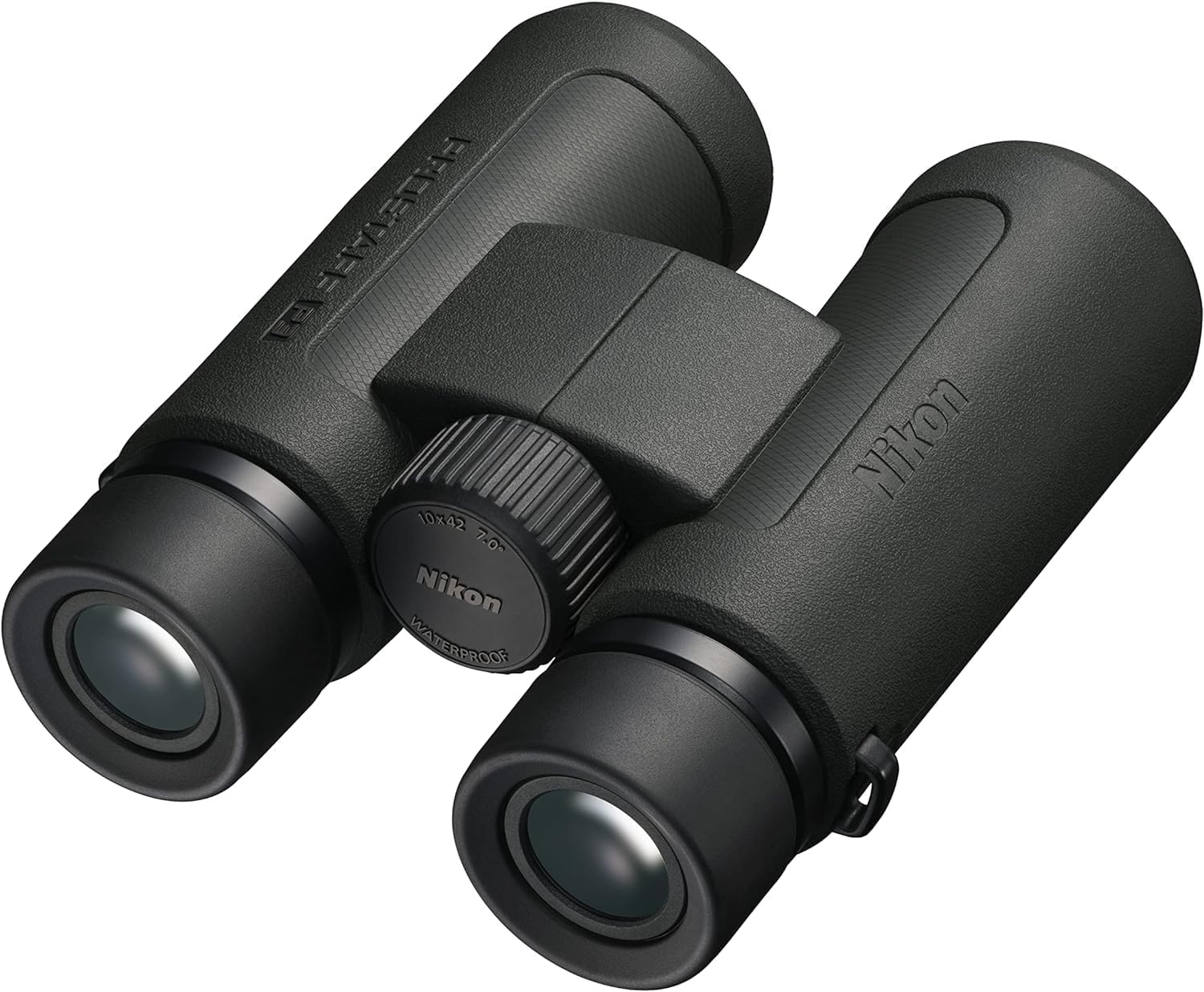
Nikon PROSTAFF P3 10×42 Binoculars
10× reach at $146. The Nikon answer for open-country, marsh, and shoreline birding.
If most of your birding happens in open terrain, coastal mudflats, grasslands, high desert, or lake shores, where 10x magnification becomes genuinely useful. The extra reach helps you identify distant raptors, waterfowl, and shorebirds that would be tiny at 8x. The Nikon PROSTAFF P3 delivers that reach at a price point most birders can justify.
The tradeoff with 10x is real: the field of view is narrower, and hand shake is more pronounced. For forest birding where you’re tracking warblers through the canopy, 8x is still the better tool. But for mixed-habitat birding with an emphasis on open areas, the PROSTAFF P3 is a smart and affordable way to get there.
Pros
- Excellent for open-country birding
- Nikon optical quality at a fair price
- Fully waterproof and fog-resistant
Cons
- Narrower FOV than 8x alternatives
- More hand shake than 8x
- Not ideal for forest birding
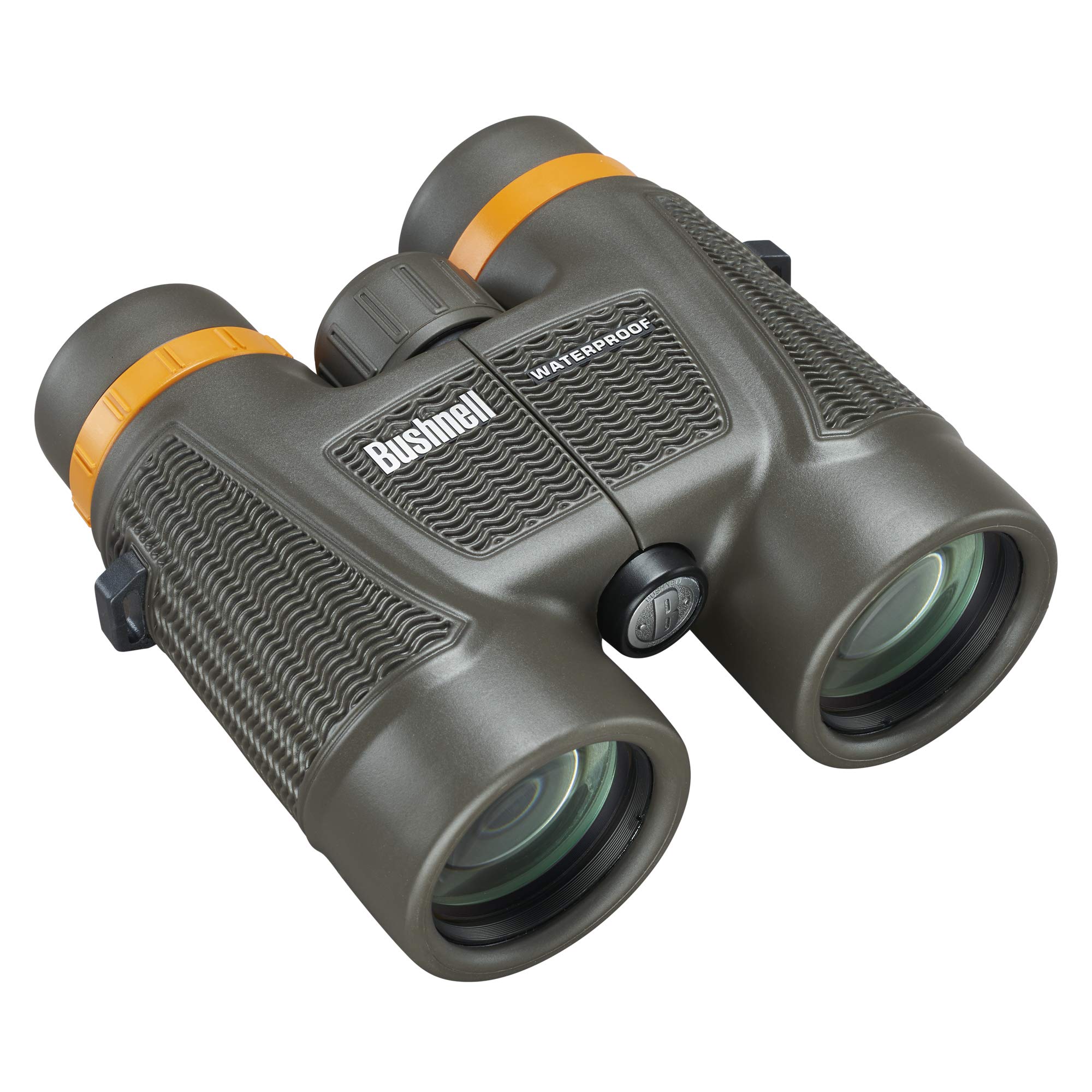
Bushnell H2O Waterproof 10×42 Binoculars
$114 for fully waterproof 10×42 from a major brand. The wet-weather workhorse.
Bushnell built the H2O series specifically for wet environments, and for Oregon birders who spend time in coastal rain, river bottoms, or winter wetlands, this focus is genuinely valuable. At $114, it is one of the most affordable fully waterproof and nitrogen-purged options available from a major brand.
The non-slip rubber armor provides a confident grip in wet conditions, and the multi-coated optics are solid for the price. It’s a workhorse pair designed to take abuse without complaint. If you’re less interested in premium image quality and more interested in a durable, weather-ready tool, the H2O makes sense.
Pros
- Fully waterproof and nitrogen purged
- Great grip in wet conditions
- Affordable price for its features
Cons
- Image quality below premium models
- 10x magnification narrows FOV
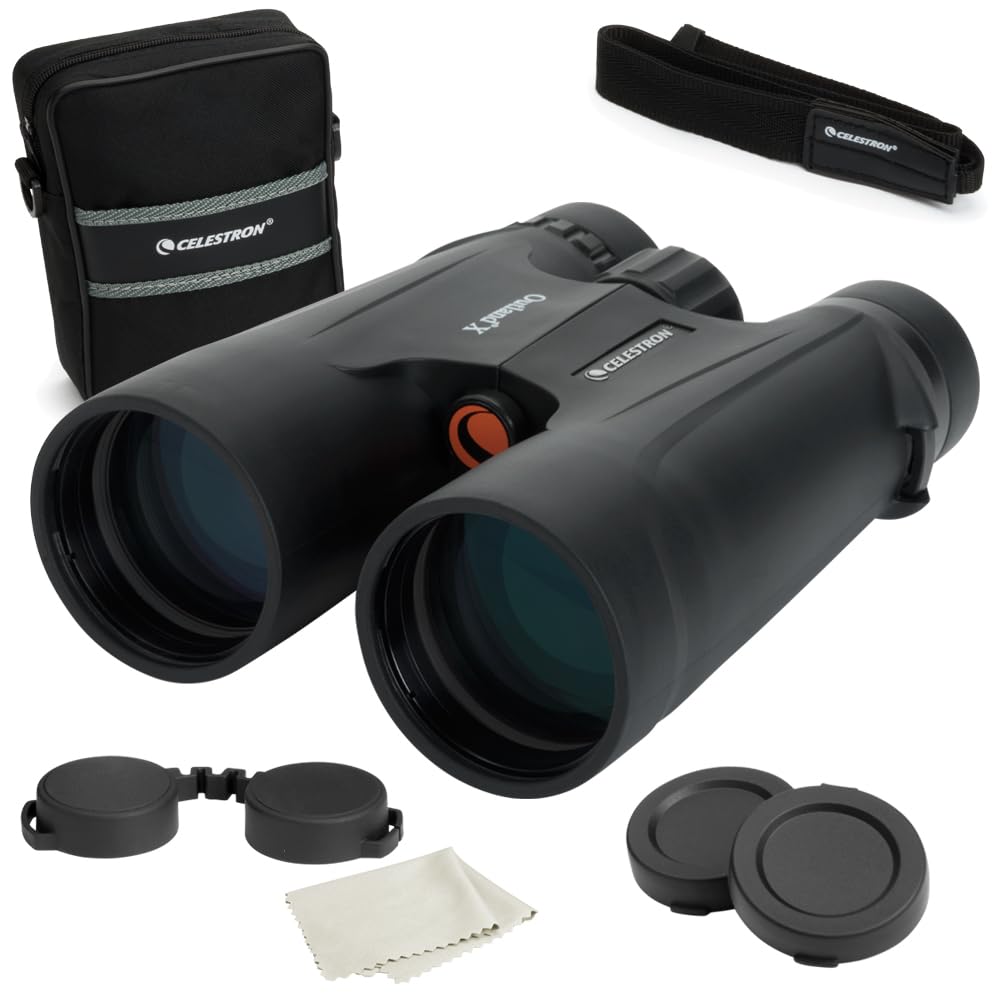
Celestron Outland X 10×50 Binoculars
50mm objectives gather more dawn and dusk light than 42mm picks. The dawn-chorus specialist.
The 50mm objective lens on the Outland X gathers significantly more light than a 42mm alternative, making it the best choice for dawn chorus outings or dusk shorebird roosts. The 5mm exit pupil at 10x delivers a bright image even as light levels drop, something you won’t get from compact or standard full-size binoculars.
The tradeoff is size and weight. These are larger binoculars that you’ll feel over a long hike. But for fixed-position birding, such as watching a productive wetland edge at sunrise or scanning a coastal headland, the extra brightness is a meaningful advantage. A good option for birders willing to carry a bit more glass for better low-light performance.
Pros
- Bright image from 50mm objective
- Excellent for dawn and dusk birding
- Waterproof and fog-proof
- Solid price for a 10×50
Cons
- Heavier and bulkier to carry
- Not ideal for hiking all day
Gosky 10×42 Roof Prism Binoculars
$68 with a phone digiscope adapter and 6,000+ reviews. Casual birding entry pair.
For casual birders who want a versatile pair at a low price, the Gosky 10×42 delivers reasonable optical quality and comes with a useful phone mount adapter for digiscoping, meaning attaching your phone to take photos through the binoculars. At $68 with over 6,000 reviews, it’s a popular entry point that works well for nature walks, travel, and backyard birding.
The FMC (Fully Multi-Coated) lenses and BAK-4 prisms are solid at this price tier. Don’t expect the sharpness or color fidelity of the Vortex or Athlon options, but for someone newer to birding or buying a spare pair for travel, it covers the basics reliably.
Pros
- Very affordable entry point
- Phone mount adapter included
- Solid 6,000+ review track record
Cons
- Image quality below premium tiers
- Build feel is entry-level
12×42 HD Binoculars with Phone Adapter and Tripod
12× magnification with included tripod and phone mount. Maximum reach on a tight budget.
If you want maximum reach on a tight budget and are willing to manage the extra hand shake of 12x magnification, this package delivers impressive reach, with over 18,000 reviews confirming its consistent performance. The included tripod adapter is useful because at 12x, a steady platform is not optional: it’s necessary for a usable image.
Keep in mind the guidance from optics experts: high magnification reduces your field of view and makes following moving birds more difficult. For stationary subjects like a hawk on a power line or a heron at a pond, 12x can be very rewarding. For most all-around birding, an 8×42 remains the better tool, but at $70 with a tripod in the box, this is a uniquely complete starter kit.
Pros
- High magnification for the price
- Tripod and phone adapter included
- 18,000+ reviews is exceptional confidence
Cons
- 12x requires steady hands or tripod
- Narrow FOV limits fast-bird tracking
Occer 12×25 Compact Binoculars
$36 and 33,000+ reviews. The pocket pair you keep in the daypack “just in case”.
With over 33,000 Amazon reviews, the Occer 12×25 is one of the most popular entry-level binoculars on the market. The compact form factor pockets easily, making it the most-recommended pair to throw in a day pack when you’re not specifically going birding but want to have something available.
The 25mm objective limits its low-light performance compared to 42mm alternatives, and 12x in a compact body means image shake will be noticeable. However, at $36, it’s the right first pair for a child, a casual hiker, or anyone who needs to try binoculars before committing more money. For serious birding, consider this a gateway pair.
Pros
- Extremely portable and affordable
- 33,000+ reviews is enormous credibility
- Fits in a jacket pocket or small day pack
Cons
- Small objective limits brightness
- 12x in compact body = visible shake
- Not a substitute for full-size birding binos
Comparison Table
All ten picks at a glance. Sortable mentally by the column that matters most to you: spec, rating, price, or use case.
| Binoculars | Config | Rating | Price | Best For | Buy |
|---|---|---|---|---|---|
| Vortex Diamondback HD 8×42 | 8×42 | 4.8★ | $149.00 | Best Overall | Amazon |
| Athlon Optics Midas UHD 8×42 | 8×42 | 4.8★ | $225.00 | Best Mid-Range | Amazon |
| Nikon Monarch M5 8×42 | 8×42 | 4.7★ | $280.00 | Best Premium Pick | Amazon |
| Celestron Nature DX 8×42 | 8×42 | 4.6★ | $136.00 | Best for First-Time Birders | Amazon |
| Nikon PROSTAFF P3 10×42 | 10×42 | 4.7★ | $146.00 | Best 10× for Open Country | Amazon |
| Bushnell H2O Waterproof 10×42 | 10×42 | 4.7★ | $114.00 | Best Waterproof Value | Amazon |
| Celestron Outland X 10×50 | 10×50 | 4.6★ | $130.00 | Best for Low-Light Birding | Amazon |
| Gosky 10×42 | 10×42 | 4.5★ | $68.00 | Best Budget with Phone Adapter | Amazon |
| 12×42 HD with Phone Adapter and Tripod | 12×42 | 4.6★ | $70.00 | Best Long-Reach Budget | Amazon |
| Occer 12×25 | 12×25 | 4.4★ | $36.00 | Best Compact Backup | Amazon |
How to Choose the Right Pair for You
If the choice still feels overwhelming, here’s the short version, organized by what you’re optimizing for.
You want one good 8×42 birder
Vortex Diamondback HD 8×42. $149 with Vortex’s lifetime warranty.
You want premium glass at value tier
Athlon Midas UHD 8×42. ED glass at $225, half the price of similar competitors.
You bird in open country
Nikon PROSTAFF P3 10×42. 10× reach for marshes, shorelines, raptors.
You’re new to birding
Celestron Nature DX 8×42 at $136. Phase-coated optics on a starter budget.
You bird in heavy weather
Bushnell H2O 10×42. Built around waterproofing first.
You want a backup pocket pair
Occer 12×25 Compact at $36. 33,000+ reviews back the casual-use math.
Frequently Asked Questions

New to birding in Oregon?
Before buying binoculars, it helps to know what you’ll be looking for. Our birding guides cover Oregon species, beginner tips, and the best spots across the state.
Compare across categories or shop a different use case
Birding binoculars overlap meaningfully with general outdoor and hiking use. If you want full-category guides or specific use-case picks, the dedicated guides below have you covered.