Hiking gear explained
What Is a Power Bank?
A power bank is a portable battery you charge at home and carry on the trail to recharge your phone, GPS, and other devices when you’re miles from an outlet. Here’s how they work, what the specs actually mean, and how to pick the right one for hiking.
If you’ve ever watched your phone battery drop toward zero at the trailhead parking lot, or had your GPS die mid-route on a three-day loop, you already understand what a power bank solves. It’s not a complicated piece of gear, but the spec sheets are full of numbers that don’t tell you much without context. How much is 10,000 mAh, really? Does fast charging matter on the trail? What’s the actual difference between a 20-dollar power bank and a 60-dollar one?
This guide answers all of that in plain language. If you’re already sold and just want to know which one to buy, jump ahead to our guide to the best power banks for hiking, where we’ve tested and ranked the top options. If you want to understand what you’re buying first, read on.
1. What a Power Bank Actually Is
A power bank is a self-contained rechargeable battery pack with USB output ports. You plug it into a wall outlet or USB charger at home to fill it up, then carry it with you. When a device runs low, you connect it to the power bank with a USB cable, and the bank charges the device from its stored energy.
That’s the entire product. There’s no wireless signal, no fuel, nothing consumable. It’s a battery that charges other batteries. The core value on a hike is straightforward: grid power is unavailable for days at a time, and modern devices (phones, GPS units, headlamps with USB charging ports, satellite communicators, camera batteries) all depend on that grid power to stay operational.
Power banks go by a few different names. Portable charger, battery pack, and power bank are all used interchangeably across brands and retailers. They all describe the same type of product. Solar chargers are a related but distinct category, covered in section 7.
Power banks are not the same as solar chargers. A power bank stores charge that was put in at home. A solar charger generates charge from sunlight. Many products combine both functions (a built-in panel and a battery), but the two are worth understanding separately. More on this in section 7.
2. How a Power Bank Works
Inside most power banks are one or more lithium-ion or lithium-polymer cells, a charging circuit, a discharging circuit, and a small control board that manages power flow and protects the cells from overcharging and overheating. The control board is part of why a 20-dollar bank and a 60-dollar bank perform differently: budget banks often cut corners on protection circuitry and cell quality.
The basic cycle is simple. Plug the power bank into a wall outlet using its input port (usually USB-C on modern banks, Micro-USB on older ones). The internal circuit fills the cells. Unplug it when it’s full. On the trail, plug your device into the bank’s output port using a compatible cable. The circuit delivers power from the cells to your device at the correct voltage and amperage for that device.
Most power banks have LED indicator lights (usually 4 dots or a percentage display) that show remaining charge. They also have a button to wake them from sleep mode, which they enter automatically when no device is drawing power to prevent trickle discharge.
Charge your power bank fully before every trip. Lithium batteries self-discharge slowly over time. A power bank sitting in your gear closet for three months may be down to 60 to 70 percent capacity when you reach for it. Build charging it into your pre-trip checklist the same way you check your headlamp batteries.
3. Capacity: What mAh Means
Capacity is measured in milliamp-hours (mAh). One mAh is one milliamp of current delivered for one hour. In practical terms, the mAh number on a power bank tells you how much total energy it can store and deliver to a device.
A typical modern smartphone has a battery of roughly 3,500 to 5,000 mAh. A 10,000 mAh power bank should, in theory, charge a 4,000 mAh phone battery about 2.5 times. In practice it’s closer to 2 times, because 10 to 20 percent of energy is lost to heat and voltage conversion during the transfer process.
The tradeoff is always capacity versus weight. A 10,000 mAh bank typically weighs around 180 to 220 grams (6 to 8 oz). A 20,000 mAh bank is often 350 to 450 grams (12 to 16 oz). For a day hike, the extra weight of a larger bank isn’t worth it. For a five-day route with no resupply, the extra capacity is essential.
4. How Much Capacity Do You Need for Hiking?
The right capacity depends on three things: how many nights you’re out, how many devices you’re charging, and how heavily you use those devices on trail. The table below gives practical starting points.
| Trip Type | Recommended Capacity | Typical Weight | Notes |
|---|---|---|---|
| Day hike (phone only) | 5,000 mAh | ~100 to 140 g | 1 to 1.5 full charges. Slim and pocketable. |
| Overnight (1 night) | 5,000 to 10,000 mAh | ~140 to 220 g | Covers phone and a GPS or headlamp with power. |
| Weekend trip (2 to 3 nights) | 10,000 mAh | ~180 to 220 g | The most versatile size. Handles most hikers comfortably. |
| 4 to 6 nights, 1 to 2 devices | 20,000 mAh | ~350 to 450 g | Phone, GPS, satellite communicator. Charges all three multiple times. |
| 7+ nights, multiple devices | 20,000 mAh + solar panel | Varies | Above treeline routes with consistent sun. See section 7. |
Don’t charge your phone to 100% on trail. Keeping devices between 20 and 80 percent charge extends battery lifespan and reduces the total charge you draw from the bank per device. On a multi-day trip, this effectively gives you an extra partial charge from the same capacity bank.
Device battery sizes for reference
To estimate how many times a bank will charge your specific gear, you need to know each device’s battery size. Here are approximate capacities for common hiking devices:
- Modern smartphone: 3,500 to 5,000 mAh
- Garmin inReach Mini 2 (satellite communicator): 1,250 mAh
- Garmin GPSMAP 67 series: AA batteries (no USB charging, needs separate battery approach)
- Garmin eTrex 32x: AA batteries
- Black Diamond Spot 400 headlamp: 1,200 mAh internal battery (USB-C rechargeable)
- GoPro HERO battery: ~1,720 mAh
- Kindle Paperwhite: ~1,500 mAh
Add up the mAh you’ll need across all your devices, multiply by the number of nights, divide by 0.85 to account for conversion loss, and that’s your minimum capacity target.
5. Ports and Charging Speed
The ports on a power bank determine how fast it can charge your devices and how fast it can be recharged itself. Most hikers don’t need to obsess over this, but understanding the basics helps you avoid a mismatch where your bank charges your phone at a fraction of its potential speed.
What “watts” means on the trail
Charging speed is measured in watts (W). A standard USB-A port delivers 5W to 12W. A USB-C Power Delivery port can deliver 18W, 30W, 45W, or more depending on the bank and device. For context: a 5W charge takes roughly 2.5 to 3 hours to charge a typical phone. An 18W charge does the same job in about 1 hour. On a cold morning when you want a quick top-up before a long day, that difference matters.
The device also has to support faster charging protocols. An older device that only accepts 5W won’t benefit from a 30W bank, but it won’t be harmed by it either. Both the bank and the device negotiate the highest speed they share.
6. Battery Types: Lithium-Ion vs Lithium-Polymer
Almost every hiking power bank uses one of two cell technologies. The difference matters mostly for form factor and cold-weather performance.
| Feature | Lithium-Ion (Li-Ion) | Lithium-Polymer (LiPo) |
|---|---|---|
| Form factor | Cylindrical cells (like a larger AA battery). Rigid casing required. | Flat, flexible pouch cells. Allows thinner, lighter designs. |
| Energy density | Slightly higher capacity per unit volume | Slightly lower capacity, but lighter overall product |
| Cold weather | Loses capacity in cold. At 0°C may deliver 70 to 80% of rated capacity. | Similar cold sensitivity. Keep either type close to your body in sub-freezing temps. |
| Durability | Well-proven over many years. Mature technology. | Can swell if damaged or overcharged. Higher-quality cells mitigate this. |
| Price | Generally lower cost | Slight premium for thinner form factor |
| Best for hiking? | Both work well. Li-Ion slightly better value per mAh. | Both work well. LiPo better for ultralight packing. |
For most hikers, the battery chemistry inside is less important than the brand’s reputation for quality control. A well-made Li-Ion bank from Anker or Goal Zero will outperform a cheap LiPo bank from an unknown brand every time. The protection circuitry and cell quality matter more than the chemistry choice.
Cold weather degrades performance. Lithium batteries of all types lose usable capacity in cold temperatures. At 0°C (32°F), expect 20 to 30 percent capacity loss. At -10°C (14°F), the loss can reach 40 to 50 percent. On cold nights, sleep with your power bank in your sleeping bag or jacket pocket to keep it warm. This is not a safety concern, it’s a performance one.
7. What About Solar Power Banks?
Solar power banks come in two forms: power banks with a small integrated solar panel on the back, and separate foldable solar panels designed to pair with a standard power bank. They solve different problems.
Integrated solar panels (the small ones on the bank itself)
These are largely ineffective for serious hiking use. A 5W integrated panel in perfect direct sunlight takes approximately 20 hours to fully charge a 10,000 mAh bank. On the trail with the bank bouncing in a pack pocket, in partial shade, at non-optimal angles, the real number is significantly worse. Integrated panels are useful for occasional supplemental trickle charging only, not as a primary charging strategy.
Separate foldable solar panels
Purpose-built foldable panels are a different category entirely. Products like the BioLite SolarPanel 5+, Goal Zero Nomad 10, and Anker PowerSolar are rated 5W to 20W and can meaningfully charge a power bank during daylight hours above treeline. A 10W panel attached to the back of a pack in direct sun can fill a 10,000 mAh bank in 4 to 6 hours of good exposure.
The tradeoff is weight, cost, and the need for consistent sun. Below treeline or in the Pacific Northwest’s cloudy conditions, solar reliability drops substantially. For most Oregon Cascades and Coast Range routes, solar panels are supplemental gear for long trips, not a substitute for carrying adequate battery capacity.
The practical solar hiking setup: carry a 20,000 mAh bank as your primary power source, and a lightweight foldable panel (Goal Zero Nomad 5 or similar) as a supplement on trips of 5 or more days in above-treeline terrain. Don’t try to run everything off solar. Let the bank absorb charge during the day while you hike, and draw from the bank at camp.
8. What to Look for When Buying
Most hiking power bank decisions come down to five factors. Here’s what to prioritize and what you can ignore.
| Factor | What to Look For | What to Avoid |
|---|---|---|
| Capacity | 10,000 mAh for most weekend hikers. 20,000 mAh for multi-night or multi-device. | Buying too small to save weight. Running out of power on day 3 is a real problem. |
| Output ports | USB-C PD (18W or higher) for fast charging. USB-A for legacy devices. | Banks with only USB-A output. Fine for overnight, frustrating for quick top-ups. |
| Input port | USB-C input. Banks that recharge themselves via USB-C are faster to refill at home. | Micro-USB input only. Slow to recharge and a dying connector standard. |
| Weight | 180 to 220 g for 10,000 mAh. Check the manufacturer spec sheet, not just marketing claims. | Unbranded banks that claim high capacity at very low weight. Often inflated ratings. |
| Brand/quality | Anker, Goal Zero, BioLite, Nitecore, Ravpower (established brands with real cell quality). | No-name banks on discount sites. Rated capacity is often exaggerated by 20 to 40%. |
| IP rating | IPX4 or higher for splash resistance if you hike in rain. Not essential, but useful on wet routes. | Assuming any power bank is fully waterproof without a specific IPX7 or IP67 rating. |
If you want tested recommendations organized by trip type and use case, our best power banks for hiking guide covers the top picks at every capacity level, with real-world performance notes from trail use.
Power Bank Picks for Hiking
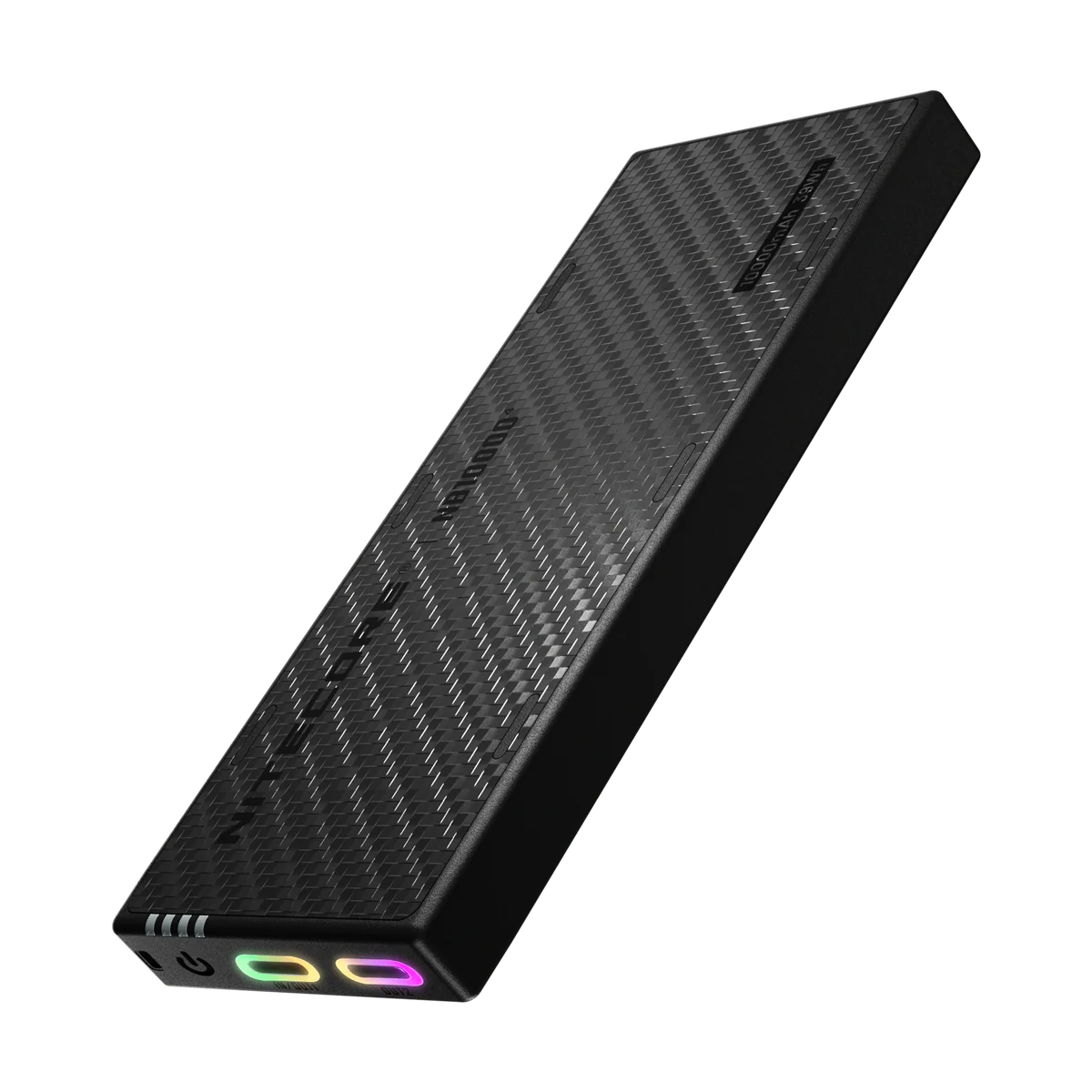
Best Power Banks for Hiking
Top picks from 5,000 to 20,000 mAh. Tested for cold-weather performance, fast charging, and trail durability.
See picks
Best Solar Chargers for Backpacking
Foldable panels that actually move the needle. Compared by wattage, weight, and real-world efficiency above treeline.
See picksWhat Is a Power Bank FAQs
