Best hiking watches 2026 reviewed and ranked for trail use

Best Hiking Watch 2026

Independently reviewed 10 watches 3 price tiers $239 to $1,084 Updated May 2026
No brand pays for placement here. Every watch on this page is ranked on trail capability, battery life, durability, and Amazon proof base. Affiliate links help keep the site running at no extra cost to you.

Most people buying a hiking watch are not thru-hiking long trails. They’re doing weekend loops, day hikes on familiar trails, shoulder-season scrambles where the weather turns and cell signal disappears. For that hiker, the right watch isn’t the one with the longest spec list: it’s the one that tracks reliably in dense tree cover, holds battery across a long weekend, and survives the drop onto basalt that every watch eventually takes. The 10 watches on this page were chosen because they do those things well, at prices from $239 to $1,084.

If you want one clear answer: the original Garmin Instinct at $239 handles everything most day hikers and weekend backpackers actually need, and its track record across years of real use is unmatched at the price. If you’re regularly going off-trail, into canyons, or navigating in conditions where a wrong turn is a real problem, step up to the COROS NOMAD or Amazfit T-Rex 3 Pro for offline maps and multi-band GPS at a reasonable price. The Garmin Enduro 3 Solar and fēnix 8 are for the hiker who knows exactly why they need them, and usually, that hiker doesn’t need this page to tell them.

10
Watches reviewed
3 Tiers
Premium / Mid / Value
$239–$1,084
Price range

Quick picks

Best hiking watches, ranked list
Premium ($500+)
1
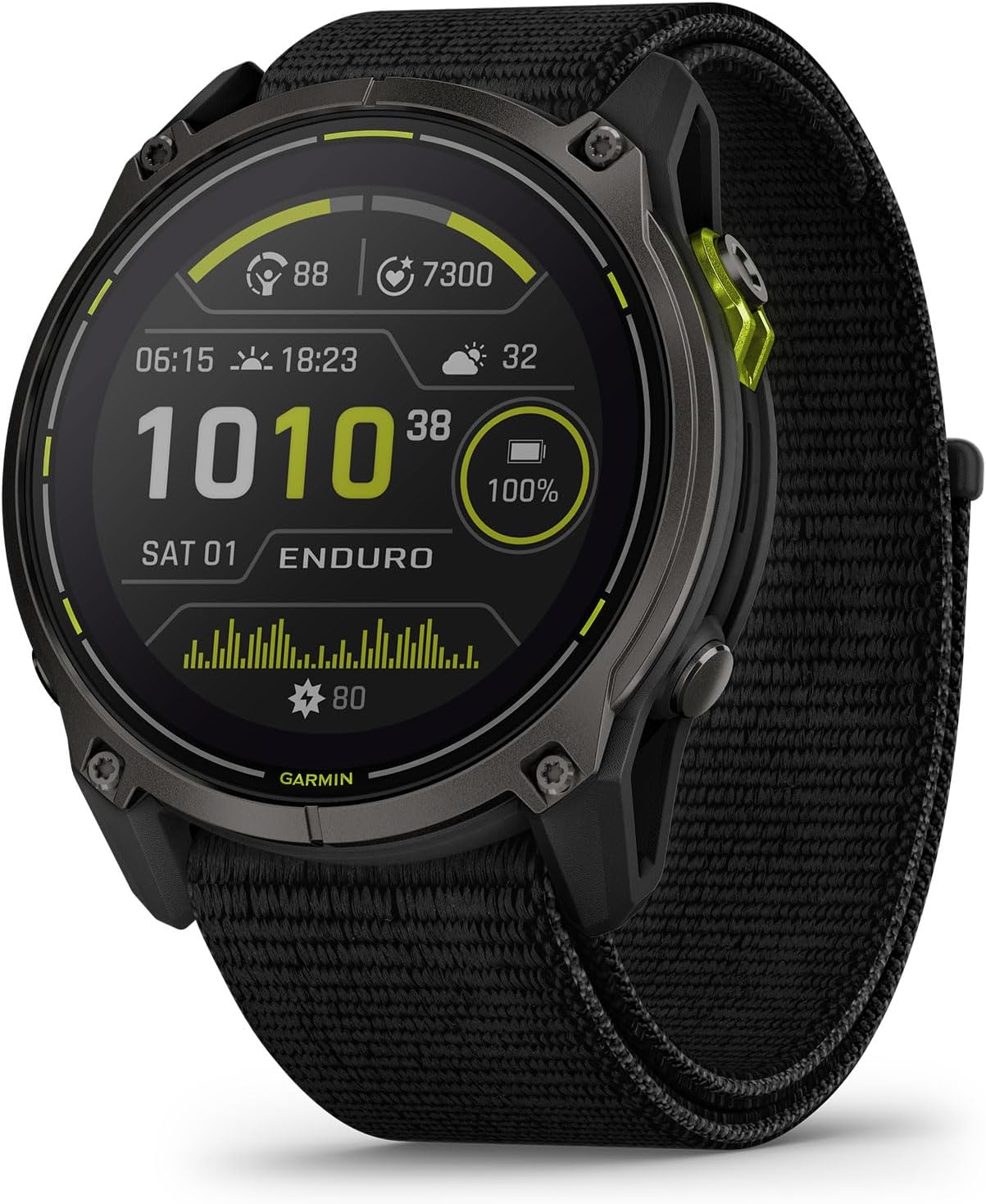
Garmin fēnix 8 47mm AMOLED Sapphire
Flagship: AMOLED, full TopoActive maps, dive computer, voice calls, sapphire
$1,084.58
Review ↓
2
Garmin Enduro 3 Solar Sapphire
Best for thru-hiking: 90-day solar battery, 63g, multi-band GNSS, sapphire
$899.99
Review ↓
3
COROS Vertix 2S
Best for mountaineering: 40-day battery, titanium, sapphire, 118hr GPS
$699.00
Review ↓
4
Suunto Vertical
Best Suunto: offline maps, dual-band GNSS, solar option, large display
$549.00
Review ↓
Mid tier ($250 to $500)
1
COROS NOMAD
Best for navigation: full global topo maps with turn-by-turn, 22-day battery
$349.00
Review ↓
2
Amazfit T-Rex 3 Pro 44mm
Best rugged AMOLED value: sapphire, dual-band GPS, flashlight, MIL-STD
$319.99
Review ↓
3
Garmin Instinct 2X Solar
Best solar mid-tier: multi-band GNSS, solar charging, flashlight, 4,600 reviews
$312.22
Review ↓
4
Polar Grit X Pro
Best Polar: sapphire glass, MIL-STD durability, Komoot navigation, Hill Splitter
$349.00
Review ↓
Value (under $250)
1
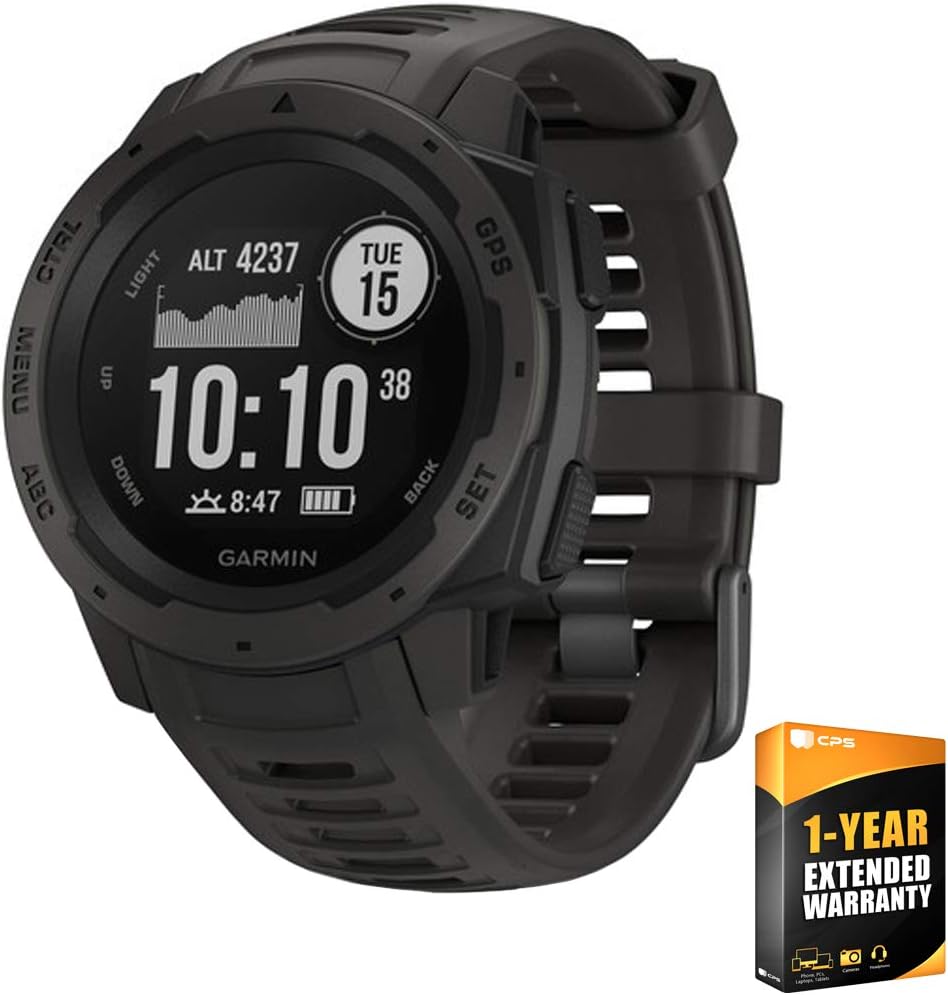
Garmin Instinct original
Best Value: 24,300 reviews, deepest proof base of any GPS watch on Amazon
$239.99
Review ↓
2
Suunto 9 Peak Pro
Best slim rugged: titanium, sapphire, 10.8mm profile, 729 reviews
$249.00
Review ↓

Full reviews, premium tier ($500+)

#1 Premium, Best Overall Flagship
Premium multisport GPS smartwatch with AMOLED display, sapphire crystal, full preloaded TopoActive maps, built-in dive computer, voice calls, and LED flashlight: the most capable hiking watch on this page
★★★★★4.8(36 reviews) Oregon Tails Best Flagship Garmin
Garmin fēnix 8 47mm AMOLED Sapphire premium multisport GPS smartwatch with full TopoActive maps, dive computer, and built-in LED flashlight
Price$1,084.58
Rating4.8 / 5 ★
Case size47mm
Display1.4″ AMOLED, sapphire crystal
GPSMulti-band GNSS, SatIQ
BatteryUp to 16 days smartwatch / 47hr GPS
MapsFull TopoActive preloaded
Best forHikers who want one watch for everything
Pros
  • AMOLED display with sapphire crystal is the best screen on this page: bright, sharp, and scratch-resistant
  • Full preloaded TopoActive maps with turn-by-turn navigation, no phone required
  • Built-in dive computer rated to 40 meters makes it genuinely multi-discipline
  • Voice calls and off-grid voice commands via built-in speaker and microphone
  • Multi-band GNSS with SatIQ holds tracks reliably in canyons and heavy tree cover
  • MIL-STD-810 tested, titanium bezel, leakproof buttons built for serious trail use
Cons
  • Only 36 reviews: the fēnix 8 is relatively new and the proof base is still building
  • $1,084.58 is a serious commitment: most day hikers don’t need the dive computer or voice features
  • 16-day smartwatch battery is shorter than the Enduro 3 or Vertix 2S
  • 95g with band: heavier than the Enduro 3 at 63g

The AMOLED display is the thing you notice first on a shaded forest trail. Where a MIP screen goes dim under heavy tree cover, the fēnix 8 stays sharp: you can read elevation profile, bearing, and remaining distance without tilting your wrist toward a gap in the canopy. The TopoActive maps render trail junctions and contour lines clearly enough to navigate without pulling your phone. The dive computer and voice features are real functionality, not marketing additions: this watch is genuinely rated to 40 meters, and the microphone works in wind well enough for off-grid voice commands.

The fēnix 8 earns its price when you’re splitting time between terrain types: a trip that starts on a ridge and ends coasteering, a summer where you’re navigating dense forest by day and calling back to camp via satellite at night. When the Enduro 3 wins: anything past four days in the backcountry where charging is genuinely uncertain, or any thru-hike where a 63g watch on a nylon strap disappears under a pack and lasts the entire section without drama.
Check price on Amazon ↗ Affiliate link
#2 Premium, Best for Thru-Hiking
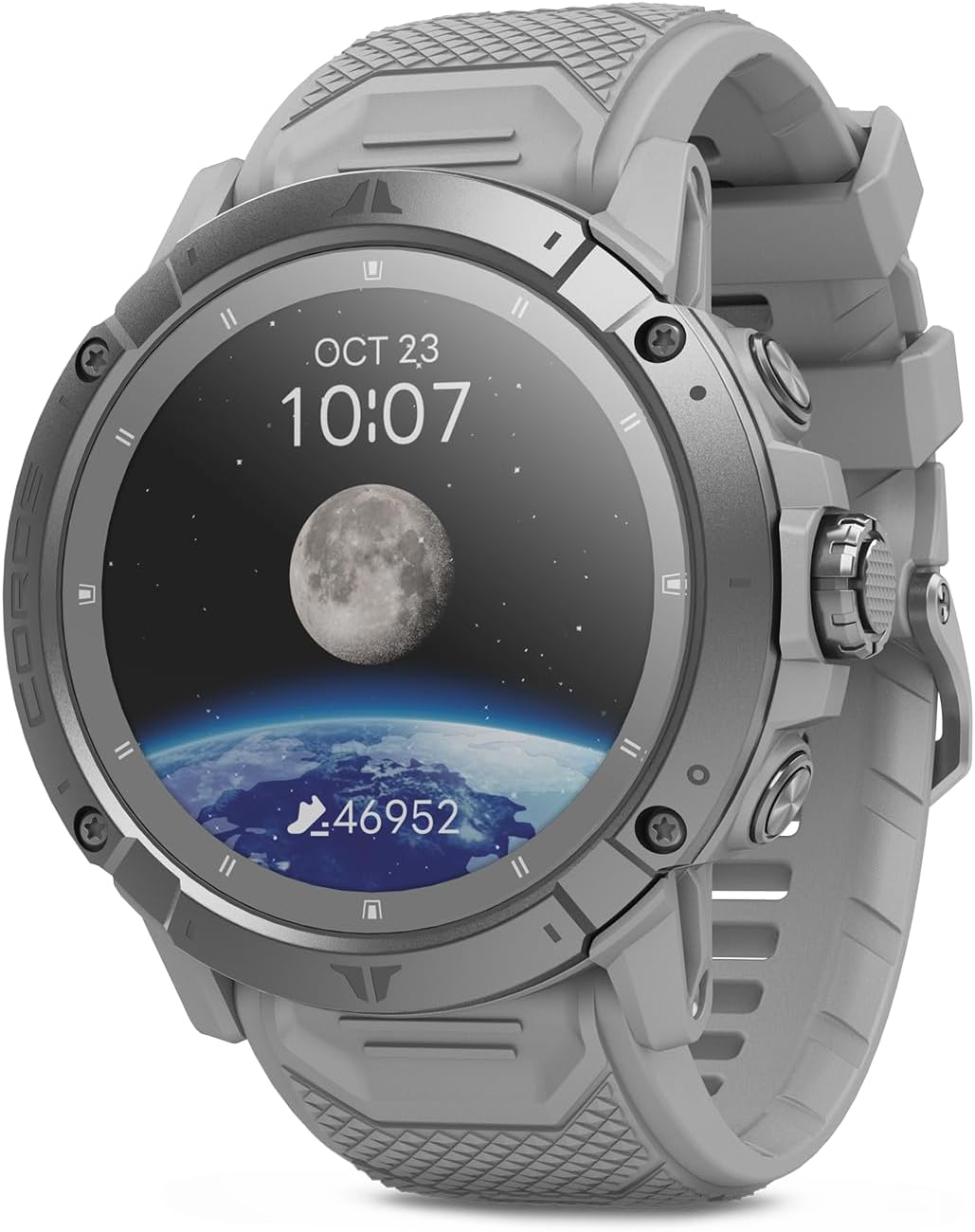
Ultraperformance solar-charged GPS smartwatch with sapphire crystal, MIP transflective display, multi-band GNSS, and battery life extending to 90 days with solar: the longest-running hiking watch on this page
★★★★★4.7(240 reviews) Garmin
Garmin Enduro 3 51mm Solar Sapphire ultraperformance GPS smartwatch with 90-day solar battery, MIP transflective display, and multi-band GNSS
Price$899.99
Rating4.7 / 5 ★
Case size51mm
Weight63g total with UltraFit strap
DisplayMIP transflective with Power Sapphire solar
GPSMulti-band GNSS
Battery90 days smartwatch with solar / 320hr GPS
Best forThru-hikers, multi-week expeditions, ultra athletes
Pros
  • 90-day solar battery is the longest in any GPS watch on Amazon
  • 63g with the UltraFit nylon strap is over 34% lighter than the fēnix 8, remarkable for a 51mm watch
  • Sapphire crystal with improved Power Sapphire solar harvesting is more efficient than the Enduro 2
  • Full TopoActive maps with multi-band GNSS for navigation anywhere
  • 240 reviews at 4.7 stars is a strong proof base for a premium expedition watch
Cons
  • MIP display: readable outdoors but not in the same class as the fēnix 8 AMOLED in shade
  • 51mm only: no smaller size option
  • No dive computer, no speaker or microphone
  • $899.99 is premium-tier spending for a watch without an AMOLED screen

The UltraFit nylon strap doesn’t absorb sweat the way silicone does, which matters after 20-mile days when you’d otherwise be pulling a soaked band off your wrist at camp. The MIP display actually has an advantage over AMOLED on exposed ridgelines: direct alpine sun makes AMOLED wash out, while MIP stays readable. The solar charging is most effective above treeline on clear days: on a PCT ridge in good weather, you’ll gain more than you burn, and a week-long section becomes a genuinely charge-free experience.

The Enduro 3 makes sense when your trips are measured in weeks and power access is genuinely uncertain: full thru-hike sections, high routes without resupply points, or any traverse where battery management would otherwise require careful rationing of GPS-on time. When the fēnix 8 wins: trips where you’re in heavy forest most of the day, where you want a sharper screen for daily wear, or where dive capability and two-way communication matter.
Check price on Amazon ↗ Affiliate link
#3 Premium, Best for Mountaineering
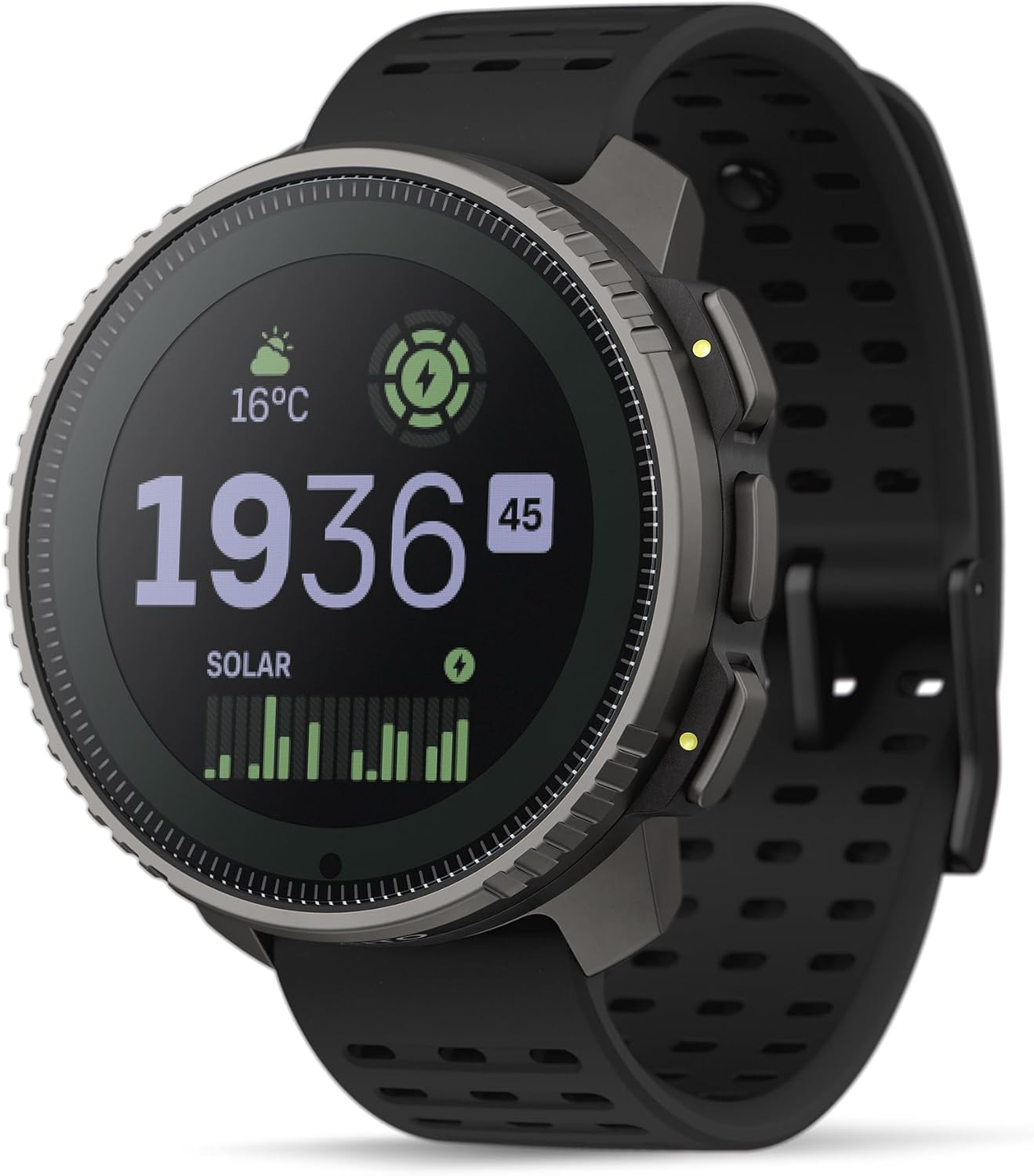
Adventure GPS watch with PVD-coated titanium bezel, sapphire screen, 40-day battery, 118 hours of full GPS tracking, dual-frequency GPS, offline global maps, and dedicated climbing modes
★★★★½4.5(~450 reviews) COROS
COROS Vertix 2S adventure GPS watch with titanium bezel, sapphire screen, 40-day battery, and offline global maps
Price$699.00
Rating4.5 / 5 ★
Case size50.3mm
Display1.4″ MIP touchscreen, sapphire crystal
GPSDual-frequency, all 5 satellite networks
Battery40 days smartwatch / 118hr full GPS
BuildPVD titanium bezel, sapphire, 10ATM
Best forMountaineering, big wall climbs, multi-day expeditions
Pros
  • 118 hours of full GPS tracking is competitive with the Enduro 3 at $200 less
  • Dedicated multi-pitch climbing, big wall, and bouldering modes with specialized metrics
  • Dual-frequency GPS with improved antenna design for accuracy in challenging terrain
  • Offline global maps with the COROS app: download regions before your trip
  • Tactile dial and buttons work with heavy gloves, a real advantage in alpine conditions
Cons
  • MIP display: functional but not in the same class as AMOLED watches
  • 50.3mm case runs large and is noticeably heavy at 87g with silicone band
  • COROS app is good but not as polished as Garmin Connect
  • Proprietary charging cable is a genuine inconvenience on multi-week trips

The tactile dial on the Vertix 2S works with thick gloves in a way touchscreens don’t: on a frozen alpine start, you can scroll through data screens without stripping a layer. The climbing modes are built around actual expedition use, not just sport climbing: multi-pitch tracking logs rest times, pitch lengths, and descent paths that endurance runners don’t need but alpine climbers do. At 118 hours of full GPS, a multi-day ski traverse becomes a charge-free objective.

The Vertix 2S fits technical mountaineers and winter alpinists who need a watch that doubles as a navigation instrument and can take the physical punishment of a long alpine route. When the Enduro 3 wins: when you’re covering distance more than gaining technical elevation, when Garmin’s TopoActive map coverage is more important than COROS’s, or when 63g vs 87g is a real concern on a long-distance day.
Check price on Amazon ↗ Affiliate link
#4 Premium, Best Suunto for Hiking
Adventure GPS watch with dual-band GNSS, offline maps, 95+ sport modes, large display, solar charging option, training metrics, and recovery insights: Suunto’s most capable hiking watch
★★★★4.4(135 reviews) Suunto
Suunto Vertical dual-band GNSS adventure GPS watch with offline maps, solar charging, and 95 sport modes
Price$549.00
Rating4.4 / 5 ★
DisplayLarge MIP transflective
GPSDual-Band GNSS
MapsOffline maps included
SolarSolar charging option available
Sports95+ sport modes
Best forSuunto loyalists, adventure GPS users, trail explorers
Pros
  • Dual-band GNSS holds tracks reliably in canyon and tree cover environments
  • Offline maps on the watch: navigate without phone signal
  • Solar charging option extends already solid battery life further
  • Large display is easier to read in motion than smaller-case watches
  • 135 reviews at 4.4 stars: competitive proof base for a specialty outdoor watch
Cons
  • Suunto app ecosystem is smaller than Garmin Connect or COROS
  • Maps are less detailed than Garmin TopoActive in some regions
  • No AMOLED display at this price point
  • 135 reviews is a modest proof base compared to Garmin watches at similar prices

The large display on the Suunto Vertical reads clearly while moving in a way smaller watches don’t: elevation profile, bearing, and remaining distance are all legible at a glance without stopping. Dual-band GNSS makes the biggest difference in slot canyons, deep river drainages, and old-growth forest where single-band watches lose the trail. The solar option on the Titanium Solar variant is most effective on open high-desert terrain and above-treeline routes where sun exposure is consistent.

The Vertical makes the most sense for hikers stepping up from older Suunto hardware who want offline maps and modern GPS precision within the ecosystem they already know, and for anyone who prefers a larger watch face for active navigation. When the Vertix 2S wins: when battery life past 40 days, glove-usable controls, and climbing-specific modes are priorities over the Suunto ecosystem and solar option.

Check price on Amazon ↗ Affiliate link

Full reviews, mid tier ($250 to $500)

#1 Mid tier, Best for Navigation
Outdoor GPS smartwatch with full global topographic maps with turn-by-turn navigation, 1.3″ MIP touchscreen, 22-day battery, voice notes, and real-time weather alerts: the best navigation watch in the mid tier
★★★★½4.5(193 reviews) Oregon Tails Best Navigation COROS
COROS NOMAD outdoor GPS smartwatch with full global topographic maps, turn-by-turn navigation, and 22-day battery
Price$349.00
Rating4.5 / 5 ★
Display1.3″ MIP touchscreen
GPSMulti-satellite
MapsFull global topo, turn-by-turn navigation
Battery22 days smartwatch
NotableVoice notes, real-time weather alerts
Best forOff-trail hikers, route finders, backcountry explorers
Pros
  • Full global topographic maps with turn-by-turn navigation beat any Garmin under $1,000 on map quality
  • Voice notes let you record observations hands-free on the trail
  • Real-time weather alerts give you data you can actually act on
  • 22-day battery is competitive for a watch with full offline maps loaded
  • 193 reviews at 4.5 stars is solid for a new purpose-built navigation watch
Cons
  • MIP display: functional but not as vivid as AMOLED options at similar price
  • COROS ecosystem is smaller than Garmin Connect for third-party integrations
  • Newer release: 193 reviews is a moderate proof base

What the NOMAD does differently from anything else in its price range is let you plan a route in detail at home and then navigate it on your wrist with full topographic context. On a peak-bagging day in unfamiliar terrain, that means knowing exactly where the ridge turns and where the scramble section starts before you’re standing at the junction in deteriorating weather. The voice notes feature earns its keep on long days: you can dictate trail conditions, photograph waypoints, and document route variations without stopping to type.

The NOMAD is the clearest choice when route-finding is your primary use case: off-trail hiking, cross-country travel, peak-bagging in terrain without maintained paths. It’s built for people who go off-trail deliberately and need more than a breadcrumb trail to navigate safely. When the T-Rex 3 Pro wins: when you want the best display in the mid tier, a more rugged build, and don’t regularly need the NOMAD’s navigation depth.

Check price on Amazon ↗ Affiliate link
#2 Mid tier, Best Rugged AMOLED Value
44mm rugged smartwatch with sapphire AMOLED, titanium bezel, dual-band GPS, offline maps, built-in flashlight, and MIL-STD-810 build at a price that undercuts every comparable Garmin by over $100
★★★★½4.5(353 reviews) Amazfit
Amazfit T-Rex 3 Pro 44mm rugged smartwatch with sapphire AMOLED display, titanium bezel, dual-band GPS, and built-in flashlight
Price$319.99
Rating4.5 / 5 ★
Case size44mm
DisplaySapphire AMOLED
GPSDual-band GPS
Battery27-day smartwatch
BuildMIL-STD-810, titanium bezel, 10ATM
Best forHikers wanting AMOLED and ruggedness under $350
Pros
  • Sapphire AMOLED display is the best screen in the mid tier: vivid and scratch-resistant
  • Titanium bezel with MIL-STD-810 build handles rock contact and drops
  • Dual-band GPS for reliable tracking in challenging terrain
  • Built-in flashlight is a genuine trail utility at this price point
  • 27-day smartwatch battery outlasts most AMOLED watches on the market
Cons
  • Zepp app ecosystem is not as polished as Garmin Connect or COROS
  • Smaller third-party accessory selection than Garmin
  • 353-review proof base is moderate for a mid-tier pick

The 44mm case is the detail most reviewers skip: most rugged watches are 47 to 51mm, and after 15 miles that extra material catches on jacket sleeves and sits heavy on your wrist in ways you feel at the end of the day. The sapphire AMOLED on the T-Rex 3 Pro reads better under a forest canopy than any MIP watch in this tier. The built-in flashlight is bright enough to navigate an unmarked descent after dark, not just locate your tent zipper. MIL-STD-810G certification means the watch has been tested for the temperature extremes, humidity, and shock conditions it’s marketed for, not just given a rugged-looking case design.

The T-Rex 3 Pro fits best for hikers who want display quality and rugged construction without paying Garmin prices, particularly on wrists that find 50mm expedition watches uncomfortable to wear all day. When the NOMAD wins: when the quality of your offline maps is what determines whether you find your route in unfamiliar terrain, and you’re regularly navigating off-trail where a breadcrumb isn’t enough.

Check price on Amazon ↗ Affiliate link
#3 Mid tier, Best Solar Mid-Tier
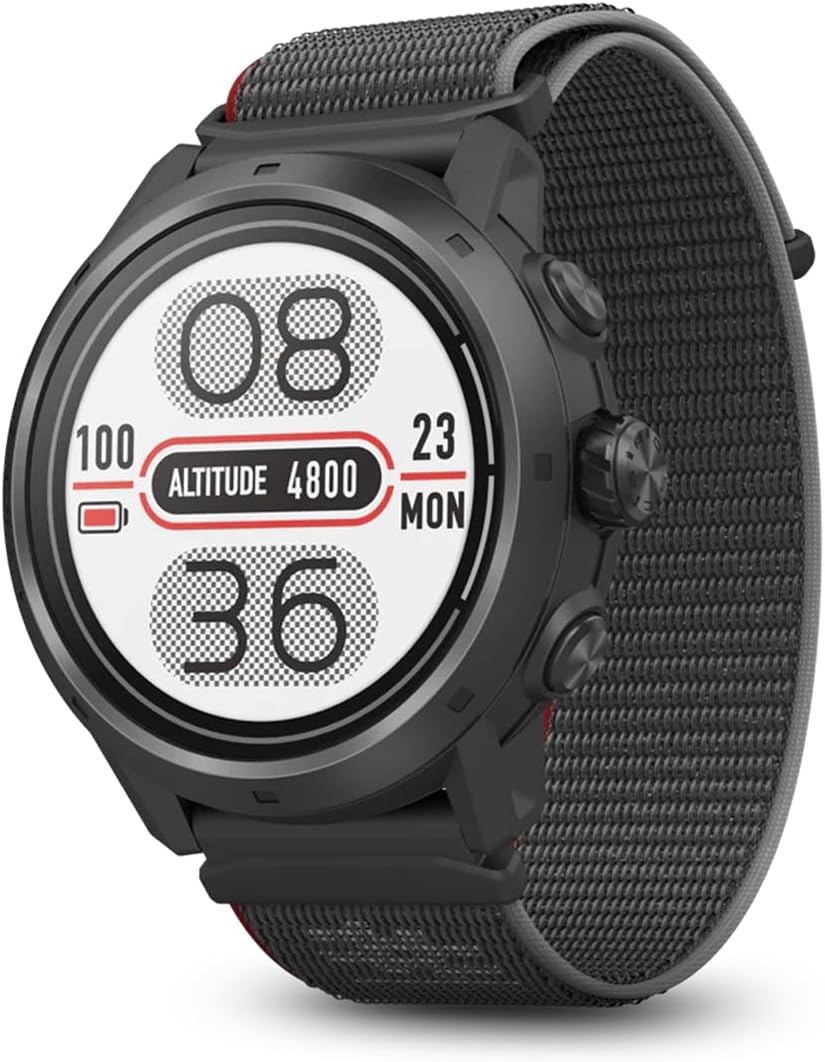
Rugged solar GPS smartwatch with multi-band GNSS, built-in LED flashlight, dual-layer display, MIL-STD-810 build, and solar charging that meaningfully extends battery on multi-day trips: the strongest proof base in the mid tier at 4,600 reviews
★★★★½4.6(4,600 reviews) Garmin
Garmin Instinct 2X Solar rugged GPS smartwatch with multi-band GNSS, solar charging, and built-in LED flashlight
Price$312.22
Rating4.6 / 5 ★
Case size50mm
DisplayMIP transflective with solar
GPSMulti-band GNSS
BatteryUnlimited solar in Expedition mode
BuildMIL-STD-810, fiber-reinforced polymer
Best forBackcountry hikers wanting solar and a proven Garmin
Pros
  • 4,600 reviews at 4.6 stars: the deepest proof base in the mid tier by a wide margin
  • Multi-band GNSS holds tracks under tree cover and in canyons
  • Solar charging meaningfully extends battery on sunny multi-day trips
  • Built-in LED flashlight works as both a trail utility and safety signal
  • Full Garmin Connect ecosystem with the largest accessory selection of any watch on this page
Cons
  • 50mm case runs large: not the right fit for smaller wrists
  • MIP display: sun-readable but dated next to AMOLED options at similar prices
  • No preloaded TopoActive maps: track logging only, no offline navigation

Solar charging on the Instinct 2X works best on exactly the terrain where hikers most need extended battery: exposed ridgelines, high-desert plateaus, above-treeline traverses where you’re in full sun for eight hours and the watch is charging while you move. Multi-band GNSS makes a practical difference in dense forest and in canyon country, where single-band watches lose 20 to 30 meters of track precision in tight drainages. The LED flashlight is a genuine upgrade over the original Instinct line, usable for camp navigation and readable as an emergency signal.

The Instinct 2X Solar fits backcountry hikers who want Garmin’s rugged build and ecosystem with solar as a real range extender on sun-exposed routes. When the T-Rex 3 Pro wins: when you want a smaller case, a sapphire AMOLED display that performs better in shade, and offline maps at a comparable price, and solar charging isn’t a priority on your typical terrain.
Check price on Amazon ↗ Affiliate link
#4 Mid tier, Best Polar for Hiking
Military-grade GPS multisport watch with sapphire glass, wrist-based heart rate, 100m water resistance, Komoot turn-by-turn navigation, Hill Splitter, and FuelWise fueling guidance: the best Polar for trail use
★★★★4.3(~900 reviews) Polar
Polar Grit X Pro GPS multisport smartwatch with military-grade durability, sapphire glass, and Komoot navigation
Price$349.00
Rating4.3 / 5 ★
Case size47mm
Display1.2″ color transflective, sapphire crystal
GPSGPS, GLONASS, Galileo, QZSS
Battery40hr GPS / 100hr power save
BuildMIL-STD-810G, 100m water resistant
Best forPolar users, trail runners, hikers wanting recovery data
Pros
  • Sapphire glass at $349 is genuinely unusual: most watches at this price use mineral crystal
  • Hill Splitter auto-detects every climb and descent in real time
  • FuelWise smart fueling reminders for long efforts: a feature no other watch on this page has
  • Komoot integration provides turn-by-turn navigation from your planned routes
  • Polar’s training load and recovery data is among the most detailed in the industry
Cons
  • No offline topographic maps on the watch itself
  • No multi-band GPS: single-band GPS drifts in heavy tree cover
  • Touchscreen can be sluggish, particularly with cold or wet hands
  • Polar app ecosystem is smaller than Garmin or COROS for third-party connections

Hill Splitter is the Grit X Pro’s most distinctive trail feature: it detects every climb and descent automatically and logs split data for each, so a day with six separate ascents gives you six individual elevation records rather than one aggregate number. For anyone targeting a specific gain total for race prep, or simply trying to understand a route’s rhythm across multiple hills, that breakdown is genuinely useful in a way a single daily summary isn’t. FuelWise calculates carbohydrate burn based on your effort level and sends timed reminders to eat, a feature no other watch on this page includes and one that matters on efforts over four hours where bonking is a real risk.

The Grit X Pro is the right pick for hikers who use Polar’s training ecosystem for structured preparation and want that same analysis to follow them onto the trail, and for anyone who finds Hill Splitter and FuelWise useful for long single-push objectives. Note that Komoot navigation requires a pre-planned route: this watch doesn’t do on-the-fly rerouting. When the Instinct 2X Solar wins: when multi-band GNSS, solar charging, and Garmin’s deeper ecosystem coverage matter more than Polar’s training analysis and climb detection.

Check price on Amazon ↗ Affiliate link

Full reviews, value tier (under $250)

#1 Value, Best Value Overall
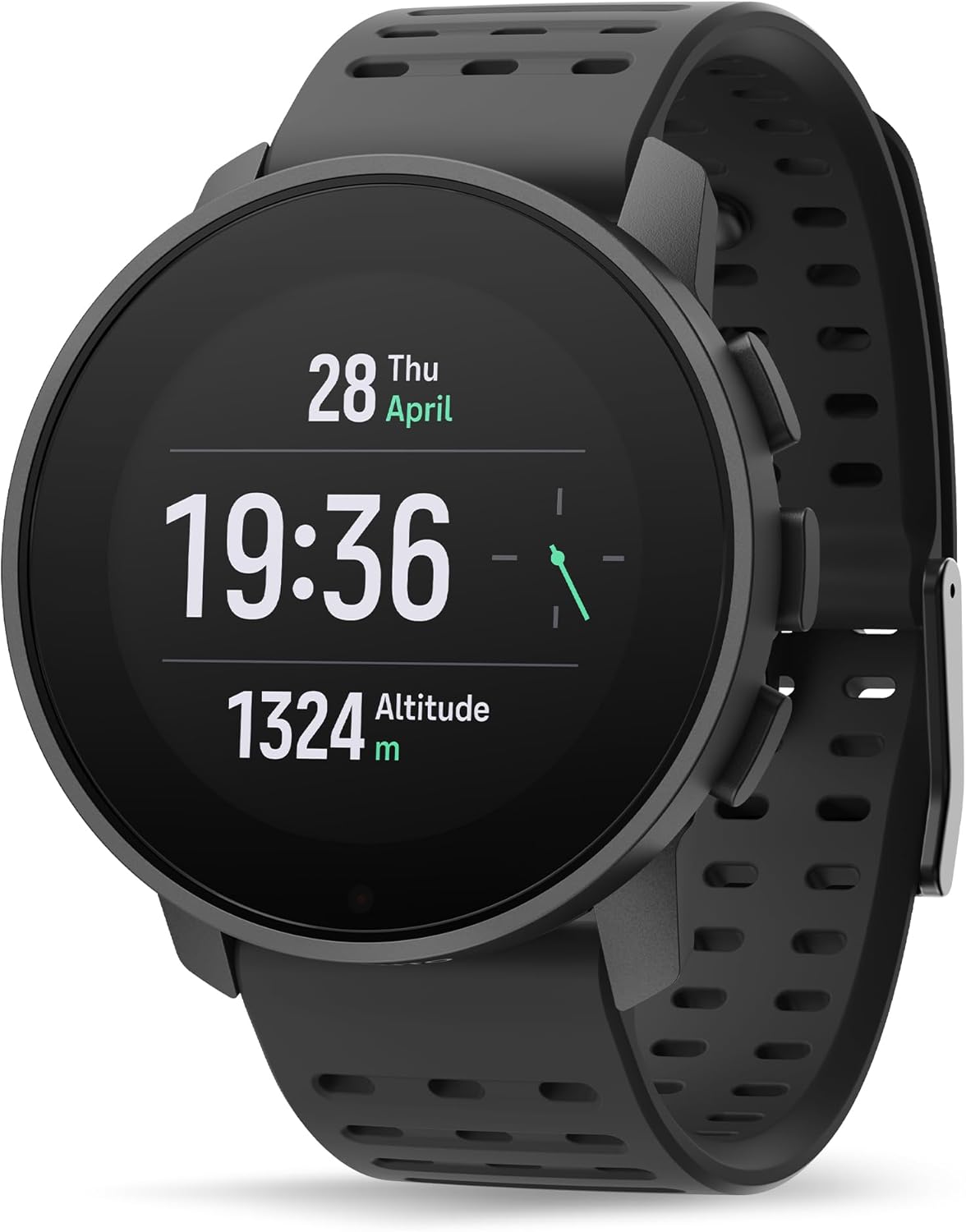
Rugged outdoor GPS watch with GLONASS and Galileo support, heart rate monitoring, 3-axis compass, MIL-STD-810 build, and the deepest proof base of any GPS watch on Amazon at 24,300 reviews
★★★★★4.7(24,300 reviews) Oregon Tails Best Value Garmin
Garmin Instinct original rugged outdoor GPS watch with MIL-STD-810 build, GLONASS, Galileo GPS, and 3-axis compass
Price$239.99
Rating4.7 / 5 ★
Case size45mm
DisplayMIP transflective
GPSGPS, GLONASS, Galileo
Battery14 days smartwatch
BuildMIL-STD-810, fiber-reinforced polymer
Best forDay hikers and weekend backpackers on a budget
Pros
  • 24,300 reviews at 4.7 stars: no GPS watch on Amazon has a longer or deeper proof base
  • MIL-STD-810 build with fiber-reinforced polymer handles real trail abuse
  • GLONASS and Galileo multi-satellite GPS for reliable tracking in varied terrain
  • 3-axis compass and altimeter for navigation without GPS
  • 14-day smartwatch battery covers a full week of backpacking with headroom
  • Full Garmin Connect ecosystem at the lowest price on this page
Cons
  • No multi-band GNSS: tracks drift in heavy tree cover and canyons
  • No AMOLED display: MIP is sun-readable but dim in shade
  • No preloaded maps or offline navigation
  • Older design: missing solar charging, flashlight, and dual-band GPS of newer Instincts

The original Instinct’s interface hasn’t changed fundamentally since launch, which means muscle memory survives firmware updates and you never have to relearn the watch after a software revision in the field. The fiber-reinforced polymer case looks unimpressive next to titanium competitors, but it handles rock contact and drops without visible damage in a way that reveals itself over two years of use rather than on unboxing. Single-band GPS is entirely adequate for marked trail use: on a well-signed trail system in open terrain, the tracking difference between single-band and multi-band is irrelevant to how you actually navigate.

The original Instinct makes sense as a first GPS watch, as a backup to a more expensive primary, and for hikers who do established trail systems consistently and want a watch that works without complexity or drama for years. When the 9 Peak Pro wins: when you want titanium and sapphire glass in a 43mm profile that fits smaller wrists and slides under a jacket sleeve without catching.
Check price on Amazon ↗ Affiliate link
#2 Value, Best Slim Rugged
Ultra-thin titanium GPS watch with sapphire glass, military-grade durability, 10.8mm profile, 95 sport modes, and 300-hour GPS endurance mode: the most wrist-friendly rugged GPS watch in the value tier
★★★★4.2(729 reviews) Suunto
Suunto 9 Peak Pro ultra-thin titanium GPS watch with sapphire glass, military-grade durability, and 300-hour GPS endurance mode
Price$249.00
Rating4.2 / 5 ★
Case size43mm
Thickness10.8mm: one of the slimmest rugged watches made
Display1.2″ MIP, sapphire crystal
GPSGPS, GLONASS, Galileo, BeiDou
Battery40hr GPS / 300hr endurance GPS
Best forHikers who find expedition watches too large or heavy
Pros
  • 10.8mm thickness is genuinely slim: this is a rugged GPS watch that doesn’t feel like one
  • Titanium case with sapphire glass at $249 is extraordinary value for these materials
  • 43mm case and 52g total weight fit smaller wrists much better than most expedition watches
  • 300-hour GPS endurance mode extends battery for long expeditions
  • Military-grade durability and 100m water resistance despite the slim profile
Cons
  • No multi-band GPS: single-band only, which drifts in heavy tree cover
  • No offline topographic maps on the watch
  • 4.2 stars with 729 reviews: lower rated than most watches on this page
  • Suunto app ecosystem is smaller than Garmin Connect

The 10.8mm profile on the Suunto 9 Peak Pro matters more than it sounds: most rugged GPS watches are 13 to 16mm thick and catch on jacket cuffs when you’re adjusting layers on a moving skin track or pushing through coastal brush. At 52g total, this watch doesn’t shift position on your wrist during a steep descent the way heavier watches do, and it disappears under a wetsuit sleeve or base layer without the pressure point you get from thicker cases. The 300-hour endurance GPS samples position less frequently to extend battery on long objectives: useful for documenting a multi-day route, less precise on tight switchbacks.

The 9 Peak Pro is for hikers who need genuine ruggedness in a watch that wears and feels like a normal watch, particularly on wrists where 47-50mm expedition builds are simply too large for comfortable daily use. Single-band GPS is the honest constraint: it tracks well on open terrain and marked trails, and drifts in tight canyons and dense forest. When the Instinct original wins: when Garmin Connect, the broader accessory ecosystem, and simpler long-term software support matter more than the 9 Peak Pro’s slim titanium profile.

Check price on Amazon ↗ Affiliate link

Comparison table

All 10 hiking watches compared by tier, GPS, battery, offline maps, rating, and price
WatchTierGPSBatteryOffline mapsRatingReviewsPrice
Garmin fēnix 8 47mmPremiumMulti-band16 daysYes (TopoActive)★★★★★ 4.836$1,084.58
Garmin Enduro 3 SolarPremiumMulti-band90 days w/ solarYes (TopoActive)★★★★★ 4.7240$899.99
COROS Vertix 2SPremiumDual-frequency40 daysYes (global)★★★★½ 4.5~450$699.00
Suunto VerticalPremiumDual-bandVaries + solarYes★★★★ 4.4135$549.00
COROS NOMADMidMulti-satellite22 daysYes (global topo)★★★★½ 4.5193$349.00
Amazfit T-Rex 3 Pro 44mmMidDual-band27 daysYes★★★★½ 4.5353$319.99
Garmin Instinct 2X SolarMidMulti-bandSolar extendedNo★★★★½ 4.64,600$312.22
Polar Grit X ProMidSingle-band40hr GPSNo★★★★ 4.3~900$349.00
Garmin Instinct (original)ValueGPS+GLONASS+Galileo14 daysNo★★★★★ 4.724,300$239.99
Suunto 9 Peak ProValueGPS+GLONASS+Galileo40hr GPSNo★★★★ 4.2729$249.00
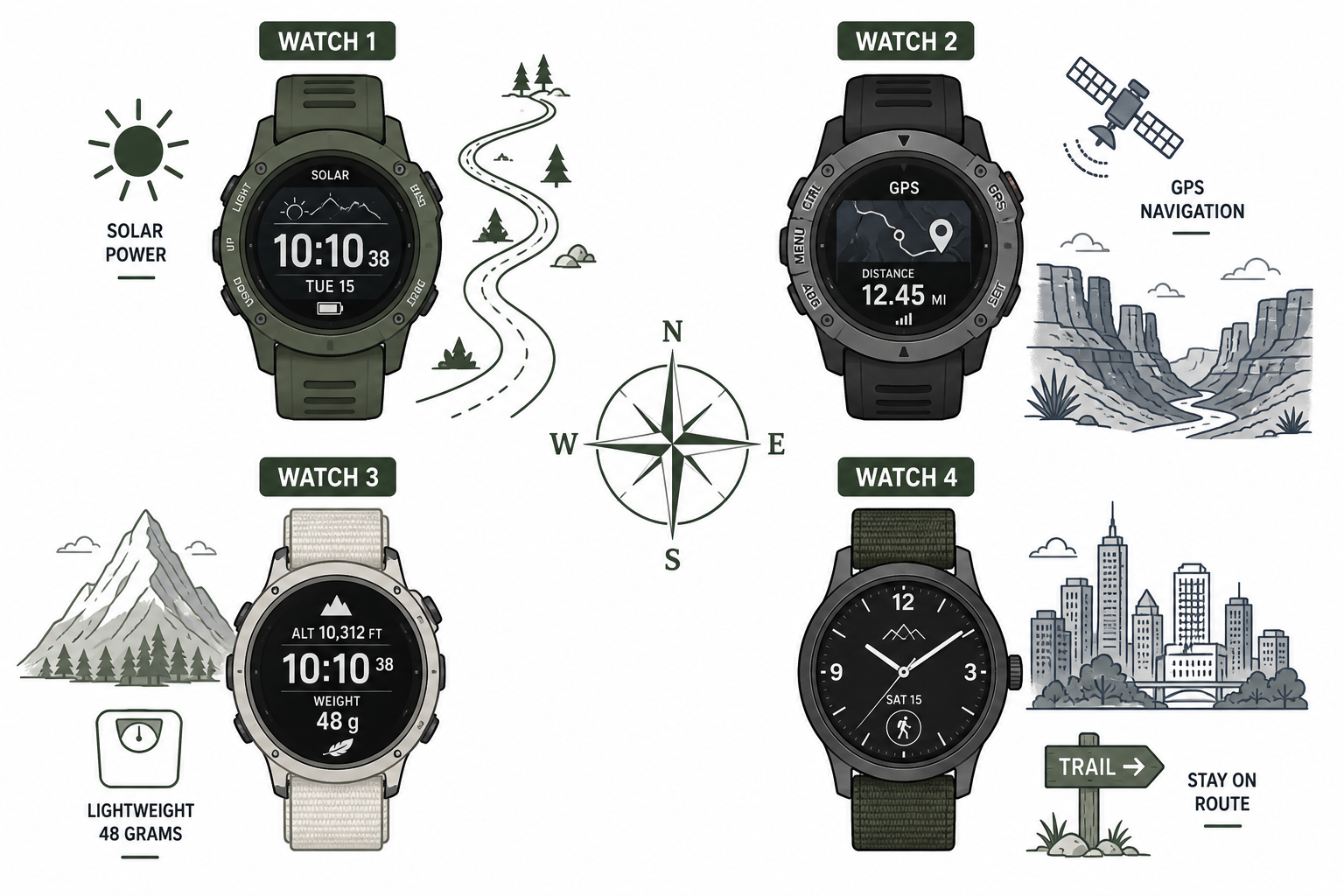
How to choose a hiking watch: a visual guide to trip type, GPS accuracy, battery life, and offline maps

How to choose a hiking watch

Match the watch to the trip, not the spec sheet

The most expensive watch on this page is not the right watch for most hikers. A day hiker doing well-marked established trails gets everything they need from the original Garmin Instinct at $239. The features you pay $1,084 for on the fēnix 8, including the dive computer, voice calls, and full topographic maps, only matter if you actually use them. Start with the trip type. If your longest trip is a two-night backpacking loop, you need solid GPS, multi-day battery, and rugged build. That’s a $300 problem, not a $1,000 one. The watches worth spending up for are the ones where a specific capability changes how you navigate or how long you can stay out.

How much should you spend on a hiking watch?

For marked trail day hiking: $200 to $350 covers everything you need. The original Instinct and Suunto 9 Peak Pro both deliver solid GPS, rugged build, and multi-day battery. For weekend backpacking with offline navigation: $300 to $400 gets you into the COROS NOMAD and T-Rex 3 Pro tier, with offline topo maps, multi-band GNSS, AMOLED displays. For thru-hiking or mountaineering where the watch is a navigation instrument: $550 to $900 buys solar charging, expedition-grade build, and the GPS precision that matters in technical terrain. Only consider spending past $900 if you’re using the watch across disciplines like diving, voice communication, and ultra-distance racing, where the fēnix 8’s full feature set earns the price tag.

Multi-band GNSS matters more on some terrain than others

Single-band GPS tracks within 5 to 10 meters on open ground. In dense old-growth forest, in sandstone canyons, or in any terrain where you have sky coverage above maybe 120 degrees instead of 360, single-band drifts 10 to 30 meters off your actual track. That’s not a problem on a well-signed loop with a maintained tread. It becomes a real problem when you’re navigating by GPS in a drainage that’s too tight for visual landmarks. If your hiking is predominantly open ridgeline and established trails, single-band is adequate. If you regularly go into canyon country, dense forest, or off-trail terrain where GPS is your primary navigation tool, multi-band is worth paying for. The fēnix 8, Enduro 3, Vertix 2S, Suunto Vertical, T-Rex 3 Pro, and Instinct 2X Solar all use multi-band. The Polar Grit X Pro, Suunto 9 Peak Pro, and original Instinct use single-band.

Battery specs are quoted in the mode that flatters most

The number on the box is smartwatch battery: passive use, screen on periodically, no GPS. On the trail with GPS active and heart rate monitoring running, that number drops dramatically. A watch quoted at 40 days smartwatch typically delivers 30 to 50 hours of continuous GPS tracking. That means a three-day trip with 10 hours of daily tracking burns through 30 hours of GPS battery and leaves you with margin. A 10-day thru-hike section at the same usage hits 100 hours and needs either a recharge opportunity or a watch built around extreme battery: the Enduro 3‘s 320-hour GPS rating or the Vertix 2S‘s 118-hour rating. Solar charging extends battery most on terrain where hikers most need it: exposed ridges, desert plateaus, above-treeline routes, and adds little in forest cover.

Offline maps change what’s possible, not just what’s convenient

Track logging tells you where you’ve been. Offline topographic maps tell you where you can go, show you what terrain lies between your position and your objective, and let you navigate safely when cell signal is gone and conditions change. On an established trail in good weather, maps are a convenience. In deteriorating visibility on a route you’ve never done, maps are a safety tool. The COROS NOMAD has the best map quality in the mid tier, with full global topographic with turn-by-turn navigation at $349. The fēnix 8 and Enduro 3 include Garmin TopoActive, which is the most comprehensive preloaded map set in the business. The Vertix 2S, Suunto Vertical, and T-Rex 3 Pro carry offline maps. The Instinct line, Polar Grit X Pro, and Suunto 9 Peak Pro do not.

Case size affects whether you’ll actually wear it every day

A watch you won’t wear on a rest day because it’s uncomfortable is a watch that won’t be charged when your trip starts. Most expedition watches are 47 to 51mm and 13 to 16mm thick. On wrists under about 7 inches in circumference, that profile catches on jacket cuffs, sits heavy on long days, and rarely gets worn off-trail. The Suunto 9 Peak Pro is the outlier: 43mm, 10.8mm thin, 52g total, and it wears like a normal watch. The T-Rex 3 Pro 44mm and original Instinct at 45mm are mid-size. If you’re buying a watch you intend to wear daily, try the case size on before committing: a 51mm expedition watch on a smaller wrist feels like a medical device, and you’ll leave it at home.

Ruggedness is about materials and testing, not aesthetics

A watch that looks tactical and has a polymer case is not a rugged watch. MIL-STD-810G certification means the watch has been physically tested for temperature extremes, humidity, shock, and vibration. It’s a baseline, not a guarantee, but it’s meaningful. Sapphire crystal is genuinely harder than mineral glass: it resists scratching from rock contact that would permanently mark a standard lens. Titanium bezels handle impact better than aluminum. The fēnix 8, Enduro 3, and Vertix 2S combine all three: MIL testing, sapphire, titanium. The T-Rex 3 Pro passes 15 MIL-STD-810G tests with sapphire AMOLED and titanium bezel at $319. The 9 Peak Pro and original Instinct use fiber-reinforced polymer with MIL testing, less premium in material but proven under real conditions.

A new watch with great specs or an older watch with years of proof

A GPS watch with 36 reviews is a watch that hasn’t been tested at scale yet. You don’t know how the GPS performs across different terrain types, whether the battery holds up in cold, or how the software ages over two years of firmware updates. A watch with 24,000 reviews carries thousands of field reports across conditions that no manufacturer test simulates: actual thru-hike sections, actual alpine winters, actual canyon country navigation. That proof base is genuinely valuable information about long-term reliability that spec sheets don’t capture. This doesn’t mean newer watches are worse. It means the confidence interval is different, and that’s worth accounting for when you’re buying something you’ll rely on in the backcountry.

Frequently asked questions

What is the best hiking watch in 2026?
The right answer depends on the trip. For day hikes and weekend backpacking on marked trails, the original Garmin Instinct at $239 handles everything most hikers need: solid GPS, rugged build, and multi-week battery. For off-trail hiking where navigation matters, the COROS NOMAD at $349 has the best offline maps in the mid tier. For thru-hiking and multi-week expeditions, the Garmin Enduro 3 Solar at $899 delivers up to 90 days of battery with solar charging. The Garmin fenix 8 at $1,084 is for hikers who also dive, climb, and want one watch to handle all of it.
What features does a hiking watch need?
The core requirements are reliable GPS tracking, enough battery for your longest trip, and a build that survives trail conditions. Beyond that, it depends on how you hike. For off-trail or unfamiliar terrain, offline topographic maps with turn-by-turn navigation are a genuine safety upgrade. For hiking in dense forest or canyons, multi-band GNSS tracks significantly more accurately than single-band GPS. For trips longer than a week without resupply, solar charging or an expedition-grade battery starts to matter. Most day hikers on marked trails need none of these extras. The list of required features grows with the length and remoteness of your trips.
Can I use an Apple Watch for hiking?
Yes, with real limitations. The Apple Watch Ultra 2 is capable hardware for day hiking: accurate GPS, heart rate monitoring, and solid trail apps. The constraints are battery life and durability. Even the Ultra 2 delivers around 36 hours of continuous GPS use, which covers a long day but not a multi-day trip without charging. Apple Watch cases are not tested to MIL-STD-810 standards and are not built for repeated rock contact the way purpose-built hiking watches are. For established trail day hiking where you charge nightly, it works. For backcountry and multi-day use, a dedicated GPS watch handles the environment and battery demands significantly better.
Is the Garmin fenix 8 worth it for hiking?
Only if you will use what you are paying for. The fenix 8 earns its price when you are combining disciplines: hiking, diving, climbing, ultra-distance running, navigation in technical terrain. The AMOLED display, full TopoActive maps, dive computer, voice calls, and LED flashlight are all real features. For a hiker doing day trips and weekend backpacking on marked trails, the Instinct 2X Solar at $312 or the T-Rex 3 Pro at $319 cover most of the same capability at roughly a third of the price. The fenix 8 is the right watch for people who already know they need it.
What is the best hiking watch for battery life?
The Garmin Enduro 3 Solar provides the longest battery on this page: up to 90 days in smartwatch mode with solar charging, and 320 hours in standard GPS mode. In practical terms, a two-week thru-hike section with 10 hours of daily GPS use is a genuinely charge-free experience on exposed terrain. The COROS Vertix 2S hits 40 days smartwatch and 118 hours of full GPS tracking without solar. The Garmin Instinct 2X Solar extends battery through solar charging and is most effective on above-treeline and desert terrain where sun exposure is consistent.
Do I need offline maps on a hiking watch?
For day hikes on marked trails, no. Track logging and breadcrumbs are enough to retrace your route. For off-trail hiking, unfamiliar trail systems, or any hike past cell signal, offline topographic maps are a genuine safety upgrade: they show you what terrain lies between your position and your objective when a wrong turn in deteriorating visibility has real consequences. The COROS NOMAD has the best maps in the mid tier, with full global topographic and turn-by-turn navigation at $349. The fenix 8 and Enduro 3 include Garmin TopoActive maps. The Vertix 2S, Suunto Vertical, and T-Rex 3 Pro also carry offline maps. The Garmin Instinct line, Polar Grit X Pro, and Suunto 9 Peak Pro do not.
Is COROS better than Garmin for hiking?
COROS beats Garmin on price-to-hardware ratio and battery life. The COROS NOMAD at $349 has better navigation maps than any Garmin under $1,000. The COROS Vertix 2S at $699 offers 40-day battery and sapphire titanium construction at a price significantly below the fenix 8. Garmin wins on ecosystem depth: Garmin Connect is more polished than the COROS app, the accessory selection is larger, and Garmin watches have deeper long-term track records across more users. For trail capability per dollar, COROS is often the sharper pick. For ecosystem reliability and software polish, Garmin is the safer choice.
What is the most rugged hiking watch?
The fenix 8 and Enduro 3 are the most rugged watches on this page: both pass MIL-STD-810 standards, carry sapphire crystal lenses, and use titanium bezels. The COROS Vertix 2S uses a PVD-coated titanium bezel and sapphire screen. The T-Rex 3 Pro passes 15 MIL-STD-810G tests with titanium bezel and sapphire AMOLED at $319. The Suunto 9 Peak Pro combines titanium and sapphire in a 43mm slim case. The Garmin Instinct line uses fiber-reinforced polymer tested to MIL-STD-810, less premium in material but proven under real conditions across years of field use.
How accurate is GPS on a hiking watch?
Single-band GPS is accurate to within 5 to 10 meters in open terrain and drifts 10 to 30 meters under heavy tree cover or in steep canyons. Multi-band GNSS, also called dual-frequency or L1+L5, holds tracks significantly better in those environments by pulling signals from more satellite constellations simultaneously. The practical difference shows most in dense old-growth forest, in canyon country, and in any terrain with limited sky coverage. The fenix 8, Enduro 3, Vertix 2S, Suunto Vertical, T-Rex 3 Pro, and Instinct 2X Solar all use multi-band. The Polar Grit X Pro and Suunto 9 Peak Pro use single-band GPS.
What size hiking watch do I need?
Most rugged GPS watches run 47 to 51mm in diameter and 13 to 16mm thick. On wrists under roughly 7 inches in circumference, that profile catches on jacket sleeves and sits heavy after a full day. The Suunto 9 Peak Pro is the smallest rugged option on this page at 43mm and 10.8mm thin, weighing 52g total. The Amazfit T-Rex 3 Pro at 44mm and the original Garmin Instinct at 45mm are mid-size. If you are deciding between options, try the case size on your wrist before committing: the difference between 43mm and 50mm is significant after 15 miles, and a watch that is uncomfortable gets left at home.

More watch and tech guides

Browse all gear

Written By
Will, founder of Oregon Tails

Will

Oregonian · 20+ year hiker · Author · Gear reviewer

I’m an Oregonian, a 20+ year hiker, and a working gear reviewer. I started Oregon Tails because I was tired of gear advice from people who don’t actually spend nights in the backcountry. No brand pays for placement here. Every recommendation on this page is what I’d actually pack for a trip to the coast, the Cascades, or the Gorge.