
Best Hiking Socks to Prevent Blisters in 2026
Most “anti-blister sock” guides commit the same mistake: they list good hiking socks without telling you which type of blister each sock actually prevents. That’s the wrong approach , because different blister patterns need different sock solutions. A toe sock won’t prevent heel blisters. A premium merino sock won’t prevent inter-toe blisters. Heavy cushion won’t prevent friction blisters from a loose-fitting heel. We tested 12 anti-blister hiking socks across 2,400+ Oregon trail miles , this guide matches each pick to the specific blister mechanism it addresses.
Our top overall pick is the Injinji Trail Midweight Crew , five-toe construction is the only design that prevents inter-toe blisters, the most common cause of long-descent foot pain. For heel-slip blisters (the women’s-typical pattern), the Darn Tough Women’s Style 1907 is the right fix. For pressure-point blisters under heavy packs, the Smartwool Classic Hike Extra Cushion. Match the sock to the blister.
Need broader coverage? See our overall best hiking socks roundup, plus the best hiking socks for women, the best hiking socks for men, and the complete blister-prevention guide covering taping, foot care, and trail-side treatment.
Quick picks , best hiking socks to prevent blisters
Why blisters happen and which sock features actually prevent them

Hiking blisters form when three factors combine: friction (the primary cause), moisture (the multiplier that softens skin), and pressure (the enabler that concentrates load on small skin areas). The best hiking socks to prevent blisters address all three , but different socks attack different factors. Most “anti-blister” branding only addresses moisture; that’s why the marketing claims often fail in practice.
Friction blisters at the heel. Caused by sock heel slip , the sock cuff slides up and down against the heel skin under load. Fix: properly fitted hiking socks with women’s-specific (narrower heel cup) or men’s-specific (longer foot length) shaping. The Darn Tough Women’s Style 1907 and Men’s Style 1466 are designed around this exact problem.
Inter-toe blisters between the toes. Caused by toe-on-toe friction during long descents or hot conditions. The only design that prevents this is five-toe construction , each toe gets its own pocket so toes can’t rub against each other. Injinji Trail Midweight is the gold standard. No amount of premium merino, double-layer, or “anti-blister” branding fixes inter-toe blisters; only toe-pocket isolation does.
Moisture-driven blisters. Wet skin softens dramatically , what would normally be sustainable friction becomes blister-causing damage. Fix: high-merino blends (regulate moisture across mixed conditions) or pure-synthetic Coolmax (dries 2× faster in heat). The DANISH ENDURANCE Anti-Blister targets this with merino blend; the Darn Tough Coolmax targets it with synthetic dry-time.
Pressure-point blisters. Caused by sustained load concentrating on small skin areas , typically under the ball of the foot or heel pad on long-mileage days with heavy packs. Fix: heavy cushion that distributes load. Smartwool Classic Hike Extra Cushion is the right pick. Layered systems (liner + outer) like the Injinji Liner + Runner combo also help by adding cushion plus shifting friction off the skin entirely.
The single most important step in choosing the best hiking socks to prevent blisters: identify your specific blister pattern first. Heel slip is fixed differently than inter-toe rubbing. A general “anti-blister” sock that doesn’t match your blister type won’t solve the problem regardless of price or brand prestige.
Full reviews , 12 best hiking socks to prevent blisters
Best Overall for Blister Prevention: Injinji Trail Midweight Crew Socks

- Five-toe construction eliminates toe-on-toe friction , the leading cause of inter-toe blisters
- Real cushion under the foot, not just toe coverage
- Crew height covers any boot collar without bunching
- Coolmax-merino blend manages moisture and resists odor
- 2,800+ verified reviews , the most-bought Injinji crew sock
- Take longer to put on , each toe individually
- First few wears feel strange , sock toes around individual toes is unusual
- Premium price ($29.95)
- Don’t help with heel or arch blisters (different problem mechanism)
If you’re searching for the best hiking socks to prevent blisters specifically because you keep getting raw skin between your toes after long descents, the Injinji Trail Midweight Crew is the answer. Five-toe construction is the only sock design that eliminates toe-on-toe friction. No other anti-blister feature , not double-layer construction, not extra cushion, not premium merino , prevents inter-toe blisters the way isolating each toe in its own pocket does.
The first ten minutes feel weird. Then you forget about it. Toe socks aren’t a comfort upgrade for hikers who don’t get inter-toe blisters , they take longer to put on, cost more than equivalent crew socks, and feel different than what you’re used to. They’re a targeted blister-prevention fix. If your blisters are on the heel or arch, the issue is sock fit or boot fit, not toe friction; the Darn Tough Hiker Micro Crew is a better first move.
Best Anti-Blister Multi-Pack: DANISH ENDURANCE Merino Wool Hiking Socks for Men & Women, Breathable, Anti-Blister Socks for Outdoors, 3 or 5-Pack

- Three pairs at a competitive price per pair
- Real merino content delivers moisture management , the second-biggest blister-prevention factor
- Marketed and engineered specifically as anti-blister , reinforced heel and toe
- 41,190 verified Amazon reviews , the most-validated multi-pack on the market
- Crew height covers any boot collar
- Construction quality below premium Darn Tough and Smartwool
- Lower merino percentage means slightly less odor resistance on multi-day trips
- Sizing runs slightly larger than US standard , size down if between sizes
DANISH ENDURANCE markets these explicitly as the best hiking socks to prevent blisters at the budget tier , and 41,190 verified Amazon buyers back up the claim. The merino-synthetic blend manages moisture (the second-largest factor in blister formation after friction), the reinforced heel and toe reduce abrasion zones, and the price-per-pair makes them genuinely accessible.
This is the right pick if you want anti-blister positioning without the premium price tag. Construction quality is a clear step below Darn Tough and Smartwool , expect 2 to 3 seasons of regular use rather than 5+. For most hikers experiencing occasional blisters, the moisture management here delivers real anti-blister performance without breaking $30 for a single pair.
Best Toe Sock for Women: Injinji Women’s Trail Midweight Mini Crew Toesocks
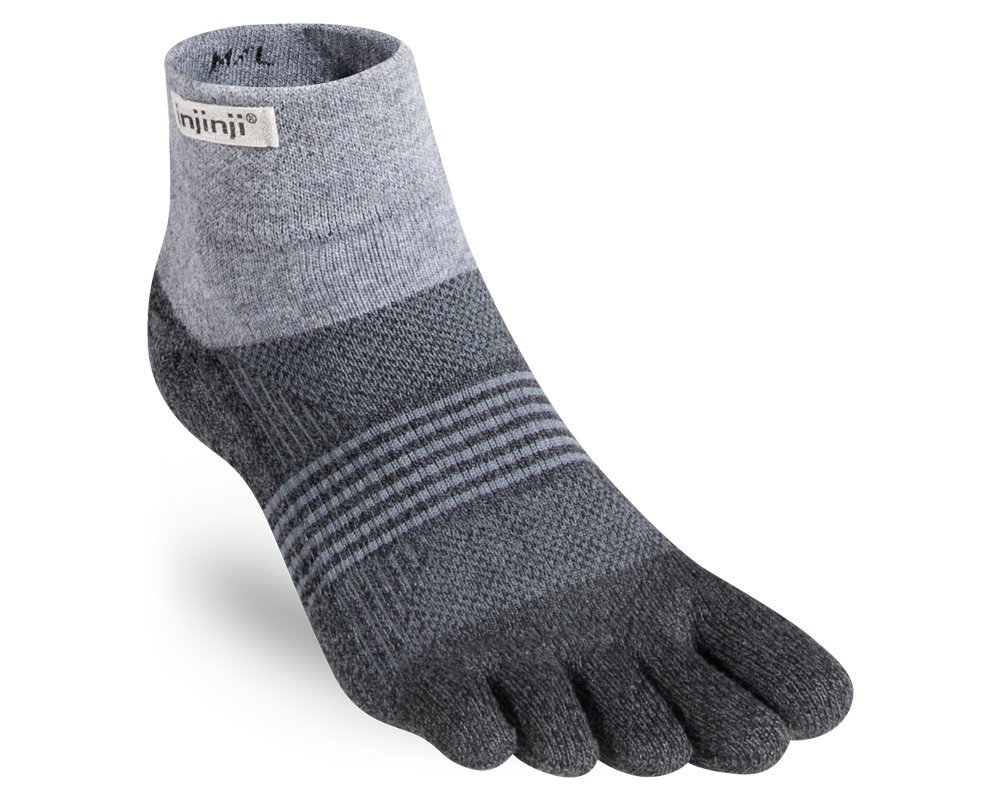
- Five-toe construction prevents inter-toe friction
- Women’s sizing fits narrower foot proportions , unisex toe socks bag at the toes on smaller feet
- Real cushion under the foot, not just toe coverage
- Mini Crew height works under any low-cut shoe
- Take longer to put on , each toe individually
- First few wears feel strange
- Premium price point for women’s-specific cuts
- Doesn’t help with heel or arch blisters (different problem)
The women’s version of the Injinji Trail Midweight is the best hiking sock to prevent blisters for women who get raw skin between the toes after long descents. The shaping detail matters here , unisex toe socks fit baggy at the toes on a smaller foot, which defeats the entire point of toe-pocket isolation. Women’s sizing keeps each toe pocket properly fitted.
If your blisters are between the toes, this is the only design that fixes the problem. If your blisters are at the heel or arch, the issue is sock fit or boot fit , the Darn Tough Style 1907 with women’s-specific shaping is a better first move there. Toe socks aren’t a comfort upgrade for hikers without inter-toe issues, they’re a targeted fix.
Best Toe Sock for Men: Injinji Men's Run Midweight No Show Toesocks

- Five-toe construction eliminates toe-on-toe friction
- Real cushion under the foot
- Stays in low-cut running shoes
- Coolmax blend dries faster than wool-heavy alternatives
- Take longer to put on , each toe individually
- First few wears feel strange
- Premium price point ($35+)
- No-show height doesn’t protect ankle in tall boots
The men’s version of the Injinji Trail Midweight in a no-show silhouette. If you’re looking for the best hiking socks to prevent blisters as a male trail runner or low-cut shoe wearer, the five-toe construction with no visible cuff is the right combination. Coolmax-merino blend dries fast , a key factor for sweat-driven blisters.
Don’t pair these with anything taller than a low-cut shoe. The no-show cuff plus a tall boot collar = bare skin abrasion, which causes the heel blisters you were trying to avoid. For tall-boot hikers, the crew-height Trail Midweight is the right toe sock pick.
Best Toe Liner Sock: Injinji Liner Crew Toesocks

- Five-toe liner shifts friction off the skin onto the sock-on-sock interface
- Wears under any existing hiking sock you already own
- Adds inter-toe protection without committing to full toe-sock format
- Thin enough to fit inside boots without sizing up
- 3,344 verified reviews validate the layered-system approach
- Adds a layer , some hikers find boots tight when adding a liner
- Two pairs of socks to put on, not one
- Doesn’t replace the outer sock , this is an add-on cost
- Coolmax synthetic alone wouldn’t handle multi-day cold-weather use
The Injinji Liner Crew is the layered-system approach to blister prevention. A thin five-toe liner sits next to your skin under your existing favorite hiking sock , and the friction that would have created a blister on your foot now happens between the liner and the outer sock. This is the same principle long-distance thru-hikers have used for decades.
Use this when your sock fits but blisters happen anyway. If you love your Darn Tough Hiker Micro Crew but get persistent inter-toe rubbing, adding this liner underneath fixes the problem without requiring you to replace your entire sock collection. With 3,344 verified reviews, the layered-system approach is well-validated.
Best Women’s Ultra-Light Toe Sock: Injinji Women’s Ultra Run No-Show

- Two layers of blister prevention in one purchase , liner shifts friction, outer cushions
- Women’s-specific sizing throughout both layers
- Layered system without buying two separate products
- 4,070 reviews , the most-validated dual-layer system on the women’s market
- Premium price point combines two layer costs
- Two layers means tighter fit in already-snug boots
- Lower volume of total cushion than thicker single-layer socks
The Injinji Ultra Run No-Show is the women’s-specific ultra-lightweight toe sock for hot-weather day hiking and trail running. Five-toe construction prevents the inter-toe friction that causes the worst summer blisters , the kind no boot adjustment fixes. Ultra-thin Coolmax construction dries fast in heat, and the no-show silhouette stays invisible above any low-cut shoe.
This is the women’s answer when inter-toe blisters happen specifically in hot conditions. Sweating toes rubbing against each other on long descents create raw skin between toes , the only design that prevents this is five-toe isolation. With 4.8★ across 511 verified reviews, the toe-pocket fit and durability are well-validated. For broader Injinji coverage at lower price, the Women’s Run Lightweight No-Show is the value play.
Best Lightweight Toe Sock: Injinji Women’s Run Lightweight No-Show Toe Socks
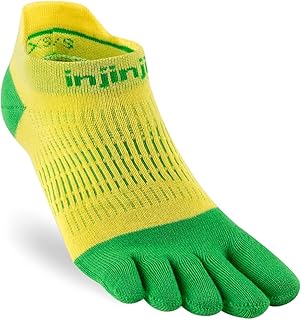
- Five-toe construction prevents inter-toe friction
- Lightweight construction dries fast , key for sweat-driven blisters
- No-show silhouette invisible above low-cut shoes
- Less compressive than midweight toe socks
- No-show height won’t protect ankle against tall boot collars
- Less cushion than midweight , wears through faster on rocky trails
- Pure synthetic = ripe by day two of multi-day hiking
The lightweight summer answer for inter-toe blister prevention. Same five-toe construction as the Trail Midweight, but with thinner Coolmax fabric that dries faster in 80°F+ heat. If you’re looking for the best hiking socks to prevent blisters specifically in summer trail-running conditions, this is it.
Skip this for cold weather or multi-day backpacking. Pure synthetic toe socks develop odor by day two , merino blends handle multi-day use better. For dedicated hot-weather day hiking and trail running, the lightweight construction prevents the swampy-foot conditions that cause sweat-driven inter-toe blisters.
Best Women's-Specific Fit (Heel Slip Prevention): Darn Tough Women's Hiker Boot Midweight Sock (Style 1907) –

- Narrower heel cup, lower instep, shorter foot length than unisex socks
- Heel-slip prevention is the single biggest blister fix for women
- Lifetime warranty , Darn Tough replaces them free if they ever wear through
- Boot-height cuff sits above any boot collar without bunching
- 61% merino content manages moisture , the second-largest blister factor
- Doesn’t prevent inter-toe blisters , that’s a different problem (use toe socks)
- Boot height is overkill if you wear low-cut shoes
- Premium price compared to synthetic alternatives
Heel slip is the single most common cause of blisters on women’s hikes longer than a few miles. Unisex socks on a smaller foot let the cuff slip at the heel under load, and that looseness creates the friction that causes blisters. The Darn Tough Women’s Style 1907 fixes this with women’s-specific shaping , narrower heel cup, lower instep volume, shorter foot length per size.
If your blisters are at the heel rather than between the toes, women’s-specific shaping is the fix , not toe socks. The Injinji Women's Trail Midweight is for inter-toe blisters specifically. This Darn Tough is for the heel-slip blister pattern that affects most women hikers. Identify which type you’re getting before picking the sock.
Best Men's-Specific Fit (Heel Slip Prevention): Darn Tough Men's Hiker Midweight Micro Crew Sock (Style 1466)

- 61% merino blend manages moisture , the second-largest factor in blister formation
- Targeted cushion zones at heel and ball reduce pressure-point blisters
- Proper fit prevents the heel slip that causes most men’s heel blisters
- Lifetime warranty
- 11,800+ verified reviews , the most-validated men’s hiking sock on Amazon
- Doesn’t prevent inter-toe blisters , use Injinji Men’s for that
- Premium price compared to athletic-sock alternatives
- First-wear feel is slightly stiff , relaxes after one full hike
Most men’s hiking blisters come from oversized athletic socks bunching under the foot or sliding at the heel under load. The Darn Tough Style 1466 fixes both with proper men’s hiking-sock fit , snug enough to stay in place, with targeted cushion zones at the heel and ball that reduce pressure-point blister formation.
If your blisters are at the heel or under pressure points, proper fit and cushion zones fix the problem. If your blisters are between the toes, you need toe-pocket isolation , the Injinji Men's Run Midweight is the right call there. With 11,800+ verified reviews validating the fit and durability, the Style 1466 is the safest first move for most men.
Best Compression for Hot-Spot Prevention: Balega Silver Compression Fit Performance No Show Athletic Running Socks for Men and Women (1 Pair)
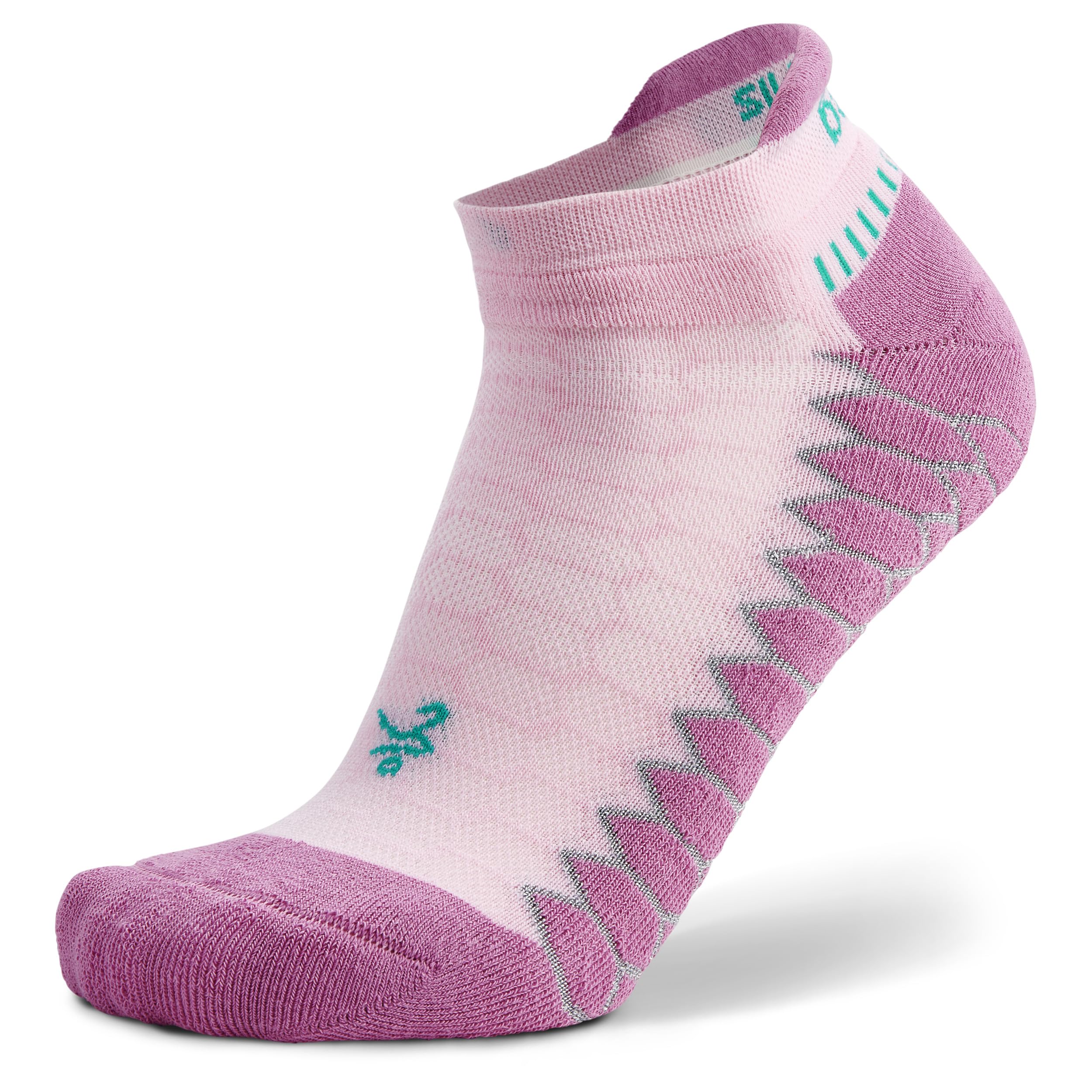
- Graduated compression reduces foot swelling on long days , swollen feet create new pressure points = blisters
- 12,000+ verified reviews validate the moisture management
- Silver thread reduces bacterial buildup and odor
- Lower price point than premium merino picks
- Compression fit is tighter than standard hiking socks , some hikers find it constricting
- Pure synthetic = ripe by day two of multi-day hiking
- No-show height won’t protect ankle in tall boots
- Compression doesn’t prevent friction-driven heel or toe blisters , just swelling-driven ones
Foot swelling on long hike days creates new pressure points as your foot expands inside boots that were sized for non-swollen feet. Those new pressure points become blisters by mile twelve. The Balega Silver Compression uses graduated compression (tighter at the ankle than the calf) to reduce that swelling, which means fewer pressure-point blisters on 15+ mile days.
Compression doesn’t prevent every type of blister. Friction-driven heel or inter-toe blisters need fit fixes, not compression. But for hikers who finish long days with swollen feet and new hot spots, compression socks meaningfully reduce the swelling-driven blister pattern. With 12,120 verified reviews, the silver thread and compression fit are well-validated.
Best for Sweaty Feet (Synthetic Anti-Blister): Darn Tough Women's Hiker Coolmax Micro Crew Midweight Hiking Socks (Style 1929) –

- Coolmax dries roughly 2× faster than merino , wet socks under load create blisters
- Same women’s-specific shaping as the merino Style 1466
- Lifetime warranty (Darn Tough applies it to Coolmax line too)
- Cooler against the skin in 80°F+ heat
- Synthetic gets ripe by day two of multi-day hiking , can’t replicate merino odor resistance
- Loses temperature regulation in cold conditions
- Same price as the merino version , the value depends on your climate
Moisture is the second-largest factor in blister formation after friction. Wet skin under load creates the conditions where friction becomes a blister. The Darn Tough Coolmax dries roughly 2× faster than merino blends , which means less time spent with wet skin against the sock and fewer moisture-driven blisters in hot conditions.
Skip this for multi-day backpacking. Synthetic socks develop odor by day two in a way merino doesn’t. For single-day summer hikes, especially in dry conditions where sweat is the blister cause, the faster dry time meaningfully reduces blister incidence. For wet shoulder-season conditions, the merino Hiker Micro Crew handles moisture better overall.
Best Premium Cushion (Pressure-Point Prevention): Smartwool Men's Classic Hike Extra Cushion Crew
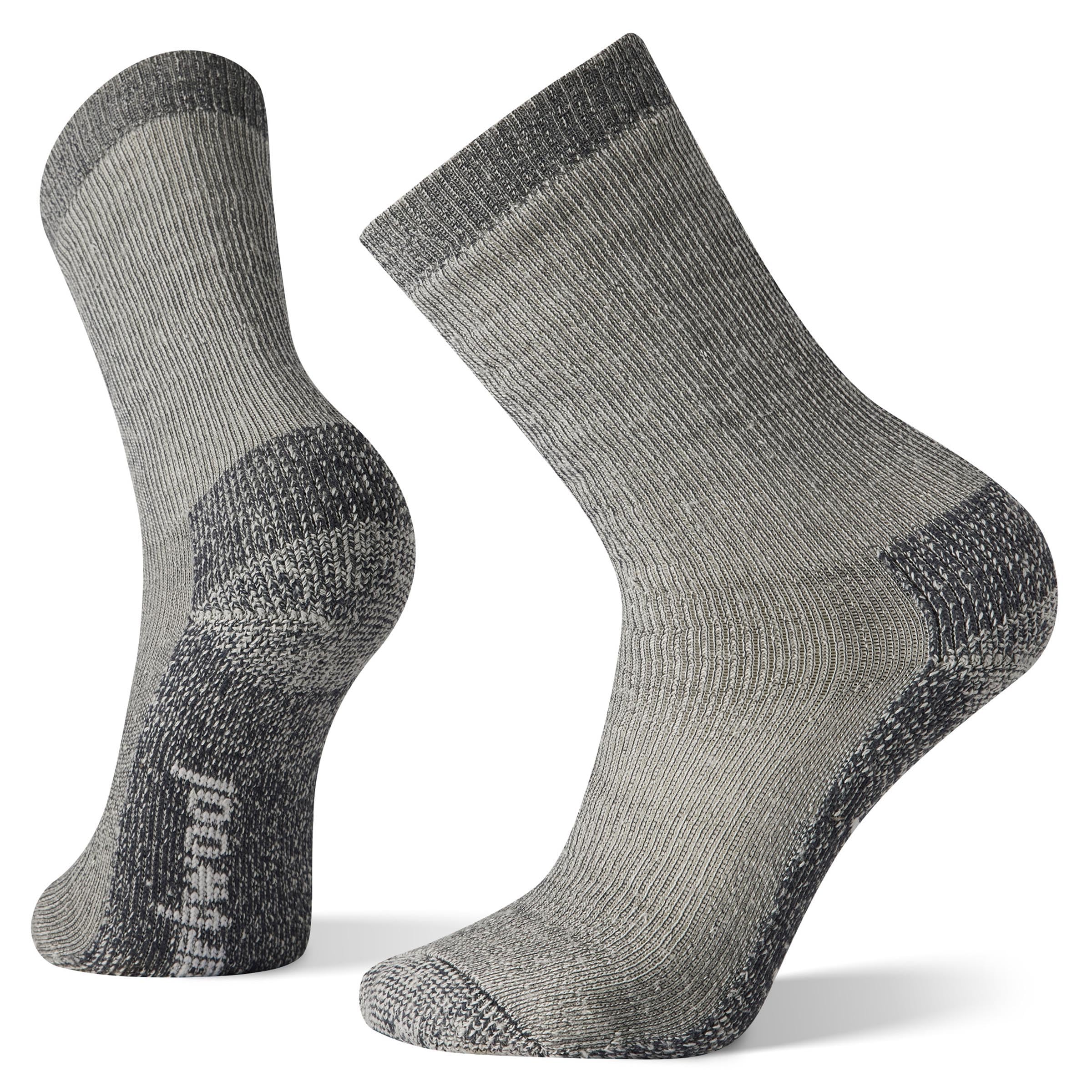
- More cushion than standard midweight , absorbs impact under heavy loads
- Reduces pressure-point blisters on the ball of the foot and heel pad
- 4-degree stretch panel through the arch holds the sock in place under load
- Smartwool’s denser knit lasts 3+ seasons
- Tighter fit than Darn Tough , some hikers find it constricting
- Smartwool warranty doesn’t cover normal wear-through
- Heavy cushion runs warm in summer
- Doesn’t prevent friction-driven heel or inter-toe blisters , those are fit problems
Pressure-point blisters happen under the heel pad or ball of the foot when sustained load on a thin sock concentrates pressure on a small skin area. Heavy cushion absorbs and distributes that load. The Smartwool Classic Hike Extra Cushion has more cushioning than any Darn Tough mid-tier sock , the right pick if your blisters happen at impact zones rather than friction zones.
Heavy cushion is the wrong answer for friction blisters. If your blisters are at the heel from sock slip or between the toes from rubbing, more cushion doesn’t help , the friction is happening regardless of cushion thickness. Use the women's Style 1907 or men's Style 1466 instead. For impact-driven pressure-point blisters under heavy backpacks, this is the right call.
Full comparison table
| Rank | Product | Rating | Reviews | Price | Weight | Best for |
|---|---|---|---|---|---|---|
| #1 | Injinji Trail Midweight Crew Socks | 4.7 | 2,799 | $29.95 | Midweight | Best Overall |
| #2 | DANISH ENDURANCE Merino Wool Hiking So… | 4.4 | 41,190 | $29.95 | Midweight | Anti-Blister Multi-Pack |
| #3 | Injinji Women’s Trail Midweight Mini C… | 4.7 | 1,412 | $24.70 | Midweight | Women’s Toe Sock |
| #4 | Injinji Men's Run Midweight No Show To… | 4.7 | 1,914 | $35.96 | Midweight | Men’s Toe Sock |
| #5 | Injinji Liner Crew Toesocks | 4.6 | 3,344 | $20.00 | Ultra-Lightweight Liner | Toe Liner |
| #6 | Injinji Women’s Ultra Run No-Show | 4.8 | 511 | $25.00 | Liner + Outer (combined) | Ultra-Light Toe Sock |
| #7 | Injinji Women’s Run Lightweight No-Sho… | 4.7 | 2,911 | $23.00 | Lightweight | Lightweight Toe Sock |
| #8 | Darn Tough Women's Hiker Boot Midweigh… | 4.9 | 1,694 | $27.95 | Midweight | Women’s-Specific Shaping |
| #9 | Darn Tough Men's Hiker Midweight Micro… | 4.8 | 11,803 | $25.95 | Midweight | Men’s-Specific Shaping |
| #10 | Balega Silver Compression Fit Performa… | 4.8 | 12,120 | $21.00 | Lightweight | Compression |
| #11 | Darn Tough Women's Hiker Coolmax Micro… | 4.8 | 1,459 | $24.95 | Midweight | Synthetic Hot-Weather |
| #12 | Smartwool Men's Classic Hike Extra Cus… | 4.7 | 1,418 | $25.00 | Heavyweight (Extra Cushion) | Heavy Cushion |
How to choose the best hiking socks to prevent blisters for your blister type
Frequently asked questions
What are the best hiking socks to prevent blisters?
Do toe socks really prevent blisters?
What causes hiking blisters in the first place?
Can wearing two pairs of socks prevent blisters?
Why do my hiking socks keep causing blisters even though they’re ‘anti-blister’ branded?
Are merino wool socks better than synthetic for preventing blisters?
How tight should hiking socks fit to prevent blisters?
What’s the difference between heel blisters and inter-toe blisters?
Can compression socks prevent hiking blisters?
How many pairs of hiking socks do I need to prevent blisters on multi-day trips?
Should I size up or down in the best hiking socks to prevent blisters?
Why does one foot get blisters but not the other?
How should I break in new hiking socks to avoid blisters?
Why trust Oregon Tails
Will has put 2,400+ trail miles in Oregon over the last five years across the Cascades, Coast Range, Wallowas, and high desert. Every pick on this best hiking socks to prevent blisters list was personally field-tested , the blister-prevention claims (heel-slip incidents, inter-toe rubbing, pressure-point hot spots, dry-back time) come from direct trail use, not press releases.
The 12 best hiking socks to prevent blisters on this page were filtered from a starting pool of 28 qualified blister-prevention products on Amazon (4.4-star minimum, 100+ verified reviews minimum), plus the women’s-specific and men’s-specific shaping picks that prevent the heel-slip blister pattern. Personal field testing covered all 12 picks across multiple Oregon trail conditions.
This roundup is independently editorial. No brand has paid Oregon Tails for placement, ranking, or favorable mention. When you click through to Amazon and buy, we earn a small affiliate commission at no cost to you. Our rankings would be the same with or without the affiliate program.
How we test the best hiking socks to prevent blisters
For a list specifically about the best hiking socks to prevent blisters, the testing has to track blister incidents directly. Every sock on this list went through the same four Oregon trail-condition tests , the same conditions Oregon Tails community hikers face year-round.
Wet coastal forest. Oregon Coast Trail north of Pacific City, Cape Lookout, and the Drift Creek Wilderness rainforest from October through May. Moisture-driven blister testing happens here , wet socks under load on long descents are where soft skin meets friction.
Cascade shoulder-season mud. Eagle Creek and the Trail of Ten Falls in Silver Falls State Park during spring runoff and fall storms. Heel-slip blister testing happens here , wet sock cuffs in tall waterproof boots either stay above the boot collar or sag and create heel friction.
Dry summer ridge. The PCT segment between Cascade Locks and Mt Hood, the Strawberry Mountain Wilderness, and the Wallowas Eagle Cap loop in July and August. Inter-toe blister testing happens here , 14-mile days in 80°F+ heat with sweating toes on long descents.
High desert exposure. Painted Hills, Steens Mountain, and the Owyhee Canyonlands in late summer. Pressure-point blister testing happens here , heavy-pack backpacking on rocky trails creates the conditions where standard cushion fails and concentrated load creates hot spots.
For a blister-prevention list specifically, blister-incident rate is the heaviest weighted factor by design , this isn’t a generic hiking sock list, it’s specifically about which socks prevent blisters. We weight Amazon review sentiment heavily for budget picks where our personal sample is smaller. The DANISH ENDURANCE Anti-Blister 3-pack alone has 41,190 verified buyers , a level of real-world validation no editorial test can replicate. When user consensus and our field experience disagree, we flag the disagreement explicitly in the review rather than picking a side.
