The Best Winter Hiking Socks
Fourteen picks across merino heavyweights, value multipacks, and specialty socks for ski boots, work boots, and anyone who cannot wear wool. Every recommendation is a sock that earns its place inside a winter boot, and no brand pays for placement.
Quick Picks: The Top 5 in 30 Seconds
Five socks covering the situations most winter buyers are shopping for. If you already know your use case, tap through and skip the rest of the page.



Find Your Winter Sock
Four questions, one pick from our fourteen. No email, no signup.
Your match
Answer the questions above
We will recommend the right sock from our fourteen picks.
Check price on Amazon →Our 14 Top Picks for 2026
Every sock here is scored out of one hundred across warmth, moisture management, cushion and fit, durability, and value. Cushion and fit carries the most weight, because a sock that compresses inside your boot or slides underfoot on a descent has already failed no matter how good the wool is. For the three-season versions of these picks, see our best hiking socks guide.
Best Merino Winter Hiking Socks
Merino is the whole reason winter socks work. It holds warmth when damp, resists odor across consecutive days, and does not go clammy the way synthetics do when you sweat on a climb and then stop moving. These seven are single pairs, priced accordingly, and worth it for the days that matter.
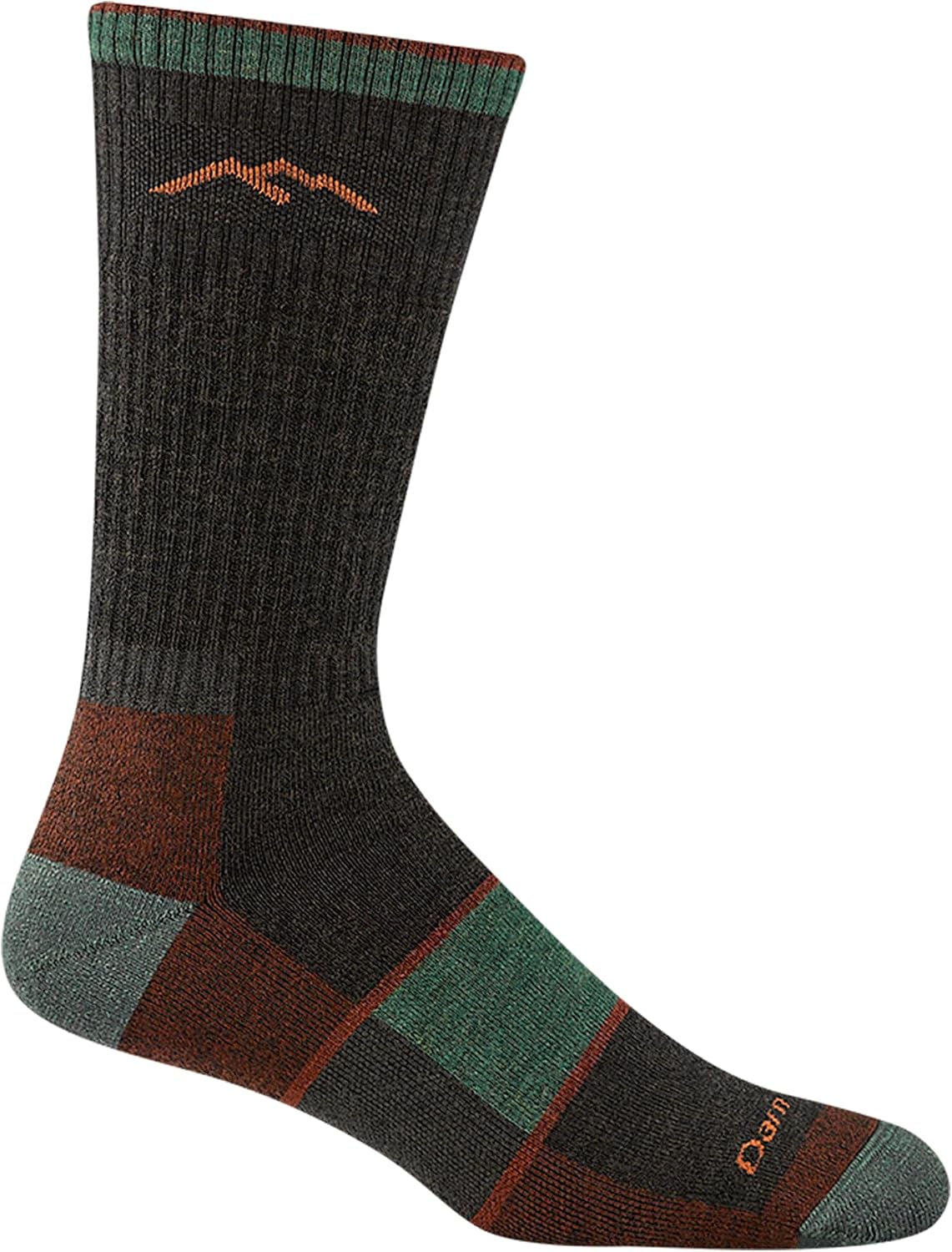
Best Winter Hiking Sock Overall: Darn Tough Hiker Boot Midweight Full Cushion
Full-cushion merino boot crew knit in Vermont, backed by an unconditional lifetime guarantee
Pros
- The densest cushion of any sock here that still fits inside a normally sized boot
- Fine-gauge knit means no bunching at the instep even after a full day of postholing
- Wear a hole in them and Darn Tough sends a new pair, no receipt and no time limit
- Elastic arch band holds position through steep descents without cutting circulation
Cons
- One pair costs what a three-pack of budget merino costs
- Too much bulk for a snug-fitting trail runner or an already tight boot
There is a specific failure mode that separates good winter socks from average ones: the moment on a long descent when the sock creeps down, the cuff folds under the boot tongue, and you spend the next hour with a pressure point behind your ankle. The 1405 does not do this. The arch band and the ribbed leg hold it in place through terrain that pulls looser socks apart, which is why it is the pair most likely to be on my feet when the forecast says freezing rain.
The lifetime guarantee gets most of the attention, and it is real, but it undersells the sock. Darn Tough knits these on fine-gauge machines in Vermont, which produces a denser cushion in a thinner overall profile than the competition manages. That combination is the whole trick in winter footwear, where every millimeter you add inside the boot costs you circulation and therefore warmth. If your boots already fit tight, size up or look at the lighter 1403 below instead.
| Material | Merino wool blend with nylon and Lycra |
|---|---|
| Cushion | Full |
| Height | Boot crew, mid-calf |
| Pairs per pack | 1 |
| Sizing | Men’s S to XXL, women’s sizing available |
| Guarantee | Unconditional lifetime |
| Made in | Vermont, USA |
| Best for | All-day winter hiking in insulated boots |
Best Boot-Height Winter Hiking Sock: Darn Tough Hiker Boot Midweight Cushion
The 1405’s leaner sibling, same knit and same guarantee with less bulk underfoot

Pros
- Fits inside boots that the full-cushion version makes too tight
- Cushioning sits under the heel and ball only, so the instep stays low profile
- Same lifetime guarantee and same Vermont knit as the heavier model
- Works across three seasons rather than only the coldest months
Cons
- Not enough insulation on its own below about twenty degrees
- Shin panel is thinner, so it offers less padding against a stiff boot cuff
Most people who complain that wool socks make their boots too tight are wearing a full-cushion sock in footwear that was fitted with a thin one. The 1403 solves that without giving up the qualities that make the Darn Tough line worth buying. It is the same yarn and the same construction, with cushion placed only where your foot actually strikes the ground.
This is the sock I recommend to anyone buying their first serious wool pair, because it fails in a forgiving direction. If it turns out to be slightly too thin for a January summit push you can layer a liner underneath. If a full-cushion sock turns out to be too thick, your only option is different boots. Skip it if you run cold or you are heading into genuinely severe conditions, where the extra loft of the 1405 or the Mountaineer earns its place.
| Material | Merino wool blend with nylon and Lycra |
|---|---|
| Cushion | Midweight, targeted |
| Height | Boot crew, mid-calf |
| Pairs per pack | 1 |
| Sizing | Men’s S to XXL, women’s sizing available |
| Guarantee | Unconditional lifetime |
| Made in | Vermont, USA |
| Best for | Winter hiking in boots that already fit snug |
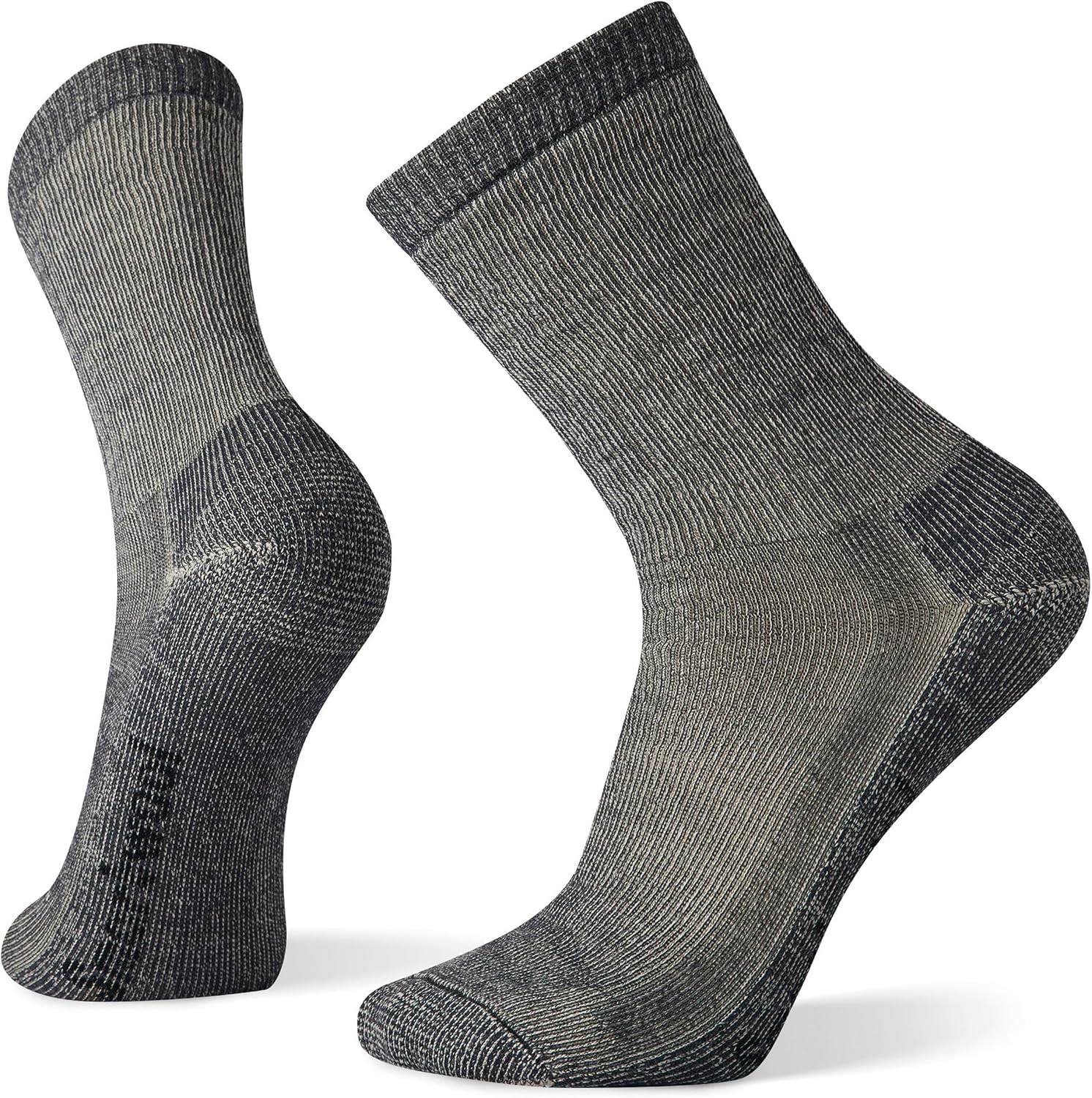
Warmest Winter Hiking Sock: Smartwool Mountaineer Classic Maximum Cushion Crew
The thickest merino sock here, built for mountaineering boots and genuinely severe cold
Pros
- Loft you can feel through a stiff mountaineering boot shell
- Full-length shin padding protects against the pressure of a rigid boot cuff
- Indestructible Wool Technology reinforcement across the heel and toe
- Holds warmth even after absorbing sweat on a long approach
Cons
- Far too thick for a standard hiking boot fitted with normal socks
- Takes most of a day to dry fully once soaked through
The first thing you notice pulling these on is that they stand up on their own. That density is the point. Rigid winter boots transmit cold straight through the shell and press hard against the front of the shin, and the Mountaineer is one of the few socks with enough padding along the leg to make a full day in that kind of footwear tolerable.
The trade-off is that it is a specialist. Wear these with a flexible three-season boot and you will lose toe room, compress the sock, and end up colder than you would have been in something thinner. Buy them if you own mountaineering boots, snowshoe in deep cold, or run cold enough that nothing else has worked. Everyone else should be looking at a full-cushion sock instead.
| Material | Merino wool blend with nylon and elastane |
|---|---|
| Cushion | Maximum |
| Height | Crew |
| Pairs per pack | 1 |
| Sizing | Men’s S to XL |
| Guarantee | Smartwool two-year warranty |
| Reinforcement | Indestructawool heel and toe |
| Best for | Mountaineering boots, snowshoeing, severe cold |
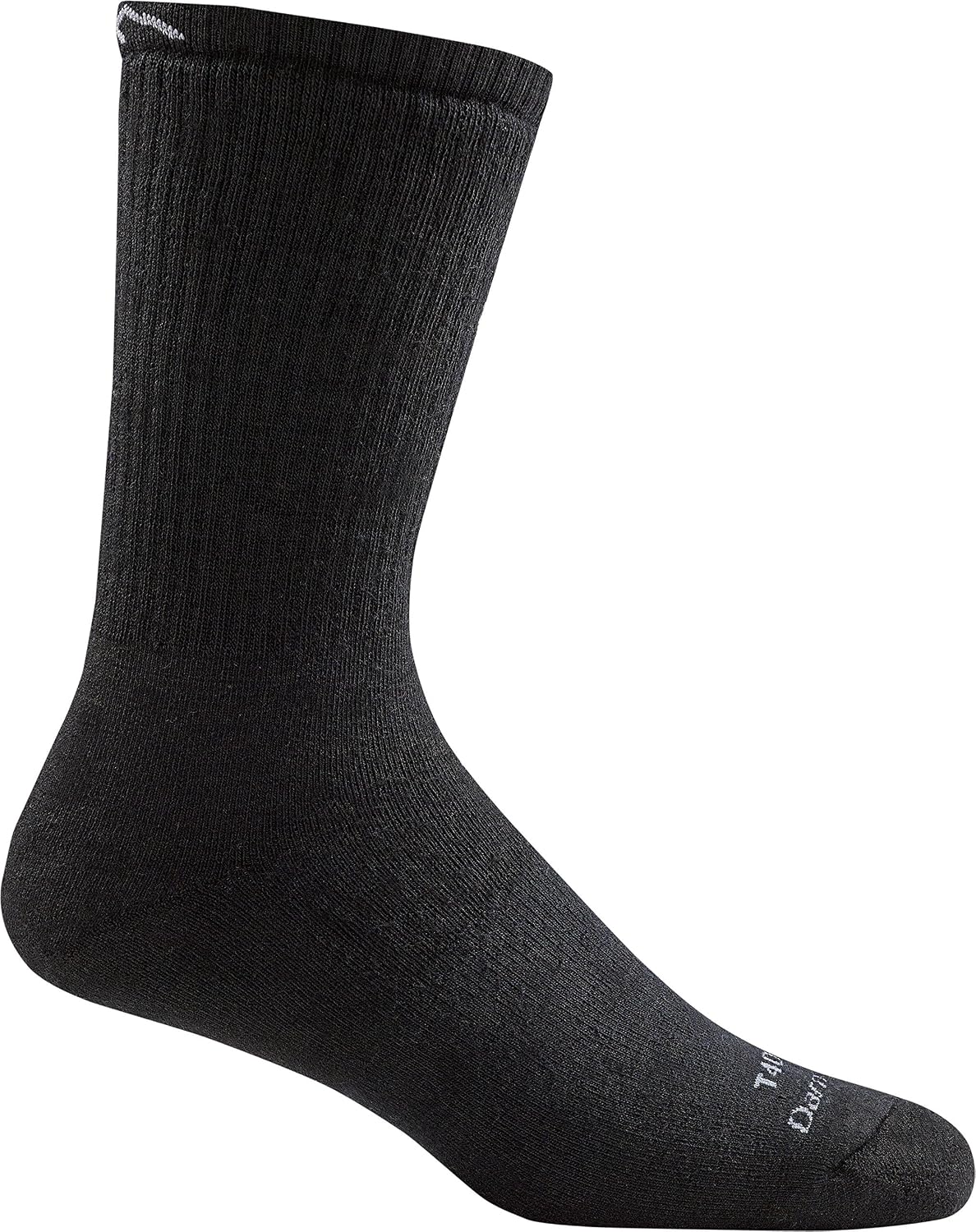
Most Cushioned Winter Hiking Sock: Darn Tough Tactical Boot Extra Cushion
Over-engineered for military boots, which makes it excellent in heavy winter footwear
Pros
- Cushioning runs the full length of the foot rather than only under high-pressure zones
- Built to survive the abuse that stiff-soled tactical boots inflict on a knit
- Unisex sizing makes it easy to share across a household
- Same unconditional lifetime replacement policy as the rest of the line
Cons
- The most expensive single pair on this page
- Overkill in a soft trail boot, where the extra loft just compresses
Tactical socks get designed around a punishing constraint: heavy boots, long hours standing, and no opportunity to change midway. That specification happens to describe winter hiking almost exactly. The T4033 puts cushion along the entire footbed instead of concentrating it under the heel and forefoot, which is what you want when a rigid winter sole is transmitting every rock straight into your arch.
It is the right pick if you are the person whose feet ache after a day in insulated boots regardless of what sock you wear. It is the wrong pick if your winter hiking happens in flexible mid-height boots on packed snow, where you are paying for padding you cannot use and adding bulk that will cost you toe circulation.
| Material | Merino wool blend with nylon and Lycra |
|---|---|
| Cushion | Extra, full-foot |
| Height | Boot crew |
| Pairs per pack | 1 |
| Sizing | Unisex S to XL |
| Guarantee | Unconditional lifetime |
| Made in | Vermont, USA |
| Best for | Heavy or stiff-soled winter boots, long days on foot |
Best Midweight Winter Hiking Sock: Smartwool Hike Classic Edition Full Cushion Crew
The sock most winter hikers should own several pairs of
Pros
- Mesh ventilation panels across the instep prevent the clammy feeling on climbs
- Cushioning strikes the balance most standard hiking boots were fitted for
- Softer next to skin than most merino blends in this weight class
- Wide size range and consistent fit across the Smartwool line
Cons
- Wears through at the heel faster than the Darn Tough equivalents
- Warranty runs out, unlike the lifetime coverage elsewhere on this list
Ask ten people at an Oregon trailhead in February what is on their feet and this sock or its immediate sibling comes up more than anything else. The reason is unglamorous: it fits the boots most people already own, it does not itch, and it manages the sweat you generate climbing without going cold on you when you stop at the viewpoint.
The mesh zones across the top of the foot are the detail that earns it a place over cheaper merino. Winter hiking is a sequence of overheating on the way up and freezing at the top, and a sock that dumps vapor while you are working keeps that swing manageable. It will not last as long as the Vermont-knit alternatives, and Smartwool’s warranty has an expiration date, so treat it as a consumable rather than a lifetime purchase.
| Material | Merino wool blend with nylon and elastane |
|---|---|
| Cushion | Full |
| Height | Crew |
| Pairs per pack | 1 |
| Sizing | Men’s S to XL |
| Guarantee | Smartwool two-year warranty |
| Ventilation | Mesh instep panels |
| Best for | Standard insulated hiking boots, mixed winter conditions |
Best Winter Hiking Sock for Women: Smartwool Women’s Classic Hike Full Cushion Crew
Cut on a women’s last rather than a scaled-down men’s pattern
Pros
- Narrower heel pocket and shorter foot length actually match a women’s foot
- Full cushion without the shin bulk that makes some crews awkward under gaiters
- Holds shape through repeated washing better than most merino at this weight
- Available in enough colorways to keep pairs identifiable in a gear bin
Cons
- Runs small if you are between sizes
- Heel wear appears sooner than on lifetime-guaranteed alternatives
The practical difference between a women’s-specific sock and a small men’s sock shows up at the heel. A heel pocket cut too wide slides forward under the arch on descents, and once it does the cushioning is in the wrong place for the rest of the hike. This one is cut correctly, which is why it stays put through the kind of steep icy downhill where the alternative starts to bunch.
Everything else follows the Smartwool Classic formula: soft merino next to skin, full cushion underfoot, mesh across the instep for the climb. It is the right default for women hiking in standard insulated boots. Anyone needing more insulation than this should move up to the Women’s Hike Full Cushion further down, and anyone whose boots run tight should look at a lighter cushion instead.
| Material | Merino wool blend with nylon and elastane |
|---|---|
| Cushion | Full |
| Height | Crew |
| Pairs per pack | 1 |
| Sizing | Women’s S to L |
| Guarantee | Smartwool two-year warranty |
| Fit | Women’s-specific heel and foot length |
| Best for | Women hiking in insulated boots through winter |
Best Women’s Full Cushion Winter Sock: Smartwool Women’s Hike Full Cushion Crew
The warmer women’s option when the Classic is not quite enough

Pros
- Noticeably denser underfoot than the Classic version at the same height
- Reinforced heel and toe hold up to gaiter straps and stiff boot collars
- Women’s-specific fit carried over from the Classic line
- Warm enough for snowshoeing without moving to a mountaineering weight
Cons
- Costs more than the Classic for a difference some feet will not notice
- Enough added loft to matter if your boots were fitted with thin socks
This is the sock to buy after you have hiked a winter in the Classic and decided your feet run colder than average. The extra density lives underfoot, where it does the most good on frozen ground, and the leg stays trim enough to fit under a gaiter cuff without wrinkling.
It is a narrow upgrade rather than a different category, so do not buy both. If you are cold in the Classic, come here. If you are comfortable in the Classic, the money is better spent on a second pair so you always have a dry set in the pack.
| Material | Merino wool blend with nylon and elastane |
|---|---|
| Cushion | Full, higher density |
| Height | Crew |
| Pairs per pack | 1 |
| Sizing | Women’s S to L |
| Guarantee | Smartwool two-year warranty |
| Fit | Women’s-specific heel and foot length |
| Best for | Women who run cold, snowshoeing, frozen ground |
Best Value Winter Sock Multipacks
Owning one excellent sock is worse than owning four decent ones, because the failure that ends a winter hike is wet feet with no spare. These multipacks build the rotation. All four use a wool or merino blend, and none of them are cotton.
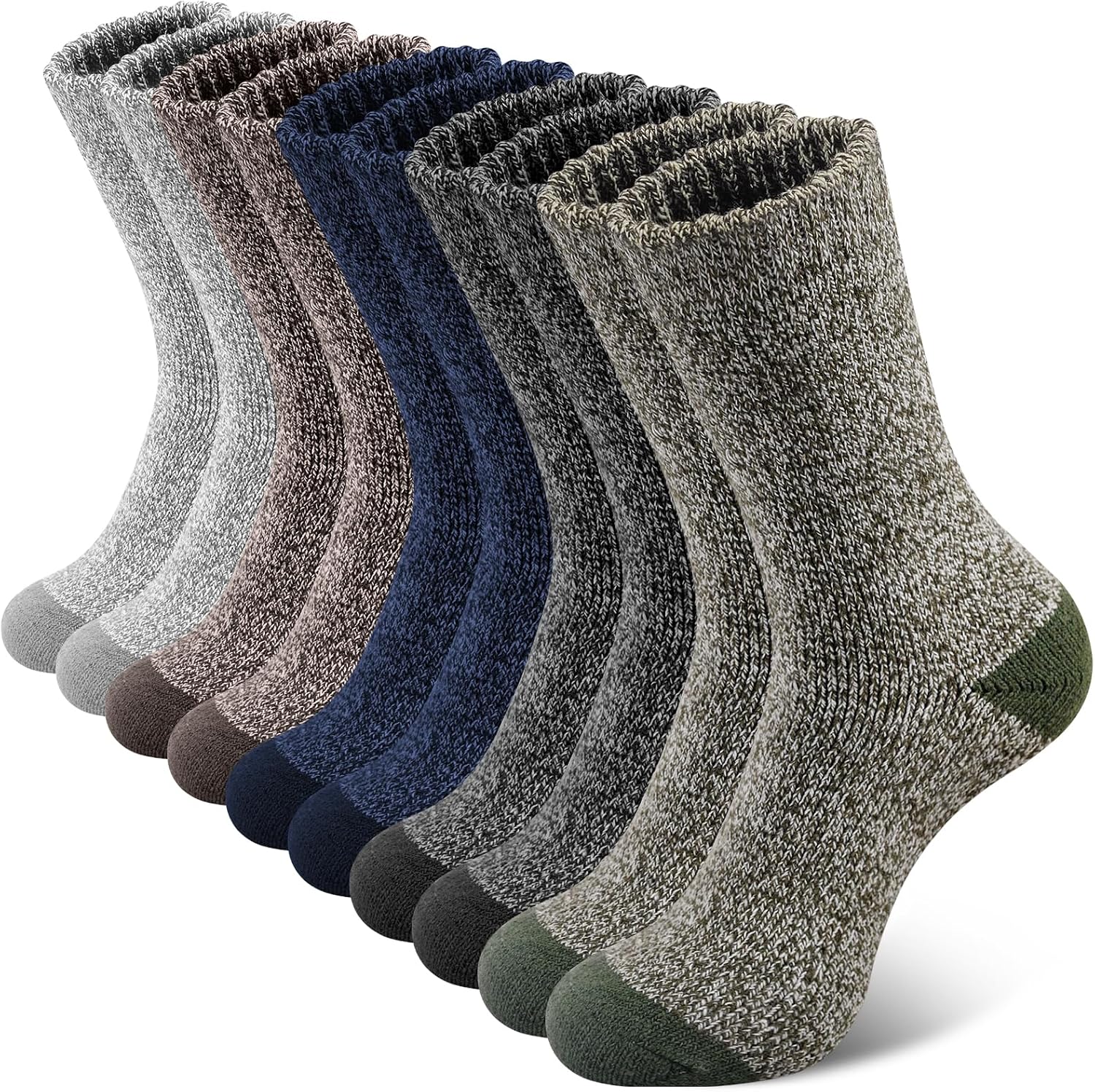
Best Value Winter Hiking Sock Multipack: DANISH ENDURANCE Merino Wool Hiking Socks
Three- and five-pack merino with the largest verified review base of any hiking sock on Amazon
Pros
- Enough pairs in one order to stop doing laundry mid-trip
- Flat toe seam genuinely reduces the hot spot most hikers get on the second toe
- Merino content high enough to keep working when the sock gets damp
- Sizing runs true, which is unusual in the multipack tier
Cons
- Thinner through the leg than a dedicated winter sock, so pair it with a taller boot
- Elastic relaxes sooner than the premium single pairs
The single biggest upgrade to a winter hiking setup is not a better sock, it is owning enough socks that a dry pair is always available. Wet feet lose heat far faster than cold ones, and the fix is a spare set in the pack and another waiting in the car. This is the pack that makes that affordable without dropping to a cotton blend.
These are lighter than the premium picks above, which is worth knowing before you order. In a well-insulated winter boot that is fine, and the reduced bulk actually helps circulation. In a marginal boot on a genuinely cold day you will want more. Buy them as your rotation socks and keep one heavyweight pair for the coldest outings.
| Material | Merino wool blend with nylon and elastane |
|---|---|
| Cushion | Light to midweight |
| Height | Crew |
| Pairs per pack | 3 or 5 |
| Cost per pair | About $13 in the three-pack |
| Sizing | Unisex EU 35 to 47 |
| Feature | Flat anti-blister toe seam |
| Best for | Building a rotation, multi-day trips, spare pairs |
Best Six-Pack Winter Sock Value: Merino.tech Merino Wool Socks
Six pairs of boot-height merino for roughly the price of two premium singles
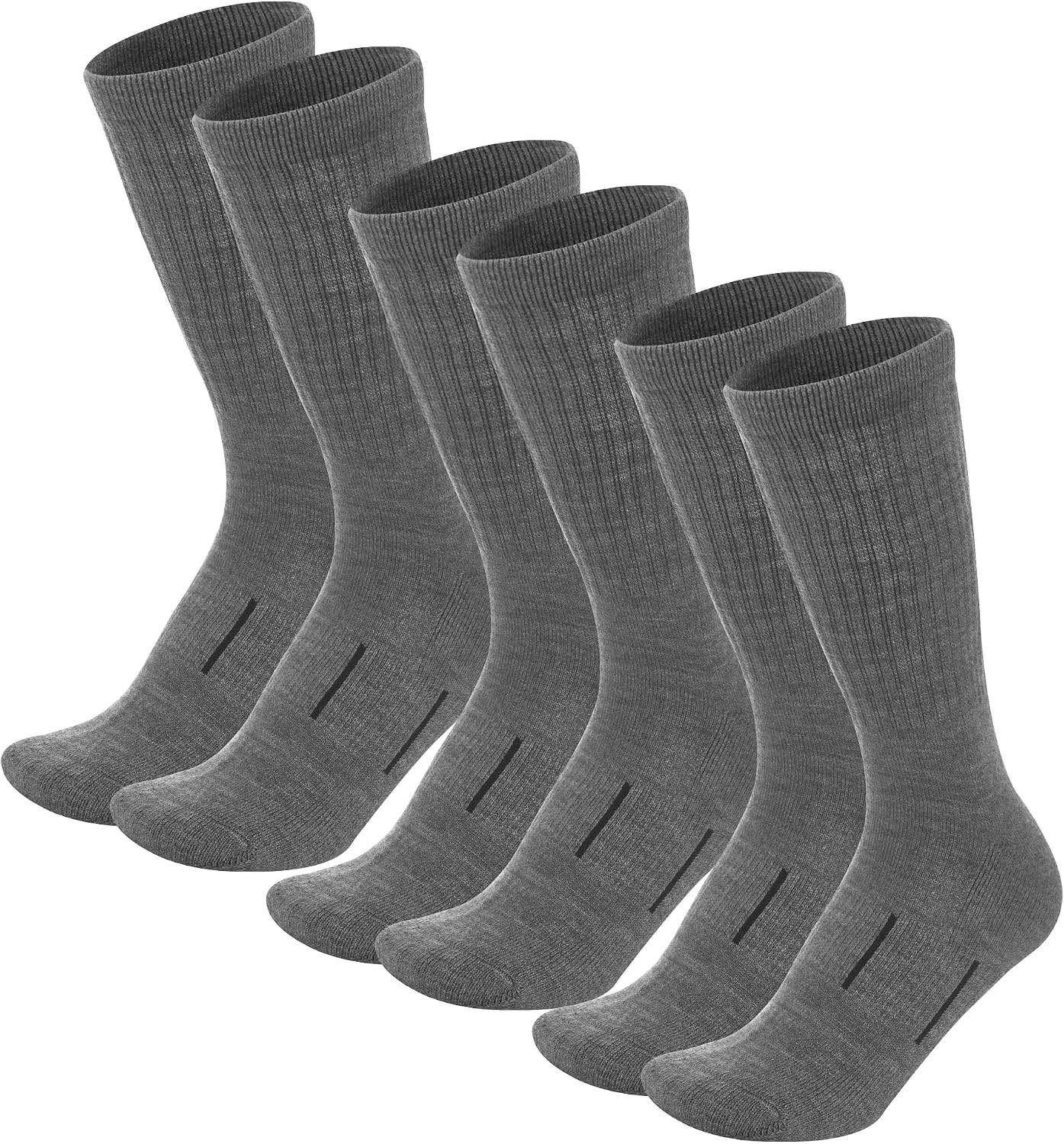
Pros
- Six pairs covers a full week of winter hiking without a wash cycle
- Boot height rather than the ankle cut most budget packs default to
- Cushioning is real, not the token padding common at this tier
- Works as well for winter work boots as it does on trail
Cons
- Merino percentage is lower than the premium picks, so it dries slower
- Cuff elastic is the first thing to give out
Budget merino multipacks usually cut the same corner: they give you the wool content in the listing title and then knit the sock at ankle height with almost nothing underfoot. This one keeps the boot-height leg and puts genuine cushioning in the footbed, which is the difference between a sock you hike in and a sock you wear around the cabin.
It will not outlast a Vermont-knit pair and it is not the warmest thing here. What it does is let a household outfit two or three people for winter without spending premium money per pair. If you are buying socks for a family that hikes together, start here and add one nice pair each for the coldest days.
| Material | Merino wool blend with nylon and spandex |
|---|---|
| Cushion | Midweight |
| Height | Boot crew |
| Pairs per pack | 3 or 6 |
| Cost per pair | About $5 in the six-pack |
| Sizing | Unisex, men’s and women’s ranges |
| Guarantee | Amazon returns |
| Best for | Outfitting a household, winter work and trail crossover |
Best Budget Winter Hiking Sock: SIMIYA Merino Wool Super Thick Hiking Socks
Five pairs of genuinely thick merino at the lowest cost per pair on this page
Pros
- Thick enough to feel like a real winter sock, not a padded dress sock
- Cost per pair low enough that losing one to a wood stove is not a crisis
- Terry loop footbed adds warmth against frozen ground
- Good first wool sock for someone unsure whether they will stick with winter hiking
Cons
- Lower merino content means slower drying and more odor after long days
- Expect visible thinning at the heel within a season of regular use
There is a real question about whether cheap merino is worth buying at all, and the honest answer is that it depends what you are asking it to do. As the sock you pull on for a two-hour snowshoe at Trillium Lake and then throw in the wash, this works. As the sock you rely on for a full day in the backcountry with no spare, it does not, because when it wets out it stays wet.
Buy a pack of these to fill out a drawer, to lend to friends who show up in cotton, or to find out whether wool suits you before committing real money. Do not buy them as your only winter sock. The thickness is legitimate and the price is genuinely low, but the durability is where the savings came from.
| Material | Merino wool blend, lower wool percentage |
|---|---|
| Cushion | Heavyweight terry footbed |
| Height | Crew |
| Pairs per pack | 5 |
| Cost per pair | About $3 |
| Sizing | Men’s shoe sizes 7 to 13 |
| Guarantee | Amazon returns |
| Best for | Filling a drawer, casual snow days, trying wool for the first time |
Best Budget Women’s Winter Sock Multipack: CLOSEMATE Thick Warm Winter Boot Socks
Three pairs of heavy boot socks with the highest rating in the budget tier
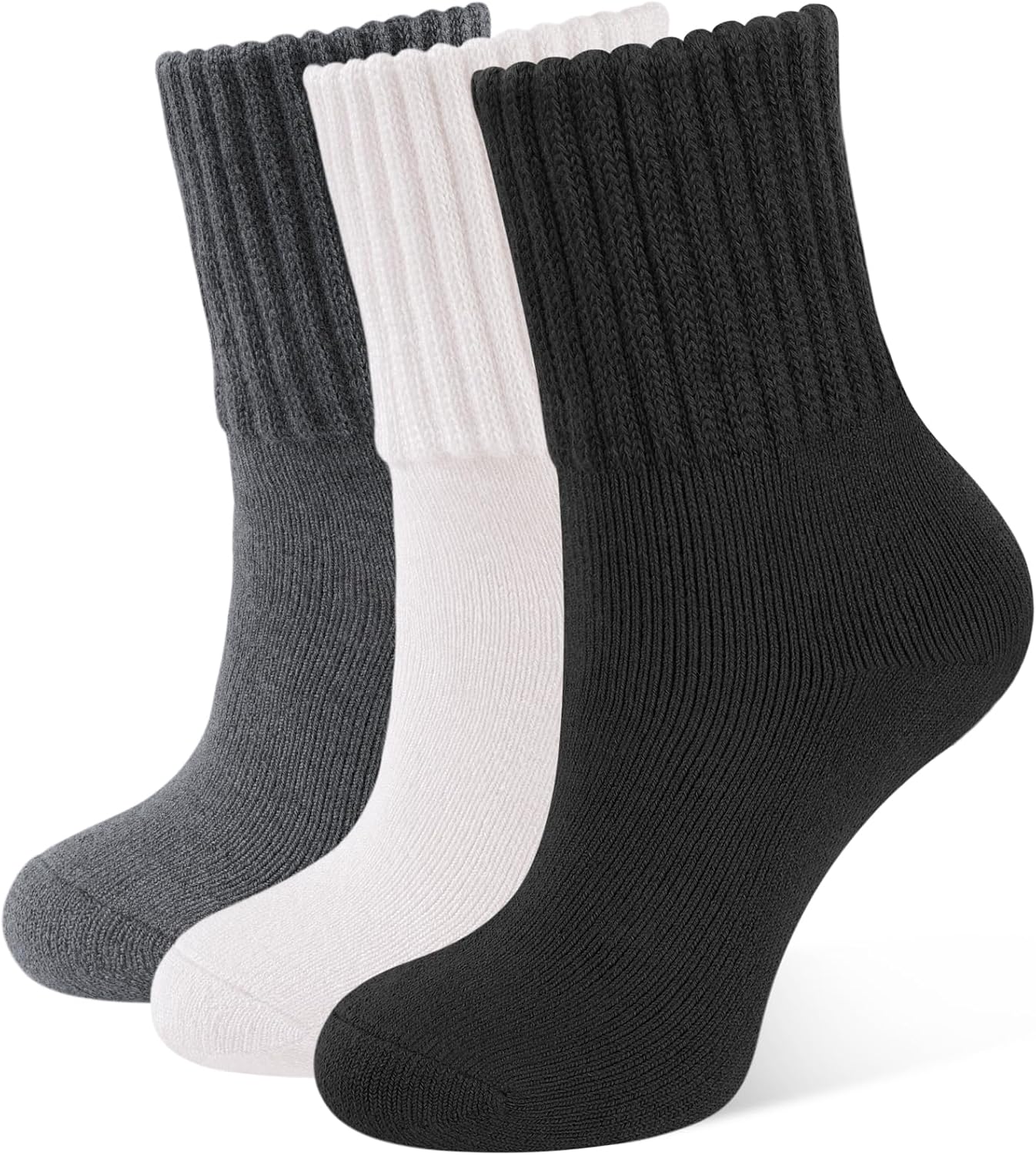
Pros
- Genuinely warm in the way most budget women’s socks are not
- Cuff sits high enough to tuck under snow pants without gapping
- Rating holds up across a very large review base, which is rare at this price
- Comfortable enough for around-town winter boots as well as trail use
Cons
- Wool blend rather than high-merino, so wet feet stay wet
- Sizing is one-size-fits-most, which fits smaller feet loosely
Warmth in a budget sock usually comes from bulk rather than fiber quality, and that is exactly what is happening here. These are thick, they are soft, and on a cold walk at Silver Falls with dry feet they perform well above what they cost. That is a legitimate use case and most winter hiking days look like it.
The limitation is the one every wool blend shares: fiber content determines what happens after you step through a slush pocket, and this is not the sock you want when that happens. Keep them for day hikes near the car and pair them with a merino pack for anything longer. Anyone with narrow or small feet should size carefully, since the fit is generous.
| Material | Wool blend with acrylic and polyester |
|---|---|
| Cushion | Heavyweight |
| Height | Boot crew |
| Pairs per pack | 3 |
| Cost per pair | About $5 |
| Sizing | Women’s, one size fits most |
| Guarantee | Amazon returns |
| Best for | Day hikes, winter boots around town, cold-weather commuting |
Specialty Winter Socks
Three picks for situations the standard hiking sock does not cover: tall stiff-cuffed boots, all-day standing in the cold, and genuine wool sensitivity.
Best Knee-High Winter Sock for Ski and Snowshoe: Hylaea Knee High Merino Ski & Snowboard Socks
Over-the-calf merino with targeted shin padding for stiff-cuffed winter boots
Pros
- Height clears the top of a ski or snowboard boot with room to spare
- Shin padding sits exactly where a rigid boot cuff creates a pressure line
- Compression through the calf helps on long approach walks
- Works equally well under tall winter hiking boots and gaiters
Cons
- Overly warm for a standard mid-height hiking boot
- Compression fit reads as tight if you have larger calves
Anyone who has skinned uphill or snowshoed in tall boots knows the specific misery of a sock cuff that stops just below the boot collar. The skin above it takes the rubbing for the whole day. A knee-high solves it structurally, and this one adds padding across the shin where a rigid cuff presses hardest.
The ski and snowboard framing undersells its range. It is also the right answer for deep-snow hiking in tall insulated boots, and for anyone wearing gaiters over a mid-height boot. Skip it if your winter hiking is in ordinary boots on packed trail, where the height and the warmth are both more than you need.
| Material | Merino wool blend with nylon and spandex |
|---|---|
| Cushion | Targeted, shin and footbed |
| Height | Knee-high, over the calf |
| Pairs per pack | 1 to 3 depending on option |
| Sizing | Unisex S to L |
| Guarantee | Amazon returns |
| Feature | Graduated calf compression |
| Best for | Ski and snowboard boots, snowshoeing, deep-snow hiking |
Best Winter Sock for Work Boots: Carhartt Heavyweight Synthetic-Wool Blend Boot Sock
Built for standing on frozen ground all day rather than covering miles
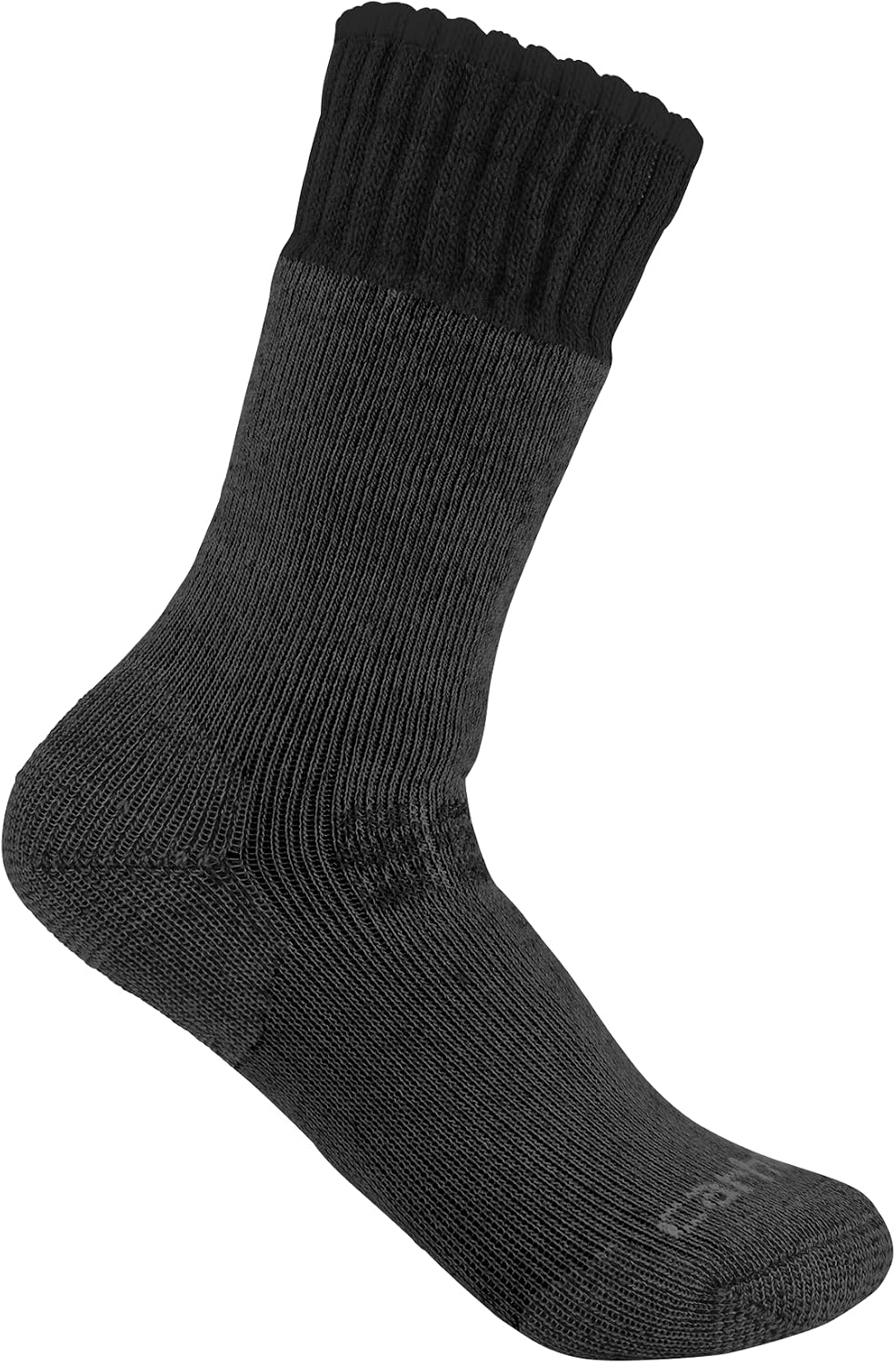
Pros
- Dense heel and forefoot padding aimed at standing rather than walking
- Synthetic blend survives repeated hot washing better than pure merino
- Reinforced arch support keeps the sock from migrating inside a loose work boot
- Widely available and easy to replace with an identical pair
Cons
- Synthetic content means it holds odor after long days
- Insulation lags behind true merino once the sock is damp
There is a real distinction between a sock built for walking and one built for standing. Hiking socks concentrate cushion where your foot strikes during a stride. Work socks pad the whole contact patch, because a stationary foot on cold concrete or frozen ground loses heat through everything touching the boot. This one is firmly in the second category.
That makes it the pick for trail work, winter chores, hunting from a stand, or any day where you spend more time still than moving. It also handles laundry abuse that would shorten the life of merino. If your winter is mostly covering distance on trail, one of the merino picks above will serve you better.
| Material | Synthetic wool blend with FastDry moisture lining |
|---|---|
| Cushion | Heavyweight, full contact |
| Height | Boot crew |
| Pairs per pack | 1 or 2 depending on option |
| Sizing | Men’s shoe sizes 6 to 12 and large |
| Guarantee | Amazon returns |
| Feature | Reinforced arch support band |
| Best for | Work boots, trail work, hunting, standing in the cold |
Best Non-Wool Winter Hiking Sock: Columbia Medium Weight Fleece Thermal Crew Socks
Fleece-lined synthetic for anyone whose skin cannot tolerate wool
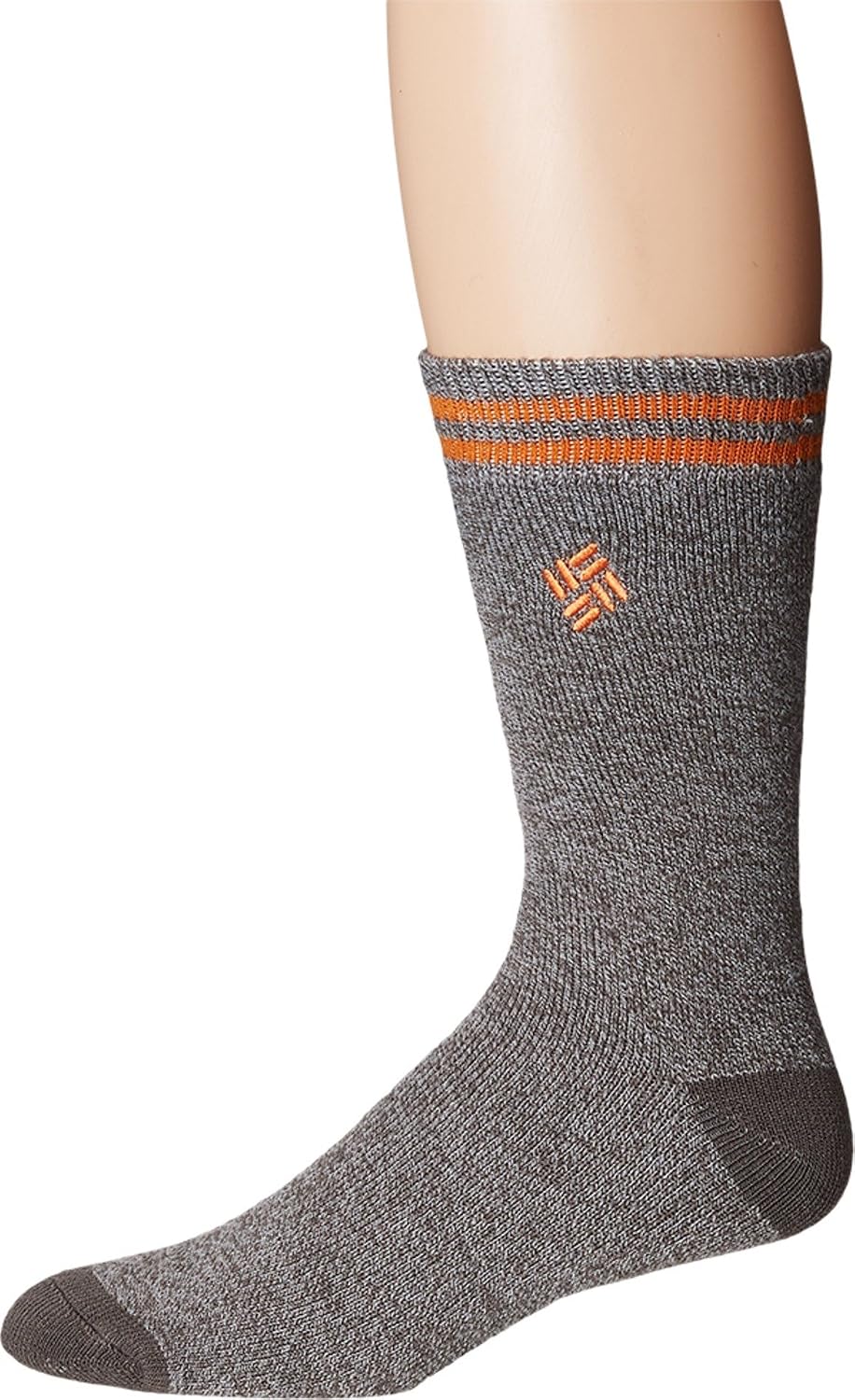
Pros
- No wool anywhere in the construction, which matters for genuine wool allergies
- Brushed fleece interior feels warm immediately rather than needing to warm up
- Dries faster than merino after a wash, useful on multi-day trips
- Two pairs per order at a reasonable price
Cons
- Loses insulating value once wet, which merino does not
- Odor builds noticeably faster over consecutive days
Most people who say wool makes them itch are reacting to coarse wool rather than merino, and switching to a fine-gauge merino solves it. But some people have an actual lanolin sensitivity, and telling them to try better wool is useless advice. For those hikers, a fleece-lined synthetic is the honest answer, and Columbia builds the most trail-appropriate version at a fair price.
Understand the trade you are making. Synthetic insulation collapses when it wets out in a way that wool does not, so the margin for error on a wet winter day is thinner. Carry a spare pair, keep the hike within range of the car, and this works. If you have never actually tested whether merino bothers you, try a merino pick first before defaulting here.
| Material | Fleece-lined polyester and spandex, no wool |
|---|---|
| Cushion | Midweight brushed interior |
| Height | Crew |
| Pairs per pack | 2 |
| Cost per pair | About $10 |
| Sizing | Men’s and women’s ranges |
| Guarantee | Amazon returns |
| Best for | Wool sensitivity, fast-drying rotation, cold and dry conditions |
Full comparison table: best winter hiking socks
Sort by trail score, price, cost per pair, or warmth. Tap the buttons to re-rank. The table scrolls horizontally on small screens.
| Sock | Award | Trail score | Material | Cushion | Height | Pairs | Price | |
|---|---|---|---|---|---|---|---|---|
|
Darn Tough Hiker Boot Midweight Full Cushion | Best Overall | 91 | Merino wool blend | Full | Boot crew | 1 | $29.95 |
|
Darn Tough Hiker Boot Midweight Cushion | Best Boot-Height | 89 | Merino wool blend | Midweight, targeted | Boot crew | 1 | $27.95 |
|
Smartwool Mountaineer Classic Maximum Cushion Crew | Warmest | 89 | Merino wool blend | Maximum | Crew | 1 | $27.00 |
|
Darn Tough Tactical Boot Extra Cushion | Most Cushion | 89 | Merino wool blend | Extra, full-foot | Boot crew | 1 | $33.95 |
|
Smartwool Women’s Classic Hike Full Cushion Crew | Best for Women | 87 | Merino wool blend | Full | Crew | 1 | $23.00 |
|
Smartwool Women’s Hike Full Cushion Crew | Best Women’s Full Cushion | 87 | Merino wool blend | Full, higher density | Crew | 1 | $27.00 |
|
Smartwool Hike Classic Edition Full Cushion Crew | Best Daily Driver | 86 | Merino wool blend | Full | Crew | 1 | $23.00 |
|
Hylaea Knee High Merino Ski & Snowboard Socks | Best Knee-High | 85 | Merino wool blend | Targeted, shin and footbed | Knee-high | 1 | $30.99 |
|
DANISH ENDURANCE Merino Wool Hiking Socks | Best Value Multipack | 84 | Merino wool blend | Light to midweight | Crew | 3 | $39.95 |
|
Carhartt Heavyweight Synthetic-Wool Blend Boot Sock | Best for Work Boots | 84 | Synthetic wool blend | Heavyweight, full contact | Boot crew | 1 | $14.99 |
|
Merino.tech Merino Wool Socks | Best 6-Pack | 82 | Merino wool blend | Midweight | Boot crew | 6 | $29.99 |
|
CLOSEMATE Thick Warm Winter Boot Socks | Best Budget Women’s | 80 | Wool blend | Heavyweight | Boot crew | 3 | $14.99 |
|
SIMIYA Merino Wool Super Thick Hiking Socks | Best Budget | 79 | Merino wool blend | Heavyweight terry footbed | Crew | 5 | $12.98 |
|
Columbia Medium Weight Fleece Thermal Crew Socks | Best Non-Wool | 79 | Fleece-lined polyester and spandex | Midweight brushed interior | Crew | 2 | $20.00 |
How We Test Winter Hiking Socks in Oregon
Oregon winter is a good testing ground precisely because it is not uniformly cold. The Coast throws wind and horizontal rain, the Gorge freezes wet, and the Cascades deliver dry cold and deep snow. A sock that works across all three is a sock that works most places. Full detail on our process lives on the how we test gear page.
-
30%Weight
Cushion and fit
How the sock behaves inside a real boot. Does it stay in position on a steep descent, does the cuff hold, does the cushion sit where your foot strikes, and does it add so much bulk that it costs you toe circulation.
-
25%Weight
Moisture management
Winter hiking means sweating uphill and cooling down at the top. We track how quickly a sock moves vapor while you are working and whether it keeps insulating after it takes on moisture.
-
20%Weight
Warmth
Measured in use rather than by fiber content on the label. A thick sock that compresses inside a fitted boot scores lower than a thinner one that keeps its loft.
-
15%Weight
Durability
Where the heel and toe stand after a season, whether the cuff elastic holds, and what the brand does when the sock fails. A lifetime guarantee changes the value calculation permanently.
-
10%Weight
Value
Cost measured per pair rather than per order, weighed against how many seasons the sock realistically lasts.
Where we test
Columbia River Gorge
Wet basalt, frozen spray, and a canyon floor that stays below freezing all day. The place moisture management gets tested honestly.
Central Cascades
Packed snow on the loop above the McKenzie, with enough elevation to hold cold through the afternoon.
Willamette Valley
A short, steep, consistently muddy descent. Socks that migrate inside a boot show it here within twenty minutes.
Oregon Coast
Coastal winter is wind and sideways rain rather than deep cold. The test is whether a sock keeps working after it gets wet.
Anatomy of a Winter Hiking Sock
Six construction details separate a winter hiking sock from a thick everyday sock. Knowing what to look for makes listing descriptions far easier to read.
- Ribbed cuff
- Holds the sock at the calf. Once this relaxes the sock creeps down and folds under the boot tongue, which is where most mid-hike pressure points start.
- Mesh vent panel
- An open knit zone across the instep that dumps vapor while you climb. The detail that keeps a heavyweight sock from turning clammy.
- Elastic arch band
- A compression band across the midfoot that stops the sock sliding forward on descents so the cushioning stays where your foot strikes.
- Cushioned footbed
- Terry loops knit into the sole for insulation and impact absorption. Full cushion runs the whole foot, targeted cushion covers heel and forefoot only.
- Reinforced heel and toe
- Extra nylon knit into the two highest-wear zones. The first place a sock fails and the first thing to inspect on a used pair.
- Flat or seamless toe
- A linked rather than stitched toe closure. A raised seam here is the most common cause of the hot spot hikers get on the second toe.
How to Choose Winter Hiking Socks
1. Fit the sock to the boot, not the temperature
This is the mistake that ruins more winter hikes than any other. Loft is what holds warm air, and a sock crammed into a boot fitted for a thinner one has no loft left. It also throttles circulation at the toes, which is the fastest route to cold feet regardless of what the label says about wool content. Buy the sock your boots have room for, and if you want more insulation than that allows, the answer is roomier boots. Our guide to how hiking boots should fit covers sizing for a winter sock.
2. Merino first, synthetic second, cotton never
Merino insulates while damp, which is the only property that matters once your feet have sweated inside an insulated boot. Synthetics dry faster after a wash and are the right call for genuine wool sensitivity, but they collapse thermally when soaked. Cotton actively pulls heat out of your foot and has no place in a winter boot. If you want the fiber-by-fiber comparison, read merino wool versus synthetic hiking socks.
3. Match height to your boot collar
The sock cuff needs to clear the top of the boot with margin. A crew sock in a mid-height boot is fine. A crew sock inside a tall winter boot or under a snowshoe binding leaves bare skin against the collar for the whole day. Move to a boot-height or knee-high cut for tall footwear, and add gaiters if you are moving through deep snow.
4. Buy the rotation before you buy the upgrade
Owning three decent pairs beats owning one excellent pair, because the failure that ends a winter hike is wet feet with no dry replacement. Start with a merino multipack, add one premium pair for the hardest days, and keep a spare set in the car permanently.
5. Understand what a lifetime guarantee is worth
A sock backed by unconditional lifetime replacement has a different cost structure than one that does not. You are buying the pair once. For a sock you will hike hundreds of miles in, that math works out quickly. For rotation socks that live in a drawer, it is money spent on coverage you will never claim.
6. Check the toe seam before anything else
A raised toe seam creates a friction point that no amount of wool quality fixes. Look for flat, linked, or seamless toe closures in the listing. Combined with an arch band that holds the sock in position, that single detail does most of the blister prevention work. More on this in our guide to stopping hiking blisters.
Cushion levels explained
Light cushion adds almost no bulk and suits tight boots or mild conditions. Midweight puts padding under the heel and forefoot. Full cushion runs the length of the footbed. Maximum cushion is a mountaineering-boot specification and will overfill a normal hiking boot.
Sock height, quickly
Ankle and low-cut have no place in winter. Crew clears a mid-height boot. Boot crew sits at mid-calf for taller footwear. Knee-high and over-the-calf are for ski boots, snowshoeing, and deep snow.
What merino percentage means
Higher merino content means better performance when damp and less odor over consecutive days. Lower-percentage blends dry more slowly and wear out sooner, which is exactly what you are trading away for the lower price on a multipack.
The liner sock question
A thin synthetic liner under a midweight merino sock reduces friction on long days. It only works if your boots were sized with room for both layers. Two thick socks together restrict circulation and make your feet colder.
Do not size down a boot to compensate for a thicker sock, and do not cinch laces hard across the instep to stop heel slip in winter. Both restrict blood flow to the toes, and circulation matters more to warm feet than any amount of insulation. If your heel lifts, fix it with lacing technique or an aftermarket insole rather than compression.
Winter Hiking Sock FAQ
The questions buyers ask before committing to a winter sock setup.
What is the best sock material for winter hiking?
Merino wool, without a close second. It insulates while damp, which is the property that matters most in winter because feet sweat inside insulated boots regardless of the outside temperature. Merino also resists odor, so a pair can go several days on a trip. Synthetic blends dry faster after washing and suit anyone with a true wool sensitivity, but they lose most of their insulating value once soaked. Cotton is the one material to avoid outright. It absorbs sweat, holds it against the skin, and pulls heat out of the foot faster than bare skin would. Read our full breakdown of merino wool versus synthetic hiking socks if you want the detail behind the choice.
How thick should winter hiking socks be?
Thick enough to insulate, thin enough that your toes still move freely inside the boot. This is the mistake most people make. A compressed sock has no loft, and loft is what holds warm air, so cramming a maximum-cushion sock into a boot fitted for a thin one makes your feet colder rather than warmer. Fit the sock to the boot you own. Standard insulated hiking boots pair well with a full-cushion crew. Mountaineering boots and rigid winter footwear can take a maximum-cushion sock. If your boots already feel snug, drop to a midweight and add a liner instead.
Should I wear two pairs of socks for winter hiking?
Only if your boots were sized for it. The classic liner-plus-outer system works because the two layers slide against each other instead of against your skin, which reduces blister risk on long days. It fails when the combined thickness restricts circulation, at which point you have made your feet colder and added pressure points. If you want to try it, use a thin synthetic or silk liner under a midweight merino sock, not two thick socks. Test the combination on a short walk before committing to a full day.
Why are my feet still cold in wool socks?
Almost always boot fit rather than the sock. Cold feet in good socks usually trace back to compression, moisture, or circulation. If the boot is tight, the sock cannot loft and blood flow to the toes drops. If you sweated on the ascent and then stopped moving, the moisture is now pulling heat out even through wool. If your laces are cinched hard across the instep, you have throttled circulation at the ankle. Loosen the laces, size up the boot rather than down the sock, change into a dry pair at the top, and keep moving during breaks.
How many pairs of winter hiking socks do I need?
Three at minimum for day hiking: one on your feet, one dry pair in the pack, and one waiting in the car. For overnight winter trips, plan on a fresh pair for each day plus a dedicated sleeping pair that never gets worn during the day. That sleeping pair is the single most underrated piece of winter kit, because dry feet in a sleeping bag change how the whole night goes. This is the argument for buying at least one multipack alongside a premium pair.
Do I need different socks for snowshoeing than for winter hiking?
Usually yes, on height rather than warmth. Snowshoe bindings and tall winter boots create a pressure line across the shin and the top of the foot that a standard crew sock does not cover. A knee-high or over-the-calf sock with shin padding removes that rubbing point. Snowshoeing also generates more heat than hiking at the same pace, so a slightly lighter sock under a taller cut often works better than piling on insulation.
How do I wash merino wool hiking socks without ruining them?
Turn them inside out, wash cold or warm on a normal cycle, and skip the fabric softener, which coats the fibers and destroys the moisture management. The single thing that kills merino socks is heat in the dryer, which shrinks the wool and breaks down the elastane that holds the sock’s shape. Tumble on low or hang them to dry. Merino resists odor well enough that you can often air a pair overnight and wear it again rather than washing after every use, which extends the life of the sock considerably.
Are expensive winter hiking socks actually worth it?
For the pair you hike hardest in, yes. The difference shows up in three places: fiber quality that keeps working when damp, knit density that delivers cushion without bulk, and elastic that holds the sock in position on descents. A sock that creeps down mid-hike creates a pressure point behind the ankle that will define the rest of your day. Where premium stops being worth it is in the rotation. Nobody needs six lifetime-guaranteed pairs. Buy one or two excellent socks for hard days and fill the drawer with a decent merino multipack.
What is the difference between hiking socks and ski socks?
Height and padding placement. Ski socks run knee-high because ski boot cuffs are rigid and tall, and they concentrate padding along the shin where that cuff presses. Hiking socks stop at crew or boot height and put cushion under the heel and forefoot where your foot strikes during a stride. A ski sock works for winter hiking in tall boots. A hiking sock in a ski boot leaves the shin unprotected and the sock cuff rubbing raw skin all day.
Can winter hiking socks prevent blisters?
They help substantially, though the boot does most of the work. Blisters come from friction plus moisture, so a sock that manages sweat and stays in position removes two of the three ingredients. Look for a flat or seamless toe closure, an elastic arch band that stops the sock migrating, and a fit snug enough that there is no loose fabric to fold. Merino handles the moisture side better than anything else. Our guide to stopping hiking blisters covers taping, boot fit, and the liner sock system in more depth.
Do winter hiking socks work in regular boots and shoes?
Yes, provided there is room. A full-cushion merino crew is excellent in winter work boots, snow boots, and pac boots, all of which are usually roomy enough to accommodate the loft. Where it fails is in sneakers, casual leather boots, and anything fitted close, where the sock compresses and you gain warmth on paper but not on your feet. If you want a wool sock for everyday winter use in normal footwear, pick a midweight rather than a full-cushion model.
When should I replace my winter hiking socks?
When the cushioning under the heel and ball has flattened, even if there is no hole yet. That padding is doing the insulating and the impact absorption, and once it packs down the sock is functionally worn out. Other signals: a cuff that no longer holds position, thin patches you can see light through, and a heel that has started to slide inside the boot. Budget merino typically reaches this point within a season of regular use. Premium socks last several seasons, and Darn Tough replaces theirs at no cost whenever they fail.