
Best Summer Hiking Socks in 2026
Most “best summer hiking socks” guides default to “buy a synthetic sock.” That’s the wrong advice for half of summer hiking. In Eastern Oregon high desert, yes , Coolmax synthetic dries 2× faster than merino and runs cooler in 90°F heat. But on Cascade trails where the day starts at 50°F and hits 80°F by afternoon, lightweight merino regulates temperature better than pure synthetic. The best summer hiking socks aren’t one type of sock , they’re different socks matched to different summer conditions.
Our top overall pick is the Darn Tough Unisex Coolmax Micro Crew for stable hot conditions, with the men’s Light Hiker and women’s Light Hiker as the merino-blend answer for mixed mountain summer conditions. We tested 12 of the best summer hiking socks across 2,400+ Oregon trail miles , this guide tells you which sock to pick based on your actual summer conditions.
Need broader coverage? See our overall best hiking socks roundup, the best hiking socks for women, the best hiking socks for men, and the best hiking socks for hot weather covering extreme-heat scenarios specifically.
Quick picks , best summer hiking socks
Why summer hiking socks differ from year-round picks
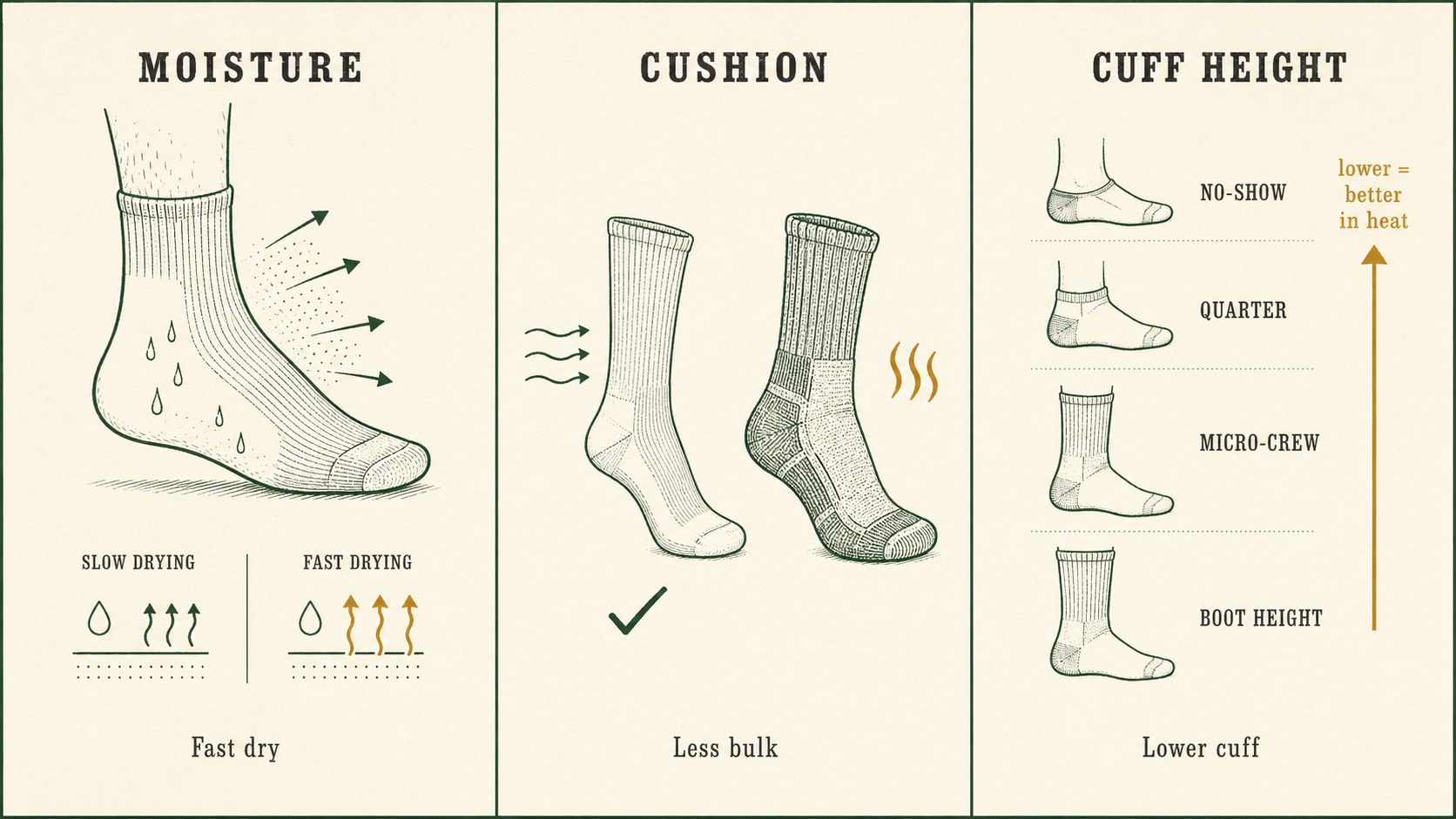
Heat changes what makes a hiking sock work. The same sock that keeps your feet comfortable on a 50°F shoulder-season hike can become the cause of blisters on an 85°F summer day. Three factors shift in summer , and the best summer hiking socks address each.
Moisture shifts from challenge to dominant problem. Cool-weather hiking produces minimal sweat , merino moisture management is sufficient. Summer hiking produces sustained sweat under load, and wet skin softens dramatically. Soft skin under sustained friction creates blisters fast , this is why most summer hiking blisters happen on the ball of the foot or heel, not the toes. Fast-drying synthetics like Coolmax address this by moving moisture away from the skin and releasing it quickly. The Darn Tough Unisex Coolmax dries roughly 2× faster than the equivalent merino sock.
Cushion needs drop relative to ventilation needs. In cold weather, sock weight is functional , the wool insulates, the cushion absorbs impact, the warmth matters. In summer, all of those become liabilities. Lightweight construction breathes better, dries faster, and runs cooler. The exception is summer backpacking with 25+ pound packs, where heavy cushion still wins , the Darn Tough Coolmax Boot Sock handles that combination.
Cuff height matters more. A micro-crew cuff that’s comfortable in cold weather can be too warm in summer , the calf coverage traps heat. No-show, quarter-cuff, and low-ankle heights breathe better and disappear under summer hiking shorts. Match the cuff to your shoe: trail runners and low-cut shoes get no-shows ( Men’s / Women’s), approach shoes get quarter ( Men’s), tall boots still need micro crew or boot height regardless of season.
The single most important step in choosing the best summer hiking socks: identify your typical summer conditions first. “Summer” in the Cascades at 5,000 ft elevation is different from “summer” in Eastern Oregon high desert. The fiber decision (merino vs synthetic) depends almost entirely on how variable your summer conditions are.
Full reviews , 12 best summer hiking socks
Best Overall Summer Hiking Sock: Darn Tough Unisex Adult Coolmax Micro Crew Cushion Socks
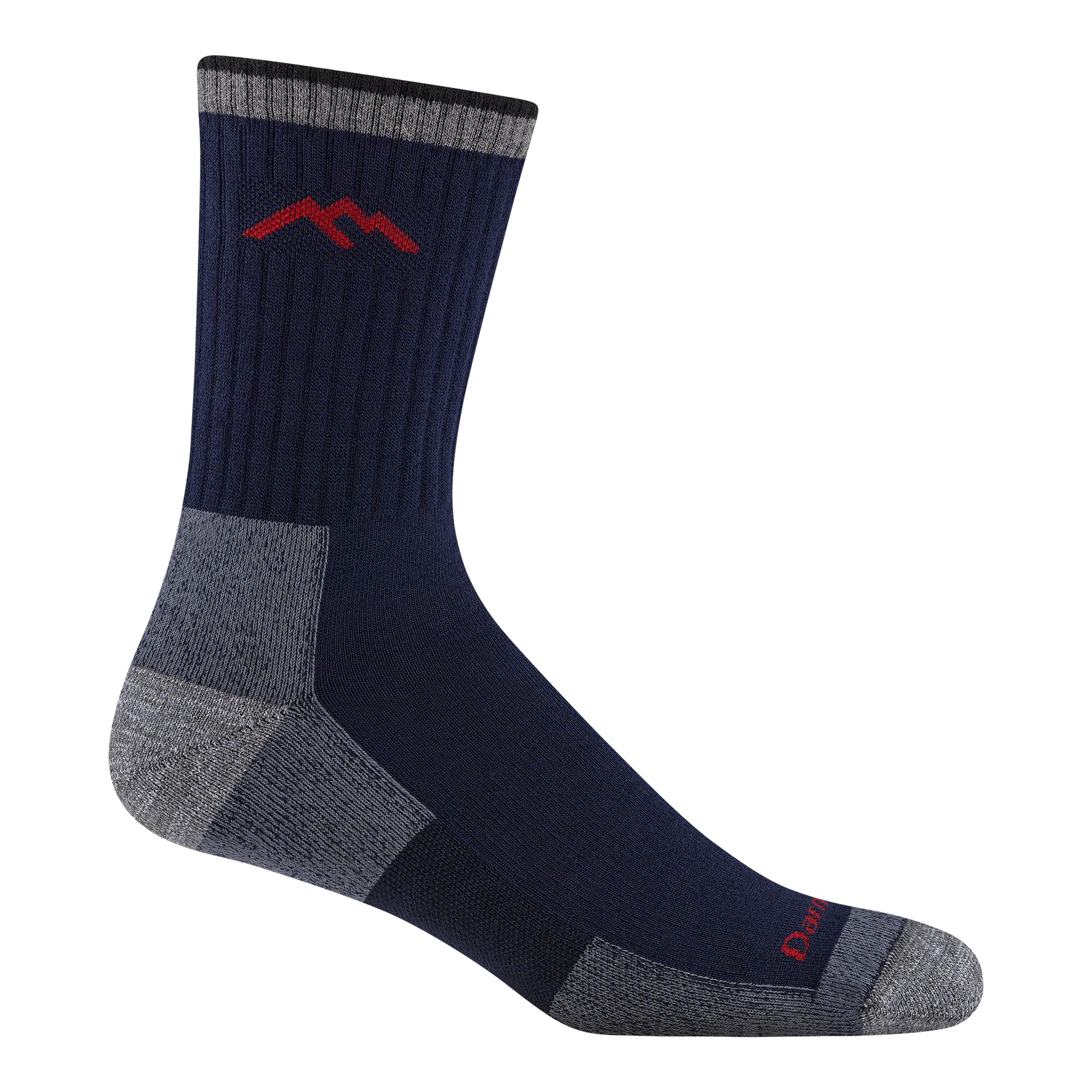
- Coolmax synthetic dries roughly 2× faster than merino blends
- Unisex sizing fits both men’s and women’s feet , the rare hiking sock that genuinely works for both
- Lifetime warranty , Darn Tough applies it to the Coolmax line same as merino
- Cooler against the skin in 80°F+ heat than any merino-heavy alternative
- More cushion than ultra-lightweight options , works for backpacking
- Synthetic gets ripe by day two of multi-day hiking
- Loses temperature regulation in cold conditions , single-purpose summer sock
- No women’s-specific shaping , some women hikers prefer the women’s Coolmax for narrower fit
If you sweat through socks on hot day hikes, this is what fixes it. The synthetic construction keeps moisture from sitting against your skin, so the combination of friction plus wet skin that causes most summer blisters doesn’t build the same way. On a 90°F Eastern Oregon desert trail or a hot valley-floor hike, this is the most comfortable sock we’ve worn across any condition we tested.
It’s not the right sock for variable mountain summer conditions. If your hike starts cold and ends warm, pure synthetic doesn’t regulate temperature the way merino does, and you’ll feel it on the way up. But if your typical summer day stays consistently hot from trailhead to turnaround, reach for this one first. The Light Hiker is the better call when your day has two different weather halves.
Best Lightweight Merino (Men’s): Darn Tough Men’s Light Hiker Micro Crew Lightweight Hiking Socks (Style 1972)
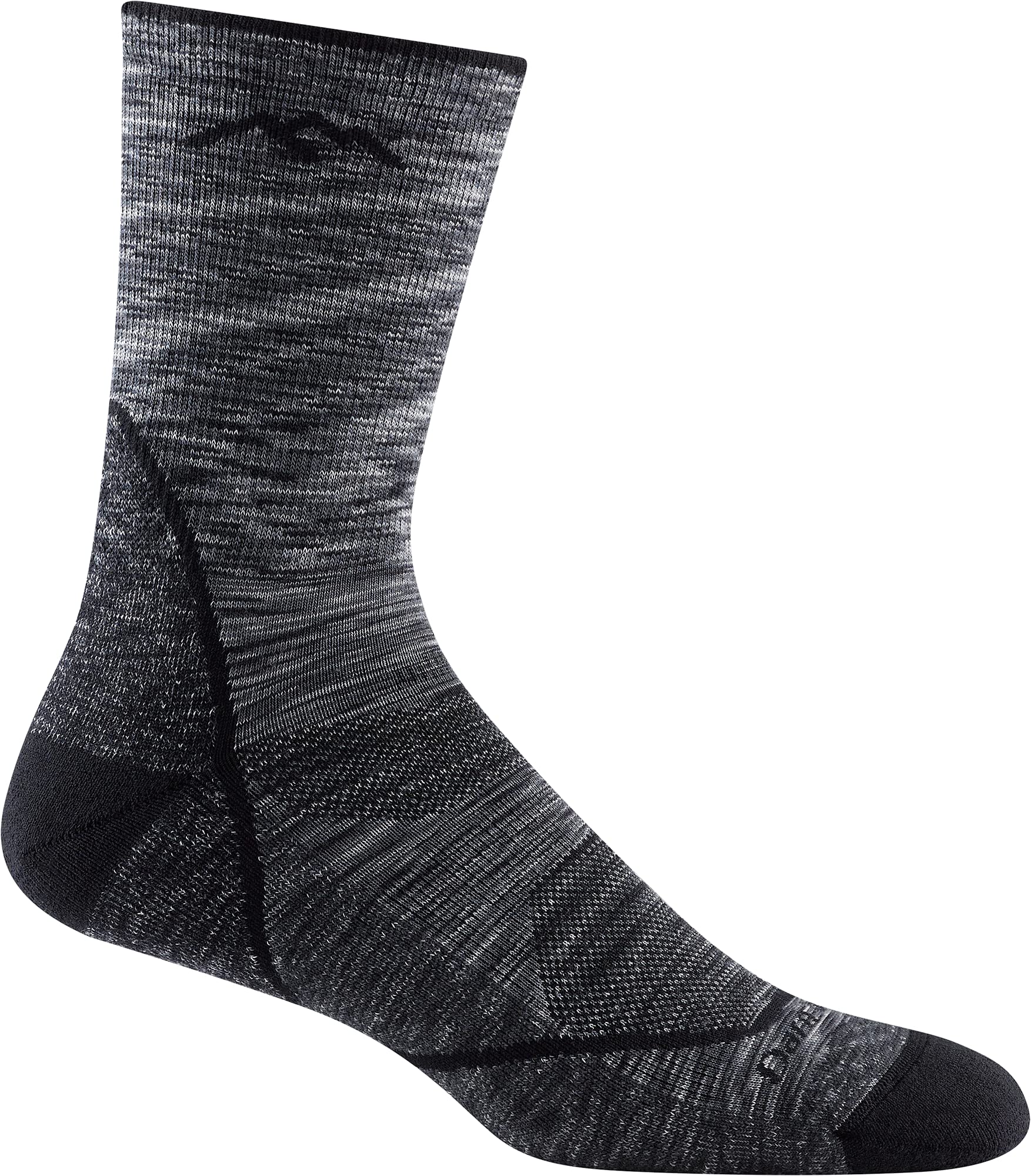
- Real merino content regulates temperature on cool mountain mornings
- Lightweight construction breathes faster than midweight merino
- Same lifetime warranty as the rest of the Darn Tough Hiker line
- Works in conditions where pure synthetic would run too cold
- 3,685 verified reviews , the most-validated men’s lightweight Darn Tough
- Slower drying than Coolmax synthetics in hot conditions
- Less cushion than midweight , wears through faster on rocky trails
- Below 50°F not warm enough , the Hiker Micro Crew handles cold mornings better
Most Cascade summer hikes aren’t actually hot from start to finish. You’re leaving the trailhead in a jacket, hitting a ridgeline in a t-shirt, descending into afternoon heat. The Light Hiker handles that range better than any pure synthetic, warm enough in the first two miles and breathable enough in the last. The merino blend doesn’t just wick, it manages the transition between temperatures so you’re not cooking on the way up or chilling on the way down.
The tradeoff is drying time. In stable 90°F heat, Coolmax synthetic pulls ahead on moisture management. But for hikers who regularly do Cascades, Coast Range, or Wallowas trails where the day swings 20–30°F, this is the more useful sock. The fiber does more work across a wider range of conditions than any pure synthetic option in the lineup.
Best Lightweight Merino (Women’s): Darn Tough Women’s Light Hiker Micro Crew Lightweight with Cushion Sock (Style 1967)

- Women’s-specific shaping , narrower heel cup, lower instep, shorter foot length
- Lightweight construction for summer trails
- Heel-slip prevention is the single biggest blister fix for women hikers
- Lifetime warranty
- Slower drying than Coolmax synthetic Hiker in pure hot conditions
- Less cushion than midweight , for heavy-pack backpacking step up
- Same price as the slightly-warmer standard Hiker Micro Crew
If you’ve had heel blisters that feel like the boot is rubbing on loose fabric, a sock shaped for your foot’s actual proportions makes a surprising difference. This is that sock. The heel cup stays where it belongs through a full day on trail, including long descents where a poorly fitting sock shifts and bunches. For women who regularly hike in unisex sizes and accept the occasional blister as normal, it’s worth trying the alternative.
For women who run hot or hike Eastern Oregon high desert, the women’s Coolmax Hiker is the faster-drying choice. The Light Hiker is the sock for the hike that’s cool in the morning and warm in the afternoon, a temperature-moderating sock more than a pure heat-management one. Both use the same women’s-specific construction, different fibers for different summer conditions.
Best Synthetic for Sweaty Feet (Women’s): Darn Tough Women’s Hiker Coolmax Micro Crew Midweight Hiking Socks (Style 1929)

- Coolmax synthetic dries 2× faster than merino in heat
- Women’s-specific shaping (narrower heel, lower instep) , the rare combination
- Lifetime warranty (Darn Tough applies it to Coolmax line)
- Cooler against the skin in 80°F+ heat than any merino-heavy alternative
- Synthetic develops odor by day two of multi-day hiking , merino wins for backpacking
- Loses temperature regulation in cold conditions
- Same price as the merino Light Hiker , value depends on your typical conditions
For women who run consistently hot on summer hikes, or anyone planning a desert trip where it’s 90°F before noon, this is the right sock. What makes it worth calling out separately from the unisex Coolmax is fit: if you’ve pulled on unisex socks and felt the heel sit slightly loose, that looseness is what eventually becomes a blister. This one holds. You get the synthetic fast-dry advantage without sacrificing the fit that prevents the problem it’s supposed to solve.
The honest limitation is multi-day trips. Synthetic loses the odor battle after two days in the backcountry. If you’re spending nights out, pack the merino Light Hiker for camp-to-camp use and save this for day hikes and short overnight trips where you’re washing socks regularly. For anything consistently hot and mostly day-use, this is the women’s first pick.
Best for Hot-Weather Backpacking: Darn Tough Coolmax Boot Socks Full Cushion
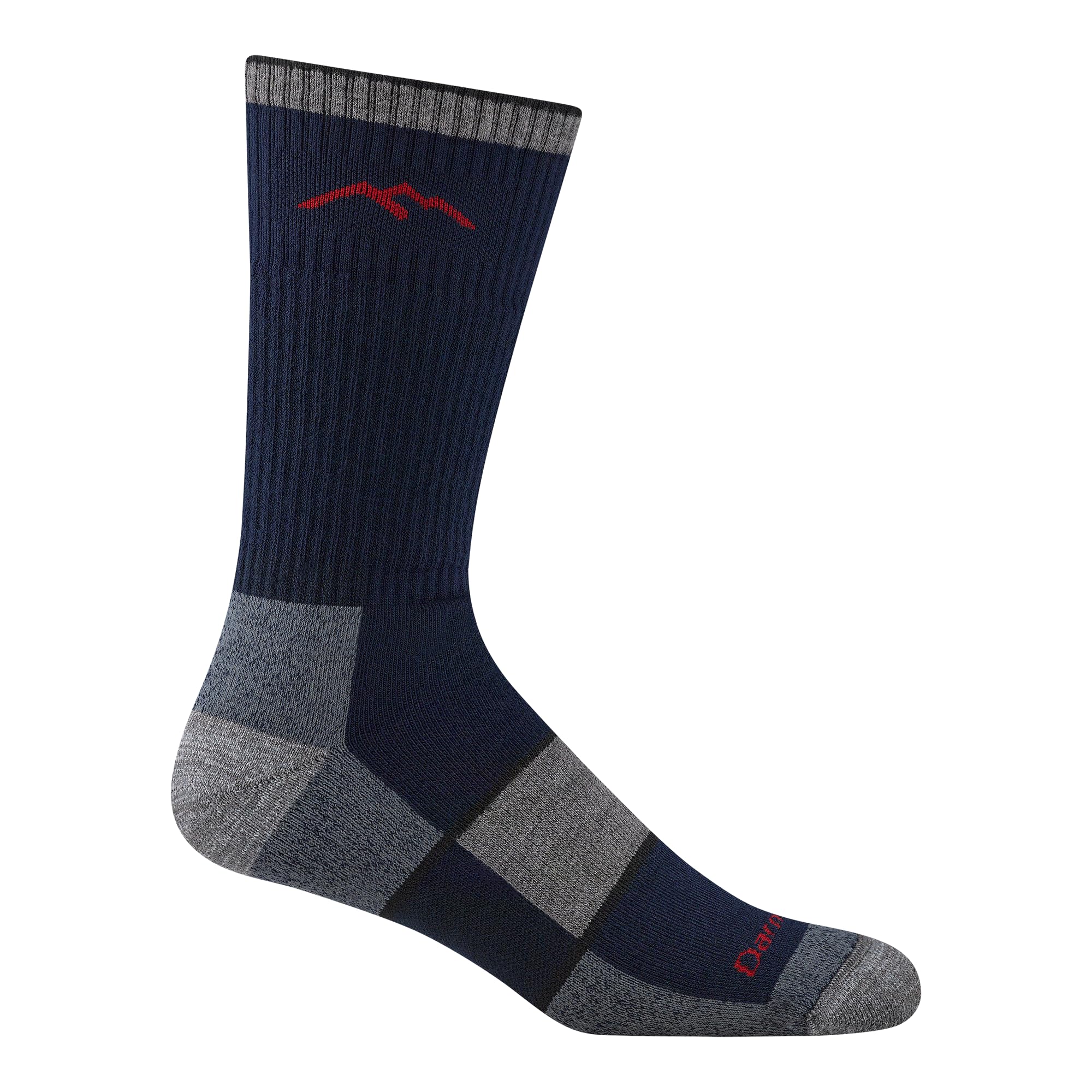
- Coolmax dries faster than merino full-cushion alternatives
- Full-cushion construction for backpacking under load
- Boot-height cuff for tall summer-mountaineering boots
- Lifetime warranty
- Full cushion runs warm even in synthetic , skip for ultralight summer mileage
- Synthetic gets ripe by day two , bring rotation socks for multi-day trips
- Premium price ($27.95) vs midweight options
Summer backpacking creates a gear gap most sock guides ignore: heavy packs require cushion, but socks designed for cushion are all thick merino that overheat in July. This solves that. If you’re carrying 30+ pounds through the Eagle Cap Wilderness or the Cascades in August, this is the only option in the lineup that gives you full cushion without a merino-weight sweat problem. The difference shows on mile 8, not mile 2, which is when pack weight and heat combine to create the real blister conditions.
Skip it for anything under a 25-pound pack or in trail runners. For day hikes, the lighter Coolmax Micro Crew handles heat better with less bulk. This is specifically for loaded backpacking in mid-cut to tall boots during hot weather. It’s a narrow use case, but if that’s your summer, it’s the only sock worth considering.
Best No-Show for Trail Running (Men’s): Darn Tough Men’s Run No Show Tab Ultra-Lightweight with Cushion Merino Wool Socks for Running

- Real merino in a no-show cut , most no-shows are pure synthetic
- Heel tab prevents the sock from slipping into the shoe
- Cheapest entry into the Darn Tough line ($18.95)
- Sub-1-inch height invisible above any low shoe
- Zero ankle protection , bare skin contacts shoe collar in tall boots
- Wrong sock for any boot taller than 4 inches
- Less cushion than Light Hiker , wears through faster
This is the sock for trail runners who are tired of pulling no-shows back up mid-run. The heel tab solves the slip problem that makes most no-shows unwearable in athletic shoes, and the merino blend is more comfortable on longer efforts than pure synthetic. For warm-weather trail runs or low-cut hiking shoes on fast summer mileage, this is the cuff height that keeps you cool without the sock working against you by mile four.
The fit is narrow in one sense: this sock belongs in low-cut shoes. Pair it with anything above 4 inches and the ankle exposure creates heel abrasion that doesn’t happen with a proper hiking sock. Know what you’re pairing it with before you buy. If you alternate between trail runners and taller boots, the no-show works for one and you’ll want a micro crew for the other.
Best No-Show for Trail Running (Women’s): Darn Tough Women’s Run No Show Tab Ultra-Lightweight Running Sock (Style 1047)

- Real merino in a women’s-shaped no-show silhouette
- Narrower foot proportions for women’s feet , unisex no-shows fit baggy
- Heel tab prevents slip-into-shoe failure
- $18.95 , cheapest women’s-specific Darn Tough
- Zero ankle protection in any boot above 4 inches
- Wrong sock for tall boots or backpacking
- Less cushion than the women’s Light Hiker
The failure mode of most no-show athletic socks is that they fit fine in a box but bunch or gap on actual women’s feet. This one doesn’t, because it’s shaped for narrower heel and toe proportions rather than scaled down from a men’s mold. For summer trail running or low-cut hiking shoes, the fit difference is real: the sock stays where it belongs and doesn’t create the bunching at the toe box that eventually turns into blisters on longer efforts.
Same caveats as the men’s version: this belongs in low-cut shoes. A no-show sock in a tall boot is a recipe for heel blisters at the collar, and no sock quality prevents that. If you hike in trail runners or approach shoes and want a sock that disappears under summer shorts without fighting you, this is the right pick. If you’re ever in taller boots, pack a micro crew for those days.
Best Lightweight Patterned (Women’s): Darn Tough Women’s Bear Town Micro Crew Lightweight with Cushion Sock (Style 1970)
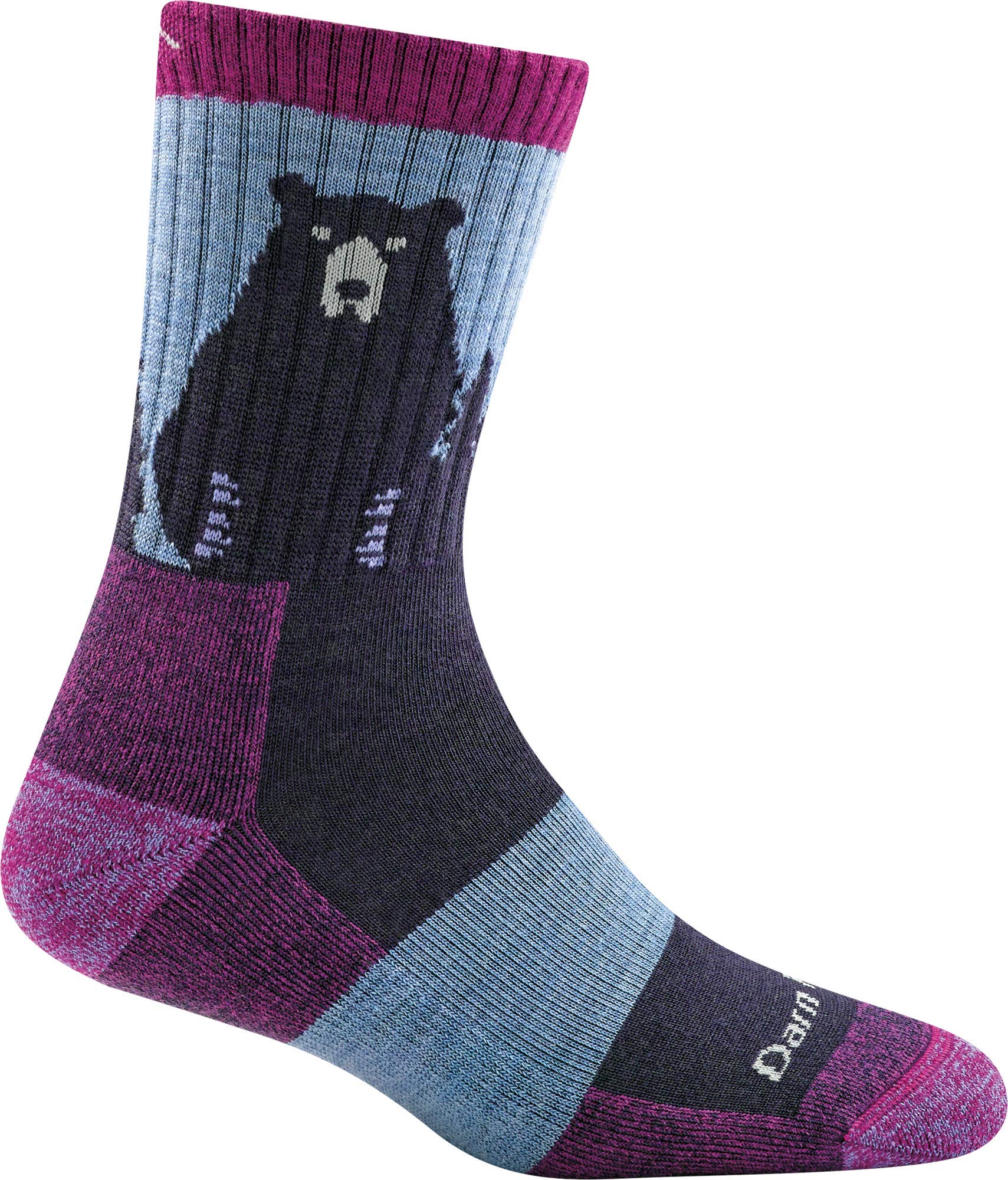
- Bear Town pattern reads as playful without being cartoonish
- Same lightweight construction as the solid-color Light Hiker
- Women’s-specific shaping
- Lifetime warranty
- GearJunkie’s top women’s-specific pick in their 2026 hiking sock guide
- Pattern is more visible , may not match all hiking outfits
- Same warmth limitations as any lightweight sock
The construction here is the same as the solid-color women’s Light Hiker: same merino blend, same lightweight cushion, same lifetime warranty. The Bear Town pattern is just the version you reach for when you care what shows above your trail runners. Whether that matters depends entirely on the hiker. There’s no performance tradeoff either way.
Buy it for the construction, not just the graphic. If you’d be happy with either this or the solid Light Hiker, choose based on which you’d rather see above your shoes. Pattern visibility depends on shoe height: trail runners show all of it, low boots hide most. If you only want the pattern and don’t otherwise need a lightweight merino micro crew for mixed-temperature summer hiking, that’s a different question.
Best Compression for Long Hot Days: Balega Silver Compression Fit Performance No Show Athletic Running Socks for Men and Women (1 Pair)
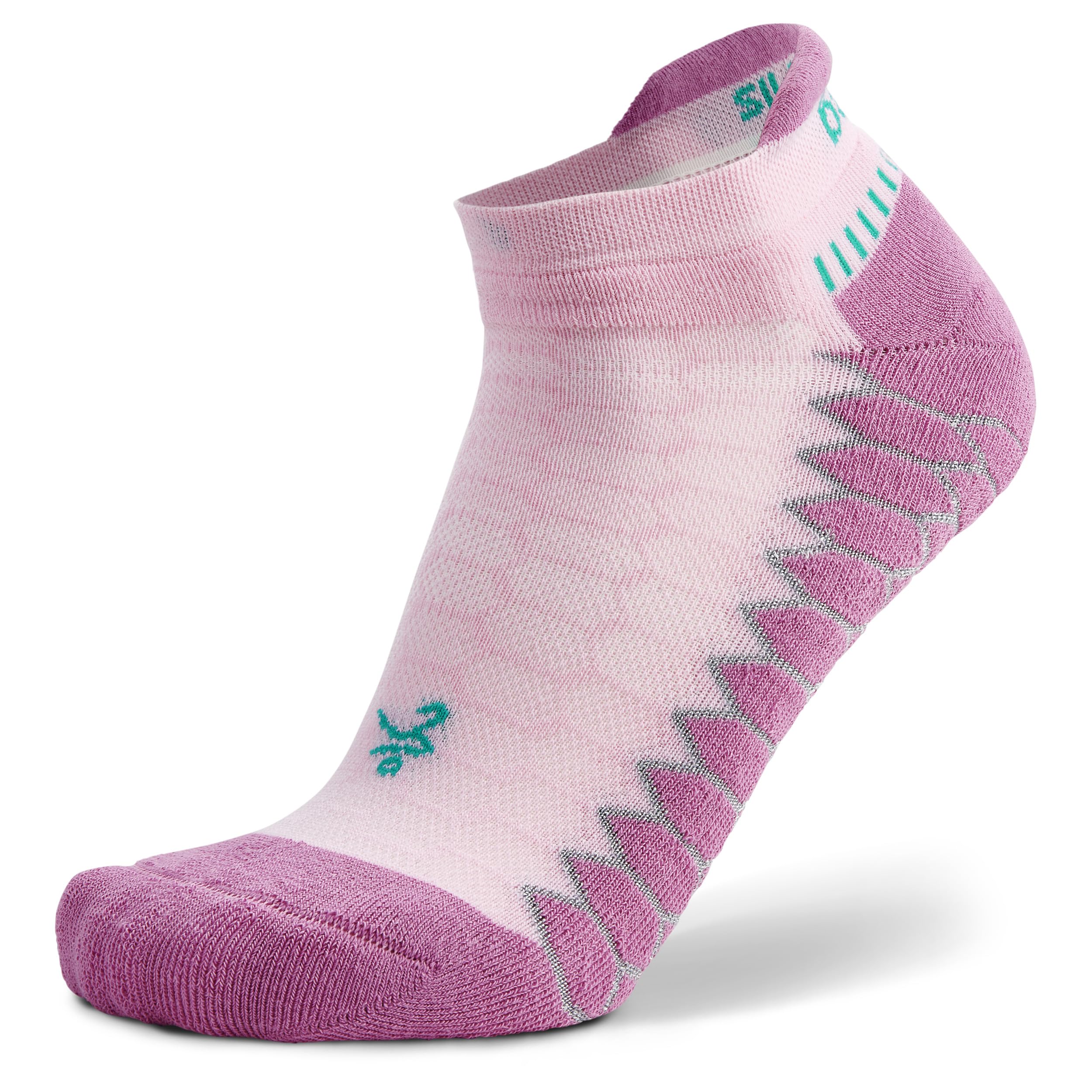
- Graduated compression reduces foot swelling on long summer days
- Silver thread reduces bacterial buildup in heat
- 12,120 verified reviews validate the compression fit
- Lower price point ($21) than Darn Tough lightweight options
- Compression fit is tighter , some hikers find it constricting in heat
- Pure synthetic gets ripe by day two of multi-day hiking
- No-show height won’t protect ankle in tall boots
- Doesn’t prevent friction-driven heel blisters , compression fixes swelling, not friction
The hikers who need this know who they are: if you’ve finished 15+ mile days with feet that feel two sizes bigger than when you started, and new hot spots in places your boots fit fine at mile one, that’s swelling-driven blister pattern. Compression doesn’t prevent the friction type of blisters, but it does meaningfully reduce the swelling that creates new pressure points on long, hot days. The graduated fit, tighter at the ankle and easing toward the calf, handles the specific mechanics of heat-related foot expansion.
It’s a specific solution to a specific problem. For hikes under 10 miles, or hikers who don’t notice notable foot swelling, the compression adds tightness without benefit. If you do a lot of long-mileage summer days and you’ve been treating end-of-day hot spots as a boot-fit problem, try the sock first. The silver thread also handles odor better than standard synthetic, which matters on multi-day trips where you’re rotating fewer pairs.
Best Toe Sock for Summer Heat: Injinji Run Lightweight No-Show Toesocks
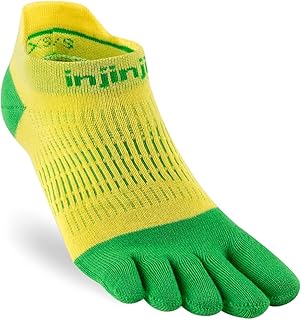
- Five-toe construction prevents inter-toe friction , the only design that does
- Lightweight Coolmax dries fast , key for sweat-driven inter-toe blisters
- No-show silhouette invisible above low-cut shoes
- Less compressive than midweight toe socks
- No-show height won’t protect ankle against tall boot collars
- Less cushion than midweight , wears through faster on rocky trails
- Pure synthetic = ripe by day two of multi-day hiking
- First few wears feel strange , each toe individually socked
Inter-toe blisters are different from other blister types: they happen between toes, not at the heel or ball, and no amount of boot adjustment or blister prevention balm prevents them. They’re caused by toe-on-toe friction in heat, and the only sock design that stops it is one that keeps toes from touching each other. The Coolmax construction handles the fast-drying side of the equation, which matters because sweat is what makes the skin soft enough to blister in the first place. For hot descents specifically, these dramatically reduce the damage.
If you’ve never had inter-toe blisters, skip this. Five-toe construction takes a few wears to feel natural, and the fit is bulkier in the toe box than a standard sock. The unisex Coolmax Micro Crew is more comfortable for general summer use. But for the specific hiker who finishes hot descents with raw skin between the toes, this is the only thing that actually works. No premium merino, double-layer, or heavy-cushion sock fixes inter-toe blisters.
Best Quarter Cuff (Men’s): Darn Tough (Style 1959) Men’s Hiker Quarter Midweight with Cushion Hiking Sock

- 4-inch cuff sits cleanly above low-cut shoe collars
- Same midweight cushion as the Style 1466 Micro Crew
- Disappears under summer hiking shorts
- Lifetime warranty
- 5,750+ verified reviews
- Won’t protect against ankle abrasion in tall boots
- Less ankle coverage than micro crew in cold weather
- Not the right height for backpacking in stiff boots
The quarter cuff is the summer cuff height most hikers overlook. Lower than a micro crew, so it runs cooler and sits below the line of summer hiking shorts. Higher than a no-show, so the ankle gets actual coverage and there’s more durable construction under the heel where it absorbs impact. For trail runners and approach shoes, this hits the middle better than either of the more common options, and on hot days the difference in ankle ventilation compared to a micro crew is noticeable.
The one thing to watch: a quarter cuff paired with a tall boot leaves a gap of exposed skin at the ankle, which is exactly where collar abrasion happens. This sock belongs in low-cut to mid-height shoes. If you rotate between trail runners and taller hiking boots, pack a micro crew for the boot days. Don’t assume the quarter works for both.
Best Smartwool Pick (Women’s): Smartwool Women’s Hike Light Cushion Low Ankle Socks

- Smartwool’s denser knit and stretch fit
- 4-degree stretch arch panel for fit consistency
- Lower price point than Darn Tough lightweight options
- Brand alternative for hikers who prefer Smartwool over Darn Tough
- Warranty covers manufacturing defects, not normal wear
- Low ankle cuff exposes skin if your shoe collar is high
- Slightly less merino than Darn Tough’s Hiker line
Smartwool’s construction sits differently on the foot than Darn Tough: denser knit, more arch compression, a fit that holds snugly without bunching on longer hikes. Some hikers find Darn Tough’s lighter hand feels slightly loose after a few miles. If that’s been your experience with lightweight hiking socks generally, Smartwool’s tighter fit is worth trying. The arch panel specifically tends to get noticed by women with medium-to-narrow feet who lose sock position during extended descents.
The honest comparison for high-mileage hikers: the warranty math favors Darn Tough. Smartwool covers manufacturing defects, not normal wear-through. For weekend day hikers who replace socks every couple of years regardless, that distinction doesn’t matter much. For hikers doing 100+ summer miles a season and expecting a sock to last until it fails, Darn Tough’s unconditional warranty changes the long-term cost comparison significantly. Pick Smartwool for the fit; pick Darn Tough for the coverage.
Full comparison table
| Rank | Product | Rating | Reviews | Price | Weight | Best for |
|---|---|---|---|---|---|---|
| #1 | Darn Tough Unisex Adult Coolmax Micro … | 4.7 | 2,433 | $24.95 | Midweight | Best Overall |
| #2 | Darn Tough Men’s Light Hiker Micro Cre… | 4.8 | 3,685 | $24.50 | Lightweight | Lightweight Merino (Men’s) |
| #3 | Darn Tough Women’s Light Hiker Micro C… | 4.8 | 1,398 | $24.90 | Lightweight | Lightweight Merino (Women’s) |
| #4 | Darn Tough Women’s Hiker Coolmax Micro… | 4.8 | 1,459 | $24.95 | Midweight | Synthetic Hot-Weather |
| #5 | Darn Tough Coolmax Boot Socks Full Cus… | 4.8 | 1,902 | $27.95 | Heavyweight (Full Cushion) | Coolmax Boot Height |
| #6 | Darn Tough Men’s Run No Show Tab Ultra… | 4.7 | 1,885 | $18.95 | Ultra-Lightweight | No-Show Trail Running |
| #7 | Darn Tough Women’s Run No Show Tab Ult… | 4.8 | 1,539 | $18.95 | Ultra-Lightweight | No-Show Trail Running |
| #8 | Darn Tough Women’s Bear Town Micro Cre… | 4.8 | 3,510 | $24.95 | Lightweight | Lightweight Patterned |
| #9 | Balega Silver Compression Fit Performa… | 4.8 | 12,120 | $21.00 | Lightweight | Compression |
| #10 | Injinji Run Lightweight No-Show Toesoc… | 4.7 | 2,911 | $23.00 | Lightweight | Toe Sock |
| #11 | Darn Tough (Style 1959) Men’s Hiker Qu… | 4.8 | 5,753 | $22.95 | Midweight | Quarter Cuff |
| #12 | Smartwool Women’s Hike Light Cushion L… | 4.8 | 1,121 | $19.55 | Lightweight | Smartwool Low Ankle |
How to choose the best summer hiking socks for your conditions
Frequently asked questions
What are the best summer hiking socks?
Are merino wool socks good for summer hiking?
Should I wear synthetic or merino socks in hot weather?
How do I prevent blisters in hot weather?
What thickness of sock should I wear in summer?
Are no-show socks good for summer hiking?
Do compression socks help in summer hiking?
How many pairs of summer hiking socks should I bring on a multi-day trip?
Why do my feet still sweat in ‘moisture-wicking’ summer socks?
Are budget hiking socks fine for summer day hikes?
What’s the difference between summer hiking socks and running socks?
How do I wash summer hiking socks?
Do I need different summer hiking socks for women vs men?
Why trust Oregon Tails
Will has put 2,400+ trail miles in Oregon over the last five years across the Cascades, Coast Range, Wallowas, and high desert. Every pick on this best summer hiking socks list was personally field-tested through Oregon’s actual summer , Eastern Oregon’s 90°F+ days, Cascade trails with cold mornings, and Coast Range trails where summer humidity changes the moisture-management equation entirely.
The 12 best summer hiking socks on this page were filtered from a starting pool of 88 qualified summer-relevant hiking socks on Amazon (4.4-star minimum, 100+ verified reviews minimum). Personal field testing covered all 12 picks across multiple Oregon summer trail conditions , Eastern Oregon high desert in August, Cascade trails with cool morning starts, Coast Range with summer humidity.
This roundup is independently editorial. No brand has paid Oregon Tails for placement, ranking, or favorable mention. When you click through to Amazon and buy, we earn a small affiliate commission at no cost to you. Our rankings would be the same with or without the affiliate program.
How we test summer hiking socks
For a list specifically about the best summer hiking socks, the testing has to track heat performance directly. Every sock on this list went through four distinct Oregon summer conditions , the same summer conditions Oregon hikers face from June through September.
Eastern Oregon high desert , 85°F+ stable heat. Painted Hills, Steens Mountain, and the Owyhee Canyonlands in July and August. This is where synthetic Coolmax wins decisively , dry-back time, odor resistance, and skin temperature all favor synthetic over merino in stable hot conditions.
Cascade summer mixed conditions , 50°F mornings to 80°F afternoons. The PCT segment between Cascade Locks and Mt Hood, the Strawberry Mountain Wilderness, and the Wallowas Eagle Cap loop in July and August. Lightweight merino testing happens here , this is where temperature regulation matters more than fastest-dry-time.
Coast Range summer humidity , moderate temps with high humidity. Oregon Coast Trail and Cape Lookout in August. This is where moisture-wicking gets challenged by ambient humidity that prevents fast evaporation.
Long-distance summer mileage , 15+ mile days in heat. PCT segments and Wallowas loop trails. Foot-swelling testing happens here , this is where compression socks earn or fail to earn their place.
For the best summer hiking socks, heat management and dry-back time get the heaviest weighting , this isn’t a generic hiking sock list, it’s specifically about summer performance. When user consensus and our field experience disagree, we flag the disagreement explicitly in the review.
