The Best Small Hiking Backpacks
Sixteen daypacks organised by the only question that matters first: how many litres do you actually need. From a sixteen-dollar packable to a two-hundred-dollar Osprey with a real hipbelt, grouped by capacity so you can skip straight to your size.
Almost everyone buys a daypack one size too big. Twenty litres sounds safer than fifteen, so people buy twenty, fill the extra space with things they carry all day and never use, and arrive tired. The sizing guide works through what each capacity genuinely holds. If you are looking for a bag to replace a suitcase rather than to hike with, our carry-on travel backpack picks are a different shape entirely.
Quick Picks: The Top 5 in 30 Seconds
Five packs covering most day hiking buying intent. Tap a card to check current pricing on Amazon.
Find Your Pack
Four questions, one personalized pick from our 16. No email, no signup.
Your match
Answer the questions above
We will recommend the right pack from our 16 picks.
Check price on Amazon →Our 16 Top Picks for 2026
Grouped by capacity, because that is the decision that comes first. Each pack is scored on a 100-point trail score across carry comfort, organisation, weather protection, build, and value, with comfort weighted heaviest.
Best 10L to 16L Packs
Six packs for short trails, fast hikes and days when you are carrying water, a layer and not much else. Below about ten litres you are holding things in your hands, and this is where a pack starts earning its place.
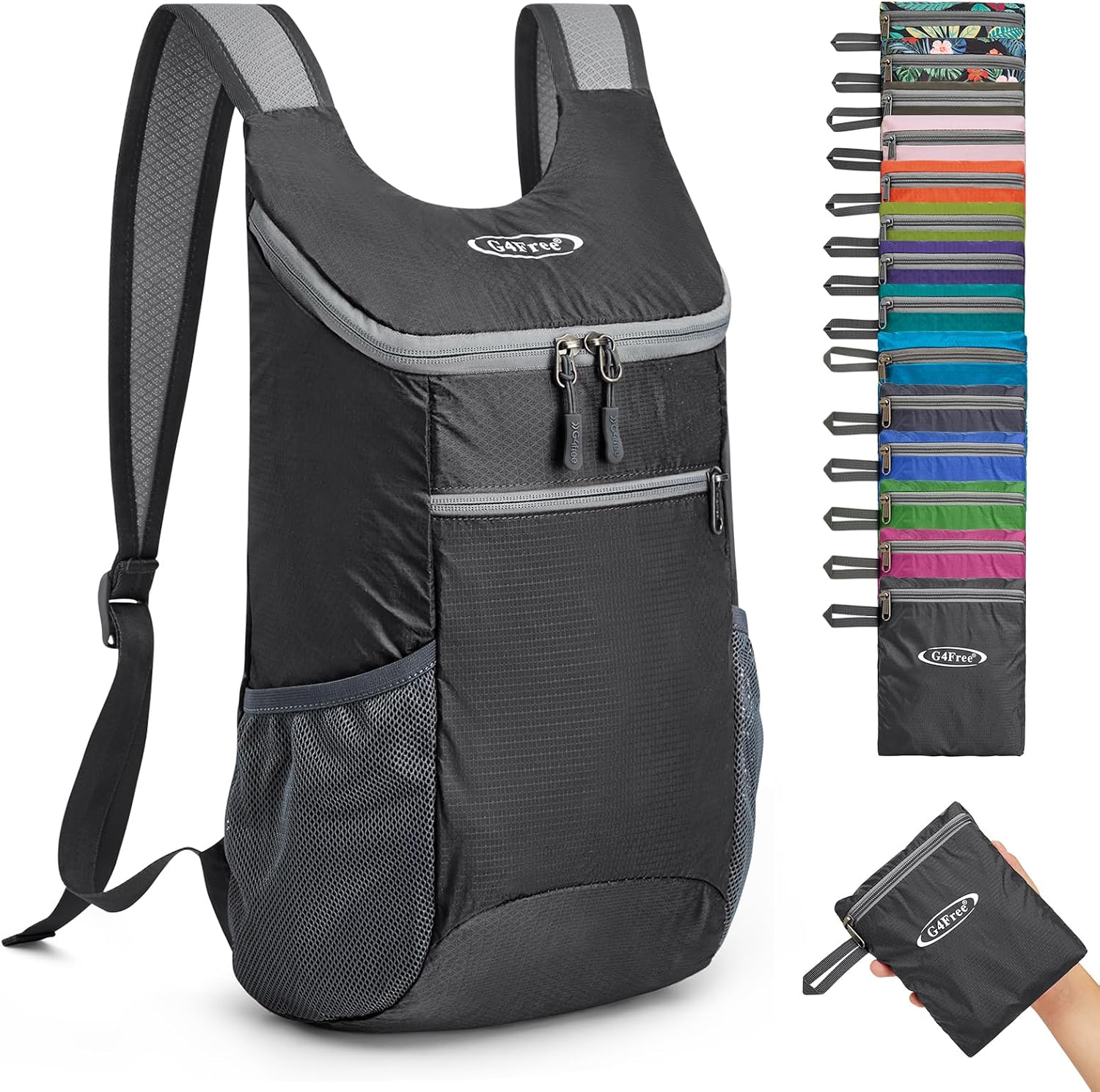
Best Packable Daypack: G4Free 10L Packable Daypack
Folds into its own pocket for a summit push or a spare in the car
Pros
- Folds into a pocket smaller than a fist and weighs almost nothing
- Cheap enough to keep one permanently in the car and one in a larger pack
- Ripstop nylon shrugs off scrapes better than the price suggests
- One of the deepest review bases of any pack in this category
Cons
- Unpadded straps dig once you load more than a few kilos
- No structure at all, everything settles into one lump
- Zippers are the first component owners report failing
This exists for one job: being there when you did not plan to need a pack. It lives in a jacket pocket or the lid of a bigger bag, weighs nothing, and turns a spontaneous side trail into a proper outing.
The very large owner base tells a consistent story. It handles light loads well for a couple of years, then a zipper gives out. Nobody reports it failing early and nobody pretends it is a real hiking pack.
Keep it under about four kilos. The straps are flat webbing with no padding, and past that weight it stops being comfortable within twenty minutes.
| Capacity | 10L |
|---|---|
| Weight | About 0.5 lb |
| Frame | None |
| Hipbelt | None |
| Hydration | No sleeve |
| Rain cover | None |
| Material | Ripstop nylon, water resistant |
| Pockets | Main, front zip, 2 mesh side |
| Packs into itself | Yes |
| Best for | Emergency pack and summit pushes |
Best 10L Minimalist Pack: SKYSPER 10L Packable Daypack
Water, layers and a snack, with nothing you will not use

Pros
- Padded shoulder straps, which most packables skip entirely
- Chest strap stops it sliding around on a descent
- Folds flat into its own pocket for storage
- Better finished than the price band usually allows
Cons
- Ten litres fills fast once you add a jacket
- No hipbelt, so all weight sits on your shoulders
- Side pockets are shallow for tall bottles
Ten litres is the honest minimum for a real hike: two litres of water, a layer, food and a phone. Below that you are carrying things in your hands, and above it you start bringing things you do not need.
What separates this from the cheaper packables is padding. Actual foam on the shoulder straps and a chest strap that works changes a short hike from tolerable to comfortable, and it costs a few dollars more.
The ceiling is real. Add a fleece and a packed lunch and you are done. For anything longer than a half day, move to the 15L or 20L options.
| Capacity | 10L |
|---|---|
| Weight | About 0.7 lb |
| Frame | None |
| Hipbelt | None |
| Hydration | No sleeve |
| Rain cover | None |
| Material | Ripstop polyester, water resistant |
| Pockets | Main, front zip, 2 side |
| Packs into itself | Yes |
| Best for | Short trails and travel day bag |
Best Premium Small Daypack: Deuter Speed Lite 13L
German-engineered suspension in a pack this size

Pros
- Carries far better than anything else this size, with a real back system
- Genuine hipbelt that transfers weight rather than just stabilising
- Deuter build quality and a repair-first warranty policy
- Light for how much structure it contains
Cons
- Thinnest owner feedback on this page by a wide margin
- Thirteen litres is tight if you carry a camera or bulky layers
- Costs more than three of the budget packs combined
Small packs almost universally treat the harness as decoration, which is why a loaded 15L can feel worse than a well-built 30L. Deuter puts an actual back system on this one, and on a fast six-mile loop the difference is immediate.
The hipbelt is not a token strap. It transfers real weight to your hips, which matters more on a scramble or a run than on flat ground, and almost nothing else at this size offers it.
Owner reports are very thin, which is why it does not lead the page despite scoring well. Deuter’s track record across their other packs is long and consistent, so I would not treat that as a durability concern.
| Capacity | 13L |
|---|---|
| Weight | About 1.1 lb |
| Frame | Delrin U-frame |
| Hipbelt | Yes, padded |
| Hydration | Sleeve, bladder not included |
| Rain cover | None |
| Material | Recycled polyamide |
| Pockets | Main, front stretch, 2 side, hipbelt |
| Packs into itself | No |
| Best for | Fast hiking and scrambling |
Best 15L Hiking Backpack: SKYSPER 15L Small Hiking Backpack
Fifteen litres, the sweet spot for a half-day on trail

Pros
- Fifteen litres holds a half day without tempting you to overpack
- Ventilated back panel that actually moves some air
- Compression straps pull the load in when it is half empty
- Enough pockets to keep small items findable
Cons
- Hipbelt is a thin webbing strap rather than a load-bearing one
- Water resistant only, a downpour gets through
- Fabric feels light next to the branded packs here
Fifteen litres is the size most day hikers actually need and rarely buy, because 20L sounds safer. Two litres of water, food, a shell, a first aid kit and a phone fit with room to spare, and the pack stays small enough that you forget it is there.
The ventilated back panel is unusual at this price. Most budget packs press a flat foam slab against your spine and you arrive with a soaked shirt.
The hipbelt is decorative rather than functional. It stops the pack swaying and transfers no weight, which is fine at this capacity because there is not much weight to transfer.
| Capacity | 15L |
|---|---|
| Weight | About 1.2 lb |
| Frame | None |
| Hipbelt | Webbing only |
| Hydration | Sleeve, bladder not included |
| Rain cover | None |
| Material | Ripstop polyester, water resistant |
| Pockets | Main, front zip, 2 mesh side, top |
| Packs into itself | No |
| Best for | Half-day hikes |
Best-Looking Small Daypack: Cotopaxi Batac 16L Del Dia
One-of-a-kind colourway with a lifetime warranty behind it

Pros
- Every pack is a different colourway, so no two are alike
- Made from remnant fabric that would otherwise be waste
- Del Dia lifetime warranty with a repair-first policy
- Packs into its own pocket despite the structure
Cons
- You cannot choose the colours you receive
- Simple layout with little internal organisation
- Expensive for sixteen litres
Cotopaxi builds these from leftover fabric, so each one is assembled from whatever was on the factory floor that day. The result is that nobody else on the trail has yours, which for some buyers settles the decision entirely.
The lifetime warranty is the substance behind the story. They repair rather than replace, which for a pack made from remnant material is the only honest way to sell it.
You are paying a premium for the ethics and the look rather than the carrying. The Deuter carries better and the SKYSPER holds more for less. Buy this because you want it, not because it outperforms.
| Capacity | 16L |
|---|---|
| Weight | About 1.1 lb |
| Frame | None |
| Hipbelt | None |
| Hydration | No sleeve |
| Rain cover | None |
| Material | Repurposed nylon remnants |
| Pockets | Main, front zip, 2 side |
| Packs into itself | Yes |
| Best for | Everyday carry and short trails |
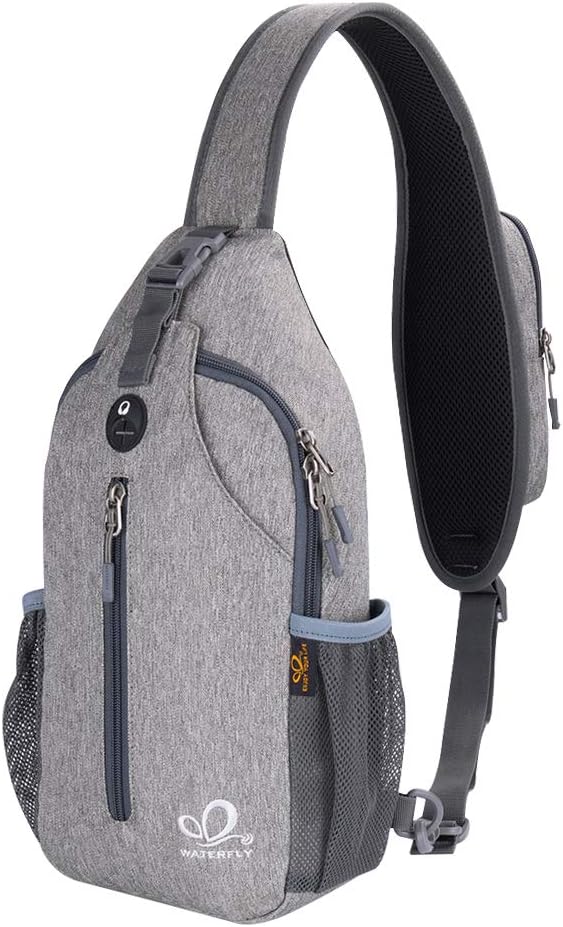
Best Sling Pack: WATERFLY Crossbody Sling
Single-strap crossbody for short trails and quick access
Pros
- Swings round to your front without taking it off
- By far the most-reviewed product in this entire category
- Small enough that you forget you are wearing it
- Works as a travel day bag as well as a trail pack
Cons
- Single strap loads one shoulder, which tires you unevenly
- Capacity is very limited, this is a large pocket rather than a pack
- Not enough for a full day with water and layers
A sling solves one specific problem: getting to your phone, snacks or camera without stopping and taking a pack off. On a short trail with frequent photo stops that is genuinely better than a backpack.
It has more owner reports than everything else here combined, and the pattern is clear. People buy it for travel and short walks, they like it, and nobody claims it replaces a daypack.
The single strap is the honest limit. All the weight lands on one shoulder, so past about three kilos it becomes uncomfortable and you start swapping sides. Treat it as an accessory rather than a hiking pack.
| Capacity | About 5L |
|---|---|
| Weight | About 0.9 lb |
| Frame | None |
| Hipbelt | None |
| Hydration | No sleeve |
| Rain cover | None |
| Material | Polyester, water resistant |
| Pockets | Main, front zip, hidden back |
| Packs into itself | No |
| Best for | Short trails and quick access |
Best 18L to 22L Day Hiking Backpacks
Six packs at the size most day hikers actually need. Twenty litres holds three litres of water, food, a shell, a first aid kit and a camera without tempting you to fill the space with things you will carry all day and never use.
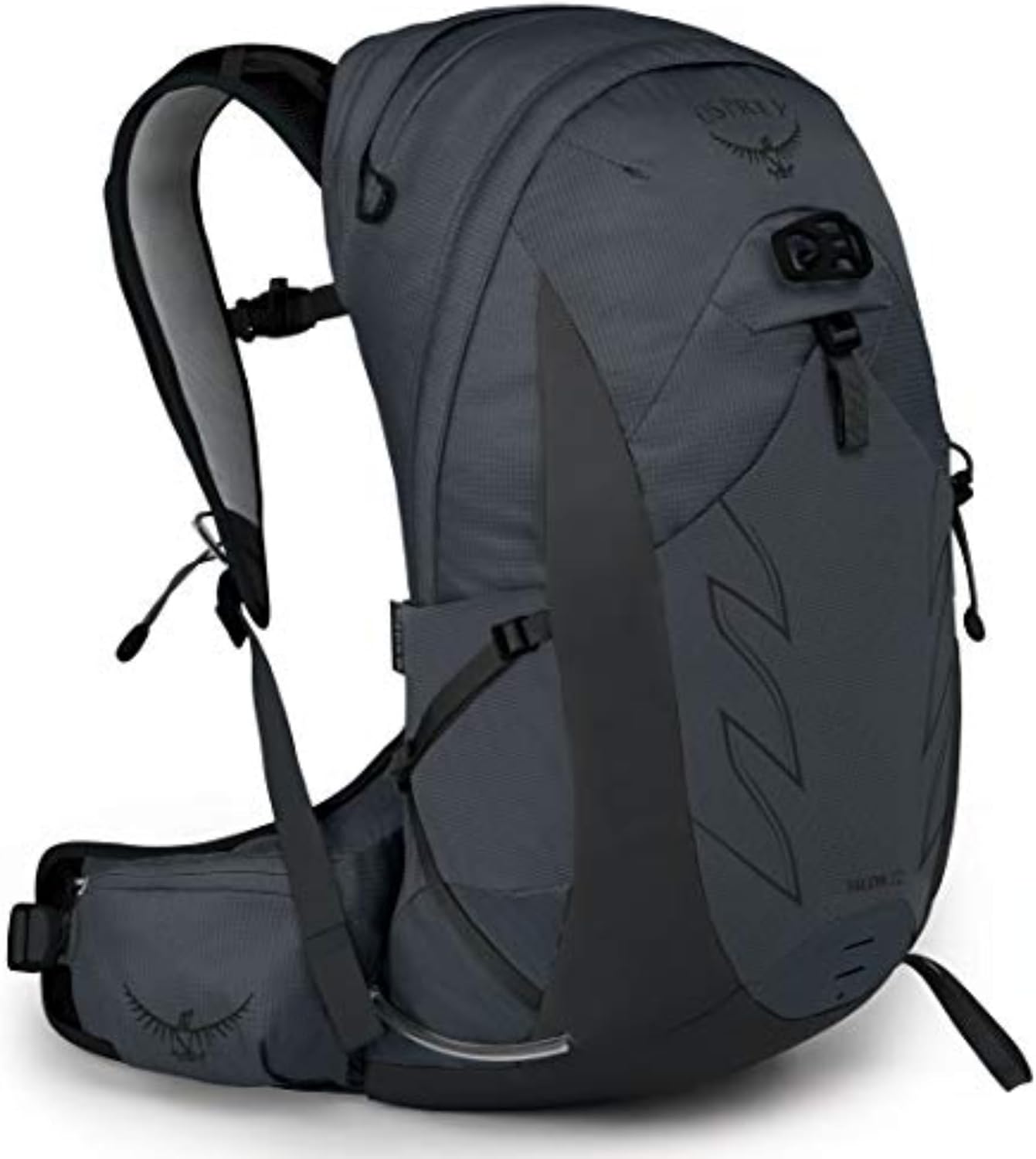
Best Small Hiking Backpack: Osprey Talon 22L
A genuine hipbelt and AirScape suspension in a day pack
Pros
- Load-transferring hipbelt with its own zippered pockets
- AirScape back panel keeps the pack off your spine and moving air
- Stow-on-the-go trekking pole attachment that works one-handed
- All Mighty Guarantee covers repairs for the life of the pack
Cons
- Costs more than three budget packs combined
- Sized by torso length, so you have to measure before ordering
- Twenty-two litres is more than a short hike needs
The line between a daypack and a school bag is whether any weight reaches your hips, and the Talon is the only pack here under 25 litres that genuinely crosses it. On an eight-mile day with three litres of water, that changes how your shoulders feel at the end.
The hipbelt pockets are the detail people notice daily. Phone and snacks reachable without stopping, which sounds minor until you have spent a day taking a pack off every twenty minutes.
It is expensive and it is sized by torso rather than sold as one-size, so you have to measure yourself first. If your hiking is short and flat, the Sportlite below does most of this for half the money.
| Capacity | 22L |
|---|---|
| Weight | About 1.9 lb |
| Frame | Wireframe peripheral |
| Hipbelt | Yes, load transferring with pockets |
| Hydration | Sleeve, bladder not included |
| Rain cover | Not included |
| Material | Recycled nylon |
| Pockets | Main, front stretch, 2 side, 2 hipbelt, lid |
| Packs into itself | No |
| Best for | Full days with real weight |
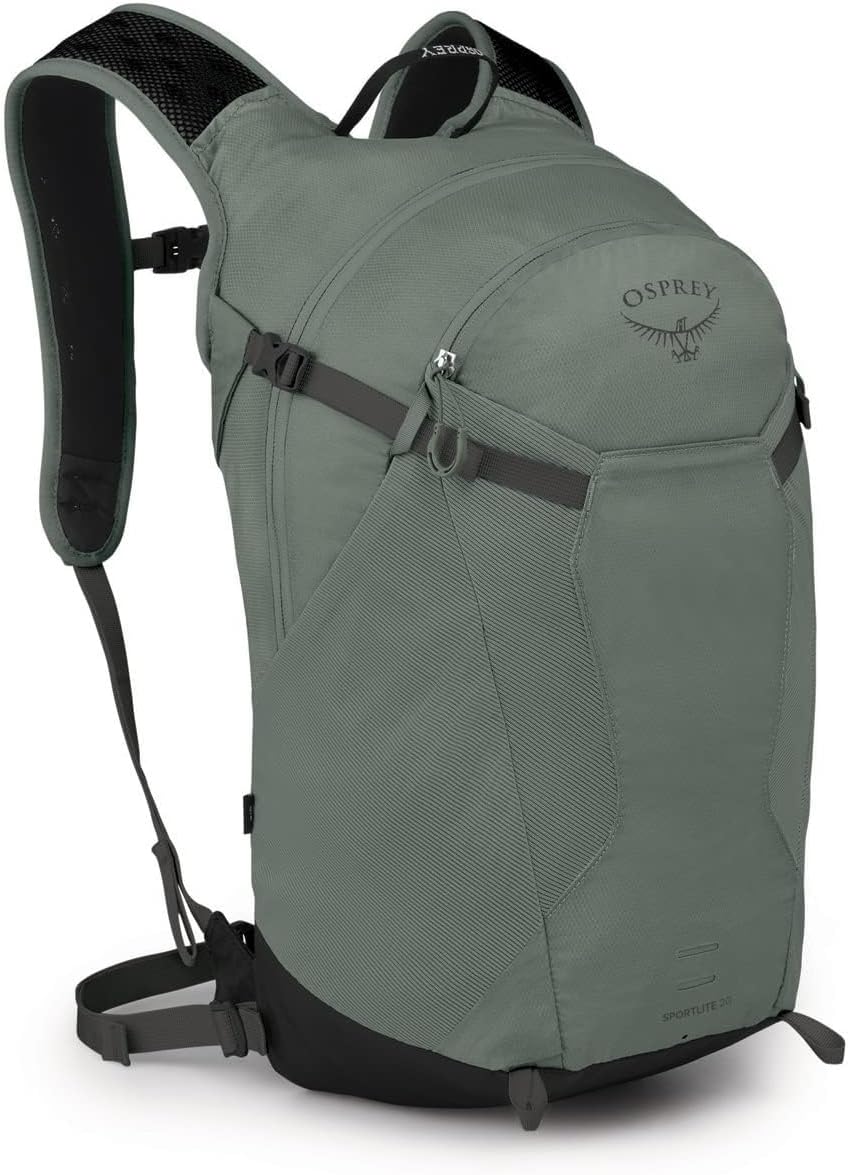
Best Value Hiking Daypack: Osprey Sportlite 20L
Osprey build at half the Talon price, stripped of what you do not need
Pros
- Carries almost as well as the Talon for half the money
- AirScape back panel carried over from the more expensive packs
- Light for a pack with this much structure
- Same lifetime guarantee as the rest of the Osprey line
Cons
- Hipbelt is webbing rather than load bearing
- Fewer pockets than the Talon, no hipbelt storage
- Thin owner feedback so far
Osprey stripped the Talon down to what most day hikers actually use and cut the price in half. What survives is the back panel and the harness, which is the part that matters, and what goes is the hipbelt padding and some pockets.
For twenty litres and a normal day hike, the webbing hipbelt is not much of a loss. There is only so much weight in a daypack, and the shoulder straps handle it.
This is the pack I would buy for most people. It carries properly, it costs a reasonable amount, and Osprey will repair it in ten years when something wears out.
| Capacity | 20L |
|---|---|
| Weight | About 1.4 lb |
| Frame | None, framesheet only |
| Hipbelt | Webbing |
| Hydration | Sleeve, bladder not included |
| Rain cover | Not included |
| Material | Recycled nylon |
| Pockets | Main, front stretch, 2 side |
| Packs into itself | No |
| Best for | Most day hikers, most of the time |
Best Trail and Office Crossover: Thule EnRoute 21L
Twenty-one litres that works on trail and does not look out of place at work

Pros
- Padded laptop sleeve, so it genuinely does both jobs
- Best weather resistance of the budget-tier packs here
- Ventilated back panel and a proper sternum strap
- Understated enough to carry into an office
Cons
- Laptop sleeve adds weight you do not need on trail
- No hipbelt at all
- Structured shape wastes some volume for bulky layers
A pack that only works on trail sits in a cupboard most of the year. The EnRoute carries well enough for a day hike and looks normal enough to use daily, which makes it far better value than the price suggests.
The weather resistance is the standout at this price. Thule coats the fabric properly rather than relying on a light finish that wears off, and it handles a genuine shower where the budget packs wet through.
You are carrying a padded laptop sleeve on every hike whether you need it or not. If you only ever hike, the Osprey Sportlite is lighter and carries better for similar money.
| Capacity | 21L |
|---|---|
| Weight | About 1.8 lb |
| Frame | None |
| Hipbelt | None |
| Hydration | No sleeve |
| Rain cover | None |
| Material | Recycled polyester, water resistant |
| Pockets | Main, laptop sleeve, front zip, 2 side |
| Packs into itself | No |
| Best for | One pack for trail and work |
Best Women’s Small Hiking Backpack: SKYSPER 20L Women’s
Twenty litres shaped for a shorter torso and narrower shoulders

Pros
- Shorter back length and contoured straps rather than a resized unisex pack
- Deep review base for a women’s-specific pack at this price
- Ventilated channels down the back panel
- Padded hipbelt, unusual below fifty dollars
Cons
- Hipbelt padding is thin and transfers limited weight
- Water resistant only
- Runs small, taller women should size up or look elsewhere
Most women’s daypacks are unisex packs in different colours, which is why so many chafe at the collarbone. This one has a genuinely shorter back panel and straps that curve differently, and that is the whole reason it carries the way it does.
Nearly six thousand owner reports for a women’s-specific pack at this price is unusual, and the feedback clusters around fit working well rather than around construction problems.
The consistent complaint is that it runs small. If you have a long torso the back length will be wrong, and the Osprey Sportlite in a size up is the better answer.
| Capacity | 20L |
|---|---|
| Weight | About 1.5 lb |
| Frame | None |
| Hipbelt | Padded |
| Hydration | Sleeve, bladder not included |
| Rain cover | Included |
| Material | Ripstop polyester, water resistant |
| Pockets | Main, front zip, 2 mesh side, top |
| Packs into itself | No |
| Best for | Women’s day hiking |
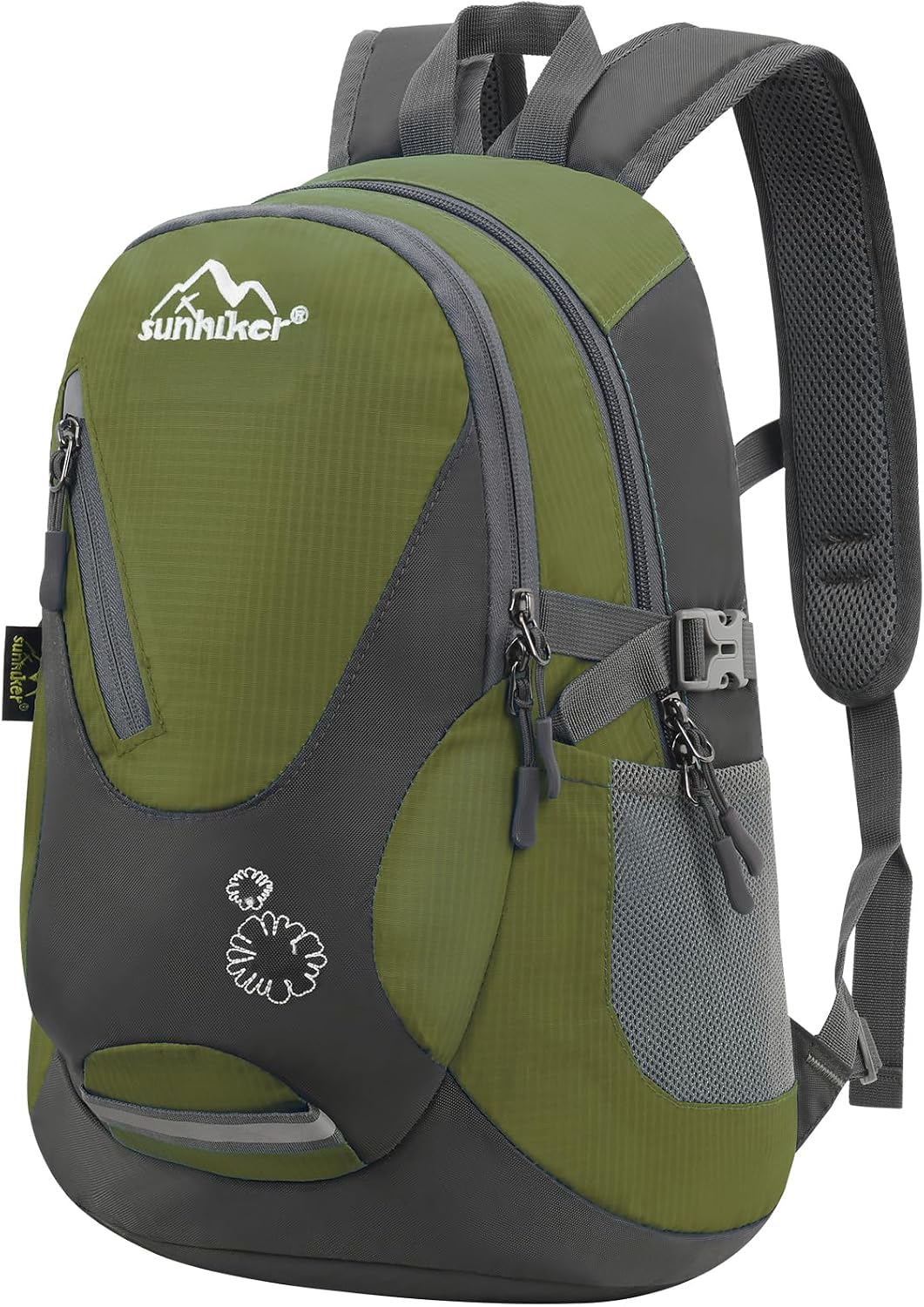
Best Budget Small Hiking Backpack: Sunhiker 20L
Twenty litres for under twenty dollars, with the reviews to back it
Pros
- Twenty litres at a price where most packs are ten
- More pockets than packs costing three times as much
- Very light, since there is no frame or structure to carry
- Deep owner history that makes the limits predictable
Cons
- Straps are thin and compress within a season of regular use
- No back ventilation, your shirt will be soaked
- Fabric is light enough to tear on brush
This is the pack for someone who hikes a few times a year and does not want to spend real money to find out whether they will hike more. It holds a day’s gear, it costs less than lunch, and outgrowing it is not expensive.
The pockets are genuinely useful. Whoever designed it understood that finding a snack without unpacking matters, and it beats several packs here at four times the price on that alone.
Everything else reflects the price. Thin straps that flatten, no ventilation, and light fabric. Treat it as a one or two season pack and it does exactly what it should.
| Capacity | 20L |
|---|---|
| Weight | About 0.9 lb |
| Frame | None |
| Hipbelt | Webbing |
| Hydration | No sleeve |
| Rain cover | None |
| Material | Polyester, water resistant |
| Pockets | Main, 2 front zip, 2 mesh side |
| Packs into itself | No |
| Best for | Occasional hikers on a budget |
Best Stowaway Daypack: Eddie Bauer Stowaway 20L
Packs flat into a suitcase as a second bag for a trip

Pros
- Packs flat rather than into a lumpy ball, so it slides into a suitcase
- Better fabric and stitching than the budget packables
- Eddie Bauer warranty behind a packable pack
- Twenty litres once unpacked, not a token ten
Cons
- Heavier than the ultralight packables
- Simple layout with minimal organisation
- Straps are thin for a 20L capacity
Packable packs usually stuff into a ball that wastes space in luggage. This one folds flat, which means it slides down the side of a suitcase and costs you nothing on the outbound trip.
The build is a clear step up from the ten and fifteen dollar packables. Better fabric, better stitching, and a brand that will honour a warranty claim, which is the difference between a two-season pack and a five-season one.
It is heavier than a true ultralight packable, and the straps are thin for twenty litres. This is a travel companion pack rather than a primary hiking bag.
| Capacity | 20L |
|---|---|
| Weight | About 0.8 lb |
| Frame | None |
| Hipbelt | None |
| Hydration | No sleeve |
| Rain cover | None |
| Material | Ripstop nylon, water resistant |
| Pockets | Main, front zip, 2 side |
| Packs into itself | Yes, folds flat |
| Best for | A second bag inside your luggage |
Best Hydration Packs
Two packs that ship with a bladder included. Buying a pack and a reservoir separately usually costs more and leaves you with a bladder that does not quite fit the sleeve.
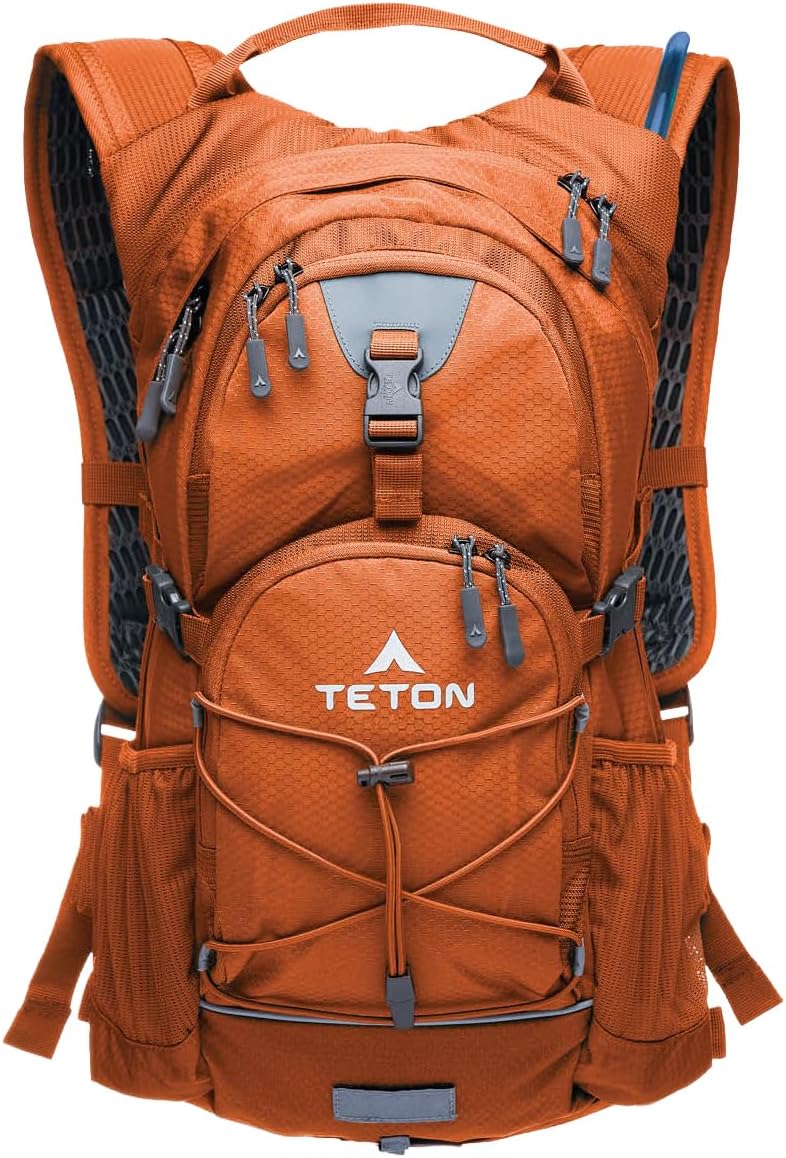
Best Hydration Pack: TETON Oasis Hydration Pack
Ships with the bladder rather than selling it separately
Pros
- Bladder included, which usually costs thirty dollars on its own
- Sewn-in rain cover rather than a separate item to lose
- Available in two sizes so you can match it to your trips
- Open-cell foam back panel keeps the pack off your spine
Cons
- Bladder bite valve is the first component owners replace
- Hipbelt stabilises rather than transferring weight
- Runs warm on the back despite the foam channels
Buying a pack and a bladder separately usually costs more than a hydration pack that includes one, and you end up with a bladder that does not quite fit the sleeve. TETON solves that by shipping them together and sizing the sleeve properly.
The sewn-in rain cover is the detail worth noting. Separate covers get left at home or lost, and having it attached means it is there in the one rainstorm a year when you need it.
The bite valve is the weak link and owners consistently replace it within a year or two. That is a ten-dollar fix on a pack that otherwise holds up well.
| Capacity | 18L or 22L |
|---|---|
| Weight | About 1.7 lb |
| Frame | None |
| Hipbelt | Padded, stabilising |
| Hydration | 2L or 3L bladder included |
| Rain cover | Sewn in |
| Material | Ripstop polyester |
| Pockets | Main, front zip, 2 mesh side, hipbelt |
| Packs into itself | No |
| Best for | Hikes where refills are not available |
Best Value Hydration Pack: Everfun 18L Hydration Pack
Insulated bladder sleeve so your water stays cold past lunch

Pros
- Insulated bladder compartment keeps water cold for hours
- Bladder included in either two or three litre sizes
- Ventilated straps and back panel for warm-weather use
- Works for hiking, cycling and running rather than just one
Cons
- Insulation adds bulk to an already modest capacity
- Zippers feel light next to the TETON
- No rain cover included
Warm water is the reason people stop drinking on a hot hike, and that is how mild dehydration starts. An insulated sleeve keeps it drinkable well past midday, which does more for you than any amount of extra capacity.
It crosses over to cycling and running better than most hiking hydration packs, which matters if you want one pack rather than three. The harness is cut close enough that it does not bounce.
The insulation eats into the eighteen litres, so real capacity is closer to fifteen once the bladder is full. Plan accordingly if you carry bulky layers.
| Capacity | 18L |
|---|---|
| Weight | About 1.5 lb |
| Frame | None |
| Hipbelt | Webbing |
| Hydration | 2L or 3L bladder included, insulated sleeve |
| Rain cover | None |
| Material | Ripstop polyester, water resistant |
| Pockets | Main, insulated bladder, front zip, 2 side |
| Packs into itself | No |
| Best for | Hot-weather hiking and multi-sport use |
Best 35L Packs for Bigger Days
Two packs for winter day hikes with extra layers, photography outings, or a minimalist overnight. Thirty-five litres is where a daypack starts turning into a small backpacking pack.
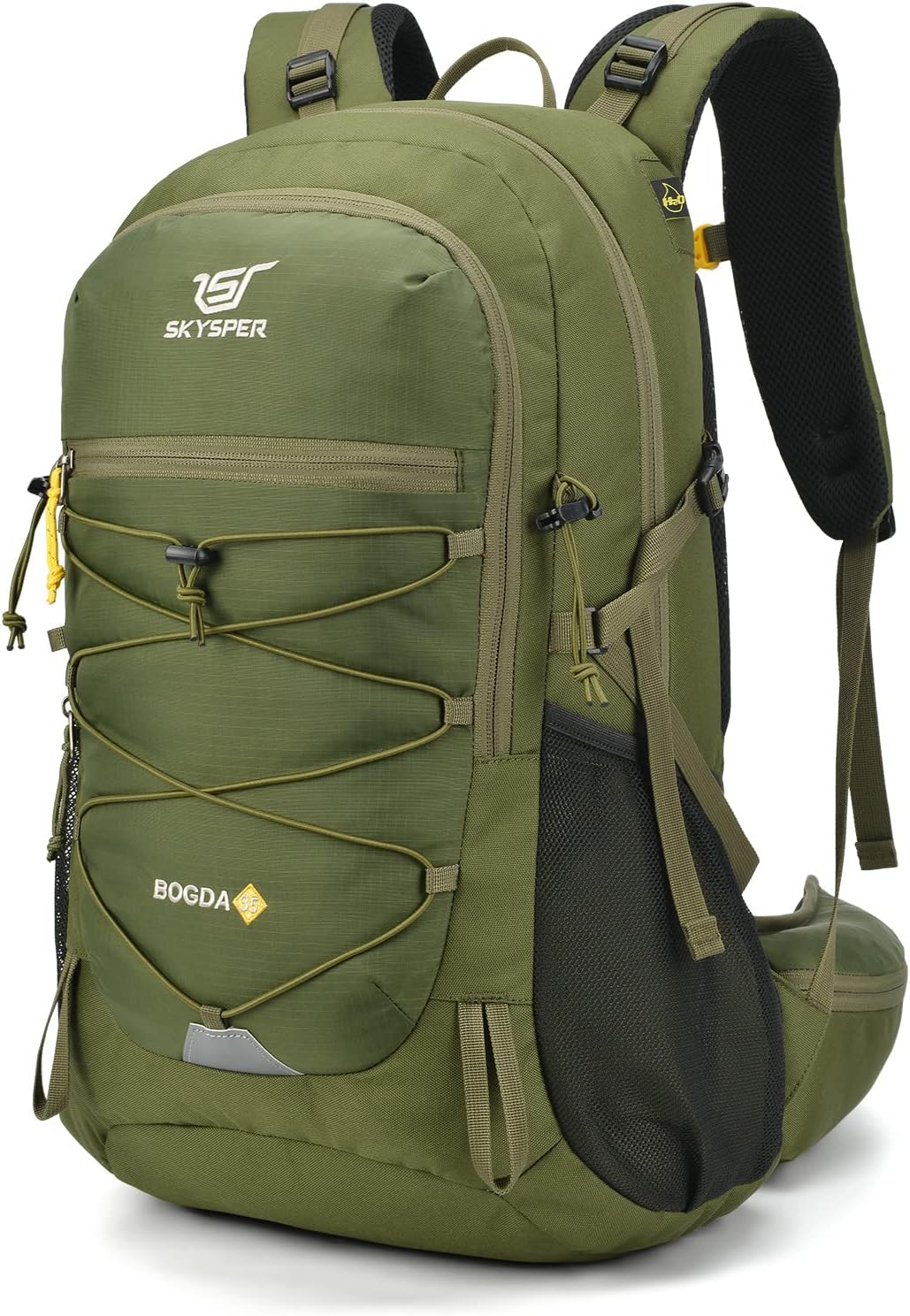
Best Pack for Bigger Days: SKYSPER 35L Hiking Daypack
Thirty-five litres for a long day or a light overnight
Pros
- Enough capacity for a long day or a minimalist overnight
- Multiple compartments rather than one deep bucket
- Padded hipbelt that takes some real weight at this capacity
- Compression straps pull the load in when it is not full
Cons
- Thirty-five litres tempts you into carrying more than you need
- No frame, so heavy loads sit badly
- Fabric is light for the capacity
Thirty-five litres is where a daypack starts becoming a small backpacking pack. For a winter day hike with extra layers, a photography outing, or a night in a hut, it is the right size and this one costs a fraction of what branded packs charge.
The compartments are what make it usable. A 35L single bucket becomes a hole you excavate, and separating gear across sections is the difference between finding your headlamp and unpacking on a trail.
There is no frame, so past about eight kilos the load sags away from your back and the hipbelt stops helping. If you routinely carry more than that, you want a framed pack rather than a large daypack.
| Capacity | 35L |
|---|---|
| Weight | About 2 lb |
| Frame | None |
| Hipbelt | Padded |
| Hydration | Sleeve, bladder not included |
| Rain cover | Included |
| Material | Ripstop polyester, water resistant |
| Pockets | Main, secondary, front zip, 2 side, top |
| Packs into itself | No |
| Best for | Long days and light overnights |
Best Ultralight Packable Pack: MIYCOO 35L Ultralight
Thirty-five litres at a weight most 20L packs cannot match

Pros
- Weighs less than most 10L packs despite holding three times as much
- Genuinely waterproof fabric rather than water resistant
- Folds into its own pocket for storage or as a backup pack
- Costs less than a bladder for most hydration packs
Cons
- No structure at all, so a heavy load becomes a sagging lump
- Thin straps that dig once you pass a few kilos
- Light fabric is vulnerable to snagging on brush
The weight-to-capacity ratio here is the whole argument. Thirty-five litres that weighs less than half a kilo means you can carry it as a spare inside another pack and deploy it when you need to haul something back.
The fabric is properly waterproof rather than treated, which is unusual at this price and useful on a coastal or Cascades trail where a shower arrives without warning.
There is no structure and no padding worth the name. Keep loads light and it works beautifully. Load it to capacity with heavy gear and it becomes a sack tied to your shoulders.
| Capacity | 35L |
|---|---|
| Weight | About 0.9 lb |
| Frame | None |
| Hipbelt | Webbing |
| Hydration | No sleeve |
| Rain cover | None, fabric is waterproof |
| Material | Waterproof ripstop nylon |
| Pockets | Main, front zip, 2 mesh side |
| Packs into itself | Yes |
| Best for | Backup pack and ultralight days |
Full comparison table: best small hiking backpack
Sort by trail score, price, weight, or customer rating. Tap the buttons to re-rank. The table scrolls horizontally on small screens.
| Backpack | Award | Capacity | Hipbelt | Trail score | Weight | Rating | Price | |
|---|---|---|---|---|---|---|---|---|
|
Osprey Talon 22L | Best Overall | 22L | Load bearing | 84 | About 1.9 lb | 4.7 | $169.95 |
|
Osprey Sportlite 20L | Best Value | 20L | Webbing | 83 | About 1.4 lb | 4.7 | $89.95 |
|
Thule EnRoute 21L | Best Crossover | 21L | None | 83 | About 1.8 lb | 4.7 | $62.96 |
|
Deuter Speed Lite 13L | Best Premium | 13L | Padded | 82 | About 1.1 lb | 4.6 | $52.50 |
|
TETON Oasis Hydration Pack | Best Hydration | 18L or 22L | Padded | 82 | About 1.7 lb | 4.5 | $43.99 |
|
SKYSPER 20L Women’s | Best Women’s | 20L | Padded | 80 | About 1.5 lb | 4.6 | $45.99 |
|
SKYSPER 35L Hiking Daypack | Best Bigger Days | 35L | Padded | 80 | About 2 lb | 4.6 | $43.69 |
|
Everfun 18L Hydration Pack | Best Hydration Value | 18L | Webbing | 79 | About 1.5 lb | 4.5 | $40.99 |
|
SKYSPER 15L Small Hiking Backpack | Best 15L | 15L | Webbing | 77 | About 1.2 lb | 4.6 | $36.99 |
|
Cotopaxi Batac 16L Del Dia | Best Style | 16L | None | 75 | About 1.1 lb | 4.4 | $69.95 |
|
MIYCOO 35L Ultralight | Best Ultralight | 35L | Webbing | 75 | About 0.9 lb | 4.5 | $19.99 |
|
Sunhiker 20L | Best Budget | 20L | Webbing | 74 | About 0.9 lb | 4.5 | $17.99 |
|
Eddie Bauer Stowaway 20L | Best Stowaway | 20L | None | 73 | About 0.8 lb | 4.4 | $39.99 |
|
G4Free 10L Packable Daypack | Best Packable | 10L | None | 72 | About 0.5 lb | 4.5 | $15.99 |
|
SKYSPER 10L Packable Daypack | Best 10L | 10L | None | 72 | About 0.7 lb | 4.6 | $21.88 |
|
WATERFLY Crossbody Sling | Best Sling | About 5L | None | 71 | About 0.9 lb | 4.5 | $23.35 |
How We Judge Small Hiking Backpacks
Daypacks fail in one predictable way, and it is not capacity. It is the harness, which almost every manufacturer treats as decoration on a pack this size.
-
30%Comfort
How it feels at mile six, not mile one
Every pack is comfortable empty in a shop. We judge strap width and padding density, whether there is a sternum strap, whether the back panel moves any air, and above all whether any weight reaches your hips. Three litres of water alone is three kilos, and where that weight sits decides whether your shoulders ache by the turnaround point.
-
20%Organisation
Finding a snack without unpacking
Pocket placement matters more than pocket count. We look for side pockets that hold a bottle you can reach with the pack on, a hipbelt or shoulder pocket for a phone, and somewhere for small items that is not the bottom of the main compartment. A single deep bucket means excavating at every stop.
-
20%Value
Cost per season, not sticker price
A seventeen-dollar pack that lasts two seasons and a hundred-and-seventy-dollar pack that lasts fifteen years cost roughly the same per year. We score against expected lifespan, what the warranty covers, and whether the brand repairs packs or only replaces them. Lifetime guarantees change this calculation more than any feature.
-
15%Weather
What happens in an Oregon shower
Almost no daypack is waterproof, and most are water resistant in the sense that they survive five minutes. We judge fabric coating quality, whether zippers are covered by storm flaps, and whether a rain cover is included or sold separately. In the Pacific Northwest this matters more than it does almost anywhere else.
-
15%Build
What fails first and how soon
Zippers and strap anchors, in that order. On budget packs the shoulder strap padding also compresses within a season until it is effectively webbing. We read long-term owner reports for those patterns rather than first-week impressions, and weigh fabric denier against the abrasion a pack takes being set down on rock.
Where we tested
Wet rock, spray and the showers that test any water-resistant claim.
Sustained climbing in dry heat, where back ventilation earns its keep.
Cold-weather days when extra layers push a small pack to its limit.
Short after-work loops where a sling or a 10L pack is the right call.
What Size Hiking Backpack Do You Need
Buying one size too large is the most common mistake in this category, because empty space gets filled and carried. Here is what each capacity genuinely holds.
One useful check: water is the heaviest thing in most daypacks. Three litres weighs three kilos, more than everything else combined on a summer hike. If you are choosing between two sizes, decide how much water you carry first and let that settle it.
Why a Hipbelt Changes Everything
This is the single biggest difference between packs on this page, and the one most listings gloss over with the same word for two completely different things.
Webbing strap versus load-bearing belt
Almost every daypack advertises a hipbelt. On most of them it is a thin webbing strap that stops the pack swaying and transfers no weight whatsoever. A genuine load-bearing hipbelt is padded, sits on your iliac crest, and moves a meaningful share of the load off your shoulders and onto your hips, which are far better suited to carrying it. On this page only the Osprey Talon and the Deuter have the real thing.
When it actually matters
Below about five kilos, a webbing strap is fine and a padded belt is extra weight you do not need. Above that, and particularly on descents where the load bounces, the difference becomes obvious within an hour. Three litres of water plus layers and a camera puts most full-day hikers past that threshold, which is why the 20L and 22L picks are where this feature starts appearing. Our pack fitting guide covers how to position one correctly.
How to Choose a Small Hiking Backpack
Five decisions, in this order. The first one eliminates most of the market.
1. Size down, not up
Pick the capacity for your typical hike rather than your longest imaginable one. Empty space in a pack gets filled with things you carry all day and never use, and a smaller pack forces better decisions. If you are torn between fifteen and twenty litres, count how much water you carry and let that decide.
2. Check whether the hipbelt is real
Read the listing for the words padded or load transferring rather than just hipbelt, and look at the photos. A thin strip of webbing and a padded wing that wraps your hips are both called the same thing and do entirely different jobs. This matters above about five kilos and not at all below it.
3. Decide bottles or bladder before you buy
A bladder keeps you drinking more consistently because you never stop to reach for it, and it costs around thirty dollars separately. A pack that includes one is often cheaper than buying both and gives you a sleeve sized to fit. Bottles are easier to refill, easier to clean and easier to monitor. Neither is wrong, but choosing after you buy the pack usually means an awkward compromise.
4. Look for back ventilation if you climb
A flat foam panel pressed against your spine means you arrive at the summit with a soaked shirt, which turns cold the moment you stop. Suspended mesh or moulded channels move air and make a real difference on sustained climbs. It costs manufacturers little and most budget packs skip it entirely.
5. Assume it is not waterproof
Water resistant means a coating that survives light rain for a while. Almost no daypack is genuinely waterproof, and the seams are unsealed regardless. Either buy a pack with an included rain cover, budget for one separately, or line the inside with a dry bag. In Oregon this is not optional, and our packing guide covers how to keep the important things dry.
Your first proper daypack
Osprey Sportlite 20L. Carries properly, costs sensibly, and Osprey will repair it years from now.
Hiking a few times a year
Sunhiker 20L. Holds a day’s gear for less than lunch, and outgrowing it costs nothing.
Full days with real weight
Osprey Talon 22L. The only pack here with a hipbelt that genuinely moves weight to your hips.
Long hikes without refills
TETON Oasis. Bladder included and a rain cover sewn in, which is two purchases avoided.
Small Hiking Backpack FAQ
The questions people ask before their first proper daypack, answered without the marketing language.
What size hiking backpack do I need for a day hike?
Twenty litres covers a full day for most people: three litres of water, food, a rain shell, a warm layer, a first aid kit and a headlamp. Drop to fifteen litres for a half day, and to ten if you are out for two hours with a single bottle. Go to thirty-five only for winter days with bulky layers or a minimalist overnight. The most common mistake is buying one size too large, because empty space gets filled with things you then carry all day and never use.
What is the best small hiking backpack?
For most day hikers the Osprey Sportlite 20L is the right answer, because it carries properly, costs a reasonable amount, and Osprey repairs packs rather than replacing them. If you carry real weight on long days, the Osprey Talon 22L is the only pack in this size range with a hipbelt that genuinely transfers load to your hips. If you hike occasionally and do not want to spend much, the Sunhiker 20L holds a day’s gear for under twenty dollars.
Do I need a hipbelt on a daypack?
Above roughly five kilos, yes, and below that it is extra weight you do not need. The complication is that almost every daypack advertises a hipbelt and most of them mean a thin webbing strap that stops the pack swaying and transfers no weight at all. A genuine load-bearing belt is padded, sits on your hip bones, and moves a real share of the load off your shoulders. Three litres of water plus layers puts most full-day hikers past the threshold where it matters.
Is a hydration bladder better than water bottles?
A bladder keeps you drinking more consistently, because you sip from a hose without stopping or reaching, and mild dehydration usually starts when people stop bothering. Bottles are easier to refill from a stream or tap, far easier to clean, and let you see how much you have left. A bladder costs around thirty dollars separately, so a pack that includes one is often cheaper than buying both, and the sleeve is sized to fit. Decide before you buy the pack rather than after.
Are hiking backpacks waterproof?
Almost none of them, including expensive ones. Water resistant means a coating that handles light rain for a while before soaking through, and the seams are unsealed regardless of what the fabric does. In the Pacific Northwest you need a plan: buy a pack with an included rain cover, buy a cover separately for around fifteen dollars, or line the inside with a dry bag. Lining the inside is the most reliable and the cheapest.
How much should I spend on a small hiking backpack?
Around twenty dollars gets a pack that holds a day’s gear and lasts a season or two, which is right if you hike a handful of times a year. Between fifty and ninety buys a real harness, back ventilation and a brand that repairs rather than replaces, which is where most regular hikers should land. Above a hundred and fifty you are paying for a load-transferring hipbelt and a frame, which only earns itself if you carry serious weight on long days.
What is the difference between a daypack and a hiking backpack?
Mostly the harness and the frame. A daypack is a simple bag with shoulder straps, sized between ten and thirty litres, built for loads under about eight kilos. A hiking backpack adds a frame or framesheet, a padded load-transferring hipbelt, and a suspended back panel, which lets it carry heavier loads comfortably over longer distances. Every pack on this page is a daypack, and the Osprey Talon is the closest to crossing into the other category.
Should women buy a women’s-specific hiking backpack?
It depends on your torso length rather than your gender. Women’s-specific packs have a shorter back panel and shoulder straps contoured for narrower shoulders, which stops a loaded pack chafing at the collarbone. If you are shorter than about five foot six, a women’s pack or a small size in a unisex pack will fit noticeably better. If you are taller, a standard unisex pack may fit you fine, and many women’s models will actually be too short.
How do I pack a small hiking backpack?
Heavy things go close to your back and level with your shoulder blades, which keeps the weight over your centre of gravity instead of pulling you backwards. Water is usually the heaviest item, so a bladder sleeve against the back panel is doing this for you automatically. Put things you need during the hike in side pockets and the lid, and things you hope not to need, like a first aid kit and a spare layer, at the bottom.
How long does a hiking daypack last?
A budget pack under thirty dollars typically handles one to two seasons of regular use before the shoulder strap padding flattens or a zipper gives out. Mid-priced packs between fifty and ninety dollars last five to ten years. Packs from brands with lifetime repair guarantees, meaning Osprey, Deuter and Cotopaxi among the picks here, regularly last fifteen years or more because the failure points get repaired. Zippers and strap anchors are what decide this, not fabric.