Trail gear field guide
The Best Backpacking Tents
Fifteen backpacking tents across seven use-case categories: overall value, ultralight and trekking-pole, solo, 2-person freestanding, group, 4-season and hot tent, and budget. Every pick is a tent we would actually shoulder for a real Cascades trip, no brand pays for placement.
Quick Picks: The Top 5 in 30 Seconds
If you are shopping in a hurry, these five cover most backpacking buying intent across solo, ultralight, 2-person, four-season, and hot tent. Tap a card to grab the best price on Amazon.
Where We Tested These Tents
Every tent on this page sat through real Oregon trail conditions. We do not test in a parking lot or a warehouse. Cascade ridgelines, the Oregon Coast, high desert, and Willamette Valley downpours.
Alpine wind, exposed ridgeline, sub-40F nights in shoulder seasons. Twelve nights across three trips.
Sustained coastal rain, sand intrusion, 30 mph onshore wind. Six nights across two trips.
Abrasive grit, 85F day temps, sustained dry-air condensation tests. Five day trips.
Every tent sat through one full Oregon downpour and dried for 72 hours.
Find Your Tent
Four questions, one personalized pick from our 15. No email, no signup.
Your match
Answer the questions above
We will recommend the right tent from our 15 picks.
See Today’s Price on Amazon →Our 15 Top Picks for 2026
Fifteen tents across seven categories. Each pick is a tent we would actually shoulder for a real trip, scored on a 100-point trail score across weather protection, weight to use case, setup, build quality, and value.
Best Overall Backpacking Tents
Three picks for the buyer who wants one tent that does most things well. Naturehike for the value floor that does not embarrass itself, Marmot for the mid-tier name brand that handles weather, MSR for the premium build that survives a decade of weekends.
Pros
- Footprint included at base price (rare value-add)
- Aluminum poles, not fiberglass
- Full-coverage rainfly with vestibule
- Freestanding pitches on platforms and slabs
- Real backpacking-community track record
Cons
- Single-door layout creates partner-exit awkwardness
- Aluminum alloy bends more easily than premium DAC
- Less wind-stable than premium ultralight
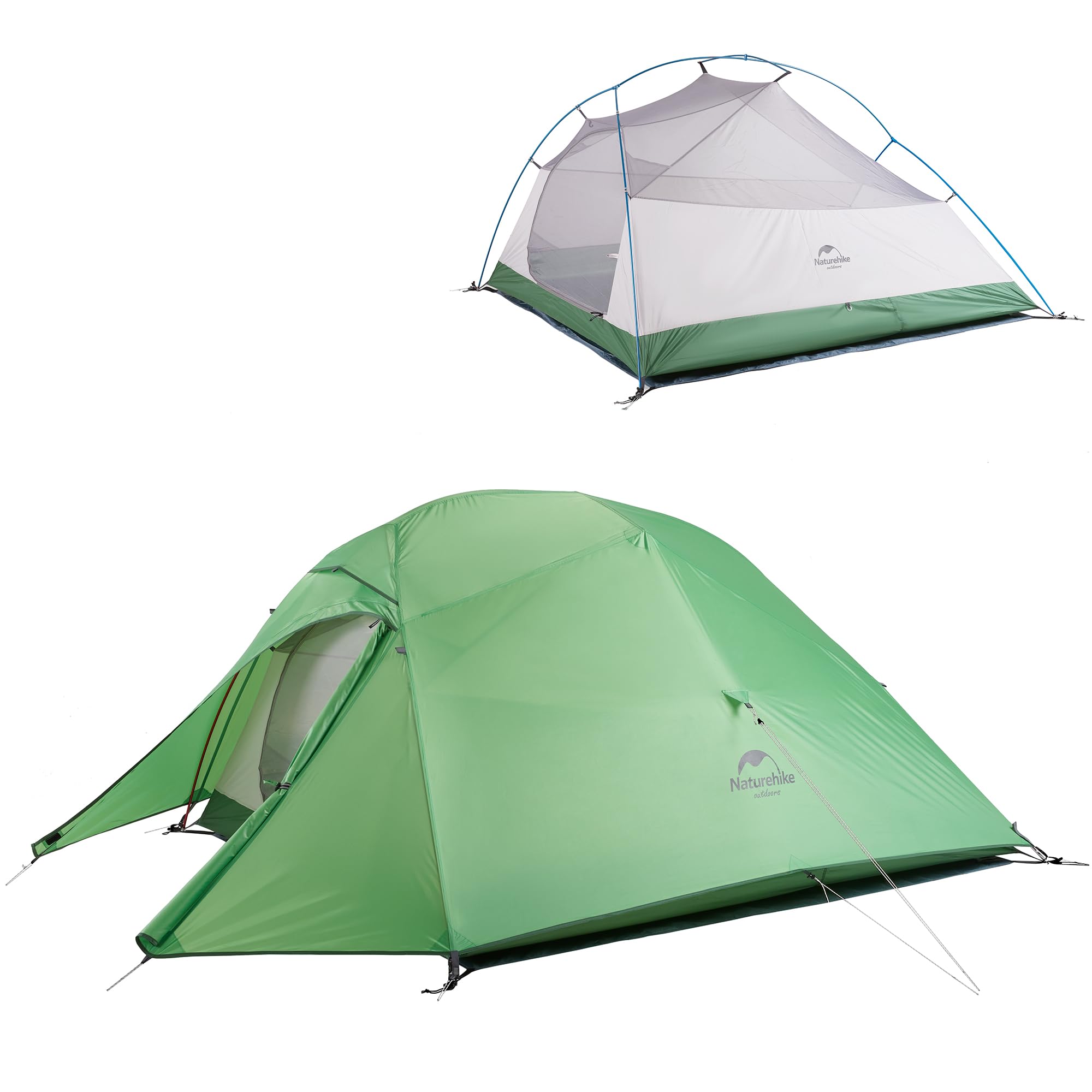
The Cloud Up 2 has earned the kind of community legitimacy that survives the post-purchase cold light. Real backpackers buy it, real backpackers keep it, and the gear forums stopped arguing about it three years ago. The freestanding pole structure pitches on platforms, slabs, packed dirt, and gravel where stake-dependent tents fail. Aluminum poles, factory-taped seams, silicone-coated nylon fly. The included footprint is a genuine value-add that most premium tents charge extra for.
The single-door layout is the real ergonomic compromise on multi-day trips. Your tent partner climbs over you to exit at night, every night. For two-door access, step up to the Big Agnes Copper Spur HV UL2. For solo trips where door geometry does not matter, the ALPS Lynx 1 is the right answer at a similar tier.
| Capacity | 2 person |
|---|---|
| Weight | 4.0 lb |
| Season | 3-season |
| Wall type | Double-wall |
| Doors | 1 |
| Freestanding | Yes |
| Rainfly | Full coverage |

Pros
- Real Marmot brand reputation and warranty
- Aluminum DAC-style poles
- Vestibule sized for two packs plus boots
- Factory-taped seams
- 5-year Marmot warranty
Cons
- Single-door layout
- Heavier than the Marmot Tungsten line
- Less ventilation than premium ultralight
Marmot is a serious outdoor brand, and the Crane Creek 2P delivers what the brand reputation promises. Real aluminum poles, factory-taped seams, full-coverage rainfly, and the kind of stitching quality that you notice when you compare it to budget tents in person. The vestibule is sized for two backpacks plus muddy boots, which sounds obvious but most mid-tier 2-person tents cheap out on vestibule depth.
The single-door layout is the compromise versus premium ultralight options. For two-door access at a lower tier, the ALPS Lynx 2 is the answer. For premium ultralight with two doors and DAC poles, the Big Agnes Copper Spur HV UL2 sits at the top of the lineup.
| Capacity | 2 person |
|---|---|
| Weight | 4.4 lb |
| Season | 3-season |
| Wall type | Double-wall |
| Doors | 1 |
| Freestanding | Yes |
| Rainfly | Full coverage |
Pros
- MSR engineering and decades of refinement
- 4-pole crossed-frame is wind-stable
- Premium materials throughout
- Lifetime MSR support
- Storm-tested geometry
Cons
- Premium-tier solo price
- Newer listing means lower review count
- Heavier than ultralight 1P alternatives
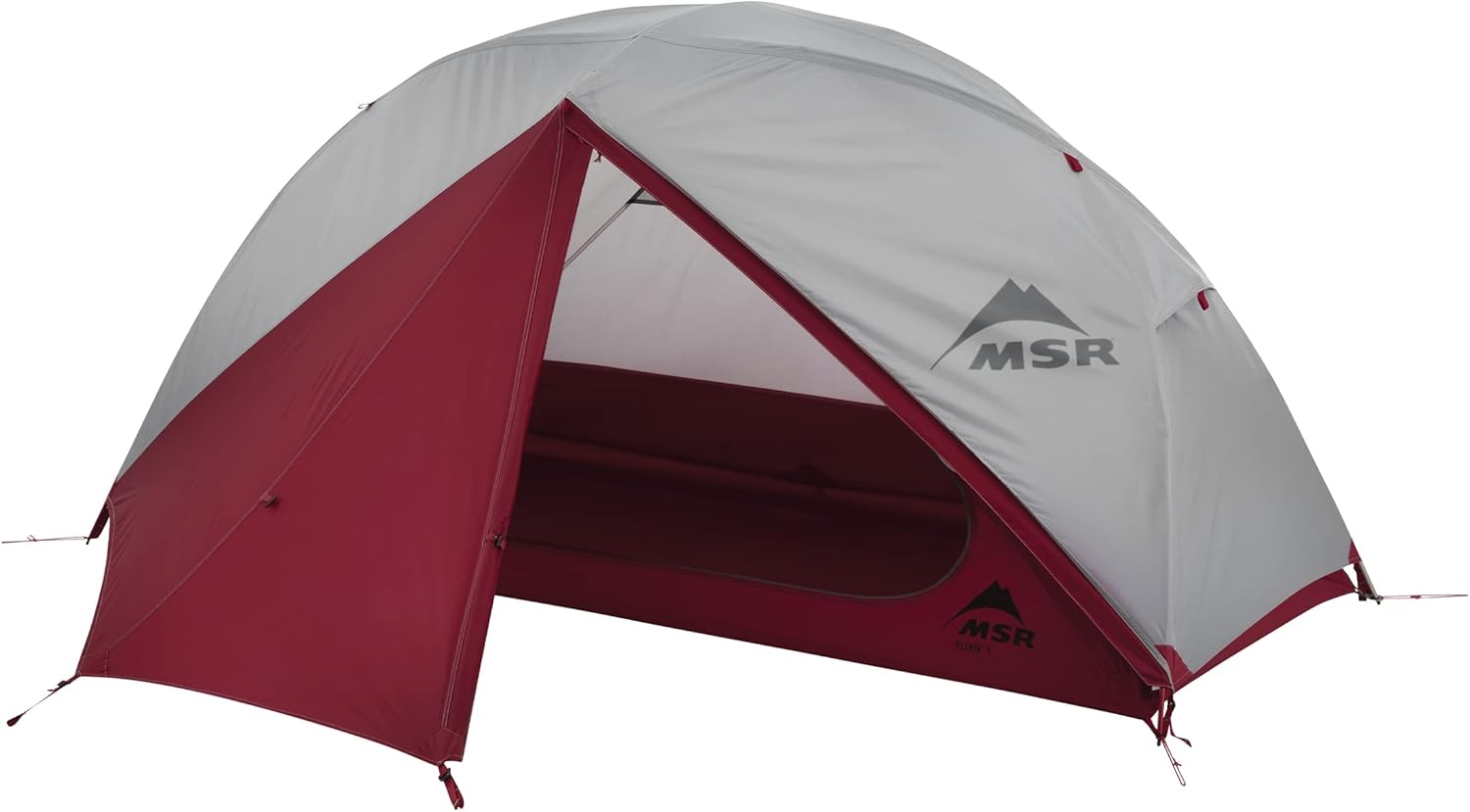
MSR is the gold standard for backpacking tent engineering, and the Elixir 1 is their entry-tier solo offering. The pole geometry, fabric tensioning, and seam construction reflect decades of MSR refinement. The Elixir line was designed specifically for buyers who wanted MSR build quality without the Hubba Hubba price ceiling. The 4-pole crossed-frame geometry is wind-stable in conditions that flatten cheaper solo tents.
Skip this if budget is the priority or if you only camp in fair weather. Casual buyers can save substantially with the ALPS Lynx 1 at acceptable quality. For storm-camping where the engineering matters, the MSR pole structure is the difference between a comfortable night and a 3am tent collapse.
| Capacity | 1 person |
|---|---|
| Weight | 4.5 lb |
| Season | 3-season |
| Wall type | Double-wall |
| Doors | 1 |
| Freestanding | Yes |
| Rainfly | Full coverage |
Best Ultralight & Trekking-Pole Tents
Two picks for thru-hikers and weight nerds. Big Agnes for the gold-standard freestanding ultralight, LANSHAN for the trekking-pole shelter that drops another pound and a half by ditching the poles entirely.
Best Premium Ultralight: Big Agnes Copper Spur HV UL2
Best Premium Ultralight
Pros
- Two doors and two vestibules for partner access
- High-volume sidewalls give sit-up headroom
- DAC pole structure (gold-standard alloy)
- Genuinely thru-hike-tested quality
- Premium fit-and-finish
Cons
- 15-denier ripstop pinholes from sticks
- Footprint sold separately (essential add)
- Premium-tier price
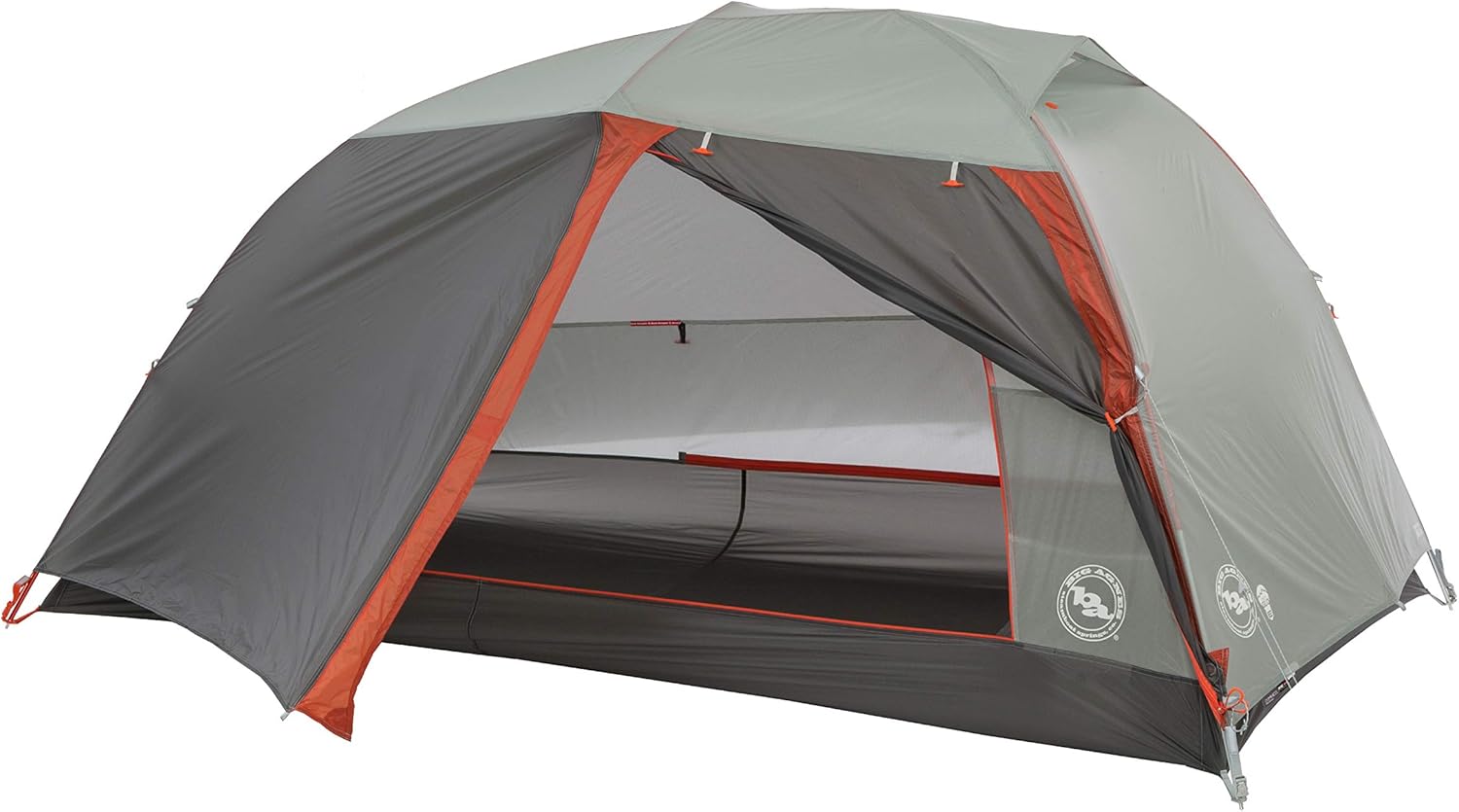
Two doors and two vestibules is the headline, but the underrated upgrade is the high-volume sidewall geometry. The HV designation means steeper near-vertical walls that give genuine sit-up headroom and let two adults change clothes without unzipping the door. The materials are intentionally minimal though: 15-denier ripstop is paper-thin and pinholes if a stick presses against the floor during a windy night. This is the price you pay for the weight savings.
Buy the matching footprint when you buy the tent. Without ground protection, the floor lifespan is two to three seasons of regular use. With it, the tent goes eight to ten years and outlasts most of the gear in your kit. For value-tier ultralight without the materials fragility, the Naturehike Cloud Up 2 covers most of the use case at a fraction of the price.
| Capacity | 2 person |
|---|---|
| Weight | 3.2 lb |
| Season | 3-season |
| Wall type | Double-wall |
| Doors | 2 |
| Freestanding | Yes |
| Rainfly | Full coverage |
Pros
- Sub-2 lb packed weight
- Trekking-pole pitch saves dedicated pole weight
- Cottage-industry backpacking community trust
- Two doors despite single-wall
- Value-tier alternative to Tarptent and Zpacks
Cons
- Single-wall accumulates condensation on cold nights
- Setup learning curve on the first few pitches
- Requires trekking poles to pitch
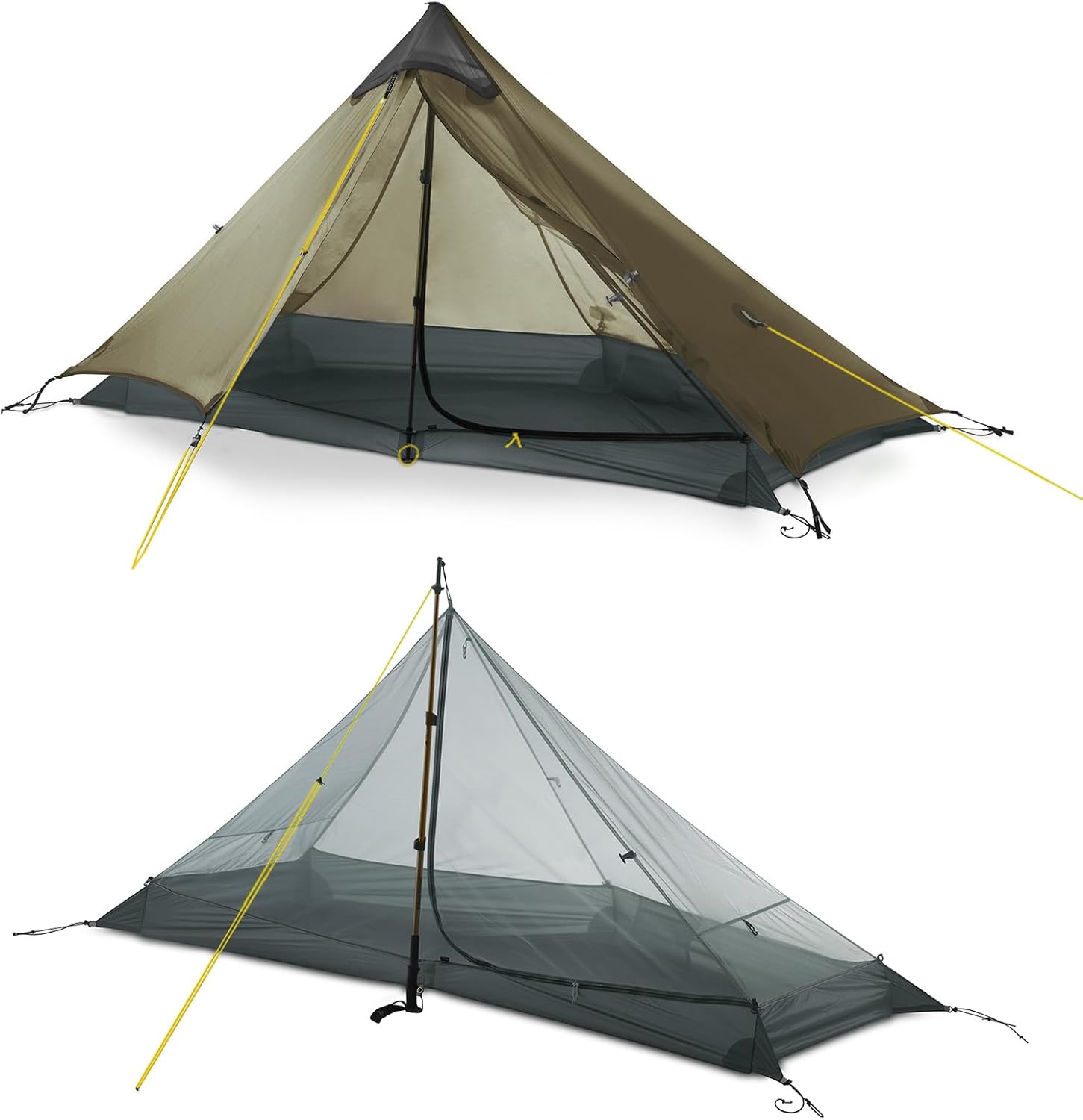
LANSHAN is the cottage-industry value alternative to Tarptent and Zpacks. Trekking-pole pitch saves the weight of dedicated tent poles, and the single-wall silicone-coated nylon construction puts the packed weight under two pounds. Thru-hikers have adopted it as the budget-tier alternative to premium options that cost three to four times as much. The setup learning curve is real: the first three pitches will feel awkward, the fourth will click, and after that it sets up faster than freestanding designs.
Skip this if you do not already use trekking poles, or if condensation tolerance is low. Single-wall tents accumulate condensation on cold nights, and you will wake to damp interior walls more often than with double-wall designs. For freestanding ultralight at a higher tier, the Big Agnes Copper Spur HV UL2 avoids the condensation issue entirely.
| Capacity | 2 person |
|---|---|
| Weight | 2.0 lb |
| Season | 3-season |
| Wall type | Single-wall |
| Doors | 2 |
| Freestanding | No (trekking poles) |
| Rainfly | Integrated single-wall |
Best Solo (1-Person) Backpacking Tents
Two solo-specific picks at the value tier. The Lynx 1 is the workhorse solo tent that has been on Amazon longer than most brands have existed, the Discovery Trail is Kelty’s modern budget answer with a sit-up peak.

Pros
- Aluminum pole structure
- Lifetime ALPS warranty
- Vestibule sized for pack and boots
- Single-pole geometry sets up fast
- Interior gear loft included
Cons
- 87-inch floor length limits hikers over 6’2″
- Single-door is standard for solo tents
- Lower headroom than newer ultralight
ALPS Mountaineering builds at a price-to-quality ratio that frustrates the premium brands. The Lynx 1 is feature-rich for solo backpacking: vestibule for pack and boots, interior gear loft, factory-taped seams, aluminum pole structure. The single-pole geometry sets up fast and is hard to do wrong, even when you arrive at camp tired and in fading light. The lifetime warranty is worth knowing about: ALPS will repair or replace pole sections, fly damage, and zipper failures for the original owner.
The footprint is short though, at 87 inches of floor length. Hikers over 6’2 will press against the foot end with a normal sleeping pad. For taller solo hikers, the MSR Elixir 1 has a longer footprint at the premium tier. For two-person trips at similar quality, the Naturehike Cloud Up 2 handles both hikers freestanding.
| Capacity | 1 person |
|---|---|
| Weight | 3.8 lb |
| Season | 3-season |
| Wall type | Double-wall |
| Doors | 1 |
| Freestanding | Yes |
| Rainfly | Full coverage |
Pros
- Real Kelty brand at first-tent pricing
- Aluminum poles, full rainfly
- Decades of Kelty construction refinement
- Factory-sealed seams
- Honest entry-level pricing
Cons
- Entry-level Kelty (not the Late Start tier)
- Heavier than premium 1P tents
- Single-door layout
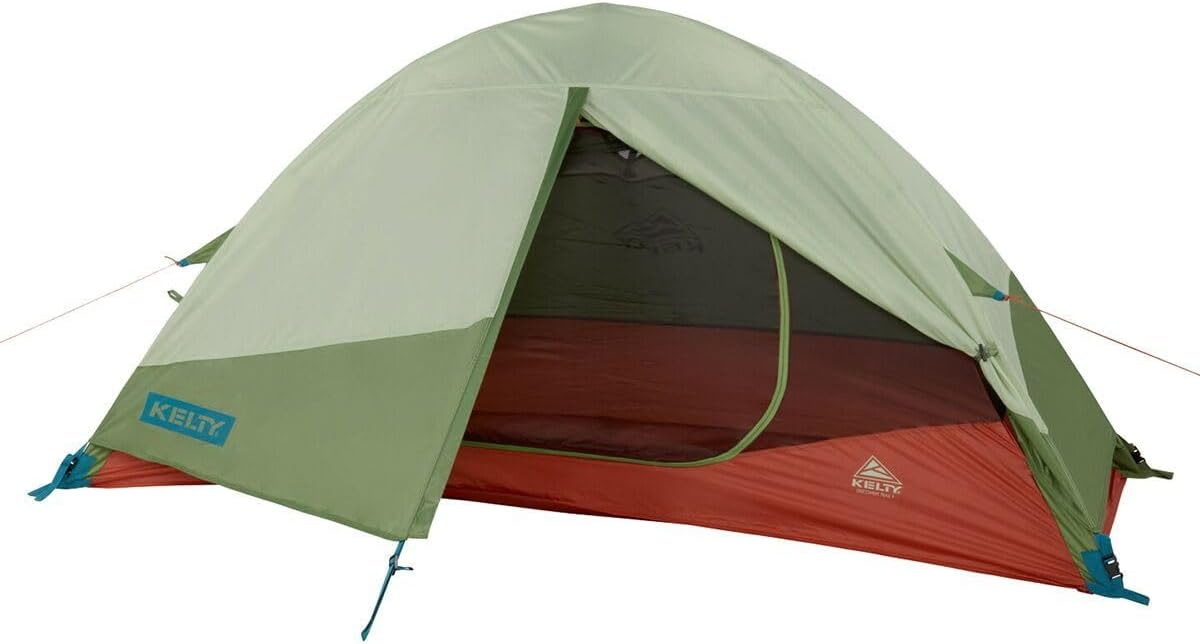
The Kelty Discovery Trail is the entry-level Kelty product, and that matters: Kelty has been making backpacking tents since 1952, and even their entry-tier line inherits decades of construction refinement. Aluminum poles, full-coverage rainfly, factory-sealed seams. The price tier puts it within reach of first-time backpackers without the build-quality compromises of generic budget tents.
Skip this for hiking partners who already own real backpacking tents. The Discovery line is intentionally entry-level; experienced backpackers should step up to the Kelty Late Start or premium ultralight options. For first-tent buyers who want a recognized outdoor brand at honest pricing, this is the right answer.
| Capacity | 1 person |
|---|---|
| Weight | 3.5 lb |
| Season | 3-season |
| Wall type | Double-wall |
| Doors | 1 |
| Freestanding | Yes |
| Rainfly | Full coverage |
Best 2-Person Freestanding Tents
Two 2P picks below the ultralight tier. The Lynx 2 carries ALPS reliability, the COSMITTO is OneTigris’s bushcraft-friendly option for buyers who want a more durable build than the typical 2P.
Pros
- Two real doors solves the partner-exit problem
- Wider footprint than the Lynx 1
- ALPS lifetime warranty
- Aluminum poles, factory-taped seams
- Two vestibules for pack storage
Cons
- Heavier than premium ultralight
- Double-wall construction adds weight
- Single-pole hub is the wear point
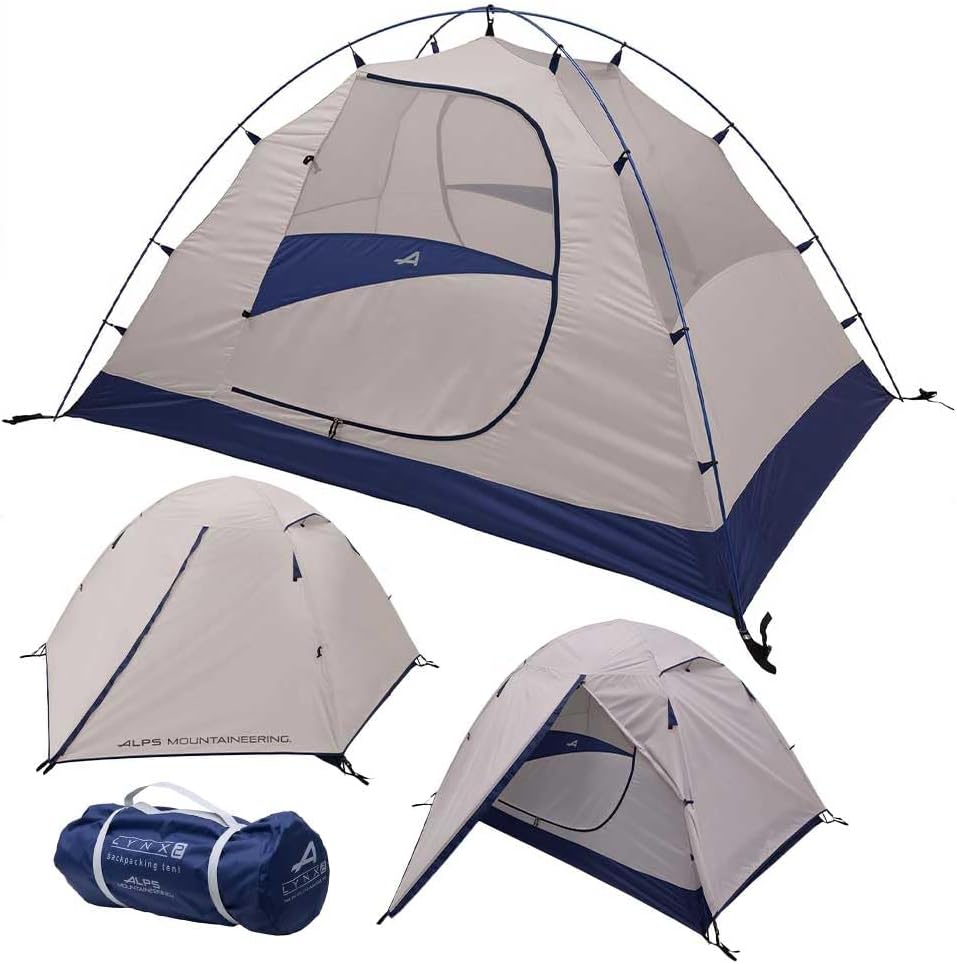
The Lynx 2 is the sibling design to the Lynx 1, with a wider footprint and a real second door so the partner-exit problem disappears. Same ALPS aluminum pole construction, same lifetime warranty, same factory-taped seams. The 2-person rating is honest: two adults fit comfortably with their packs in the vestibule, and three is genuinely possible for a single night with a smaller hiker tucked between two larger ones.
Skip this for ultralight thru-hike weight goals. The double-wall construction adds weight that single-wall trekking-pole tents avoid. For gram-counting thru-hikes, the LANSHAN is the dedicated lightweight answer. For premium ultralight at thru-hike grade, you are stepping up to the Big Agnes Copper Spur HV UL2.
| Capacity | 2 person |
|---|---|
| Weight | 5.5 lb |
| Season | 3-season |
| Wall type | Double-wall |
| Doors | 2 |
| Freestanding | Yes |
| Rainfly | Full coverage |
Pros
- Two doors despite semi-freestanding pitch
- Bushcraft community adopted
- Generous mesh inner
- Full-coverage rainfly
- Honest design philosophy
Cons
- Semi-freestanding needs stake points
- Lighter floor fabric than premium
- Less weather-tight than full freestanding
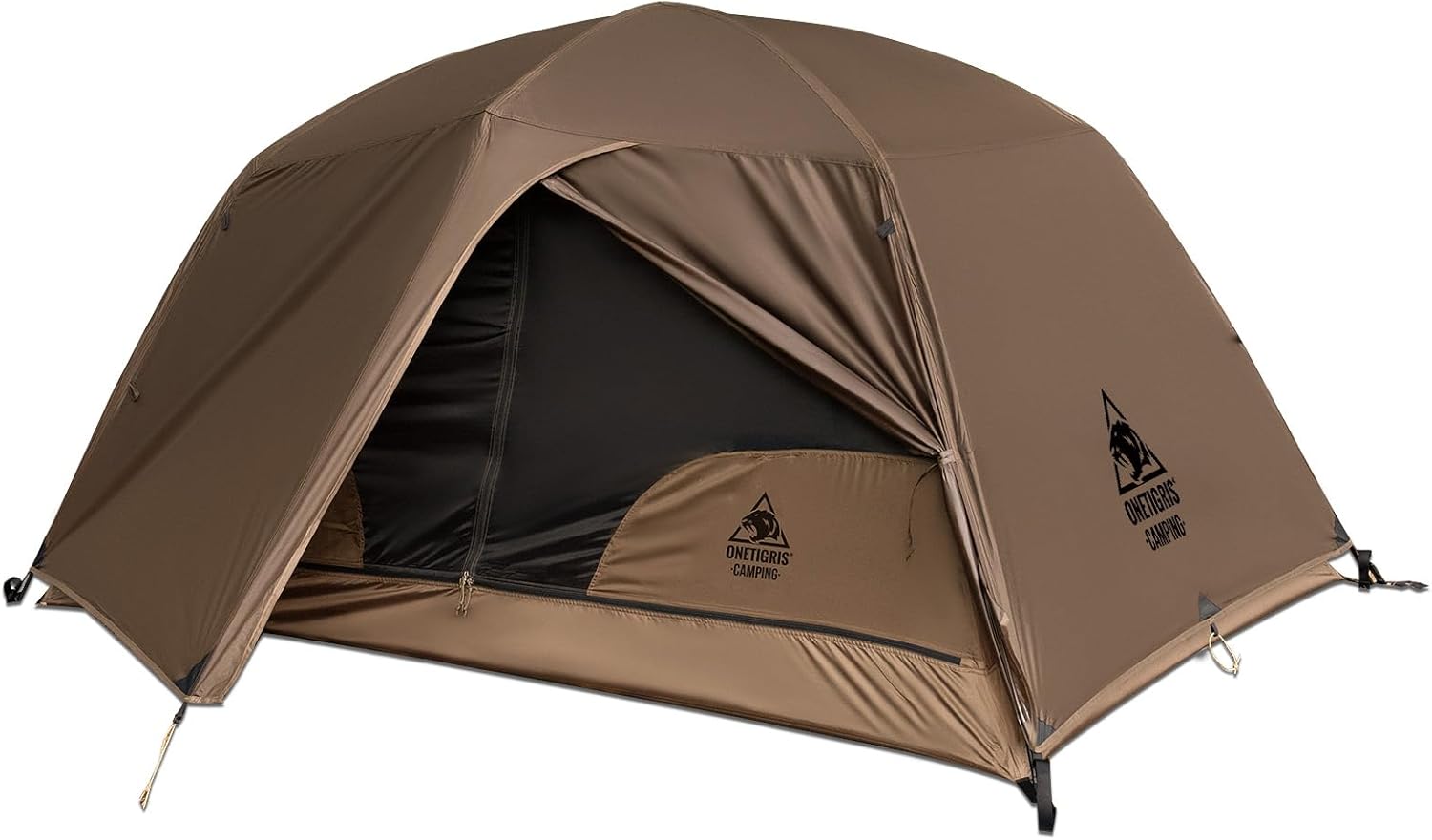
OneTigris COSMITTO is the bushcraft community’s adopted answer. The 2-door semi-freestanding design splits the difference between traditional double-wall tents and trekking-pole shelters. The mesh inner is generous; the rainfly is sized for actual rain protection rather than just spec compliance. The bushcraft and tarp-camping community has adopted it because the design philosophy matches their use case better than conventional backpacking tents.
Skip this if you want true freestanding pitch on platforms. The semi-freestanding geometry needs at least four stake points to fully tension. For platform pitch, the Naturehike Cloud Up 2 is the right answer. For ultra-minimalist tarp-shelter use, OneTigris’s tarp products are the next step.
| Capacity | 2 person |
|---|---|
| Weight | 3.5 lb |
| Season | 3-season |
| Wall type | Double-wall |
| Doors | 2 |
| Freestanding | Semi-freestanding |
| Rainfly | Full coverage |
Best Group (3P/4P) Backpacking Tents
Three picks for groups that prefer one tent over two. Kelty Late Start for the genuine 4-person backpacker that splits across packs, Forceatt for the value tier, Clostnature for the scalable budget option that ranges 1P through 6P.

Pros
- Color-coded Quickcorners simplify setup
- Aluminum pole sections are field-repairable
- Full-coverage rainfly with vestibule
- 4-person rating is honest for 3 hikers plus gear
- Kelty brand reputation
Cons
- Single-door for 4 sleepers is awkward
- Tight at full 4-person capacity
- Heavier than splitting two 2P tents in some cases
Kelty’s color-coded Quickcorners are the underrated feature that matters most after a long hiking day: pole tips and corner pockets are matched colors, so setup in low light or fading energy is genuinely fool-proof. The aluminum pole sections (not fiberglass) mean you can field-repair if a pole breaks on trail; carry a spare pole sleeve and you have full self-rescue capability. The 4-person rating fits three hikers with their packs comfortably; pushing to four means sleeping bags touching all night.
Skip this for solo trips or wind-exposed alpine sites. The single-door layout creates partner-exit awkwardness, and the rectangular footprint will not fit on tight tent platforms. For solo trips, the ALPS Lynx 1 is right-sized. For weight savings at the premium tier, the Big Agnes Copper Spur HV UL2 is the dedicated answer.
| Capacity | 4 person |
|---|---|
| Weight | 6.6 lb |
| Season | 3-season |
| Wall type | Double-wall |
| Doors | 1 |
| Freestanding | Yes |
| Rainfly | Full coverage |

Pros
- Aluminum poles at the budget tier
- Factory-taped seams
- 2-3 person flexibility is genuine
- Full-coverage rainfly
- Vestibule for packs
Cons
- Smaller vestibule than premium tents
- Lighter floor fabric than premium
- Generic brand without long warranty
Forceatt is a budget-tier brand that has earned legitimacy through honest construction. The 2-3 person tent uses aluminum poles, factory-taped seams, and a full-coverage rainfly with vestibule. The 2-3 person flexibility is genuine: two adults fit comfortably with packs, three adults fit shoulder-to-shoulder for a single night. The build quality at the budget tier is the price-to-performance benchmark in this category.
The vestibule is smaller than premium tents, and the floor fabric is lighter weight. Both are tradeoffs you can live with at this tier. For a step up in materials, the Clostnature Lightweight is at a similar price tier with a more proven track record. For brand-name confidence, the ALPS Lynx 2 is the next step up.
| Capacity | 2-3 person |
|---|---|
| Weight | 5.0 lb |
| Season | 3-season |
| Wall type | Double-wall |
| Doors | 1 |
| Freestanding | Yes |
| Rainfly | Full coverage |
Best Scalable Budget: Clostnature Lightweight 1-6P
Best Scalable Family Trail Tent
Pros
- Real aluminum poles, not fiberglass
- Factory-taped seams
- Full-coverage rainfly with vestibule
- 1, 2, 3, 4, and 6-person variants are real
- Best price-to-quality in the budget tier
Cons
- Standard guy-out cords need replacement after 2-3 seasons
- Newer brand with shorter track record
- Vestibule smaller than premium tents
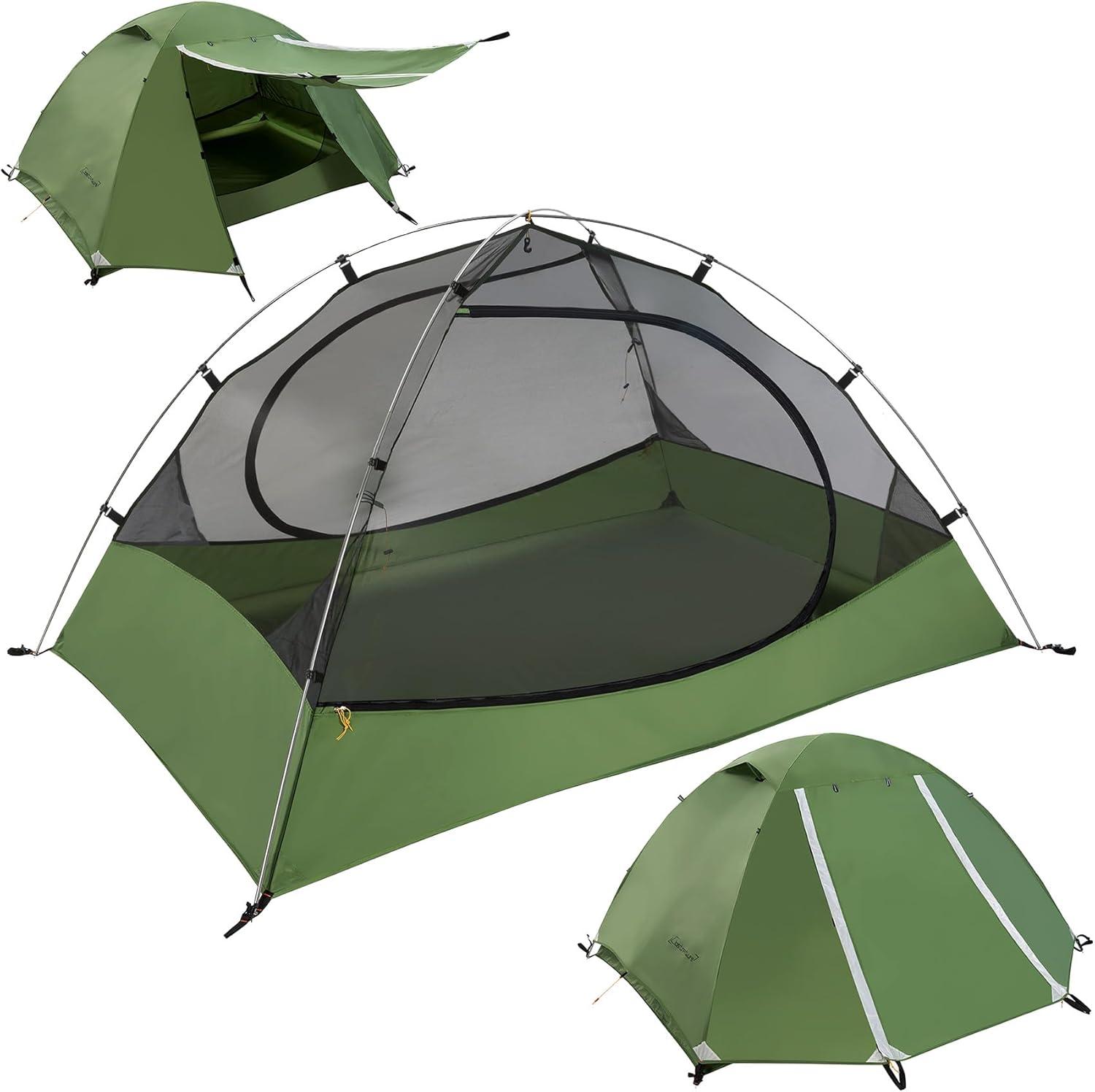
Clostnature has earned its reviews honestly. The lightweight backpacking tent uses aluminum (not fiberglass) poles, factory-taped seams, and a full-coverage rainfly with vestibule. At the budget tier, you are getting build quality that competes with tents twice the price. The 1, 2, 3, 4, and 6-person variants are real: Clostnature scales the design, not just the marketing copy. The 2-person variant fits two adults with their packs comfortably.
The single weakness is the fly tension system. The standard guy-out points are thinner cord than premium tents use, and they will need replacing after two or three seasons of heavy use. Carry replacement cord on long trips. For a step up in materials and warranty support, the ALPS Lynx 1 or Lynx 2 are the right answer at a higher tier.
| Capacity | 1 to 6 person variants |
|---|---|
| Weight | 4.5 lb (2P) |
| Season | 3-season |
| Wall type | Double-wall |
| Doors | 1 |
| Freestanding | Yes |
| Rainfly | Full coverage |
Best 4-Season & Hot Tent Backpacking
Two shoulder-season-and-winter shelters. GEERTOP for the genuine 4-season backpacker at sub-7-pound weight, the Tipi Hot Tent for stove-pipe winter camping where heat changes the math entirely.
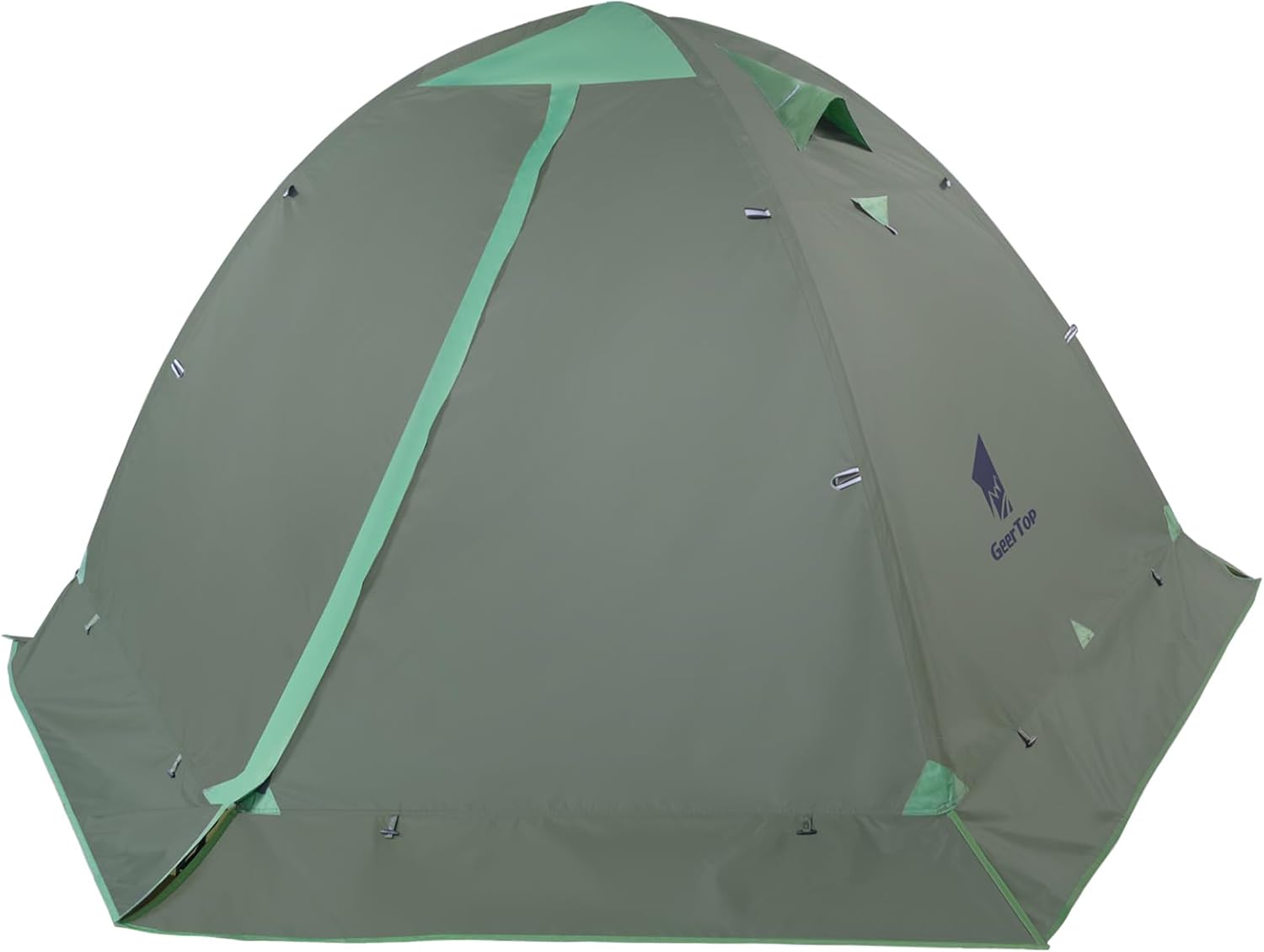
Best 4-Season Backpacker: GEERTOP Ultralight 4-Season 2P
Best 4-Season at Honest Pricing
Pros
- Legitimate 4-season at value-tier pricing
- Pole structure handles real snow load
- Reduced mesh prevents spindrift
- Two doors, two vestibules
- Aluminum poles
Cons
- Runs warm in summer (reduced ventilation)
- Heavier than 3-season equivalents
- Brand newer than Hilleberg or Black Diamond
The GEERTOP Ultralight 4-Season fills a real gap in the market. Quality 2-person 4-season tents from established brands like Hilleberg, Black Diamond, and NEMO sit in premium territory. GEERTOP has earned trust in the winter-backpacking community for delivering legitimate snow-load capacity at the value tier. The pole structure handles real snow accumulation, and the reduced mesh prevents spindrift from blowing into the tent body.
The 4-season rating is not 4-summer. The tent runs warm in summer because the reduced ventilation that protects you in winter traps heat in July. For 3-season backpacking, you want the Naturehike Cloud Up 2 or ALPS Lynx 2. For dedicated alpine winter mountaineering at the highest tier, you are looking at Hilleberg territory at multiple times this price.
| Capacity | 2 person |
|---|---|
| Weight | 5.5 lb |
| Season | 4-season |
| Wall type | Double-wall |
| Doors | 2 |
| Freestanding | Yes |
| Rainfly | Full coverage |

Pros
- Real stove jack accepts wood-burning camp stoves
- Center-pole tipi sheds wind and snow
- 4-person capacity for hunting/group trips
- Affordable versus canvas wall tent alternatives
- True 4-season capability
Cons
- Single-pole tipi geometry is steep-walled
- Setup requires interior pole tensioning
- Build quality is honest entry-tier, not premium-brand polish
The 4-person tipi with stove jack is a specialist tool. For winter base camps, hunting trips, and group expeditions where the heated shelter is the actual point, this is the right answer at a tier well below canvas wall tents. The center-pole tipi geometry sheds wind and snow load that flatten conventional pole tents. The stove jack accepts small titanium camp stoves that turn the shelter into a heated sleeping space at -20°F.
Skip this if you do not actually plan to use the stove jack. Without the wood stove, you are paying for a single-wall canvas-style shelter that other tents do better. For 3-season backpacking, the GEERTOP Ultralight 4-Season is the right answer at a similar price. For dedicated 4-season alpine use without the stove, you are looking at Hilleberg or Black Diamond.
| Capacity | 4 person |
|---|---|
| Weight | 5.0 lb |
| Season | 4-season |
| Wall type | Single-wall canvas |
| Doors | 1 |
| Freestanding | No (center pole) |
| Rainfly | Integrated canvas |
Best Budget Backpacking Tent
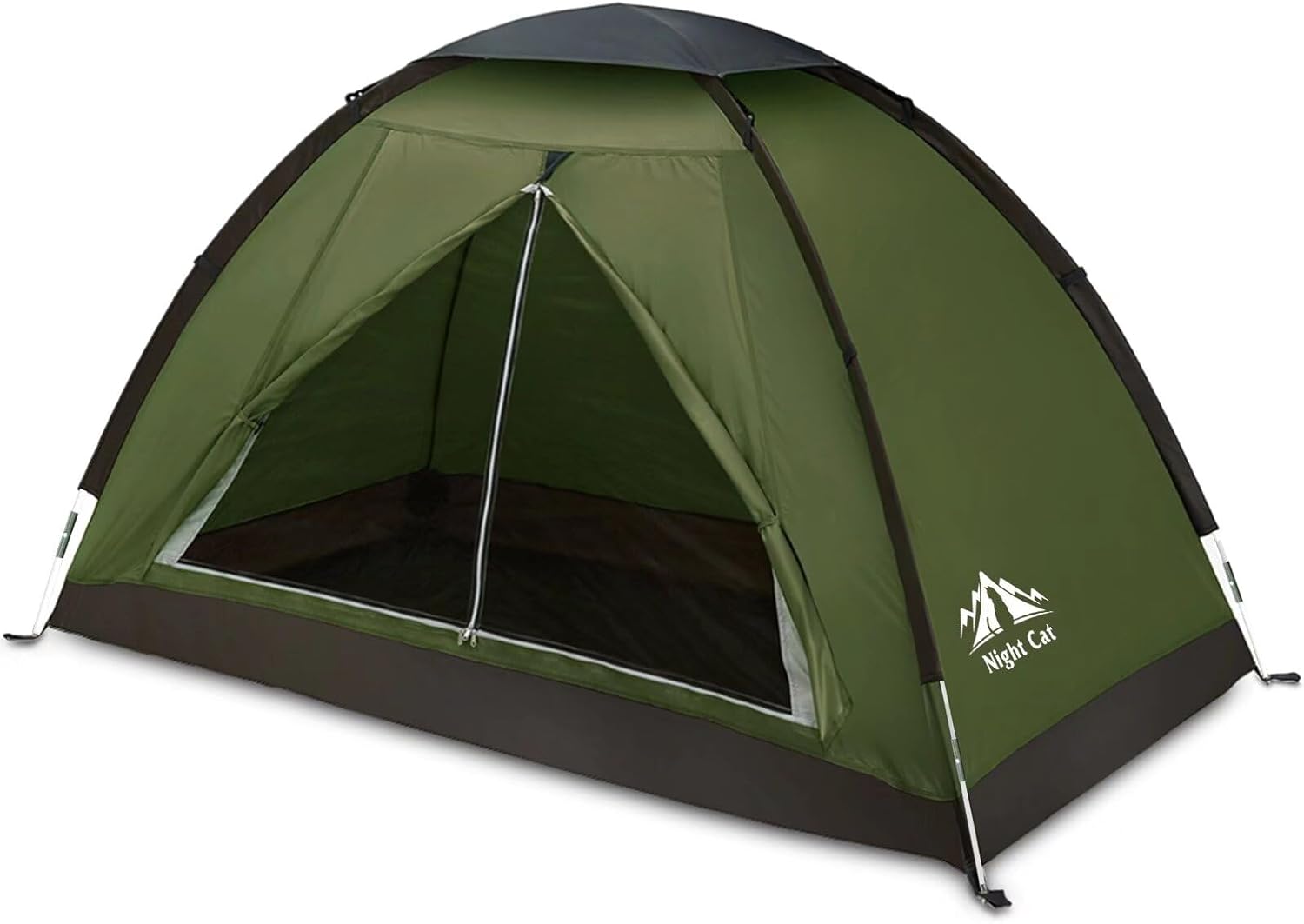
One pick at the absolute price floor. The Night Cat is what we recommend to friends who want to test backpacking without committing to a real-money purchase, and it punches above its price for fair-weather trips.
Pros
- Genuinely usable at the lowest tier
- Aluminum-alloy poles avoid fiberglass cracks
- Acceptable casual-use durability
- Full setup in 10 minutes
- Workable for occasional trips
Cons
- 2-3 year tent, not 10-year
- Partial-coverage rainfly leaks in storms
- Not for serious backcountry trips
Night Cat at the ultra-budget tier is genuinely usable for occasional backpacking and weekend trips. The construction is honest entry-level: aluminum-alloy poles (not fiberglass), basic factory seams, partial rainfly. Treat it as a 2-to-3-year tent, not a 10-year tent. The fiberglass alternatives at this tier crack at the ferrules within a season; Night Cat avoids this by using proper aluminum.
Skip this for serious backcountry trips or sustained wet-weather camping. Tent failure has real consequences when you are 20 miles from the trailhead. For first-time backpackers planning to camp regularly, the Clostnature Lightweight at twice the price is a much better long-term investment. For occasional backyard, festival, and beginner trips, this is the right answer at a tier that does not punish learning.
| Capacity | 1-2 person |
|---|---|
| Weight | 3.5 lb |
| Season | 3-season |
| Wall type | Double-wall |
| Doors | 1 |
| Freestanding | Yes |
| Rainfly | Full coverage |
Full comparison table: best backpacking tent
Sort by trail score, weight, capacity, or price. Tap the column headers to re-rank the table. The table scrolls horizontally on small screens.
| Tent | Award | Trail score | Weight | Capacity | Season | Rating | Price | |
|---|---|---|---|---|---|---|---|---|
|
Big Agnes Copper Spur HV UL2 | Best Premium Ultralight | 87 | 3.2 lb | 2 person | 3-season | 4.7 (339) | $439 |
|
Naturehike Cloud Up 2 | Best Overall Value | 86 | 4.0 lb | 2 person | 3-season | 4.6 (896) | $111 |
|
ALPS Mountaineering Lynx 1 | Best Solo Workhorse | 86 | 3.8 lb | 1 person | 3-season | 4.7 (901) | $114 |
|
Marmot Crane Creek 2P | Best Mid-Tier 2P | 84 | 4.4 lb | 2 person | 3-season | 4.6 (1,126) | $229 |
|
LANSHAN Ultralight 2P | Best Trekking-Pole UL | 84 | 2.0 lb | 2 person | 3-season | 4.2 (873) | $149 |
|
ALPS Mountaineering Lynx 2 | Best 2P Value | 84 | 5.5 lb | 2 person | 3-season | 4.7 (1,047) | $149 |
|
GEERTOP Ultralight 4-Season 2P | Best 4-Season Backpacker | 84 | 5.5 lb | 2 person | 4-season | 4.5 (2,520) | $117 |
|
Kelty Discovery Trail | Best Solo Budget | 83 | 3.5 lb | 1 person | 3-season | 4.6 (196) | $119 |
|
OneTigris COSMITTO 2P | Best Bushcraft 2P | 83 | 3.5 lb | 2 person | 3-season | 4.7 (493) | $179 |
|
Clostnature Lightweight 1-6P | Best Scalable Budget | 83 | 4.5 lb (2P) | 1 to 6 person variants | 3-season | 4.6 (2,929) | $68 |
|
MSR Elixir 1 | Best Premium Solo | 82 | 4.5 lb | 1 person | 3-season | 4.7 (116) | $359 |
|
Kelty Late Start 4P | Best 4P Backpacker | 81 | 6.6 lb | 4 person | 3-season | 4.7 (787) | $209 |
|
Forceatt 2-3 Person | Best 2-3P Budget | 81 | 5.0 lb | 2-3 person | 3-season | 4.6 (1,890) | $62 |
|
4P Tipi Hot Tent with Stove Jack | Best Hot Tent for Trail | 81 | 5.0 lb | 4 person | 4-season | 4.1 (680) | $209 |
|
Night Cat 1-2P | Best Sub-$50 Tent | 79 | 3.5 lb | 1-2 person | 3-season | 4.3 (3,720) | $32 |
How We Test Backpacking Tents in Oregon
Every tent on this page sat in real Oregon trail conditions. Cascade ridgelines, high desert, Crater Lake nights, and Pacific Northwest shoulder-season rain. Each tent earns a 100-point trail score across five weighted categories.
-
25%Weather
Sustained Pacific Northwest rain and wind on exposed ridgelines
We pitch every tent through at least one Cascade downpour and one 20+ mph alpine wind night. We measure how much water reaches the floor, whether seams weep, whether the rainfly sags into the body in driving rain, and whether condensation builds inside the inner tent. The tent that stays dry and dry-feeling on a five-day shoulder-season trip earns the 9 plus rating in this category.
-
25%Weight
Real packed weight, not minimum trail weight
Marketed weights and minimum trail weights are reliably optimistic and exclude stakes, guy lines, or stuff sacks. We weigh the full as-shipped kit and score against the realistic use case. A 3.5-pound 2P tent that drops to 2.5 pounds with footprint left at home is real. A 2-pound advertised weight that is actually 3 pounds with everything you need is not.
-
20%Setup
Pitch in fading light after a long mileage day, on uneven ground
We time setup with a stopwatch, both two-person and solo, after dropping packs at the end of a 12+ mile day. Bonus for color-coded poles and clip-on construction. Penalty for any tent that requires reading instructions on the third try. Penalty for tents that demand specific ground anchors to stay standing. The tent that pitches in five minutes from a fatigued backpacker earns the high score here.
-
15%Build
What survives the season and what fails first
Pole material (DAC vs no-name aluminum vs fiberglass), fabric denier, waterproof rating in millimeters, zipper brand, seam-tape integrity, floor durability against rocky alpine ground. We look at long-term review patterns on Amazon for the failure modes that emerge after 30+ trail nights. DAC poles beat unbranded aluminum. YKK zippers beat unbranded zippers. Bathtub-style PU-coated floors beat flat-stitched floors.
-
15%Value
Dollars per backcountry night
Price is meaningful only relative to expected lifespan and use rate. A $100 tent that lasts two seasons of weekend use costs more per night than a $440 tent that lasts a decade of regular trips. We score against this real-world math, not against the sticker price alone. Brand support, replacement-parts availability, and warranty path all factor into the long-term math.
Anatomy of a Backpacking Tent
Six parts decide whether a tent earns its place in your pack or gets sold off after one trip. Knowing what to look at on the spec sheet saves you weight, money, and a wet night above tree line.
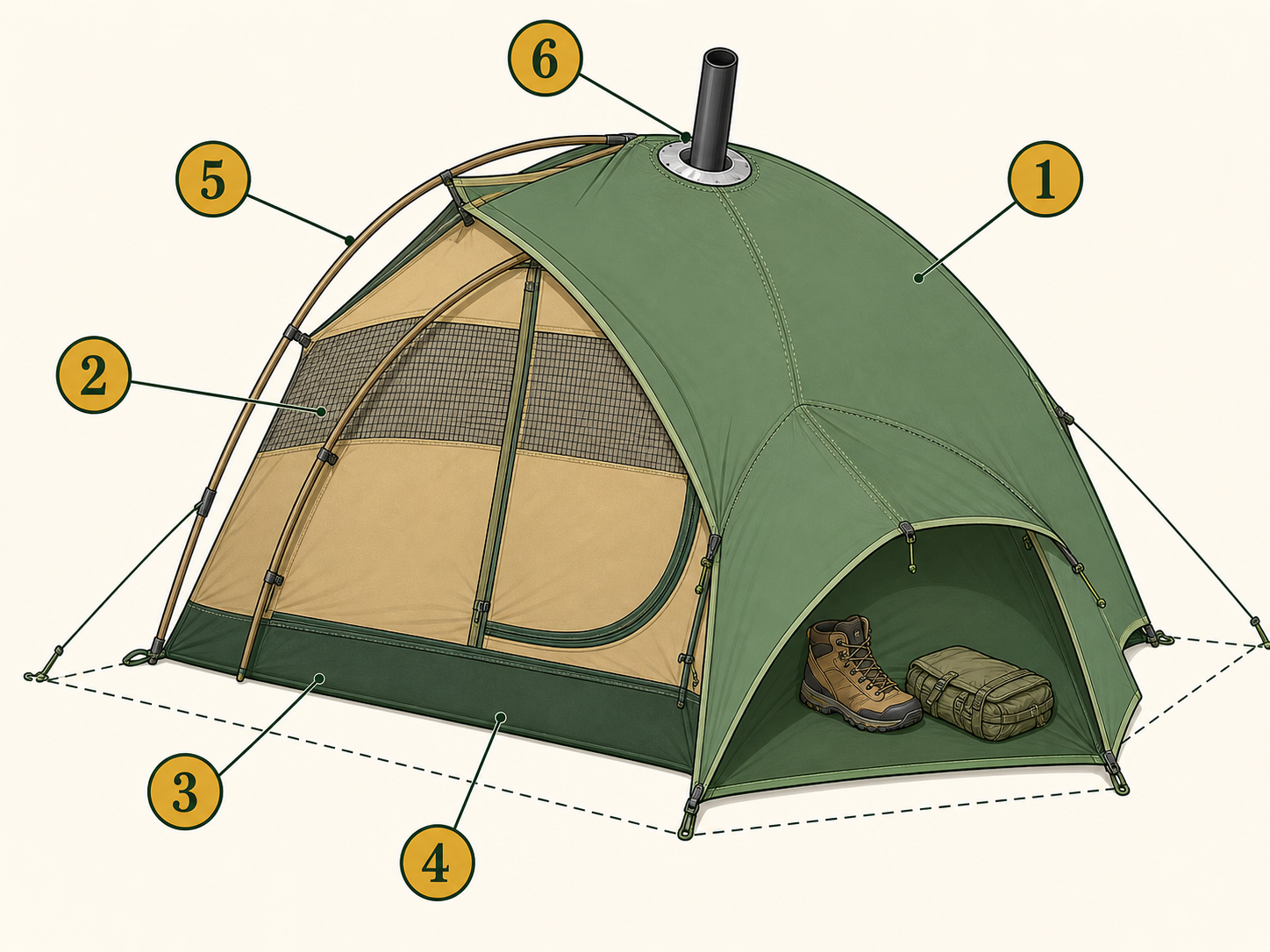
- Rainfly
- The outer waterproof layer. Full-coverage flies that reach the ground beat partial flies that leave sidewalls exposed. PU3000+ rating handles real Cascade rain, anything below PU2000 will weep in sustained downpours.
- Mesh inner tent
- The inner shelter, often partial mesh for ventilation. Body fabric denier matters more than rainfly denier for tent longevity. 20D nylon is ultralight standard, 70D is heavy-duty for alpine. More mesh equals more ventilation but more cold-weather penalty.
- Vestibule
- The covered porch zone outside the door for boots and packs. A genuine vestibule adds usable square footage and keeps wet gear out of the inner tent. Two-door 2P tents typically have two smaller vestibules, one per occupant.
- Bathtub floor
- The waterproof tent floor that walls up several inches around the perimeter. The wall-up height matters more than the rated waterproof number. PU5000+ floor coatings handle pressure from sleeping bodies, lighter floors weep at pressure points.
- Pole structure
- Aluminum (DAC, 7001 alloy) outperforms fiberglass for both wind and longevity. Trekking-pole shelters skip the dedicated poles entirely, dropping weight at the cost of pitch flexibility. Hub-and-pole geometry gives the best volume-to-weight ratio for freestanding tents.
- Footprint & stake points
- Stake points distribute pole tension across the perimeter, the more attachment points, the more stable the tent in wind. A separate ground footprint extends floor life dramatically on rocky alpine sites and is the cheapest tent upgrade you can make.
How to Choose a Backpacking Tent
Five decisions narrow the field from hundreds of Amazon listings to the right tent for your trips. Walk through them in order.
1. Capacity: pair with the partner you actually backpack with
A 2-person backpacking tent fits two people shoulder-to-shoulder with packs in the vestibules. Solo backpackers who want elbow room should buy a 2P and use it as a 1.5P. Couples who switch off pack contents may find 2P tight after three days, consider sizing up. The 4P tents on this page are genuinely group shelters that split across two packs, not just larger 2Ps.
2. Weight: match the tent to the trip length
For weekend trips up to 30 miles, 4 to 5 pounds packed is fine. For thru-hikes and multi-week trips, every ounce above 3 pounds compounds. The Big Agnes Copper Spur and LANSHAN sit in the sub-3-pound category. The Marmot, MSR, ALPS, and OneTigris picks sit in the 4 to 5 pound bracket. Heavier tents are not worse, they trade weight for durability or interior volume.
3. Pole material: DAC for premium, 7001 aluminum for value
DAC (the Korean pole maker MSR and Big Agnes use) is the gold standard for backpacking poles. 7001 aluminum from value brands is fine for 3-season weekend use. Trekking-pole shelters skip the question entirely by using your hiking poles as tent poles, dropping a pound or more at the cost of needing trekking poles in your kit.
4. Wall construction: double-wall for condensation, single-wall for weight
Double-wall tents have a separate inner mesh body and outer rainfly with airspace between, which manages condensation by letting moist air escape through the mesh before condensing on the cold fly. Single-wall ultralight tents save weight at the cost of waking up to interior moisture in cold conditions. For Pacific Northwest shoulder seasons, double-wall is generally the right call.
5. Season rating: 3-season for most, 4-season for alpine
3-season backpacking tents handle spring, summer, and fall use including normal rain and wind. 4-season tents add storm flaps, heavier-denier fabrics, smaller mesh panels, and stronger pole structures designed for snow loads and sub-freezing conditions. Most backpackers need a 3-season tent. If you push into shoulder season above 6,000 feet or the high alpine, the 4-season is worth the weight premium. Hot tents are a winter-specific category for stove-pipe heated camping.
Solo backpacker, weekend trips
ALPS Lynx 1 or Kelty Discovery Trail. Reliable, sub-$130, fast pitch.
2-person, value tier
Naturehike Cloud Up 2. Footprint included, real backpacking weight.
2-person, ultralight thru-hike
Big Agnes Copper Spur HV UL2. Sub-3 pound, DAC poles, the benchmark.
Group of 4, one-tent backpacking
Kelty Late Start 4P. Splits across two packs, real 4-person interior.
Shoulder-season alpine
GEERTOP 4-Season 2P. Real 4-season build at sub-7-pound weight.
Winter trail camping with stove
4P Tipi Hot Tent. Stove jack and floor make winter trips livable.
Backpacking Tent FAQ
The questions backpackers ask before pulling the trigger on a real trail-tested purchase.
What is the best backpacking tent overall?
For overall value, the Naturehike Cloud Up 2 is the tent we recommend most often. Real aluminum poles, factory-taped seams, included footprint, and a price point that lets first-time backpackers commit without a premium-tier financial decision. For premium ultralight buyers, the Big Agnes Copper Spur HV UL2 is the benchmark, sub-3.5 pound packed with DAC poles. Both are right answers for the right buyer; match the tier to your trip frequency.
What is the lightest backpacking tent?
For freestanding ultralight, the Big Agnes Copper Spur HV UL2 at 3 pounds 2 ounces is the genre benchmark. For trekking-pole ultralight, the 3F UL Lanshan 2P drops below 2.4 pounds by skipping the pole set entirely. Below those tiers you are buying cottage-tier custom tents at premium pricing that we do not cover here. Both Lanshan and Copper Spur fit inside a 50L pack without dominating the load.
How much should a backpacking tent weigh?
Solo trail tents target 2.5 to 4 pounds packed. Two-person trail tents target 3 to 5.5 pounds. Ultralight 2P tents go below 3 pounds at premium prices. Three- and four-person tents target 5 to 8 pounds and split across multiple packs. Budget tents add about a pound to each tier in exchange for a third the price. The right weight depends on your trip length, terrain, and pack volume budget.
Is the Naturehike Cloud Up 2 a real backpacking tent?
Yes. The Cloud Up 2 has earned community legitimacy that survives the post-purchase cold light. It uses real 7001 aluminum poles, factory-taped seams, silicone-coated nylon fly, and includes a footprint. Real backpackers buy it, real backpackers keep it, and the gear forums stopped arguing about it three years ago. Quality control is variable, occasional buyers report seam-tape inconsistencies, but the build that lands in your house is genuinely a real backpacking tent.
Are trekking-pole tents worth it?
For thru-hikers and weight-obsessed backpackers, yes. Trekking-pole tents like the Lanshan 2P weigh half as much as freestanding equivalents because they skip the pole set entirely, using the trekking poles you already carry. The trade-off is pitch flexibility, you need firm stakeable ground for every pitch. Tent platforms, slabs, and gravel are out. For typical trail trips with mixed surfaces, freestanding tents like the Cloud Up 2 are the more pleasant choice.
What is the best 4-season backpacking tent?
For genuine alpine backpacking weight with 4-season capability, the GEERTOP Ultralight 4-Season 2P at under 5 pounds is the best balance we tested at the budget tier. For winter basecamp with stove-pipe heating, the Tipi Hot Tent 4P at mid-budget pricing is the cheapest credible American-shipped hot tent we tested. Match the tent to your exact use case, weight constraint, and budget. No single 4-season tent is the right answer for every winter scenario.
Freestanding vs non-freestanding backpacking tent?
Freestanding tents stand on their own poles and pitch on platforms, slabs, packed dirt, gravel, and any surface where stakes will not bite. Non-freestanding tents (most trekking-pole and many cottage shelters) require stakes to hold their shape and pitch only on dirt or grass that takes a stake. For most trail trips freestanding is the right answer. For thru-hikers prioritizing weight, non-freestanding saves a pound at the cost of pitch flexibility.
How do I waterproof a backpacking tent?
Most new tents come with factory-sealed seams that handle moderate rain. For older tents or sustained heavy rain, two products restore waterproofing: a seam sealer applied to every interior seam line on the rainfly and floor, and a polyurethane reproofing treatment sprayed across the entire fly exterior. Clean the tent first, apply seam sealer with a small brush along every stitch line, let it cure for 24 hours, then apply the reproofing treatment in light overlapping passes. Always pitch your tent with proper guy-line tension, the most common cause of leaks is fly-to-body contact in wind, not coating failure.
How do I clean a backpacking tent?
Spot-clean only. Use a soft brush, mild dish soap, and cool water on stained or muddy areas. For full cleaning, set the tent up in a yard or garage, hose it gently inside and out, and let it dry fully in the shade for a minimum of 24 hours before packing. Never machine wash a tent, the agitation breaks down seam tape and waterproof coatings. Never put a tent in a dryer, the heat compromises the polyurethane fly coating that gives the tent its rain resistance. Store the tent loosely in a cotton storage sack rather than its compression bag whenever possible to preserve fabric integrity.
How long does a backpacking tent last?
Budget backpacking tents under 100 dollars typically last 30 to 80 nights of use over three to five seasons before fabric degradation, seam failure, or pole damage requires replacement. Mid-tier tents in the 100 to 300 dollar range last 100 to 250 nights with reasonable care, generally six to ten seasons of regular trail use. Premium tents with DAC poles and high-denier floors regularly last 15 to 20 years with proper drying, storage, and seam maintenance. The single biggest factor in tent longevity is moisture. Always dry a tent fully before packing, mildew destroys waterproof coatings faster than any other cause.
Do I need a footprint for a backpacking tent?
Strictly required for ultralight tents with 20D or 30D floors (Big Agnes Copper Spur, Lanshan). Strongly recommended for any tent with a sub-70D floor that will see rocky alpine ground. Optional but lifespan-doubling for 70D-plus floors. The Naturehike Cloud Up 2 includes a footprint, which is rare at its price tier. Most premium brands sell footprints separately as a paid add-on. A polycro or Tyvek ground sheet works as a budget substitute for a fraction of the cost.
What is hot tent backpacking?
Hot tent backpacking means carrying a tent designed to safely accommodate a wood-burning camp stove inside. The tent has a stove jack, a heat-resistant opening cut into the wall or roof that lets the stove pipe pass through without burning the fabric. Hot tents are typically heavy-denier polyester or canvas, both of which handle the heat better than thin nylon ultralight fabrics. The Tipi Hot Tent 4P in our 4-season section is the entry point. Hot tent backpacking extends trips into shoulder seasons and winter where typical 3-season tents become survival shelters.
Is the Big Agnes Copper Spur worth the price?
For buyers who backpack frequently, yes. The Copper Spur HV UL2 has been the benchmark ultralight 2P for several model years and the current generation refines the formula without changing it. DAC Featherlite NSL poles are the gold standard for backpacking pole quality. Sub-3.5 pound packed weight makes this practical for true backpacking, not car-camping with shoulder straps. For a buyer who backpacks twice a year and a tent might sit in a closet for nine months, the Naturehike Cloud Up 2 at a fifth the price is the better value.
How do I stay warm in a backpacking tent?
The biggest factor by a wide margin is what is between you and the ground, not what is over you. Use a sleeping pad with an R-value rated for your expected temperatures, R 4 or higher for sub-freezing nights. Wear dry insulating layers to bed, never the layers you sweated in during the day. Eat a meal one to two hours before sleep, your body generates more heat with calories to burn. A wool or fleece beanie traps significant body heat, more than equivalent torso insulation. For the coldest backpacking conditions, a hot tent with a wood-burning camp stove is the only fully reliable solution. Avoid running propane heaters inside any tent, the carbon monoxide risk is real.