The Best Kids Hiking Boots
Sixteen boots and shoes ranked on the things that decide whether a child keeps walking: whether it rubs, whether they can put it on themselves, and whether it grips when they run downhill without meaning to. From twenty-two dollars to seventy-one, with separate picks for toddlers and for winter.
One thing to settle before you spend anything. Children will not tell you a boot is uncomfortable until it has already ruined the hike, and they outgrow footwear in under a year. That combination argues for a boot that fits well out of the box and costs little enough that outgrowing it does not sting. The sizing section covers how much room to leave and when to size up.
Quick Picks: The Top 5 in 30 Seconds
Five picks covering most of what parents are shopping for. Tap a card to check current pricing on Amazon.
Find Their Boot
Four questions, one personalized pick from our 16. No email, no signup.
Your match
Our 16 Top Picks for 2026
Each pick is scored on a 100-point trail score across fit and comfort, traction, durability, weather protection, and value. Fit carries the most weight, because a child in a boot that rubs will simply stop walking.
Best Kids Hiking Boots
Seven mid-cut boots with real lugged outsoles, covering everything from a twenty-dollar first pair to leather built to hand down. Ankle coverage matters more for children than adults, because their balance is still developing and they run downhill without meaning to.
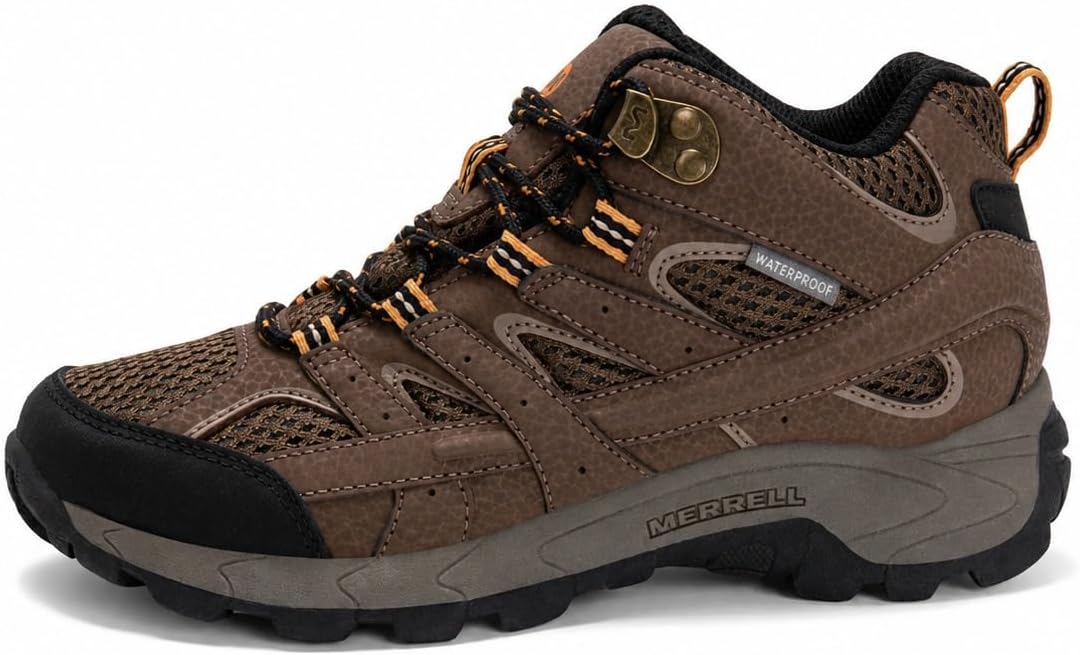
Best Kids Hiking Boot: Merrell Moab 2 Mid Waterproof Kids
The kids’ version of the most-recommended adult hiking boot
Pros
- Almost no break-in, comfortable from the first walk
- Vibram-style lugged outsole that grips wet rock and loose dirt
- Bungee lace with a toggle, so kids can tighten it themselves
- Holds up well enough to hand down to a younger sibling
Cons
- Costs roughly triple the budget options
- Waterproof membrane makes it warm on summer hikes
- Runs slightly narrow through the midfoot
The adult Moab is the boot most hiking shops hand to a beginner, and the kids’ version keeps what makes it work: it fits straight out of the box, the sole grips, and nothing rubs. Children will not tell you a boot is uncomfortable until it has already ruined the hike, so a boot that needs no breaking in matters far more than it does for adults.
The bungee lace with a toggle is the practical detail. Kids can tighten it themselves at a trailhead without kneeling down to retie, and it does not come undone every half mile the way a bow does.
The waterproof membrane is the trade. It keeps creek crossings from ending a hike and it runs warm in July. For summer-only hiking, the Trail Chaser shoe further down breathes far better.
| Sizes | Little kid 10.5 to big kid 7 |
|---|---|
| Closure | Bungee lace with toggle |
| Waterproof | Yes, membrane |
| Upper | Suede and mesh |
| Outsole | Lugged rubber |
| Cut | Mid, above ankle |
| Insulated | No |
| Weight | About 1 lb per pair |
| Machine washable | No |
| Best for | Real trail miles in any season |
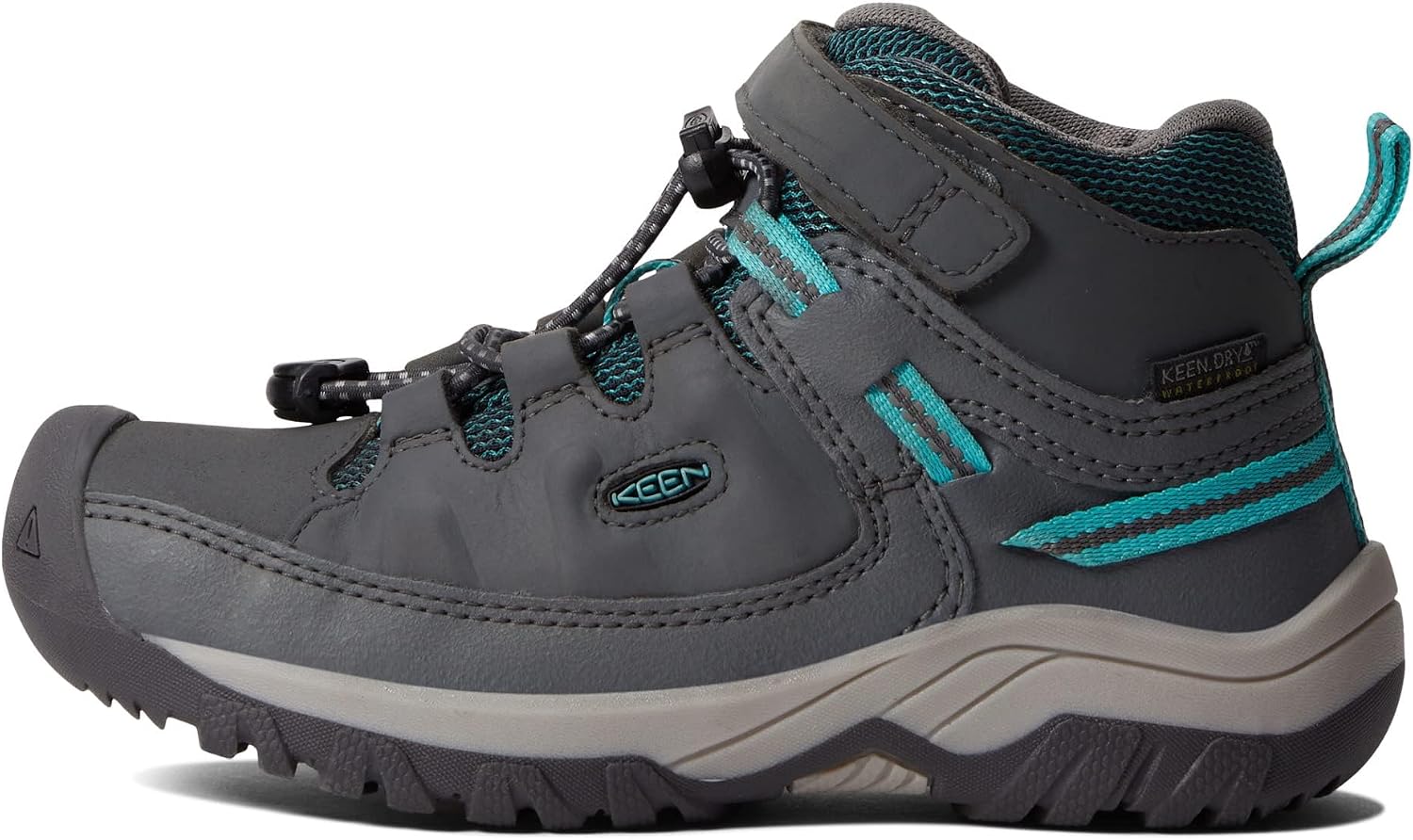
Best Kids Boot for Wide Feet: KEEN Targhee Mid Waterproof Kids
Roomy toe box for kids who never quite fit standard widths
Pros
- Genuinely wide toe box, which suits kids who size up for width
- Rubber toe bumper survives kicking rocks, which children do constantly
- Quick-lace bungee closure kids can operate alone
- Washable upper, so mud does not become permanent
Cons
- Wide last swims on narrow feet
- Bulkier and heavier than the Merrell
- Sizing runs large, most parents drop a half size
Children’s feet are wider than adult proportions suggest, and most kids’ boots are built on scaled-down adult lasts that pinch across the toes. KEEN builds wide as standard, which is why parents who have been sizing up for width should start here rather than anywhere else.
The rubber toe bumper wraps further round than on most kids’ boots. Children kick things, drag their toes and scuff constantly, and that is where cheaper boots wear through first.
It is bulkier than the Merrell and it runs large. If your child has narrow feet this will slop around no matter what size you order, and the Moab or the Adidas will fit far better.
| Sizes | Little kid 8 to big kid 7 |
|---|---|
| Closure | Bungee lace with toggle |
| Waterproof | Yes, KEEN.DRY membrane |
| Upper | Leather and textile |
| Outsole | Non-marking lugged rubber |
| Cut | Mid, above ankle |
| Insulated | No |
| Weight | About 1 lb 2 oz per pair |
| Machine washable | Yes |
| Best for | Wide feet and hard wear |
Best Premium Kids Hiking Boot: Timberland Mt. Maddsen Kids
Waterproof leather built to survive being handed down

Pros
- Full leather upper that outlasts mesh by years, not months
- Genuinely waterproof rather than water resistant
- Sturdy enough to pass down through two or three children
- Timberland warranty and easy replacement sourcing
Cons
- Most expensive pick here
- Needs a genuine break-in period, unusual for kids’ footwear
- Heaviest boot in this lineup
Everything about kids’ footwear argues against spending money, because feet grow out of it in a year. The counter-argument is siblings. A leather boot that survives three children costs less per child than three pairs of mesh boots, and this is the one built for that.
The waterproofing is the real thing rather than a coating that wears off. Puddles, wet grass and creek edges are what children walk through by choice, and a boot that handles that keeps them out longer.
It needs breaking in, which is unusual and worth planning around. Wear them for a few short walks before a full day out, or the first hike becomes a lesson in blisters.
| Sizes | Toddler 5 to big kid 7 |
|---|---|
| Closure | Traditional lace |
| Waterproof | Yes, seam-sealed leather |
| Upper | Full grain leather |
| Outsole | Lugged rubber |
| Cut | Mid, above ankle |
| Insulated | No |
| Weight | About 1 lb 6 oz per pair |
| Machine washable | No |
| Best for | Passing down between siblings |
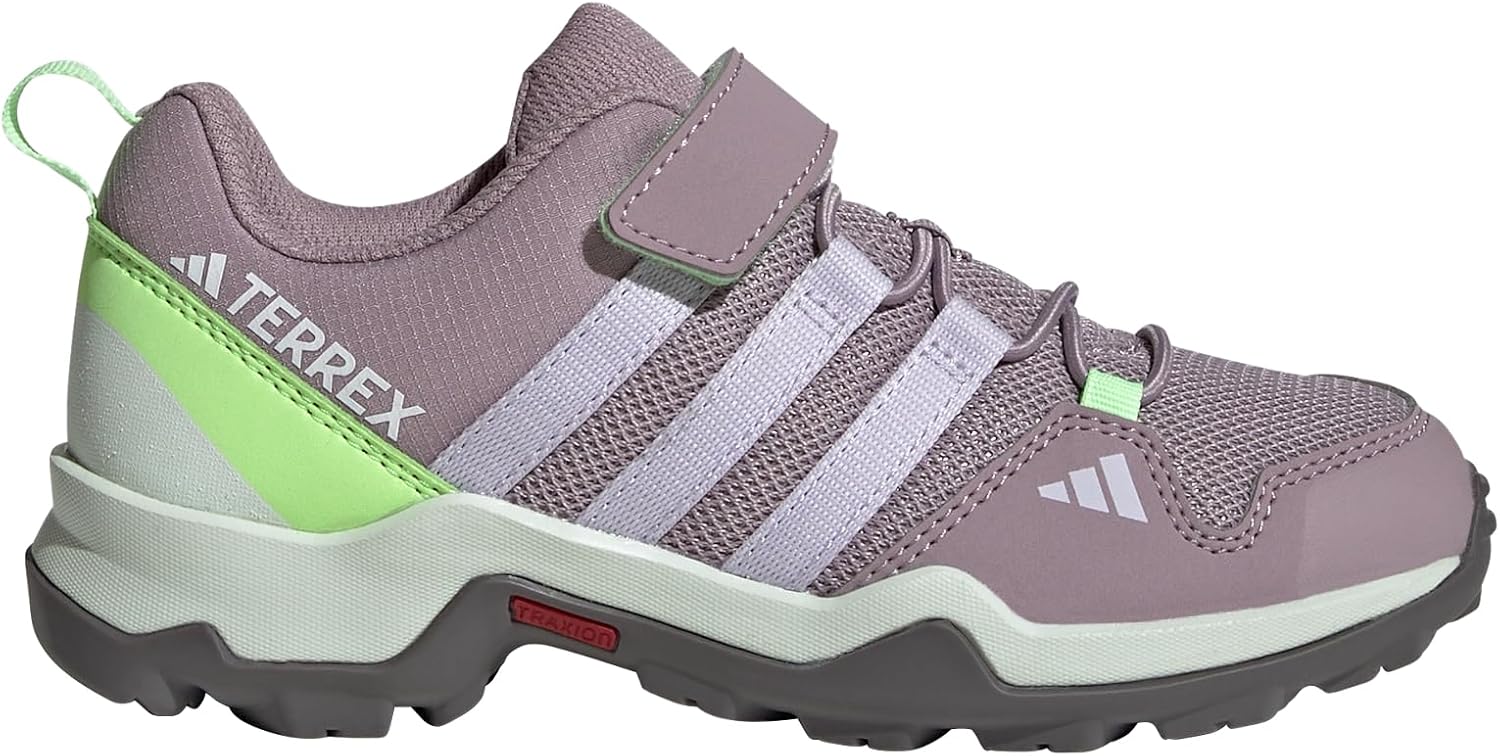
Best Value Kids Hiking Boot: Adidas Terrex AX2R CF Kids
Terrex outsole with a closure kids can fasten themselves
Pros
- Highest owner rating in this lineup
- Traxion outsole borrowed from the adult Terrex line
- Hook-and-loop closure means no laces to tie or come undone
- Light enough that kids do not complain about their feet
Cons
- Not waterproof, wet grass soaks straight through
- Mesh upper wears at the flex point faster than leather
- Low-cut, so no ankle support on uneven ground
The outsole here is the same Traxion pattern Adidas puts on adult Terrex shoes, and on wet rock the difference against a generic lugged sole is obvious. Kids move unpredictably and stop badly, so grip matters more for them than for adults.
Hook-and-loop is the right call for anyone under about eight. Laces come undone, kids trip on them, and a parent ends up retying them six times a hike. This removes the problem entirely.
It is not waterproof and it is not a boot. For dry summer trails it is excellent value, and for Oregon spring you want the Merrell or the Timberland instead.
| Sizes | Little kid 10.5 to big kid 7 |
|---|---|
| Closure | Hook and loop |
| Waterproof | No |
| Upper | Mesh and synthetic |
| Outsole | Traxion lugged rubber |
| Cut | Low |
| Insulated | No |
| Weight | About 12 oz per pair |
| Machine washable | No |
| Best for | Dry-weather trails, younger kids |
Best Leather Kids Hiking Boot: Columbia Newton Ridge Kids
Suede and leather on a proper Newton Ridge platform

Pros
- Same Newton Ridge design as the adult boot parents already own
- Omni-Grip outsole handles wet trail better than generic rubber
- Seam-sealed waterproof construction
- Widely stocked, so replacements and exchanges are simple
Cons
- Thinnest owner feedback of the branded picks here
- Suede marks and needs treating before wet use
- Traditional laces rather than a kid-friendly closure
Buying children the boot you already wear has a practical benefit beyond matching photos: you know how it fits, how it wears and whether it leaks. The kids’ Newton Ridge is a genuine scaled version rather than a lookalike with a cheaper sole.
Omni-Grip is Columbia’s wet-traction compound and it does noticeably better on the slick basalt of Gorge trails than the unbranded rubber on the budget boots here.
The suede needs treating before it goes anywhere wet, which parents routinely skip and then blame the boot. Twenty minutes with a proofing spray before the first hike solves it.
| Sizes | Little kid 11 to big kid 7 |
|---|---|
| Closure | Traditional lace |
| Waterproof | Yes, seam sealed |
| Upper | Suede and leather |
| Outsole | Omni-Grip rubber |
| Cut | Mid, above ankle |
| Insulated | No |
| Weight | About 1 lb 3 oz per pair |
| Machine washable | No |
| Best for | Matching what the adults wear |
Best Traditional Kids Hiking Boot: Northside Rampart Mid
Classic mid-cut boot at a price that forgives outgrowing it

Pros
- Looks and feels like a proper hiking boot rather than a sneaker
- Padded collar and tongue that resist rubbing at the ankle
- Deep lugs that clear mud instead of packing with it
- Priced so outgrowing it in a season does not sting
Cons
- Water resistant rather than waterproof
- Synthetic upper creases at the flex point within a season
- Stiffer than the Merrell out of the box
Some children want a boot that looks like a boot, and that matters more than adults expect. A child who feels properly equipped complains less and walks further, which is most of what determines whether a family hike works.
The lug depth is genuinely useful. Oregon trails in spring are mud, and a shallow sneaker sole packs solid within a mile while these clear themselves.
It is water resistant, not waterproof, and there is a difference after twenty minutes in wet grass. For the price it is a lot of boot, and for consistently wet conditions the Merrell earns its premium.
| Sizes | Toddler 8 to big kid 7 |
|---|---|
| Closure | Traditional lace |
| Waterproof | Water resistant only |
| Upper | Synthetic and mesh |
| Outsole | Deep lugged rubber |
| Cut | Mid, above ankle |
| Insulated | No |
| Weight | About 1 lb 1 oz per pair |
| Machine washable | No |
| Best for | A first proper hiking boot |
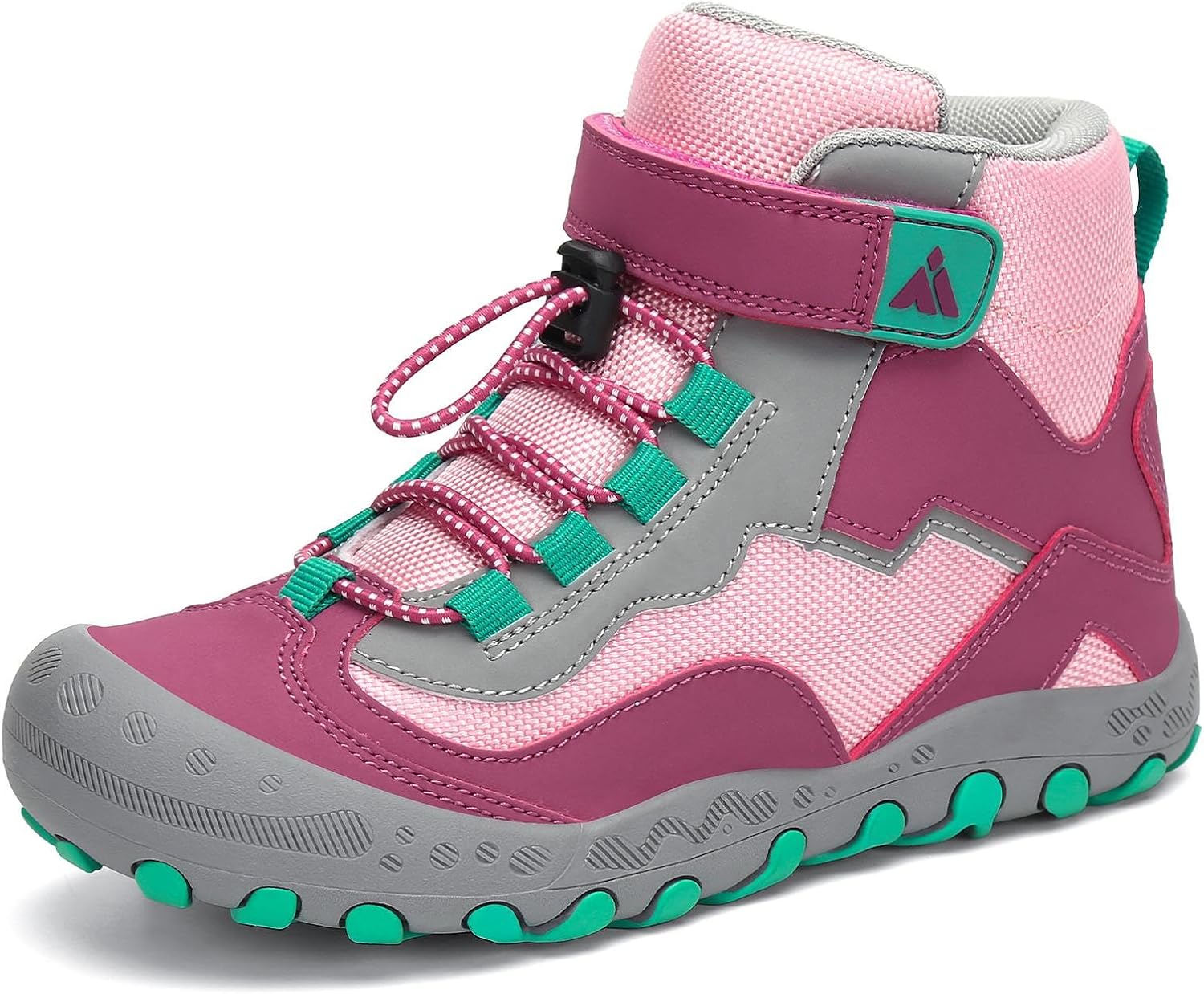
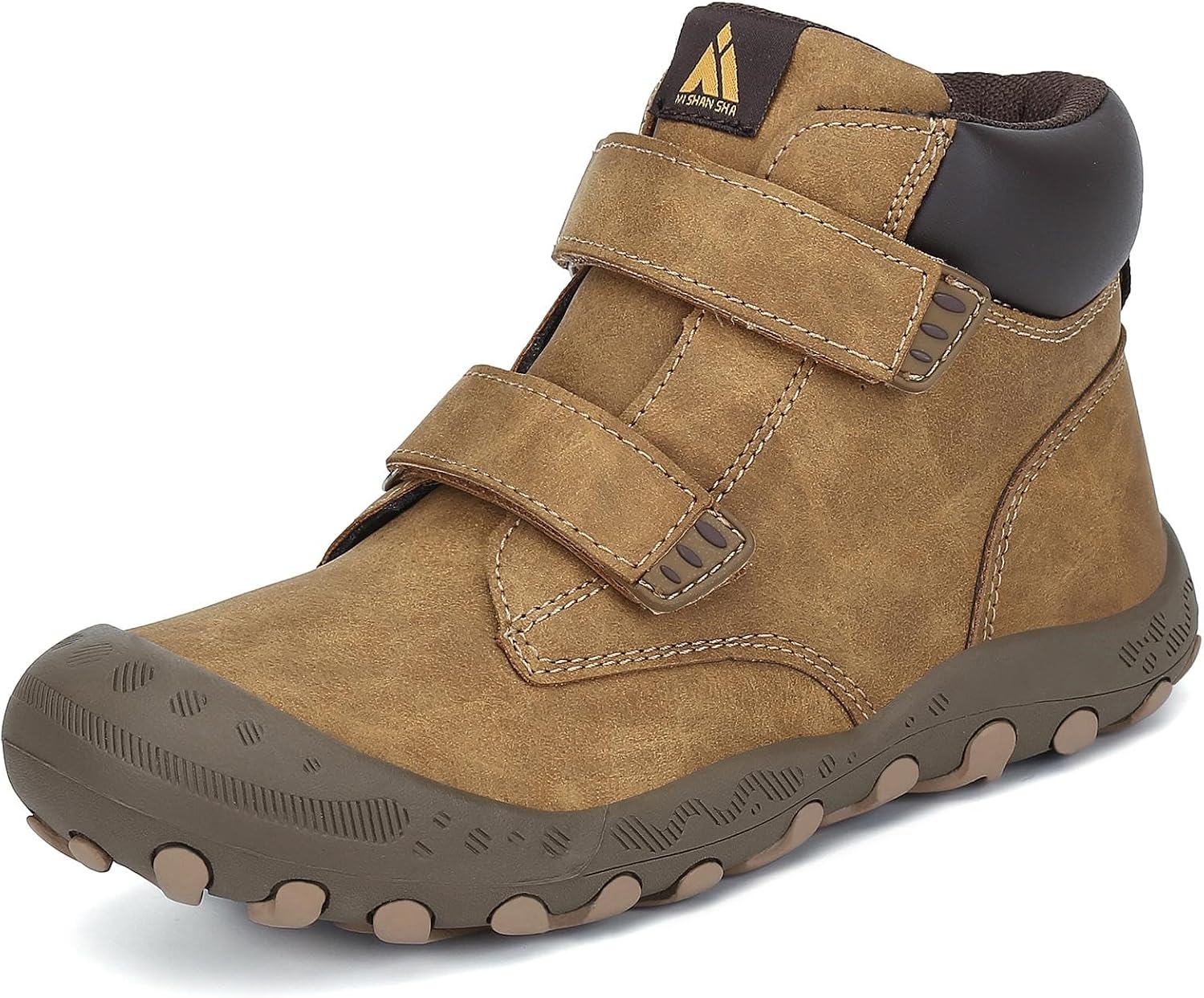
Best Budget Kids Hiking Boot: Mishansha Kids Hiking Boot
Water-resistant kids’ boot with a very deep review base
Pros
- Deep owner history that makes the limits predictable
- Side zip alongside the laces, so kids get them on unaided
- Wide colour range, which matters more to children than to parents
- Cheap enough to replace mid-season when feet grow
Cons
- Water resistant only, and the coating wears within a season
- Synthetic upper splits at the flex crease over time
- Sizing is inconsistent between colourways
Children outgrow boots in under a year, which is the honest argument against spending real money. This one holds up for that year, keeps feet dry through wet grass, and does not hurt when the next size is needed.
The side zip is genuinely useful. Laces get tied once by a parent and then the zip handles daily on and off, which means the boot actually gets worn rather than abandoned for trainers.
The consistent complaint across a very large number of owners is sizing varying between colours. Order from a seller with easy returns, or size up and use a thicker sock.
| Sizes | Toddler 7 to big kid 5 |
|---|---|
| Closure | Lace with side zip |
| Waterproof | Water resistant only |
| Upper | Synthetic and mesh |
| Outsole | Lugged rubber |
| Cut | Mid, above ankle |
| Insulated | No |
| Weight | About 14 oz per pair |
| Machine washable | No |
| Best for | One growing season on a budget |
Best Kids Hiking Shoes
Three low-cut options for summer trails and for children who flatly refuse a boot. A shoe they will wear beats a boot that stays in the cupboard, and on dry ground the breathability is a genuine advantage.
Best Kids Hiking Shoe: Merrell Trail Chaser Kids
Low-cut option for kids who refuse to wear a boot

Pros
- By far the deepest review base of any kids’ hiking footwear here
- Breathes properly, so feet stay cool on summer trails
- Looks enough like a trainer that kids will actually wear it to school
- Merrell fit and cushioning without the boot price
Cons
- Not waterproof at all
- Low cut offers no ankle support on rocky ground
- Mesh lets in trail dust and small stones
Plenty of children flatly refuse boots, and a shoe they will wear beats a boot that stays in the cupboard. The Trail Chaser is a real hiking shoe with a proper outsole, dressed enough like a trainer that it does not become a fight.
It has close to ten thousand owner reports, which is more than everything else on this page combined. The feedback pattern is consistent: comfortable, durable enough, and definitively not waterproof.
For summer trails and dry conditions it is the better choice than any boot here because it breathes. For Oregon spring and autumn, buy a boot instead.
| Sizes | Little kid 10.5 to big kid 7 |
|---|---|
| Closure | Bungee lace with toggle |
| Waterproof | No |
| Upper | Mesh and synthetic |
| Outsole | Lugged rubber |
| Cut | Low |
| Insulated | No |
| Weight | About 11 oz per pair |
| Machine washable | No |
| Best for | Summer trails and kids who hate boots |
Best Barefoot-Style Kids Shoe: KUBUA Kids Barefoot High Top
Zero-drop minimalist sole for natural foot development

Pros
- Wide toe box lets toes splay the way young feet are meant to
- Zero drop and a flexible sole, so feet do the work rather than the shoe
- High top gives some ankle coverage despite the minimal sole
- Far cheaper than the established barefoot brands
Cons
- Thin sole transmits every rock underfoot
- Not suitable for rough or sharp terrain
- Minimal protection if a child kicks something hard
Podiatrists broadly agree that young feet develop better in flexible shoes with room for toes to spread, and most children’s footwear is neither. Barefoot-style shoes address that, and this one does it at a fraction of what the specialist brands charge.
The high top is a sensible compromise. It keeps trail debris out and offers some ankle coverage while leaving the sole thin and flexible, which is where the developmental argument actually lives.
The thin sole is the whole point and also the limit. On a smooth forest path it is ideal. On sharp volcanic rock or scree your child will feel every step, and a cushioned boot is kinder.
| Sizes | Toddler 6 to big kid 5 |
|---|---|
| Closure | Elastic lace and hook and loop |
| Waterproof | No |
| Upper | Textile and synthetic |
| Outsole | Thin flexible rubber, zero drop |
| Cut | High top |
| Insulated | No |
| Weight | About 8 oz per pair |
| Machine washable | Yes |
| Best for | Foot development on smooth trails |
Best Toddler Hiking Shoe: Mishansha Toddler Hiking Shoe
Sized for the smallest feet actually walking trails
Pros
- Genuinely small sizes, down to toddler 7
- Hook and loop closure a toddler can manage alone
- Light enough not to slow small legs down
- Cheap, which matters when feet grow every few months
Cons
- Least durable pick here, built for a season
- Water resistant only
- Sole is soft and wears smooth quickly
Toddlers walking real trails need grip and a shoe that stays on, and very little else. Most of what makes an adult boot good is irrelevant at this size, because the distances are short and the child will be carried for part of it regardless.
Hook and loop is not optional at this age. A toddler who can put their own shoes on is a toddler who wants to go outside, and anything with laces becomes a parent’s job every single time.
It will last a season and their feet will outgrow it in about that time anyway. Spending more at this age buys durability you will never use.
| Sizes | Toddler 7 to little kid 3 |
|---|---|
| Closure | Hook and loop |
| Waterproof | Water resistant only |
| Upper | Mesh and synthetic |
| Outsole | Soft lugged rubber |
| Cut | Low |
| Insulated | No |
| Weight | About 7 oz per pair |
| Machine washable | No |
| Best for | Toddlers on short trails |
Best Kids Winter Hiking Boots
Three insulated boots for snow days and cold trails. Cold feet end a walk faster than anything else, and children tell you about it immediately rather than pushing through.
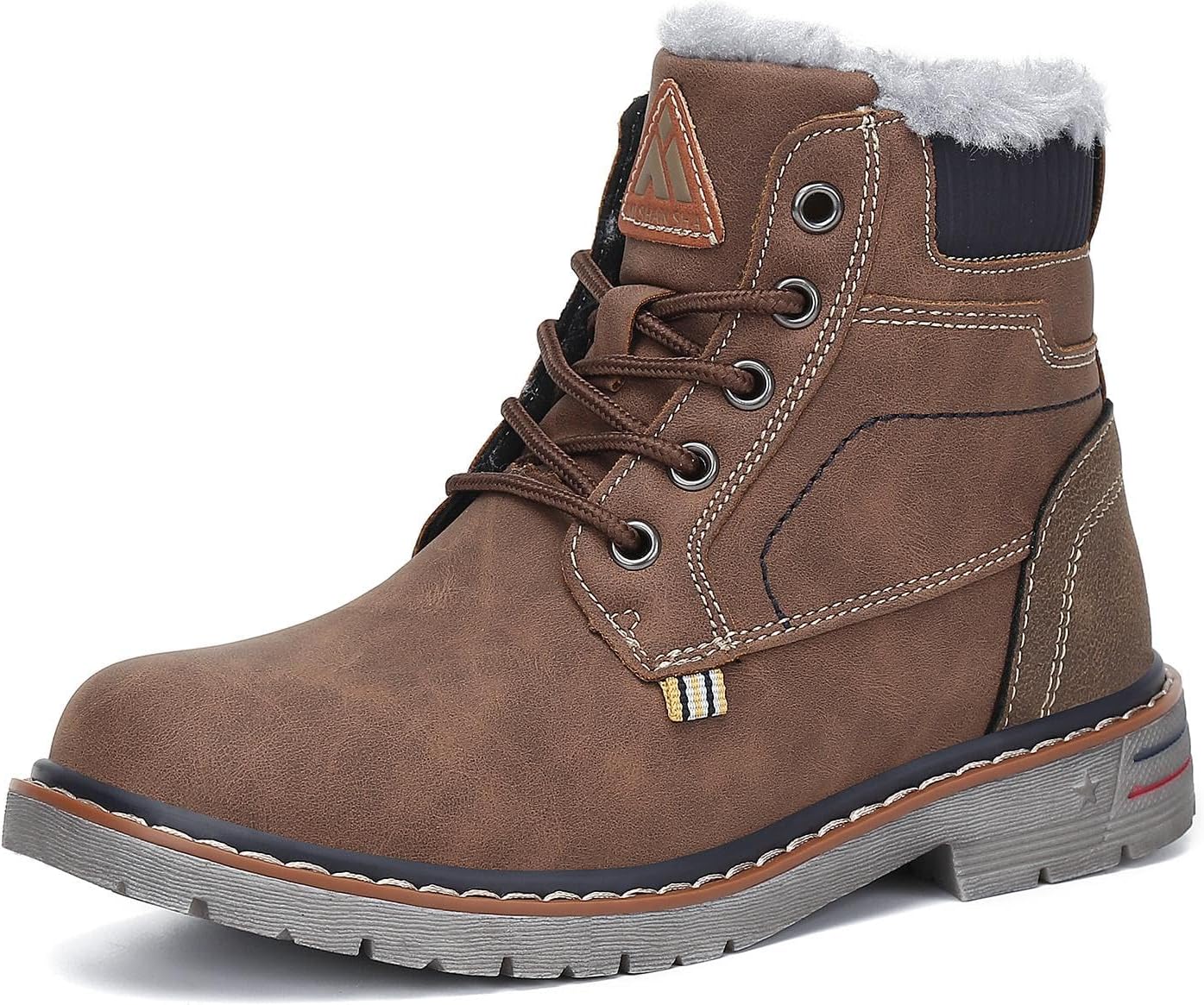
Best Kids Winter Hiking Boot: Mishansha Kids Winter Boot
Insulated and water resistant for snow days on trail
Pros
- Fleece lining that is warm without needing a thick sock
- Water resistant upper handles slush and wet snow
- Side zip so cold hands do not have to manage laces
- Deep review base for a kids’ winter boot at this price
Cons
- Insulation is sealed in and cannot be dried separately
- Outsole hardens and loses grip on ice
- Runs warm for anything above freezing
Cold feet end a winter walk faster than anything else, and children tell you about it immediately. A fleece-lined boot with a water-resistant upper covers a snowy trail or a sledding afternoon without needing a second layer of sock.
The side zip matters more in winter than any other season. Fastening laces with cold hands in a car park is exactly when a family outing starts going wrong.
The outsole is the honest weakness. It grips packed snow and slides on ice, which is true of nearly every boot at this price. If your winter walks involve frozen trail, strap-on traction for children is worth the ten dollars.
| Sizes | Toddler 8 to big kid 5 |
|---|---|
| Closure | Lace with side zip |
| Waterproof | Water resistant |
| Upper | Synthetic with fleece lining |
| Outsole | Lugged rubber |
| Cut | Mid to high |
| Insulated | Yes, fleece lined |
| Weight | About 1 lb per pair |
| Machine washable | No |
| Best for | Snow days and cold trails |
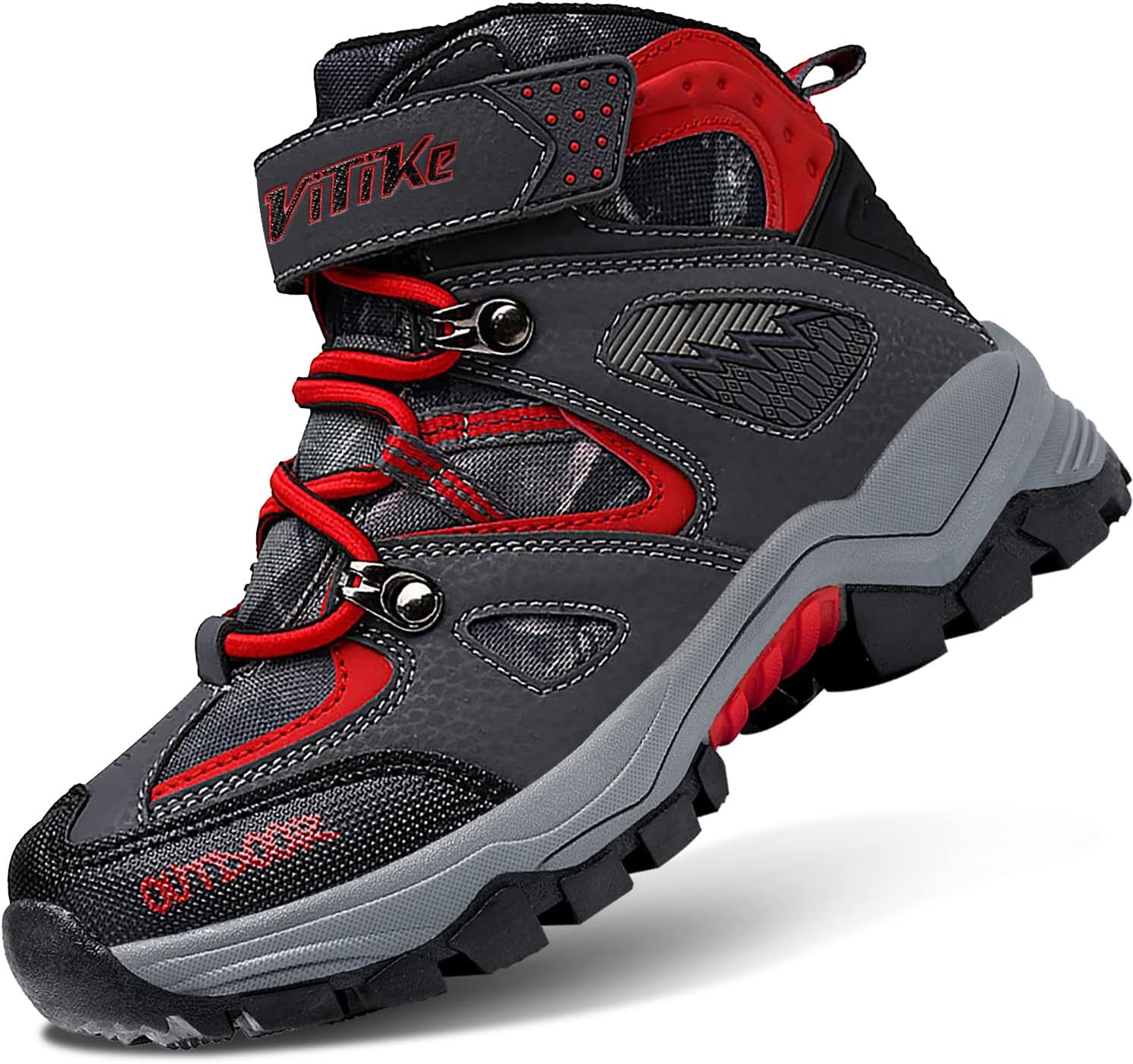
Best Kids Boot for Deep Snow: Littleplum Kids Snow Boot
Waterproof winter boot with an antiskid outsole
Pros
- Genuinely waterproof rather than water resistant
- Taller shaft keeps snow out when children posthole into drifts
- Antiskid outsole compound that stays softer in cold
- Very deep owner history for a kids’ snow boot
Cons
- Too warm for anything but genuine winter
- Bulky and heavy for small legs over distance
- Not a hiking boot, the sole barely flexes
Deep snow is where water-resistant boots fail, because snow melts against a warm boot and soaks in from above the ankle. A taller waterproof shaft solves both problems, and children walk into drifts by choice rather than around them.
The outsole compound stays softer at low temperatures than the cheaper winter boots here, which is the difference between grip and a slide on packed snow.
It is a snow boot rather than a hiking boot. The sole is stiff and it is heavy for small legs, so match it to sledding, snow play and short winter walks rather than distance on trail.
| Sizes | Little kid 11 to big kid 6 |
|---|---|
| Closure | Lace with side zip |
| Waterproof | Yes |
| Upper | Waterproof synthetic, plush lining |
| Outsole | Antiskid lugged rubber |
| Cut | High, above ankle |
| Insulated | Yes, plush lined |
| Weight | About 1 lb 4 oz per pair |
| Machine washable | No |
| Best for | Deep snow and snow play |
Best Kids Boot for Severe Cold: Rocky 800G Insulated Kids
Heavily insulated for standing still in real cold

Pros
- Heaviest insulation here by a wide margin
- Waterproof construction rather than a treated upper
- Built to a hunting standard, so it outlasts fashion snow boots
- Warm when a child is standing still rather than moving
Cons
- Far too warm for active hiking above freezing
- Stiff and heavy, which tires small legs quickly
- Thinner owner feedback than the other winter picks
Children stop moving. They stand and watch things, they sit in snow, and that is when lightly insulated boots fail. Eight hundred grams of insulation is built for exactly that, and it is a different category from a fleece-lined winter boot.
It comes from Rocky’s hunting line rather than a children’s fashion range, which shows in the waterproofing and the stitching. It will outlast the season it was bought for.
It is genuinely too much boot for most Oregon winters, and a child hiking in these above forty degrees will overheat and complain. Buy it for Cascades snow days and cold standing around, not for everyday winter walks.
| Sizes | Little kid 11 to big kid 7 |
|---|---|
| Closure | Traditional lace |
| Waterproof | Yes |
| Upper | Leather and synthetic |
| Outsole | Aggressive lugged rubber |
| Cut | High, above ankle |
| Insulated | Yes, 800g |
| Weight | About 1 lb 8 oz per pair |
| Machine washable | No |
| Best for | Severe cold and standing still |
Best Boots for Toddlers and Younger Kids
Three picks sized and built for the smallest walkers, where a closure a child can manage alone matters more than any technical feature.
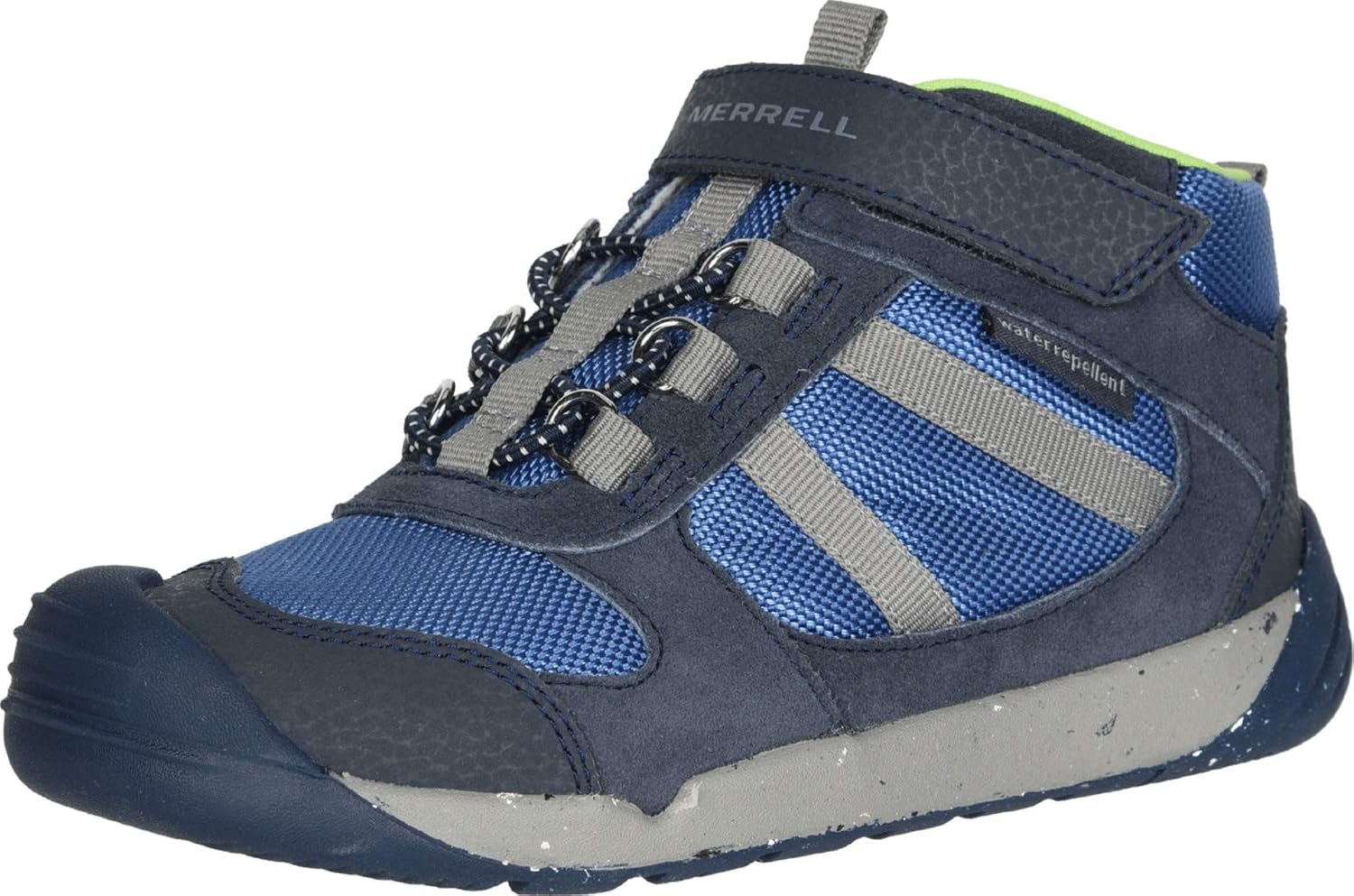
Best Lightweight Kids Hiker: Merrell Bare Steps Ridge Hiker
Flexible sole that lets young feet move naturally
Pros
- Flexible sole designed around how young feet actually develop
- Very light, so small legs are not fighting the shoe
- Bare Steps last is wide through the toes
- Merrell build quality on a shoe aimed at younger children
Cons
- Not waterproof
- Flexible sole offers little protection on sharp rock
- Sizing stops before older children need it
Merrell built the Bare Steps line around paediatric guidance on foot development, which means a wide toe box and a sole that bends where a foot bends. For children still developing their gait, that matters more than any waterproof membrane.
The weight is the part parents notice. Heavy boots change how a small child walks and tire them out well before the distance would, and this one weighs almost nothing.
It is not waterproof and the sole is thin. For a dry forest path with a four-year-old it is close to ideal, and for a wet Gorge trail you want something else.
| Sizes | Toddler 5 to little kid 12 |
|---|---|
| Closure | Hook and loop |
| Waterproof | No |
| Upper | Leather and mesh |
| Outsole | Flexible lugged rubber |
| Cut | Mid |
| Insulated | No |
| Weight | About 8 oz per pair |
| Machine washable | No |
| Best for | Young children still developing gait |
Best Easy-On Kids Boot: Sperry Port Boot Kids
Pull-on design for kids who cannot manage laces yet

Pros
- Pulls on without any fastening to manage
- Strong rating from a large number of owners
- Sperry name behind a boot at a budget price
- Comfortable enough that children keep them on
Cons
- Pull-on fit means no adjustment for narrow or wide feet
- Outsole is designed for grip on deck rather than trail
- Not waterproof despite the marine styling
The single biggest predictor of whether a young child’s shoes get worn is whether they can put them on alone. A pull-on boot removes the negotiation entirely, and for a three or four year old that is worth more than any technical feature.
Sperry’s fit is comfortable and forgiving, and the review pattern reflects that. Children wear them, keep them on, and parents buy the next size up.
The outsole is not a hiking sole. It grips smooth surfaces well and packs up on mud, so treat this as a gentle-trail and around-camp boot rather than a hiking one.
| Sizes | Toddler 5 to little kid 12 |
|---|---|
| Closure | Pull on, no fastening |
| Waterproof | No |
| Upper | Synthetic |
| Outsole | Rubber, shallow tread |
| Cut | Mid |
| Insulated | No |
| Weight | About 9 oz per pair |
| Machine washable | No |
| Best for | Young children who dress themselves |
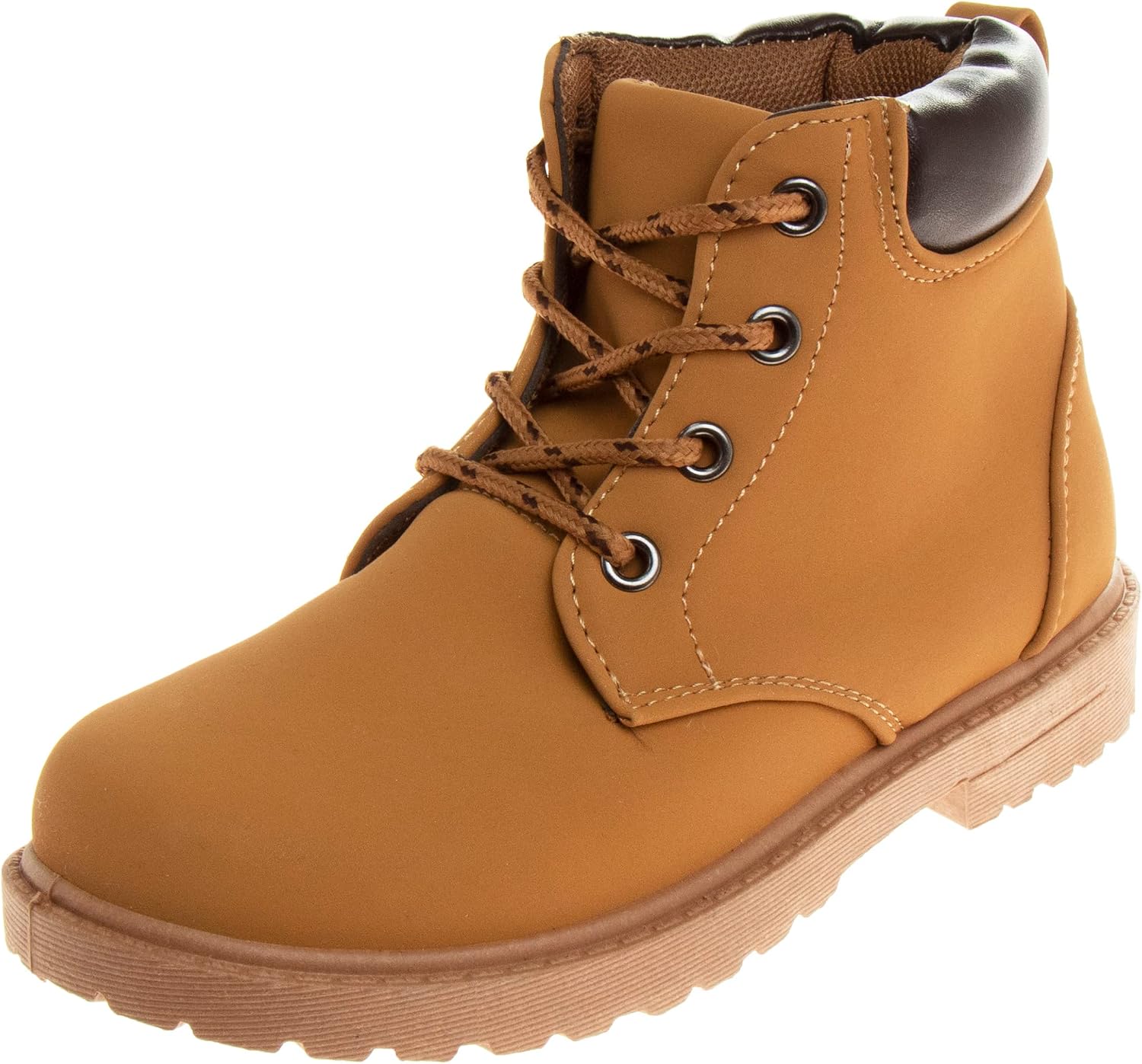
Best Second Pair: Josmo Kids Hiking Boot
Cheap enough to keep a spare pair in the car
Pros
- Cheapest pick here by a clear margin
- Fine for gentle trails, playgrounds and camp
- Looks enough like a hiking boot to satisfy a child
- Low enough cost to keep a spare pair in the car boot
Cons
- Least durable pick on this page
- Shallow tread that offers little on wet or steep ground
- Not water resistant in any meaningful sense
Every family with young children eventually wants a spare pair of boots living in the car, for the days when the good ones are wet or someone forgot them entirely. At this price that is a sensible purchase rather than an extravagance.
For a flat forest walk, a campsite, or a playground it does the job. Nobody is pretending otherwise, and the review pattern is honest about it.
Do not take these up anything steep or wet. The tread is shallow and the upper soaks through, and a child slipping on a descent is how a good day ends badly.
| Sizes | Toddler 5 to little kid 10 |
|---|---|
| Closure | Lace with side zip |
| Waterproof | No |
| Upper | Synthetic |
| Outsole | Shallow tread rubber |
| Cut | Mid |
| Insulated | No |
| Weight | About 10 oz per pair |
| Machine washable | No |
| Best for | A spare pair and gentle walks |
Full comparison table: best kids hiking boots
Sort by trail score, price, weight, or customer rating. Tap the buttons to re-rank. The table scrolls horizontally on small screens.
| Boot | Award | Sizes | Closure | Trail score | Weight | Rating | Price | |
|---|---|---|---|---|---|---|---|---|
|
Merrell Moab 2 Mid Waterproof Kids | Best Overall | LK 10.5 to BK 7 | Bungee lace with toggle | 86 | About 1 lb per pair | 4.6 | $59.50 |
|
KEEN Targhee Mid Waterproof Kids | Best Wide Fit | LK 8 to BK 7 | Bungee lace with toggle | 86 | About 1 lb 2 oz per pair | 4.5 | $63.75 |
|
Timberland Mt. Maddsen Kids | Best Premium | T 5 to BK 7 | Traditional lace | 84 | About 1 lb 6 oz per pair | 4.6 | $71.40 |
|
Adidas Terrex AX2R CF Kids | Best Value | LK 10.5 to BK 7 | Hook and loop | 83 | About 12 oz per pair | 4.8 | $38.31 |
|
Columbia Newton Ridge Kids | Best Leather | LK 11 to BK 7 | Traditional lace | 81 | About 1 lb 3 oz per pair | 4.6 | $69.93 |
|
Merrell Trail Chaser Kids | Best Hiking Shoe | LK 10.5 to BK 7 | Bungee lace with toggle | 80 | About 11 oz per pair | 4.5 | $51 |
|
Rocky 800G Insulated Kids | Best Severe Cold | LK 11 to BK 7 | Traditional lace | 80 | About 1 lb 8 oz per pair | 4.7 | $54.61 |
|
Northside Rampart Mid | Best Traditional | T 8 to BK 7 | Traditional lace | 79 | About 1 lb 1 oz per pair | 4.6 | $44.95 |
|
Merrell Bare Steps Ridge Hiker | Best Lightweight | T 5 to LK 12 | Hook and loop | 79 | About 8 oz per pair | 4.7 | $52.80 |
|
KUBUA Kids Barefoot High Top | Best Barefoot | T 6 to BK 5 | Elastic lace and hook and loop | 77 | About 8 oz per pair | 4.5 | $35.99 |
|
Mishansha Kids Winter Boot | Best Winter | T 8 to BK 5 | Lace with side zip | 77 | About 1 lb per pair | 4.6 | $42.99 |
|
Littleplum Kids Snow Boot | Best Deep Snow | LK 11 to BK 6 | Lace with side zip | 77 | About 1 lb 4 oz per pair | 4.6 | $58.99 |
|
Sperry Port Boot Kids | Best Easy On | T 5 to LK 12 | Pull on, no fastening | 76 | About 9 oz per pair | 4.7 | $32.01 |
|
Mishansha Kids Hiking Boot | Best Budget | T 7 to BK 5 | Lace with side zip | 75 | About 14 oz per pair | 4.4 | $41.99 |
|
Mishansha Toddler Hiking Shoe | Best Toddler | T 7 to LK 3 | Hook and loop | 74 | About 7 oz per pair | 4.4 | $33.59 |
|
Josmo Kids Hiking Boot | Best Second Pair | T 5 to LK 10 | Lace with side zip | 70 | About 10 oz per pair | 4.4 | $22.67 |
How We Judge Kids Hiking Boots
Children’s footwear fails differently from adult footwear, and the reason is that children do not report problems until it is too late to fix them.
-
30%Fit
Comfortable from the first wear
Adults break boots in. Children do not, because they will refuse to wear a boot that hurt them once and you will never get it back on their feet. We judge whether a boot is comfortable out of the box, toe box width, whether the collar rubs at the ankle, and whether the closure can be operated by the child rather than requiring a parent to kneel down at every trailhead.
-
20%Traction
Grip when they run downhill without meaning to
Children move unpredictably, stop badly and run down slopes they should walk. Lug depth and rubber compound matter more for them than for adults, and shallow sneaker tread that packs solid with mud within a mile is genuinely unsafe on a wet Oregon descent. We weigh wet grip highest.
-
20%Durability
Whether it survives to be handed down
Children kick things, drag their toes and scuff constantly, so toe bumpers and upper material decide lifespan far more than sole wear does. We look at whether the flex crease splits, whether a toe bumper wraps far enough, and whether the boot is likely to fit a younger sibling afterwards, which changes the cost calculation entirely.
-
15%Weather
Wet feet end a hike faster than tired legs
Children walk through puddles by choice. We separate genuinely waterproof construction from a water-resistant coating that stops working within a season, and note shaft height, because snow and wet grass get in over the ankle long before they soak through the fabric.
-
15%Value
Cost against how long their feet stay that size
A child outgrows footwear in roughly a year, which caps how much any boot can be worth. We score against expected wear life relative to that, and give real credit to boots durable enough to pass to a sibling, because that is the only way an expensive pair makes financial sense.
Where kids can use them
Flat, short loops that suit small legs and a first pair of boots.
Wet rock and spray, where a waterproof boot earns its price.
Snow into early summer, which is where the winter picks belong.
Sand, tide pools and wet rock, hard on any boot’s upper.
Sizing for Feet That Keep Growing
Children’s feet grow in bursts, and the temptation is always to buy big and let them grow into it. That causes more problems than it solves.
Leave one thumb width, not two
Press your thumb between the end of the longest toe and the front of the boot with the child standing. One thumb width of space is right. Two sizes of growing room means the foot slides forward on every descent, which jams toes into the front and causes bruised toenails and blisters. A boot that is too big is more likely to end a hike than one that is slightly snug.
Measure both feet, at the end of the day
Feet swell over a day and one is usually larger than the other, so measure in the afternoon and fit to the bigger foot. Have the child stand rather than sit, since a weight-bearing foot is measurably longer. Do this with the socks they will actually hike in, because a thick wool sock changes the fit by close to half a size.
Boot or Shoe for a Child
The ankle support argument is more complicated for children than the marketing suggests, and the honest answer depends on age and terrain rather than on a rule.
Choose a boot when
The ground is uneven, wet or rocky, or the hike is long enough that a rolled ankle far from the car is a real problem.
Choose a shoe when
It is summer, the trail is smooth, or the child flatly refuses boots. A shoe they wear beats a boot in the cupboard.
Under about five
Flexibility matters more than support. Young feet develop better in shoes that bend, and the distances are short anyway.
Over about eight
Distances get longer and packs get heavier, which is when a mid-cut boot with a stiffer sole starts genuinely helping.
How to Choose Kids Hiking Boots
Five decisions, in this order. The first two matter far more than any specification.
1. Pick a closure the child can manage
Hook and loop for under about six, bungee lace with a toggle for six to ten, and traditional laces after that. This sounds trivial and it is the single biggest predictor of whether footwear gets worn. A child who cannot fasten their own boots needs a parent kneeling in a car park before every hike, which is how outings stop happening.
2. Insist on no break-in
Adults tolerate a boot that needs breaking in. A child who gets a blister on the first wear will refuse those boots permanently, and you will have bought them for nothing. Test them around the house for an evening before committing to a hike, and return anything that leaves red marks.
3. Decide honestly whether you need waterproof
Waterproof boots run warm and cost more. If your hiking is summer and dry, breathable is genuinely better and your child will be more comfortable. If you hike Oregon spring, autumn or anywhere near a waterfall, waterproof is worth it because children walk directly through puddles rather than around them. Our boot waterproofing guide covers treating suede uppers before first use.
4. Match the spend to their age
Under five, buy cheap because feet grow every couple of months and the distances are short. Six to ten, mid-price makes sense since a pair may last a full year. Over ten, growth slows and a good boot can serve two seasons, which is when spending properly starts paying off. Siblings change this calculation entirely, since a durable leather boot passed down twice costs a third as much per child.
5. Get the socks right too
Cotton socks cause most childhood hiking blisters, because they hold moisture against the skin and bunch when damp. A merino or synthetic hiking sock costs a few dollars and prevents more problems than a more expensive boot will. See our hiking sock picks and the blister prevention guide.
Their first proper hiking boot
Merrell Moab 2 Mid. No break-in, real grip, and a toggle lace they can tighten themselves.
Hiking a few times a year
Mishansha or Northside. Both handle a season of trails for a fraction of the branded price.
Passing down to siblings
Timberland Mt. Maddsen. Leather that survives two or three children, which changes the maths.
Toddlers on short trails
Merrell Bare Steps or the Sperry pull-on. Flexible soles and closures a small child can manage.
Kids Hiking Boots FAQ
The questions parents ask before buying a first pair, answered without the marketing language.
What are the best hiking boots for kids?
For most children the Merrell Moab 2 Mid is the right answer, because it needs no breaking in, grips properly on wet ground, and has a toggle lace a child can tighten alone. If your child has wide feet the KEEN Targhee is built on a genuinely roomier last. If you are buying for a family and expect to hand boots down, the leather Timberland Mt. Maddsen survives two or three children, which changes the cost per child considerably.
Do kids really need hiking boots?
For short flat trails in dry weather, trainers are fine and buying boots is optional. Boots start earning their place when the ground is uneven, wet or rocky, or when hikes get long enough that a rolled ankle a mile from the car becomes a real problem. The other honest argument is grip: shallow sneaker tread packs solid with mud within a mile on an Oregon spring trail, and children run downhill without meaning to.
What size hiking boots should I buy for my child?
Leave about one thumb width between their longest toe and the front of the boot, with the child standing rather than sitting. Resist buying two sizes of growing room, because a boot that is too big lets the foot slide forward on descents, which jams toes into the front and causes bruised toenails. Measure both feet at the end of the day when they are slightly swollen, fit to the larger foot, and use the socks they will actually hike in.
How often do children outgrow hiking boots?
Between one and three years old, expect about half a size every two to three months. From three to six it slows to roughly half a size every four months, and from six to ten it is every four to six months. Check the fit every few months regardless of what the calendar says, because growth comes in bursts. This is the main reason spending heavily on boots for a toddler rarely makes sense.
Should kids hiking boots be waterproof?
It depends on where you hike. Waterproof boots run warm and cost more, so for dry summer trails a breathable shoe is genuinely more comfortable. For Oregon spring and autumn, or anywhere near waterfalls and creeks, waterproof is worth the money because children walk straight through puddles rather than around them, and wet feet end a walk faster than tired legs do.
What is the best closure for kids hiking boots?
Match it to their age. Hook and loop for under about six, a bungee lace with a toggle for six to ten, and traditional laces after that. This matters more than it sounds, because a child who cannot fasten their own boots needs a parent kneeling in a car park before every hike, and that friction is how family outings quietly stop happening.
Are barefoot shoes good for kids hiking?
For foot development on smooth ground, there is a reasonable case for them. Paediatric guidance broadly favours flexible soles and wide toe boxes for developing feet, which is what barefoot-style shoes provide. The limit is terrain: a thin sole transmits every rock, so on sharp volcanic ground or scree a child will feel every step and a cushioned boot is kinder. Use them on forest paths rather than rough trails.
How much should I spend on kids hiking boots?
Under five, spend as little as possible because feet grow every couple of months and distances are short. Between six and ten, mid-price makes sense since a pair may last a full year. Over ten, growth slows and good boots can serve two seasons, which is when spending properly starts paying off. Siblings change everything: a durable leather boot handed down twice costs a third as much per child.
How do I stop my child getting blisters when hiking?
Start with socks rather than boots. Cotton socks cause most childhood hiking blisters because they hold moisture against the skin and bunch up when damp, and a merino or synthetic hiking sock costs a few dollars and prevents more problems than a more expensive boot will. Beyond that, check the boot is not too large, since a foot sliding forward on descents is the other common cause, and stop at the first complaint rather than pushing on.
Do kids hiking boots need breaking in?
They should not, and a boot that does is usually the wrong purchase. Adults tolerate a break-in period, but a child who gets a blister on the first wear will refuse those boots permanently and you will have bought them for nothing. Test any new pair around the house for an evening before a hike, and return anything that leaves red marks on their feet.