Guide to Whale Watching on the Oregon Coast (2026)
Where to go, when to go, and what to bring. The complete 2026 guide to gray whales, orcas, and humpbacks along the Oregon Coast: 10 best viewing spots, Whale Watch Week dates, NOAA’s latest population numbers, and the binoculars that actually work in coastal weather.
Oregon Coast Whale Watching at a Glance
The Oregon Coast is one of the best places on Earth to watch gray whales without getting on a boat. About 13,000 gray whales migrate past Oregon’s headlands every year between their winter calving grounds in Baja Mexico and their summer feeding grounds in Alaska, often within a couple of miles of shore. Roughly 200 of them stay year-round and feed close to the central coast from June through mid-November, which means there’s a meaningful chance of seeing a whale at almost any time of year if you know where to stand.
This guide covers the whole picture: the migration calendar (with 2026 dates for Whale Watch Week), the species you might actually see, the 10 best shore-based viewing spots from north to south with Will’s notes on each, the gear that pays for itself the first time you use it, and the resources that tell you in real time where whales are showing up. NOAA’s most recent population estimates are sobering: the 2025 winter count was the lowest since the 1970s. That makes the careful, low-impact, shore-based watching this guide focuses on more important than ever.
One of the longest mammal migrations on Earth, right past your binoculars
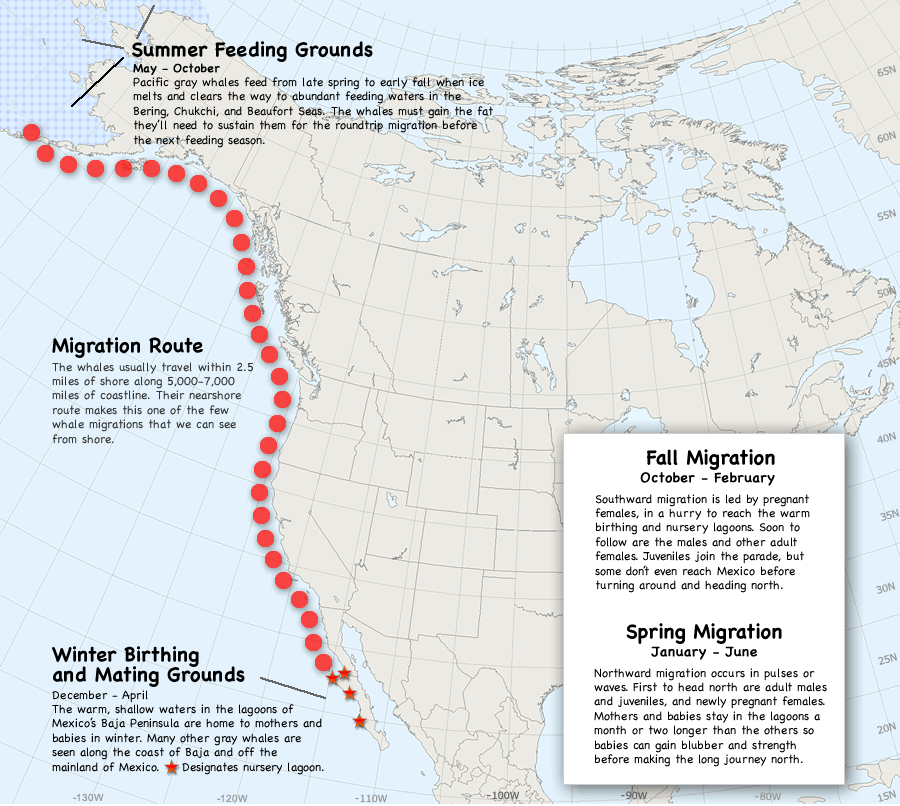
Pacific gray whales make a roughly 10,000-mile round trip every year, one of the longest migrations of any mammal on the planet. They feed all summer in the cold, plankton-rich waters of the Bering, Chukchi, and Beaufort Seas, fattening up for a fast that can last more than half the year. In the fall, the whales head south along the coastline, traveling 5 to 7 miles per hour, day and night. Pregnant females lead the southbound migration, racing to reach the warm calving lagoons of Baja before they give birth.
The northbound trip in spring is the more visible one for shore-based watchers in Oregon. Mothers and calves travel slower and stay closer to shore, often within a mile of the headlands. By late March and through May, you can sometimes see the calves’ small spouts directly beside the larger spouts of their mothers. Then, instead of continuing to Alaska with the rest of the population, about 200 whales stop and feed along the central Oregon Coast through summer and fall, taking advantage of the rich shallow-water feeding here. Those are the whales the Whale Watching Center in Depoe Bay sees 5 to 15 of every day in peak summer.
When to go: season-by-season
Whale watching on the Oregon Coast has four distinct seasons. Each one has different species, different behavior, and different odds of a sighting. Here’s what’s on the water at any given time of year, and what to plan for.
| Season | What’s there | Odds & conditions |
|---|---|---|
| Winter (Dec-Jan) | Southbound gray whales, peak migration toward Baja calving lagoons. Pregnant females lead the way. | |
| Spring (Mar-May) | Northbound gray whales with calves, traveling slower and closer to shore. First wave arrives late March. | |
| Summer (Jun-Aug) | Resident grays feeding close to shore (~200 whales). Depoe Bay sees 5-15 daily. Orcas possible. | |
| Fall (Sep-Nov) | Resident grays still feeding through mid-November. Humpbacks ramping up. Orcas through September. | |
| Late Nov / early Dec | Slow window between resident departure and southbound migration arrival. |
The cleanest single answer: aim for late December or late March if you want to see a lot of whales in a short window. Both align with Oregon State Parks’ Whale Watch Week, when 15 of the best viewing sites are staffed by trained volunteers who can help you spot whales and identify behavior.
Species you’ll see
Gray whales are the headliner: by far the most common, the most predictable, and the closest to shore. Other species pass through too, sometimes for a few weeks at a time, sometimes for a single morning. Here’s what you might actually see, in rough order of likelihood.
Gray whales
Pacific gray whales are the most regularly sighted whale species off the Oregon Coast. They measure nearly 50 feet long and weigh up to 90,000 pounds, with tail flukes nearly 10 feet wide. Their mottled gray skin is often covered in white barnacles and cyamids (whale lice), giving each whale a unique fingerprint. They’re bottom feeders, comfortable in shallow water, which is why they migrate within a couple of miles of the Oregon shoreline and are visible from headland viewpoints.
Three windows to know:
- Winter (December to January): An estimated 13,000 gray whales head south to Baja Mexico (per NOAA’s winter 2025 estimate, the lowest since the 1970s). Pregnant females lead the way, racing to reach the warm lagoons before giving birth.
- Spring (late March through May): The whales head back north toward Alaska, mothers and calves travelling slower and even closer to shore. The first wave arrives late March; northbound migration continues through June.
- Summer/Fall (June to mid-November): About 200 resident gray whales feed close to the central Oregon Coast. Depoe Bay is the hot spot, with 5 to 15 whales seen daily during peak summer.
Orcas (killer whales)
The best time to see orcas off the Oregon Coast is between May and September. Killer whales generally only stay for a few weeks at a time, though in unusual years (like 2006) they have stayed until mid-July. There’s an average of about 30 reports of orca sightings per year, so they’re far less common than gray whales. The Oregon Coast Whale Watchers Facebook group is the fastest way to find out where orcas have been spotted in real time during a sighting event.
Want to know what an orca sounds like?
Orcas use a complex repertoire of calls, clicks, and whistles to communicate, navigate, and hunt. Each pod has its own dialect, and researchers can identify resident pods by the calls alone. Here are three sample sounds recorded from Pacific orcas:

Humpback whales
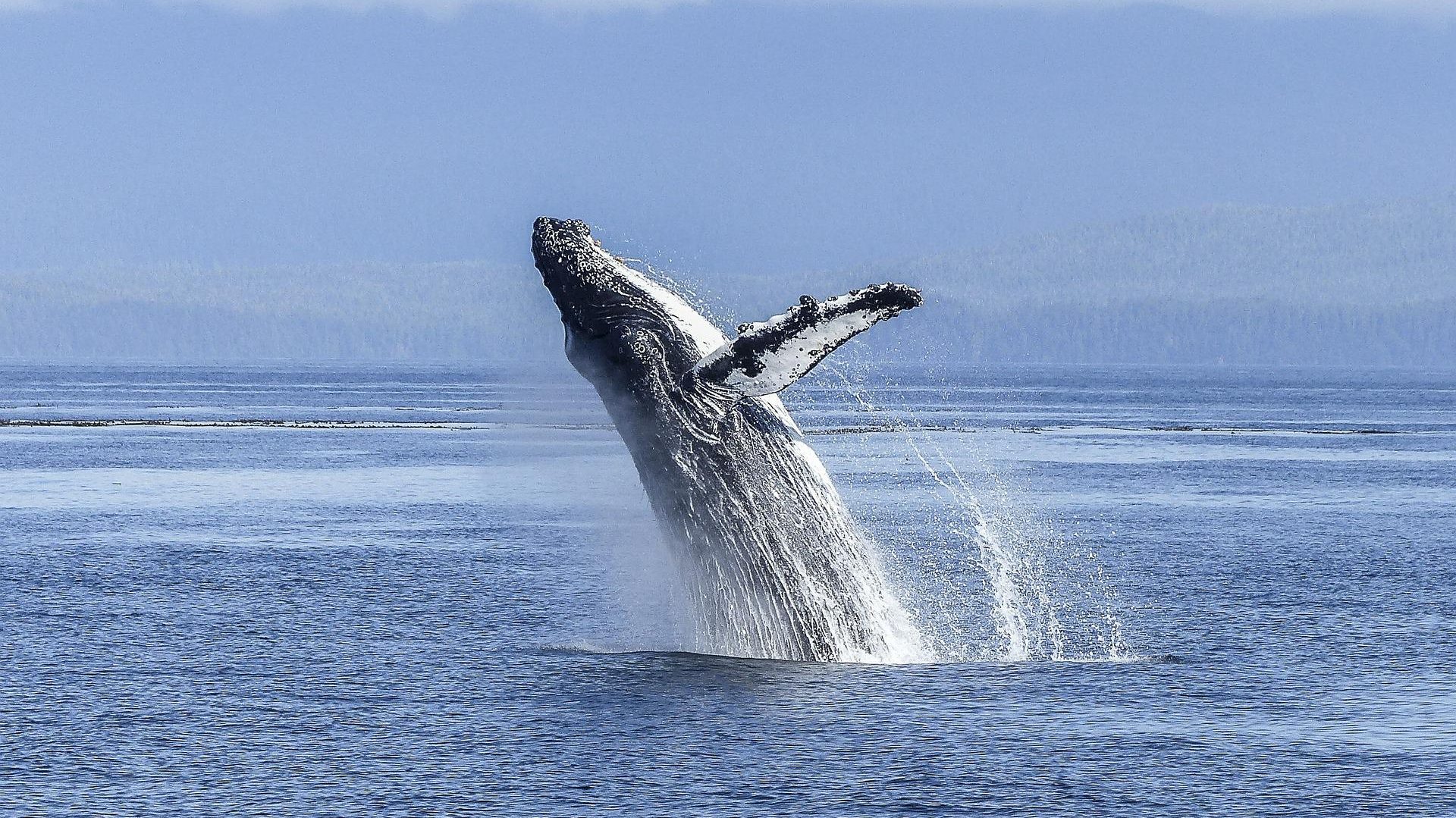
If you want to see humpback whales, the best window is between September and January. Humpbacks are the second most common whale species seen off the Oregon Coast. They’re known for their dramatic surface behavior: breaching, tail-slapping, and pectoral fin slaps that throw spray 20 feet into the air. Adults are 50-60 feet long with distinctive white flippers up to one-third the length of their body.
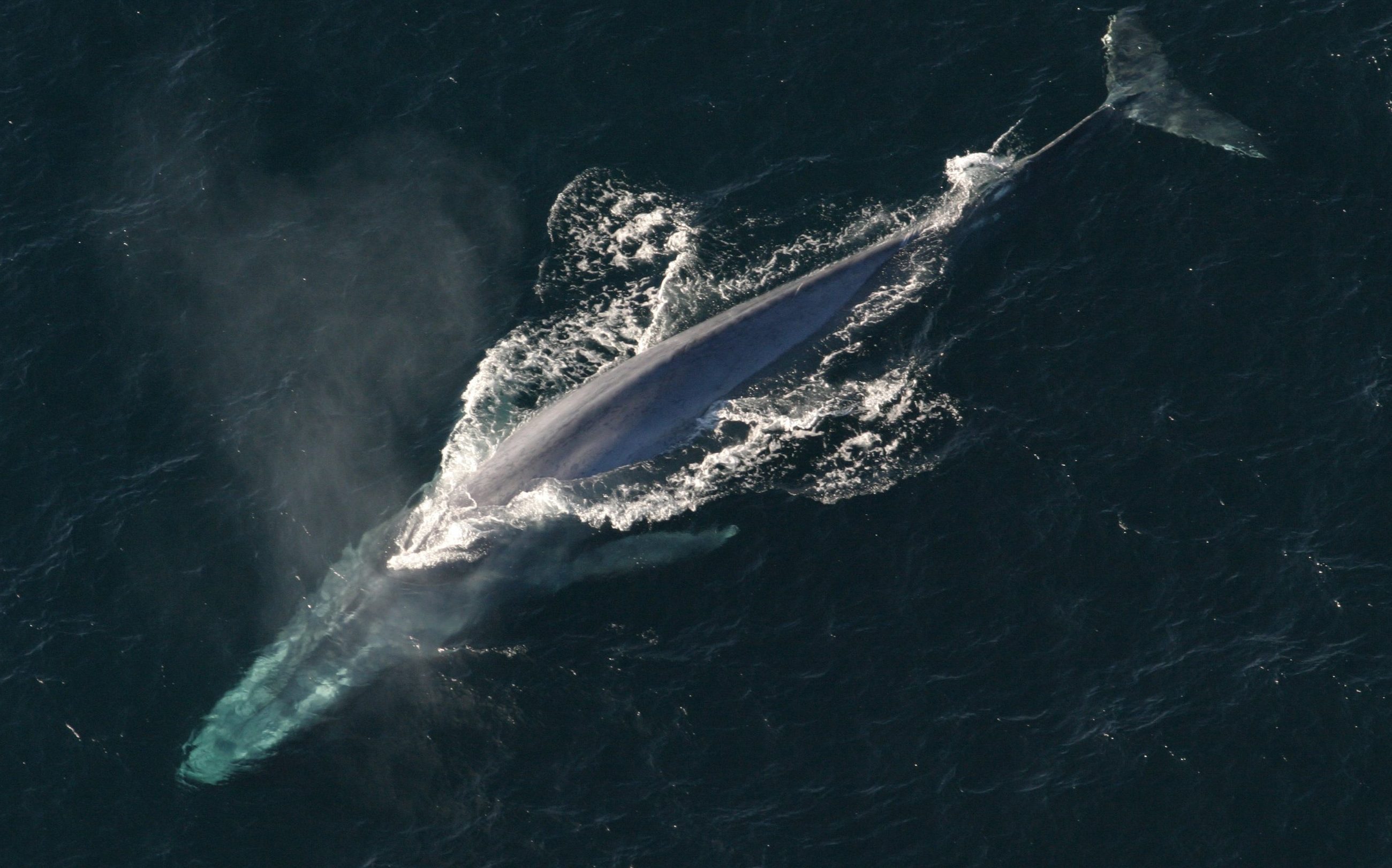
Other species you may see along the Oregon Coast: minke whales, blue whales (the largest animals on Earth), sperm whales, Pacific white-sided dolphins, bottlenose dolphins, Dall’s porpoise, and harbor porpoise.



Come for Whale Watch Week 2026!
Where to go: 10 best whale watching spots on the Oregon Coast
There are great whale watching spots up and down the Oregon Coast, but most sightings are reported on the central coast. The most popular hubs are around Depoe Bay and Newport, where the bathymetry pushes resident gray whales close to shore. Here are the 10 best spots, north to south, with Will’s notes on what to expect at each.
A map of the best places to go whale watching on the Oregon Coast
Oregon Whale Watch: interactive map of the 10 best viewing locations along the central Oregon Coast.

📄 Download the Whale Watching Guide (PDF)
Depoe Bay Whale Watching Center
Depoe Bay · Year-round
At the Whale Watching Center, year-round Oregon State Parks employees are ready to answer your questions and help you spot gray whales. The facility sits right on the seawall and offers panoramic ocean views and educational displays about whales and other marine species. Hours: Daily 10 a.m. to 4 p.m. (call ahead for winter hours). Address: 119 SW Hwy 101, Depoe Bay. Phone: 541-765-3304.
Inn at Spanish Head
Lincoln City · Year-round
The Inn’s central Oregon Coast location makes it an ideal base for everything in the area: a world-class aquarium, museums, scenic hiking trails, whale watching, and deep-sea fishing. Every room is oceanfront. The 10th-floor restaurant has floor-to-ceiling windows and is one of the best whale-watching spots in town that doesn’t require leaving your table.
Boiler Bay State Scenic Viewpoint
Depoe Bay · Year-round
Boiler Bay State Scenic Viewpoint is a great spot to see gray whales year-round, with magnificent panoramic views from the headland. It’s also one of the best places in Oregon to watch seabirds: shearwaters, jaegers, albatrosses, grebes, pelicans, loons, oystercatchers, and murrelets all show up here. Bring binoculars.
Rocky Creek Scenic Viewpoint
Depoe Bay · Year-round
Whales frequently play around Whale Cove, just below Rocky Creek, and seals and sea lions can be seen too. Rocky Creek Scenic Viewpoint is recognized for its whale watching opportunities. Note: Rocky Creek State Wayside is the official name; you’ll sometimes see it referred to as Rocky Creek State Park.
Cape Foulweather
Otter Rock · Year-round
Cape Foulweather is a basalt protrusion 500 feet (150 meters) above the Pacific Ocean on Oregon’s central coast, south of Depoe Bay in Lincoln County. The high vantage means you can spot spouts farther out than from a beach-level viewpoint. The Lookout Gift Shop at the top is worth a stop for hot coffee on a cold morning.
Devils Punchbowl State Natural Area
Otter Rock · Year-round
Devils Punchbowl State Natural Area is a popular whale watching destination with fascinating geology. The bowl was formed by the ceiling collapsing over two adjacent sea caves and was sculpted further by waves. The headland above the punchbowl is an excellent picnic spot with whale watching views. Don’t forget to check out the tide pools on the punch bowl’s north side.
Yaquina Head Outstanding Natural Area
Newport · Year-round
Yaquina Head Outstanding Natural Area encompasses the lighthouse and the surrounding headland, and it is genuinely spectacular for whale watching. The Yaquina Head Lighthouse is a short drive from downtown Newport, the world-famous Oregon Coast Aquarium, and the bayfront where Newport’s sea lions haul out.
Don Davis Park (Nye Beach Kiosk)
Newport · Year-round
Don Davis Park sits on a 2-acre site with magnificent views of the Pacific in Newport’s Nye Beach neighborhood. On a clear day, you can see Yaquina Head and Lighthouse to the north and Cape Perpetua to the south. The on-site gazebo offers a 180-degree ocean view, making it an excellent rain-or-shine whale watching spot.
Cape Perpetua Overlook
Yachats · Year-round
On a clear day, the Cape Perpetua headland gives you 30 miles (48 kilometers) of visibility out to sea. The overlook at 800 feet (244 meters) is the highest point on the entire Oregon Coast accessible by car. When you’ve had your fill of whale watching, the Cape Perpetua Visitor Center has more on the Siuslaw National Forest. Note: the building is closed mid-December through May 2026 for remodeling, but the parking and trails remain open.
Cook’s Chasm & Thor’s Well
Yachats · Year-round
Cook’s Chasm and Thor’s Well near Yachats are also great places to whale watch. Thor’s Well is a 20-foot-deep hole in the basalt rocks at Cook’s Chasm. During high tides and storms the water spirals and drains through Thor’s Well back out to sea. You may also see seals around this spot, since they like coming up close to shore.
How to spot a whale from shore
Whale watching from the Oregon Coast is a patience game. You’re scanning open ocean for a 12-foot misty exhale that lasts 5 to 10 seconds, sometimes 1 to 2 miles offshore. Most people see their first spout in the first 10 minutes if they know what they’re looking for, or never if they don’t. Here’s how to load the dice in your favor.
- Look for spouts on the horizon. Whale spouts are the misty exhale when a whale surfaces, and they reach up to 12 feet (3.7 meters) high. They’re visible against the dark blue of the open water for 5 to 10 seconds before dissipating. Once you find one, watch the same spot. Whales typically surface 3 to 5 times in sequence before a deeper dive that can last 5 to 10 minutes.
- Pick a high vantage point. Cape Perpetua Overlook (800 ft) is the highest point on the entire Oregon Coast accessible by car. Cape Foulweather (500 ft) and Boiler Bay also work. Avoid sandy beaches; you’re too low to see spouts at distance.
- Scan slowly, left to right. Don’t try to scan both directions or jump around. A slow, deliberate sweep covers more water than a fast random scan.
- Use binoculars to confirm. Once you see a spout, lock binoculars on the area. You’ll often see the back arch and the tail flukes lift before the dive. 8×42 binoculars are the sweet spot: enough magnification to identify species, wide enough field of view to track moving whales.
- Watch dive patterns to find them again. Gray whales typically surface 3-5 times at 20-30 second intervals, then dive for 3-5 minutes. If you lose them, wait 4 minutes and watch the same area; they often resurface within a few hundred yards of where they went down.
- Visit during Whale Watch Week. Trained Oregon State Park volunteers staff 15 sites along the coast 10 a.m. to 1 p.m. daily during the late-December and late-March events. They have binoculars on loan and can point out behavior most visitors miss.

What to bring: binoculars & gear
The Oregon Coast is windy, damp, and colder on the headlands than it is inland, almost any day of the year. The single best piece of gear you can bring whale watching is a decent pair of binoculars. Beyond that, the list is short.
Resources & live updates
If you can’t make it to the coast this year, you can watch recorded streams from past Whale Watch Weeks on Oregon State Parks’ YouTube channel. You can also download the official Whale Watching brochure made by Oregon State Parks for printable maps and species ID help.
If you want to know where people are seeing whales in real time, the Oregon Coast Whale Watchers Facebook group is the fastest source. Members post sightings every day with location and species. During an active orca event or unusual humpback close-encounter, you’ll see reports there hours before any official news outlet picks it up.
- Oregon State Parks Whale Watching page: official site for Whale Watch Week dates, viewing site maps, and volunteer schedules: stateparks.oregon.gov
- Whale Watching Center, Depoe Bay: parkId 183. Open daily 10 a.m. to 4 p.m. (Whale Watch Week) or call 541-765-3304 for current hours.
- NOAA gray whale stock assessment: for current population estimates and migration data.
- Oregon Coast Whale Watchers Facebook group: real-time sighting reports.
Pair your trip with these stops
Whale watching is rarely the only reason people drive to the central Oregon Coast, and several of the 10 viewing locations have their own deeper guides on Oregon Tails. Use these to plan a longer day or a multi-day trip.
Frequently asked questions
When can you see whales in Oregon?
When is Spring Whale Watch Week 2026?
What’s the best place for whale watching on the Oregon Coast?
How do you spot a whale from shore?
How many gray whales migrate past Oregon?
How far is Depoe Bay from Portland?
What kinds of whales can you see off the Oregon Coast?
What binoculars are best for whale watching on the Oregon Coast?
What is Whale Watch Week?
Are there whale watching tours in Oregon?
Can you see whales year-round on the Oregon Coast?
Are orcas common on the Oregon Coast?
How big are gray whales?
Where can I watch live whale streams from the Oregon Coast?
Last updated: May 2026 · Whale Watch Week dates, viewing site staffing, and Whale Watching Center hours can change. Oregon State Parks is the official source for Whale Watch Week schedules. NOAA gray whale population estimates are updated annually based on winter survey counts; the figures in this guide reflect the winter 2025-2026 estimate. For real-time sighting reports, follow the Oregon Coast Whale Watchers Facebook group.