Backpack buying guide
What Size Hiking Backpack Do I Need?
The chart everyone repeats says 10 to 30 liters for day hikes, 30 to 50 for weekends, 50 to 70 for multi-day. The chart is roughly right and quietly misleading. Two hikers doing the same trip can need wildly different pack sizes, and the deciding factor is not the trip.
The internet’s answer to “what size hiking backpack do I need” is the same chart on every page: 10-30 / 30-50 / 50-70 liters by trip length. It is roughly right and incomplete in three specific ways. It treats every hiker’s gear load as identical, which it is not. It ignores body fit entirely. And it does not tell you what to do when your actual gear does not match the trip-length rule, which happens constantly.
This guide gives you the chart up front, then explains why the chart fails, then walks you through the inventory-driven sizing method that works regardless of trip type. If you want pack weight rather than capacity, see how heavy should a hiking backpack be; capacity in liters and weight in pounds are linked but separate questions.
1. Why pack size actually matters
Pack size is not just a matter of fitting your gear. The wrong size pack creates three kinds of problems, and each one is preventable with the right liter range.
- Too small means external strapping. A pack that does not have internal capacity for your gear forces stuff sacks, sleeping pads, and extra clothes onto the outside. External gear catches on brush, snags on branches, gets soaked in rain, and shifts the load away from your back where it carries worst.
- Too large means dead weight. An empty 70 L pack weighs 4 to 6 lb on its own. If you only need 45 L of capacity, you are carrying 1 to 2 lb of pack you do not need, plus the dead air shifts under load no matter how aggressively you compress it.
- Wrong frame size means injury. A pack with the right capacity and the wrong torso length creates pressure points, shoulder strain, and a load that pulls backward instead of riding on your hips. Capacity is a number; frame fit is the difference between a comfortable hike and a trip you remember for the wrong reasons.
The right pack is the smallest one that holds your actual gear comfortably, in the right frame size for your body. That means the answer changes depending on your gear inventory, not just your trip length.
2. The trip-type sizing chart
The standard reference table, with the caveat that these are starting points and the actual answer depends on your gear bulk. Find your trip type, find the range, then move to Section 3 for the cases where this chart fails.

| Trip type | Liter range | Notes |
|---|---|---|
| Trail running, fastpacking | 5-15 L | Hydration vest or running pack territory |
| Short summer day hike | 15-25 L | Water, snacks, layers, 10 essentials |
| Full-day hike, varied weather | 20-30 L | More layers, more water, possibly traction or rain gear |
| Winter day hike, technical objective | 25-35 L | Insulation, crampons, ice axe, emergency shelter |
| Overnight, hut or shelter | 30-40 L | No tent or full sleep system needed |
| Weekend backpacking, lightweight | 40-50 L | Compact tent, light sleeping bag, minimal cookware |
| Weekend backpacking, traditional | 50-65 L | Synthetic bag, larger tent, conventional gear |
| Multi-day, traditional gear | 60-75 L | 3 to 7 nights, 25 to 35 lb base weight |
| Multi-day, lightweight gear | 45-55 L | 3 to 7 nights, 15 to 20 lb base weight |
| Thru-hike, ultralight | 35-45 L | Multi-week, 8 to 12 lb base weight |
| Winter or expedition | 70-90+ L | Four-season tent, heavy bag, technical gear |
The pattern in the chart is that lighter gear allows smaller packs at any given trip length. Two hikers leaving the trailhead together for the same five-day trip can correctly buy a 70 L pack and a 45 L pack respectively, and both can be right.
3. Why the standard chart fails
Trip-type charts fail in five specific ways. If any of these apply to you, the chart will steer you wrong.
You have light or heavy gear
The biggest variable. A backpacker with an 8 lb base weight needs maybe 35 L for a multi-day trip. A backpacker with a 30 lb base weight on the same trip needs 65 L. Same trip, same nights, very different packs. The chart picks an average that fits neither extreme well.
You camp where bear canisters are required
A BV500 canister is 700 cubic inches, or about 11.5 L of internal volume. Add it to a 50 L pack and your usable capacity drops to 38 L. The chart almost never accounts for this, and many hikers buy a pack that fits everything except the canister.
You travel with a partner sharing gear
If your partner carries the tent, you can size down significantly. If you carry the tent, you need to size up. Charts assume solo gear lists.
You hike in a wet or cold climate
Damp gear takes more volume than dry gear. Synthetic insulation in the Pacific Northwest takes more pack space than down insulation in Colorado. Cold-weather layers compress less than summer layers. Climate matters.
You overpack or underpack systematically
The chart assumes you bring exactly what you need. Most hikers consistently overpack by 20 to 30 percent or underpack and regret it. If you know your tendency, adjust your pack size accordingly. A chronic overpacker should buy at the lower end of the range to force discipline; a chronic underpacker should not buy a 70 L pack hoping it will help them prepare more.
4. Inventory-driven sizing
The method that works regardless of trip type. Takes 30 minutes the first time and 5 minutes after that.

Step 1: Lay out everything
Spread every item you plan to bring on the floor: tent, sleeping bag, sleeping pad, clothes, cookware, food, water containers, first aid, electronics, repair kit, navigation, headlamp. Yes, all of it. Nothing in stuff sacks, nothing in compression bags. You want to see actual volumes.
Step 2: Identify the bulk anchors
Three items account for 60 to 70 percent of pack volume: shelter, sleep system (bag plus pad), and clothing. The rest of your gear fits in the gaps. Measure or estimate these three items in liters or rough fist-sized units. A two-person tent compressed is about 5 to 7 L. A 20-degree synthetic sleeping bag compressed is 8 to 12 L; a down equivalent is 4 to 6 L. A sleeping pad rolled is 2 to 5 L. Three days of clothing is 6 to 10 L.
Step 3: Add consumables and small gear
Food at 1 to 2 L per day. Water containers at 2 to 4 L (water itself usually rides in a side pocket and bladder, not the main compartment). Cookware at 2 to 4 L. First aid, electronics, navigation, and miscellaneous at 2 to 4 L combined. Toiletries and small comfort items at 1 to 2 L.
Step 4: Add 15 to 20 percent buffer
Real packs are not packed perfectly. Items have angles. You will add a snack or a layer at the trailhead. Your sleeping bag never compresses to its theoretical minimum. Add 15 to 20 percent to your raw volume estimate to get the working pack size.
Worked example
A weekend trip with traditional gear:
- Tent: 6 L
- Sleeping bag: 10 L
- Sleeping pad: 3 L
- Clothes: 8 L
- Food (2 days): 3 L
- Water containers: 3 L
- Cookware: 3 L
- First aid, navigation, electronics: 3 L
- Misc (toiletries, headlamp, repair): 2 L
Subtotal: 41 L. Add 18 percent buffer: 48 L. The right pack for this load is in the 45 to 55 L range, which lines up with the “weekend backpacking, traditional” row of the chart but only because the math agreed. If your tent were 9 L instead of 6, your subtotal would be 44 L and your target 52 L, pushing you toward the 55 L range.
5. Day-hike pack subcategories
The “10 to 30 L” range that most articles give for day hikes is too broad to be useful. Day hiking actually has four distinct use cases, each with a different pack target.
Trail running and fastpacking (5 to 15 L)
Hydration vests and running packs designed to bounce minimally at speed. Holds water, gels, a thin shell, a phone, and not much else. The right answer for runs and fast hikes under 4 hours where weight matters more than capacity.
Short summer day hike (15 to 25 L)
The default day pack size. Holds 2 L of water, a midlayer, a rain shell, snacks, sunscreen, first aid, and the rest of the 10 essentials. The vast majority of casual day hikers should buy in this range and stop there.
Full-day hike, varied conditions (20 to 30 L)
Same as above plus a full lunch, an extra layer, possibly traction or microspikes for shoulder season, possibly a headlamp because your day might run long. The 25 L sweet spot fits most committed day hikers in the Pacific Northwest, where weather can swing 20 degrees and start raining at any moment.
Winter day hike or technical objective (25 to 35 L)
Adds insulation (puffy jacket), traction (microspikes or crampons), an ice axe in the loop, an emergency bivy, more food, and more water-carrying capacity. The upper end touches lightweight overnight territory, which is appropriate because winter day hikes carry winter overnight risks.
6. Bear canisters and other bulky gear
Some gear takes more pack volume than its weight suggests. Five common items that change pack-size math significantly.
| Item | Volume impact | Sizing implication |
|---|---|---|
| BV500 bear canister | 11.5 L (700 cu in) | Adds 2 sizes; required in many western US wildernesses |
| BV450 bear canister | 7.4 L (450 cu in) | Adds 1 to 2 sizes; OK for solo 3-night trips |
| Synthetic sleeping bag (vs down) | +4 to 6 L | Often the second-biggest bulk item |
| Four-season tent | +3 to 5 L over 3-season | Heavier poles, more fabric |
| Climbing rope (60 m) | 15 to 20 L | Usually rides on top, not inside |
| Camera body + lens | 3 to 6 L | Adds dedicated padded space requirement |
If any of these apply, factor them in before pack purchase. A 50 L pack is 38 L of usable capacity if you carry a BV500 canister, and that is a legitimate problem on a 4-night trip with traditional gear. The fix is either size up to compensate or downsize gear elsewhere.
Bear canister sizing in practice
If you camp in the Sierra Nevada, parts of the Cascades, Yosemite, the John Muir Trail, or many western US wildernesses, the canister is mandatory. Buy a pack with internal canister-shaped capacity, which is roughly 11 inches tall and 8.5 inches in diameter. Most quality 50 L+ backpacking packs accommodate the BV500 vertically. Some 45 L packs do not, and you will discover this the day before your trip if you do not check.
7. Frame size, torso length, and hip fit
This is the section most articles skip and the one that separates a comfortable hike from a brutal one. Pack capacity (in liters) and pack frame size (in torso inches) are completely separate specs. A 60 L pack comes in size small, medium, and large at most quality brands, and the wrong frame size makes the right capacity miserable.
Measure your torso
Find the bony bump at the base of your neck, where your neck meets your shoulders, called the C7 vertebra. Run a flexible measuring tape from there straight down your spine to the imaginary horizontal line between the tops of your hip bones (the iliac crest). The number you get is your torso length, typically 16 to 22 inches for adults.
- Under 17 in: extra-small or women’s small frame
- 17 to 18.5 in: small frame
- 18.5 to 20 in: medium frame (most common)
- Over 20 in: large frame
Measure your hip belt size
Wrap a measuring tape around the top of your hip bones (not your waist). Most adult hip belts adjust from about 26 to 50 inches, but extreme ends often need a different size or model. Specifically, hikers with hips under 28 inches often find standard hip belts cannot tighten down enough to actually transfer load to the hips, which defeats the entire purpose of a backpacking hip belt.
Why this matters more than capacity
A pack with the right capacity and the wrong frame size sits wrong on your back. The shoulder straps cut in, the hip belt slips, the load shifts every step, and you are essentially carrying a daypack’s worth of comfort with a backpacking pack’s worth of weight. A pack with the right frame and slightly wrong capacity is uncomfortable but functional. The wrong frame is its own injury risk.
Women’s vs men’s pack fit
Women-specific packs have shorter torso ranges, narrower shoulder strap spacing, and hip belts contoured for wider hip-to-waist ratios than men’s packs. Many women fit men’s packs in size small or extra-small without issues. Many do not. The honest answer is body shape, not gender. Try the pack on with weight in it, ideally at a shop with a fit specialist, before committing.
8. The test-load shake-down
Before you commit to a pack, load-test it. Most quality outdoor retailers (REI in particular) have sandbags or weighted stuff sacks for this exact purpose, or you can do it at home with your own gear.
The 20-minute load test
- Load the pack with 8 to 12 kg (18 to 26 lb) of gear, distributed roughly the way you would actually pack it: dense items center-back at hip level, lighter items at top and bottom.
- Adjust the hip belt first, with the belt riding on top of your hip bones. Tighten until the load transfers to your hips and your shoulders feel the straps barely.
- Snug the shoulder straps without overtightening. The straps should cup the shoulders, not press hard on top of them.
- Adjust the load-lifter straps (the angled straps from shoulder to pack body) to about 45 degrees. This pulls the top of the pack closer to your back.
- Walk around the store or your house for 15 to 20 minutes. Climb stairs. Lean side to side. Reach overhead.
What to look for
- Load on hips, not shoulders. 80 percent of the weight should ride on your hip belt. Shoulders should feel barely loaded.
- No pack flop or shift. If the pack swings or twists when you turn, the frame is wrong or the load is too small for the pack.
- Hip belt sits on hip bones. Not above (waist), not below (top of femur). The padded section should cup the iliac crest.
- Pack body close to your back. Half an inch of gap is fine. Three inches means the load-lifters are not adjusted, or the frame is too long.
- No pinch points. Shoulder strap stitching cutting into your collarbone, hip belt buckle pressing on stomach, sternum strap chafing across the chest are all fit problems.
9. Common mistakes
Buying based on trip length alone
The chart says “weekend = 50 L” and you buy a 50 L pack without measuring your gear. You discover at the trailhead that your sleeping bag is too bulky and the rain shell does not fit. Lay out gear first, choose pack second.
Oversizing for hypothetical future trips
“I might do a thru-hike someday so I will buy 70 L now.” A 70 L pack on a weekend feels like a beach ball strapped to your back, and the dead air shifts no matter how aggressively you compress it. Buy for the trips you actually do.
Ignoring frame size to chase capacity
You find a great deal on a 60 L pack in size large but you have an 18-inch torso. The deal is not a deal. Pack frame fit is non-negotiable; capacity savings cannot offset wrong frame size.
Skipping the load test
Buying a pack online without ever wearing it loaded is the most common modern mistake. Even if you order online, load-test the pack before the return window closes. Walk around the house for 30 minutes with real gear inside.
Ignoring the bear canister problem
You buy a 50 L pack and discover the BV500 canister does not fit vertically. You either return the pack, awkwardly strap the canister to the outside, or downsize gear elsewhere to make room. None of these are good options. Check canister fit before purchase if your trips require one.
Confusing daypack and overnight pack capacities
A “30 L day pack” and a “30 L overnight pack” are different products. The day pack has minimal frame and hip belt because it carries 5 to 15 lb. The overnight pack has a real frame and load-bearing hip belt because it carries 25 to 35 lb. Same liters, different design intent. Buy for the load, not just the volume.
Following social media ultralight advice without context
Influencer ultralight setups in 35 L packs are real and impressive and not for first-time backpackers. Achieving an 8 lb base weight requires expensive specialized gear, years of refinement, and willingness to sacrifice safety margin. Most committed backpackers settle into 45 to 55 L packs, which is the right answer for their gear and use case.
Picking the right backpack
Once you know the liter range and frame size you need, the buying guides below cover the gear that pairs naturally with it.

Hiking backpacks
Day packs and overnight packs sorted by capacity and use case.

Best hydration packs
5 to 25 L hydration vests for trail running and fast day hikes.
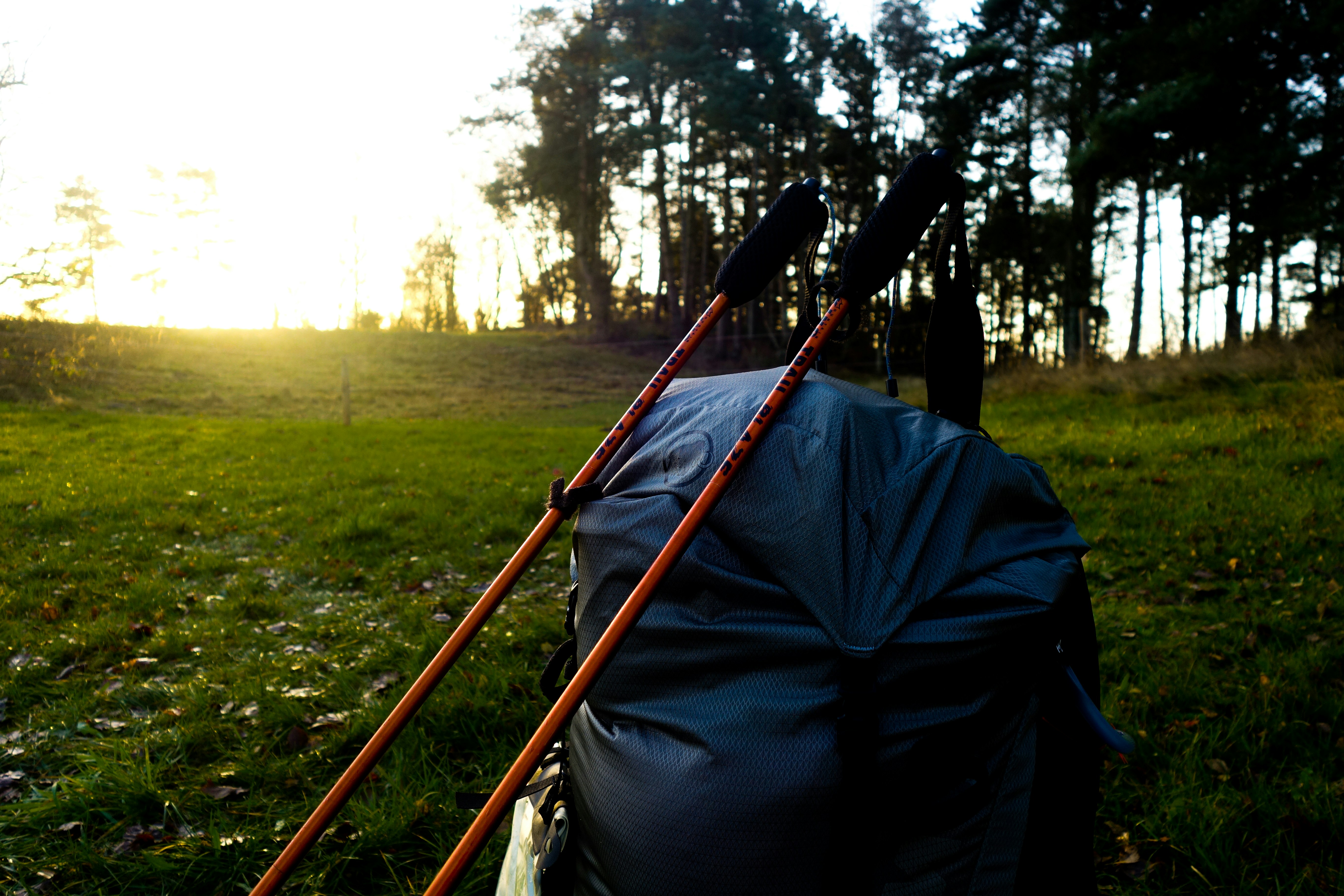
Best trekking poles
Reduce knee strain when carrying a loaded multi-day pack.

Best lightweight hiking boots
Lighter boots help when you’re sizing down on pack capacity.
Common questions about hiking backpack size
The standard answer is 10 to 30 liters for day hikes, 30 to 50 liters for weekend trips, 50 to 70 liters for multi-day backpacking, and 70 liters or more for expeditions. The better answer is to size your pack to your actual gear inventory, not the trip length on a generic chart. Two hikers doing the same weekend trip with different gear loads will need different sized packs.
Most day hikers need 15 to 25 liters. Trail running and short summer hikes work in 10 to 15 liters. Full-day hikes with the 10 essentials, weather layers, food, and 2 to 3 liters of water sit in 18 to 25 liters. Winter day hikes with extra insulation, traction, and emergency gear push up to 25 to 35 liters. Anything over 30 liters for a day hike is usually overpacking.
30 to 50 liters covers the standard weekend backpacking trip. Lightweight backpackers with compact gear can fit a one-night trip in 30 to 35 liters. Traditional weekend gear with a synthetic sleeping bag, larger tent, and conventional cookware needs 45 to 55 liters. The deciding factor is gear bulk, not trip length: lay out your kit and choose pack size by what actually fits.
50 to 70 liters is the classic recommendation for trips of 3 to 7 days, but the actual sweet spot depends on base weight. A traditional backpacker with a 25 to 35 lb base weight needs 60 to 70 liters. A lightweight backpacker at 15 to 20 lb base weight fits comfortably in 45 to 55 liters. An ultralight thru-hiker at 8 to 12 lb base weight runs 35 to 45 liters even on a multi-week trip.
For an experienced lightweight or ultralight backpacker, yes. For most beginners using conventional gear, no. A 40 L pack carries a one-night summer trip comfortably with compact gear, or a multi-night trip if your base weight is under 15 lb. With traditional gear (a 5 lb tent, a 4 lb sleeping bag, conventional cook kit), 40 L feels cramped after the first night when food bulk decreases but everything else stays the same.
Yes, indirectly. Pack capacity (in liters) is independent of your body size. Pack frame fit (torso length and hip belt) absolutely depends on your body. A 60 L pack from Osprey, REI, or Gregory comes in three to four torso sizes for the same capacity. Get the capacity right based on your gear, then get the frame size right based on your body. Both matter, neither is optional.
Capacity in liters does not need to be smaller for women. The frame, however, often does. Women-specific packs typically have shorter torso lengths, narrower shoulder strap spacing, and hip belts contoured for wider hip-to-waist ratios. Many women fit men’s packs in size small or extra-small just fine; many do not. The right answer is body fit, not gendered marketing.
