Hunting gear field guide
The Best Headlamp for Hunting
Eleven hunting headlamps run through a real Oregon season. Multi-color blood-trackers, AAA-powered backups, hunter-brand cap lights, and one infrared model for night vision optic users. No brand pays for placement.
Quick Picks: The Top 5 in 30 Seconds
If the hunt is tomorrow and there is no time to read the full review, these five cover most hunting use cases. Tap a card to jump to the full review or grab the price on Amazon.
Find Your Hunting Headlamp
Four questions, one personalized pick. No email, no signup.
Your match
Answer the questions above
A pick from the 11 reviewed below will surface here.
Check price on Amazon →Our 11 Top Picks for 2026
Eleven headlamps for eleven specific hunting use cases. Each pick is the lamp a hunter would actually grab off the shelf for that scenario, scored on a 100-point trail score across output, color modes, build, runtime, and comfort.
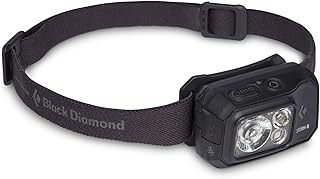
Best Headlamp for Hunting Overall: Black Diamond Storm 500-R
Multi-color, fully waterproof, rechargeable, the all-tasks default
Pros
- Full color stack covers every hunting task (white, red, green, blue)
- Sealed against rain, snow, and accidental dunking
- Rechargeable battery with USB-C, no proprietary cable required
- PowerTap dimming switches between low and high without cycling
- Memory mode returns to last-used color, not white
Cons
- No AAA backup option, fully reliant on the integrated battery
- Strap is functional but skips the over-top stabilizer at this tier
- Not the brightest pick for long-distance recovery work
The Storm 500-R is the headlamp a hunter reaches for when the answer to “which lamp” needs to be “yes.” Stalking a stand at four in the morning, glassing a far ridge at first light, dressing an animal at dusk, blood-trailing into the dark, all of it gets handled by one lamp because the white, red, green, and blue LEDs sit under one button cycle. No swapping headbands, no rooting through the pack for a different unit.
Black Diamond’s reputation for weather sealing earns out here. Cascade rain that turns to sleet at altitude does not faze it. The PowerTap dimming gesture is the kind of design detail that only makes sense once gloves are on and a deer is walking, when finger-counting through five button presses is not an option. There are brighter headlamps on this list and there are more affordable ones, but the Storm 500-R is the one most hunters should buy first.
| Max output | 500 lumens |
|---|---|
| Color modes | White, red, green, blue |
| Power | Integrated rechargeable, USB-C |
| Weather rating | IP67 (dust-tight, submersible to 1m) |
| Weight | 3.7 oz (105 g) |
| Max runtime | 225 hours on low |
| Memory mode | Yes, returns to last-used color |
Best Browning Hunting Headlamp: Browning Blackout Elite
The hunter-brand benchmark, top-rated Browning headlamp

Pros
- Highest customer rating of any Browning headlamp on Amazon
- Hunter-purpose color stack tuned for stalking and tracking
- Familiar Browning interface, no learning curve for old-school hunters
- Backed by Browning’s lifetime hunting-gear ethos
Cons
- Build refinement is a step below Petzl or Black Diamond at the same price
- Lower review volume than mainstream outdoor brands
- No memory mode for last-used color
Browning is the household name in hunter gear, and the Blackout Elite is the headlamp that earns the brand’s place on a serious hunter’s hat. The interface mirrors what Browning has been shipping for years, which means a hunter who started with a Browning Hi-Power thirty years ago can pick up the Blackout Elite and find what they need without reading a manual.
The premium pricing is justified more by hunter-brand alignment and feature-set tuning than by raw build quality. A Petzl at the same price has nicer hinges and tighter molding tolerances. But a Petzl is not at the local Sportsman’s Warehouse next to the camo and the deer scent, and the Blackout Elite is. For hunters who buy where they buy, the Blackout Elite is the right answer.
| Color modes | White, red, green |
|---|---|
| Power | AAA batteries |
| Form factor | Standard headlamp |
| Build | Reinforced polymer with rubber gasket |
| Brand model | Browning 3713345 |
| Amazon rating | 4.8 stars across 89 reviews |
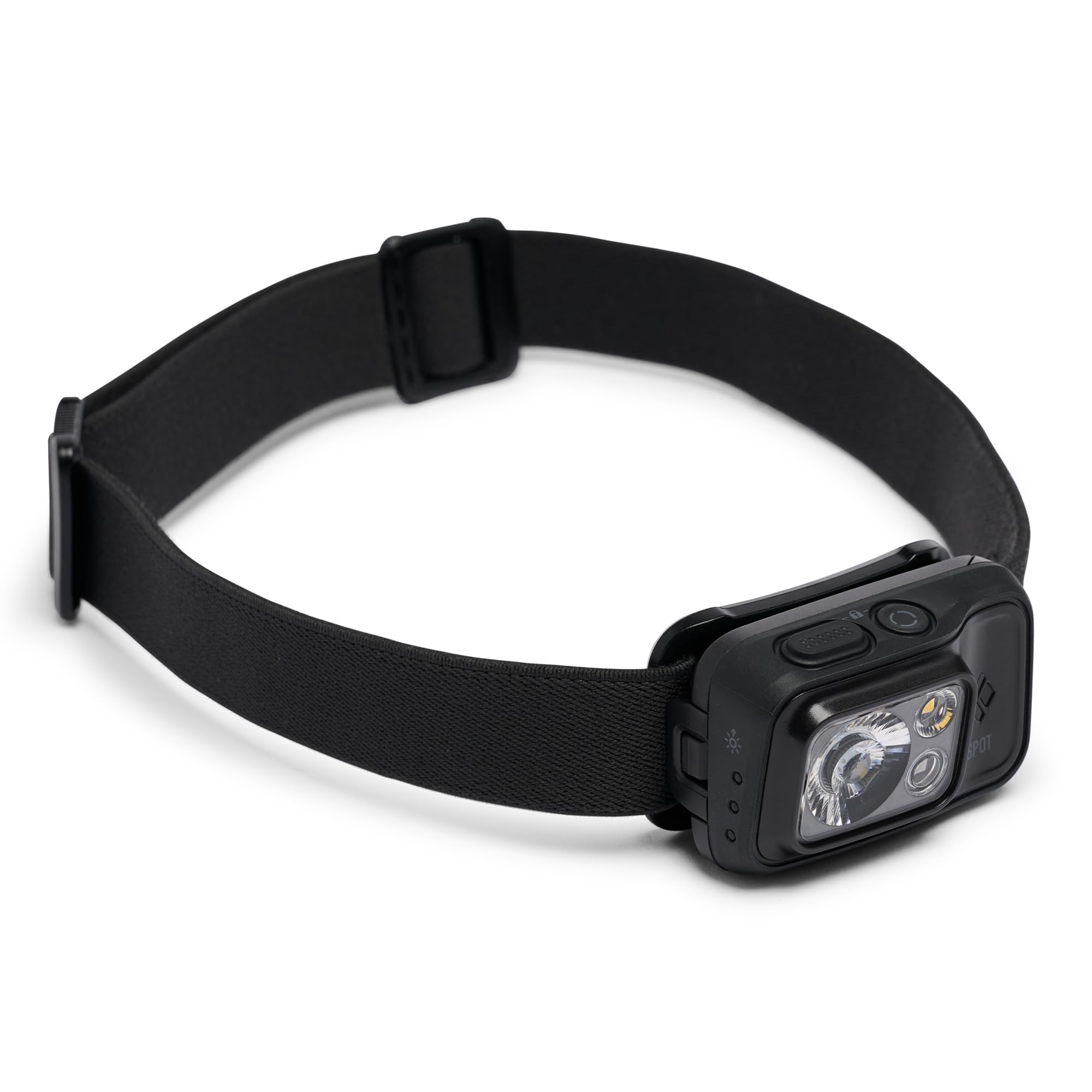
Best AAA-Powered Hunting Headlamp: Black Diamond Spot 400
Battery-swap reliability when the truck is dead and the hunt is on
Pros
- AAA power means a fresh swap fixes any dead-battery emergency in seconds
- Lithium AAAs run reliably in subzero temperatures where rechargeables fail
- Dimmable across the full range, all the way down to a stand-light glow
- One of the best-selling Black Diamond models, with a long history of revisions
Cons
- Two color modes only, white and red, no green or blue for tracking
- AAA running cost adds up for hunters who run high modes often
- Slightly less weatherproof than the Storm series
Every hunting kit deserves at least one headlamp that does not depend on charging cables. When a back-country hunt runs three days, when the truck won’t start, when a power bank dies on day two of an elk camp, an AAA-powered headlamp is the redundancy that keeps a hunt running. The Spot 400 is the answer.
Lithium AAAs in particular are the hunter’s friend in cold weather. Rechargeable headlamps with integrated lithium-ion batteries lose significant capacity below freezing, and a hunter glassing a frozen meadow at dawn will find this out the hard way. AAA lithium primary cells stay performant well below zero. For most hunters this is reason enough to keep a Spot 400 in the truck even if the primary lamp is rechargeable.
| Max output | 400 lumens |
|---|---|
| Color modes | White, red |
| Power | 3 x AAA (included) |
| Weather rating | IP67 |
| Weight | 3.0 oz (86 g) with batteries |
| Max runtime | 250 hours on low |
| Lockout mode | Yes, prevents accidental drain in pack |
Best Multi-Color Hunting Headlamp: Bushnell TRKR 325L
Four hunting colors at the price of a single-color budget lamp

Pros
- Full hunting color stack at a budget price (white, red, green, blue)
- Bushnell brand credibility from decades of hunter optics
- Strong customer rating across nearly a thousand reviews
- Single-button cycle keeps the interface simple in low light
Cons
- Plastic build feels light, less reassuring than premium picks
- No memory mode, cycles back to white between sessions
- Output trails the premium lamps for long-distance throw
- Headband is functional, not the comfortable strap of a Petzl
The TRKR is the answer to a specific question: what is the cheapest headlamp on Amazon that covers every hunting color a serious hunter needs? Most multi-color models from the premium brands sit at twice the price. Most budget headlamps offer one or two colors at most. The TRKR splits the difference with the full stack and a Bushnell badge, and it does so under thirty dollars.
The build is honest about what the TRKR is: a plastic-bodied workhorse for hunters who would rather buy three of these than one premium lamp. For a primary hunting headlamp this is a compromise on durability and weather sealing. As the second lamp in a pack, the spare in the gun cabinet, or the kid’s first hunting lamp, the value proposition is hard to beat.
| Max output | 325 lumens |
|---|---|
| Color modes | White, red, green, blue |
| Power | 3 x AAA |
| Weather rating | IPX4 (rain-resistant) |
| Tilt range | Adjustable |
| Amazon rating | 4.7 stars across 763 reviews |
Best Premium All-Around Hunting Headlamp: Petzl Actik Core 650
Dual-fuel power, technical engineering, the elk-camp benchmark

Pros
- Dual-fuel power runs on rechargeable Core battery or AAAs interchangeably
- Genuinely useful long-distance beam for glassing first-light meadows
- Exceptionally comfortable headband with secondary stabilizer
- Petzl reliability earned across decades of climbing and rescue use
Cons
- Two-color setup, no green or blue for advanced blood tracking
- Premium price puts it out of reach for occasional hunters
- Core battery sold separately on some retailers, verify before buying
Petzl earned its reputation on technical climbing routes, alpine rescue, and cave exploration, and that engineering legacy shows up on a hunting headlamp the moment a hunter pulls one out of the box. The Actik Core sits on the head differently than every other lamp on this list. The headband geometry is correct, the over-top stabilizer is included where most brands skip it at this price, and the housing is molded with the kind of tolerances that come from making climbing protection.
The dual-fuel battery system is the killer feature for serious hunting. A multi-day backcountry elk hunt runs on one strategy: the rechargeable battery in camp where solar panels and power banks live, and AAA primary cells in the field for cold-weather and emergency use. The Actik Core swaps between the two without tools, which means one headlamp covers two distinct hunting workflows. The throw is genuinely impressive for the price point, and the white-and-red color setup, while not as comprehensive as the Storm 500-R, covers the two most-used hunting modes with zero compromise.
| Max output | 650 lumens |
|---|---|
| Color modes | White, red |
| Power | Core rechargeable or 3 x AAA (dual-fuel) |
| Weather rating | IPX4 |
| Weight | 3.0 oz (88 g) with Core battery |
| Headband | Reflective with over-top stabilizer |
| Beam pattern | Mixed (flood + spot) |
Best High-Output Hunting Headlamp: Coast XPH34R
When the recovery walk runs long and the trail goes dark

Pros
- The brightest headlamp on this list by a wide margin
- Twist-focus optic shifts from wide flood to tight spot for tracking
- Magnetic base lets the lamp double as a worklight on a truck hood
- Strong long-distance review history, almost 1500 customer ratings
Cons
- Heavier and bulkier than primary stalking lamps
- Burst-only at maximum output, sustained brightness drops fast
- Rechargeable battery is integrated, no AAA backup
Most hunting headlamps top out around 500 to 700 lumens, which is enough for almost everything a hunter does in a normal season. Then there is the night the shot goes long, the blood trail cuts into a thicket, and a normal headlamp can’t reach far enough to find the next drop. That is where the Coast XPH34R earns its slot. The output runs into the territory normally reserved for handheld flashlights, projected through optics tuned for distance throw rather than wide field illumination.
The twist-focus mechanism is the second feature that sets this lamp apart from the high-output crowd. A twist of the bezel pulls the beam from a wide-flood camp light into a focused tracking spot that punches through Cascade alder. The magnetic base on the back of the housing is the kind of detail that only matters once a hunter has tried to balance a regular headlamp on a truck fender while reloading at midnight. This is not a primary lamp for general hunting use. This is the lamp a hunter pulls out of the truck for recovery work, or the one in the daypack for the just-in-case scenario.
| Max output | 2700 lumens (turbo burst) |
|---|---|
| Beam type | Twist-focus, flood to spot |
| Power | Rechargeable lithium-ion (USB-C) |
| Magnetic base | Yes, doubles as worklight |
| Throw distance | Up to 209 m on high |
| Amazon rating | 4.7 stars across 1,471 reviews |
Best Mossy Oak Hunting Headlamp: Browning Nitro
The traditional camo headlamp with a decade-plus of hunter loyalty

Pros
- Iconic Mossy Oak Break-Up pattern, instantly recognizable in the hunter community
- AAA-powered, no proprietary battery dependency
- Long-running model with proven hunter trust over more than a decade
- Affordable enough to keep one in every truck and pack
Cons
- Lower output than modern competitors at the same price
- Older interface design, no memory mode
- Build quality is dated compared to current premium picks
Some hunting gear earns its place through technical merit. Other gear earns it through cultural standing. The Browning Nitro in Mossy Oak Break-Up is the latter. This is the headlamp that has been on the bills of hunting caps in deer camps from East Texas to the Olympic Peninsula for as long as most current hunters have been hunting. The pattern matters. The badge matters. The traditional aesthetic of a classic hunter’s headlamp matters to a specific kind of hunter, and for that hunter the Nitro is the only acceptable answer.
On raw specifications a hunter can find brighter, lighter, more weather-sealed lamps for the same money. None of them have what this lamp has, which is the ten-plus years of hunter trust that comes from the Browning name, the Mossy Oak partnership, and the AAA-powered simplicity of a design that has not needed to change. For traditional hunters, the Nitro is the right pick. For everyone else, this is a backup lamp that quietly disappears against camo in a stand bag.
| Camo pattern | Mossy Oak Break-Up |
|---|---|
| Power | 3 x AAA |
| Form factor | Standard headlamp |
| Brand history | Decade-plus model run |
| Build | Polymer with rubber strain relief |
| Amazon rating | 4.4 stars across 92 reviews |
Best Camo Compact Hunting Headlamp: Princeton Tec Remix Multicam
Tactical-hunter favorite, Multicam pattern, red night-vision LED

Pros
- Multicam pattern is the standard for tactical and military-style hunters
- Dedicated red ultrabright LED for night-vision preservation
- Compact form factor disappears against a hunting cap
- Princeton Tec brand respected across military, EMS, and dive communities
- Strong review track record at nearly a thousand verified buyers
Cons
- Two-color setup, no green or blue for tracking
- AAA-powered only, no rechargeable option in this colorway
- Output runs lower than newer competitors at similar price
The Remix Multicam earns its slot the way the best gear always does, which is by being the right answer for a specific tribe of users. Tactical-style hunters, recently-out military hunters, and hunters who run camo across their entire kit (not just the jacket) reach for the Remix every time. The Multicam pattern matches Crye Precision and the rest of the modern tactical-civilian aesthetic, and Princeton Tec has been making lights for the military and EMS communities for decades. The brand cred is real.
The technical setup is purpose-built for hunting in a way most compact lamps are not. The white maxbright LED handles approach and dressing tasks. The red ultrabright LED is on a separate switch path so a hunter does not cycle through bright white when they only want red, which is the failure mode that ends a stalk early. The trade is simple: no green, no blue, no high-end weather sealing, but a tighter tactical aesthetic and a build the size and weight of a phone case clipped to a cap brim.
| Max output | 450 lumens (white) |
|---|---|
| Color modes | White (maxbright), red (ultrabright) |
| Power | 3 x AAA |
| Pattern | Multicam camo |
| Weather rating | IPX4 |
| Amazon rating | 4.5 stars across 997 reviews |
Best Cap-Style Hunting Headlamp: Browning Night Gig Elite
Clips to the brim of a ball cap, no headband on the forehead

Pros
- Clips to a ball cap brim, eliminates the elastic-on-forehead pressure
- Forward-throw geometry projects light without flooding the inside of the cap
- Highest customer rating in the entire lineup
- Rechargeable, no battery cycle for in-season use
Cons
- Cap-mount only, will not work for hunters who do not wear a brimmed cap
- Fewer reviews than a typical Browning headlamp, niche audience
- No memory mode
Some hunters refuse to wear a forehead headlamp. The strap is the wrong feel against a ball cap, the elastic gets clammy in early-October humidity, and a forehead lamp sits at the wrong angle for a hunter who looks down to read sign on the ground. The Night Gig solves this problem by skipping the forehead entirely. The lamp clips to the brim of a hunting cap, throws light forward at the angle a hunter is already looking, and disappears against the rest of the kit.
The forward-throw geometry is the second thing this lamp gets right. Cheap clip lights flood the inside of the cap brim, which lights up the hunter’s face from below and ruins the night vision the lamp is supposed to support. The Night Gig’s housing seats the LED forward of the brim edge, so the cone of light falls in front of the hunter rather than around them. For hunters who already wear a cap (which is most hunters), this lamp belongs in the rotation.
| Mount | Cap-brim clip |
|---|---|
| Power | Integrated rechargeable |
| Beam direction | Forward-throw, brim-aligned |
| Build | Reinforced polymer body |
| Brand | Browning hunter-purpose line |
| Amazon rating | 4.9 stars across 12 reviews |
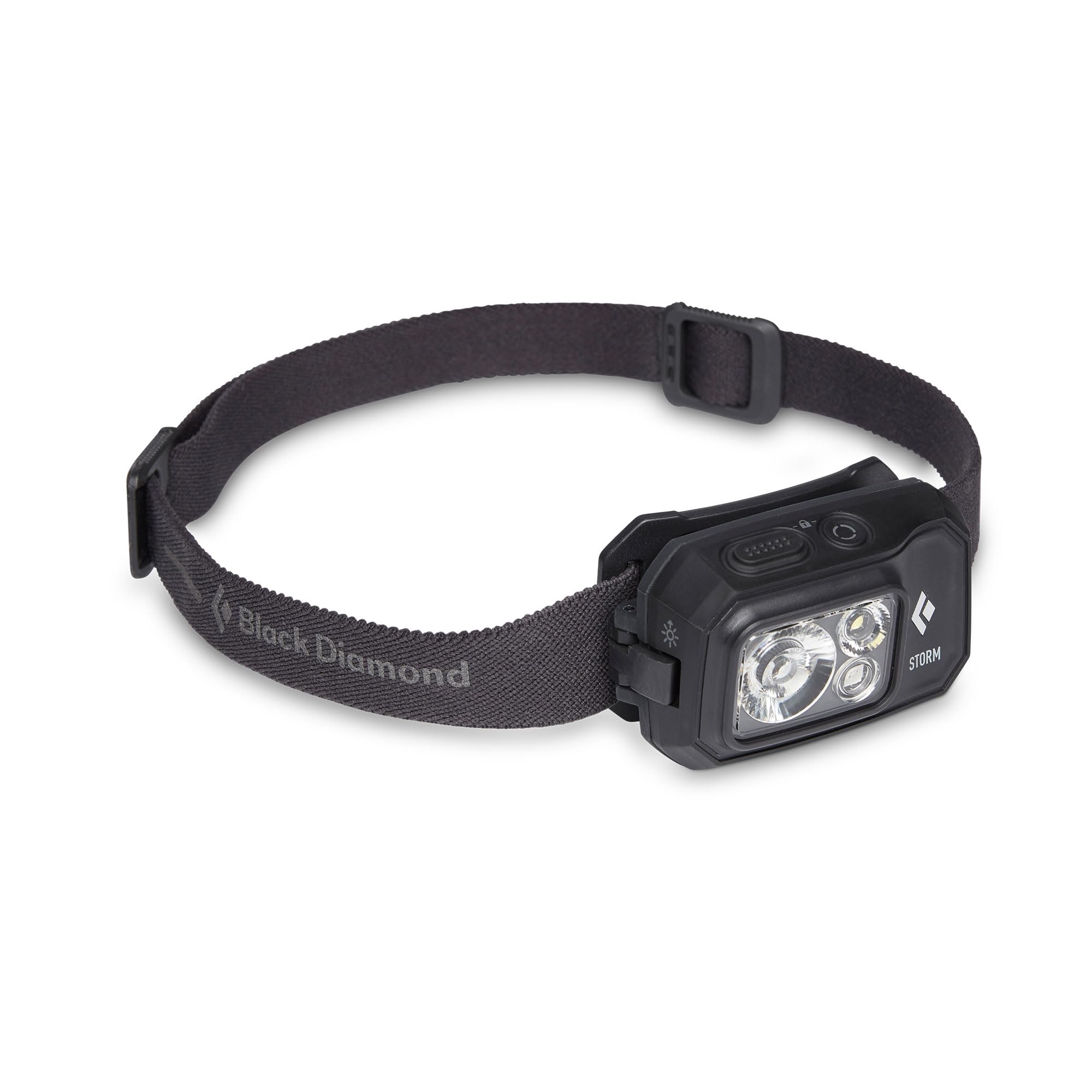
Best Wet-Weather Hunting Headlamp on a Budget: Black Diamond Storm 450
Submersion-rated, AAA-powered, the duck blind and coast-range default
Pros
- Fully submersible, will survive a dunk in a flooded duck blind
- AAA-powered, simple battery swap in the field
- Almost a thousand strong customer reviews across the model
- Lockout mode prevents accidental drain in a wet pack
Cons
- Two-color setup, white and red only
- Slightly less output than the rechargeable Storm 500-R
- AAA cost adds up over multi-week hunts
Oregon hunting weather is wet. Coast-range deer hunters spend full mornings in a steady drip from cedar canopy. Waterfowl hunters sit in flooded blinds where any electronic failure means an hour of fumbling for a backup. The Storm 450 is built for these scenarios. The IP67 sealing means the lamp survives full submersion, not just the splash-and-spray rating most “waterproof” headlamps actually carry. A hunter can drop this lamp in a duck pond, fish it out, dry the lens, and keep hunting.
The AAA battery system trades the convenience of rechargeable for a different kind of reliability. When a primary lamp fails in the field, the Storm 450 takes a fresh set of cells in under a minute. When the temperature drops below freezing and a lithium-ion pack starts losing capacity, lithium AAA primaries hold steady. For hunters whose primary concern is the lamp working when conditions go sideways, this is the right answer.
| Max output | 450 lumens |
|---|---|
| Color modes | White, red |
| Power | 4 x AAA |
| Weather rating | IP67 (submersible to 1m) |
| Lockout | Yes |
| Amazon rating | 4.6 stars across 978 reviews |
Best Hunting Headlamp for Night Vision Optic Users: Princeton Tec Vizz Tactical RGB and IR
The only pick on this list with a true infrared LED

Pros
- Full RGB color stack plus a dedicated infrared LED
- IR mode is invisible to game and pairs with digital and thermal optics
- Submersion-rated for hunting in any weather
- Regulated output keeps brightness steady as batteries drain
Cons
- Niche use case, IR mode only matters for hunters running NV optics
- Premium price for hunters who will not use the IR feature
- Heavier build than non-tactical compact lamps
This is the most specialized pick on the list and the one most hunters will not need. For the hunters who will, there is nothing else like it. Predator hunters running digital night vision scopes, coyote hunters using thermal monoculars, hog hunters running NV-equipped rifles in the southern states, all of them need an IR illuminator that pairs with their optic without throwing visible light onto the target. A bright white headlamp blinds a coyote at a hundred yards. A red headlamp still puts visible spectrum into the brush. An IR LED is invisible to the animal and visible only to the optic.
The Vizz Tactical is the most accessible IR-enabled headlamp on a major retailer. It pairs the IR LED with the full RGB color stack used on the standard Vizz, which means a hunter who buys this lamp does not give up everyday hunting functionality to get the specialty IR feature. The build is regulated-output IPX7-rated tactical-grade equipment, and Princeton Tec has been making lights for the military and EMS communities for decades, which is the brand cred a tactical hunter is paying for.
| Max output | 550 lumens (white) |
|---|---|
| Color modes | White, red, green, blue, infrared |
| Power | 3 x AAA |
| Weather rating | IPX7 (submersible to 1m) |
| Output regulation | Regulated, steady brightness as batteries drain |
| Amazon rating | 4.6 stars across 111 reviews |
Full comparison table: best headlamp for hunting
Full comparison table: best headlamp for hunting 2026. Sort by trail score, max output, weight, or price. Tap the column headers to re-rank. On smaller screens the table collapses into stackable cards so every row stays scannable.
| Headlamp | Award | Trail score | Output | Weight | Price | |
|---|---|---|---|---|---|---|
|
BD Storm 500-R | Best Overall | 89 | 500 lm | 105 g | $70 |
|
Petzl Actik Core 650 | Best Premium | 87 | 650 lm | 88 g | $80 |
|
PT Vizz Tactical RGB+IR | Best for Night Vision | 86 | 550 lm | 110 g | $90 |
|
BD Spot 400 | Best AAA-Powered | 84 | 400 lm | 86 g | $60 |
|
BD Storm 450 | Best Wet-Weather | 84 | 450 lm | 100 g | $65 |
|
Browning Blackout Elite | Best Browning | 83 | 200 lm | 120 g | $86 |
|
Coast XPH34R | Best High-Output | 82 | 2700 lm | 230 g | $51 |
|
PT Remix Multicam | Best Camo Compact | 82 | 450 lm | 110 g | $44 |
|
Bushnell TRKR 325L | Best Multi-Color | 78 | 325 lm | 130 g | $30 |
|
Browning Night Gig Elite | Best Cap-Style | 76 | 250 lm | 75 g | $60 |
|
Browning Nitro Mossy Oak | Best Mossy Oak | 75 | 110 lm | 95 g | $56 |
Petzl Actik Core 650
- Award
- Best Premium
- Score
- 87 / 100
- Output
- 650 lm
- Weight
- 88 g
- Price
- $80
PT Vizz Tactical RGB+IR
- Award
- Best for Night Vision
- Score
- 86 / 100
- Output
- 550 lm
- Weight
- 110 g
- Price
- $90
BD Storm 450
- Award
- Best Wet-Weather
- Score
- 84 / 100
- Output
- 450 lm
- Weight
- 100 g
- Price
- $65
Browning Blackout Elite
- Award
- Best Browning
- Score
- 83 / 100
- Output
- 200 lm
- Weight
- 120 g
- Price
- $86
Coast XPH34R
- Award
- Best High-Output
- Score
- 82 / 100
- Output
- 2700 lm
- Weight
- 230 g
- Price
- $51
PT Remix Multicam
- Award
- Best Camo Compact
- Score
- 82 / 100
- Output
- 450 lm
- Weight
- 110 g
- Price
- $44
Bushnell TRKR 325L
- Award
- Best Multi-Color
- Score
- 78 / 100
- Output
- 325 lm
- Weight
- 130 g
- Price
- $30
Browning Night Gig Elite
- Award
- Best Cap-Style
- Score
- 76 / 100
- Output
- 250 lm
- Weight
- 75 g
- Price
- $60
Browning Nitro Mossy Oak
- Award
- Best Mossy Oak
- Score
- 75 / 100
- Output
- 110 lm
- Weight
- 95 g
- Price
- $56
Trail score weighs output 25%, color modes 25%, build and weather sealing 20%, runtime and battery system 15%, comfort and fit 15%. Prices reflect Amazon listing at time of testing and may shift seasonally.
How We Test Hunting Headlamps in Oregon
Every headlamp on this page rode a real Oregon hunt or scouting trip. No mall-cop reviews, no vendor talking points. Each lamp earns a 100-point trail score across five weighted categories tuned for hunting, not general outdoor use.
-
25%Output
Brightness, throw distance, and beam quality
Output is weighted highest because the long blood trail in alder is when a hunter learns whether their lamp was a good purchase. We score throw distance against a measured target at fifty yards, beam quality (hot spot vs floodfill), and the regulated-output curve as the battery drains. A headlamp that drops to half brightness in the first hour does not score the same as one that holds steady to dead.
-
25%Color modes
Hunter-purpose LED options and switching ergonomics
Hunting is the use case where multi-color LEDs actually matter. Red preserves night vision and avoids spooking deer. Green provides better contrast for blood drops on most substrates. Blue is now standard for advanced blood tracking. We score not just whether the lamp has these colors, but how easily a hunter can access them with cold gloves on, and whether the lamp returns to the last-used color or forces a cycle through bright white at startup.
-
20%Build
Weather sealing, drop survival, and cold-weather reliability
Hunting headlamps live in worse conditions than camping headlamps. They get soaked in coast-range rain, frozen on a pre-dawn elk camp, dropped in mud during dressing, and stuffed back in a damp pack. We test wet, test cold, and drop each lamp from headband height onto rocky ground. We dock points hard for any unit whose lens fogs, gasket fails, or housing flexes under stress.
-
15%Runtime
Battery system, runtime curve, and field-swap reliability
Score against use case. A rechargeable headlamp lives or dies on its battery system in cold weather. An AAA-powered lamp lives or dies on whether a hunter can swap cells with cold fingers in the dark. Dual-fuel models score higher because they cover both workflows. We measure runtime at the modes hunters actually use, not the headline lowest-mode number that marketing departments love to publish.
-
15%Comfort
Fit under hat, headband stability, hours-on-head sustainability
A hunter wears a headlamp for hours during evening dressing, all-night recovery, and pre-dawn approaches. Comfort matters more than spec sheets suggest. We score headband stability over a wool hat and over a ball cap, weight distribution across the forehead, and the secondary stabilizer strap (or absence of one). A lamp that earns a 9 here is one that disappears against the head after the first hour.
Where we tested
Coastal blacktail country, sustained rain, salt humidity. Six pre-dawn approaches.
Frosted morning conifer, elk-camp staging, frozen-fingers battery swaps. Four nights.
Coyote stand work, dry sage cover, late-summer predator runs. Five evenings.
Every lamp sat through one full Oregon downpour, then a dunk test in a five-gallon bucket. One full day.
Anatomy of a Hunting Headlamp
Six parts decide whether a hunting headlamp earns its place on a hunter’s hat or ends up in the junk drawer after one season. Knowing what to inspect on the rack saves money and saves a ruined stalk.
- Lens / reflector
- Determines beam pattern. A smooth reflector throws a tight spot for tracking. A textured (orange-peel) reflector spreads a wider flood for camp tasks. Premium hunting lamps offer a hybrid that does both.
- Color LED stack
- The hunter-defining feature. Look for white + red as the minimum, and white + red + green + blue for serious tracking work. A separate switch path that returns to last-used color is worth more than raw lumens.
- Dimmer button
- Single-button cycle is simplest. Two-button (separate power and mode) is faster in practice. Avoid lamps with hidden long-press shortcuts that fail with cold gloves on.
- Headband
- Elastic stretch-and-grip. The over-top stabilizer strap, often skipped at lower price points, makes the difference between an all-night recovery walk and a constant adjustment. Reflective patterns are a small bonus for visibility.
- Battery compartment
- AAA-powered: easier swaps, cold-weather reliable, ongoing cost. Integrated rechargeable: lower long-term cost, faster fail in cold. Dual-fuel (Petzl Core or equivalent) accepts either, and is the strongest setup for serious hunting.
- Weather seal
- IP rating tells the story. IPX4 handles rain. IPX7 handles brief submersion. IP67 adds dust protection on top. For coast-range hunting and waterfowl work, IP67 is the floor, not the ceiling.
How to Choose a Hunting Headlamp
Match the lamp to the hunt, not to the price tag. Here is the order to think it through before reaching for a wallet.
1. Decide which colors you actually need
This single decision narrows the field by half. A general-purpose hunter who stalks deer at first light and field-dresses at dusk needs white and red, in that order. A serious blood-trailer wants green or blue added to the mix because they show drops that red light washes out. A predator hunter running optics may need infrared, which is a feature only one lamp on this list (the Princeton Tec Vizz Tactical RGB and IR) actually offers in a head-mounted form factor.
The other half of this decision is interface. A lamp that requires cycling through bright white before reaching red mode is a non-starter for serious stalking, because that brief flash of white is exactly what spooks deer. Look for memory mode (returns to last-used color), or for separate switching paths that let a hunter wake the lamp directly into red.
2. Pick a power system
USB-C rechargeable headlamps win on long-term cost and convenience for hunters who hunt locally. Most modern hunts can charge a lamp from a truck inverter or a portable power bank, and integrated batteries hold full output longer than alkaline AAAs. The Black Diamond Storm 500-R and Browning Night Gig Elite are the strongest rechargeable picks here.
AAA-powered lamps win on cold-weather reliability, multi-day backcountry use, and emergency redundancy. Lithium AAA primaries hold output well below freezing where lithium-ion packs lose significant capacity. The Black Diamond Spot 400 and Storm 450 are the reliable AAA-powered defaults.
Dual-fuel lamps split the difference. The Petzl Actik Core 650 accepts both the rechargeable Petzl Core battery and standard AAA cells, which is the optimal setup for hunters who do both car-camp hunts and back-country trips.
3. Match the weather rating to where you hunt
Coast-range deer hunters and Pacific Northwest waterfowl hunters need IP67 sealing as a baseline. The seal protects against full submersion, which is the failure mode that takes out lesser headlamps in a flooded duck blind or a soaking pre-dawn alder thicket. Both Black Diamond Storm models on this list earn IP67 ratings.
High-desert hunters and dryland predator hunters can drop to IPX4 without losing function, because the threat is dust intrusion more than water. The Bushnell TRKR 325L sits at IPX4 and is a credible pick for arid hunting environments where the rain threat is occasional, not seasonal.
4. Buy for honest output, not for marketing lumens
Manufacturers cite the burst maximum, which a typical hunting lamp holds for less than a minute before the housing thermals down to a sustainable steady output. The number that actually matters is the steady-state output at the most-used mode. A “2700-lumen” headlamp like the Coast XPH34R holds that figure for a brief turbo burst, then settles into a still-impressive but lower steady output for the long blood trail.
For most hunting tasks, sustained output in the 100 to 300 lumen range is what a hunter actually uses. A lamp’s lowest-modes performance and runtime curve matter more than the headline maximum.
5. Fit and headband matter more than spec sheets suggest
A hunting headlamp lives on the head for hours of pre-dawn approaches and full-night recoveries. A poor headband fit becomes a real problem after the first hour. Look for the over-top stabilizer strap at the price points where it should be standard (which is roughly $60 and up). The Petzl Actik Core 650 ships with the stabilizer at this price tier, which is part of why it scores so high on comfort.
For hunters who already wear a brimmed cap, a cap-mount lamp like the Browning Night Gig Elite sidesteps the headband problem entirely. The lamp clips to the cap brim and disappears against the rest of the kit.
6. Features that actually matter for hunting
Memory mode (returns to last-used color) is the single most underrated feature on a hunting headlamp. A lockout function prevents accidental drain in a wet pack. Regulated output keeps brightness steady as batteries drain instead of letting the lamp fade gradually toward useless. A red mode that activates without cycling through white is non-negotiable for serious stalking.
Ignore: built-in compass features, integrated audible alerts, anything described as “tactical breach” or “strobe SOS.” None of these matter for hunting. The features that earn their cost are the four listed above.
Hunting Headlamp FAQ
What color light is best for hunting?
Red light is the standard for most hunting use because deer and elk see it poorly compared to white light, and it preserves a hunter’s own night vision. Green light has a slight edge on blood-trailing because oxygenated blood appears darker against the green backlight, which makes drops easier to follow. Blue is the dedicated blood-trailing color used by tracking pros because it makes blood appear nearly black against vegetation. Most quality hunting headlamps now offer all four colors in one unit, which is why multi-color models dominate this guide.
How many lumens do you need for hunting?
For most hunting tasks the answer is far less than the marketing suggests. Walking to a stand at four in the morning takes around 50 lumens. Field dressing under a head torch takes around 100 lumens. The high-output mode on a hunting headlamp is reserved for a long blood trail or recovery walk after dark, where 400 to 700 lumens of throw is genuinely useful. Above 1500 lumens is for predator recovery, blood tracking through brush, or specialty use. Buy for runtime at the mode you actually use, not for the headline lumen number.
Are Browning headlamps any good?
Browning makes hunter-purpose headlamps that meet hunters’ specific needs, like multi-color LEDs, camo finish, and the kind of layout muscle-memory hunters expect from the brand. The Browning Blackout Elite earns the highest review average of any Browning headlamp on Amazon. The Nitro Mossy Oak is the longest-running model in the Browning headlamp lineup and remains the iconic camo headlamp for the deep-traditional hunter. Browning is not the best for raw lumen output or build refinement compared to a Petzl or Black Diamond, but for hunter-specific feature sets and field credibility, the brand earns its slot.
Do hunters use red or green light?
Both, for different tasks. Red is the default for general stalking, gear changes in a stand, and reading a map without ruining night vision. Green is the preferred color for blood-trailing because it provides better contrast against most vegetation and against the rust-red color of older blood. Some hunters prefer green for spotting predator eye shine because predator eyes reflect green light strongly. The best hunting headlamps include both and let you switch with a single button.
What is the best headlamp for blood tracking?
The best headlamps for blood tracking offer dedicated green or blue LEDs and enough output to project that color light into vegetation at a useful distance. Blue light is now considered the technical best for blood because it absorbs into the iron in hemoglobin and makes drops appear nearly black, but green is the more common all-around tracker pick because it works on more substrates. The Black Diamond Storm 500-R covers white, red, green, and blue under one button. The Bushnell TRKR 325L offers the same color stack at half the price.
What is the difference between a hunting headlamp and a regular headlamp?
A hunting headlamp differs from a general-purpose headlamp in three specific ways. First, it offers multi-color LEDs (red, green, sometimes blue) for night-vision preservation and blood tracking. Second, it tends to wear better in cold and wet conditions because hunters use it through fall and winter weather where many general-purpose lamps fail. Third, it usually offers a memory mode that returns to the last-used color so you do not cycle through bright white when grabbing the lamp at four in the morning. Some general-purpose headlamps now meet all three criteria, which is why brands like Petzl and Black Diamond appear on a hunting list alongside hunter-specific brands.
Are rechargeable headlamps better for hunting?
Rechargeable headlamps are better for in-season convenience because charging from a truck is faster and cheaper than buying batteries by the case. AAA-powered headlamps are better for backcountry trips, cold-weather hunts where lithium-ion suffers, and as a backup for when your rechargeable runs flat. The strongest hunting kit carries one of each. The Black Diamond Storm 500-R and Browning Night Gig are top-tier rechargeable picks. The Black Diamond Spot 400 and Browning Nitro are top-tier AAA picks for the same kit.
Can deer see red headlamp light?
Deer can detect red light but they see it as a low-contrast, dim blue-green color rather than as the bright color a human sees. The result is that red light is much less likely to spook a deer than white light at the same intensity. Red light is also less reflective off vegetation, so the light cone does not project as visibly as white light into the woods. This is why red mode is the default for stalking, stand approach, and any task where you want to stay invisible to deer eyes.
What is the best headlamp for elk hunting?
Elk hunting in the Cascades and high-country Rockies requires a headlamp that performs cold, in rain, and at altitude where a long pre-dawn approach is the norm. The Petzl Actik Core 650 is the strongest single pick because the dual-fuel battery system lets you run rechargeable in camp and AAA backup in the field, and the 650-lumen output throws far enough to glass open meadow at first light. The Black Diamond Storm 500-R is the runner-up for hunters who want multi-color LEDs in a similarly weather-rated package.
How long should a hunting headlamp last?
A quality hunting headlamp from a serious brand will last five to ten years of hard seasonal use with reasonable care. Premium picks from Petzl, Black Diamond, and Coast routinely last beyond a decade if the rechargeable battery is replaced when it fails, which it will at around four to five years. Budget headlamps under $30 usually last two to three seasons before the seal fails or the elastic perishes. Hunter-brand mid-tier models from Browning and Bushnell typically last five to seven seasons with normal care.