Footwear field guide
The Best Hiking Boots for Plantar Fasciitis
Twelve boots judged on the four things that actually matter when your heel hurts: whether the footbed comes out, how much arch the boot gives you before you spend another dollar, how firmly the heel is held, and how hard the sole resists twisting. Picks for men and women, from under sixty dollars to alpine.
Quick picks: the top five in thirty seconds
Five boots that cover most of what people arrive here looking for. Tap a card to buy, or keep scrolling for the full reasoning behind each pick.
Find your boot
Four questions, one recommendation from the twelve picks below. No email, no signup.
Your match
Answer the questions above
We will point you at the right boot from the twelve picks below.
Check price on Amazon →Our twelve top picks for 2026
Twelve boots, each earning its slot for a specific reason. Scores are ours and reflect plantar fasciitis suitability rather than general boot quality, so a superb backpacking boot can score modestly here if its footbed is glued down.
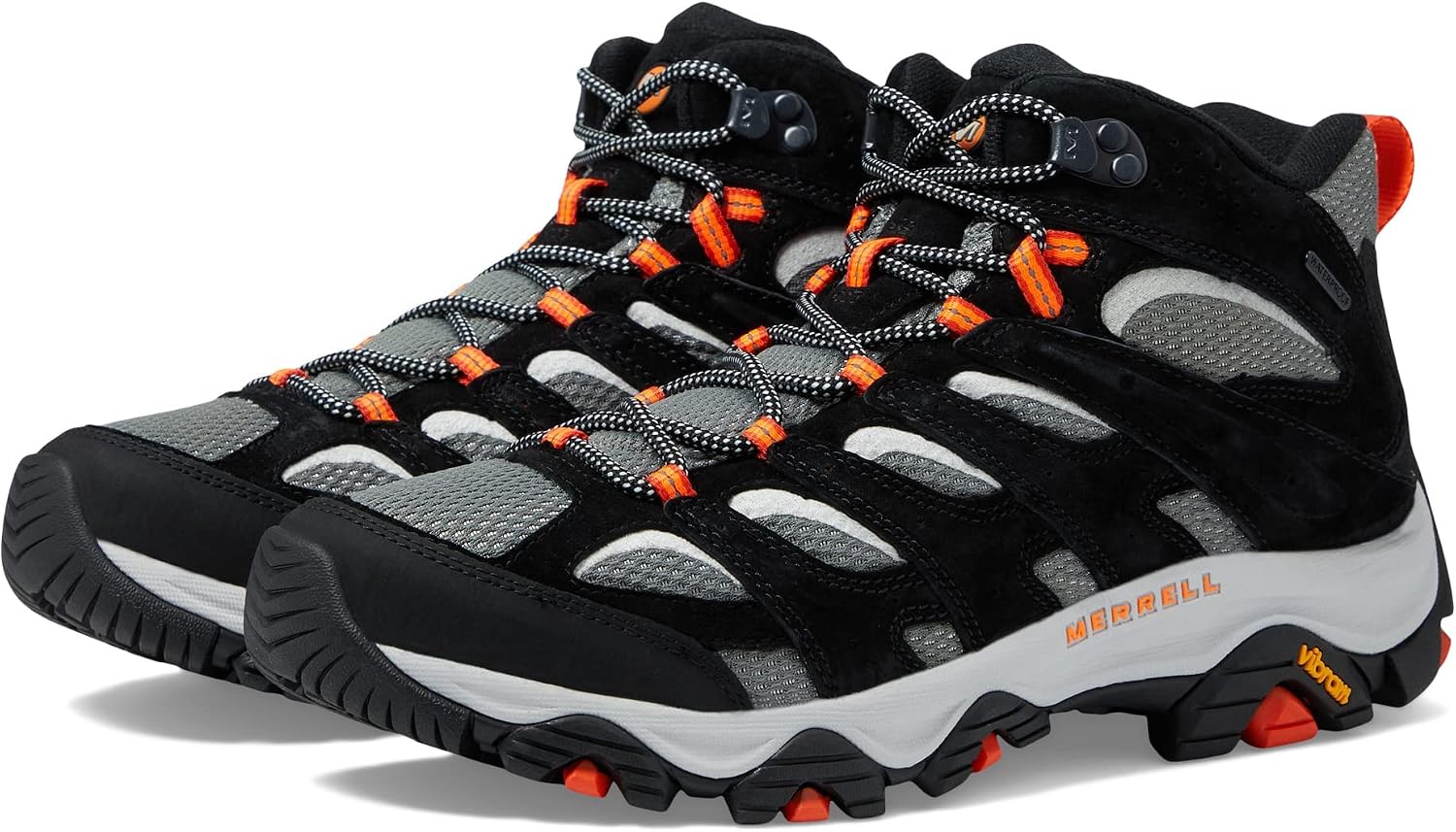
Best Hiking Boot for Plantar Fasciitis Overall: Merrell Moab 3 Mid Waterproof (Men’s)
The boot most likely to work with the orthotic you already own
Pros
- Kinetic Fit ADVANCED footbed lifts out cleanly and leaves a flat, full-depth footwell for a custom orthotic
- Molded nylon arch shank resists the twisting motion that irritates the fascia on off-camber ground
- External heel counter is stiff enough to stop rearfoot roll without a break-in period
- Sold in wide, so you are not forced up a half size to buy width
Cons
- Stock footbed leans cushioned rather than structured, so severe cases will still want an aftermarket insert
- Pigskin and mesh upper needs regular treatment to stay waterproof through an Oregon winter
- Mid collar sits high enough to irritate a sensitive Achilles on steep descents
Plantar fasciitis shopping usually comes down to one question that gear pages never answer: will this boot actually accept the insert my podiatrist made. The Moab 3 answers it better than anything else at this price. The Kinetic Fit footbed pulls out in one piece, and what it leaves behind is a flat, square footwell with no molded ridges fighting the orthotic underneath. Boots that glue in a contoured footbed force your insert to sit on top of someone else’s idea of an arch, and the stack ends up too tall in the heel and too soft under the midfoot.
The rest of the platform earns the top slot on its own. The nylon shank under the arch keeps the boot from wringing out like a towel when a foot lands across a root, which is the exact motion that pulls the fascia. The heel counter is firm from the first mile. Merrell also sells this in wide, and width matters more than most buyers expect, because a foot squeezed side to side flattens out and drops the arch further. If you are replacing a worn-out pair and you want the lowest-risk answer, start here.
| Upper | Pigskin leather and mesh |
|---|---|
| Waterproofing | M Select DRY membrane |
| Footbed | Kinetic Fit ADVANCED, fully removable |
| Arch structure | Molded nylon arch shank |
| Heel counter | External, firm |
| Midsole | EVA with air cushion in the heel |
| Outsole | Vibram TC5+ |
| Widths | Standard and wide |
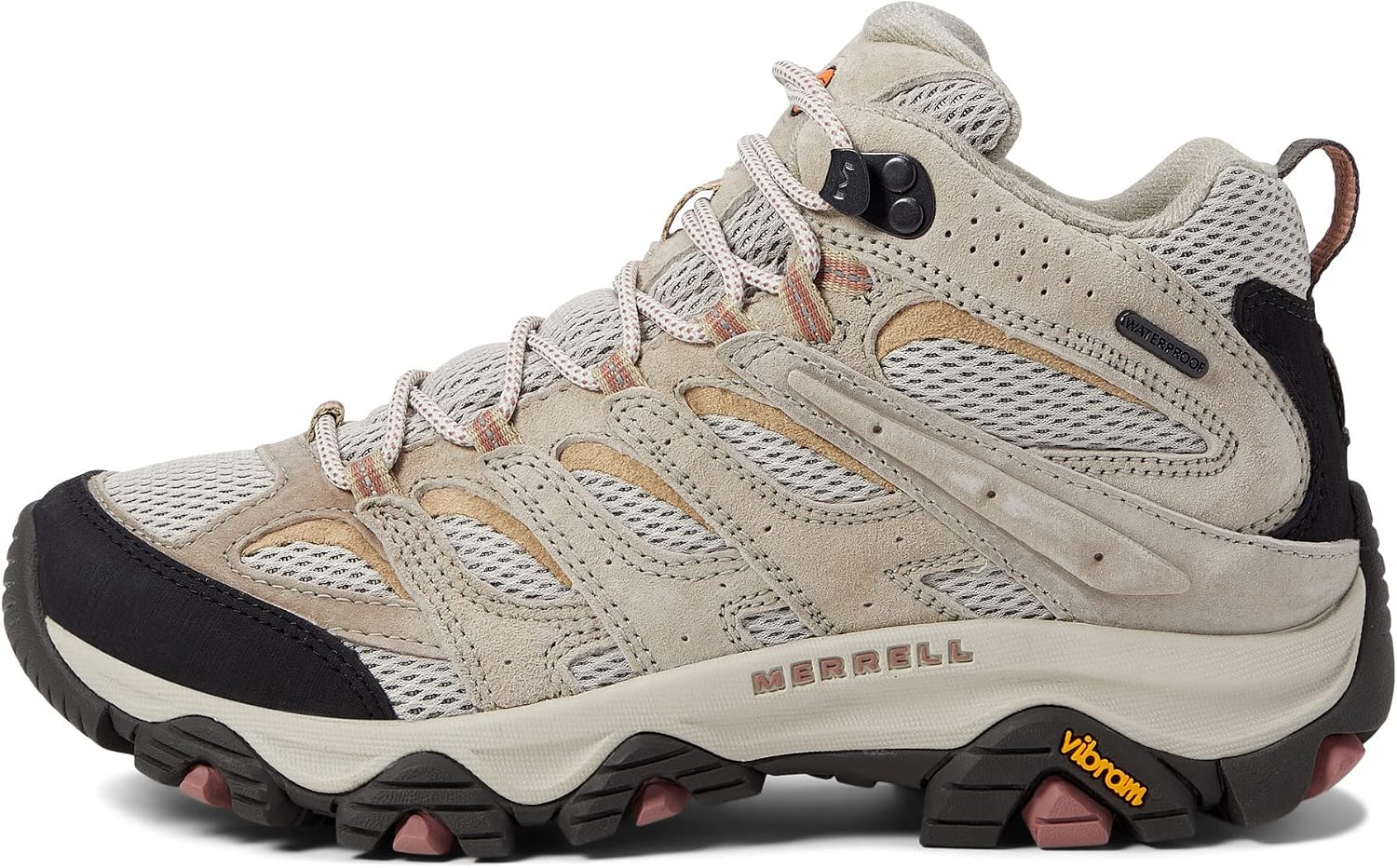
Best Hiking Boot for Plantar Fasciitis for Women: Merrell Moab 3 Mid Waterproof (Women’s)
Same orthotic-friendly platform, built on a women’s last
Pros
- Identical removable footbed system to the men’s boot, on a narrower heel and a lower instep
- Nylon shank under the arch holds its shape through a full season of trail miles
- Wide sizing available, which is unusual in a women’s hiking boot at this level
- Break-in is effectively none, so a flare-up does not get a two-week head start
Cons
- Sits at the top of the Moab 3 price range, where other colorways of the same boot often cost less
- Softer stock footbed than the Oboz, so plan on an insert for chronic cases
- Suede panels stain and darken with repeated wet use
Women’s hiking boots are too often the men’s mold shrunk down, which leaves a heel pocket that lets the rearfoot piston up and down. That movement is a problem when the fascia is already inflamed, because every slip adds a small stretch at the heel attachment. The women’s Moab 3 uses a genuinely different last with a tighter heel and a lower instep volume, and the difference shows up on descents where the foot wants to slide forward.
Everything that makes the men’s version the overall winner carries over. The footbed comes out, the footwell underneath is flat, the shank does its job, and wide is available off the shelf. The one thing to watch is the listing itself. Merrell prices this boot by colorway and the spread is wide, so the color you land on first is often not the cheapest one available. Check a few before committing, and if you would rather spend less outright, the Moab 2 Mid GTX runs on a similar chassis for noticeably less.
| Upper | Pigskin leather and mesh |
|---|---|
| Waterproofing | M Select DRY membrane |
| Footbed | Kinetic Fit ADVANCED, fully removable |
| Arch structure | Molded nylon arch shank |
| Heel counter | External, firm |
| Midsole | EVA with air cushion in the heel |
| Outsole | Vibram TC5+ |
| Widths | Standard and wide |
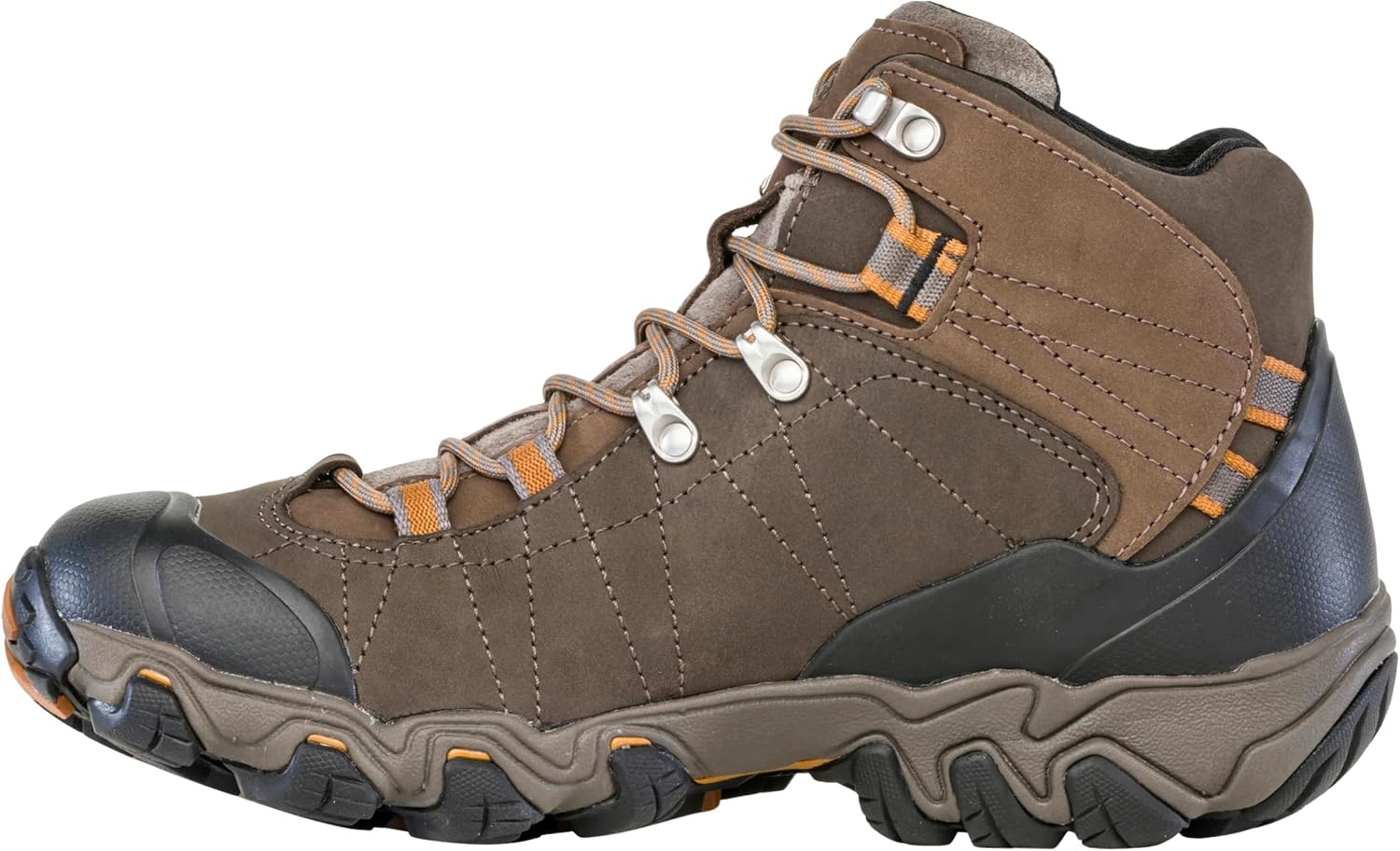
Best Arch Support: Oboz Bridger Mid B-DRY (Men’s)
The only boot here whose stock insole is worth keeping
Pros
- The O FIT insole is a contoured support with a real arch profile and a deep heel cup, not a foam sheet
- Deep heel cup keeps the fat pad under the heel where it belongs during heel strike
- Stiff nylon shank plus a supportive midsole gives the arch almost nothing to fight against
- Available in wide, with a roomier forefoot than the fit suggests from the outside
Cons
- The most expensive mainstream option on this list
- The molded footbed is so contoured that a custom orthotic can sit awkwardly on top of it
- Heavier underfoot than the Merrell, which is noticeable late in a long day
Nearly every hiking boot ships with a die-cut foam insole that exists so the boot does not feel empty in the store. Oboz is the exception. The O FIT insole is a molded support with a genuine arch profile, a deep heel cup, and enough density to hold shape under load. For a lot of people with plantar fasciitis, that means the boot works out of the box with no second purchase, which quietly makes the sticker price less brutal than it looks.
The support does not stop at the insole. The shank and midsole under the arch are stiff enough that the foot is not doing structural work on uneven ground, and the heel cup keeps the heel pad compressed under the bone instead of spreading out sideways. The trade-off is real: if you already own a custom orthotic, the molded footbed underneath is not the flat platform you want. In that case the Merrell is the better host, and the Oboz is the better boot for anyone shopping without an insert.
| Upper | Nubuck leather |
|---|---|
| Waterproofing | B-DRY membrane |
| Footbed | O FIT Insole Plus, removable and contoured |
| Arch structure | Molded arch with a deep heel cup, nylon shank |
| Heel counter | Firm, structured |
| Midsole | Dual-density EVA |
| Outsole | Oboz Sawtooth |
| Widths | Standard and wide |
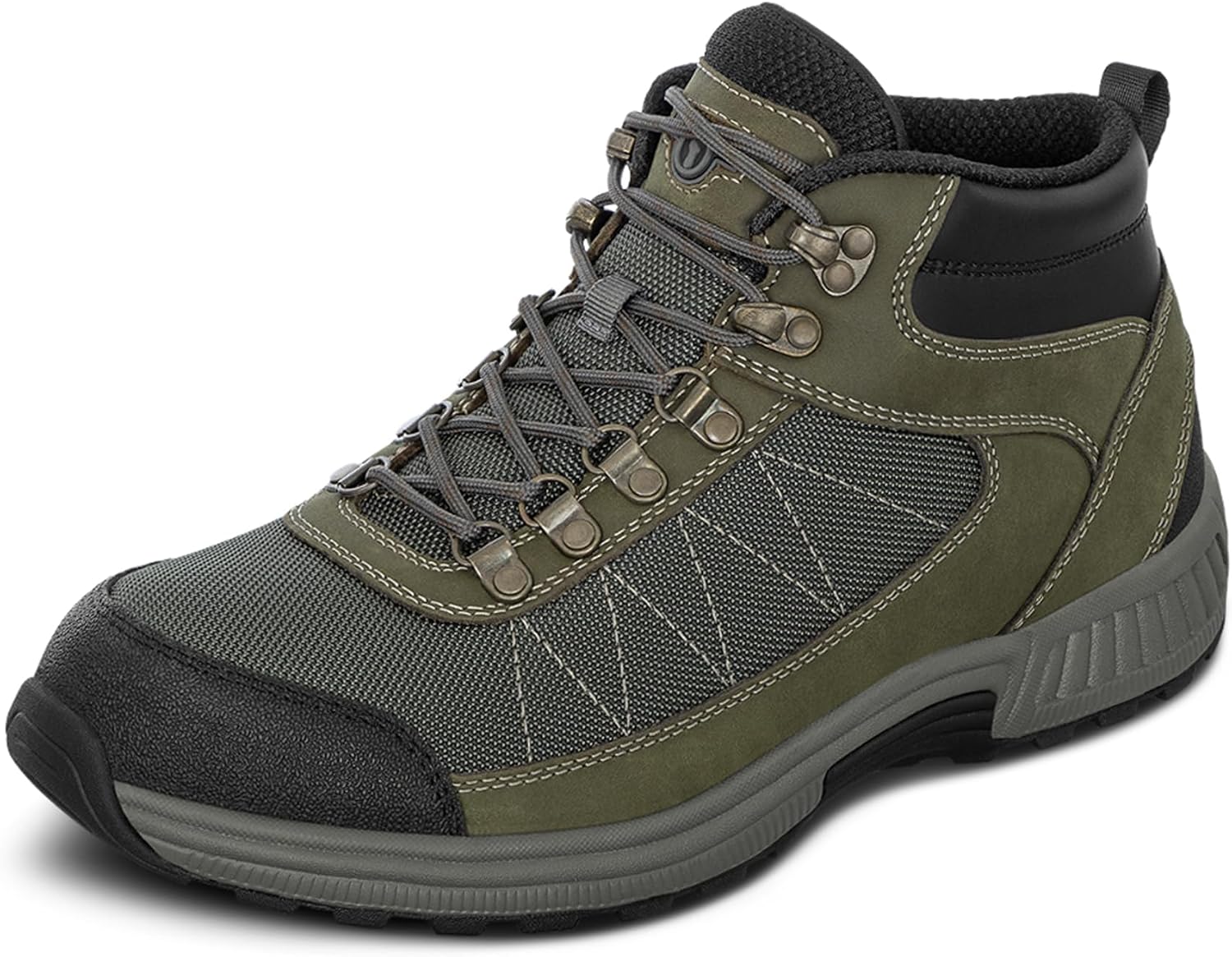
Best Orthopedic Build: Orthofeet Hunter (Men’s)
Built around the insert instead of around the outsole
Pros
- Extra-depth construction leaves headroom for a thick custom orthotic without cramming the toes
- Ships with stackable arch booster spacers so support height can be dialed in over a few weeks
- Heavily padded heel seat and a seam-free interior, which helps if swelling comes and goes
- Offered in wide and extra wide across the size run
Cons
- Softer torsionally than a true backcountry boot, so it is out of its depth on scree and rock
- Styling reads orthopedic rather than technical
- Waterproofing is adequate for damp trail, not for repeated stream crossings
Orthofeet designs from the insert outward, and for plantar fasciitis that ordering matters. The boot is built with extra depth, which is the quiet feature nobody markets: a prescribed orthotic is thicker than the foam it replaces, and in a normal boot that stack pushes the foot up until the toes hit the box. Here there is room for it. The included spacers let you raise the arch in stages rather than going from nothing to full support in one painful afternoon.
What you give up is chassis. This is a walking and light-trail boot, not something to take across talus, and the torsional flex shows up quickly on genuinely rough ground. Read it as the right answer for graded trail, forest roads, long approach walks, and the recovery months when you are trying to log miles without provoking a flare. For rock and off-camber terrain, the Oboz or the Salewa are the better tools.
| Upper | Leather and mesh |
|---|---|
| Waterproofing | Water-resistant treated upper |
| Footbed | Ortho-Cushion orthotic insole, removable |
| Arch structure | Anatomical arch support with stackable booster spacers |
| Heel counter | Padded, structured heel seat |
| Midsole | Ergonomic cushioning sole |
| Outsole | Lugged rubber |
| Widths | Standard, wide, extra wide |
Best Orthopedic Build for Women: Orthofeet Dakota (Women’s)
The women’s answer when a podiatrist is involved

Pros
- Same extra-depth interior and spacer system as the men’s Hunter, on a women’s last
- Seam-free lining and a soft collar, which matters if the heel is already tender
- Wide and extra wide are stocked rather than special order
- Cushioned sole geometry takes the sting out of hard-packed trail and gravel
Cons
- Flexible through the midfoot, so it wanders on side-slopes
- Fewer color options than the mainstream brands
- Weakest choice here if your hiking involves scrambling
The Dakota is the women’s counterpart to the Hunter and it solves the same problem: fitting a real orthotic into a real boot without turning the toe box into a vice. Extra depth, a removable insole, and the same stack of arch booster spacers means a prescribed insert goes in the way it was designed to, sitting flat with the arch where your podiatrist put it rather than perched on top of a molded foam hump.
Treat this as a trail-and-town boot rather than a mountain boot. The cushioning is generous and the interior is forgiving, which is exactly what you want during a flare or in the weeks after one. It is not the boot for a technical ridge, and it does not pretend to be.
| Upper | Leather and mesh |
|---|---|
| Waterproofing | Water-resistant treated upper |
| Footbed | Ortho-Cushion orthotic insole, removable |
| Arch structure | Anatomical arch support with stackable booster spacers |
| Heel counter | Padded, structured heel seat |
| Midsole | Ergonomic cushioning sole |
| Outsole | Lugged rubber |
| Widths | Standard, wide, extra wide |
Best Wide Toe Box: KEEN Targhee 4 Mid Waterproof (Men’s)
For heel pain that travels with a crowded forefoot

Pros
- Forefoot volume is genuinely generous, so the foot can splay instead of being squeezed narrow
- Removable footbed carries a defined arch and a shaped heel cup
- ESS shank between the midsole and outsole cuts torsional flex on rooted trail
- Wide sizing on top of an already roomy standard last
Cons
- The roomy forefoot lets the foot slide forward on steep descents unless you lock the lacing
- Bulkier profile than the Merrell, which some people find clumsy on narrow tread
- Heel pocket runs large, so thin socks can allow lift
Plantar fasciitis rarely arrives alone. It shows up alongside bunions, a splayed forefoot, or toes that have spent years being funneled into a narrow box, and squeezing a foot from the sides has a direct effect on the arch: the foot cannot spread under load, so it collapses downward instead. The Targhee is the mainstream boot that solves that geometry. There is real room across the metatarsals, and the arch and heel cup in the footbed still give the rearfoot something to sit in.
The updated footbed in this generation has more arch height than the outgoing model, which is the change that matters here. Underneath it, the ESS shank keeps the boot from twisting, so the fascia is not being asked to stabilize every awkward step. One fitting note: because the toe box is roomy, use the upper eyelets and a heel-lock lace to stop the foot from sliding forward on descents. Forward slide is what turns a good-fitting boot into a black toenail and a sore heel.
| Upper | Nubuck leather |
|---|---|
| Waterproofing | KEEN.DRY membrane |
| Footbed | Removable PU footbed with metatomical arch |
| Arch structure | Contoured arch over an ESS shank |
| Heel counter | Structured, external |
| Midsole | Compression-molded EVA |
| Outsole | KEEN.ALL-TERRAIN rubber |
| Widths | Standard and wide |
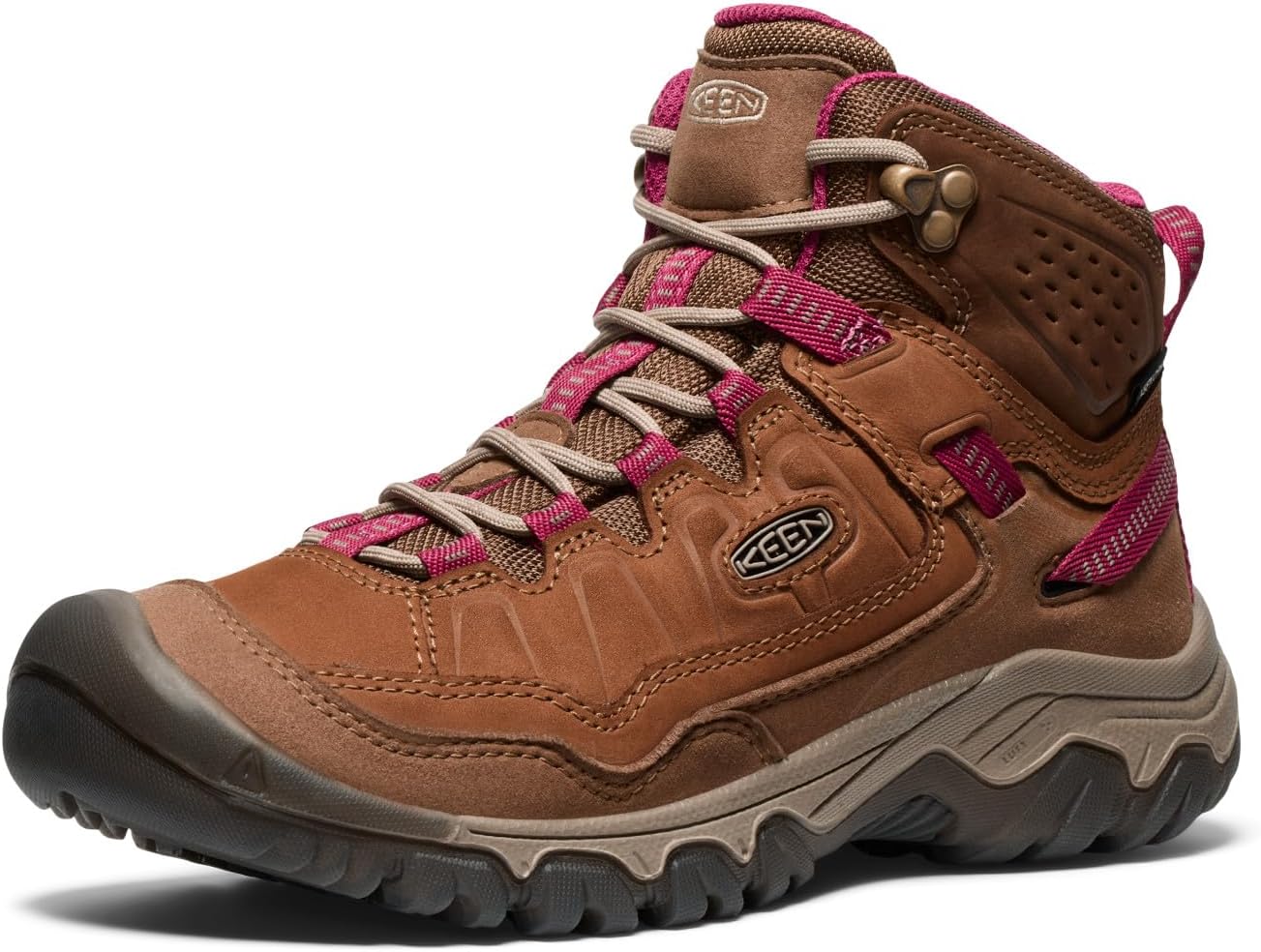
Best Wide Toe Box for Women: KEEN Targhee 4 Mid Waterproof (Women’s)
Room across the forefoot without giving up the arch
Pros
- Women’s last keeps the heel narrow while leaving the forefoot open
- Same contoured removable footbed and ESS shank as the men’s boot
- Wide sizing available, which is still rare in women’s hiking footwear
- Sheds the break-in period that stiffer leather boots demand
Cons
- Runs roomy enough that some hikers size down a half
- Toe bumper adds visual bulk to a women’s boot
- Heel cushioning is a step behind the Orthofeet on hard surfaces
The combination women’s buyers struggle to find is a narrow heel with a wide forefoot, and that is precisely the shape a lot of feet take when the arch has started to flatten. The Targhee women’s last is built that way on purpose. The rearfoot stays locked while the toes get room to spread, which keeps the arch from collapsing sideways every time weight transfers.
The footbed is contoured with a defined arch and a shaped heel seat, so unlike most stock insoles it does something useful before you replace it. Combined with the shank underfoot, this is a boot that resists twisting on the rooty, uneven tread that fills most of western Oregon. Size carefully. Roomy is helpful right up until the foot starts moving inside the boot.
| Upper | Nubuck leather |
|---|---|
| Waterproofing | KEEN.DRY membrane |
| Footbed | Removable PU footbed with metatomical arch |
| Arch structure | Contoured arch over an ESS shank |
| Heel counter | Structured, external |
| Midsole | Compression-molded EVA |
| Outsole | KEEN.ALL-TERRAIN rubber |
| Widths | Standard and wide |
Best Cushioning for All-Day Wear: Timberland Mt. Maddsen Waterproof (Men’s)
For flat miles, long approaches, and days that start on pavement

Pros
- Anti-fatigue footbed puts recovery foam directly under the heel strike zone
- Removable insole, so swapping in an insert is straightforward
- Full-grain leather upper holds its shape and supports the rearfoot as it breaks in
- One of the largest owner bases on this list, which makes sizing feedback easy to find
Cons
- Softer underfoot than the Oboz, so it flexes more on rocky ground
- Leather needs a genuine break-in window before it stops rubbing the ankle
- Runs warm in summer heat
Heel pain is worst under repetitive, low-variation impact. Flat trail, gravel road, and pavement produce the same heel strike thousands of times in a row, and that is where cushioning earns its keep. The anti-fatigue geometry in this footbed places recovery foam under the heel and the ball of the foot specifically, and on long graded miles the difference is noticeable by the end of the day.
The full-grain leather upper is the other half of the story. Once it molds, it behaves like a shell around the rearfoot and holds the heel in position, which is the mechanical goal for anyone protecting an inflamed fascia. It takes a real break-in to get there, so buy this one ahead of the trip rather than the week of. On technical ground it flexes more than the stiffer picks here, but for approach trail and forest road walking it is the best value on the page.
| Upper | Full-grain waterproof leather |
|---|---|
| Waterproofing | TimberDry membrane |
| Footbed | Anti-fatigue footbed, removable |
| Arch structure | Molded footbed arch, no rigid shank |
| Heel counter | Structured, leather-backed |
| Midsole | EVA with anti-fatigue geometry |
| Outsole | Rubber lug |
| Widths | Standard and wide |
Best Value: Columbia Newton Ridge Plus Waterproof (Women’s)
The sensible base to build on with a better insole

Pros
- Removable insole and a roomy footwell, so an aftermarket insert drops straight in
- Waterproof leather and suede upper at a price that leaves budget for a proper orthotic
- Structured heel counter that is firmer than the price suggests
- Wide sizing available across most of the size run
Cons
- Stock insole is thin and soft, and it should be treated as a placeholder
- Midsole compresses faster than the premium picks under heavy use
- Lacing hardware is basic, which makes a heel lock fiddly
The smartest way to buy for plantar fasciitis on a budget is to spend less on the boot and more on what goes inside it. This is the boot for that strategy. The upper is waterproof, the heel counter is properly structured, and the insole lifts out to leave a clean, roomy footwell. Pair it with a supportive aftermarket insert and the combination outperforms plenty of boots costing considerably more.
Be clear-eyed about what you are getting. The stock insole is a thin foam sheet, and the midsole is not going to hold its rebound for years of heavy mileage. But for someone hiking graded trail on weekends, replacing a worn-out pair, or unsure whether hiking will stick, this is a rational purchase. Our companion guide to hiking insoles walks through which inserts pair well with a boot like this one.
| Upper | Waterproof leather, suede and mesh |
|---|---|
| Waterproofing | Seam-sealed membrane |
| Footbed | Removable die-cut insole |
| Arch structure | Techlite midsole, no rigid shank |
| Heel counter | Structured |
| Midsole | Techlite lightweight EVA |
| Outsole | Omni-Grip rubber |
| Widths | Standard and wide |
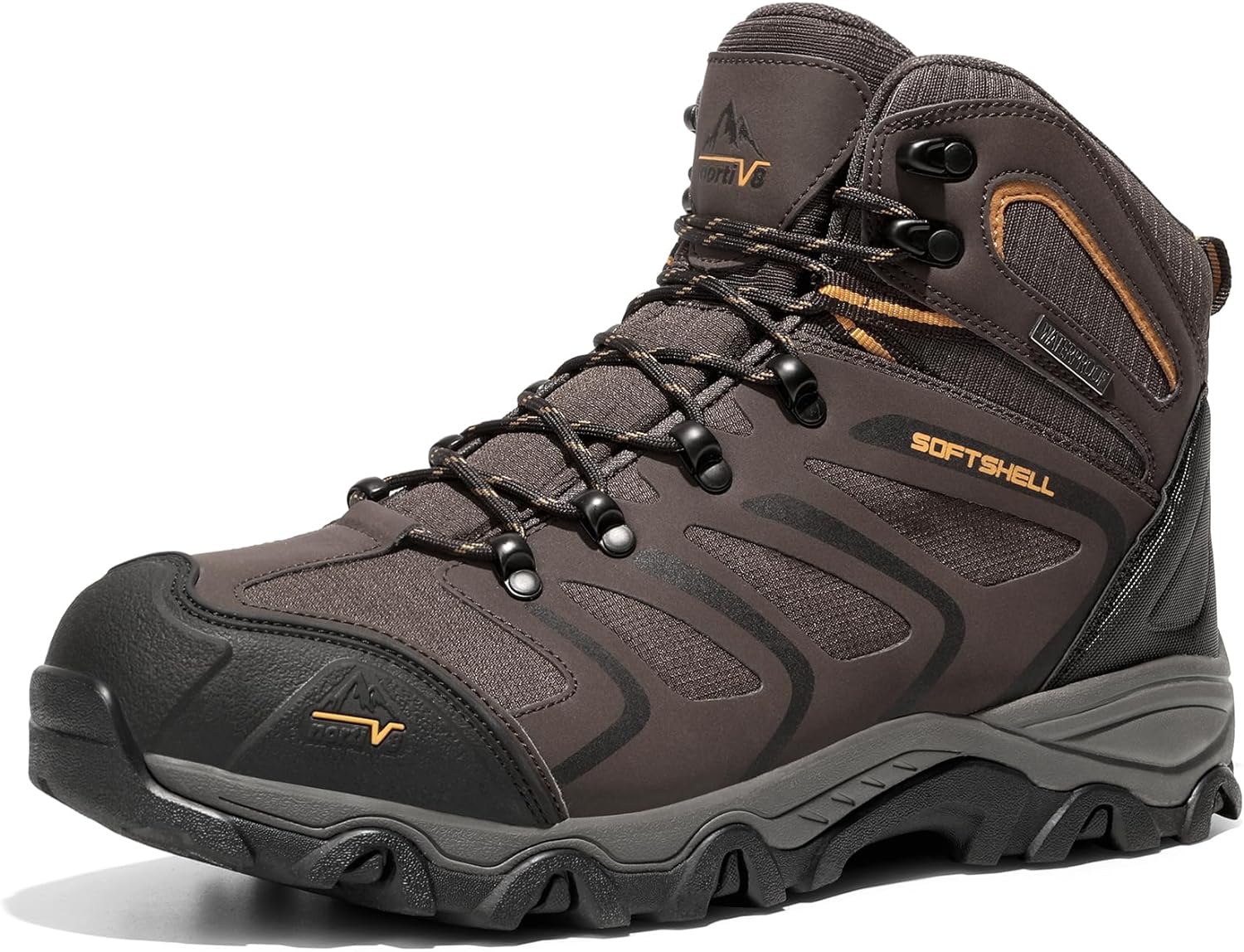
Best Budget: NORTIV 8 Ankle High Waterproof (Men’s)
The entry point, with one upgrade assumed
Pros
- Removable insole and a deep footwell, which is the minimum requirement for this diagnosis
- Padded collar and a structured heel cup that holds the rearfoot better than the price implies
- Wide sizing offered, so width is not a reason to skip it
- Cheap enough that a quality insert still lands the pair under most single-boot prices here
Cons
- The stock insole should come out on day one, no exceptions
- Synthetic upper offers less rearfoot support than leather once it softens
- Midsole foam flattens noticeably within a season of regular use
There is a version of this page that refuses to recommend anything at this price, and that page is not useful to someone who needs boots this month. The honest position is that the structural basics are here: the insole comes out, the footwell is deep enough to take a real insert, and the heel cup does hold the rearfoot. That combination is what plantar fasciitis actually requires, and plenty of pricier boots with glued-in footbeds fail it.
What you are giving up is longevity. The foam under the midfoot loses its rebound faster than a dual-density midsole, and a flattened midsole is exactly the condition that lets the arch drop again. Budget for replacing these sooner than a leather boot, and treat the day-one insole swap as part of the purchase rather than an optional upgrade.
| Upper | Synthetic leather and mesh |
|---|---|
| Waterproofing | Waterproof membrane |
| Footbed | Removable insole |
| Arch structure | EVA midsole, no shank |
| Heel counter | Molded heel cup |
| Midsole | EVA |
| Outsole | Rubber lug |
| Widths | Standard and wide |
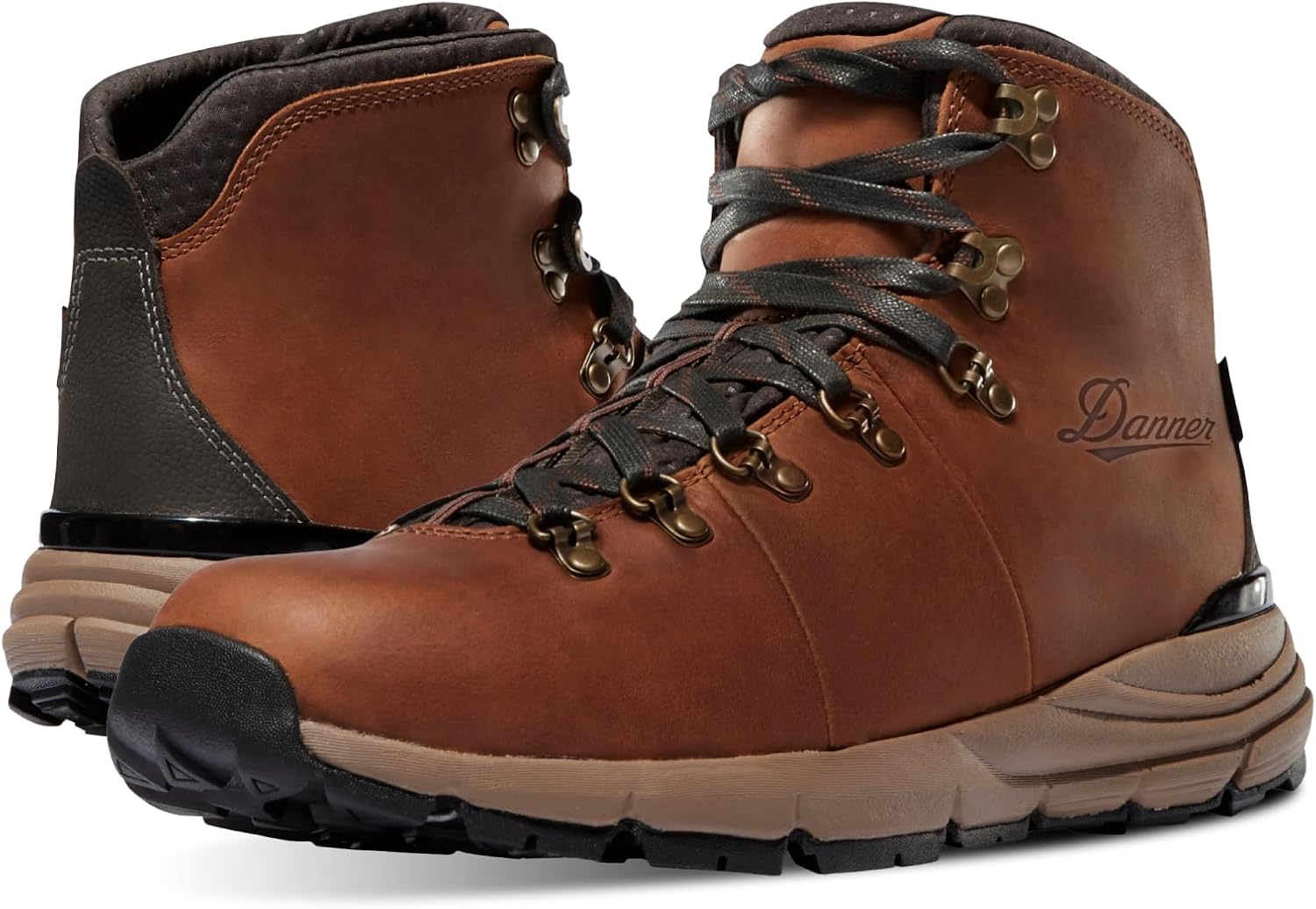
Best Premium: Danner Mountain 600 (Men’s)
Support that holds its shape across seasons, not weeks
Pros
- Vibram SPE midsole is denser than standard EVA and keeps its rebound far longer
- Suede upper molds around the rearfoot and then holds that shape
- OrthoLite footbed lifts out for an insert without leaving a molded ridge behind
- Built by an Oregon company with a long service history behind the name
Cons
- Priced well above the practical picks on this page
- Not a recraftable boot, unlike the stitchdown models in the same lineup
- Runs narrow through the midfoot compared with the KEEN
Arch support is not a static property. Standard EVA compresses over months, and once the midsole under the arch has flattened, a boot that felt supportive in spring stops doing anything by autumn. That slow failure is why people conclude their boots stopped working. The Vibram SPE midsole here is a denser compound that resists that collapse, and across a season of real mileage the support underfoot stays much closer to where it started.
The suede upper does something similar. It molds to the rearfoot early and then stays put, working like a shell that holds the heel in place rather than fabric that stretches around it. Note one thing that gear pages get wrong about this model: the Mountain 600 is cemented, not stitchdown, so it is not a recraftable boot the way the Mountain Light is. You are paying for materials that last, not for a resole.
| Upper | Suede leather |
|---|---|
| Waterproofing | Danner Dry membrane |
| Footbed | OrthoLite footbed, removable |
| Arch structure | Vibram SPE midsole with a supportive shank |
| Heel counter | Structured, leather-backed |
| Midsole | Vibram SPE |
| Outsole | Vibram Fuga |
| Widths | Standard, with a narrower midfoot |
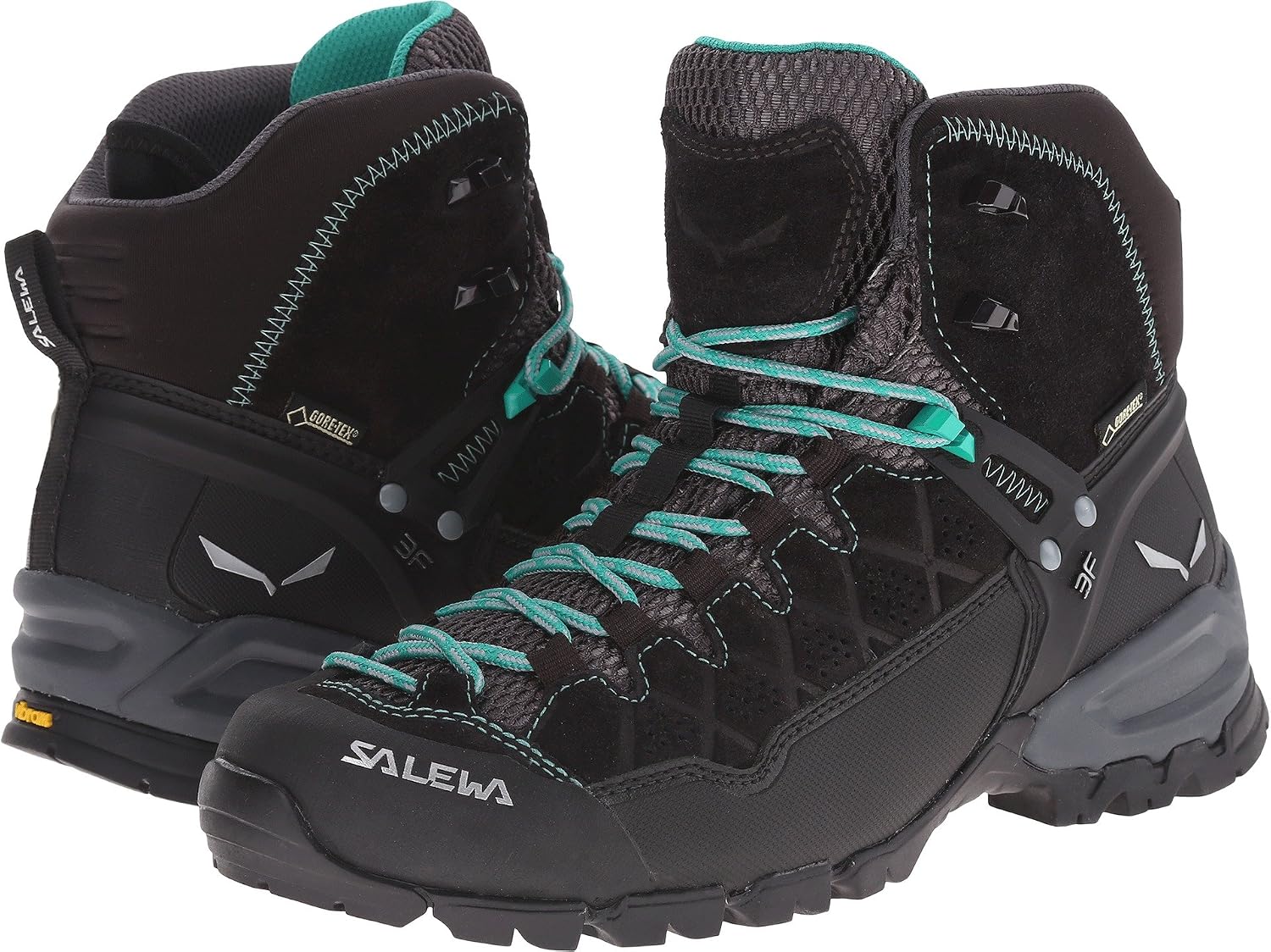
Best for Technical Terrain: Salewa Alp Trainer Mid GTX (Women’s)
The stiffest chassis here, for ground that fights back
Pros
- Torsionally rigid platform, so the foot is not stabilizing every awkward rock placement
- Multi Fit Footbed system tunes width with interchangeable inserts rather than a size change
- Heel and ankle are locked down by an internal frame that limits rearfoot roll
- Full rubber rand protects the boot where scree does the most damage
Cons
- Firm underfoot, which is the wrong feel for long stretches of pavement or gravel road
- The most expensive boot on this page
- Alpine last runs snug, so it needs a careful in-store fitting
On uneven rock, the fascia becomes a stabilizer. Every time the boot twists under an off-angle landing, the arch does structural work it was not built to do repeatedly, and that accumulated load is what turns a scramble into three sore days. A rigid chassis moves that job from the foot to the boot. The Alp Trainer is by a wide margin the stiffest platform here, and on genuinely technical ground that is the single most protective feature available.
The Multi Fit Footbed deserves specific mention. It lets you change the effective width of the boot by swapping the insert, which means a foot that swells across a long day can be accommodated without moving up a full size and losing heel lock. The trade is comfort on easy ground: this is a firm boot, and on flat gravel it feels like more boot than the day requires. Match it to the terrain and it earns the price.
| Upper | Suede leather with a full rubber rand |
|---|---|
| Waterproofing | Gore-Tex membrane |
| Footbed | Multi Fit Footbed, removable and width-adjustable |
| Arch structure | Rigid chassis with a supportive shank |
| Heel counter | Internal 3F frame linking heel to instep |
| Midsole | Bilight dual-density |
| Outsole | Vibram Alp Trainer |
| Widths | Adjustable via footbed inserts |
Full comparison table: best hiking boots for plantar fasciitis
Sorted by plantar fasciitis score. Tap a sort button to re-rank by stock arch support, torsional stiffness or price. On phones the table becomes stackable cards so every row stays readable.
| Boot | Award | PF score | Footbed | Stock arch | Stiffness | Widths | Price | |
|---|---|---|---|---|---|---|---|---|
|
Oboz Bridger Mid | Best Arch Support | 90 | Removable, contoured | High | Nylon shank | Standard, wide | $220 |
|
Merrell Moab 3 Mid | Best Overall | 88 | Removable, flat footwell | Moderate | Nylon shank | Standard, wide | $139.99 |
|
KEEN Targhee 4 Mid | Best Wide Toe Box | 87 | Removable, contoured | Moderate to high | ESS shank | Standard, wide | $142.50 |
|
Merrell Moab 3 Mid (W) | Best for Women | 86 | Removable, flat footwell | Moderate | Nylon shank | Standard, wide | $175 |
|
Orthofeet Hunter | Best Orthopedic Build | 86 | Removable, extra depth | High, adjustable | Flexible | Standard, wide, x-wide | $134.99 |
|
KEEN Targhee 4 Mid (W) | Best Wide Toe Box for Women | 85 | Removable, contoured | Moderate to high | ESS shank | Standard, wide | $142.50 |
|
Danner Mountain 600 | Best Premium | 85 | Removable | Moderate to high | Firm midsole | Standard | $224.95 |
|
Orthofeet Dakota | Best Orthopedic Build for Women | 84 | Removable, extra depth | High, adjustable | Flexible | Standard, wide, x-wide | $159 |
|
Timberland Mt. Maddsen | Best Cushioning for All-Day Wear | 84 | Removable | Moderate | Moderate | Standard, wide | $130 |
|
Salewa Alp Trainer Mid | Best for Technical Terrain | 84 | Removable, width-adjustable | Moderate to high | Rigid | Adjustable | $253.46 |
|
Columbia Newton Ridge Plus | Best Value | 81 | Removable, roomy | Low, insert-ready | Moderate | Standard, wide | $99.98 |
|
NORTIV 8 Ankle High | Best Budget | 76 | Removable, deep | Low, insert-ready | Soft | Standard, wide | $59.99 |
How we ranked these boots
Plantar fasciitis is a mechanical problem, so this list is built on mechanical criteria rather than general boot quality. We started from every hiking boot Amazon surfaces for this condition, screened out the insoles and casual shoes that clutter those results, collapsed duplicate colorways, and dropped anything without verifiable pricing. What survived was judged on five things.
Orthotic compatibility
Does the footbed lift out, and what is underneath it? A flat, full-depth footwell is what a prescribed orthotic needs. Boots with heavily molded factory footbeds score lower here even when they are excellent boots, because stacking an orthotic on a contoured base changes its geometry.
Stock arch support
How much does the boot do before you spend more money? Most hiking boots ship with a flat foam sheet. A handful ship with a genuine molded support, and for buyers who are not using an insert that difference decides the outcome.
Torsional stiffness
Hold the boot at heel and toe and try to wring it. A boot that twists easily hands stabilizing work to the arch on every off-camber step. Shank material and midsole density drive this, and it is the criterion most gear roundups ignore entirely.
Heel control
The heel counter needs to be firm enough that you cannot collapse it between thumb and forefinger. Rearfoot motion pulls directly on the fascia where it attaches, and no amount of cushioning compensates for a heel that moves.
Width availability
A foot that cannot spread sideways under load flattens downward instead. Boots offered in wide, extra wide, or with adjustable-width footbeds scored higher, because for many people width is the fitting problem underneath the arch problem.
How to choose hiking boots for plantar fasciitis
Six checks you can run in a store in about two minutes, in the order that matters. Every one of them is something you can test by hand rather than something you have to take on faith from a product page.
1. Check that the insole comes out
Before anything else, reach into the boot and pull. If the footbed lifts out in one piece and leaves a flat surface underneath, the boot can host a proper insert. If it is glued down or the footwell below is heavily contoured, you are locked into whatever support the manufacturer decided to give you. This one test eliminates more boots than any spec sheet.
2. Try to twist the sole
Hold the boot by the heel and the toe and wring it like a wet towel. Good boots for this condition resist noticeably. When a sole twists freely, your arch becomes the structure that stabilizes each uneven landing, and doing that a few thousand times in a day is exactly the load that irritates the fascia. Look for a nylon or composite shank in the specs.
3. Squeeze the heel counter
Pinch the back of the boot between thumb and forefinger. It should feel like a shell, not like fabric. A firm heel counter keeps the rearfoot from rolling inward, and rearfoot control is the mechanical goal of the entire purchase. Leather uppers tend to hold the heel better than synthetic ones once broken in.
4. Get the width right before the length
Most people with long-running plantar fasciitis have feet that have widened as the arch has flattened, and a standard-width boot then squeezes the foot narrow, forcing it to collapse downward. Try the wide version even if you have never worn wide before. Our guide on how hiking boots should fit covers the full fitting sequence.
5. Decide who provides the arch
There are two coherent strategies and one bad one. Either buy a boot with strong stock support and use it as delivered, or buy a boot that hosts an insert well and pair it with a proper orthotic. The bad strategy is stacking a custom orthotic on top of a heavily molded factory footbed, which raises the heel, changes the arch position, and crowds the toe box all at once. Our roundup of the best insoles for hiking covers the insert half of this decision.
6. Break them in before you need them
New boots change how your foot loads, and a flare is the worst time to introduce that change. Wear them around the house, then on short flat walks, then on a half day before you commit to a full one. If you are also moving to a taller arch support, raise it in stages. Our guide to breaking in hiking boots has a schedule you can follow.
What to avoid
Five common purchases that make heel pain worse. Most of these are boots that a general hiking roundup would happily recommend, which is why the condition needs its own list.
Zero-drop boots, at least during a flare
Level heel-to-toe geometry lengthens the calf and Achilles, and that tension runs straight into the fascia. Zero drop suits some hikers after a long, careful transition, but starting there while the tissue is inflamed usually extends the problem. Altra’s hiking line comes up constantly in these searches for exactly this reason, and it is the wrong first move here.
Very soft, very flexible trail shoes
Marketing language treats maximum cushioning as maximum comfort, but a shoe that folds in half gives the arch no help. Cushioning belongs under the heel. Structure belongs under the midfoot. A shoe that has the first and none of the second feels wonderful in the shop and poor at hour six.
Any boot with a glued-in footbed
If the insole will not lift out, you cannot fix a support problem later. That closes off your best remedy before you have even worn the boot on a trail.
Buying a stiff leather boot the week of a trip
Traditional leather boots can be excellent for this condition once they mold to the rearfoot, but the break-in period puts new pressure in new places. Starting that process with an inflamed heel on a multi-day trip is how a manageable problem becomes a trip-ending one.
Sizing down for a snugger heel
Heel lift is a lacing problem, not a length problem. Going a half size down to chase heel hold crowds the toes, stops the forefoot from spreading, and pushes the foot into more collapse. Lock the heel with the upper eyelets instead.
A note on what boots can and cannot do. Better footwear reduces the load the tissue takes while you hike, which creates the conditions for it to settle down. It is not a treatment. Stretching, a gradual return to mileage, and in stubborn cases a clinician all do work that no boot can do for you. If heel pain has lasted more than a few months or is getting worse, that is worth a professional opinion rather than another purchase.
Plantar fasciitis hiking boot FAQ
The questions readers ask most about hiking with plantar fasciitis, answered without the hedging.
Are hiking boots good for plantar fasciitis?
Yes, provided the boot is chosen for structure rather than softness. A boot that helps has three things: a firm heel counter that stops the rearfoot from rolling, enough torsional stiffness that the sole does not twist easily in your hands, and a removable insole so you can fit a supportive insert. A soft, flexible boot with a glued-in foam footbed will not help and can make heel pain worse over a long day.
What kind of hiking boot is best for plantar fasciitis?
A mid-height boot with a molded or nylon shank under the arch, a structured heel counter, and a removable footbed. The Merrell Moab 3 Mid is our overall pick because it accepts a custom orthotic better than almost anything at its price, and the Oboz Bridger Mid wins for anyone who wants the stock insole to do the work without a second purchase.
Should I get arch support built in or use my own insoles?
If a podiatrist made you a custom orthotic, buy the boot that hosts it best, which means a removable footbed sitting over a flat footwell with enough depth that the insert does not push your toes into the box. If you are not using a custom insert, buy the boot with the best stock support instead. Trying to stack a custom orthotic on top of a heavily molded factory footbed is the most common fitting mistake we see.
Is a stiff sole or a cushioned sole better for plantar fasciitis?
Both, in different places. You want the sole to be stiff torsionally, meaning it resists twisting along its length, and cushioned at the heel where impact lands. A sole that twists easily forces the arch to stabilize every uneven step, and a heel with no cushioning transmits impact straight into the sore attachment point. Pick up any boot and try to wring it out like a towel. If it turns easily, it is not the boot.
Should hiking boots for plantar fasciitis have zero drop?
Generally no, at least not during an active flare. Zero-drop shoes place the heel level with the forefoot, which lengthens the calf and Achilles and increases tension through the fascia. Some hikers transition to zero drop successfully over many months, but starting there while the tissue is inflamed tends to prolong the problem. A small amount of heel elevation is the safer default.
Are high-top or mid-height boots better than low hiking shoes?
For plantar fasciitis, mid-height usually wins. The extra collar height lets the lacing lock the heel down, and rearfoot control is the mechanical goal. Low shoes can work if the heel counter is firm and the lacing reaches high enough to hold the heel, but you generally get less stability from the same design.
How should a hiking boot fit if I have plantar fasciitis?
The heel should be locked with essentially no lift when you walk, the forefoot should have room to spread sideways, and there should be a thumb’s width in front of the longest toe. Width is more important than most buyers expect, because a foot squeezed narrow cannot splay under load and flattens downward instead. Try boots on late in the day when your feet have swelled, wearing the socks and the insert you plan to hike in.
Do I need a wide boot if I have plantar fasciitis?
Not always, but check. If your foot has been flattening for years, it has likely widened as well, and a standard-width boot will compress it. The KEEN Targhee and the Orthofeet models are the roomiest here, and Merrell, Columbia, and Timberland all sell wide versions of their standard boots.
Can new hiking boots make plantar fasciitis worse?
They can, in two ways. A boot that is too flexible lets the arch do work it should not be doing, and a break-in period spent on long hikes puts new pressure on tissue that is already irritated. Wear new boots on short walks first, and if you are changing your arch support height, step up gradually rather than going from a flat insole to a tall orthotic overnight.
Will better boots alone fix plantar fasciitis?
Footwear is one part of it. Most people also need calf and fascia stretching, a gradual return to mileage rather than a jump back to long days, and sometimes a professional assessment. Boots reduce the load the tissue takes on the trail, which creates the conditions for recovery, but they are not a treatment on their own. Persistent heel pain is worth taking to a clinician.