The Best Winter Hiking Boots
Seventeen boots ranked on the three things that decide a cold day: warmth that lasts past the trailhead, traction that works when rubber goes hard, and a sole you can still walk on at mile six. Nine men’s, eight women’s, and no brand pays for placement.
One thing worth settling before you shop. A winter hiking boot and a snow boot are different tools, and buying the wrong one is the most common mistake in this category. Both are on this page because people searching this term genuinely want both, but every award below names which is which so nobody buys a pac boot expecting to hike ten miles in it. The boot types section explains the difference.
Quick Picks: The Top 5 in 30 Seconds
Five boots covering most winter buying intent. Tap a card to check current pricing on Amazon.
Find Your Boot
Four questions, one personalized pick from our 17. No email, no signup.
Your match
Answer the questions above
We will recommend the right boot from our 17 picks.
Check price on Amazon →Our 17 Top Picks for 2026
Each boot is scored on a 100-point trail score across warmth, traction, waterproofing, comfort, and value. Warmth and traction carry equal top weight, because a warm boot that slides is as useless as a grippy boot that freezes your toes.
Best Winter Hiking Boots for Men
Nine boots spanning insulated hikers, pac boots and one studded specialist. The awards name which is which, because a boot built for standing in deep snow and a boot built for eight winter miles are different tools and buying the wrong one is the most common mistake in this category.
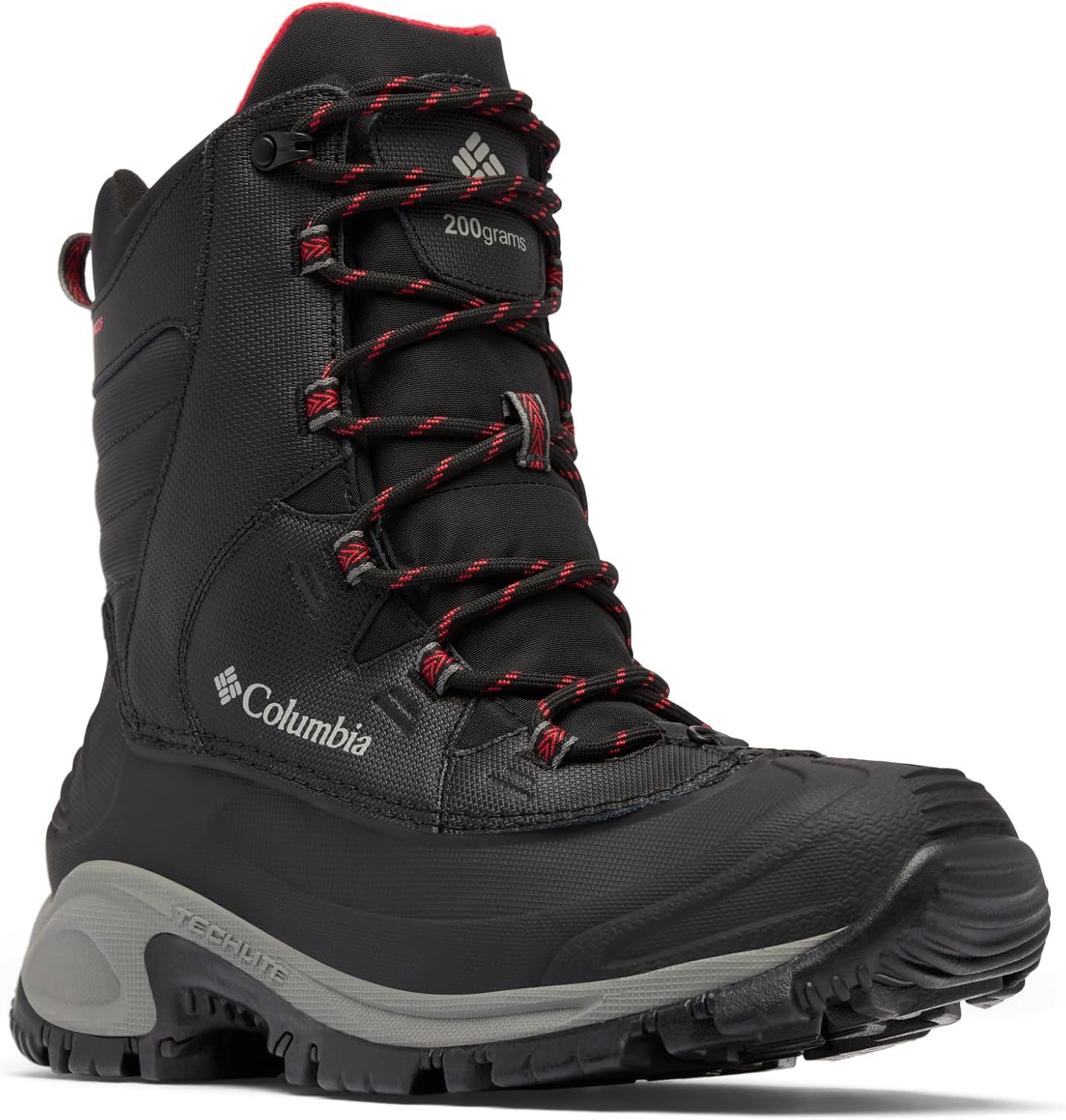
Best Overall Winter Hiking Boot: Columbia Bugaboot III
Omni-Heat reflective lining and 200g insulation at a mainstream price
Pros
- Reflective lining bounces body heat back rather than relying on bulk alone
- Seam-sealed construction holds up in slush without soaking through
- Gusseted tongue keeps snow out on postholing sections
- Widely stocked, so replacement and sizing exchanges are simple
Cons
- Outsole hardens on ice and gives up grip below freezing
- Runs warm on anything above the mid-thirties
- Heavier than a dedicated insulated hiking boot
The Bugaboot is the boot most people searching this term should actually buy. It handles a snowy Gorge trail, a slushy Bend parking lot, and a cold morning walk to the car without asking you to spend two hundred dollars, and Columbia has iterated the pattern long enough that the fit and the sealing are both sorted.
The reflective lining is doing real work rather than marketing. It reflects radiant heat back toward your foot, which means the boot stays warm without the bulk a thick felt liner adds. That is why it feels closer to a hiking boot than a pac boot on the trail.
The outsole is the compromise. Columbia’s winter rubber stiffens on hard ice and you will notice it on a frozen trailhead. Pair it with traction devices if ice is likely, and see the Icebug further down if ice is the norm rather than the exception.
| Insulation | 200g synthetic |
|---|---|
| Lining | Omni-Heat reflective |
| Waterproofing | Seam-sealed membrane |
| Upper | Leather and textile |
| Outsole | Omni-Grip winter rubber |
| Shaft height | Mid, above ankle |
| Closure | Lace, gusseted tongue |
| Weight | About 2 lb 4 oz per pair |
| Temperature range | Roughly 10 to 35 F active |
| Best for | All-round Oregon winter hiking |
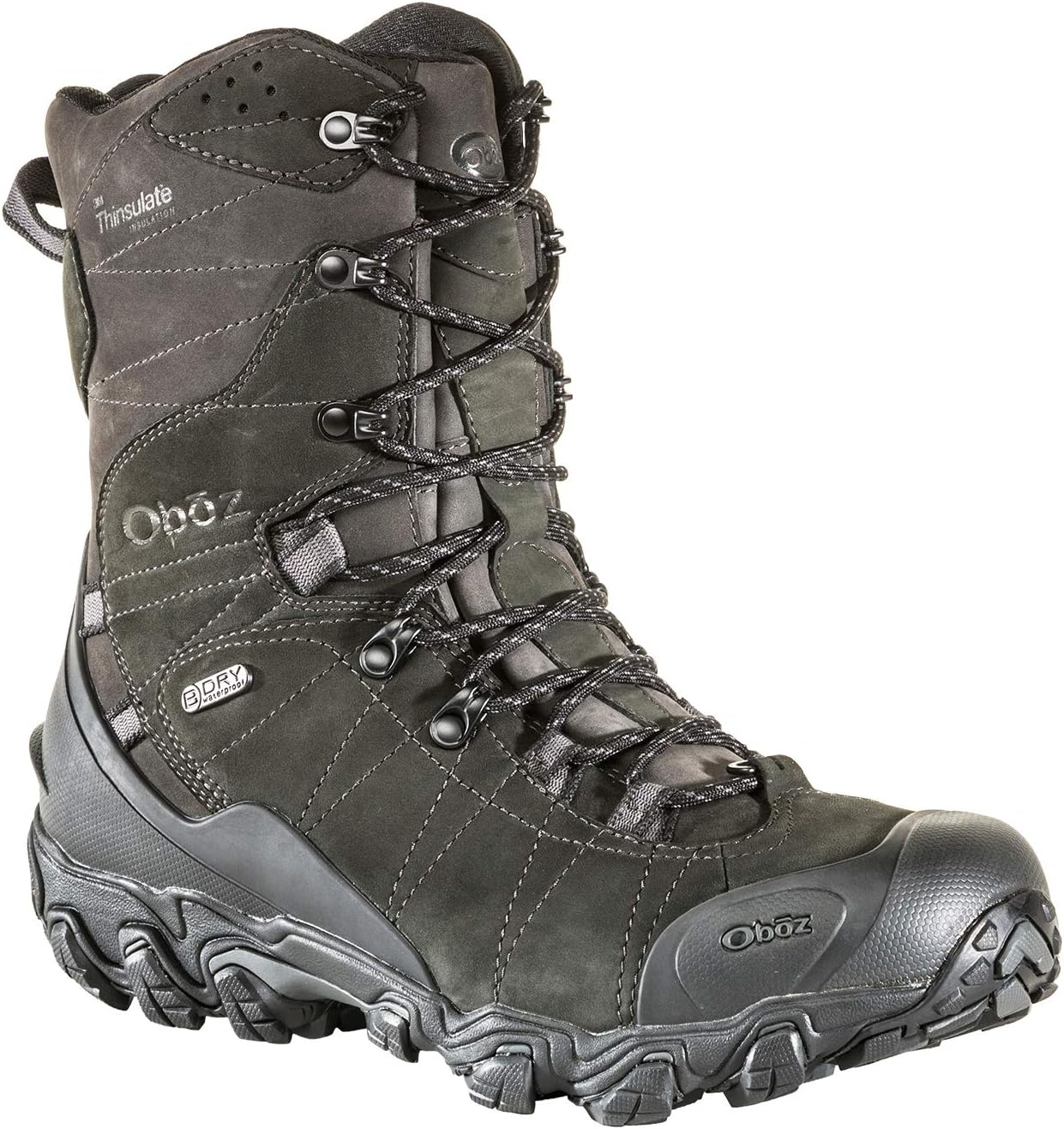
Best Premium Winter Hiking Boot: Oboz Bridger 10″ Insulated
A backpacking boot with insulation added, not a snow boot with laces
Pros
- Built on a genuine hiking last, so it flexes for real mileage
- Ten-inch shaft clears deeper snow than a standard mid
- Supportive insole included rather than a flat foam sheet
- Aggressive lug pattern that clears packed snow instead of loading up
Cons
- Most expensive men’s pick here by a clear margin
- Break-in period is real, this is a stiff boot out of the box
- Overkill for anyone whose winter hiking is flat and short
Almost every boot in this category is a snow boot that someone added laces to. The Bridger is the opposite: a genuine backpacking boot with insulation and a taller shaft. That distinction matters the moment you go past three or four miles, because a pac boot flexes in the wrong places and your feet know it by the turnaround point.
Oboz includes a supportive footbed rather than the flat foam most brands ship, which is unusual and saves you the cost of aftermarket insoles. If you normally swap insoles out of new boots, you may not need to here.
This is the pick for someone who genuinely hikes in winter rather than walks in snow. If your winter outings are short and flat, the Bugaboot does the job for half the money.
| Insulation | 400g synthetic |
|---|---|
| Lining | B-DRY waterproof membrane |
| Waterproofing | B-DRY, seam-sealed |
| Upper | Nubuck leather |
| Outsole | Granite Peak winter rubber |
| Shaft height | 10 inch |
| Closure | Lace, metal hardware |
| Weight | About 3 lb 6 oz per pair |
| Temperature range | Roughly minus 10 to 30 F active |
| Best for | Real winter mileage with a pack |
Best Budget Winter Boot: NORTIV 8 Winter Snow Boot
Insulated and waterproof under seventy dollars, with a very deep review base

Pros
- Enough owner history that the failure patterns are actually visible
- Faux fur lining is warm out of the box with no break-in
- Light enough to walk in all day without leg fatigue
- Cheap enough to keep as a dedicated winter-only pair
Cons
- Synthetic upper creases and cracks after a couple of seasons
- Waterproofing is a coating, not a laminated membrane
- Insole is thin and most owners replace it early
This is the boot that covers the gap between owning nothing for winter and owning something good. It keeps your feet warm and dry on snowy trails and slushy sidewalks, and if it falls apart in three seasons you have not lost much.
The very large review base is worth something on its own. The pattern in that feedback is consistent: it works well through the first couple of winters, then the synthetic upper starts creasing at the flex point and letting water in. Nobody reports it failing early.
Swap the insole. That one change turns it from a boot you tolerate into a boot you forget you are wearing, and our blister prevention guide explains why the insole matters more than the boot for hot spots.
| Insulation | Faux fur lining |
|---|---|
| Lining | Synthetic fleece |
| Waterproofing | Coated upper, not laminated |
| Upper | Synthetic leather |
| Outsole | Rubber lug |
| Shaft height | Mid, above ankle |
| Closure | Lace |
| Weight | About 2 lb 2 oz per pair |
| Temperature range | Roughly 20 to 40 F active |
| Best for | First winter boot on a budget |
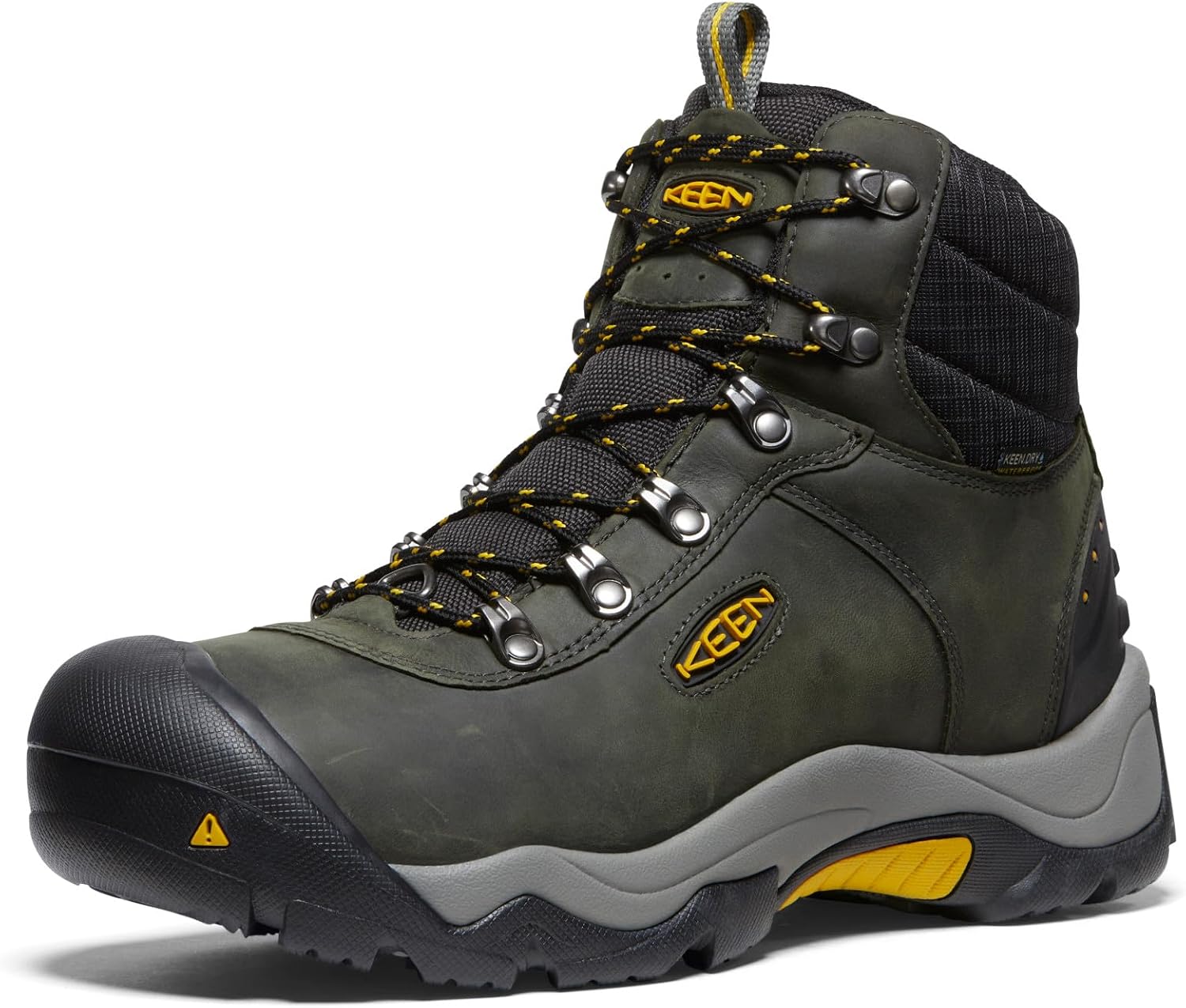
Best Insulated Hiking Boot: KEEN Revel III Mid
Insulation on a trail-oriented last rather than a snow boot chassis
Pros
- Roomy toe box that stays comfortable when feet swell on a long day
- Heat-reflective footbed layer targets the coldest part of the boot
- Walks like a hiking boot rather than a rigid winter shell
- Rubber toe cap survives kicking steps into frozen crust
Cons
- KEEN’s wide fit does not suit narrow feet
- Insulation is lighter than the pac boots here
- Laces are the first component owners report replacing
Cold enters a boot through the sole more than through the upper, which is why the heat-reflective layer under the footbed matters more than the insulation number printed on the box. The Revel puts material where the heat actually escapes.
This walks like a hiking boot. The flex point is where your foot bends, the ankle has give, and nothing binds across the instep on a descent. That sounds obvious until you spend a day in a pac boot and realise how much work your legs were doing.
KEEN builds wide, which is either the reason you buy this or the reason you skip it. If you have been sizing up in other brands to get toe room, start here. If your feet are narrow, look at the Merrell instead.
| Insulation | 200g KEEN.WARM |
|---|---|
| Lining | KEEN.DRY membrane |
| Waterproofing | KEEN.DRY, seam-sealed |
| Upper | Waterproof leather |
| Outsole | KEEN.POLAR winter rubber |
| Shaft height | Mid |
| Closure | Lace |
| Weight | About 2 lb 8 oz per pair |
| Temperature range | Roughly 5 to 35 F active |
| Best for | Wide feet, real trail miles |
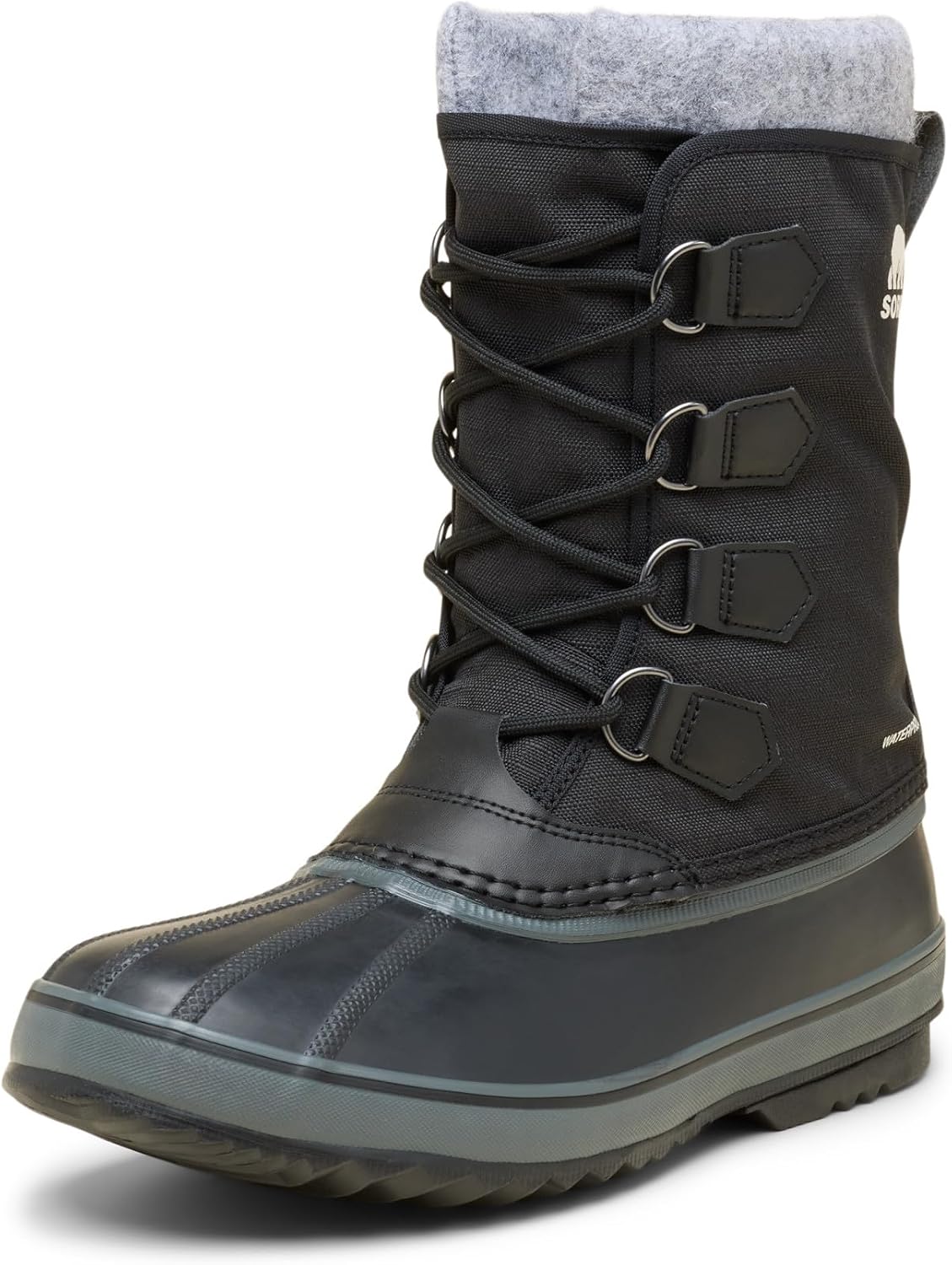
Best Boot for Deep Snow: Sorel Caribou
The pac boot standard, removable felt liner inside a sealed rubber shell
Pros
- Removable felt liner dries overnight instead of staying damp for days
- Vulcanised rubber shell is genuinely sealed rather than seam-taped
- Tall shaft handles snow deeper than any hiking boot here
- Liner is replaceable, which extends the boot’s life by years
Cons
- Walks poorly, the sole barely flexes
- Heavy enough to tire your legs over distance
- Sizing runs large, most owners go down a half size
This is a pac boot, not a hiking boot, and the distinction matters. The Caribou will keep your feet warm and dry in snow deeper than the boot itself, and it will make three miles feel like six because the sole does not flex where your foot wants to bend.
The removable liner is the feature that keeps this design alive after decades. Pull it out at the end of the day and it dries by morning. Sealed-in insulation stays damp for days, and damp insulation is cold insulation.
Buy it for snowshoeing, winter camp chores, plowing out a driveway, and short walks in deep snow. Do not buy it for a ten-mile winter loop, because the Oboz or the KEEN will serve you far better there.
| Insulation | 9mm removable felt liner |
|---|---|
| Lining | Removable ThermoPlus felt |
| Waterproofing | Vulcanised rubber shell |
| Upper | Waterproof leather and rubber |
| Outsole | Sorel winter rubber |
| Shaft height | Tall, mid-calf |
| Closure | Lace |
| Weight | About 4 lb 5 oz per pair |
| Temperature range | Rated to minus 40 F static |
| Best for | Deep snow, camp chores, snowshoeing |
Best Boot for Ice: Icebug Adak BUGrip
Carbide studs moulded into the outsole, no strap-on traction needed

Pros
- Carbide studs grip hard ice in a way no lug pattern can match
- Studs are permanently set, so nothing to strap on at the trailhead
- Rubber compound stays pliable at temperatures where others harden
- Walks like a boot rather than a boot wearing crampons
Cons
- Thinnest owner feedback across this entire lineup
- Studs are noisy and awkward on bare pavement and indoors
- Priced at the top of the range
Ice is the thing that actually hurts people in winter, and no lug pattern solves it. Rubber goes hard below freezing and slides on a frozen trail regardless of how aggressive the tread looks. Carbide studs bite instead.
Having them moulded into the sole rather than strapped on top changes the experience. You stop making a decision at every icy patch about whether it is worth stopping to fit traction devices, which is exactly when people fall.
The reservation is data. This listing has far fewer owner reports than anything else here, so long-term patterns around stud retention are not yet visible. The capability is real and nothing else in this pool offers it.
| Insulation | Primaloft synthetic |
|---|---|
| Lining | Waterproof membrane |
| Waterproofing | Membrane, seam-sealed |
| Upper | Leather and textile |
| Outsole | BUGrip with 17 carbide studs |
| Shaft height | Mid |
| Closure | Lace |
| Weight | About 2 lb 12 oz per pair |
| Temperature range | Roughly 0 to 35 F active |
| Best for | Icy trails and frozen crust |
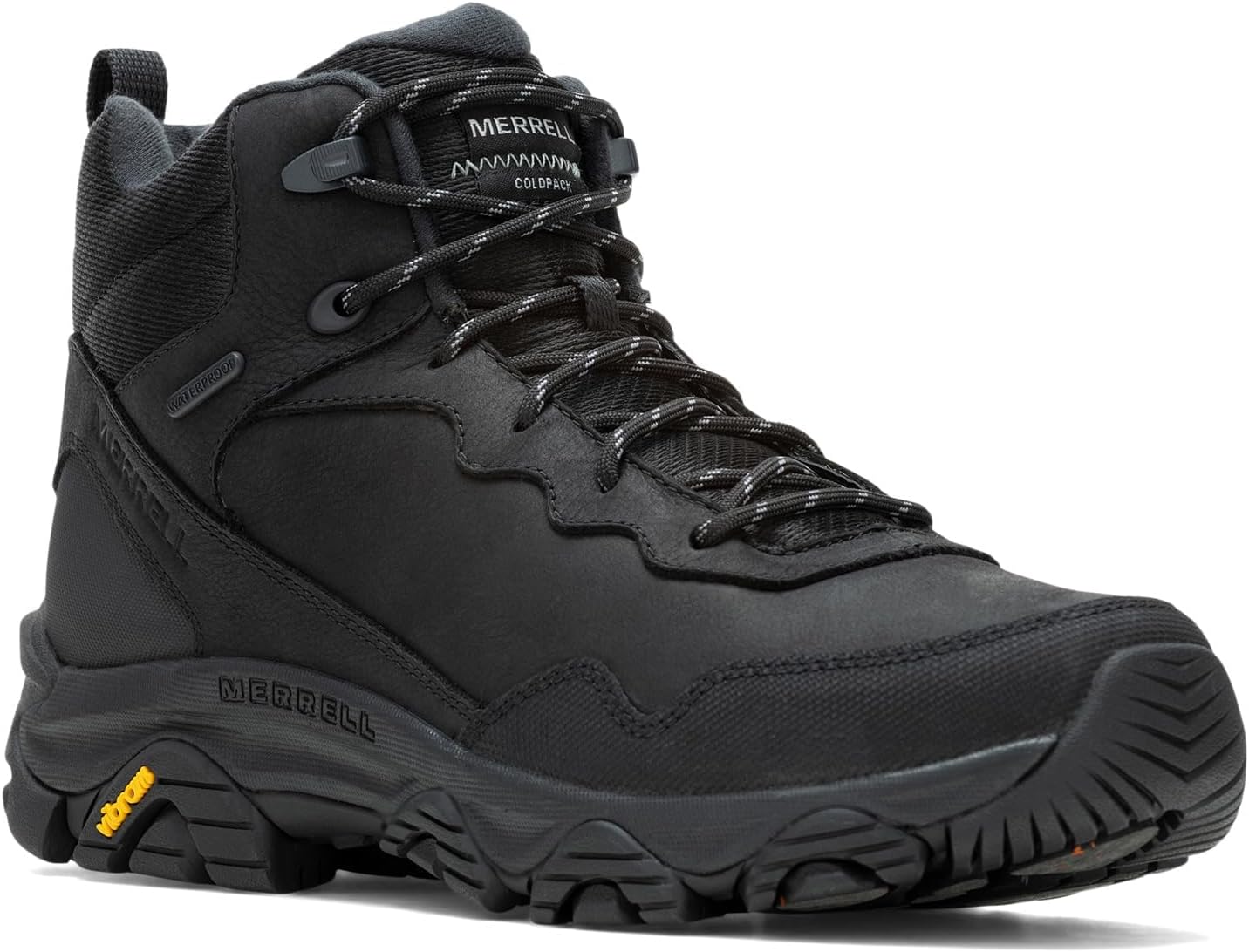
Best Lightweight Winter Boot: Merrell Coldpack 3 Thermo Mid
Winter warmth without the weight penalty of a pac boot
Pros
- Light enough that it does not change how you walk
- Almost no break-in, comfortable from the first outing
- Cushioned midsole absorbs impact on frozen rutted ground
- Narrower last than KEEN, which suits average and slim feet
Cons
- Least insulated pick in the men’s lineup
- Not enough boot for standing still in real cold
- Mesh panels in the upper wear faster than full leather
Weight matters more in winter than people expect, because you are already working harder in snow. Every ounce on your foot costs you several times what the same weight costs in a pack, and a heavy boot turns a pleasant winter hike into a slog by mile four.
The Coldpack is the boot for someone who keeps moving. It is warm enough while you are generating heat and it never feels like a winter boot underfoot, which is the whole point. Comfortable from the first wear, with no break-in period to endure.
It is not enough boot for standing still. If your winter involves waiting at viewpoints, ice fishing, or camp chores, the extra insulation in the Bugaboot or the Caribou earns its weight.
| Insulation | 200g Merrell PrimaLoft |
|---|---|
| Lining | Thermo waterproof membrane |
| Waterproofing | Membrane, seam-sealed |
| Upper | Leather and mesh |
| Outsole | Vibram Arctic Grip |
| Shaft height | Mid |
| Closure | Lace |
| Weight | About 2 lb per pair |
| Temperature range | Roughly 15 to 40 F active |
| Best for | Moving fast in cold weather |
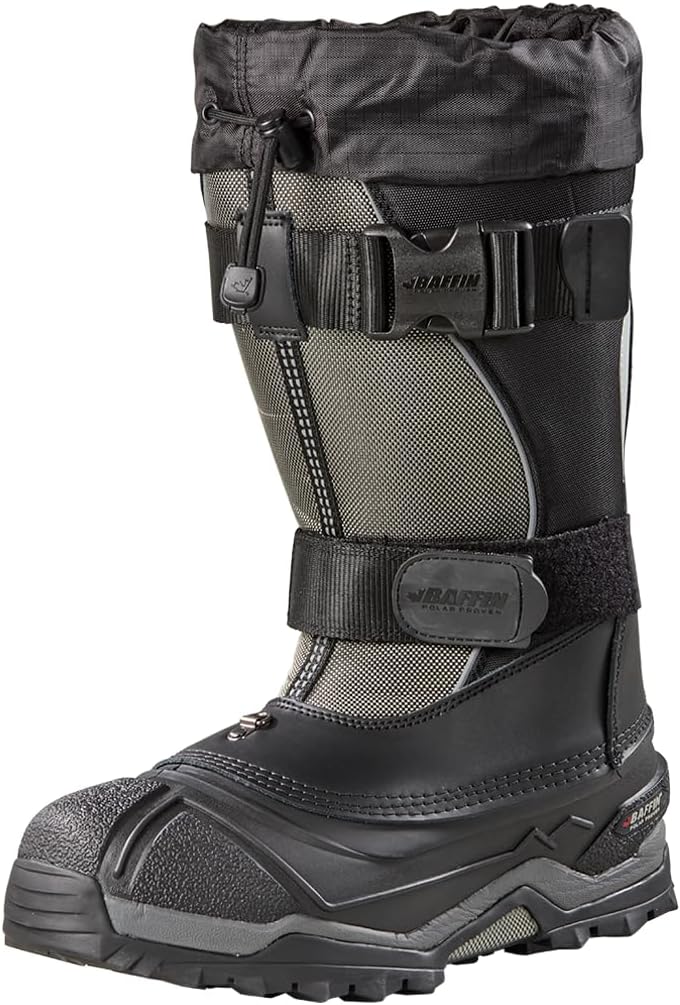
Best Boot for Extreme Cold: Baffin Selkirk
Multi-layer removable liner rated well below anything else here
Pros
- Multi-layer liner system is warmer than anything else in this lineup
- Liner pulls out completely for overnight drying
- Built for stationary cold, not just walking cold
- Shell shrugs off salt, slush and repeated freeze cycles
Cons
- Genuinely uncomfortable for walking any real distance
- Bulky enough to catch on snowshoe bindings
- Far more boot than most Oregon winters require
This is a specialist tool. Baffin builds for conditions where standing still in the cold is the job, and the multi-layer liner reflects that: it is designed to keep a stationary foot warm rather than to walk twelve miles.
Most Oregon winters do not require this. Cascades trailheads in January, ice fishing, winter camp, or anyone who runs cold enough that ordinary winter boots have never worked will find it justifies itself immediately.
The comfort score is the lowest here and that is not a criticism of the build. It is a boot optimised for warmth over walkability, and it makes no apology for that trade.
| Insulation | Multi-layer removable inner boot |
|---|---|
| Lining | Removable, multi-layer |
| Waterproofing | Sealed rubber shell |
| Upper | Nylon and rubber |
| Outsole | Polar rubber |
| Shaft height | Tall, mid-calf |
| Closure | Lace with snow collar |
| Weight | About 4 lb 12 oz per pair |
| Temperature range | Rated to minus 60 F static |
| Best for | Standing still in severe cold |
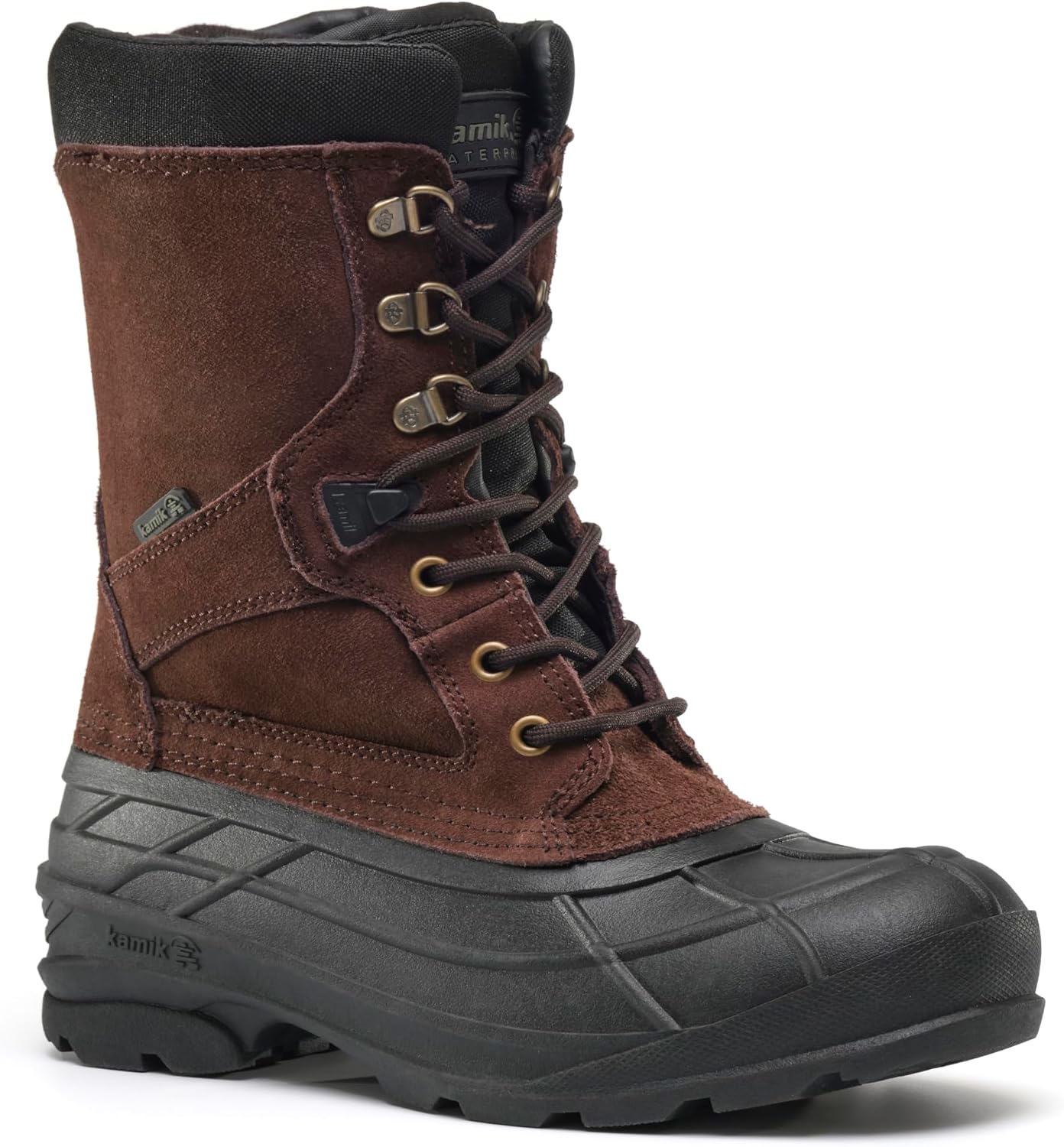
Best Winter Boot Under $100: Kamik Nation Plus
Waterproof and insulated below the hundred-dollar line
Pros
- Removable liner at a price where sealed insulation is the norm
- Sealed rubber lower handles slush without wetting through
- Adjustable snow collar seals against deep powder
- Made in North America with replaceable parts available
Cons
- Stiff sole makes distance walking tiring
- Sizing runs large, most owners drop a half size
- Nylon upper marks and scuffs easily
Getting a removable liner under a hundred dollars is unusual, and it is the reason this beats the cheaper synthetic boots. A liner you can pull out and dry overnight stays warm across a whole winter, while sealed insulation gets progressively damper and colder each week.
The sealed rubber lower is the other thing worth paying for at this price. Slush is what defeats most budget winter boots, and a bonded rubber foot handles standing water in a way a stitched upper never will.
It walks like what it is, a pac boot with a stiff sole. For plowing, walking the dog, snowshoeing, or a short winter trail it is more boot than the price suggests.
| Insulation | Removable 8mm liner |
|---|---|
| Lining | Removable Zylex |
| Waterproofing | Sealed rubber lower |
| Upper | Nylon and rubber |
| Outsole | Rubber lug |
| Shaft height | Tall, mid-calf |
| Closure | Lace with snow collar |
| Weight | About 3 lb 8 oz per pair |
| Temperature range | Rated to minus 40 F static |
| Best for | Budget deep-snow and chores |
Best Winter Hiking Boots for Women
Eight boots cut on women’s lasts rather than resized from men’s patterns. Women’s winter boots run narrow as a rule, which matters more than it sounds: feet swell over a cold day, and toes that cannot move get cold first.
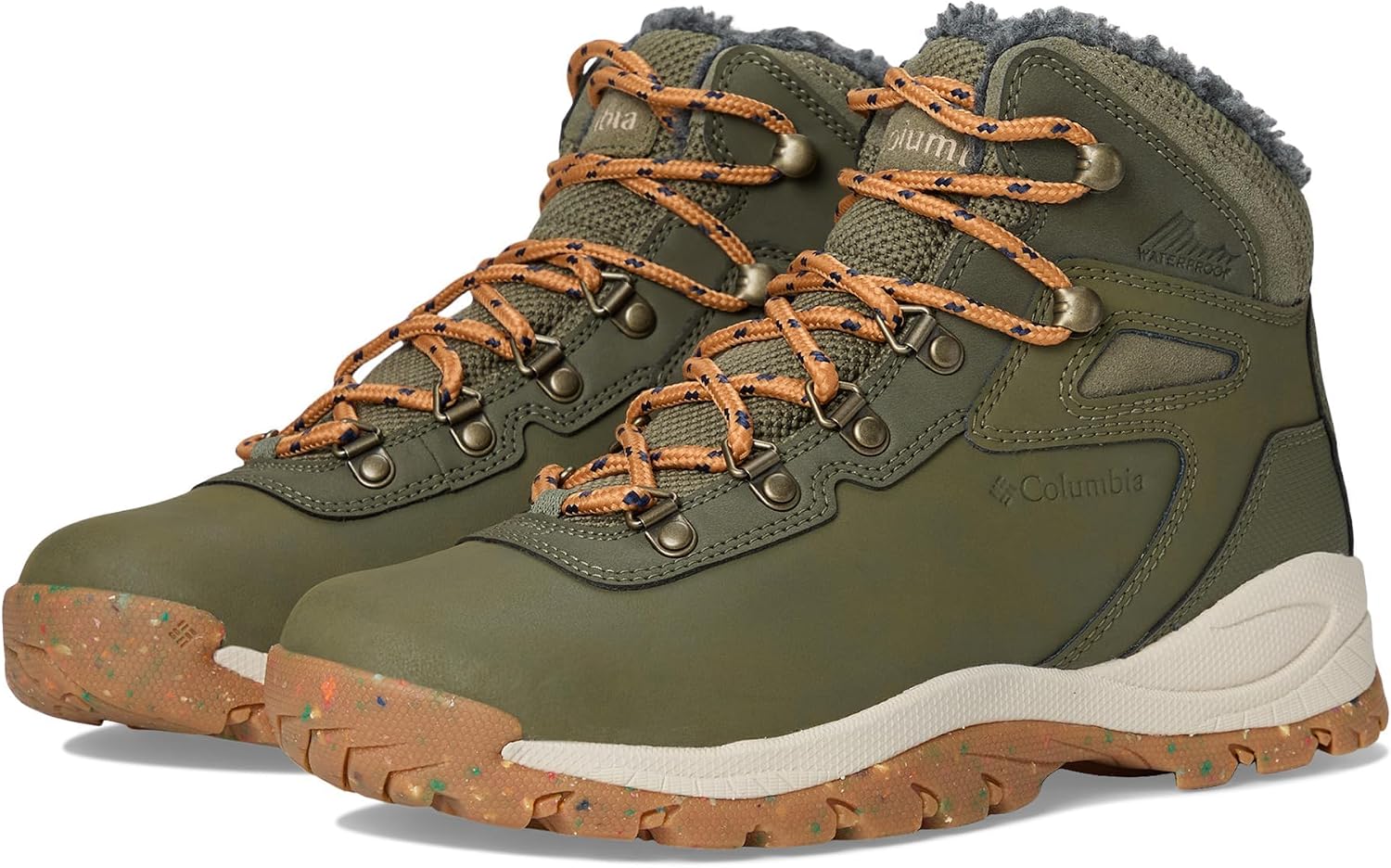
Best Women’s Winter Hiking Boot: Columbia Newton Ridge Omni-Heat II
The insulated version of Columbia’s most-reviewed women’s hiking boot
Pros
- Built on the Newton Ridge hiking last rather than a snow boot chassis
- Reflective lining adds warmth without adding bulk
- Breaks in fast compared with leather winter boots
- Sits at a price where most women’s options are pac boots
Cons
- Insulation is light for standing still in real cold
- Suede upper needs treating before the first wet outing
- Narrower toe box than the KEEN
This is the women’s boot to buy if you actually hike rather than walk in snow. It is the insulated version of a hiking boot that tens of thousands of women already own, which means the fit and the flex are proven and the only new variable is the added warmth.
The reflective lining does the same job it does in the men’s Bugaboot, reflecting body heat back rather than piling on bulk. The result feels like a hiking boot with a warm lining rather than a snow boot you laced up.
Treat the suede before you wear it out. Columbia seals the seams but the upper itself takes on water in slush until it is proofed, and our boot waterproofing guide covers the process.
| Insulation | 200g synthetic |
|---|---|
| Lining | Omni-Heat reflective |
| Waterproofing | Seam-sealed membrane |
| Upper | Suede and textile |
| Outsole | Omni-Grip winter rubber |
| Shaft height | Mid |
| Closure | Lace |
| Weight | About 1 lb 14 oz per pair |
| Temperature range | Roughly 15 to 40 F active |
| Best for | Women’s winter trail miles |
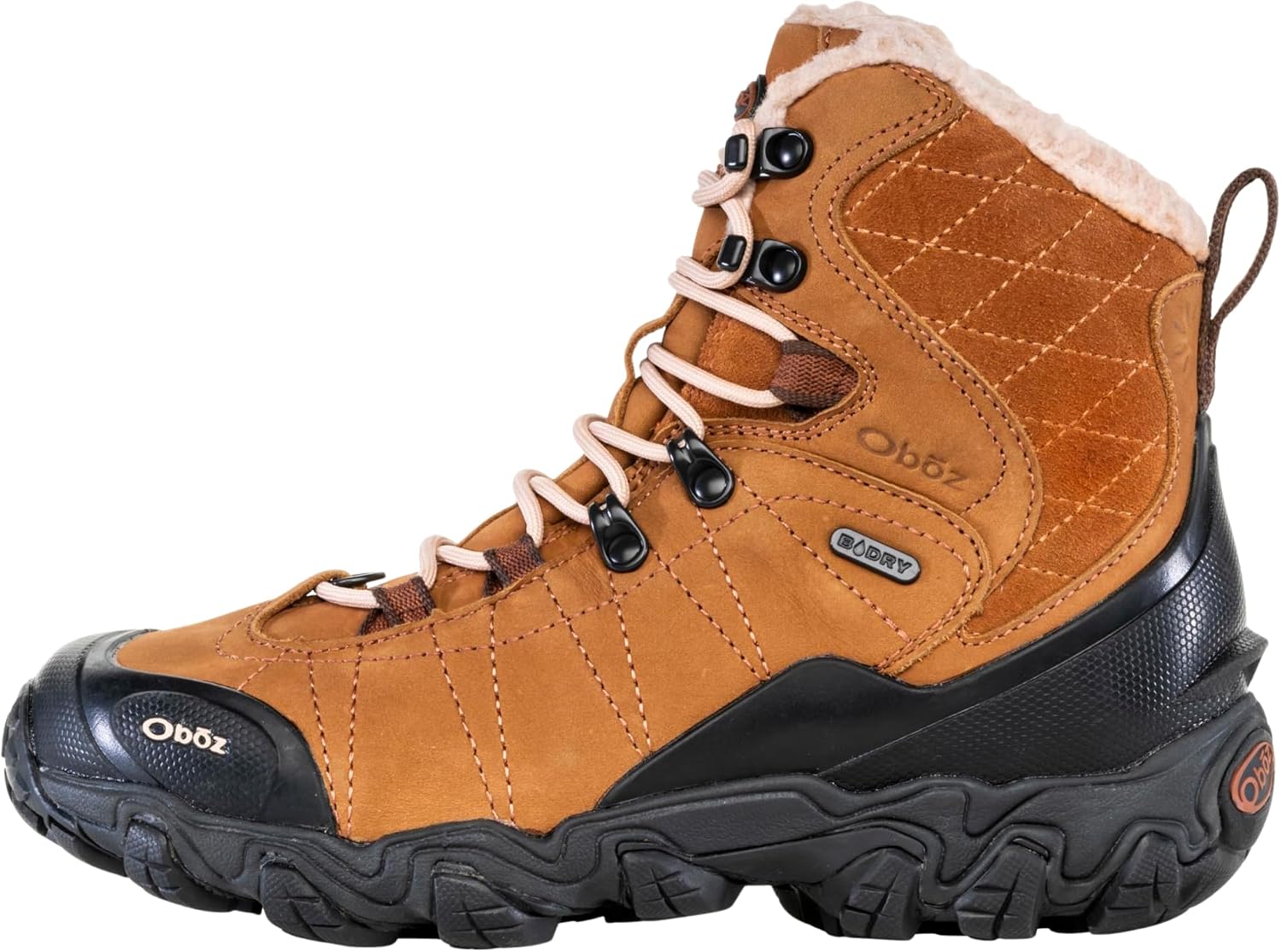
Best Women’s Premium Winter Boot: Oboz Bridger 7″ Insulated
The women’s version of the best-walking boot in this lineup
Pros
- A hiking boot with insulation added rather than a snow boot with laces
- Supportive footbed included instead of a flat foam sheet
- Lug pattern sheds packed snow instead of loading up
- Shorter shaft than the men’s version, which suits most women’s calves
Cons
- Most expensive women’s pick by some distance
- Stiff out of the box and needs genuine break-in
- Thin owner feedback compared with the Columbia and Sorel options
If you hike serious distance in winter, this is the women’s boot that will not fight you at mile six. The chassis underneath is a backpacking boot, so the flex point sits where your foot bends and the ankle supports without locking up.
Oboz ships a real footbed, which almost nobody does at any price. If you routinely bin the insoles that come with new boots and buy aftermarket, that expense disappears here.
The seven-inch shaft is the right call for a women’s boot. It clears meaningful snow while still allowing ankle articulation, where the ten-inch men’s version trades some of that flex for depth.
| Insulation | 400g synthetic |
|---|---|
| Lining | B-DRY waterproof membrane |
| Waterproofing | B-DRY, seam-sealed |
| Upper | Nubuck leather |
| Outsole | Granite Peak winter rubber |
| Shaft height | 7 inch |
| Closure | Lace, metal hardware |
| Weight | About 2 lb 10 oz per pair |
| Temperature range | Roughly minus 10 to 30 F active |
| Best for | Women’s winter mileage with a pack |
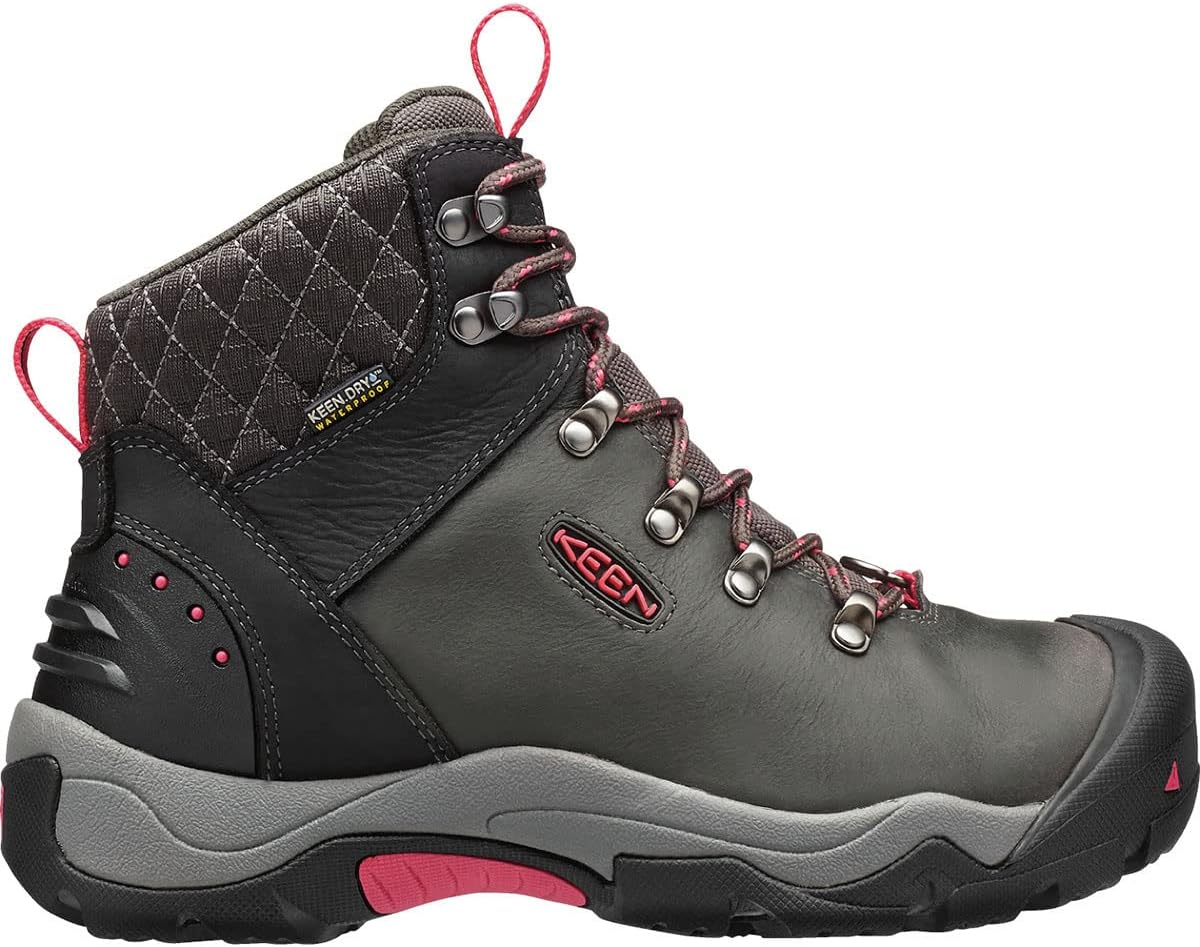
Best Women’s Insulated Hiking Boot: KEEN Revel III Women’s
Wide-fit insulated hiker, the counterpart to the men’s pick
Pros
- Roomy toe box, rare in women’s winter boots
- Heat-reflective footbed layer targets heat loss through the sole
- Walks like a hiking boot with no winter stiffness
- Rubber toe cap handles kicking into frozen crust
Cons
- Wide last is wrong for narrow feet
- Lighter insulation than the pac boots here
- Laces are the first thing owners report replacing
Women’s winter boots run narrow as a rule, which is a problem because feet swell over a cold day and toes that cannot move get cold fastest. KEEN builds wide, and in winter that is a warmth feature rather than just a comfort one.
The heat-reflective layer sits under the footbed, targeting the sole where most cold actually enters. That placement matters more than the insulation weight printed on the box.
If your feet are narrow this will swim, and the Columbia or the Merrell will serve you better. If you have spent years sizing up to get toe room, start here.
| Insulation | 200g KEEN.WARM |
|---|---|
| Lining | KEEN.DRY membrane |
| Waterproofing | KEEN.DRY, seam-sealed |
| Upper | Waterproof leather |
| Outsole | KEEN.POLAR winter rubber |
| Shaft height | Mid |
| Closure | Lace |
| Weight | About 2 lb 2 oz per pair |
| Temperature range | Roughly 5 to 35 F active |
| Best for | Wide feet, women’s trail miles |
Best Women’s Budget Winter Boot: COOJOY Winter Snow Boot
Insulated women’s winter boot with a very deep owner history

Pros
- Cheapest pick here by a wide margin and still genuinely warm
- Light on the foot, no break-in required
- Deep owner history for a boot at this price
- Slips on easily with the side zip when hands are cold
Cons
- Outsole is the weakest traction in this lineup
- Coated rather than membrane waterproofing, it wets out in prolonged slush
- Not built for trail miles, this is a walking boot
This is the boot for someone who needs warm feet this winter and cannot spend a hundred dollars. It handles snowy sidewalks, school runs, and short easy trails, and it is warm enough that nobody feels short-changed.
The deep owner history is the reason it beats the other budget options in the pool. The feedback is consistent about what it does well and where it stops, and there are no reports of it failing in the first season.
Be honest about the limit. The outsole is the weakest here and it will slip on packed snow and ice, so this is not the boot for a winter trail with any grade to it. Pair it with strap-on traction if you take it anywhere steep.
| Insulation | Faux fur lining |
|---|---|
| Lining | Plush synthetic |
| Waterproofing | Coated upper, not laminated |
| Upper | Synthetic |
| Outsole | Rubber, moderate lug |
| Shaft height | Mid calf |
| Closure | Side zip and lace |
| Weight | About 1 lb 12 oz per pair |
| Temperature range | Roughly 20 to 40 F active |
| Best for | Everyday winter walking |
Best Women’s Boot for Deep Snow: Sorel Joan of Arctic
The women’s pac boot benchmark, removable liner and sealed shell

Pros
- Removable felt liner dries overnight rather than staying damp
- Vulcanised rubber lower is sealed rather than stitched and taped
- Tall shaft handles snow deeper than any hiking boot here
- Holds up for years, with replacement liners widely available
Cons
- Stiff sole makes distance walking tiring
- Heavy, and the weight is noticeable by the end of a day
- Outsole is average on ice despite the warmth
The Joan of Arctic has been the default women’s winter boot for a long time, and the reasons are structural rather than fashionable. A sealed rubber foot and a liner you can pull out and dry are what keep feet warm across a full winter rather than just the first week.
It is a pac boot, which means it walks the way pac boots walk. Short distances and standing around are its territory. Snowshoeing, winter camp, deep powder, walking the dog in a storm.
For a winter hike with real distance the Oboz or the KEEN will be far kinder to your legs. Buy this for the days when depth and warmth matter more than mileage.
| Insulation | 6mm removable felt liner |
|---|---|
| Lining | Removable felt |
| Waterproofing | Vulcanised rubber lower |
| Upper | Waterproof suede and textile |
| Outsole | Sorel winter rubber |
| Shaft height | Tall, mid-calf |
| Closure | Lace with faux fur collar |
| Weight | About 3 lb 4 oz per pair |
| Temperature range | Rated to minus 25 F static |
| Best for | Deep snow and winter town use |
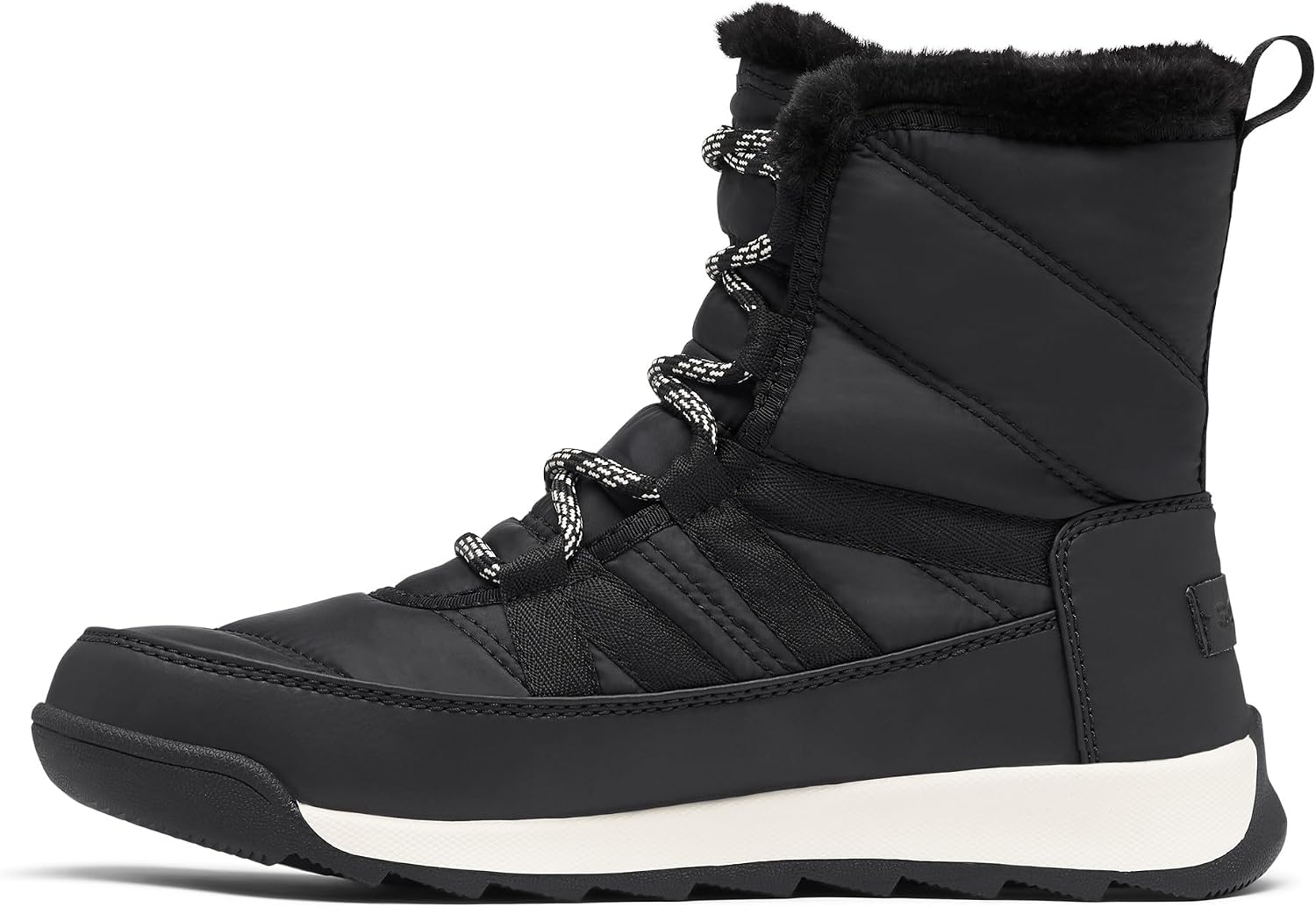
Best Women’s Winter Boot Under $110: Sorel Whitney II Short Lace
Short-shaft winter boot that works on a trail and in town
Pros
- Shorter shaft is easier to walk in than a full pac boot
- Sealed rubber lower handles slush and standing water
- Sorel build quality at roughly half the Joan of Arctic price
- Reads as a normal boot off the trail
Cons
- Insulation is sealed in, so it cannot be dried separately
- Shorter shaft lets snow in above the ankle in deep powder
- Outsole grip is average on ice
The Whitney sits between a hiking boot and a pac boot, and that middle ground is where a lot of women’s winters actually happen. It walks better than the Joan of Arctic and seals better than a fabric hiking boot.
The sealed rubber lower is what you are paying for. Slush defeats most boots in this price range, and a bonded rubber foot handles standing water the way a stitched upper never will.
The trade is the fixed liner. It cannot be pulled out to dry, so on a wet week the insulation gets progressively damper. Alternate pairs if you are out daily, or step up to the Joan of Arctic.
| Insulation | 100g sealed synthetic |
|---|---|
| Lining | Fixed microfleece |
| Waterproofing | Sealed rubber lower, seam-sealed upper |
| Upper | Waterproof textile |
| Outsole | Sorel winter rubber |
| Shaft height | Short, at ankle |
| Closure | Lace |
| Weight | About 2 lb per pair |
| Temperature range | Rated to minus 25 F static |
| Best for | Mixed trail and town winter use |
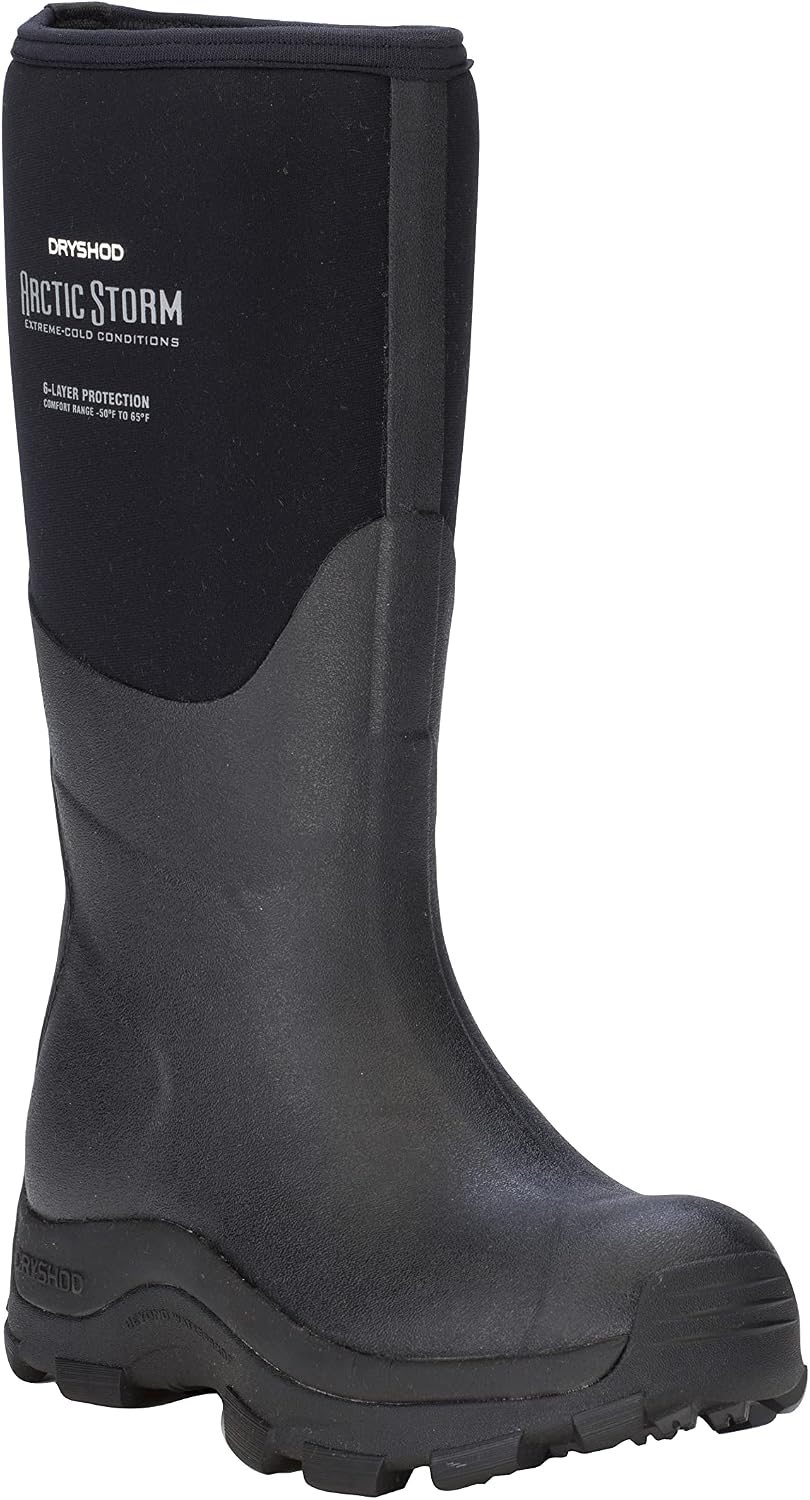
Best Women’s Boot for Extreme Cold: Arctic Storm Hi
Rated for genuinely severe cold rather than mild winter
Pros
- Warmest women’s pick here by a clear margin
- Built for standing still in cold, not just walking in it
- Tall shaft with a sealing collar keeps powder out
- Holds warmth for people who run cold and have given up on normal boots
Cons
- Bulky and awkward for anything resembling a hike
- Far more boot than most Oregon winters call for
- Stiff sole tires legs over distance
This is a specialist boot for people who genuinely get cold. If ordinary winter boots have never worked for you, or your winter involves standing around outdoors rather than moving through it, the extra insulation solves a real problem.
Most Oregon winters do not require this much boot. Cascades trailheads in deep January, ice fishing, winter events, or anyone whose circulation means normal boots fail them will find it justifies itself on the first outing.
The comfort score is the lowest in the women’s section and that is the design working as intended. It optimises for warmth at the cost of walkability, the same trade the Baffin makes on the men’s side.
| Insulation | Heavy synthetic, sealed |
|---|---|
| Lining | Thermal fleece |
| Waterproofing | Sealed rubber lower |
| Upper | Nylon and rubber |
| Outsole | Winter rubber lug |
| Shaft height | Tall, mid-calf |
| Closure | Lace with sealing collar |
| Weight | About 3 lb 6 oz per pair |
| Temperature range | Rated to minus 40 F static |
| Best for | Standing still in severe cold |
Best Boot for Slush and Mud: MUCK Arctic Sport II Tall
Neoprene and rubber for standing water, deep slush and mud

Pros
- Completely sealed, no seams anywhere for water to find
- Neoprene stretches to fit rather than needing break-in
- Pulls on and off without laces, which matters with cold hands
- Rinses clean under a hose rather than needing brushing
Cons
- No ankle support at all, this is a boot not a hiker
- Neoprene runs hot the moment temperatures rise
- Pull-on fit means no adjustment for narrow calves
Oregon winter is more often wet than frozen, and that changes what the right boot is. Standing water, saturated ground, and slush defeat stitched boots eventually, no matter how good the seam tape is. A one-piece rubber and neoprene boot has nowhere for water to get in.
The neoprene handles both jobs at once, insulating and stretching to fit without a break-in period. Pull them on and they work, which is genuinely useful in the dark with cold hands.
There is no ankle support and no lacing, so this is wrong for anything with a grade or uneven footing. For coastal winter trails, farm and property work, and mud that swallows other boots, nothing else here compares.
| Insulation | 5mm neoprene plus fleece |
|---|---|
| Lining | Fleece over neoprene |
| Waterproofing | Fully sealed, one-piece |
| Upper | Neoprene and rubber |
| Outsole | Rubber lug |
| Shaft height | Tall, mid-calf |
| Closure | Pull-on, no laces |
| Weight | About 4 lb per pair |
| Temperature range | Roughly minus 20 to 40 F |
| Best for | Slush, mud and standing water |
Full comparison table: best winter hiking boots
Sort by trail score, price, weight, or customer rating. Tap the buttons to re-rank. The table scrolls horizontally on small screens.
| Boot | Award | Type | Insulation | Trail score | Weight | Rating | Price | |
|---|---|---|---|---|---|---|---|---|
|
Oboz Bridger 10″ Insulated | Best Premium | Hiking boot | 400g synthetic | 87 | About 3 lb 6 oz per pair | 4.7 | $210 |
|
Oboz Bridger 7″ Insulated | Best Women’s Premium | Hiking boot | 400g synthetic | 86 | About 2 lb 10 oz per pair | 4.6 | $210 |
|
Columbia Bugaboot III | Best Overall | Hiking boot | 200g synthetic | 84 | About 2 lb 4 oz per pair | 4.5 | $118.74 |
|
KEEN Revel III Mid | Best Insulated Hiker | Hiking boot | 200g KEEN.WARM | 84 | About 2 lb 8 oz per pair | 4.4 | $144.60 |
|
Icebug Adak BUGrip | Best for Ice | Hiking boot | Primaloft synthetic | 84 | About 2 lb 12 oz per pair | 4.8 | $249.95 |
|
KEEN Revel III Women’s | Best Women’s Hiker | Hiking boot | 200g KEEN.WARM | 84 | About 2 lb 2 oz per pair | 4.6 | $142 |
|
Columbia Newton Ridge Omni-Heat II | Best Women’s | Hiking boot | 200g synthetic | 83 | About 1 lb 14 oz per pair | 4.6 | $100.93 |
|
MUCK Arctic Sport II Tall | Best for Slush | Rubber | 5mm neoprene plus fleece | 82 | About 4 lb per pair | 4.6 | $116.25 |
|
Sorel Caribou | Best Deep Snow | Pac boot | 9mm removable felt liner | 81 | About 4 lb 5 oz per pair | 4.6 | $168.38 |
|
Merrell Coldpack 3 Thermo Mid | Best Lightweight | Hiking boot | 200g Merrell PrimaLoft | 81 | About 2 lb per pair | 4.6 | $184.95 |
|
Baffin Selkirk | Best Extreme Cold | Pac boot | Multi-layer removable inner boot | 81 | About 4 lb 12 oz per pair | 4.7 | $272.49 |
|
Kamik Nation Plus | Best Under $100 | Pac boot | Removable 8mm liner | 81 | About 3 lb 8 oz per pair | 4.4 | $99.99 |
|
Sorel Joan of Arctic | Best Women’s Deep Snow | Pac boot | 6mm removable felt liner | 80 | About 3 lb 4 oz per pair | 4.5 | $214.39 |
|
Sorel Whitney II Short Lace | Best Women’s Under $110 | Snow boot | 100g sealed synthetic | 80 | About 2 lb per pair | 4.5 | $102.94 |
|
Arctic Storm Hi | Best Women’s Extreme Cold | Pac boot | Heavy synthetic, sealed | 80 | About 3 lb 6 oz per pair | 4.7 | $184.95 |
|
NORTIV 8 Winter Snow Boot | Best Budget | Snow boot | Faux fur lining | 78 | About 2 lb 2 oz per pair | 4.5 | $65.99 |
|
COOJOY Winter Snow Boot | Best Women’s Budget | Snow boot | Faux fur lining | 77 | About 1 lb 12 oz per pair | 4.7 | $54.99 |
How We Test Winter Boots in Oregon
Oregon winter is rarely the dry cold that boot marketing assumes. It is wet cold, which is harder on feet and harder on boots. Every pick here is judged against that, on a 100-point trail score across five weighted categories.
-
25%Warmth
Warm at hour four, not hour one
Any insulated boot feels warm walking out of the car. We care about the point where your feet have stopped generating much heat, the insulation has picked up moisture from sweat, and you are standing at a viewpoint in wind. Removable liners score higher than sealed insulation, because a liner you can dry overnight stays warm across a whole season while sealed insulation gets progressively damper and colder each week.
-
25%Traction
What happens when rubber goes hard
Most outsole compounds stiffen below freezing and lose grip exactly when you need it. We judge lug depth and spacing on packed snow, whether the tread clears or loads up, and how the compound behaves on hard ice. Aggressive-looking tread counts for nothing if the rubber turns to plastic at 20 degrees, and only studs genuinely solve ice.
-
20%Waterproof
Slush is the real test, not snow
Dry snow brushes off. Slush and standing water are what actually get into boots, and they find seams, tongue gussets and the flex point above the toe. Bonded rubber lowers outperform stitched-and-taped uppers here every time, which is why pac boots score well in this category even when they score poorly elsewhere.
-
15%Comfort
Whether you can still walk at mile six
We look at where the sole flexes relative to where your foot bends, toe box volume with a thick sock on, break-in required, and how much the weight costs your legs over distance. A boot that flexes in the wrong place is fine for a hundred yards and punishing over five miles, which is the gap between a snow boot and a winter hiking boot.
-
15%Value
Cost per winter, not sticker price
A budget boot that creases and leaks after two seasons costs more per winter than a mid-priced one that lasts eight. We score against expected lifespan, whether liners and laces can be replaced, and whether the brand supports the boot after purchase. Replaceable liners earn points that sealed construction does not.
Where we tested
Packed snow, frozen crust and sub-freezing mornings. Eleven outings.
Freezing rain and the wet cold that defeats most boots. Eight outings.
Dry cold, abrasive rock and hard frozen ground. Six day trips.
Saturated ground, salt spray and standing water. Five trips.
Winter Hiking Boot, Snow Boot or Pac Boot
Three designs get sold under the same search term and they do genuinely different jobs. Picking the wrong category is a more expensive mistake than picking the wrong model within a category.
Buy a winter hiking boot if
You are covering real distance on trail and the snow is packed rather than deep. The Bugaboot, Bridger, Revel and Coldpack all sit here.
Buy a pac boot if
You are in deep snow, standing still in cold, snowshoeing or doing winter chores. The Caribou, Joan of Arctic, Kamik and Baffin sit here.
Buy rubber and neoprene if
Your winter is wet rather than frozen. Coastal trails, saturated ground and mud that swallows other boots. That is the MUCK.
Buy studs if
Ice is a regular condition rather than an occasional patch. Only the Icebug has them moulded in, otherwise use strap-on traction.
Insulation Ratings, Decoded
Boots list insulation in grams and often quote a temperature rating. Both numbers are useful and both are widely misread, because they describe very different situations.
The temperature ratings printed on boxes almost always assume you are standing still, not hiking. A boot rated to minus 40 will not keep a stationary foot warm at minus 40 for hours, and it will cook your feet at 30 degrees while you are moving. Read the rating as a rough ceiling for inactivity rather than a promise, and choose insulation weight based on whether you will be moving or waiting.
How to Choose Winter Hiking Boots
Five decisions narrow the field fast. Work through them in order.
1. Decide whether you are walking or standing
This is the question that determines everything else, and it is the one most buyers skip. A boot optimised for warmth while stationary walks badly, and a boot that walks well will not keep a motionless foot warm below about ten degrees. Be honest about which describes your winter, then pick the category before you pick the model.
2. Size up, then size up again for socks
Winter boots need room that three-season boots do not. Thick socks take up space, feet swell over a cold day, and toes that cannot move are toes that get cold. Most people need a half size larger than their summer hiking boot, and a full size if they wear heavy wool. Circulation matters more than insulation, so a boot laced tight over a thick sock will be colder than a looser boot with room to spare. Our boot fit guide covers the measurements.
3. Look for a removable liner if your winter is wet
Sealed insulation cannot be dried separately, so it picks up sweat and slush moisture and holds it. Across a wet Oregon week that means each day starts colder than the last. A removable liner comes out at night, dries by morning, and can be replaced when it packs down after a few seasons. It is the single most underrated feature in this category.
4. Assume the outsole will not handle ice
Almost no standard winter outsole grips hard ice, because rubber stiffens as it gets colder and stiff rubber slides. Deeper lugs help on packed snow and do nothing on ice. Unless you buy studded boots, plan on carrying strap-on traction devices for icy sections and put them on before you need them rather than after you slip.
5. Match your socks to the boot, not the temperature
A well-insulated boot with a thin merino sock beats a lightly insulated boot with a thick one, because compressed insulation stops working. If your boots are already warm, do not fill the remaining space with bulk. See our hiking sock picks and the merino versus synthetic comparison for what works in cold and wet.
Traction, and Why Winter Outsoles Disappoint
The most common winter complaint is a boot that grips fine in the store and slides on the trail. It is almost never a manufacturing fault. It is physics.
Rubber hardens as it cools
Outsole compounds are formulated to stay soft and tacky at moderate temperatures. As they get colder they stiffen, and a stiff sole cannot deform into the tiny irregularities that create grip. By the time you are on a frozen trail at 20 degrees, an aggressive-looking tread is behaving like hard plastic. Winter-specific compounds slow this down but do not eliminate it, which is why boots with a genuine cold-weather rubber score higher here than boots with deeper lugs.
Lugs solve snow, studs solve ice
Deep, widely spaced lugs bite into packed snow and clear themselves as you walk, which is exactly what you want. On ice they do nothing at all, because there is nothing to bite into. Only a harder material embedded in the sole works there, which is what the carbide studs on the Icebug provide. Everyone else needs strap-on traction devices, and the mistake people make is waiting until after the first slip to put them on.
Winter Hiking Boot FAQ
The questions buyers ask before committing, answered without the marketing language.
What are the best winter hiking boots?
For most people the Columbia Bugaboot III is the right answer: it is warm enough for a snowy Oregon trail, waterproof, and priced where a mainstream buyer will actually pull the trigger. If you cover real distance in winter, the Oboz Bridger is built on a genuine hiking chassis and will treat your legs far better past mile four. If ice is a regular condition rather than an occasional patch, the studded Icebug Adak is the only pick here that solves it without strap-on traction. The best boot depends far more on whether you are walking or standing still than on any warmth rating.
What is the difference between a winter hiking boot and a snow boot?
A winter hiking boot is a hiking boot chassis with insulation added and a cold-weather outsole, so it flexes where your foot bends and supports the ankle over distance. A snow boot or pac boot is a sealed rubber lower with a removable liner inside, built to keep a mostly stationary foot warm in deep snow. Pac boots are warmer and more waterproof. Hiking boots walk far better. Buying a pac boot for a ten-mile winter hike is the most common mistake in this category, and buying a hiking boot for snowshoeing and camp chores is the second.
How much insulation do I need in a winter hiking boot?
For active hiking in most Oregon winters, 200 grams covers you down to roughly ten degrees. Move to 400 grams if you hike the Cascades in deep winter or you run cold. Anything above 600 grams will cook your feet while you are moving and only makes sense if you are standing still. A removable liner beats any gram rating in a wet climate, because it can be dried overnight while sealed insulation stays damp and gets colder each day you wear it.
Are winter hiking boots waterproof?
Almost all of them claim to be, and the useful distinction is how. Boots with a bonded rubber lower, meaning pac boots and neoprene designs, are genuinely sealed with no seams for water to find. Boots with a stitched upper rely on a membrane and seam tape, which works well for snow and less well for hours in slush and standing water. Budget boots often use a coated upper rather than a laminated membrane, and that coating wears off at the flex point after a season or two.
What size winter hiking boots should I buy?
Usually a half size larger than your three-season hiking boot, and a full size if you wear heavy wool socks. You need room for a thicker sock, for feet swelling over a cold day, and for your toes to move. Circulation matters more than insulation, so a boot laced tight over a thick sock will run colder than a roomier boot with space to spare. Try them on with the socks you actually plan to wear and check that you can wiggle your toes freely.
Do winter hiking boots work on ice?
Mostly not, and this catches people out. Outsole rubber stiffens as it gets colder, and stiff rubber cannot deform into the surface irregularities that create grip, so an aggressive-looking tread behaves like hard plastic on a frozen trail. Deeper lugs help on packed snow and do nothing on ice, because there is nothing to bite into. Only a harder material embedded in the sole solves it, which is what carbide studs provide. Everyone else should carry strap-on traction devices and fit them before the icy section rather than after the first slip.
Can you hike long distances in pac boots?
You can, but you will feel it. Pac boots have a stiff sole that does not flex where your foot bends, no meaningful ankle articulation, and considerably more weight than a hiking boot. Three miles feels like six. They are the right tool for snowshoeing, winter camp chores, deep powder and standing around in cold, and the wrong tool for a full day on trail. If your winter outings involve real mileage, buy an insulated hiking boot instead.
How do I keep my feet warm in winter hiking boots?
Start with fit, because the most common cause of cold feet is a boot laced too tight over a thick sock, which restricts circulation. Use one pair of merino or synthetic socks rather than two, since doubling up compresses the insulation and reduces warmth. Never wear cotton. Keep the insoles dry, and pull removable liners out every night so they dry completely. If your feet are cold while moving rather than while stopped, the boot is probably too small or laced too tight rather than not warm enough.
How do I care for winter hiking boots?
Rinse road salt off after every use, because salt degrades leather and rubber and leaves white staining that becomes permanent. Dry the boots at room temperature, never on a radiator or in front of a fire, since direct heat cracks leather and separates adhesive. Pull removable liners out to dry separately. Treat leather and suede uppers with a waterproofing product before the first wet outing and again mid-season. Store them somewhere dry rather than in a cold garage, where repeated freeze cycles harden the rubber.
Are expensive winter boots worth it?
Up to a point. Moving from a coated budget boot to one with a real membrane, a removable liner and a winter-specific outsole is a genuine jump in performance and lasts several times longer. Beyond roughly two hundred dollars you are mostly buying a better walking chassis and a supportive footbed rather than more warmth. A mid-priced boot that fits properly will keep you warmer than an expensive one that pinches, so spend on fit before you spend on brand.