
Best Time to Visit Oregon
A month-by-month, region-by-region, and activity-by-activity guide to the right window for whatever you came here to do.
The short answer
September is the single best month for most Oregon travelers.
Summer crowds drop after Labor Day, late-season fire smoke usually clears by mid-September, the Cascades lakes are still warm enough to swim, fall color starts at high elevations, and almost every road and trail is still open. October is a close second for the Columbia River Gorge and the Willamette Valley wine country.
If you are coming for a specific activity or a specific region, the picture changes. The fastest path to your answer is below.
Oregon is one of the most geographically varied states in the country, and that variety extends to its weather. The Pacific coast stays mild year-round and sees more than 70 inches of rain in some places. The Willamette Valley has wet winters and reliably dry summers. The Cascades hold deep snow into June. Eastern Oregon is high desert, with cold winter nights and hot, dry summers. There is no single “best time” that applies to all of it.
If you only have one week and you want a single safe bet across the whole state, target mid-September. Crowds drop after Labor Day, summer fire smoke usually clears, the Cascade lakes are still warm, and almost every road and trail is still open. For everything else, this guide walks Oregon four ways: first by season, then month-by-month with weather averages and what is open or in bloom, then region-by-region for the six major parts of the state, then by activity so you can match your trip to the right week.
The four seasons in Oregon
Each season offers something the others do not. Here is the high-level read.
| Season | Months | Conditions | Verdict |
|---|---|---|---|
| Spring | Mar – May | Wildflowers explode in the Columbia River Gorge from late March through mid-May. Waterfalls run at peak flow. Western Oregon stays wet through April. The Cascades hold deep snow. | |
| Summer | Jun – Aug | Reliable dry weather statewide. Long daylight. Crater Lake Rim Drive opens by mid-July. Coast and Cascades both fully accessible. Crowds and prices peak. Fire smoke risk in Aug. | |
| Fall | Sep – Oct | The shoulder window. Smoke clears, crowds drop, weather stays dry into mid-October. Larches turn gold in the eastern Cascades. Coast water temperatures peak. Wine harvest in the Willamette Valley. | |
| Winter | Nov – Feb | Wet and gray in western Oregon, deep snow in the Cascades, dry and cold in the east. Storm-watching, skiing, hot springs, and whale watching are at their best. Most high-elevation roads close. |
The catch with Oregon is that all four seasons are happening somewhere in the state at the same time. In late June, you can ski at Timberline in the morning and lie on a coastal beach the same afternoon. In October, the coast is still warm enough for tide pooling while the Cascades already have early snow. The right answer depends entirely on what you came here to do.
Crowd levels by month
A visual read on visitor traffic. The chart reflects state park reservations, lodging occupancy patterns, and major-attraction wait times across Oregon.
Two things drive the shape of this curve. The first is school calendars, which load summer travel between mid-June and Labor Day. The second is weather, which rewards the dry stretch from late June through mid-October. December is a brief uptick at coastal towns and ski resorts but stays light elsewhere.
Insider tip
The week after Labor Day is Oregon’s hidden window
Crowds drop by roughly half overnight, but the weather pattern does not change for two to three more weeks. Lodging rates fall, popular trailheads stop filling at 8 a.m., and the lakes are at their warmest of the year. If you have any flexibility in your trip dates, this is the week to target.
Oregon month by month
Real weather averages, what is open or closed, what is in bloom, and what the month is actually best for.
January Mid-winter

January is Oregon’s quietest tourist month and the heart of ski season. Mt. Hood Meadows, Mt. Bachelor, and Timberline are all running at full capacity. The Oregon Coast sees its first king tides and dramatic winter storms, drawing storm-watching crowds to Cannon Beach, Yachats, and Pacific City. Lincoln City beaches start releasing the Finders Keepers glass floats.
Western Oregon stays gray and wet, with daylight at its shortest. Eastern Oregon gets cold, dry, and crystal-clear, with overnight lows in the teens and 20s. Whale-watching trips out of Depoe Bay catch the southern migration of gray whales heading to Mexico.
February Late winter

February is the deepest snowpack of the season for the Oregon Cascades. Skiing is at its peak, and the Mt. Hood Meadows resort routinely posts mid-mountain bases of 100 inches or more. Crater Lake gets its heaviest snowfall of the year, with averages exceeding 70 inches in the month. The Painted Hills look stark and beautiful with a dusting of snow. Daylight starts noticeably stretching by month’s end.
Western Oregon stays in the same wet pattern as January. The Willamette Valley’s first hellebores and snowdrops bloom by mid-February, the earliest sign of the long spring ahead. Coast watching is excellent, particularly during the new-moon king tides.
March Early spring

March is a transition month with two distinct halves. The first half stays in the wet winter pattern, with frequent storms and short daylight. The second half sees the first reliably warm sunny days in western Oregon, the first wildflowers in the Columbia Gorge at low elevations like Coyote Wall and Catherine Creek, and the start of the gray whale’s northern migration past the Oregon Coast.
The Cascades still hold full snowpack and ski season runs uninterrupted. Most low-elevation hikes in the Coast Range and the western foothills are open but muddy. Cherry blossoms in Portland’s Tom McCall Waterfront Park typically peak in the last week of March.
April Mid-spring
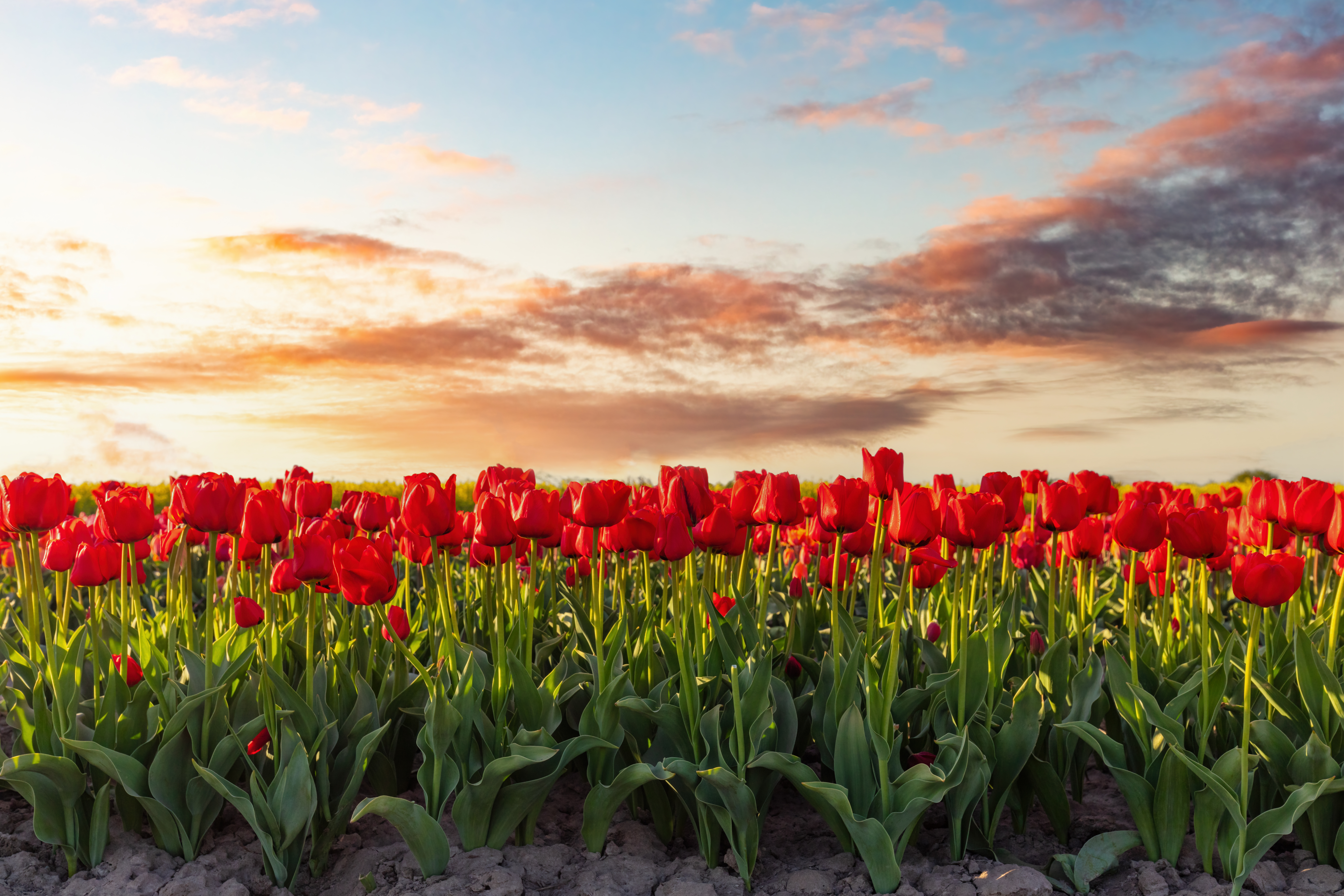
April is when Oregon visibly becomes spring. Rowena Crest and Tom McCall Point hit peak balsamroot and lupine bloom in mid to late April. Waterfalls in the Columbia River Gorge run at peak flow from snowmelt. Tulip farms in the Willamette Valley, particularly the Wooden Shoe Tulip Festival south of Portland, are in full bloom. Whale watching peaks during Whale Watch Week, the last week of school spring break.
The Cascades still have deep snow and ski season is winding down. Mt. Bachelor typically stays open through mid-May, and Timberline runs year-round. Eastern Oregon warms up but nights remain cold.
May Late spring

May is the first month where weather becomes reliably good across most of the state. Saddle Mountain on the north coast hits its rare-wildflower peak. Portland sees its first stretches of clear, warm days. The Painted Hills are still cool enough to comfortably hike at midday and the high desert wildflowers are in full bloom. Smith Rock, Camassia Preserve, and the Owyhee Canyonlands all reach peak conditions.
The high Cascades still have snow on most trails above 5,000 feet, and Crater Lake’s Rim Drive remains closed. The weekend before Memorial Day starts the first crowds at coastal towns and Bend.
June Early summer

June daylight stretches to over 15 hours in Portland and rain becomes uncommon by mid-month. Most Cascade trails below 6,000 feet are clear of snow. Wildflowers move up the elevation gradient: coastal meadows finish blooming as alpine and subalpine zones start. Mt. Bachelor closes its winter season, and Bend transitions to summer mode. The Oregon Coast Trail is fully open. School lets out the last week of June and crowds spike sharply.
Coastal fog still rolls in most mornings, but afternoons clear by 11 a.m. or noon. The “June gloom” pattern is real but rarely lasts past lunch. Crater Lake Rim Drive remains closed in early June and partially opens by month’s end in low-snow years.
July Mid-summer
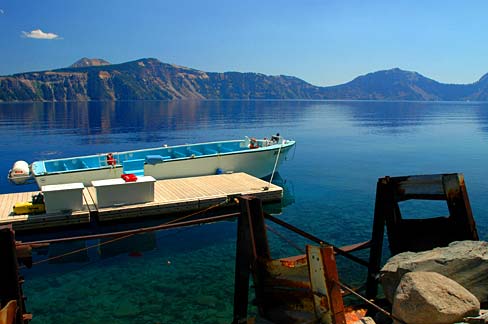
July is the busiest, sunniest month in Oregon. Crater Lake’s Rim Drive opens by mid-month in most years. Alpine meadows on Mt. Hood, the Three Sisters, and Mt. Jefferson hit peak wildflower bloom. The Pacific Crest Trail through Oregon is fully snow-free by late July. Coastal towns hit maximum lodging occupancy. Portland and Bend can both reach the high 90s during heat waves, which have become more frequent in the past decade.
Reservations for state park campgrounds, ranger-led Crater Lake boat tours, and Mt. Hood lodges should be made months in advance. The Fourth of July week is the single most-booked stretch of the year.
August Late summer

August is statistically the warmest, driest month and brings the most consistent weather of the year. It also brings the highest wildfire risk. Smoke events during the second half of August are a real factor and can shut down hiking access in the Cascades, the Klamath, and parts of the eastern desert. Air quality forecasts should be checked daily.
Oregon coast water temperatures peak around 60°F. Summer-resident gray whales feed in Depoe Bay and Newport. Huckleberry season hits the Cascades. The Oregon State Fair runs in Salem during the last week of the month. Crowds remain at peak levels until Labor Day.
September Early fall

September is the best month of the year for most Oregon trips. Crowds drop sharply after Labor Day weekend. Smoke from late-summer fires usually clears by mid-September with the first cold-front passages. Cascade lake water temperatures stay warm through the month. The Willamette Valley wine harvest begins in early September with pinot noir picking at most major vineyards. Larches in the eastern Cascades start their annual gold turn by month’s end.
Daylight is still long enough for full-day hikes. Early-morning fog returns to the coast, but afternoons stay clear. Eastern Oregon nights drop into the 30s but days stay in the 70s. Lodging rates fall by 20 to 40 percent compared to August.
October Mid fall

October is the foliage peak across most of Oregon. The vine maple, big-leaf maple, and Cascade larch turn through the first three weeks. The Columbia River Gorge, the McKenzie River corridor, and the rural roads of the Willamette Valley wine country all hit peak color between October 5 and 25. Crater Lake Rim Drive typically stays open through mid to late October before snow closes it.
Rain returns by mid-month in western Oregon, but full-day rain remains uncommon until November. Coastal storm-watching season begins. Eastern Oregon stays dry and crisp, with cottonwoods and aspens turning gold along the John Day, Owyhee, and Wallowa Rivers.
November Late fall
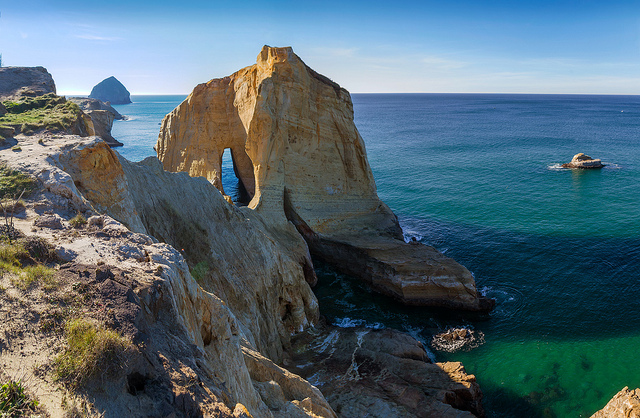
November is the quietest month of the fall and the toughest stretch of the year for casual visitors. The first three weeks bring increasingly heavy rain to western Oregon and the first major snowstorms to the Cascades. Daylight drops below 10 hours by month’s end. Crater Lake Rim Drive closes. Most high alpine trails are inaccessible without winter gear.
Ski resorts open in late November in most years. Mushroom foragers find prime chanterelle and porcini conditions in the Coast Range and the western Cascades. The Oregon Coast hosts dramatic king-tide events and the first major storm-watching weekends. Lodging is at its lowest rates of the year outside the ski areas.
December Early winter
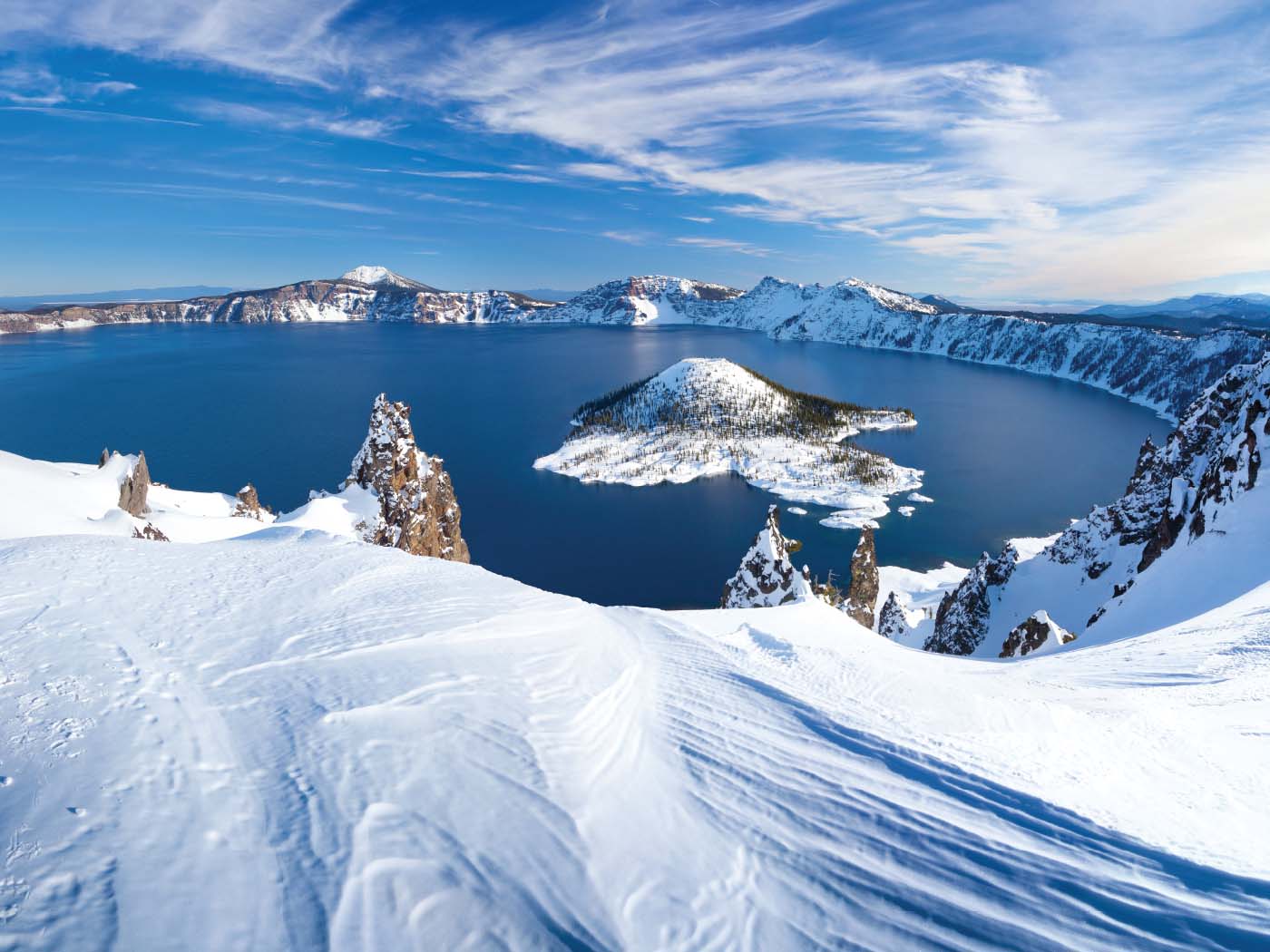
December brings ski season into full swing and is the peak window for the southern gray-whale migration past the central coast. Whale Watch Week runs the week between Christmas and New Year. The eastern desert is cold but clear and dark-sky stargazing is at its best of the year. Portland’s Christmas markets, Pittock Mansion holiday tour, and the ZooLights at the Oregon Zoo draw crowds.
Solstice falls on December 21, with daylight at just 8 hours and 42 minutes in Portland. King tides peak at the new moon. Winter storms regularly push surf above 20 feet at exposed coast points. Heavy travel weeks include Christmas through New Year.
Best time by region
Oregon’s six regions have wildly different climates. Pick where you are going first, then match the season.
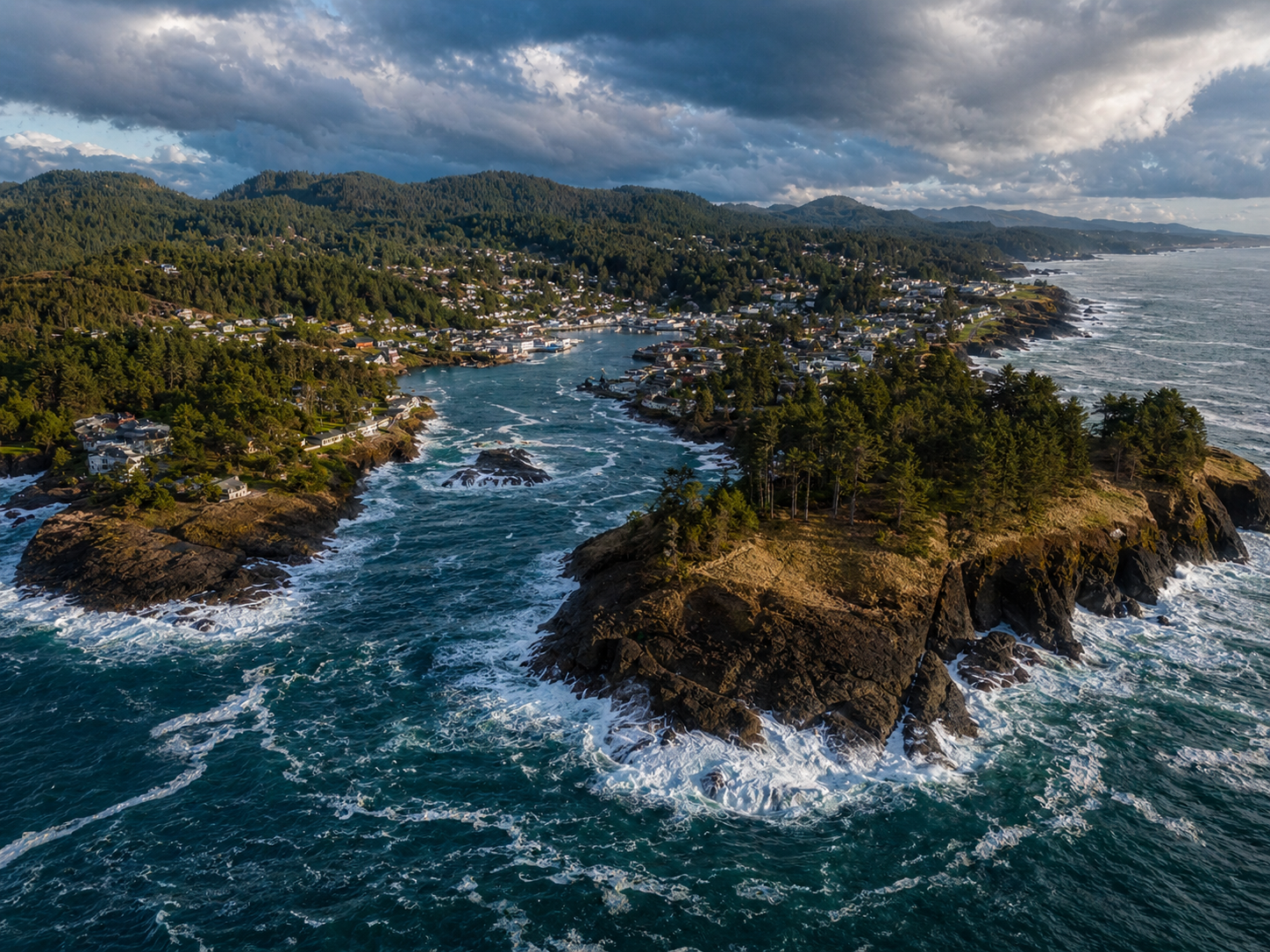 Region 1 of 6
Oregon Coast
Best: Late August – early October
Summer fog burns off earlier in late August and September, ocean temps peak at 60°F, and Labor Day cuts crowds in half. Winter is dramatic for storm-watching but rough for swimming or tide pooling.
 Region 2 of 6
Willamette Valley
Best: September – mid-October
Wine harvest, dry weather, foliage, and the lowest rain risk of any month. Spring is also strong for tulip festivals and waterfalls. Winters are wet and gray. Summers are reliable but increasingly warm.
 Region 3 of 6
The Cascades
Best: July – September
Most alpine trails are snow-free by mid-July. Wildflower meadows peak late July to early August. Lakes warm enough for swimming late July through Labor Day. Winter brings world-class skiing but most roads close.
 Region 4 of 6
Central Oregon
Best: May – June, September – October
Bend and Smith Rock have 300+ days of sun. Spring and early fall avoid both summer heat (90s) and winter snow. Mt. Bachelor turns this region into a major winter destination. Climbing is best in shoulder seasons.
 Region 5 of 6
Southern Oregon
Best: July – mid-October
Crater Lake Rim Drive only opens mid-July. The Rogue River, Ashland, and Klamath are all warmer and drier than the rest of western Oregon. Fall foliage is especially strong in the Rogue and Umpqua Valleys.
 Region 6 of 6
Eastern Oregon
Best: Late April – June, September – October
High desert with extreme summer heat (90s to 100s) and cold winter nights. Spring brings wildflowers in the Owyhee. The Painted Hills, Steens Mountain, and the Wallowas all peak in shoulder seasons. Dark skies year-round.
Two big picture rules apply across Oregon’s regions. The first is the Cascade rain shadow: everything west of the Cascades (Coast, Willamette Valley) is wet in winter and dry in summer; everything east (Central, Eastern Oregon) is dry year-round but more extreme in temperature. The second is elevation: an alpine basin at 6,000 feet does not become reliably hike-able until July, even when the valley below has been hot and dry since April.
Activity calendar
Twelve activities across twelve months. Find the row for what you came to do.
| Activity | Jan | Feb | Mar | Apr | May | Jun | Jul | Aug | Sep | Oct | Nov | Dec |
|---|---|---|---|---|---|---|---|---|---|---|---|---|
| Hiking (low elevation) | Poor | Poor | OK | Good | Peak | Peak | Peak | Good | Peak | Peak | OK | Poor |
| Hiking (alpine) | Snow | Snow | Snow | Snow | Late snow | OK | Peak | Peak | Peak | Good | Snow | Snow |
| Skiing & snowboarding | Peak | Peak | Peak | Good | Late | Palmer | Palmer | Palmer | Closed | Closed | Open | Peak |
| Whale watching | South mig. | Good | North mig. | North mig. | Good | Resident | Resident | Resident | Resident | Resident | Early mig. | South mig. |
| Wildflowers (Gorge) | Poor | Early | Good | Peak | Peak | Late | Past | Past | Past | Past | Past | Past |
| Wildflowers (alpine) | Snow | Snow | Snow | Snow | Snow | Early | Peak | Peak | Late | Past | Past | Snow |
| Camping (state parks) | Wet/cold | Wet/cold | OK | Good | Peak | Peak | Peak | Peak | Peak | Good | Wet/cold | Wet/cold |
| Coast beach days | Cold | Cold | Cold | Cool | Good | Foggy | Peak | Peak | Peak | Good | Stormy | Stormy |
| Storm watching | Peak | Peak | Good | Past | Past | Past | Past | Past | Past | Early | Peak | Peak |
| Wine country (harvest) | Off | Off | Pruning | Bud break | Good | Good | Good | Pre-harvest | Harvest | Harvest | Quiet | Off |
| Hot springs | Peak | Peak | Good | Good | Good | Hot | Hot | Hot | Good | Peak | Peak | Peak |
| Mushroom foraging | Off | Off | Off | Spring | Morels | Off | Off | Off | Chants | Peak | Peak | Late |
The pattern in the calendar is the most important part of the page. Most activities have a specific peak window and clear shoulder weeks on either side. Skiing and storm watching peak in winter; alpine hiking and beach days peak in late summer; whale watching has two distinct migration windows plus a summer-resident pod; harvest and foliage own October. If you can flex by even a single week toward a peak window, the trip improves substantially.
Where to stay
Now figure out where to sleep
Oregon’s lodging story changes as much as its weather. Coastal towns book up four to six months ahead for summer. Cascade ski lodges peak December through March. Wine country fills every weekend in September and October. Eastern Oregon basecamps stay reasonable year-round. Use our places-to-stay hub to match your travel month to the right kind of stay.
Weather data tables
Real climate normals for four representative Oregon cities. Highs are average daily highs in °F. Rain is monthly average precipitation in inches.
Portland (Willamette Valley)
Elevation 30 ft · Western Oregon · ~36 in annual rainfall
| Month | Avg High | Avg Low | Rain (in) | Rain Days | Daylight |
|---|---|---|---|---|---|
| January | 47° | 36° | 5.0 | 17 | 9h |
| February | 51° | 37° | 4.0 | 15 | 10h 20m |
| March | 56° | 40° | 3.7 | 17 | 11h 50m |
| April | 61° | 42° | 2.6 | 14 | 13h 25m |
| May | 68° | 48° | 2.1 | 11 | 14h 45m |
| June | 74° | 53° | 1.6 | 9 | 15h 40m |
| July | 81° | 57° | 0.6 | 3 | 15h 25m |
| August | 82° | 58° | 0.7 | 4 | 14h 15m |
| September | 77° | 54° | 1.5 | 5 | 12h 45m |
| October | 64° | 46° | 3.1 | 11 | 11h 10m |
| November | 53° | 41° | 5.6 | 18 | 9h 40m |
| December | 46° | 36° | 5.5 | 19 | 8h 45m |
Bend (Central Oregon high desert)
Elevation 3,623 ft · East side of Cascades · ~12 in annual rainfall · 300+ days of sun
| Month | Avg High | Avg Low | Precip (in) | Snow Days | Sunny Days |
|---|---|---|---|---|---|
| January | 40° | 23° | 1.6 | 6 | 11 |
| February | 44° | 24° | 1.2 | 4 | 12 |
| March | 49° | 27° | 1.0 | 3 | 15 |
| April | 57° | 30° | 0.7 | 1 | 17 |
| May | 65° | 36° | 0.9 | 0 | 20 |
| June | 73° | 41° | 0.7 | 0 | 22 |
| July | 82° | 46° | 0.4 | 0 | 27 |
| August | 82° | 45° | 0.4 | 0 | 26 |
| September | 75° | 38° | 0.5 | 0 | 23 |
| October | 62° | 31° | 0.7 | 0 | 19 |
| November | 47° | 26° | 1.7 | 3 | 11 |
| December | 38° | 22° | 1.7 | 5 | 10 |
Newport (Central Oregon Coast)
Elevation 50 ft · ~70 in annual rainfall · Mild year-round
| Month | Avg High | Avg Low | Rain (in) | Rain Days | Ocean Temp |
|---|---|---|---|---|---|
| January | 52° | 40° | 10.4 | 21 | 49° |
| February | 53° | 40° | 8.4 | 18 | 49° |
| March | 55° | 41° | 8.1 | 20 | 50° |
| April | 57° | 43° | 5.0 | 17 | 51° |
| May | 61° | 47° | 3.2 | 13 | 53° |
| June | 64° | 51° | 2.0 | 10 | 55° |
| July | 68° | 54° | 0.8 | 4 | 57° |
| August | 69° | 54° | 1.2 | 5 | 58° |
| September | 68° | 51° | 2.5 | 8 | 58° |
| October | 63° | 47° | 5.7 | 14 | 56° |
| November | 55° | 43° | 11.3 | 20 | 53° |
| December | 51° | 40° | 11.2 | 22 | 50° |
Crater Lake (Southern Cascades)
Elevation 6,475 ft · ~43 ft of snow per year (deepest measured snowpack in Oregon)
| Month | Avg High | Avg Low | Snowfall (in) | Rim Drive | Notes |
|---|---|---|---|---|---|
| January | 34° | 19° | 76 | Closed | Snowshoeing |
| February | 34° | 19° | 73 | Closed | Peak snowpack |
| March | 36° | 20° | 74 | Closed | Snowshoeing |
| April | 40° | 23° | 49 | Closed | Spring storms |
| May | 49° | 29° | 20 | Partial | Late melt |
| June | 59° | 34° | 4 | Partial | Plowing |
| July | 69° | 40° | 0 | Open | Best month |
| August | 69° | 40° | 0 | Open | Boat tours |
| September | 62° | 34° | 2 | Open | Fall color |
| October | 52° | 27° | 11 | Closes mid | First snow |
| November | 40° | 22° | 52 | Closed | Storms in |
| December | 34° | 19° | 78 | Closed | Snowshoeing |
Two patterns matter most. First, Portland and Newport (western Oregon) have wet winters and dry summers; Bend and the eastern side stay dry year-round. Second, elevation transforms everything. Crater Lake at 6,475 feet has only two months of full road access, even though the towns at the base of the Cascades have eight or nine.
Sources: Climate normals derived from NOAA / National Weather Service 1991–2020 station records for Portland (KPDX), Bend (KBDN), Newport (KONP), and Crater Lake (KMHS). Crater Lake snowfall and Rim Drive open/close windows from the National Park Service. Whale migration counts from the Oregon Whale Watching Spoken Here program and NOAA Fisheries. Wildflower bloom windows compiled from the Oregon Wildflower Map and field observations across multiple seasons.
What to pack by season
Oregon’s climate punishes the wrong gear in any season. Here is the short list for each, with links to our gear guides.
Spring (March – May)
Summer (June – August)
Fall (September – October)
Winter (November – February)
Frequently asked questions
The ten questions we get most often about timing an Oregon trip, with the short answer first.
-
What is the best month to visit Oregon?
September is the single best month for most Oregon travelers. The weather across the state stays dry and mild, summer crowds drop significantly after Labor Day, smoke from late-summer fires usually clears by mid-month, the Cascades lakes are still warm enough to swim, and fall foliage starts to turn at high elevations. October is a close second, especially for the Columbia River Gorge and the Willamette Valley.
-
What is the worst month to visit Oregon?
For most travelers, late November and early to mid-March are the most challenging. Both have short daylight, frequent rain in western Oregon, lingering snow at elevation, and a calendar with relatively few seasonal highlights. They are however quiet, cheap, and great for storm-watching on the coast or skiing in the Cascades.
-
When is the rainy season in Oregon?
Western Oregon, including Portland, the Willamette Valley, and the coast, gets the bulk of its rain between November and March. Portland averages roughly 36 inches of rain per year, and most of it falls in those five months. Summers from July through early September are reliably dry. Eastern Oregon is dry year-round, with most precipitation falling as winter snow.
-
What is the cheapest time to visit Oregon?
Mid-January through mid-March is the lowest-priced window for hotels, vacation rentals, and flights into Portland and Eugene. The exception is the ski areas around Mt. Hood and Mt. Bachelor, where peak winter rates apply. The shoulder weeks in early November and late April also offer strong value with better weather.
-
When can you see wildflowers in Oregon?
The Columbia River Gorge wildflower season starts in mid-March at low elevations and peaks from mid-April through mid-May, with balsamroot and lupine at Rowena Crest, Tom McCall Point, and Memaloose. Coastal wildflowers peak in May and June. Alpine and subalpine meadows in the Cascades, including Paradise Park on Mt. Hood and the Sky Lakes Wilderness, peak in late July and early August.
-
When is whale watching season in Oregon?
Oregon has two major migration windows. The southern migration peaks from late December through mid-January, when an estimated 18,000 gray whales pass the Oregon coast heading to Mexico. The northern return migration peaks from mid-March through late April. About 200 resident gray whales feed off the central coast from June through October, making summer the most reliable time for boat tours.
-
When does Crater Lake open?
Crater Lake National Park is open year-round, but Rim Drive, the 33-mile loop around the caldera, typically opens in early to mid-July and closes in late October or early November depending on snowfall. The park averages about 43 feet of snow per year, the deepest snowpack of any place regularly measured by the National Weather Service in Oregon. Plan for the full Rim Drive experience between July and mid-October.
-
When is ski season in Oregon?
Most Oregon ski areas, including Mt. Hood Meadows, Mt. Bachelor, Hoodoo, and Willamette Pass, open in late November or early December and run through April. Timberline Lodge on Mt. Hood is the only ski area in North America that operates almost year-round, with summer skiing typically running through Labor Day on the Palmer snowfield.
-
What is the best time to visit the Oregon Coast?
Late August through early October is the sweet spot for the Oregon Coast. Summer fog burns off earlier, ocean temperatures peak around 60°F, crowds thin after Labor Day, and storm-watching has not yet begun. July is reliably warm but heavily booked. Winter brings dramatic storm-watching conditions from late October through March, with king tides in December and January.
-
Is Oregon worth visiting in winter?
Yes, particularly if your trip centers on a specific winter activity. Mt. Hood and Mt. Bachelor offer some of the deepest, longest ski seasons in the lower 48. The coast gets dramatic winter storms and is the best time to find glass floats on Lincoln City beaches. Hot springs season is at its peak. Crowds are minimal everywhere outside the ski resorts and lodging is at its cheapest.